
Why hot water takes so long
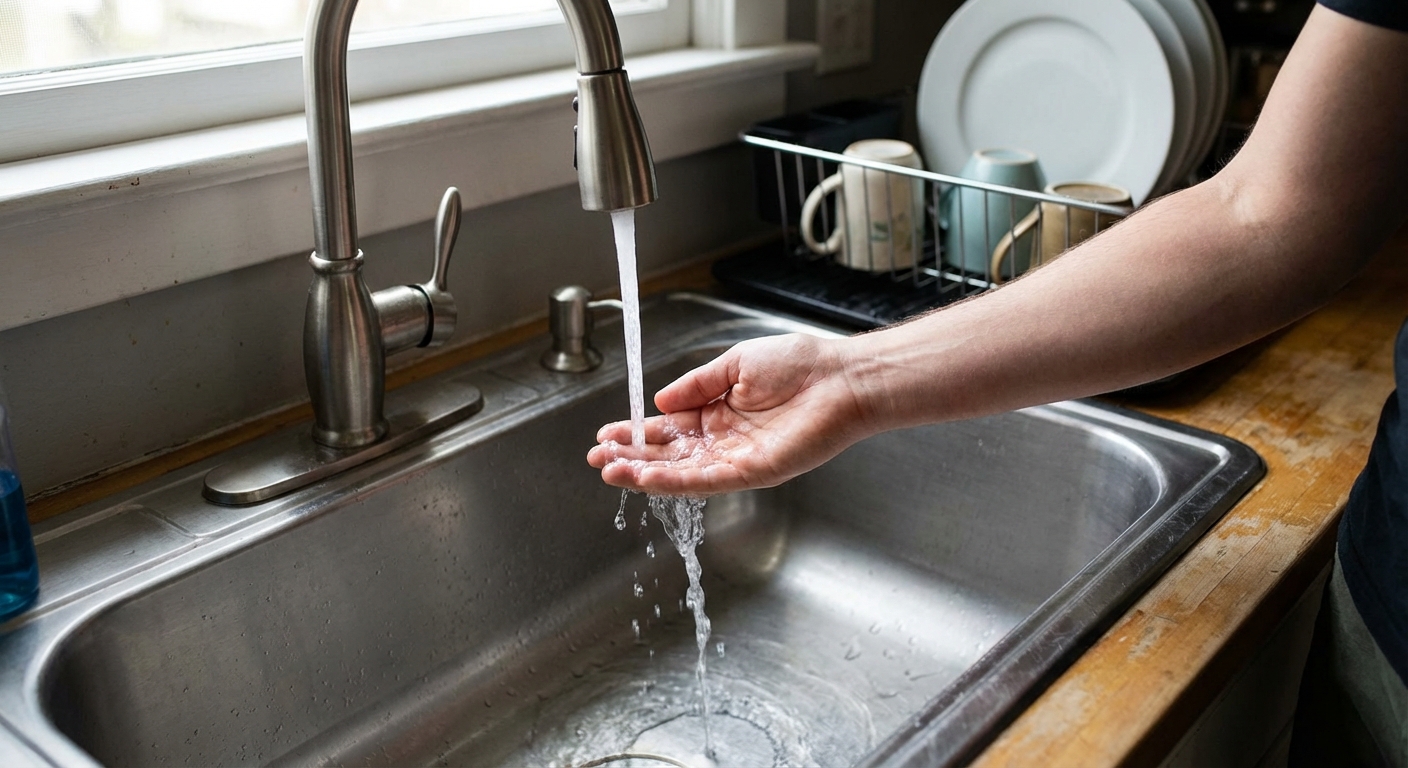
If your water heater is in the basement, garage, or a utility closet on one end of the house, the farthest fixtures are always going to feel sluggish. Most of the time, nothing is “wrong” with the heater. You are simply waiting for the cooler water sitting in the hot water pipe to get pushed out so fresh hot water can arrive.
Think of it like this: every time you turn the handle to hot, the first thing coming out is the room temperature water that cooled down in the line since the last time anyone used that fixture. The longer and wider the pipe run, the more water has to be purged before the hot stuff shows up.
- Long distance: More feet of pipe between the heater and the faucet means more water sitting in the line.
- Heat loss: Uninsulated pipes dump heat into crawl spaces, basements, and wall cavities.
- Plumbing layout: Trunk-and-branch systems can leave far bathrooms at the end of the line.
- Pipe size: Larger diameter lines hold more water, which increases wait time.
- Restrictions and buildup: Sediment, scale, or partially closed valves can slow flow and make the wait feel worse.
- Whole-home tankless delay: If you have a tankless water heater, there is usually a short firing delay and a minimum flow needed to “wake it up.” It is normal for tankless systems to take a few extra seconds to deliver hot water, and they still cannot beat pipe distance.
Quick check: one faucet or the whole area?
Before you spend money, narrow down the problem. This also tells you whether you are chasing a fixture issue or a system issue.
If it is only one faucet or one shower
- Check and clean the faucet aerator or showerhead for debris and scale.
- Confirm the hot stop valve under the sink is fully open.
- If you have a single-handle faucet, a worn cartridge can reduce hot flow.
- For showers, check the anti-scald limit stop. Some valves are set too low after a repair or remodel, which makes “hot” feel like it is taking forever.
If it is every fixture far from the heater
- You are dealing with distance, pipe volume, and heat loss, which is where the fixes below shine.
Fix 1: Insulate hot water pipes
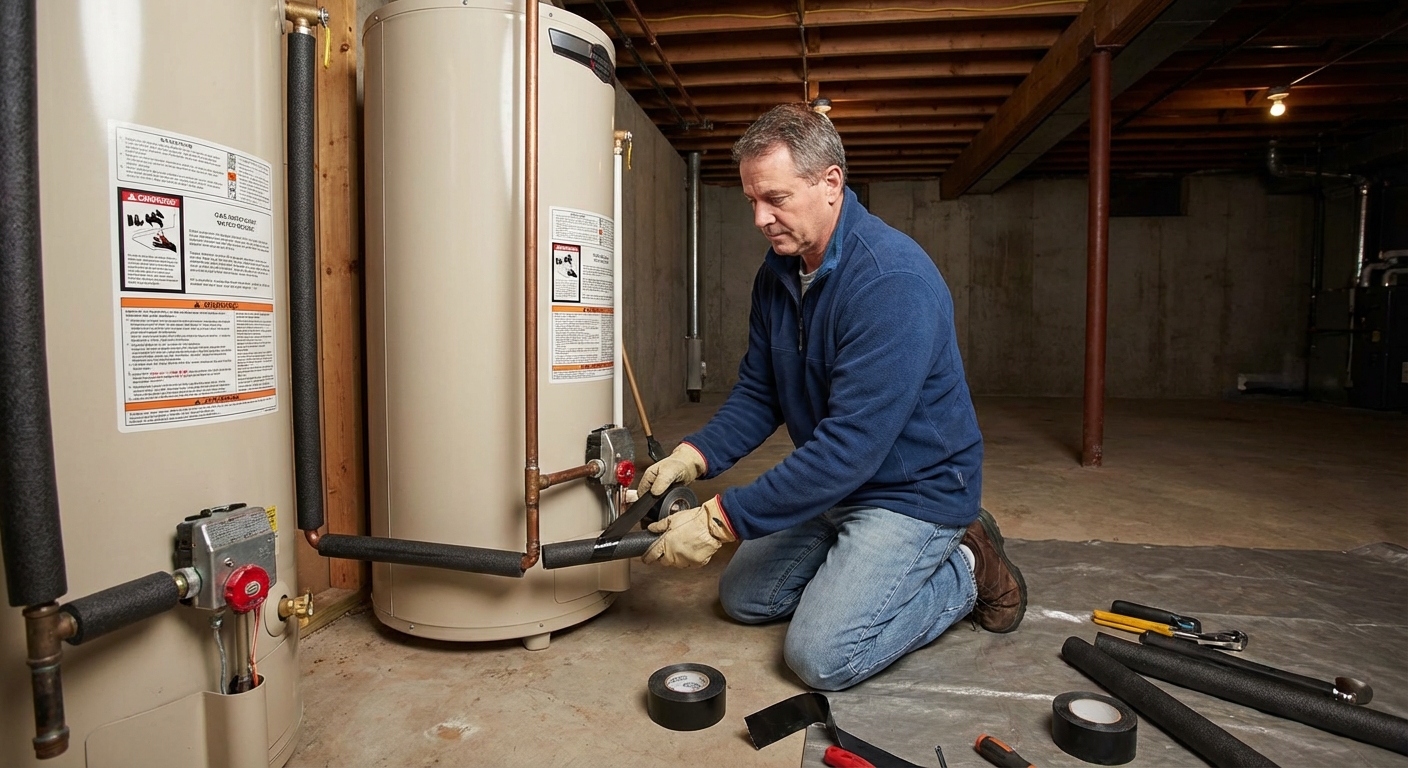
Pipe insulation is the cheapest, least invasive upgrade, and it helps in two ways: it keeps hot water hotter while it travels, and it slows down how quickly the standing water in the line cools off between uses. It will not magically eliminate the wait, but it can reduce how long you have to run the tap and makes the hot water last longer once it arrives.
Where it matters most
- Start with the first 10 to 20 feet leaving the water heater, since that area is often exposed and loses heat fast.
- Then insulate all accessible hot water piping, especially long runs in basements, crawl spaces, garages, and attics.
- Prioritize any hot water lines running along exterior walls.
DIY notes from the budget side of the fence
- Foam sleeves are simple and affordable. Choose the right diameter so it actually hugs the pipe.
- Seal seams and joints with compatible tape so the insulation stays put.
- Keep insulation away from flue vents and high-heat surfaces around gas appliances.
Fix 2: Add a recirculation pump
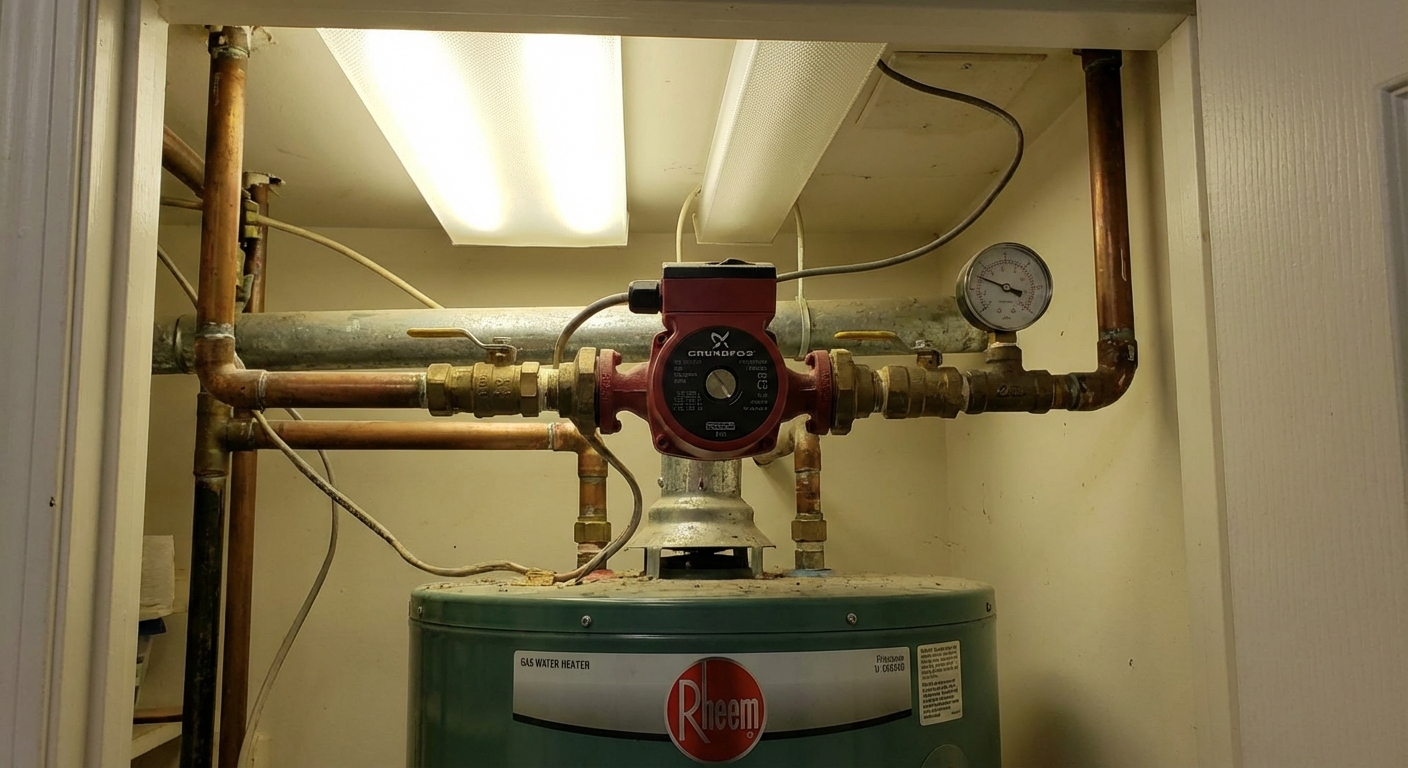
If you want “hot water faster” without remodeling, a recirculation system is usually the biggest jump in comfort. The basic idea is simple: instead of letting hot water cool off in the line, the system moves water through the hot plumbing so hot water is closer to your fixtures when you need it.
There are two common styles, and which one you can use depends on your plumbing.
Option A: Dedicated return line
Some homes have a return pipe that brings water back to the heater, creating a loop. A pump near the heater circulates hot water continuously or on a schedule.
- Pros: Fast hot water at multiple fixtures, consistent performance, typically the best setup if your home already has the return line.
- Cons: Requires a return line. Adding one can mean opening walls.
Option B: Comfort system using the cold line
These kits typically put a small pump at the water heater and a thermostatic crossover valve under the farthest sink. When the pump runs, the valve opens and lets cooler water in the hot line move into the cold line until the valve senses “hot enough,” then it closes.
- Pros: Often installable without opening walls, great for existing homes.
- Cons: You can get briefly warm water on the cold side near the crossover location.
Make it feel smart, not wasteful
- Use a timer: Run it during morning and evening routines, not 24/7.
- Use a thermostat control: Some pumps cycle only when the line drops below a set temperature.
- Consider demand control: Push-button, motion-sensor, or app-triggered pumps run only when you ask, which is great if you are trying to keep the utility bill in check.
- Insulate pipes too: Otherwise you are paying to heat the crawl space.
Thrifty reality check: Recirculation can save water at the faucet, but it may increase energy use because the system keeps pipes warmer. A timer (or demand control) plus insulation is how you get the comfort without the sneaky monthly bump.
Fix 3: Add a point-of-use heater
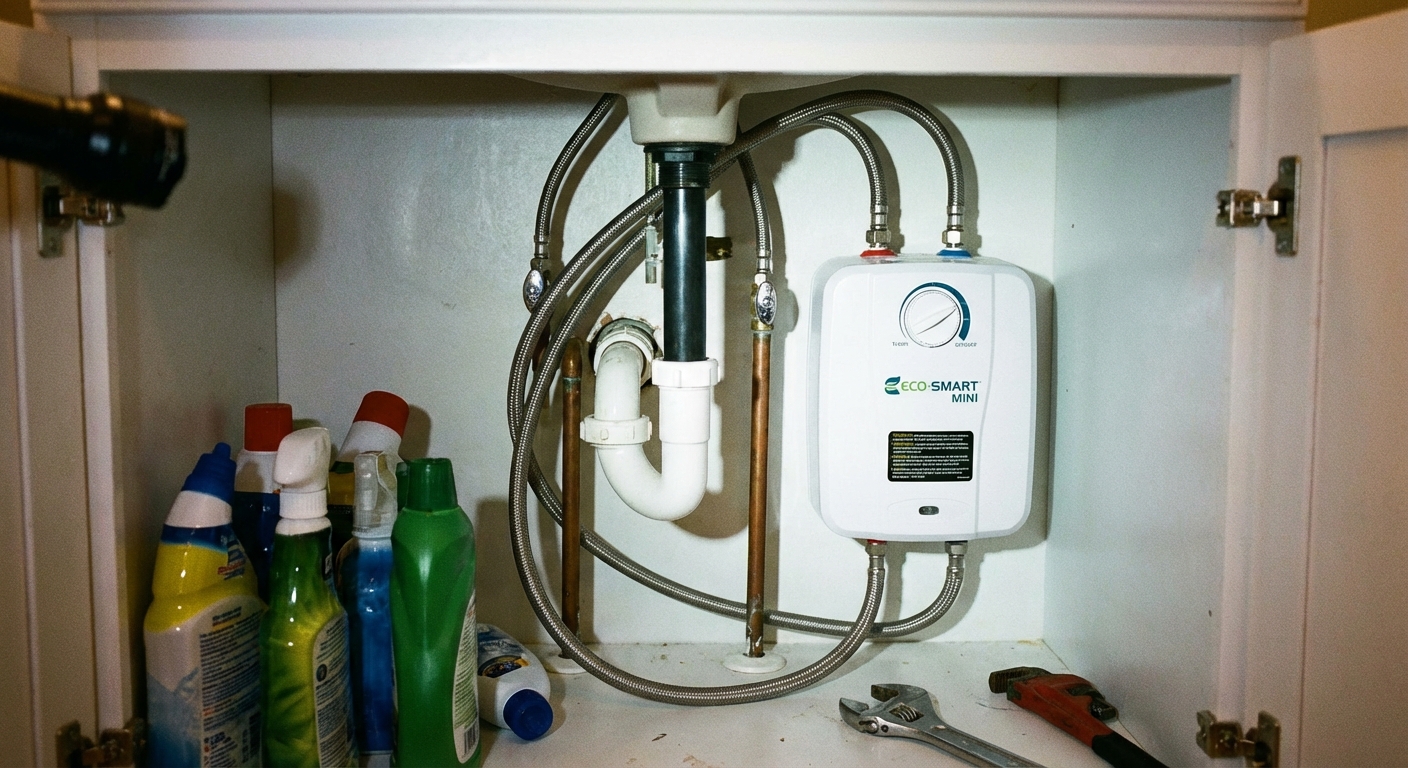
If one bathroom or a far kitchen sink is the main offender, a point-of-use heater can be a targeted fix. These small units install near the fixture and reduce or eliminate the wait because the hot water source is right there.
Common types
- Small electric tank (2.5 to 10 gallons): Great for a single sink. Simple operation and steady output.
- Electric tankless point-of-use: No stored hot water, but it needs enough electrical capacity to heat on demand. Output depends on incoming water temperature and the unit’s kW rating, so it is often best for sinks, not miracle-level shower flow.
When this is the right move
- You have one fixture that is far from the main heater and it gets used a lot.
- Running a new recirculation return line would be messy or expensive.
- You want fast hot water at that spot without changing the rest of the house.
Heads-up items before you buy
- Electrical: Many tankless point-of-use units need a dedicated circuit and can require high amperage. Plan this before you click “add to cart.”
- Space: Measure the vanity, cabinet, or closet carefully.
- Maintenance: In hard-water areas, scale buildup can shorten lifespan unless you descale on schedule.
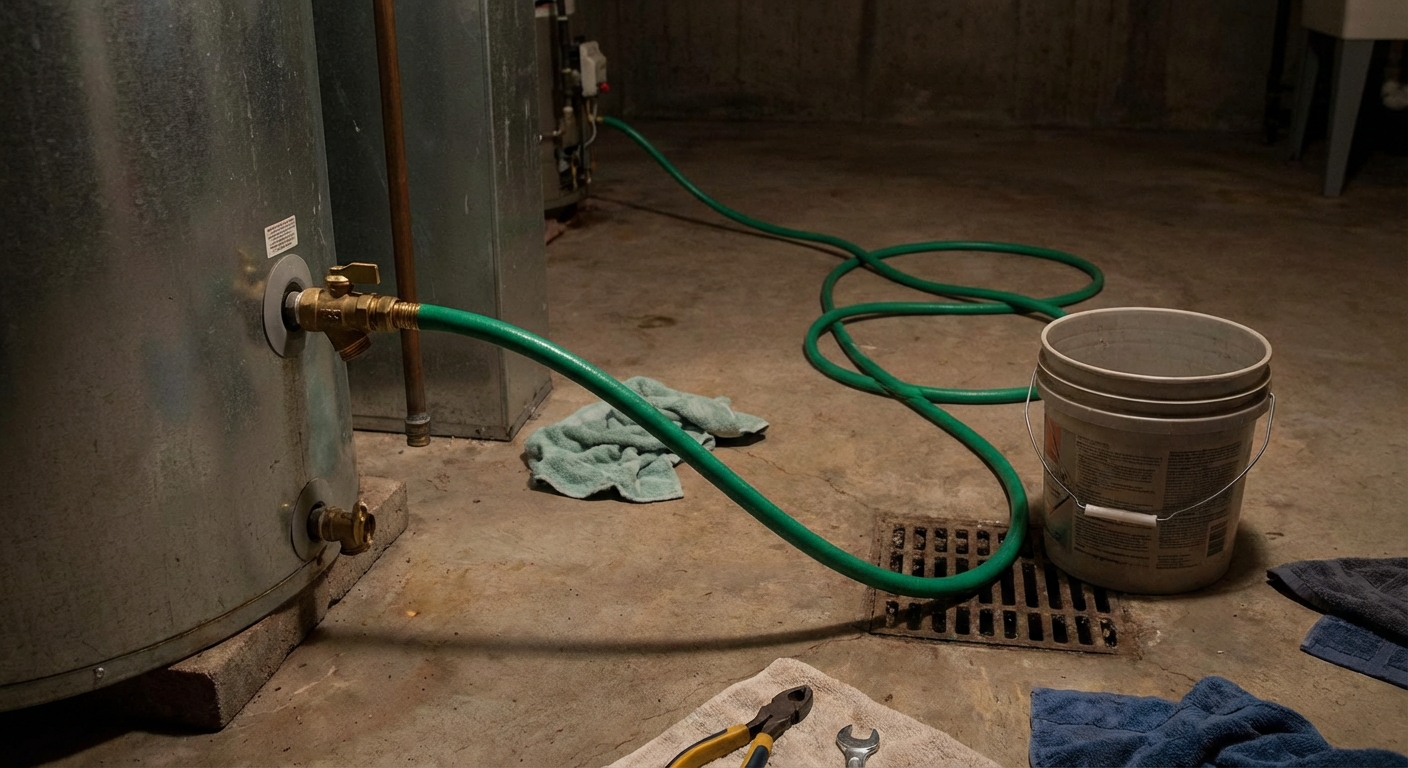
Fix 4: Flush sediment and scale
Sediment does not usually cause long wait times by itself, but it can reduce heater efficiency, lower delivered temperature, and make your hot water feel inconsistent. If your hot water arrives lukewarm or runs out quickly, sediment is worth dealing with.
For tank-style heaters, flushing can remove loose sediment. In hard-water areas, mineral scale can also build up on heating elements (electric) or in the tank and piping.
Signs sediment might be part of your problem
- Popping or rumbling noises from the tank when heating.
- Reduced hot water capacity compared to a year or two ago.
- Lukewarm water even when the wait is over.
Safety notes
- For gas heaters, follow manufacturer steps so you do not risk flame or venting issues.
- If the drain valve is old and crusty, forcing it can cause leaks. Replacing a plastic drain valve with a brass one is often money well spent.
- If you are not comfortable, this is an easy service call and usually not expensive.
Fix 5: Pipe size and wait time
Pipe size is a sneaky culprit because it is “invisible” behind walls. Larger pipes hold more water, and more water in the line means more cool water to purge before the hot arrives.
Here is the simple version: a 3/4-inch hot water trunk line can hold about 2x to 2.5x the water per foot compared to a 1/2-inch line (exact numbers vary by pipe type and internal diameter). That is great for supplying multiple fixtures, but if your far bathroom is fed by an oversized run, the wait can be longer than it needs to be.
What you can do about it
- Best-case: If you have accessible plumbing during a remodel, right-sizing certain branch runs (for example, keeping a larger trunk but using appropriately sized branches to single fixtures) can reduce volume and improve delivery time.
- Realistic retrofit: Most homeowners do not replace pipe just for wait time. In existing homes, recirculation or point-of-use heating usually gives more bang for the buck.
Bonus checks
Tankless activation and flow
If you have a whole-home tankless heater, remember two things: it needs a minimum flow to activate, and it has a short firing delay. If you are running a faucet at a trickle, it may take longer to get hot, or it may cycle warm and cool. Also, even a perfect tankless still has to push the cool water out of the pipes first.
Water heater temperature setting
If the heater is set low, you might interpret “not hot yet” as “taking forever.” Many households run around 120 F for safety and energy balance. Follow local guidance, and consider anti-scald devices if you increase temperature.
Partially closed valves
A valve that is not fully open can choke flow and make the wait feel longer. Check the shutoff at the heater and any accessible branch valves.
Mixing valves and tempering valves
Some homes use a tempering valve to blend very hot tank water (sometimes set higher for capacity) down to a safer temperature at the taps. If that valve is failing, clogged with scale, or set incorrectly, it can create lukewarm water and confusing symptoms.
Which fix should you try first?
If you are standing at the sink watching money swirl down the drain, here is how I would prioritize it on a normal homeowner budget.
- Step 1: Clean aerators and confirm valves are open if the issue is isolated to one fixture.
- Step 2: Insulate accessible hot water piping. Cheap, low risk, and it helps no matter what.
- Step 3: If you want faster delivery across the house, consider a recirculation pump with a timer or demand control.
- Step 4: If one far fixture is the pain point, add a point-of-use heater.
- Step 5: Flush the water heater if performance is declining, noisy, or inconsistent.
When to call a plumber
I am all for DIY, but there are a few moments where professional eyes are worth the service fee.
- You suspect a failing mixing valve, cross-connection, or complex valve issue.
- You have galvanized piping, chronic leaks, or signs of corrosion and restrictions.
- You want a dedicated recirculation return line added through finished walls.
- Your water heater is old and you are worried the drain valve will not survive a flush.
- You are changing heater settings, adding recirculation, or installing a new heater and you want it done to local code, especially for scald protection.
A quick habit that saves water today
Until you make a permanent fix, catch that “warming up” water in a bucket for plants or cleaning, or plug the sink and use it for rinsing. I started doing this during our early renovation years when every dollar mattered, and it is one of those small habits that still feels good even after the big projects are done.

About Marcus Vance
Content Creator @ Grit & Home
Marcus Vance is a lifelong DIY enthusiast and self-taught home renovator who has spent the last decade transforming a dilapidated 1970s ranch into his family's dream home. He specializes in budget-friendly carpentry, room-by-room renovations, and demystifying power tools for beginners. Through his writing, Marcus shares practical tutorials and hard-learned lessons to help homeowners tackle their own projects with confidence.