
🚨 In a DIY emergency or rush?
Skip the details and jump straight to our 30-second cheat sheet for the most crucial info.
Small courier. Big home questions.
Here is one I carry a lot: how do you walk into a hotel room, drop your bag, and not bring home a tiny hitchhiker with a talent for hiding?
The goal is not to become a forensic scientist in a lobby mirror. It is to do a focused visual inspection before you unpack, using the handful of places bed bugs most like to hang out: near where people sleep and sit, and along seams, edges, and cracks. Do it as soon as you arrive, before anyone sits down or spreads clothing around.
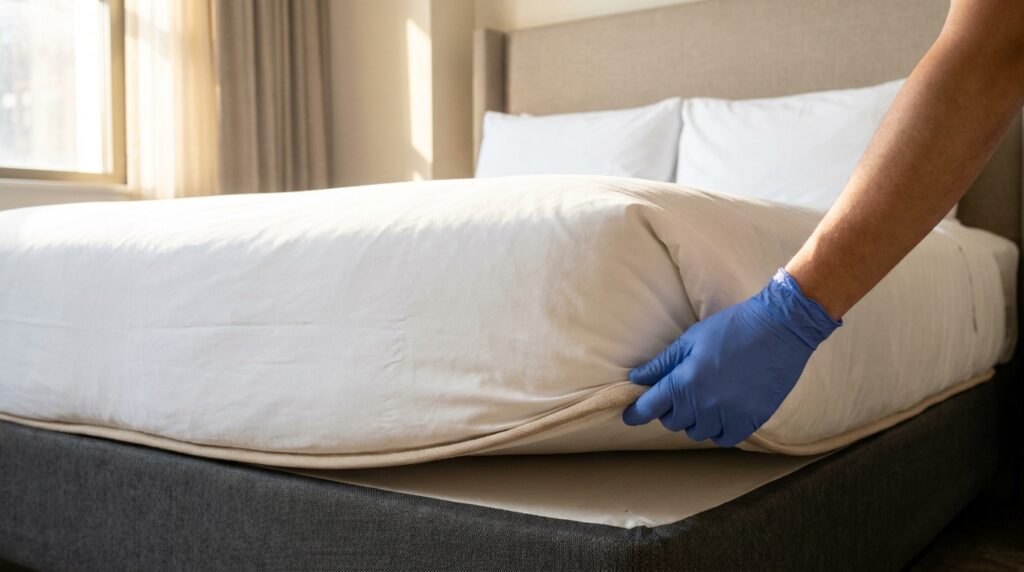
First, park your luggage in the right spot
Bed bugs do not fly, and they are not jumpers like fleas. They mainly crawl and hitchhike.
So your first move is simply to keep your bag away from beds and soft seating until the room passes your quick check.
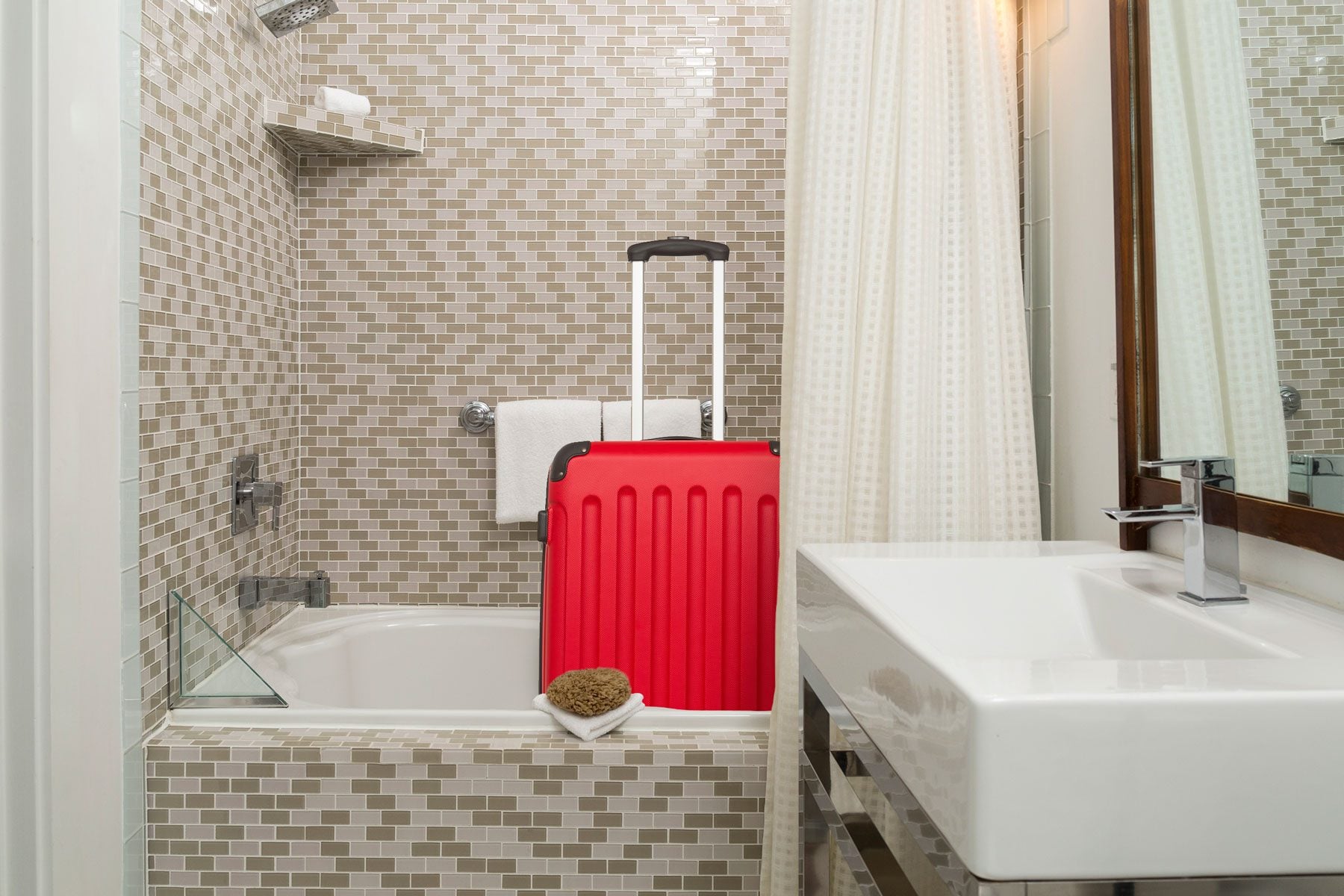
Lower-risk luggage parking options
- Bathroom tub or a hard tile floor area, away from towels, bathmats, and the wall.
- A hard-surfaced desk or table, if it is not upholstered and not pushed up against the bed.
- Luggage rack, but only after you inspect it.
Avoid these until you inspect
- On the bed, even “just for a second.”
- Upholstered chair, sofa, or padded bench.
- Closets with extra blankets piled on the floor.
What you need for a 5 minute check
You can do this with what you already have.
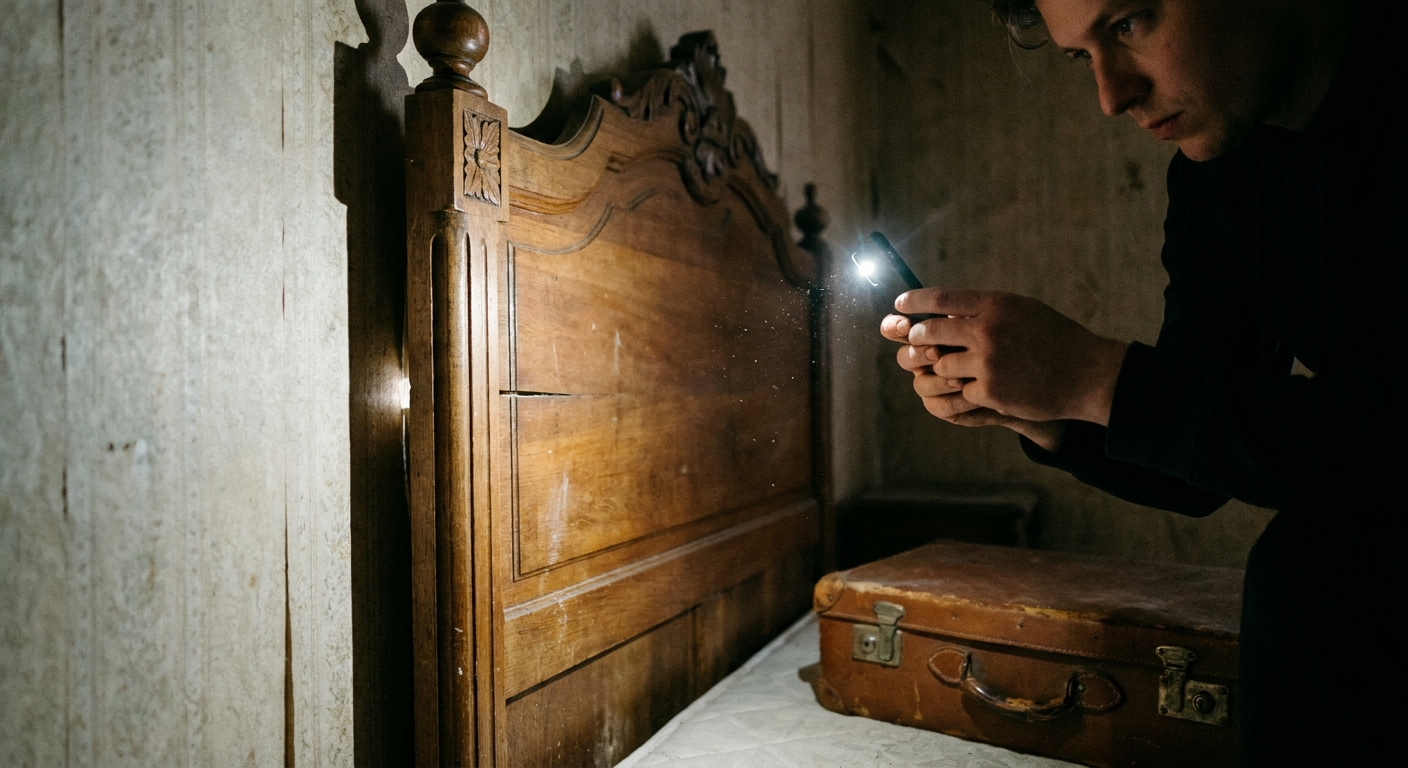
- Your phone flashlight
- A credit card or room key card to gently run along seams (do not tear fabric)
- A small plastic bag (optional) to isolate something you find, like a shed skin or a suspicious speck you want to show the front desk
If you brought a headlamp, congratulations. You are now the person everyone quietly respects in the hallway.
Step-by-step: the hotel room check
Work from the bed outward. Bed bugs prefer to stay close to where a host rests for long stretches. Your order of operations:
- Headboard and wall area
- Sheets and mattress seams
- Box spring and bed frame
- Nearby furniture and luggage rack
- Upholstery and window treatments
1) Start at the headboard
Headboards are a classic hiding zone because they have cracks, screw holes, and fabric edges, and they are right behind your head at night.
- Pull the bed slightly away from the wall if you can do it safely.
- Shine your light along the top and sides of the headboard.
- Check where the headboard meets the wall, especially seams, gaps, and mounting points.
What you are looking for: tiny dark specks like ink dots, shed skins, or a few pale bugs tucked into a crevice.
2) Check linens quickly, then go straight to seams
You do not need to strip the bed. Do a quick scan, then focus on the edges.
- Look at the top sheet near the pillows for small rust-colored spots.
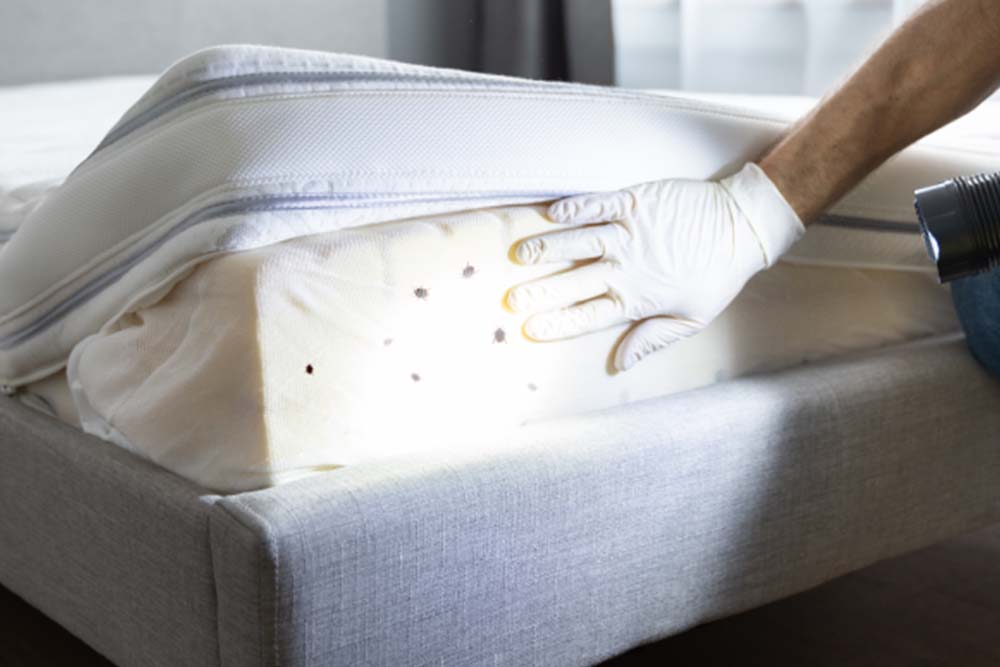
- Lift the corner of the fitted sheet and inspect the mattress piping and stitching.
- Use a card to gently run along the seam to expose anything tucked in. If fabric looks fragile, stop.
Prime zones: the head of the bed, corners, and any folded fabric where the fitted sheet grips the mattress.
Do not skip the box spring and frame
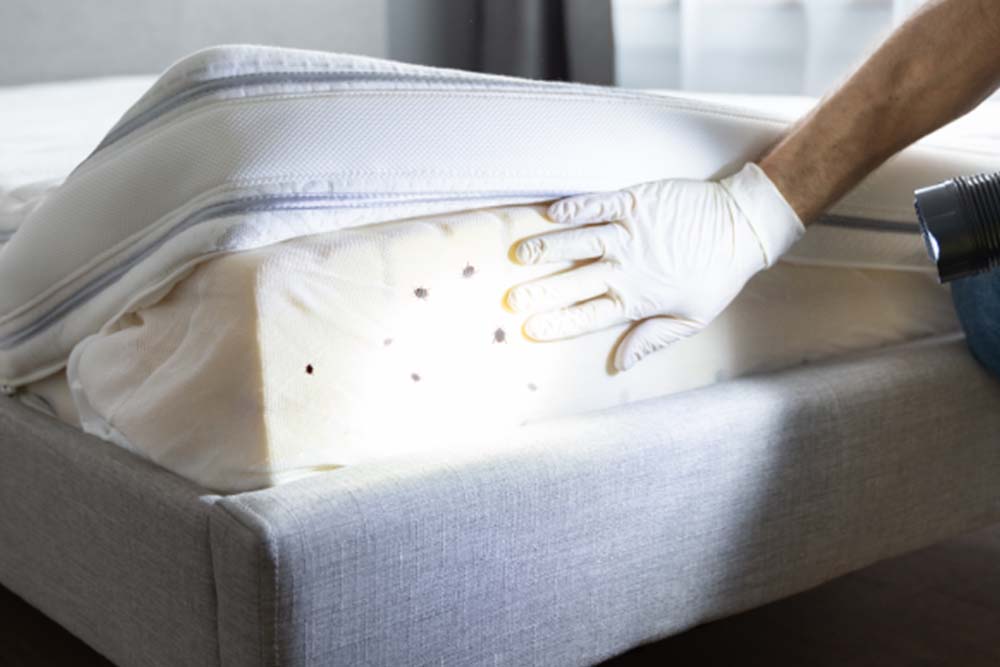
If the mattress looks clean, you are not done. Bed bugs can shelter in the box spring, bed frame joints, and any stapled fabric underneath.
3) Inspect the box spring edges
- Look along the top edge of the box spring where it meets the mattress.
- Check the corners and any torn or loose fabric.
- If you can, lift the dust ruffle and look at the side seams.
4) Look at bed frame contact points
- Shine light at joints, brackets, and screw holes.
- If there is a fabric-covered base, check the stapled edge where fabric meets frame.
Inspect the luggage rack
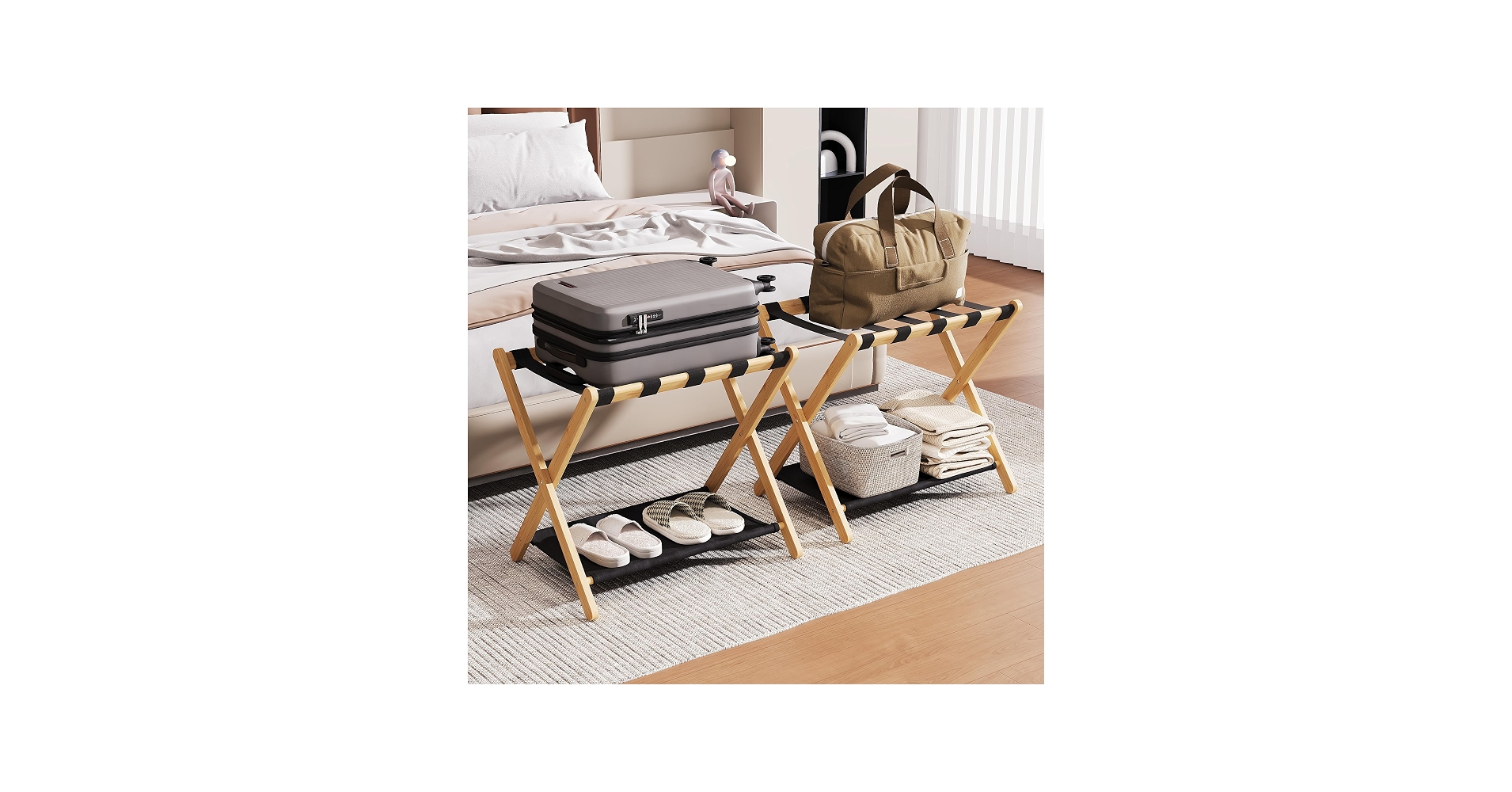
Luggage racks are great when they are clean. They are also a convenient bridge between your bag and the bed if pests are present.
5) Check the rack straps and joints
- Look closely at the webbing straps, especially where they fold around fasteners.
- Inspect wood joints and screw heads.
- If it is upholstered or padded, treat it like a chair and do a deeper check.
If you are unsure, keep your suitcase in the tub or on a hard surface instead.
Check soft seating
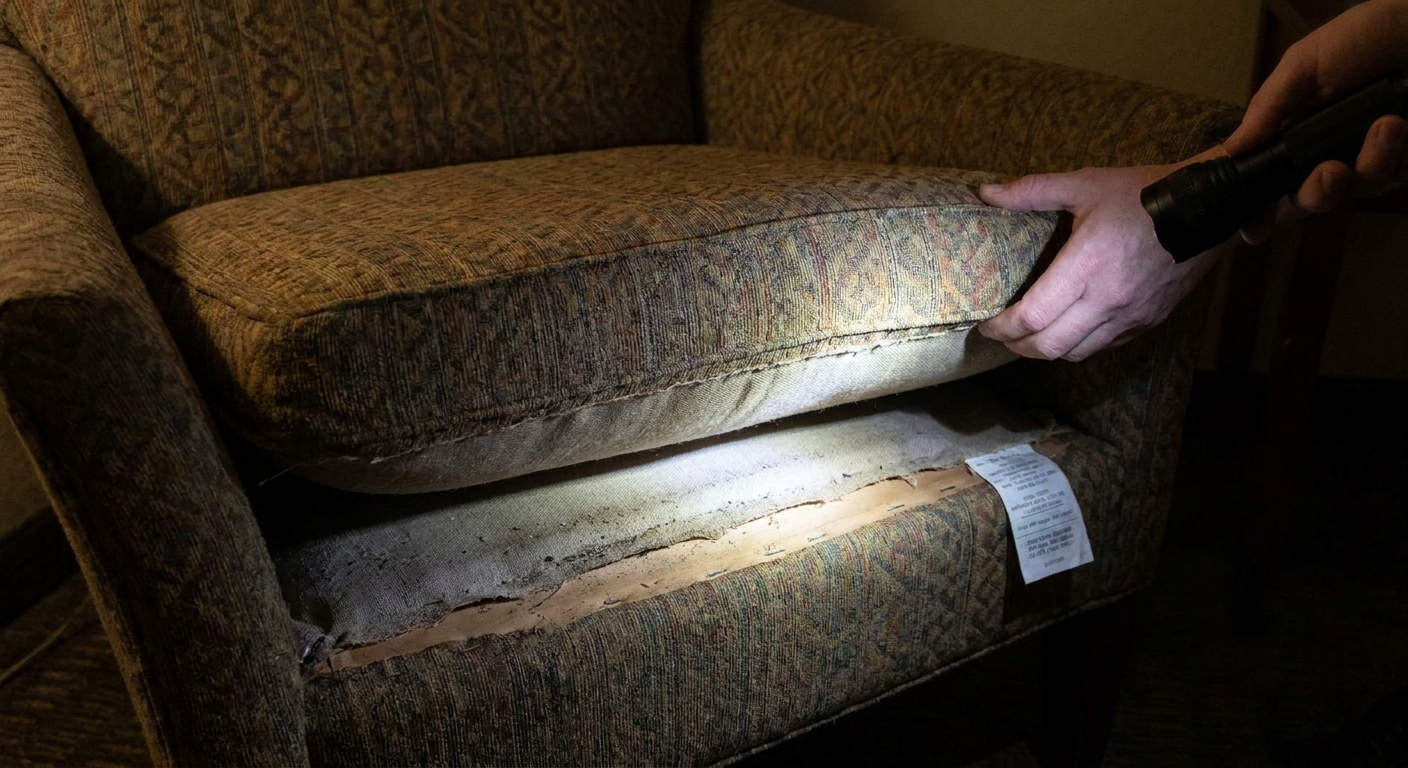
If you are going to sit there in your travel clothes, it is worth 30 seconds of checking.
6) Upholstered chair, sofa, or bench
- Inspect seams, welting, and piping.
- Look under removable cushions and along the zipper area if there is one.
- Check the underside edge where fabric is stapled to the frame.
Again, you are looking for dark spotting, shed skins, or live bugs tucked into folds.
Quick checks: curtains and corners
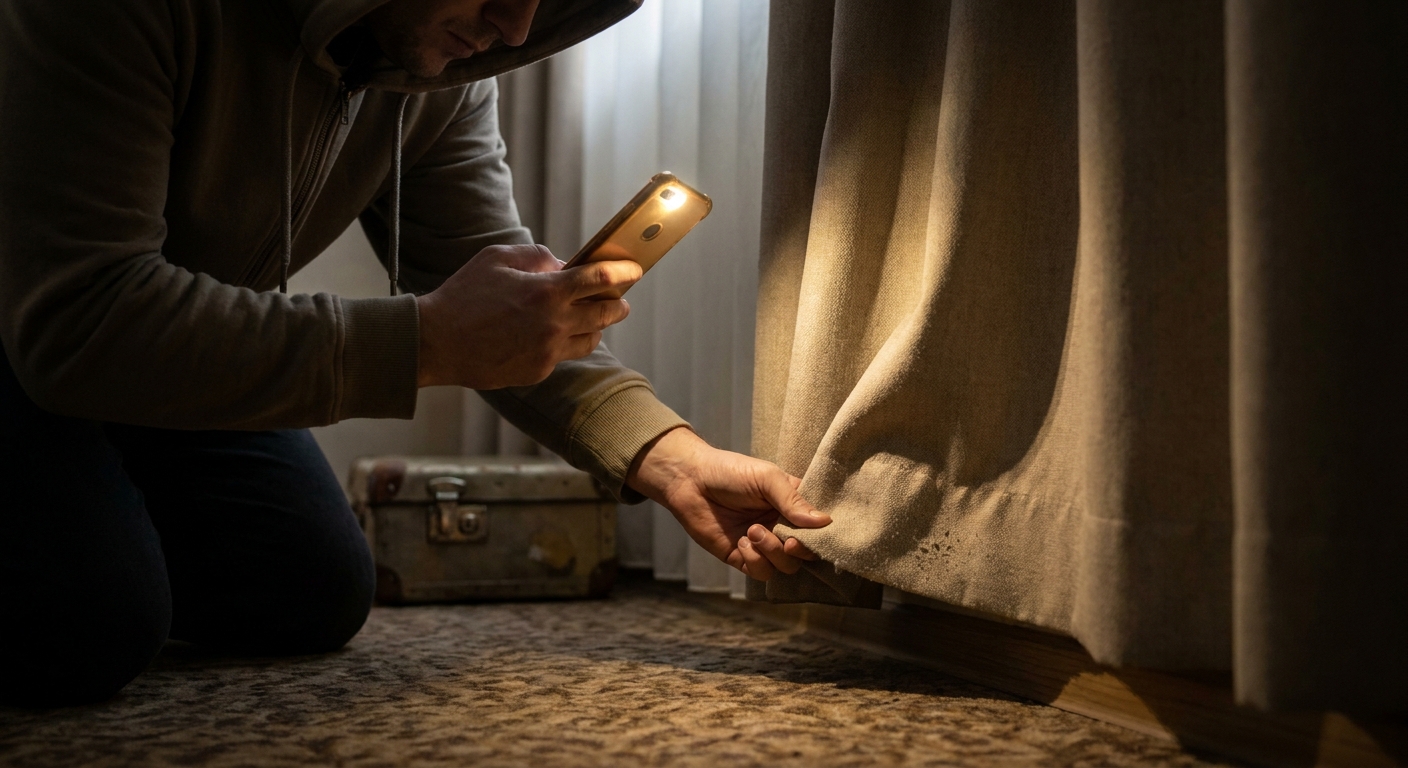
Bed bugs prefer staying close to people, but they can end up in nearby hiding spots, especially in heavier fabrics and edges.
7) Curtains and window area
- Check the pleats near the bottom and the hem.
- Look along the curtain header area if you can reach it easily.
- Glance at the window sill and corners near the bed.
8) Nightstands and baseboards near the bed
- Pull out the top drawer of the nightstand and shine light into the drawer corners.
- Look along the baseboard and carpet edge around the bed.
What bed bug evidence looks like
Hotels have plenty of random specks and scuffs. The trick is knowing what is meaningful.
- Live bugs: flat, oval, about the size of an apple seed when adult. Nymphs are smaller and paler.
- Dark spots: tiny black dots that can look like marker specks, often clustered along seams or corners.
- Shed skins: papery, tan, bug-shaped shells left behind as they grow.
- Eggs: very small, whitish, and tucked into cracks. Easy to miss.
Not proof by itself: a lone stain on a sheet, random lint, or a single dead insect far from the bed. Patterns and clusters are what raise my little blue eyebrow.
If you cannot confidently ID what you are seeing, treat it as suspicious, keep your items contained, and ask staff to take a look before you settle in.
If you find signs: what to do now
If your inspection turns up something suspicious, you have two jobs: limit what touches what, and get help from staff.
1) Do not unpack
- Keep luggage in the bathroom or on a hard surface.
- Do not spread clothes into drawers.
- Do not set items on upholstered benches, luggage carts, or the bed while you decide what to do.
2) Document what you see
- Take clear photos or a short video with your flashlight on.
- Note where you found it: “mattress seam at head of bed” is more helpful than “on the bed.”
3) Contact the front desk promptly
- Ask for a different room far from the original when possible, ideally not adjacent and not directly above or below.
- Request that staff inspect the new room before you move your things in.
If the hotel cannot offer a satisfactory option, consider relocating to a different property.
4) Treat your belongings like they were exposed
Even if you never saw a live bug, assume your suitcase may have been exposed in the same room and act accordingly when you get home. The goal is caution, not panic.
During your stay: keep it low risk
If your room passes inspection, keep it that way.
- Use the luggage rack and keep it a few feet from the bed if possible.
- Keep the suitcase closed when you are not actively using it.
- Avoid the floor for clothes piles, especially near the bed.
- Hang items rather than draping them over upholstered chairs.
When you get home: handle luggage carefully
This page stays in traveler mode, so we are not getting into home treatment. But you can still do smart, simple handling that reduces the odds of a stowaway wandering into your living space.
Unpack with a buffer zone
- Unpack in a place that is easy to inspect and clean, like a garage, entryway, laundry area, or a hard-floor space.
- Keep your suitcase off beds and upholstered furniture until you are confident it is clear.
Separate and contain
- Put worn and unworn clothing into separate bags as you unpack.
- Check pockets, cuffs, and seams on soft items that spent time near the bed.
Inspect the suitcase
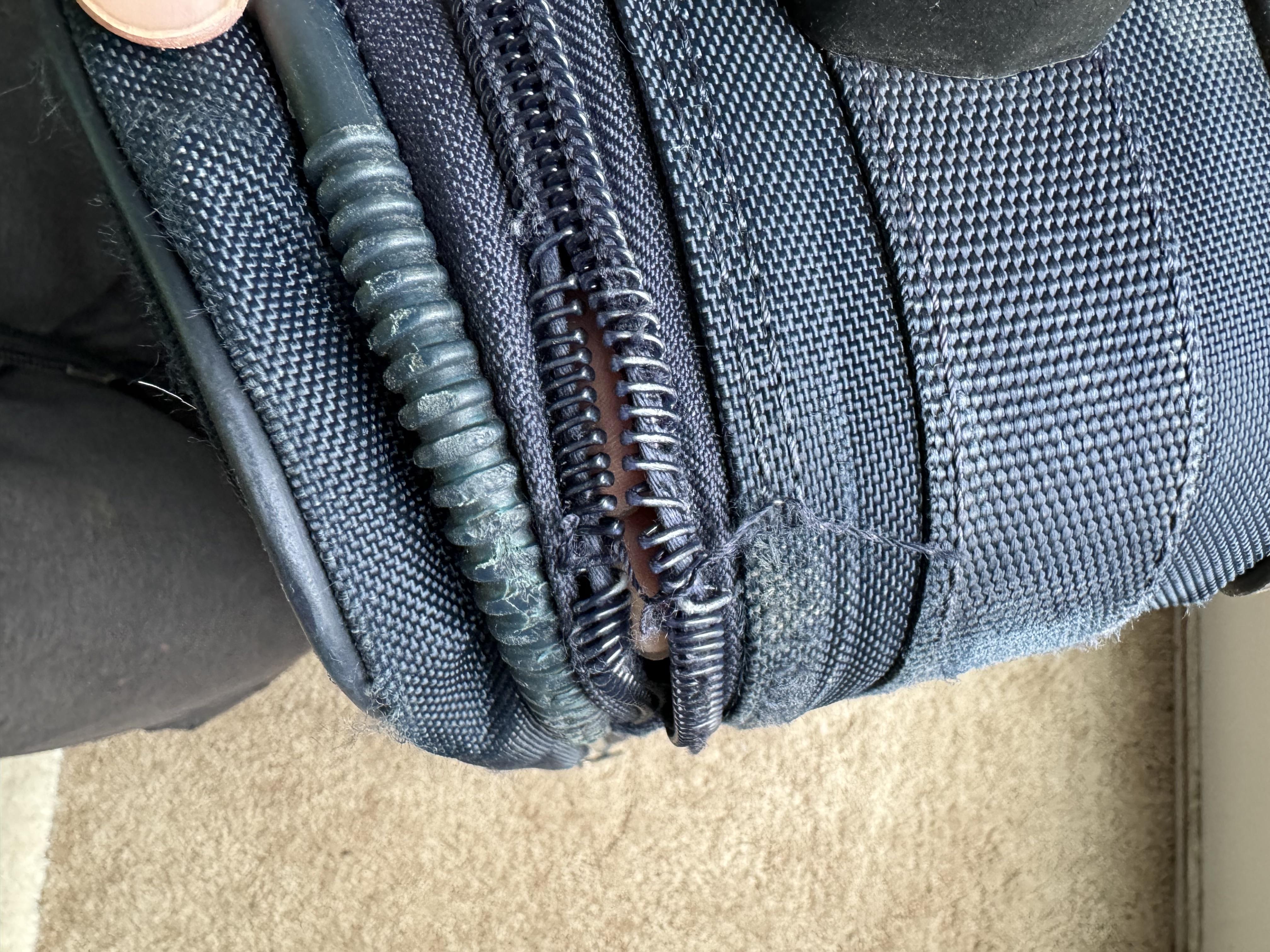
- Use a flashlight to look at zippers, seams, piping, and the area around wheels.
- Pay attention to folds, labels, and any hard-to-clean creases.
FAQ
Can I rely on a hotel room being clean or renovated?
Cleanliness and bed bugs are not the same thing. Bed bugs are pests, not a dirt issue. Even well-run hotels can have an occasional problem, which is why the quick check is worth doing anywhere.
Do bed bugs always leave bites?
No. Some people react strongly, others barely react at all, and bites can be confused with other causes. That is why visual inspection beats waiting to see what your skin does.
Should I use bed bug spray in my hotel room?
I would skip DIY spraying in a hotel room. If you suspect bed bugs, the best move is to involve staff and change rooms or properties rather than trying to treat the space yourself.
What is the fastest minimum check if I am exhausted?
Keep luggage in the bathroom, then check the headboard area and the mattress seams at the head of the bed. If you only have energy for two spots, those are the ones.
The 30-Second Cheat Sheet
Essential takeaways for: How to Check a Hotel Room for Bed Bugs
Do this before you unpack
- Park luggage in the bathroom tub or on a hard surface, not on the bed or upholstered chair.
- Use your phone flashlight. You are hunting seams, cracks, and corners.
5 minute inspection order
- Headboard: check edges, wall gap, mounting points.
- Mattress seams: lift sheet corners, inspect piping and stitching, especially at the head of the bed.
- Box spring and bed frame: look at corners, fabric seams, joints, screw holes.
- Luggage rack: inspect straps and joints before using it.
- Upholstered furniture and curtains: check seams, cushion edges, curtain hems.
What you are looking for
- Live bugs (adult about apple-seed size), tiny dark specks in clusters, shed skins, or eggs tucked in cracks.
If you find evidence
- Do not unpack. Keep bags isolated.
- Take photos with the flashlight on.
- Call the front desk and request a room far from the original, or switch properties.
When you get home
- Unpack in a buffer zone (garage, entryway, laundry area, hard floor).
- Keep suitcase off beds and sofas until inspected.
- Inspect the suitcase: zippers, seams, piping, wheel area.
💡 Tip: Scroll up to read the full article for detailed, step-by-step instructions.
⬆️ Back to top
About Grit
Content Creator @ Grit & Home
Grit is Grit & Home’s little blue clay courier, delivering big questions about the place you call home. Expect practical ideas, a raised eyebrow, and a satchel full of curiosity.