
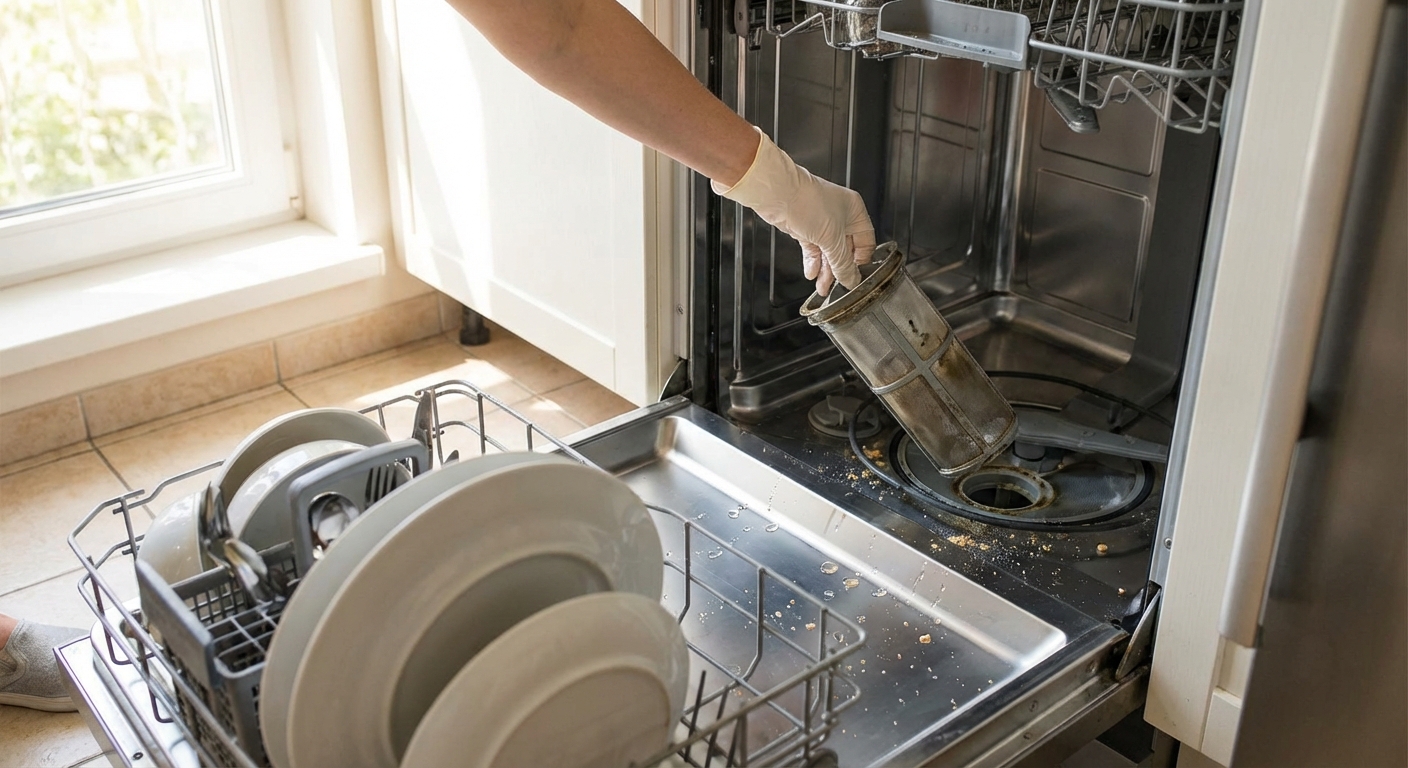
If your dishwasher smells like a swamp or your glasses come out cloudy, you are not alone. Dishwashers do a gross job in a warm, wet box, and eventually that gunk wins unless we give it a reset. The good news is a proper deep clean is mostly simple: clean the filter, open up the spray arms, scrub the seals, then run two separate hot cycles (vinegar first, baking soda second) to help knock out film and odors.
I learned this the hard way after thinking my detergent “suddenly stopped working.” It did not. My filter was basically a tiny compost bin.
Time: About 20 to 40 minutes hands-on, plus cycle time.
What you need
- Dish soap
- Old toothbrush or small nylon brush
- Microfiber cloths or paper towels
- White vinegar
- Baking soda
- Wooden toothpick or soft pick (for spray arm holes)
- Towel and a small bowl (for drips and parts)
Avoid: steel wool on plastic parts, harsh drain cleaners, and bleach unless your manual explicitly approves it. Bleach can pit stainless and damage some rubber parts if it is too strong or used too often.
Before you start
1) Clear it out
Remove dishes, then pull out the bottom rack so you can reach the filter and sump area easily.
2) Check your manual
Filter and spray arm removal varies a lot by brand. A quick glance at your manual can save you from snapping a plastic clip you did not know existed.
3) Kill the power if you will be reaching deep
If your model has sharp edges or you are going to remove spray arms, I like to flip the dishwasher breaker off. It is not strictly required for basic filter cleaning, but it is a smart habit in a wet appliance.
Step 1: Clean the filter
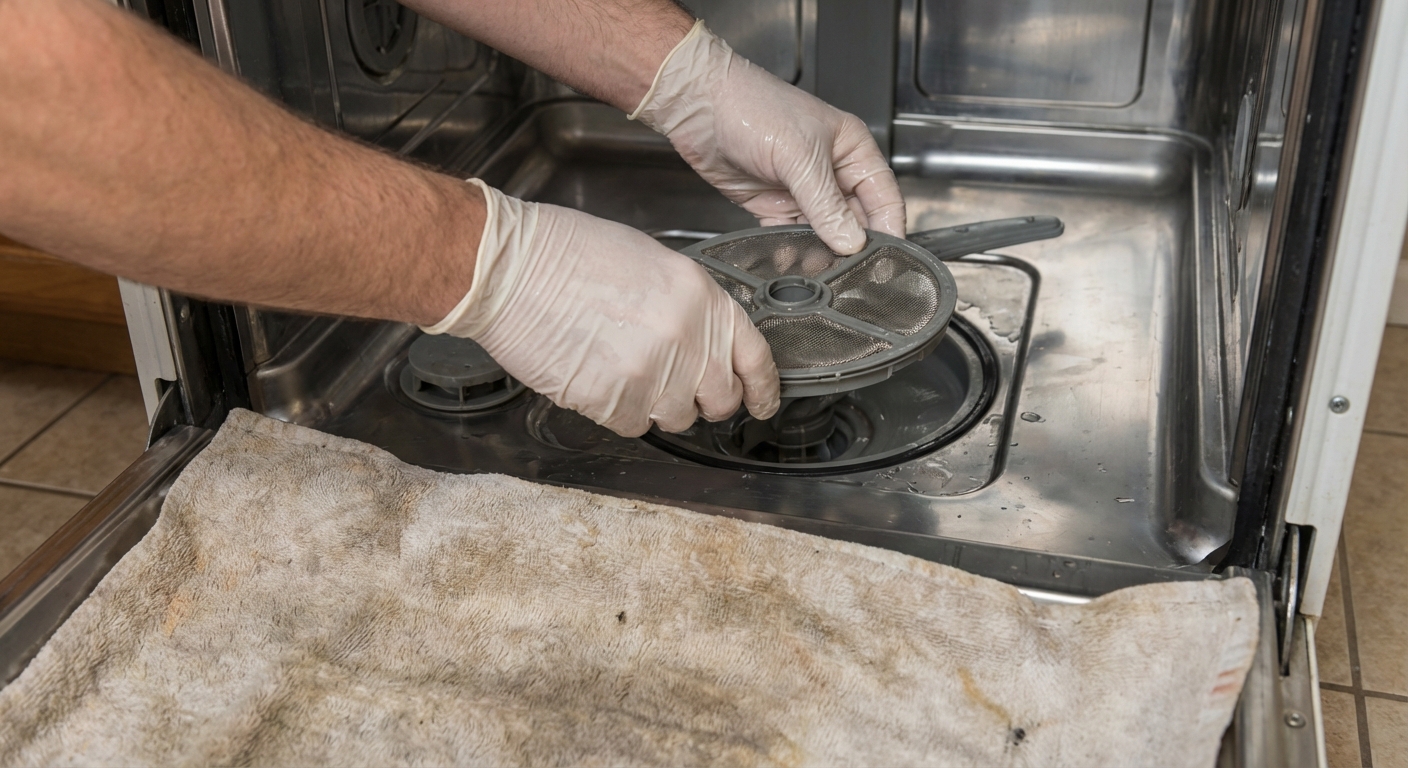
Most modern dishwashers have a filter at the bottom, typically a round twist-lock assembly. If you have never cleaned it, this is the main event.
How to do it
- Twist the filter counterclockwise and lift it out.
- Rinse under hot water to remove loose debris.
- Scrub with a toothbrush and a drop of dish soap. Focus on the mesh and seams where grease hides.
- If it is slimy, soak it in hot water with a splash of vinegar for 10 to 15 minutes, then scrub again.
- Rinse well and set it aside.
Quick check: With the filter out, look for broken glass, labels, bone fragments, or twist ties in the sump area. Wipe out any muck you can reach with a damp cloth.
Step 2: Clean the sump
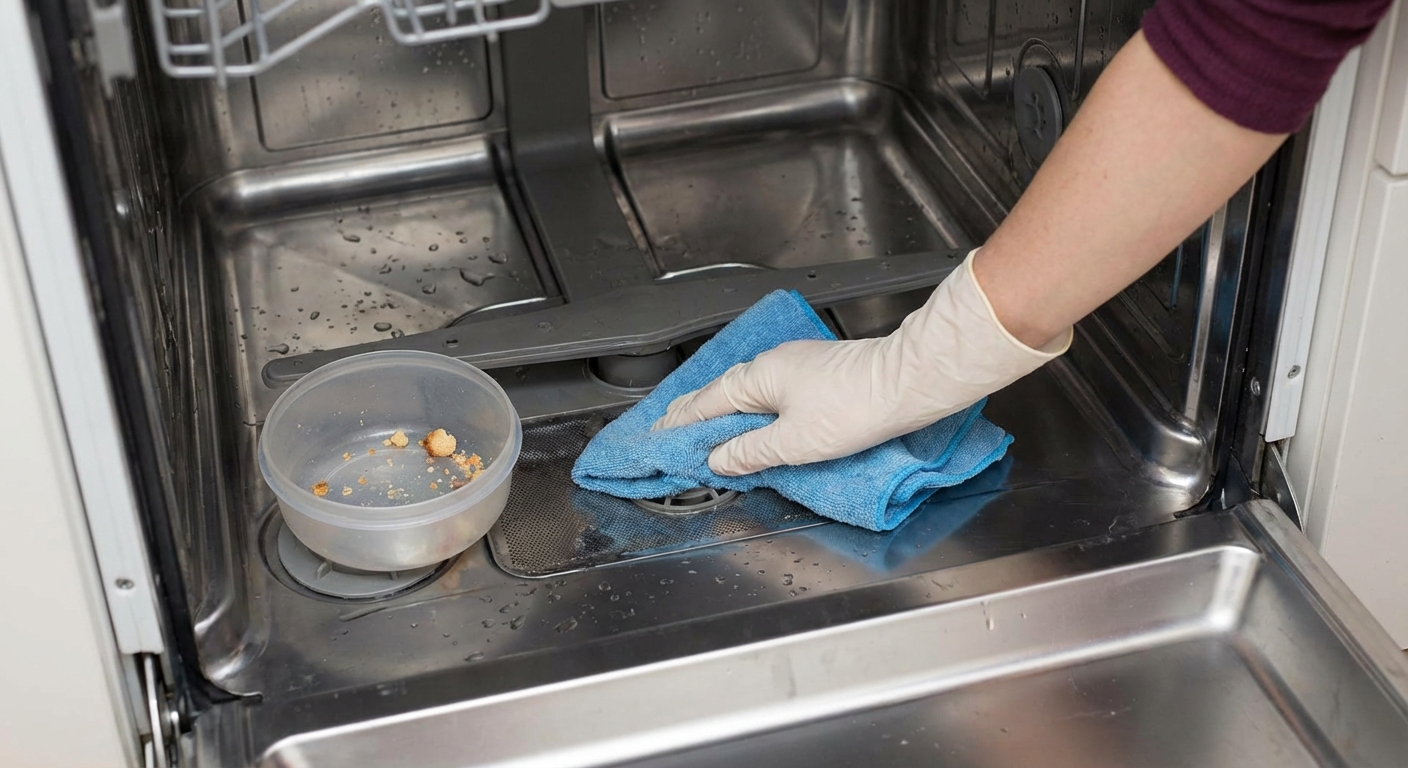
This is the part that stops the “dirty dishwater smell.” The sump area collects grease, food grit, and detergent residue.
- Wipe the basin, corners, and the flat ledge where the filter sits.
- Use a toothbrush to get into creases.
- If there is a small amount of water sitting below the filter area, that is often normal. If there is a lot of smelly water, jump to the troubleshooting section on draining.
Step 3: Rinse the spray arms
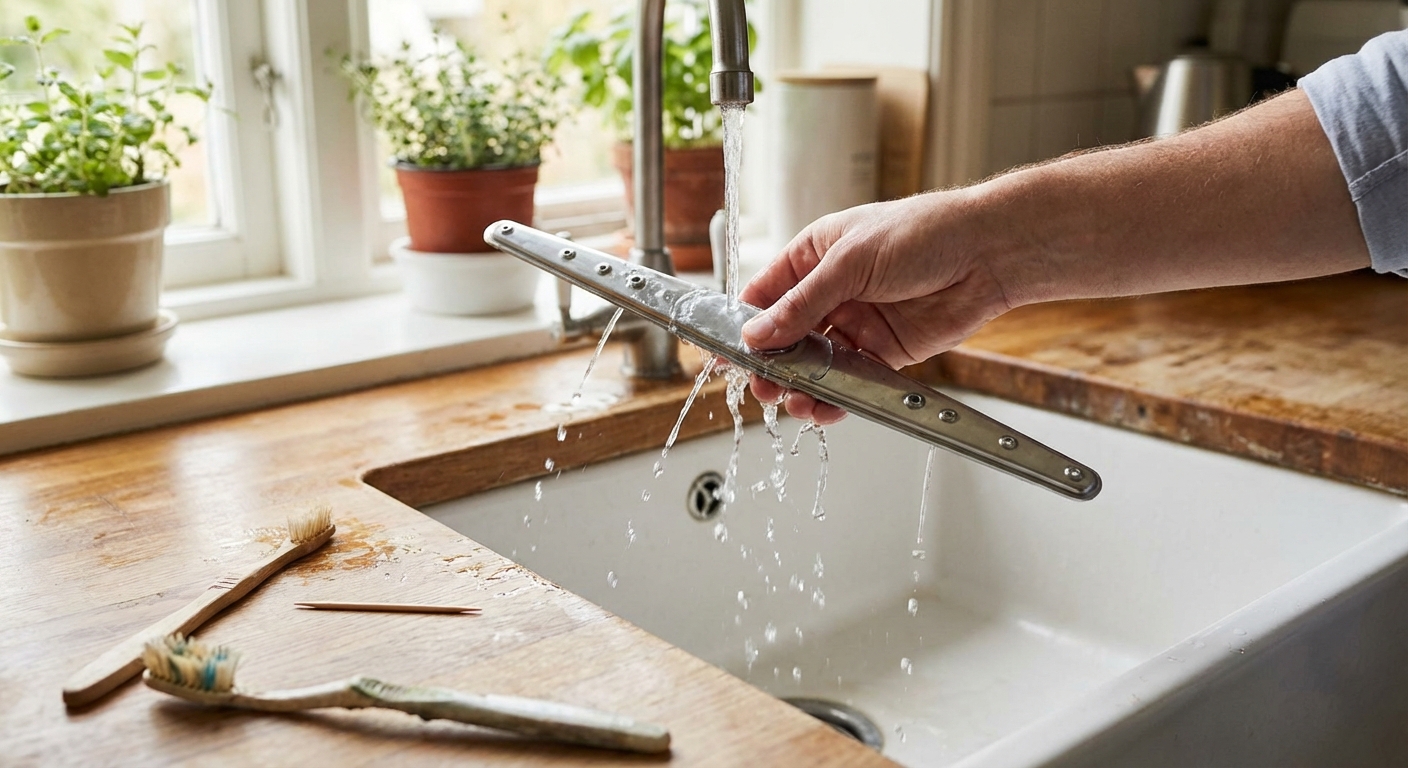
Spray arm holes clog with mineral scale and tiny food bits. When that happens, you get gritty plates, soap stuck on cups, and weak cleaning overall.
How to do it
- Check if your spray arms pop off, unscrew, or lock in place. Many lift off with a gentle tug, others use a plastic nut.
- Rinse them under warm water.
- Use a wooden toothpick to clear individual holes. Do not use metal that can gouge plastic.
- Shake out debris and rinse again.
- Look through the center hub for blockages and flush it until it runs clear.
My mistake: I once “cleaned” a spray arm by poking holes with a small screw. It worked, but it also enlarged a couple of holes and made the arm spray weird. Stick with wood or a soft pick.
Step 4: Scrub the gasket
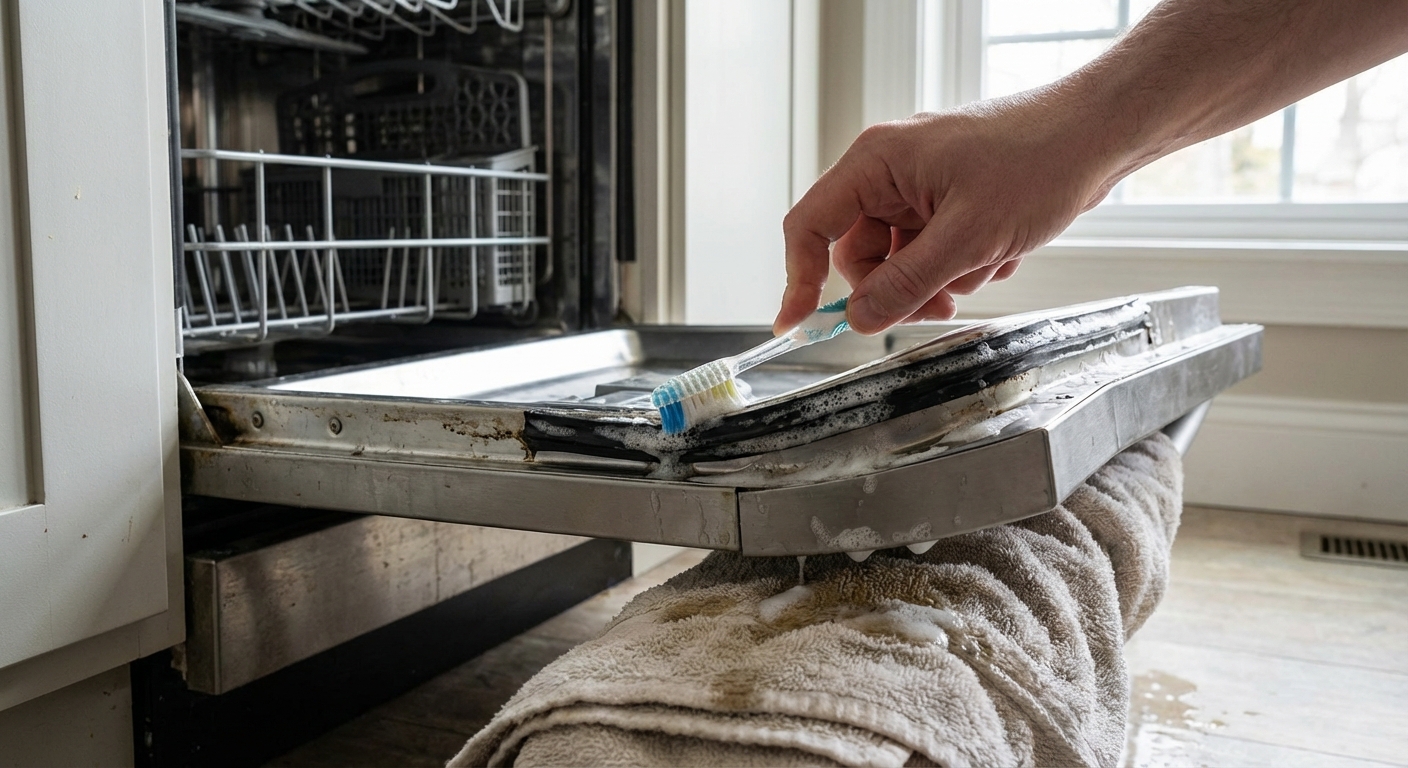
The rubber gasket around the door is a magnet for slime, grease, and mildew. It is also where a lot of odor lives.
- Dip a toothbrush in warm, soapy water and scrub the gasket all the way around.
- Wipe clean with a damp cloth, then dry it.
- Do the same along the bottom edge of the door and the inner lip of the tub where the door closes.
Tip: If you see black spots that look like mold, start with hot soapy water first. If you need extra punch, use a small amount of hydrogen peroxide on a cloth and wipe, then rinse. Avoid mixing cleaners.
Step 5: Wipe the dispenser
Gummed-up detergent doors and rinse-aid caps can cause poor washing and residue.
- Wipe inside the detergent cup and around the hinge area.
- Check the dispenser door for sticky movement and clean the edges.
- If you use rinse aid, wipe the cap area and clean any crusty buildup.
Step 6: Wipe the outside
This is optional, but it is a nice finish. Dishwasher handles and buttons collect a shocking amount of kitchen grease.
- Wipe the control panel and handle with a damp microfiber cloth.
- For stainless fronts, wipe with the grain and dry to prevent streaks.
Step 7: Vinegar cycle
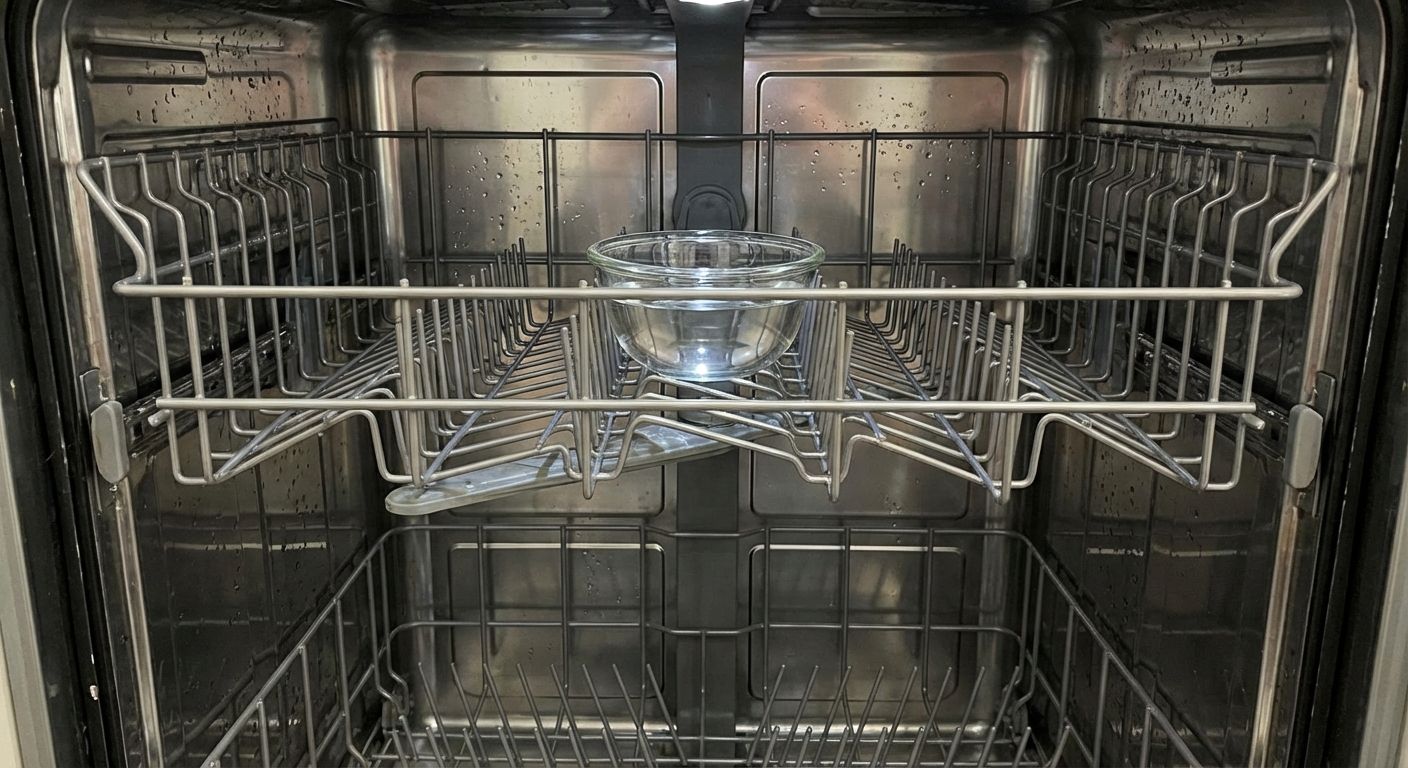
Vinegar is best at breaking up mineral film and freshening the tub. It is not a magic degreaser, but it helps once you have already removed the physical gunk.
How to do it
- Put the clean filter back in and reinstall spray arms and racks.
- Place a dishwasher-safe bowl or measuring cup with 1 to 2 cups of white vinegar on the top rack.
- Run the hottest cycle you have that is meant for an empty machine, like “Machine Clean” or “Sanitize” if your dishwasher includes it. Otherwise, use the hottest normal cycle.
- Optional: Skip heated dry if you notice lingering odors after cycles, or if your manual recommends air-drying.
Note: Do not pour vinegar into the rinse aid compartment. Just use a bowl on the rack.
Also: Do not run vinegar and baking soda in the same cycle. They neutralize each other, and you lose the point of doing either one.
Step 8: Baking soda cycle
Baking soda is great for odor control and gives the tub a clean, neutral finish.
- After the vinegar cycle is done, sprinkle 1 cup of baking soda across the bottom of the dishwasher.
- Run a short hot cycle (or rinse cycle if yours runs hot enough).
If you are battling serious smells, repeat this step one more time, but do not do it every week. Monthly is plenty for most homes.
Troubleshooting
Cloudy glasses
Cloudiness usually comes from one of two things: hard water mineral deposits or glass etching.
- Hard water film (most common): Glasses look hazy, but feel smooth. Fix it by using rinse aid, reducing detergent a bit, and running the vinegar cycle monthly. Consider a dishwasher cleaner designed for hard water if your area is brutal.
- Etching: Glasses look cloudy and may feel slightly rough or “frosted.” This is permanent damage. Prevent it by using less detergent, skipping extra hot cycles for delicate glass, and avoiding pre-rinsing if your detergent is enzyme-based (it needs food soil to work properly).
Bad smells that come back fast
- Filter not seated: Make sure the filter is locked in. A loose filter lets debris recirculate.
- Drain or disposal issue: If your dishwasher connects to a garbage disposal, run the disposal and flush it with water. A stinky disposal can make the dishwasher smell bad.
- Blocked air gap (if you have one): Some setups have a small air gap fitting by the sink. If it is clogged, it can trap nasty water. Pop the cap and clean it out.
- Dirty door gasket: Scrub again, especially the bottom corners.
- Low water temperature: If your water is not hot enough, grease lingers. Aim for around 120°F to 140°F at the tap, or follow your manual. Run the hot water at the sink for 30 seconds before starting the dishwasher.
White residue or gritty film
- Too much detergent, especially in soft water.
- Hard water minerals. Use rinse aid and a detergent formulated for hard water.
- Clogged spray arms. Recheck holes and the center hub.
Dishes still dirty
- Loading: Make sure nothing blocks the spray arms from spinning. Tall cutting boards and sheet pans are common offenders.
- Water supply: Ensure the shutoff valve under the sink is fully open.
- Detergent: Old or clumpy detergent loses power. Pods can struggle in very short cycles because they may not fully dissolve in time. Try a fresh powder or gel and use the right amount.
- Heating: If water is not heating, cleaning drops. If you notice consistently cool cycles, it may be a heater or thermostat problem and worth a service call.
Standing water
A small amount can be normal, but a pool of smelly water is not.
- Clean the filter and sump again and look for labels or food blocking the intake.
- Check for a kinked or clogged drain hose under the sink.
- If your drain hose runs through a high loop or air gap, make sure it is not sagging low. A low spot can trap water.
How often to deep clean
- Weekly: Quick check for visible debris, wipe the door edge if you see slime.
- Monthly: Clean the filter, wipe the gasket, run a vinegar cycle.
- Every 3 months: Full deep clean including spray arm holes and baking soda cycle.
If you have hard water, heavy use, or lots of starchy foods (pasta, rice), bump the schedule up. Those are the perfect ingredients for buildup.
Hard water note: If your dishwasher has a built-in water softener (common in some regions), check whether it needs dishwasher salt or an adjustment. It makes a bigger difference than most people expect.
Keep it fresh
These are the small things that keep you from needing a big rescue clean.
- Scrape, do not pre-rinse. Just knock off chunks.
- Run hot water at the sink before starting the cycle.
- Leave the door cracked open for 30 minutes after a load to let moisture escape.
- Use rinse aid if you have hard water or cloudy glass issues.
When to call a pro
Cleaning fixes most smell and performance problems, but not all of them. If you have persistent standing water, leaking at the door even with a clean gasket, burning smells, or repeated error codes, it is time to check your manual for diagnostics or bring in a pro. A $150 service visit can beat flooding your kitchen, ask me how I know.

About Marcus Vance
Content Creator @ Grit & Home
Marcus Vance is a lifelong DIY enthusiast and self-taught home renovator who has spent the last decade transforming a dilapidated 1970s ranch into his family's dream home. He specializes in budget-friendly carpentry, room-by-room renovations, and demystifying power tools for beginners. Through his writing, Marcus shares practical tutorials and hard-learned lessons to help homeowners tackle their own projects with confidence.