
Before you start: pick the right fix
Window screens are one of those “tiny problem, big annoyance” repairs. The good news is you have two solid options, and neither requires fancy skills.
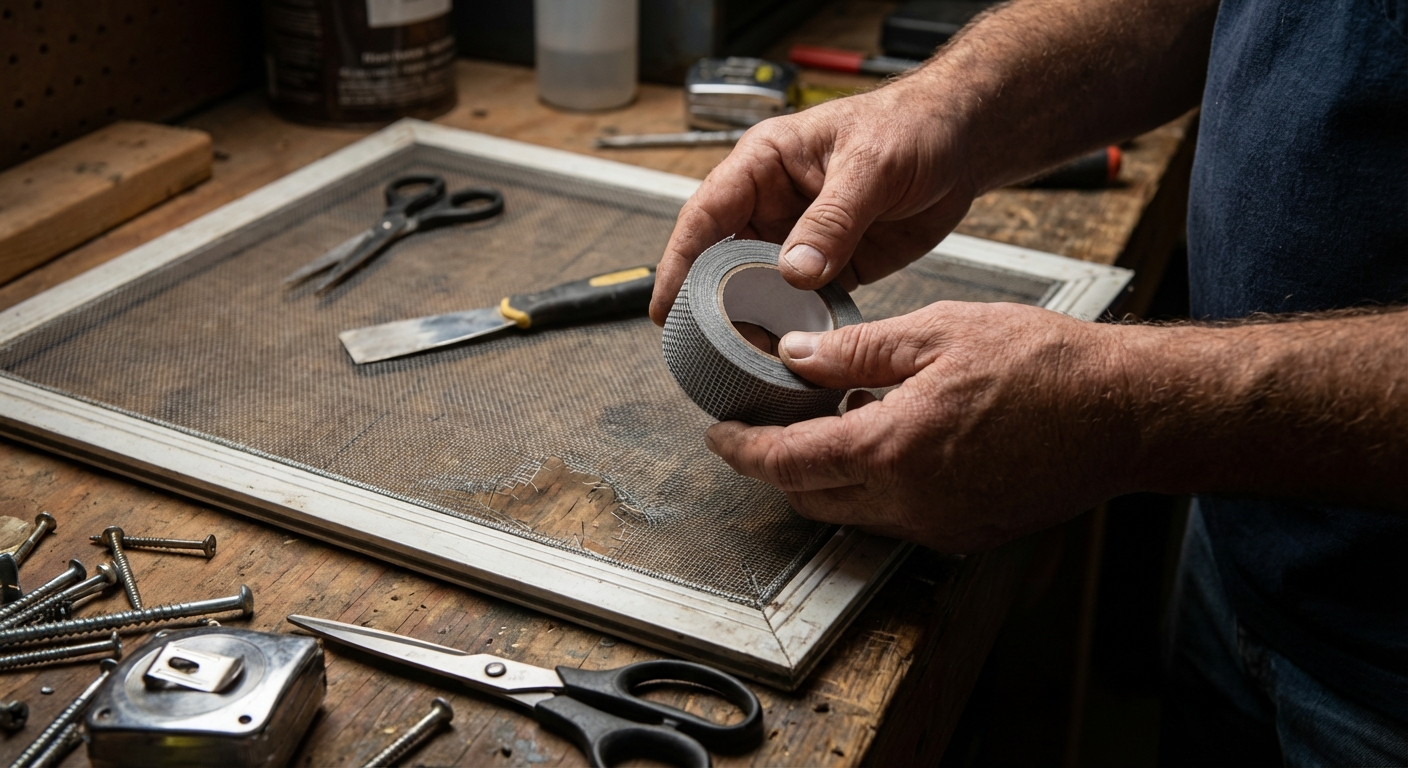
- Patch it (screen repair tape or an adhesive patch): best for small holes, pinholes, or short tears.
- Replace the mesh (full rescreen): best for large rips, brittle mesh, or damage near the frame edges.
If the screen mesh feels crunchy, sun-baked, or keeps tearing when you touch it, skip the patch and go straight to a full rescreen. I have tried to “save” old mesh before and ended up doing the job twice.
Tools and materials
For a quick patch
- Screen repair tape or adhesive screen patches
- Scissors or a utility knife
- Rubbing alcohol and a clean rag (for prep)
For replacing the entire screen mesh
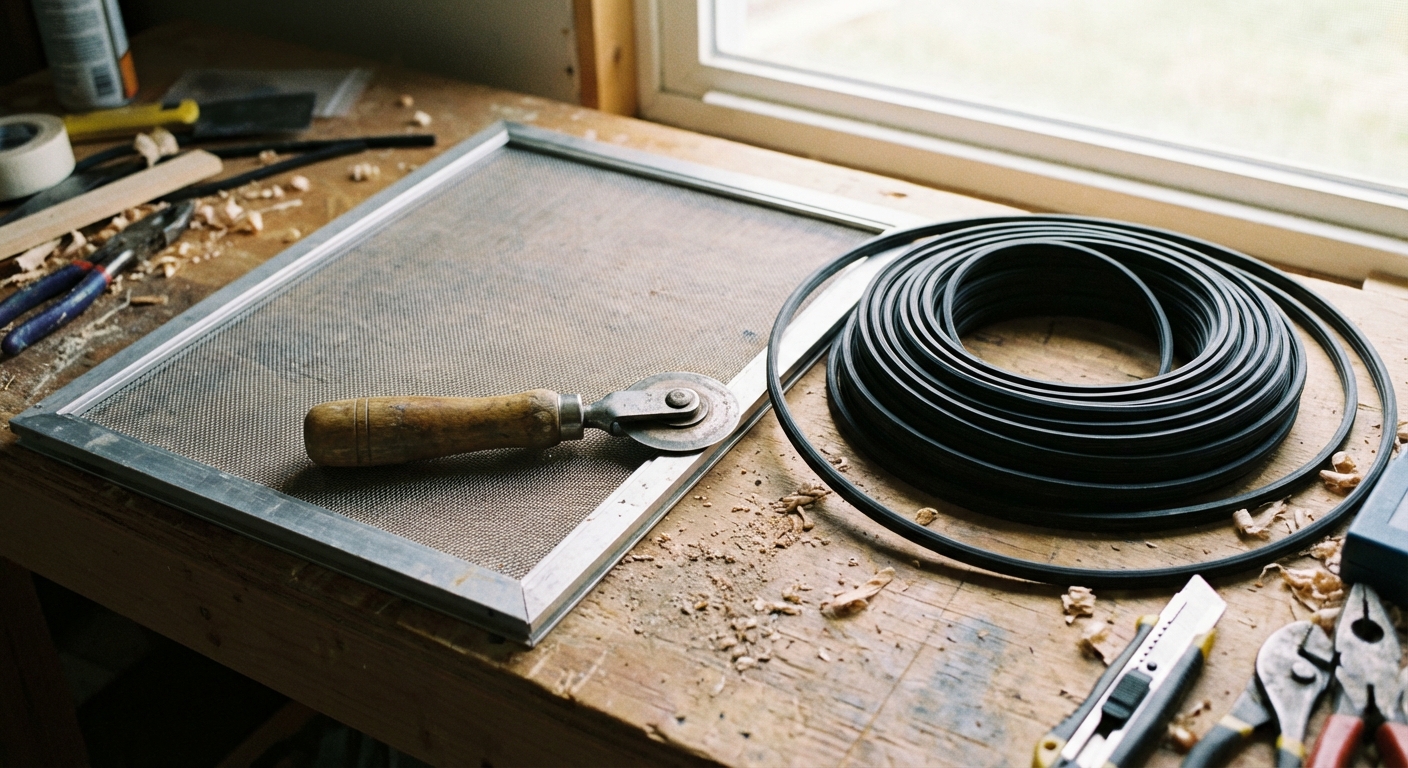
- Replacement screen mesh (fiberglass or aluminum)
- Screen spline (rubber cord that locks the mesh in the frame)
- Spline roller (the essential tool for this job)
- Flathead screwdriver or pick (to pry out old spline)
- Utility knife with a sharp blade
- Measuring tape
- Optional: clamps or painter’s tape (to hold mesh in place)
Quick spline tip: Bring a short piece of your old spline to the hardware store to match the diameter. Getting the size right prevents the “spline keeps popping out” headache later.
Method 1: Patch small holes with repair tape or adhesive patches
This is the quickest win. It works great for tiny punctures (pets, branches, a slipped screwdriver) and small tears where the mesh is still in decent shape.
Step 1: Remove the screen and clean the area
- Pop the screen out of the window frame and set it on a flat surface.
- Wipe both sides around the hole with rubbing alcohol. Let it dry.
Step 2: Patch it (two options)
Option A: Screen repair tape
- Cut tape large enough to overlap the hole by at least 1 inch on all sides.
- Apply tape to one side of the screen first, pressing it into the mesh.
- For best strength, apply a second piece on the other side, lining it up with the first.
Option B: Adhesive patch
- Trim the patch to size if needed (leave at least a 1 inch overlap).
- Peel and stick the patch on the screen, pressing firmly.
- If the patch has a stiff edge, press it down into the mesh so it sits flatter.
Step 3: Reinstall and check
- Hold the screen up to the light and make sure the patch is fully adhered.
- Reinstall the screen and confirm the frame still sits flat and snug.
Patch tips that keep it from peeling
- Clean first. Dust and pollen are basically tape repellant.
- Warm helps. If it is cold, bring the screen inside for 20 minutes so the adhesive sticks better.
- Overlap matters. Tiny patches fail because there is not enough grip area.
Method 2: Replace the full screen mesh in the frame
This looks “pro” when you are done, and it is often easier than trying to make a patch look perfect. Once you do one screen, the next one takes half the time.
Step 1: Remove the old spline and mesh
- Lay the screen frame flat on a table or workbench.
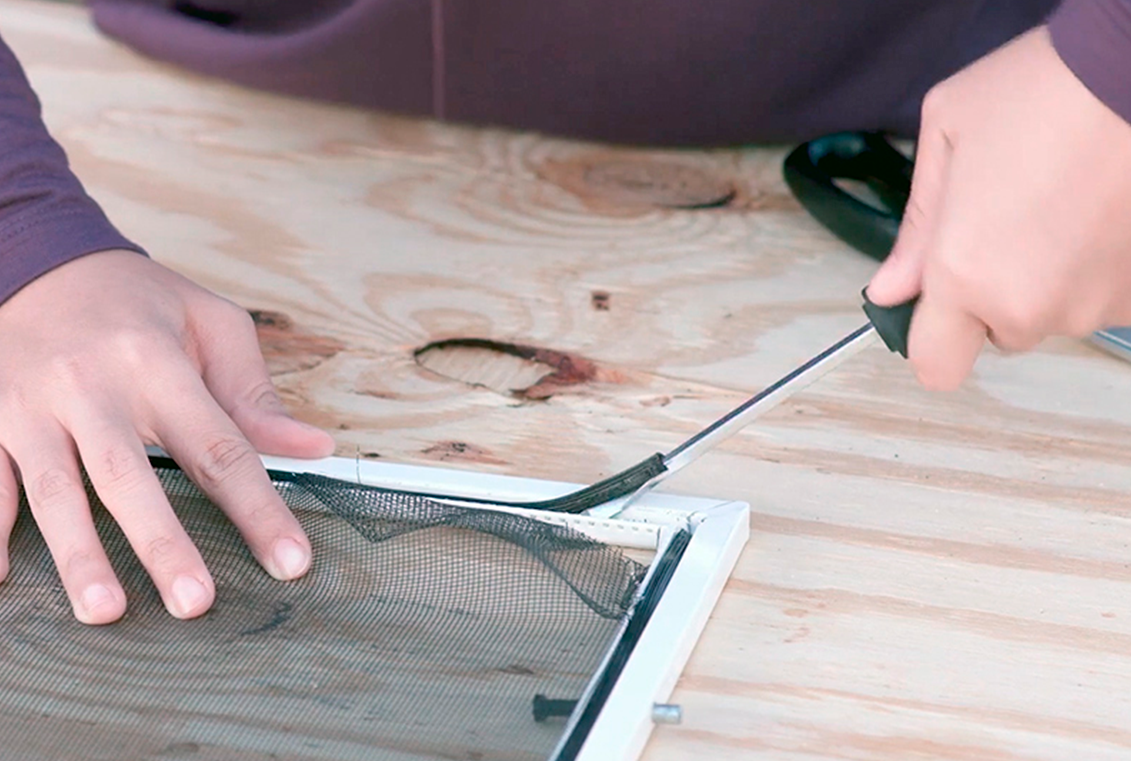
- Use a flathead screwdriver or pick to lift one end of the spline.
- Pull the spline out of the groove all the way around.
- Remove and discard the old mesh.
Thrifty tip: If the spline is soft, flexible, and not cracked, you can sometimes reuse it. But spline is cheap, and new spline often makes the job smoother.
Step 2: Measure and cut the new mesh
- Roll the new screen over the frame.
- Cut it so it overhangs the frame by 1 to 2 inches on all sides.
Step 3: Start the spline and set the mesh
- Place the mesh over the frame, keeping the weave straight.
- If your roller has two wheels, you can use the convex wheel to gently press the mesh into the groove first. This is especially helpful with aluminum screen.
- Push the spline into the groove along one short side by hand to “start” it.
- Use the concave (grooved) wheel of the spline roller to press the spline into the groove, locking the mesh as you go.
Step 4: Work around the frame without making it wavy
- Move to the opposite side next and repeat, keeping gentle tension on the mesh.
- Do the two remaining sides last.
- At corners, use your fingers to keep the mesh flat while the roller seats the spline.
The most common beginner mistake is pulling the mesh too tight. That can bow the frame inward, especially on larger screens. Aim for flat and firm, not drum-tight.
Step 5: Trim the excess mesh
- With the spline fully seated, run a sharp utility knife along the outside edge of the spline groove.
- Go slow and keep the blade angled away from the spline so you do not nick it.
Step 6: Reinstall the screen
- Check that the spline is fully seated all the way around.
- Pop the screen back into the window frame and confirm it sits square.

Fiberglass vs. aluminum screen: which should you choose?
You will see two common options at the home center. Both work, but they feel different to install and live with.
Fiberglass (most common)
- Best for: most homeowners, beginners, budget repairs
- Pros: easy to work with, does not kink easily, affordable, great for standard windows and patios
- Cons: can tear from claws or sharp impacts more easily than metal
Aluminum (stiffer)
- Best for: higher wear areas, homes where screens get bumped a lot
- Pros: more puncture resistant, holds shape well once installed
- Cons: kinks permanently if you crease it, a little fussier for first-timers
If you are on your first rescreen job, I recommend fiberglass unless you have a specific reason to go aluminum.
Troubleshooting (quick fixes for common frustrations)
The spline keeps popping out
- Make sure you are using the correct spline diameter for your frame groove.
- Use the roller to seat it fully. Hand-pushing usually is not enough.
The screen looks wrinkled or wavy
- Remove spline on one side and reset with more even tension.
- Work opposite sides in sequence so the mesh tightens evenly.
The frame bows inward
- You pulled the mesh too tight. Back off and re-seat the spline with gentler tension.
- On large screens, a temporary cross brace (a scrap strip clamped across the frame) can help keep it square while you roll.
I nicked the spline while trimming
- If it is minor and still seated, you are probably fine.
- If the spline is cut through, replace it. A damaged spline will slowly work loose.
Safety and realism check
- Use a fresh utility blade. Dull blades slip.
- Cut away from your hand and keep fingers off the trim line.
- If your screen frame is bent or cracked, rescreening will not fix the fit. That is a frame replacement job.
My rule of thumb
If the hole is smaller than a quarter and the mesh still feels strong, patch it and move on with your day. If the mesh is brittle, ripped at the edge, or you have multiple tears, rescreen it once and be done. Either way, you will keep bugs out and keep that first warm night with open windows feeling like a win you earned.

About Marcus Vance
Content Creator @ Grit & Home
Marcus Vance is a lifelong DIY enthusiast and self-taught home renovator who has spent the last decade transforming a dilapidated 1970s ranch into his family's dream home. He specializes in budget-friendly carpentry, room-by-room renovations, and demystifying power tools for beginners. Through his writing, Marcus shares practical tutorials and hard-learned lessons to help homeowners tackle their own projects with confidence.