
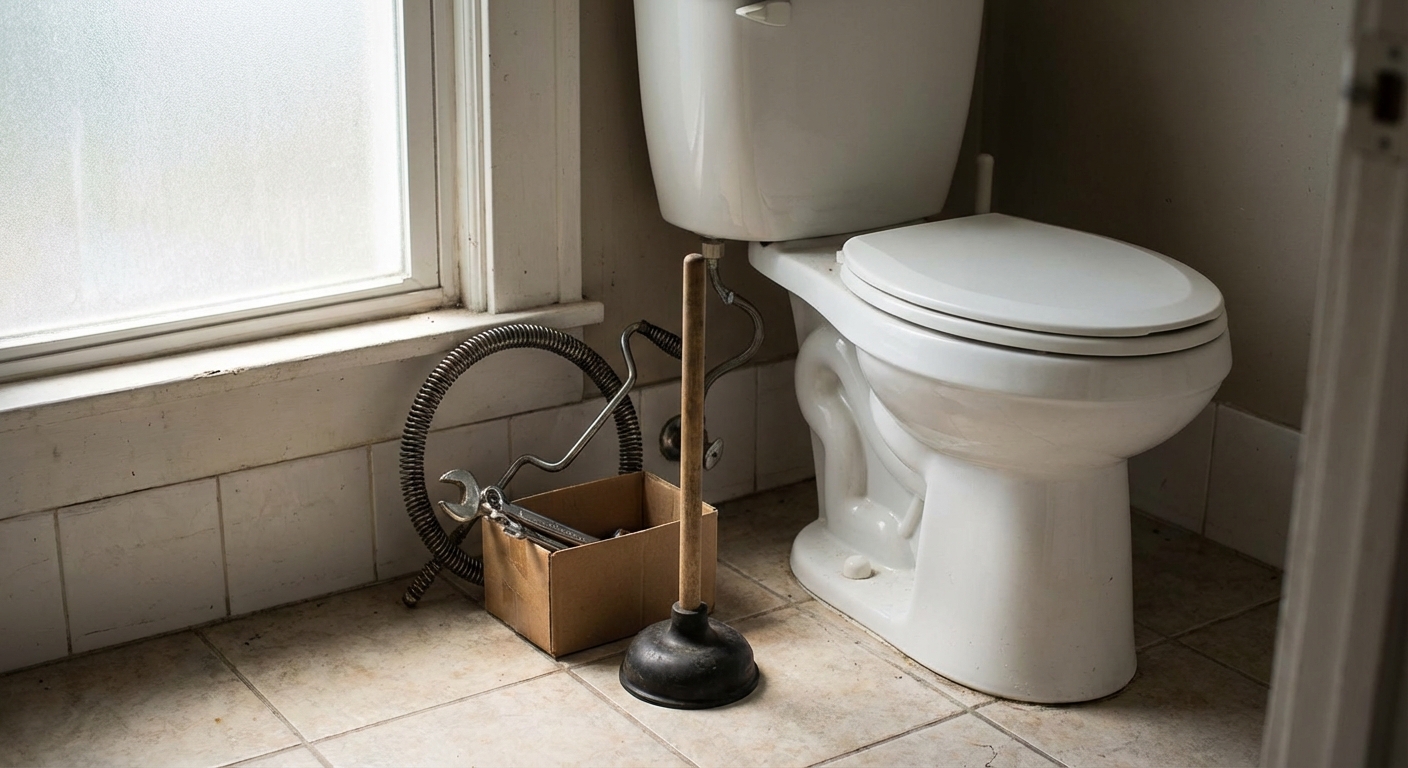
A one-off clog is annoying. A toilet that keeps clogging is a pattern, and patterns usually have a cause. The good news is that most repeat clogs are fixable with basic tools and a little detective work.
I have lived through the full spectrum here, from my kids treating the toilet like a trash can to me installing a bargain low-flow model that turned out to be a little too “efficient.” Below is how I troubleshoot a chronic clog in the real world, starting with the simplest wins and working toward the bigger, call-a-pro issues.
Quick safety and sanity checks
- Stop flushing. Every extra flush turns a clog into an overflow.
- Shut off the water at the valve behind the toilet if the bowl is rising.
- Protect the floor. Lay down old towels, and keep a small trash bag nearby for wet cleanup.
- Skip chemical drain cleaners. They rarely solve toilet clogs, can damage plumbing, and make augering dangerous if they splash.
Why your toilet keeps clogging (the real root causes)
Recurring clogs usually come from one of these buckets. The trick is matching the symptoms to the right fix.
1) Too much toilet paper (or the wrong kind)
This is the most common cause in normal, otherwise healthy plumbing. Thick “ultra plush” paper and big wads do not break down fast, especially in older drain lines with less slope.
- Clue: The toilet clogs mainly after a “big paper” flush and clears with a plunger.
- Fix: Smaller flushes, switch to a septic-safe or quick-dissolving paper, and teach the household the “two-flush rule” when needed.
2) Non-flushable items
“Flushable” wipes are a repeat-clog classic. So are cotton swabs, paper towels, feminine products, dental floss, and those little plastic deodorizer clips that fall in during cleaning.
- Clue: The toilet clogs more suddenly, plunging works poorly, and the clog returns quickly.
- Fix: Pull the blockage with an auger, then commit to a bathroom trash can with a lid.
3) Low-flow toilet performance issues
Some 1.28 GPF toilets are great. Some are… not. Older early-generation low-flow models and bargain units can have weak flush energy or poor bowl wash, which means waste and paper do not get pushed through consistently.
- Clue: Frequent clogs even with “normal” use. The bowl clears slowly and you often need a second flush.
- Fix: Verify the tank water level, check the flapper and fill valve, and consider upgrading to a high-performing model if the design is the problem.
4) Partial blockage in the toilet trap or closet bend
Often it is something lodged in the built-in S-shaped trap inside the toilet, or right where the toilet meets the floor flange. It might let liquids through but snag paper every time.
- Clue: The toilet seems “touchy” and clogs with small amounts of paper. Plunging sometimes works, sometimes not.
- Fix: Toilet auger first. If it keeps happening, pull the toilet and inspect.
5) Drain venting problems
Your plumbing vent lets air into the system so waste can flow smoothly. A blocked vent (leaves, bird nest, debris) can cause slow flushing and repeat clogs because the drain cannot breathe.
- Clue: Gurgling sounds, slow drain, or the bowl water level changes weirdly after other fixtures run.
- Fix: Check for obvious vent issues and call a plumber if roof access is unsafe.
6) Main sewer line problems
If the main line is partially blocked by roots, grease, a belly in the pipe, or a collapse, the toilet is often the first place you notice because it is the biggest “dump” in the house.
- Clue: Multiple drains act up (tub, shower, sinks), backups happen in the lowest fixture, or clogs return within hours or days.
- Fix: This is where a camera inspection and proper main-line clearing pays for itself.
7) Hard water buildup and mineral scale
In hard water areas, scale can narrow passages inside the toilet or rough up the drain so paper grabs instead of gliding.
- Clue: Visible scale in the bowl, weaker flush over time, and frequent “almost clogs.”
- Fix: Descale the toilet and address hard water long-term if it is severe.
Step 1: Use the right plunging technique (it matters)
Most people “jab” the plunger. What you want is a tight seal and controlled pressure changes to loosen the clog.
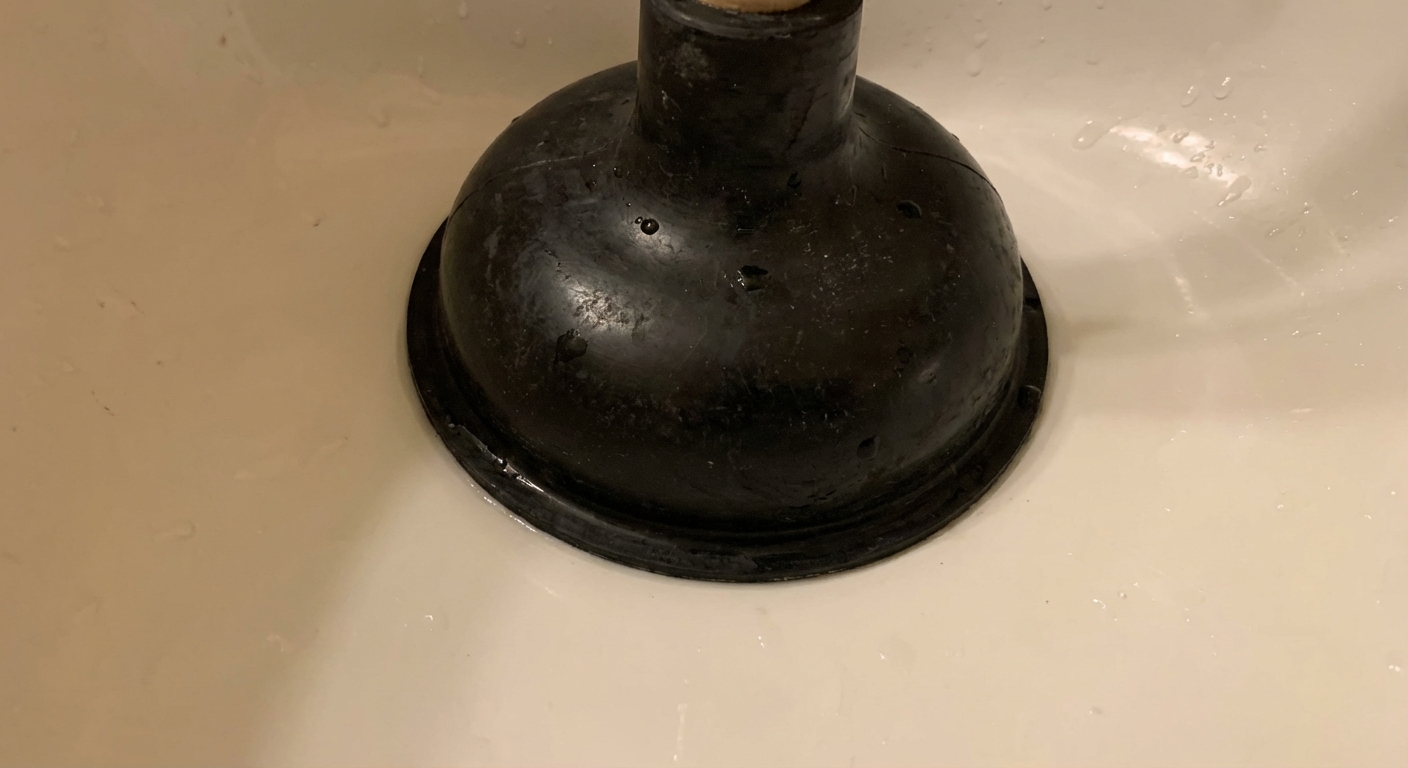
Best practice plunging
- Use a flange plunger (the kind with the extra rubber sleeve). Cup plungers are for sinks.
- Make sure there is enough water in the bowl to cover the rubber head. Add water if needed.
- Set the plunger over the hole and press down slowly first to burp out air and create a seal.
- Then do 10 to 15 firm pushes without breaking the seal. Think “pump,” not “stab.”
- Lift slightly to see if it drains. Repeat once or twice.
If plunging works but the toilet clogs again next week, treat that as evidence. Something is still catching paper, or the toilet is not moving enough water to clear the trap reliably.
Step 2: Run a toilet auger (my go-to for repeat clogs)
A toilet auger, also called a closet auger, is made to snake through the toilet trap without cracking porcelain. If you are dealing with recurring clogs, this tool pays for itself fast.
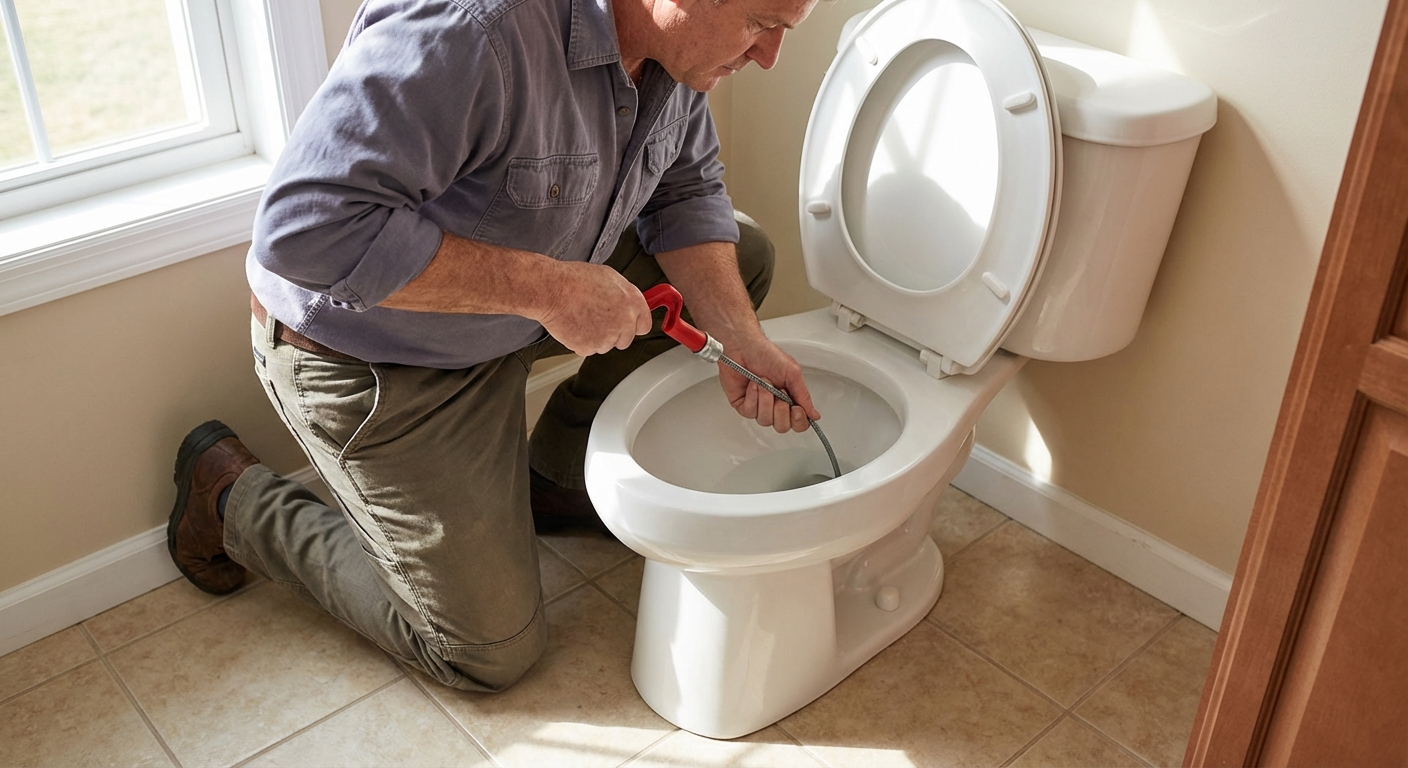
How to auger a toilet safely
- Extend the auger cable slightly and place the curved end into the bowl aimed at the drain opening.
- Keep the protective sleeve against the porcelain and crank clockwise while gently pushing.
- When you feel resistance, do not force it. Crank, push a little, pull back a little to work through the blockage.
- Retract the cable slowly and have a towel ready.
- Flush once. If it drains fast, flush again to confirm.
Marcus tip: If you pull back and the cable comes out with bits of wipe or paper towel, you just found your “mystery clog” culprit.
Step 3: Confirm the toilet is flushing at full strength
If your toilet is barely getting waste past the built-in trap, it will clog more often even when nothing is “wrong” in the drain line.
Check these three things
- Tank water level: The water line should be near the mark on the overflow tube. Too low equals a weak flush.
- Flapper lift: If the chain is too tight or too loose, the flapper can close early. You want it to stay open long enough to dump the full tank.
- Rim jets and siphon jet: Mineral buildup can choke the small holes under the rim and the main jet. A sluggish bowl wash is a clue.
If you have an older low-flow toilet that has always been finicky, this may be a design issue, not a maintenance issue. Replacing a problem toilet is not defeat. It is often the cheapest long-term fix.
Step 4: Look for signs of a venting or main line issue
This is the fork in the road: either the problem lives in the toilet and the first few feet of drain, or it lives deeper in the system.
Symptoms that point deeper than the toilet
- Gurgling from the toilet or nearby drains when you flush
- Water level in the bowl rises, then slowly drops without fully flushing
- Clogs coincide with running the washer, shower, or dishwasher
- Backups in a tub or floor drain when the toilet clogs
If you are seeing any of the above, it is time to stop “re-plunging history” and move into diagnostic mode.
Step 5: When to pull the toilet (and what to check)
Pulling a toilet sounds scary the first time, but it is straightforward if you are organized. I do it when clogs are frequent and an auger keeps coming up clean.
What you are checking for
- Obstructions in the outlet horn (kids toys are famous here)
- Wax ring failure that has shifted and is partially blocking flow
- Flange issues like a broken flange or improper height that lets the toilet rock
- Foreign objects sitting right at the closet bend in the drain line
If you do pull the toilet, plan to replace the wax ring or use a quality wax-free seal. That seal is not a “reuse it if it looks okay” part.
Hard water fixes: descaling that actually helps
Hard water buildup can reduce flow and create snag points. Descaling will not fix a root intrusion or a collapsed pipe, but it can improve a toilet that has slowly gotten weaker over the years.
Simple approach
- Shut off the water and flush to lower the bowl level if needed.
- Apply a descaling product intended for toilets, or use diluted vinegar for mild scale.
- Let it sit long enough to work, then brush and flush.
If your area has very hard water, the long game is a whole-house solution or regular maintenance. Otherwise the minerals just come right back.
When a camera inspection is worth it
If you have recurring clogs and any signs that multiple fixtures are involved, a sewer camera inspection can save you from guessing.
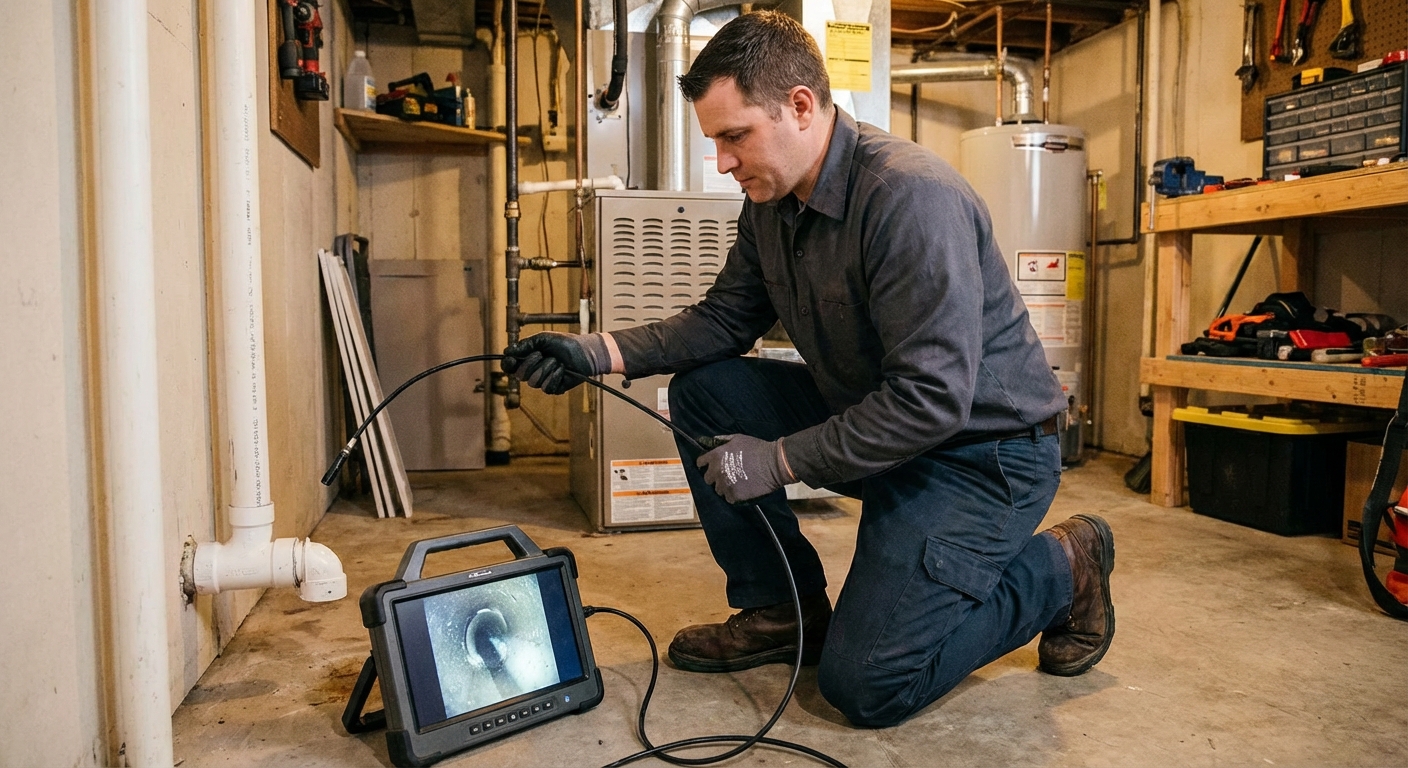
Camera inspections can reveal
- Tree root intrusions
- Bellies or sags in the pipe where solids settle
- Offsets at joints
- Cracked or collapsed sections
- Grease buildup or heavy scaling in older lines
My rule: if you have plunged and augered correctly and the clog comes back within days, it is time to stop treating the symptom and verify what the pipe is doing.
Prevent repeat clogs: habits and upgrades that work
Everyday habits
- Keep wipes, floss, cotton swabs, and paper towels out of the toilet, even if the packaging says “flushable.”
- Use less paper per flush and teach kids to flush mid-way if needed.
- Handle “big jobs” with a little patience. A second flush is cheaper than a backup.
Smart upgrades
- High-performance toilet: If yours is a chronic under-flusher, replacement can be the long-term fix.
- Soft-close seat with quick-release: Makes cleaning easier, which helps spot issues early.
- Install an accessible cleanout (where permitted and practical) if your home has none and you have a history of line issues.
Troubleshooting by symptom
- Clogs only with lots of paper: Paper type, volume, or weak flush performance.
- Plunger rarely works: Likely solid obstruction. Use an auger.
- Toilet gurgles: Venting problem or downstream restriction.
- Multiple drains slow or backing up: Main line issue. Consider camera inspection.
- Clog returns quickly after clearing: Partial blockage snagging paper or a belly in the line.
When to call a pro
I love DIY, but there are times when the fastest cheap fix is paying for the right equipment and experience.
- Water is backing up into a tub, shower, or floor drain
- You suspect roots or a collapsed pipe
- You cannot safely access the roof to check a vent
- You have tried a proper plunge and a toilet auger and the clog keeps returning
- The toilet overflows or you see sewage outside near a cleanout
My simple “repeat clog” plan
If you want the short version I use at my own house, here it is:
- Plunge correctly.
- Auger the toilet.
- Verify tank level and flush performance.
- If clogs return, look for venting or main line symptoms.
- Pull the toilet if needed, and do not reuse the seal.
- If multiple fixtures are involved, schedule a camera inspection.
Fixing the root cause is the goal. Once you do, the toilet goes back to being what it should be: boring.

About Marcus Vance
Content Creator @ Grit & Home
Marcus Vance is a lifelong DIY enthusiast and self-taught home renovator who has spent the last decade transforming a dilapidated 1970s ranch into his family's dream home. He specializes in budget-friendly carpentry, room-by-room renovations, and demystifying power tools for beginners. Through his writing, Marcus shares practical tutorials and hard-learned lessons to help homeowners tackle their own projects with confidence.