
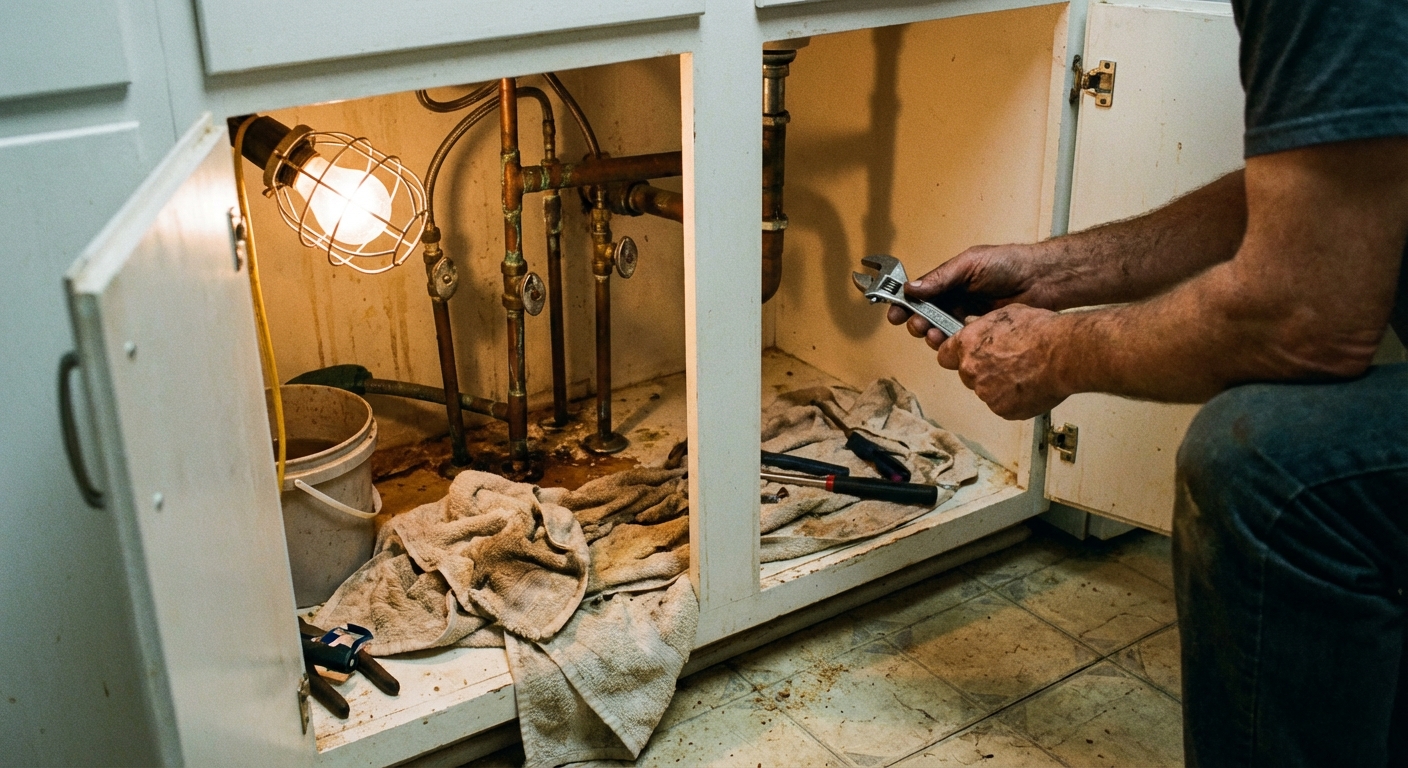
What water hammer is and why it happens
If you have ever shut off a faucet and heard a sharp bang, thud, or rapid rattling in the walls, that is usually water hammer. It happens when moving water is forced to stop suddenly, like when a washing machine valve snaps closed or you flick a single handle faucet off quickly. The water has momentum, and when it hits a “closed door” it sends a pressure wave through the pipes. That wave is what you hear as the bang.
Sometimes the sound is one big hit. Sometimes it is a quick chatter. Both can be hard on plumbing over time, and both are usually fixable with a handful of beginner-friendly checks.
Quick safety note before you start
- Know where your main shutoff is. If you accidentally loosen the wrong fitting, you want to stop water fast.
- Go easy on old pipes. Galvanized and older copper can be brittle at joints. Support pipes while tightening nearby straps.
- Use two wrenches on rigid plumbing. When loosening or tightening fittings on copper or galvanized pipe, hold the pipe with one wrench and turn the fitting with the other so you do not twist the line in the wall.
- Do not overtighten compression fittings. Snug plus a small turn is usually enough. Crushing a ferrule can create leaks.
- If you see active leaks, corrosion, or wet drywall, pause. Fixing water hammer is not worth hiding a bigger problem behind the wall.
Common causes of banging pipes
Water hammer usually shows up because one or more of these issues are in play:
- Fast-closing valves (washing machines, dishwashers, ice makers, some single handle faucets)
- Loose pipes that are free to move when the pressure wave hits
- High water pressure that makes the pressure spike more dramatic
- Waterlogged air chambers (older plumbing may rely on trapped air as a cushion, and it can fill with water over time)
- Pressure reducing valve (PRV) issues or thermal expansion (common when a PRV with a built-in check, a check valve, or a backflow preventer creates a “closed system”)
Step 1: Confirm it is water hammer
What it sounds like
- A sudden bang right when a valve closes
- A thud in the wall or ceiling near the fixture or appliance
- Rattling that stops quickly after shutoff
Noises that look similar
- High-pitched squeal: often a worn washer or cartridge, or a partially closed shutoff valve.
- Constant ticking after hot water use: pipe expansion and contraction on framing, not water hammer.
- Banging when no water is running: a toilet fill valve cycling, a PRV issue, or a loose pipe reacting to pressure changes.
A quick DIY test: run the fixture that triggers the noise, then shut it off slowly. If the bang gets noticeably better when you close it slowly, you are almost certainly dealing with water hammer.
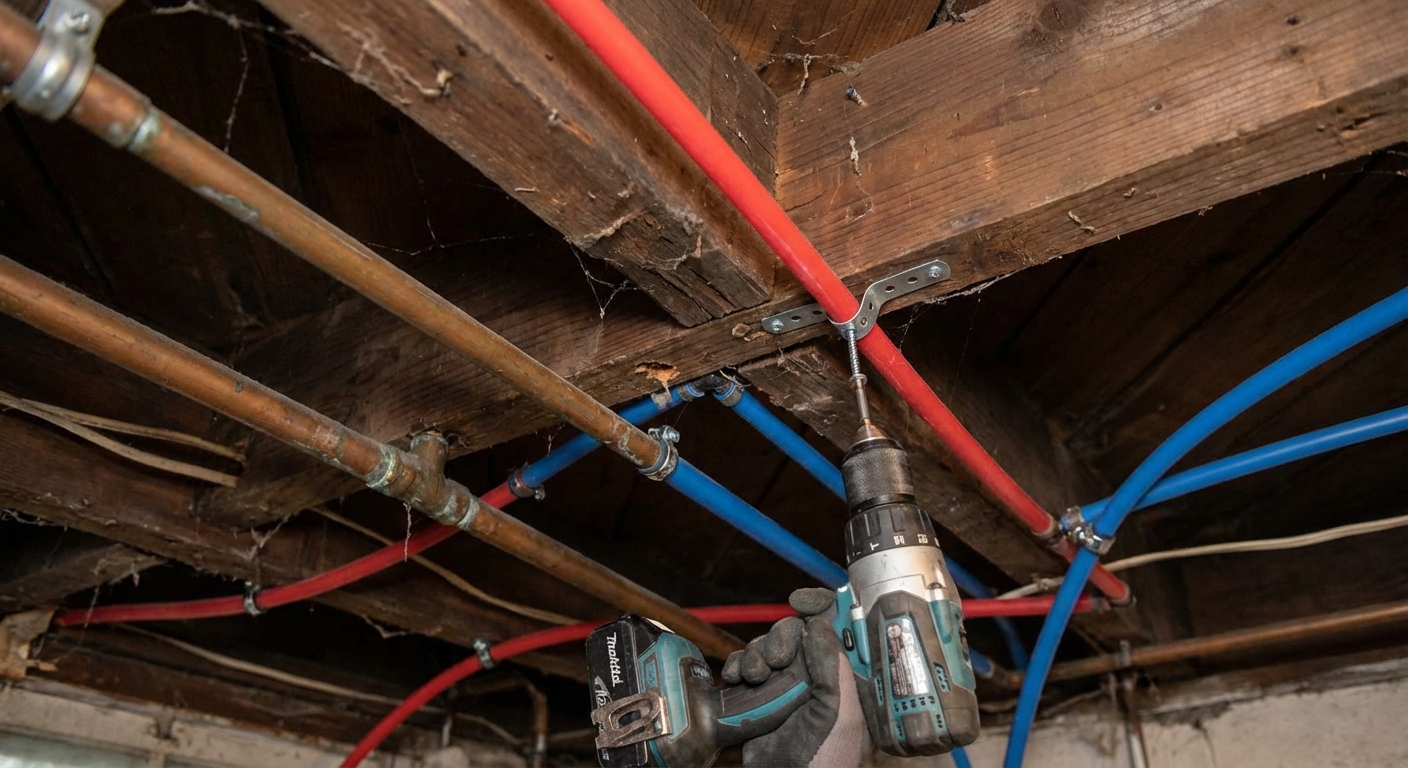
Step 2: Secure loose pipes
This is where I always start because it is often the whole problem. Even if you install an arrestor later, loose pipes can still clunk.
What you need
- Pipe straps or clamps (rubber-lined is great)
- Screws and a drill or screwdriver
- Foam pipe insulation or felt tape (optional, but helpful)
Where to look
- Under sinks (hot and cold lines, shutoff valves, supply lines)
- Basement ceiling runs below kitchens and laundry rooms
- Utility room lines near the water heater and main trunk line
- Behind access panels for tubs and showers
What to do
- Add pipe straps or clamps to secure the pipe to framing members. Do not crush the pipe.
- Use cushioning where needed, like foam pipe insulation, felt tape, or rubber-lined clamps to reduce tapping against wood.
- Check holes through studs and joists. If the pipe can slap the wood, add a plastic bushing or wrap the pipe where it passes through.
My tip: If you can reproduce the bang while someone else turns the faucet on and off, put a hand on the exposed pipe runs. You can often feel the exact section that jumps when the valve closes.
Step 3: Check your water pressure
High pressure makes water hammer louder and harder on valves. Most homes are happiest around 50 to 60 psi. In many areas, 80 psi is the typical maximum allowed by code, but local rules vary.
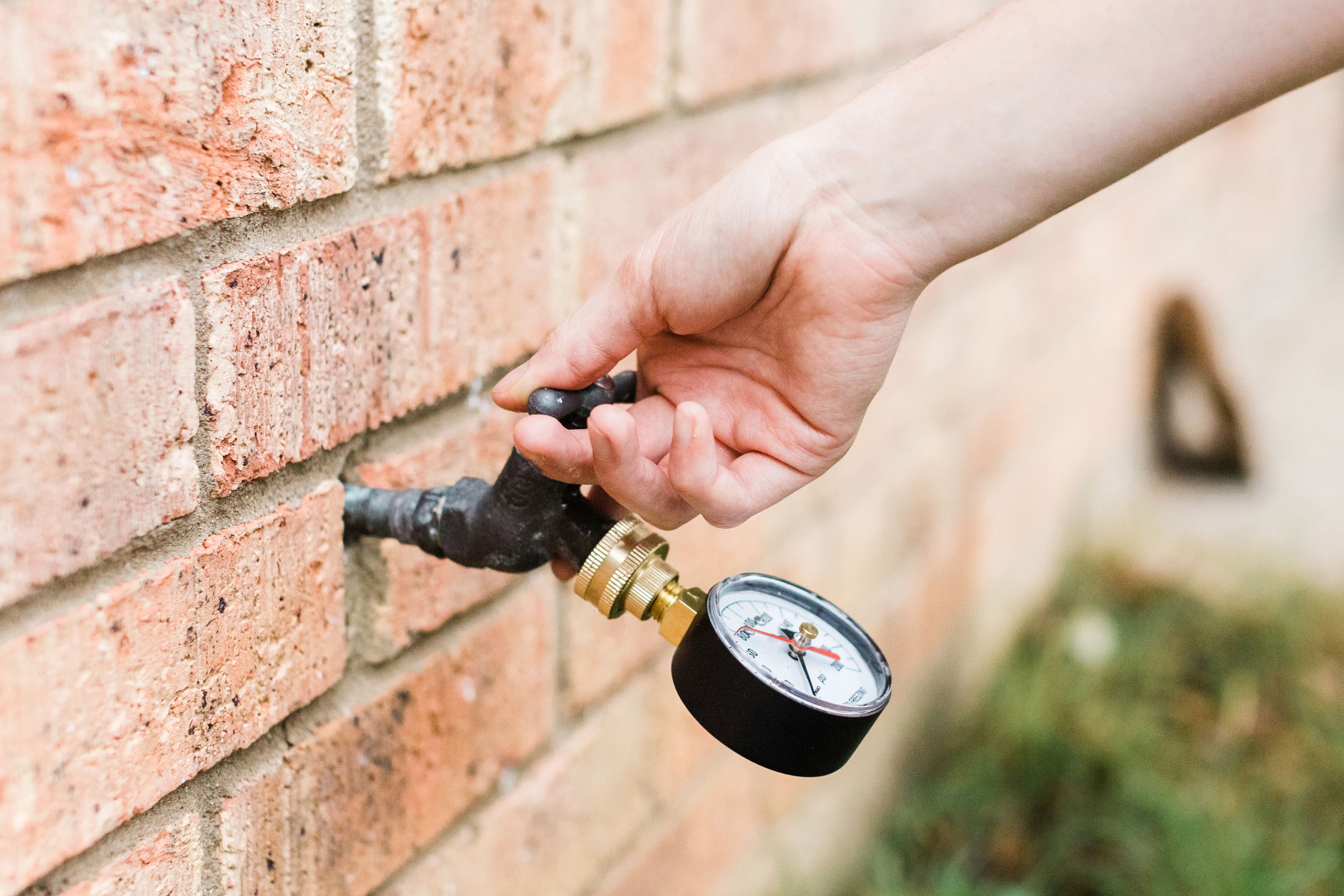
How to measure it
- Buy an inexpensive water pressure gauge that threads onto a hose bib.
- Screw it onto an outdoor spigot or laundry sink hose connection.
- Turn the water on fully and read the gauge.
If pressure is high
- If you have a pressure reducing valve (PRV), it may need adjustment or replacement.
- If you do not have a PRV and your pressure is above 80 psi, adding one is typically a plumber job, but it is one of the best long-term fixes for pipe stress.
Important: Pressure can creep up at different times of day. If your gauge has a “telltale” max needle, leave it on for a bit to catch spikes.
Step 4: Reset waterlogged air chambers
Some plumbing systems, especially older setups, used vertical stub-outs called air chambers to cushion shock. Over time, those chambers can fill with water and stop working.
How to reset them
- Turn off the main water supply to the house.
- Open the highest faucet in the home (often an upstairs bathroom sink).
- Open the lowest faucet (often a basement laundry sink or hose bib) and let the system drain fully.
- Flush toilets once to empty tanks as much as possible.
- When water stops running, close all faucets.
- Turn the main water back on slowly, then open faucets one at a time to bleed air out.
This refill cycle can reintroduce air into those chambers. If it helps for a week and then the banging comes back, that is a good sign you should move on to arrestors. In many systems, that air cushion does not last because the air dissolves into the water and gets carried away.
Step 5: Install water hammer arrestors
A water hammer arrestor is a small device with a sealed air cushion (or piston) designed to absorb the shock wave when a valve closes. Unlike old air chambers, it is made to keep working long term.
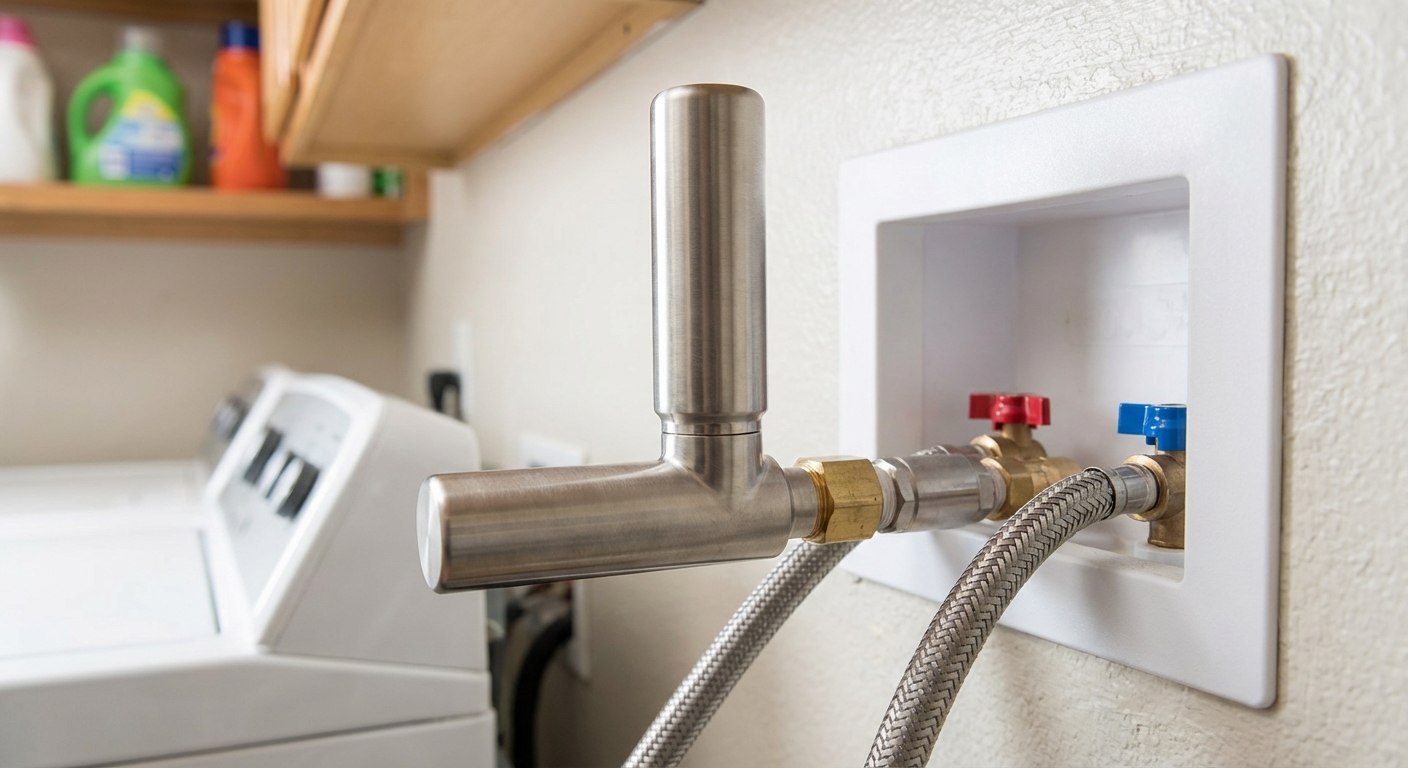
Where arrestors help most
- Washing machine hot and cold supply lines
- Dishwasher supply line under the kitchen sink
- Ice maker or refrigerator water line
- Fast-closing single handle faucets that trigger a bang
Placement tip: Arrestors work best when installed as close as practical to the fast-closing valve. For a washer, that usually means one on hot and one on cold right at the washer box.
Choosing the right type
- Threaded, screw-on arrestors are easiest for washing machines and many dishwashers.
- Push-to-connect (SharkBite-style) arrestors can work well on PEX or copper where you have access and need a clean retrofit.
- Sweat (solder) or crimp arrestors are permanent but require more skill and tools.
Basic install steps (washing machine)
- Turn off the hot and cold shutoff valves for the washer.
- Relieve pressure by starting a short fill cycle on the washing machine for a few seconds, then cancel it. This helps bleed pressure in the washer hoses.
- Disconnect the washer hoses from the shutoff valves (keep a towel handy).
- Install the arrestors onto the shutoff valve outlets.
- Reconnect the hoses to the arrestors.
- Turn water back on and check carefully for leaks.
My mistake to help you avoid it: The first time I installed an arrestor, I did not replace the old rubber hose washers. The “fix” worked, but I created a slow drip that stained the drywall below. If you have the hoses off anyway, use fresh washers or new braided lines.
Step 6: Check thermal expansion
If the noise shows up when the water heater runs, or you hear creaks and thuds near the heater or main line, you may have thermal expansion. As water heats, it expands. In a “closed” plumbing system (often created by a PRV with a check feature, a separate check valve, or a backflow preventer), pressure can spike.
Clues this is your issue
- Banging or brief pressure surges after long hot water runs
- A pressure gauge shows higher readings after the water heater heats a tank
- A TPR valve discharge line that drips during heat cycles
Safety note: A temperature and pressure relief (TPR) valve is a safety device. If it is continuously dripping or dumping water, do not ignore it. That can point to a real over-pressure problem or a failing valve, and it should be evaluated promptly.
The common solution is a properly sized expansion tank installed on the cold water line feeding the heater. This is a doable DIY for experienced homeowners, but if you are unsure about sizing, pressure settings, or local code requirements, this is a smart place to bring in a plumber.
Troubleshooting by location
Banging when the washing machine stops
- Install arrestors at the washer box (hot and cold)
- Secure the supply lines so they cannot whip
- Check overall water pressure
Banging at a single faucet
- Make sure shutoff valves under the sink are fully open
- Secure loose hot and cold lines in the cabinet
- Consider an arrestor under the sink if the faucet is a fast-closing style
Banging after the dishwasher fills
- Install an arrestor on the dishwasher supply line under the sink
- Secure the copper or PEX feeding that cabinet area
Banging when no fixture is running
- Listen near toilets. A cycling toilet fill valve can cause random thuds and pressure bumps.
- Take the toilet tank lid off and watch the water level. If it refills on its own, start by replacing the flapper or fill valve.
- If you have a PRV, consider that it may be creeping or failing, especially if pressure readings climb over time.
When to call a plumber
I am all for DIY, but there are times when a pro earns their keep fast. Call a plumber if:
- Water pressure is over 80 psi and you do not have a PRV, or you suspect the PRV is failing.
- The banging is accompanied by leaks, wet drywall, or ceiling stains.
- You have old galvanized piping and the noise seems to be coming from multiple areas.
- The sound is severe and persistent even after securing pipes and adding arrestors.
- You suspect thermal expansion and need an expansion tank added or adjusted.
- Your TPR valve is continuously dripping or discharging water.
- You are not comfortable shutting off the main, working in tight spaces, or testing for leaks afterward.
Simple habits that keep it quiet
- Close valves gently when possible. That one habit reduces shock instantly.
- Replace worn shutoff valves that do not open fully or chatter.
- Keep pipes supported whenever you open a wall or ceiling for other work.
- Check water pressure yearly, especially if you live in an area with known high municipal pressure.
If you take one thing from this page, take this: water hammer is usually a combination problem. An arrestor handles the shock, and proper strapping handles the movement. Do both and the banging almost always disappears.
FAQ
Is water hammer dangerous?
One loud bang is not an emergency, but repeated hammer can loosen fittings, stress valves, and eventually contribute to leaks. It is worth fixing, especially if it happens daily with an appliance cycle.
Do water hammer arrestors really work?
Yes, when installed close to the fast-closing valve that is causing the shock. They are most effective on washing machines, dishwashers, and ice makers.
Why did draining the system help only temporarily?
That points to old-style air chambers. Over time, the air cushion dissolves into the water and gets carried away, leaving the chamber waterlogged again. An arrestor is the long-term fix.
Can high water pressure cause banging even if pipes are strapped?
Yes. Straps prevent movement, but they do not reduce the pressure spike. If your pressure is high, address that alongside arrestors.

About Marcus Vance
Content Creator @ Grit & Home
Marcus Vance is a lifelong DIY enthusiast and self-taught home renovator who has spent the last decade transforming a dilapidated 1970s ranch into his family's dream home. He specializes in budget-friendly carpentry, room-by-room renovations, and demystifying power tools for beginners. Through his writing, Marcus shares practical tutorials and hard-learned lessons to help homeowners tackle their own projects with confidence.