
🚨 In a DIY emergency or rush?
Skip the details and jump straight to our 30-second cheat sheet for the most crucial info.
Bathroom ants feel extra rude because the room is supposed to be clean. But ants aren't showing up because your house is “dirty.” They're showing up because a bathroom is basically an ant buffet with a built-in water station.
Below is the same system I use in my own 1970s ranch when a random trail pops up near the tub or vanity: identify the ant, follow the trail, remove what's attracting them, then bait and seal in the right order so you don't chase the colony around the walls.
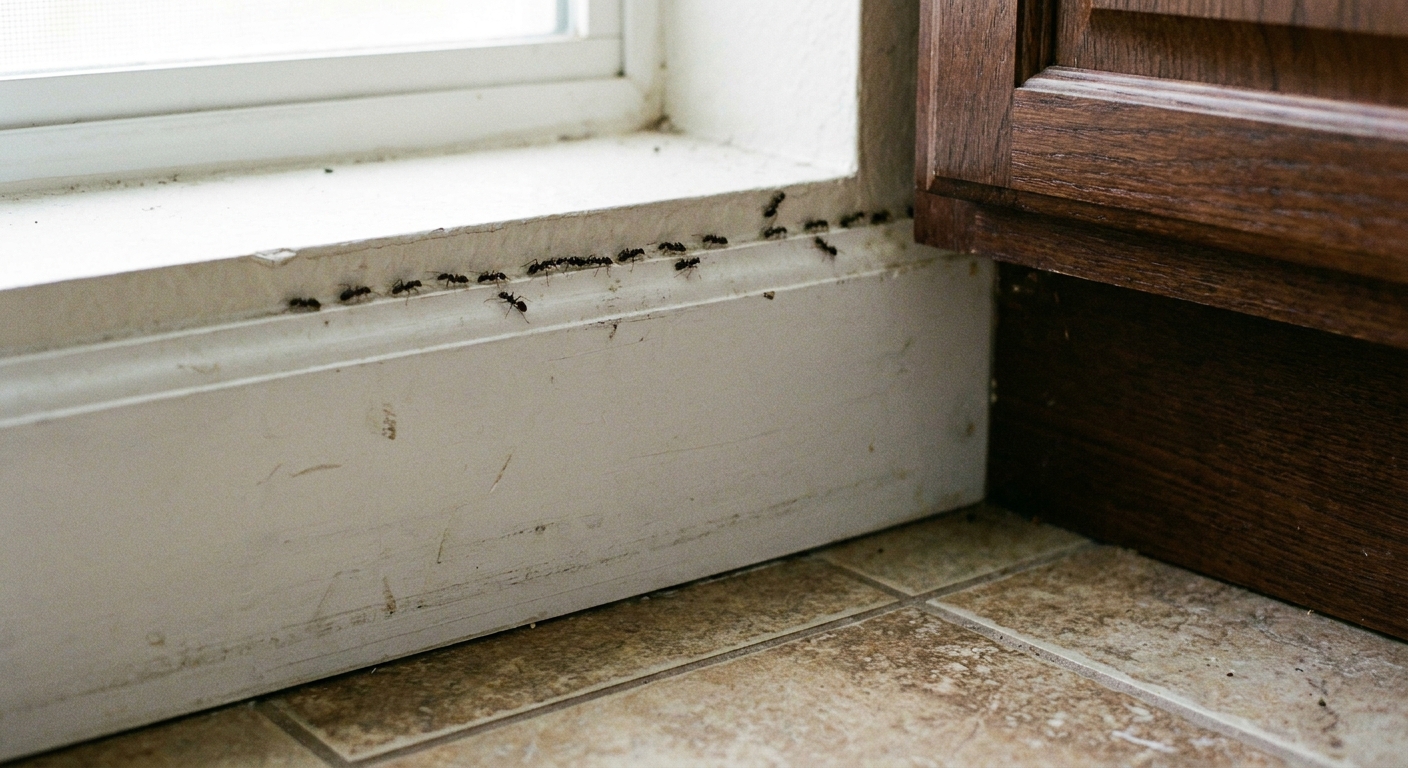
Why ants love bathrooms
Ants come inside for resources: water, carbs (sugars), and often protein for brood. Kitchens usually supply the calories. Bathrooms often supply the water, plus a few sneaky extras that keep scouts coming back.
- Moisture: leaky supply lines, a sweating toilet tank, damp bath mats, slow drains, and condensation around windows.
- Easy-to-miss residue: toothpaste spit in seams, soap film at counter edges, shampoo drips, lotion, makeup, and sticky hair product overspray.
- Organic debris: hair, skin flakes, and gunk in corners can contribute for some species, especially when water is nearby.
- Warm, protected travel lanes: behind baseboards, under flooring edges, around plumbing penetrations, and inside wall voids.
If you only spray what you see, you knock down the scouts but leave the colony fully supplied. That's why the line disappears for a day, then comes back somewhere else.
First: identify the ant
You don't need to become an entomologist, but a quick ID changes your game plan.
- Common “bathroom ants” (tiny ants): often odorous house ants or pavement ants. They show up in thin lines near sinks and tubs.
- Odorous house ants: when crushed, they can smell like coconut or a weird “rotten” sweet smell.
- Pavement ants: often nest under slabs, driveways, or foundations and use indoor edges as highways.
- Carpenter ants: larger (often 1/4 to 1/2 inch), usually black or dark reddish, and you may see them at night. They don't eat wood, but they excavate it to nest, often where there's moisture.
- Pharaoh ants (small, yellowish to light brown): can show up in bathrooms and kitchens, especially in apartments or multi-unit buildings. Don't spray them. Repellents can make them split into multiple colonies (budding). Baiting is the right move, and persistent infestations often need a pro.
Rule of thumb: if the ants are big enough that you instantly notice them one by one, pause and consider carpenter ants. If they're tiny and yellowish and seem to pop up in multiple spots, consider pharaoh ants and skip sprays.
Track the trail
This step saves time and money. You want to know where they're traveling, not just where you spotted them.
What to do
- Don't spray yet. Sprays can scatter the trail and make bait less effective.
- Watch for 5 to 10 minutes. Ant trails usually run along edges: baseboards, caulk lines, pipe cutouts, and the lip of a vanity toe-kick.
- Use a flashlight with low-angle light. Raking light makes moving ants easier to spot because it throws tiny shadows along the edge.
- Mark the path with painter’s tape. Two or three small tape flags are enough.
- Find the pinch point. Look for where they disappear: a crack in caulk, a gap at a pipe, a corner seam, or under the baseboard.
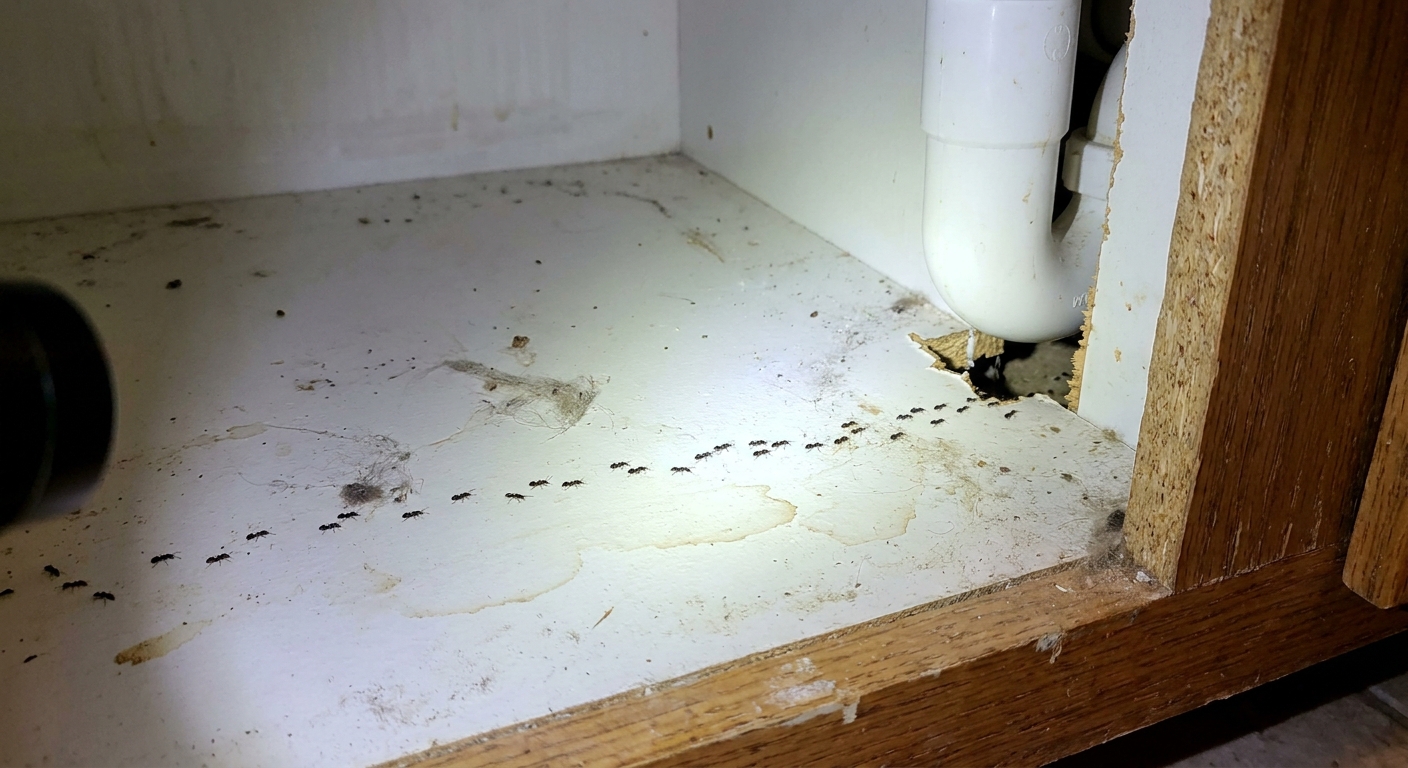
Common entry points
- Gaps around sink drain and supply lines inside the vanity
- Cracked or missing caulk where the countertop meets the backsplash
- Voids around the tub spout, shower valve trim, or overflow plate
- Baseboard corners, especially near exterior walls
- Window trim gaps and damp sills
- Where flooring meets the tub or shower pan
Start with non-chemical fixes
Ants are opportunists. If you remove the water and residue, you cut off the reason they keep scouting your bathroom.
1) Dry the room
- Run the bath fan for 20 to 30 minutes after showers. If your fan is weak, crack the door too.
- Hang towels to dry and don't leave wet bath mats bunched up on the floor.
- Wipe condensation from window sills and the toilet tank if it sweats.
2) Fix the tiny leaks that feed ants
In older homes (mine included), the “barely dripping” leak under a vanity is a repeat offender.
- Check the P-trap, drain connections, and shutoff valves for dampness.
- Look at the toilet supply line and the base for seepage.
- If your tub spout drips, plan a cartridge or washer fix. Constant moisture invites pests.
3) Remove scent trails and residue
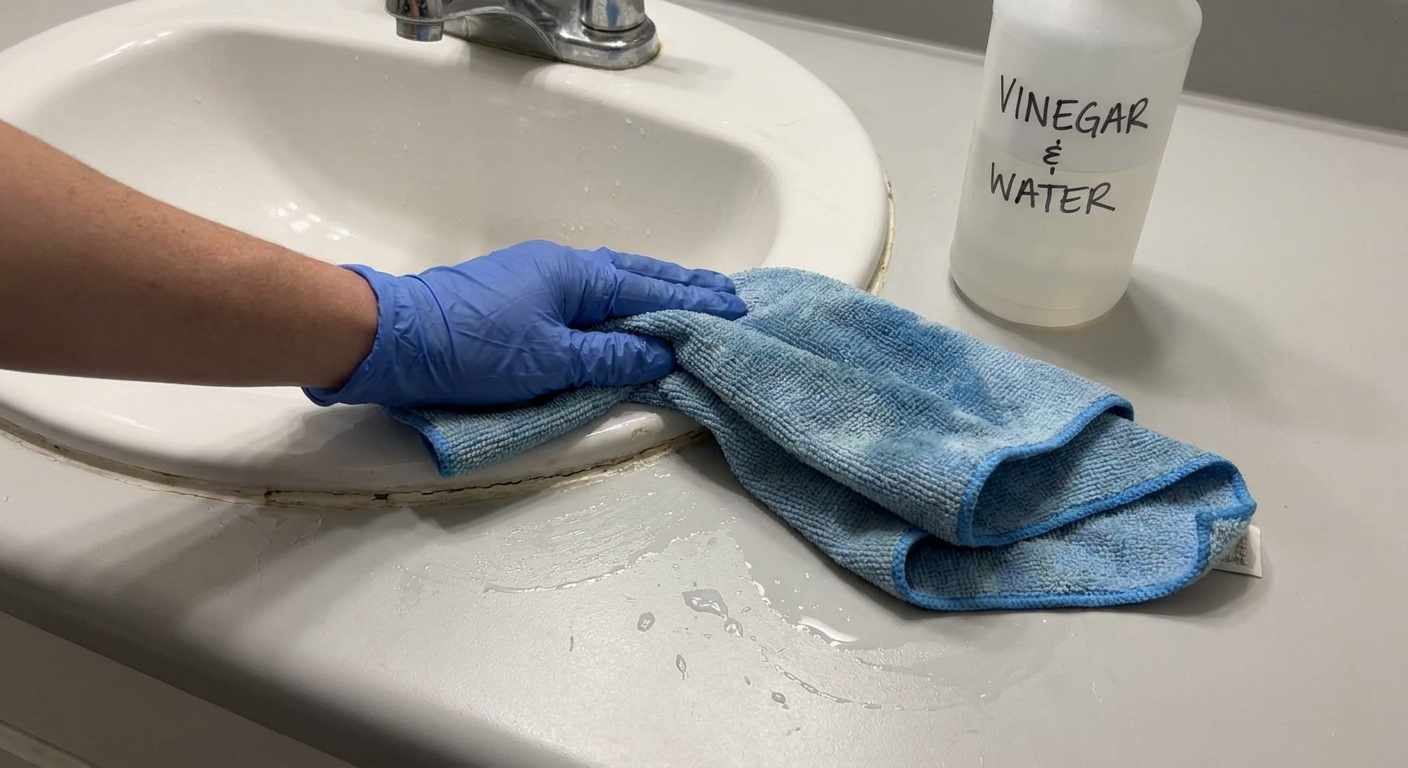
Ants leave a chemical trail. Cleaning removes it so you stop getting “re-routes” around your bait.
- Wipe edges and corners with soapy water, then rinse.
- Follow with a 50/50 mix of white vinegar and water on hard surfaces (avoid natural stone like marble).
- Clean the toothpaste zone: sink rim, faucet base, and the counter lip where drips dry sticky.
- Empty bathroom trash, especially if it contains flossers, cotton swabs, or product wipes.
Use bait the right way
If you want the colony gone, bait beats “kill on contact.” Bait works because workers carry it back and share it.
Pick the right bait
- Sweet-loving ants: common in bathrooms because they're often after water and any sugary residue. Use a sweet liquid or gel bait.
- Protein or grease-loving ants: less common in bathrooms, but it happens. Use a protein-based bait if the sweet bait gets ignored.
If they ignore a bait, give it a little time. As a rule of thumb, if there's zero interest after 24 to 48 hours, switch types or move the placement a foot or two closer to the trail.
Active ingredient note: You’ll see baits labeled with actives like boric acid or borax, fipronil, indoxacarb, abamectin, or similar. Different species respond differently, and results can vary based on the active and competing food sources.
Where to place bait in a bathroom
- Inside the vanity, back corner near the pipe entry
- Along the baseboard where the trail runs, but out of splash zones
- Near the tub if the trail follows the tub edge, but not where kids or pets can access it
Safety note: Bathrooms are small. Use enclosed bait stations when possible. Keep them away from toothbrushes, towels, and anything you touch daily. Don't place bait where it can get wet, and avoid putting gels directly on porous stone or unfinished wood.
Don't sabotage your bait
- Don't spray repellent insecticide near the bait. It can stop ants from taking it.
- Don't wipe up the ants that are feeding. I know it's gross. Let them work for a few days.
- Refresh bait if it dries out or gets diluted by humidity.
If your ant problem is clearly connected to your kitchen (same line showing up at both), my kitchen-focused guide goes deeper on bait choices and pantry prevention. Keep your bathroom plan here as the “water control” half of the equation.
Seal entry points (after bait)
Sealing is important, but timing matters. If you seal first, ants often just find another gap. My order is: clean, bait, then seal.
What to seal
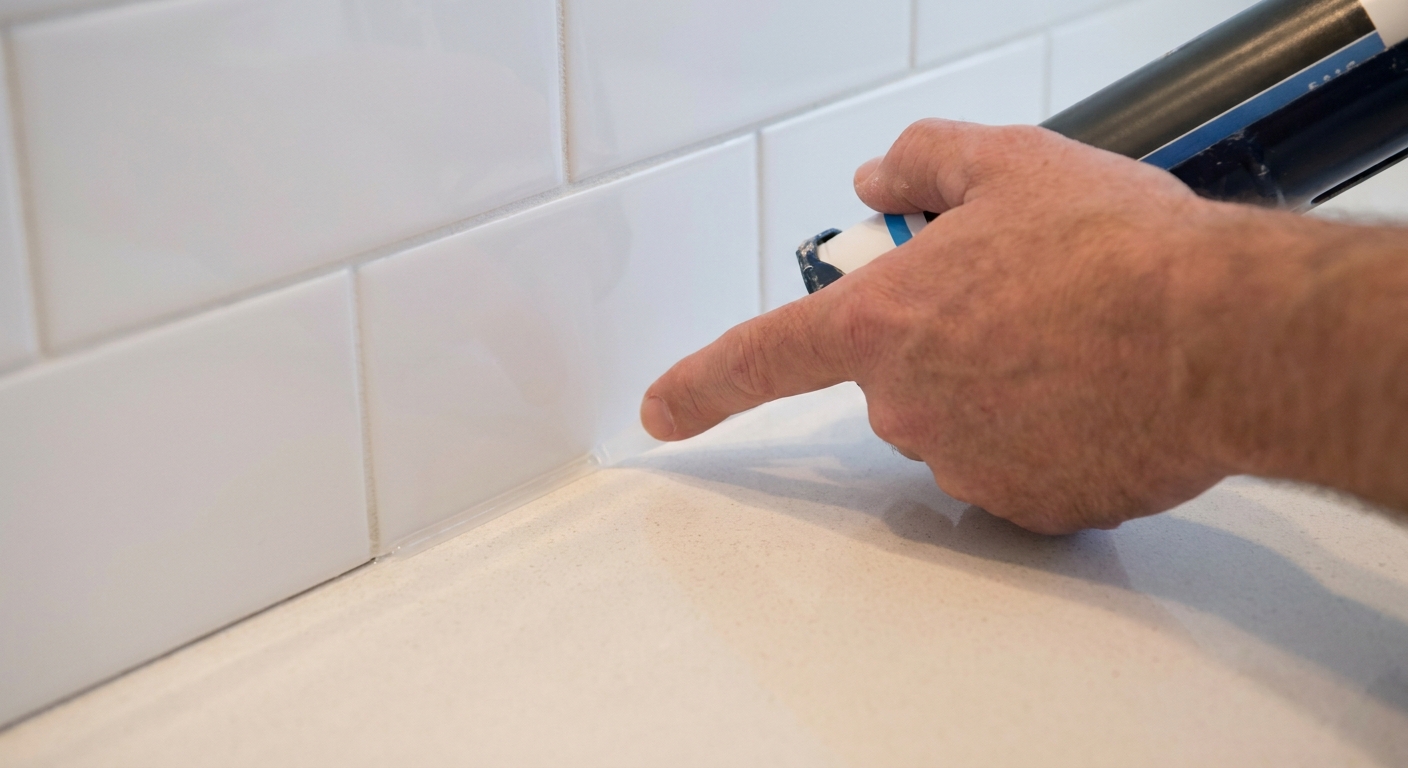
- Under-sink pipe gaps: use silicone caulk for small gaps. For wider holes, use copper mesh or stainless steel wool as a backing, then caulk to close it up. Skip standard steel wool in bathrooms since it can rust and stain if it gets damp.
- Counter to backsplash seam: a clean bead of kitchen and bath silicone stops trails and moisture intrusion.
- Baseboard cracks: paintable acrylic latex caulk works well in dry areas.
- Tub and shower trim plates: if you can see a void, seal lightly only where it won't trap water. Many setups benefit from leaving a small gap at the bottom edge so any moisture can escape and the area can dry.
Prep tip: Caulk sticks to clean, dry surfaces. If there's soap scum or mildew, remove it first or your seal will fail early.
Carpenter ants: different plan
Carpenter ants in a bathroom often point to damp wood. Think: a leaking shower valve in the wall, a failed tub caulk line letting water into the subfloor, or a slow drip under the vanity that’s been soaking the cabinet base.
Signs it might be carpenter ants
- Ants are large and you see them more in the evening or at night
- You find frass, which looks like sawdust mixed with insect parts near trim or baseboards
- You hear faint rustling in a wall when the room is quiet (not always, but it happens)
- Ants appear in multiple rooms, especially near a bathroom and an exterior wall
What to do
- Hunt for moisture first. Fix the leak or wet area or you're treating symptoms only.
- Don't rely on sweet bait alone. Carpenter ants may prefer protein, and they don't always respond like small house ants do.
- Inspect nearby wood. Check the vanity bottom, baseboards, window trim, and any soft or stained areas.
- Consider a pro if you see frass, damaged wood, or repeated sightings of large ants. Nests can be in walls where DIY treatment gets tricky.
If you're in the “large ants plus moisture damage” category, treat this like a small home repair project, not just pest control. Stop the water, then deal with the insects.
Not ants? Quick check
Bathrooms also attract other tiny bugs that get mistaken for ants.
- Springtails: super tiny jumpy bugs, often near tubs, drains, and damp window sills. Humidity control is the fix.
- Booklice: tiny pale insects that hang out in humid areas and feed on mold or mildew. Drying the room and cleaning usually helps more than bait.
Common mistakes
- Don't blast the trail with strong spray cleaner and call it done. It removes the visible ants but not the colony.
- Don't mix methods randomly. Repellent sprays plus bait usually equals slower results.
- Don't seal every gap immediately if ants are actively trailing. Let bait reduce the colony first.
- Don't ignore ventilation. A damp bathroom can keep pulling ants back in, even after a “successful” bait cycle.
How long it takes
With good bait placement and moisture control, many bathroom ant issues improve fast, but timelines vary by species, colony size, competing food sources, and bait active ingredient.
- 24 to 48 hours: you may see more ants at the bait. That's often a good sign.
- 3 to 7 days: trails often shrink noticeably.
- 1 to 3 weeks: many colonies collapse or stop sending scouts inside, though some stubborn situations can take longer.
When to escalate
- You still have steady trails after 14 days of baiting and cleaning.
- Ants are coming from inside a wall and you can't locate moisture or an entry point.
- You suspect carpenter ants or find frass or wood damage.
- You have a recurring leak you can't repair easily, like a shower valve in the wall.
- You suspect pharaoh ants (tiny, yellowish, showing up in multiple spots) and it's not improving with careful baiting.
Prevention checklist
- Run the fan, reduce humidity, and dry mats and towels
- Fix drips under the sink and address toilet sweat
- Wipe toothpaste and product residue from seams and edges weekly
- Re-caulk failing seams before water gets behind them
- Seal pipe penetrations and baseboard gaps after you've knocked down the colony
Most of the time, bathroom ants are a moisture and maintenance problem first, and a pesticide problem second. Once you treat it that way, the “mystery trail” stops feeling so mysterious.
The 30-Second Cheat Sheet
Essential takeaways for: How to Get Rid of Ants in Your Bathroom
Fast plan (do this in order)
- Don't spray yet. Watch the ants and find where they disappear (pipe gaps, cracked caulk, baseboard corners).
- Clean the trail. Soap and water first, then vinegar and water on hard surfaces (skip vinegar on natural stone).
- Dry the bathroom. Run the fan 20 to 30 minutes after showers, hang towels, dry mats, wipe condensation.
- Fix moisture sources. Check under-sink connections, toilet supply line, tub spout drip, slow drain.
- Place ant bait near the trail. Use enclosed bait stations when possible. Keep away from kids, pets, towels, and toothbrushes. Keep bait out of splash zones.
- Wait 3 to 7 days. Seeing more ants at the bait at first is normal. Don't wipe them up.
- Seal gaps after bait works. Silicone for wet areas, paintable caulk for dry trim. Seal around pipes and cracked seams.
Where to look (top bathroom entry points)
- Gaps around drain and supply lines inside the vanity
- Countertop to backsplash seam
- Tub spout or shower valve trim openings
- Baseboard cracks, especially near exterior walls
- Window trim gaps and damp sills
Carpenter ant red flags
- Ants are large (1/4 inch or bigger) and show up at night
- You find frass that looks like sawdust near trim or baseboards
- You have known moisture damage near the bathroom
If these apply: prioritize finding and fixing the water issue, then consider professional help if activity continues.
💡 Tip: Scroll up to read the full article for detailed, step-by-step instructions.
⬆️ Back to top
About Marcus Vance
Content Creator @ Grit & Home
Marcus Vance is a lifelong DIY enthusiast and self-taught home renovator who has spent the last decade transforming a dilapidated 1970s ranch into his family's dream home. He specializes in budget-friendly carpentry, room-by-room renovations, and demystifying power tools for beginners. Through his writing, Marcus shares practical tutorials and hard-learned lessons to help homeowners tackle their own projects with confidence.