
🚨 In a DIY emergency or rush?
Skip the details and jump straight to our 30-second cheat sheet for the most crucial info.
Aphids are one of those garden pests that can make a healthy rose look sad overnight. The good news is you usually do not need harsh chemicals to get control. Most infestations fold quickly when you hit them with the right one-two punch: physical removal (water and pruning), followed by targeted treatment (beneficial insects or a gentle spray), and then a little prevention so they do not boomerang back.
I approach aphids the same way I approach a wobbly cabinet hinge. Start with the simplest fix first, test, then step up only if you need to.
How to tell it is aphids
Aphids are tiny, soft-bodied insects that cluster on new growth. They are often green, but can be black, yellow, pink, or gray. Roses and tender spring growth are like a buffet for them.
- Where they hide: underside of leaves, tips of stems, flower buds, and fresh shoots
- Damage you will see: curled leaves, distorted buds, stunted growth
- Sticky residue: shiny “honeydew” on leaves or nearby surfaces
- Black film: sooty mold growing on honeydew
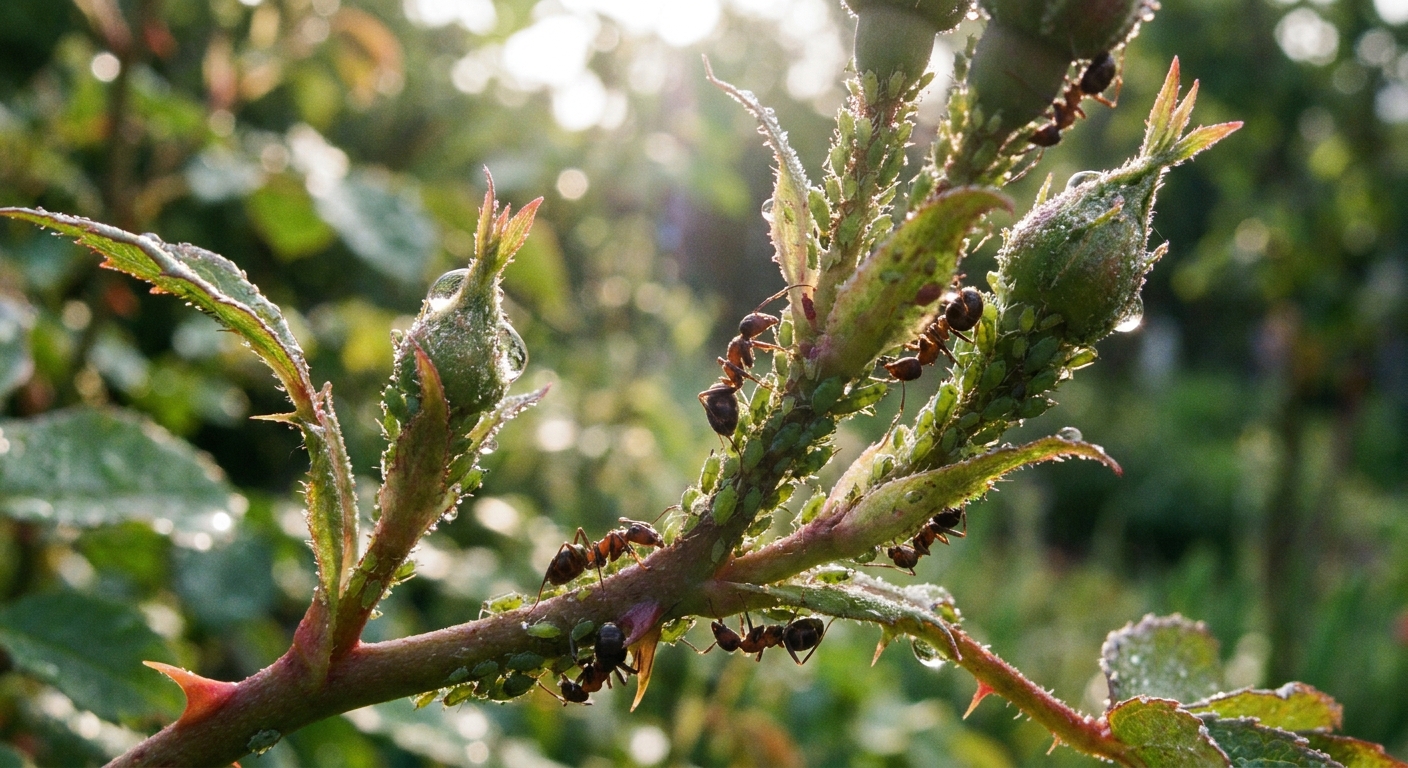
- Ant activity: lots of ants running up and down stems often means aphids are being “farmed”
Quick severity check: a few clusters on the newest tips is usually “light.” When multiple stems and buds are coated, or new growth is curling hard, you are in “moderate to heavy” territory.
If you see fine webbing and stippled leaves, you may be dealing with spider mites instead. If you see white cottony clumps, that can be mealybugs. The steps below still help, but product choice and timing may change.
Start here: non-chemical fixes
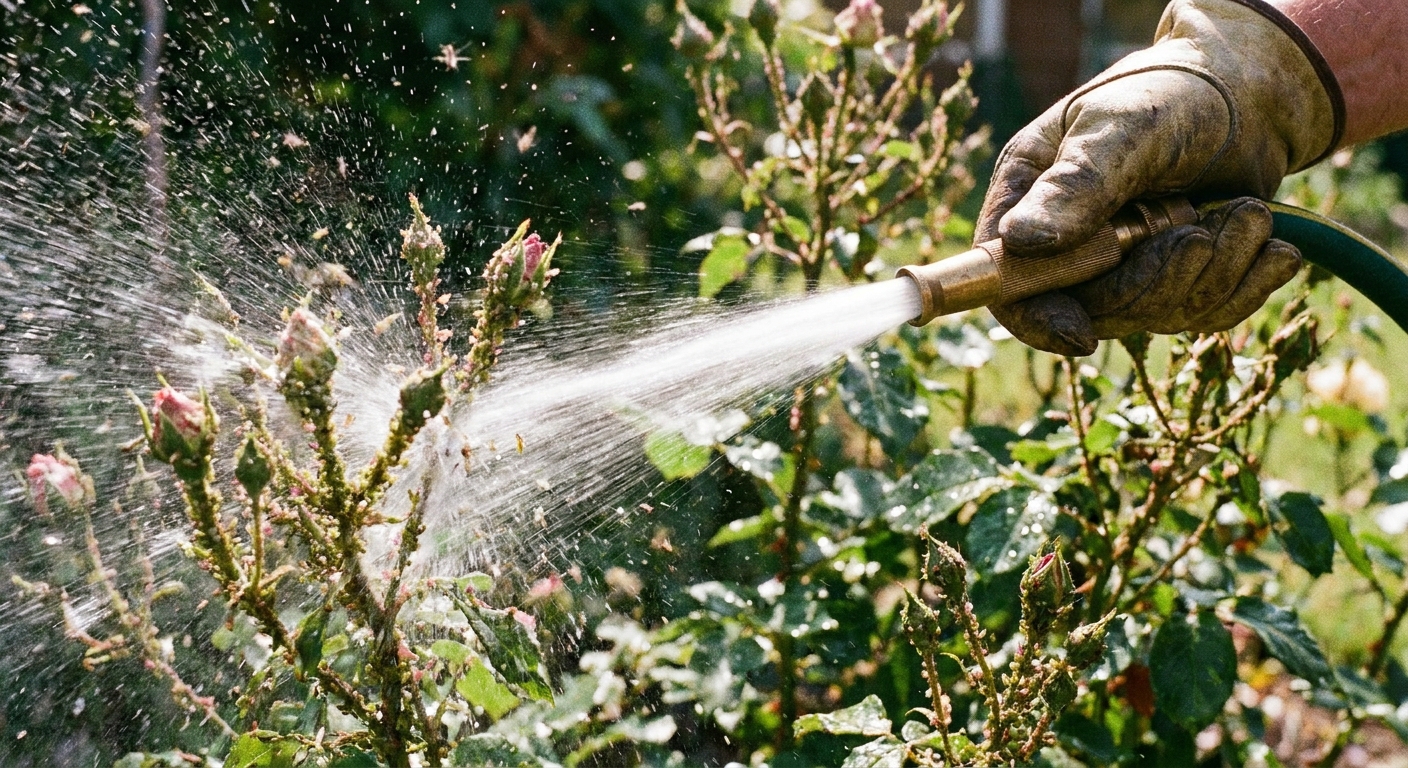
1) Blast them off with water
This is the fastest, cheapest move, and it is often enough by itself for light to moderate infestations.
- Use a hose nozzle with a firm jet setting, not a mist.
- Aim at the underside of leaves and the tender tips where aphids gather.
- Spray in the morning so foliage dries quickly.
- Repeat daily for 2 to 3 days, then check every couple of days.
Tip for roses: focus on buds and the newest 6 to 10 inches of growth. That is where aphids like to set up shop.
2) Prune heavily infested growth
If a stem tip is coated, do not negotiate with it. Snip it.
- Use clean pruners and cut off the most infested tips or curled leaves.
- Drop prunings into a bucket of soapy water or seal in a bag before tossing.
- Do not compost heavily infested material unless your compost gets truly hot.
3) Encourage beneficial insects
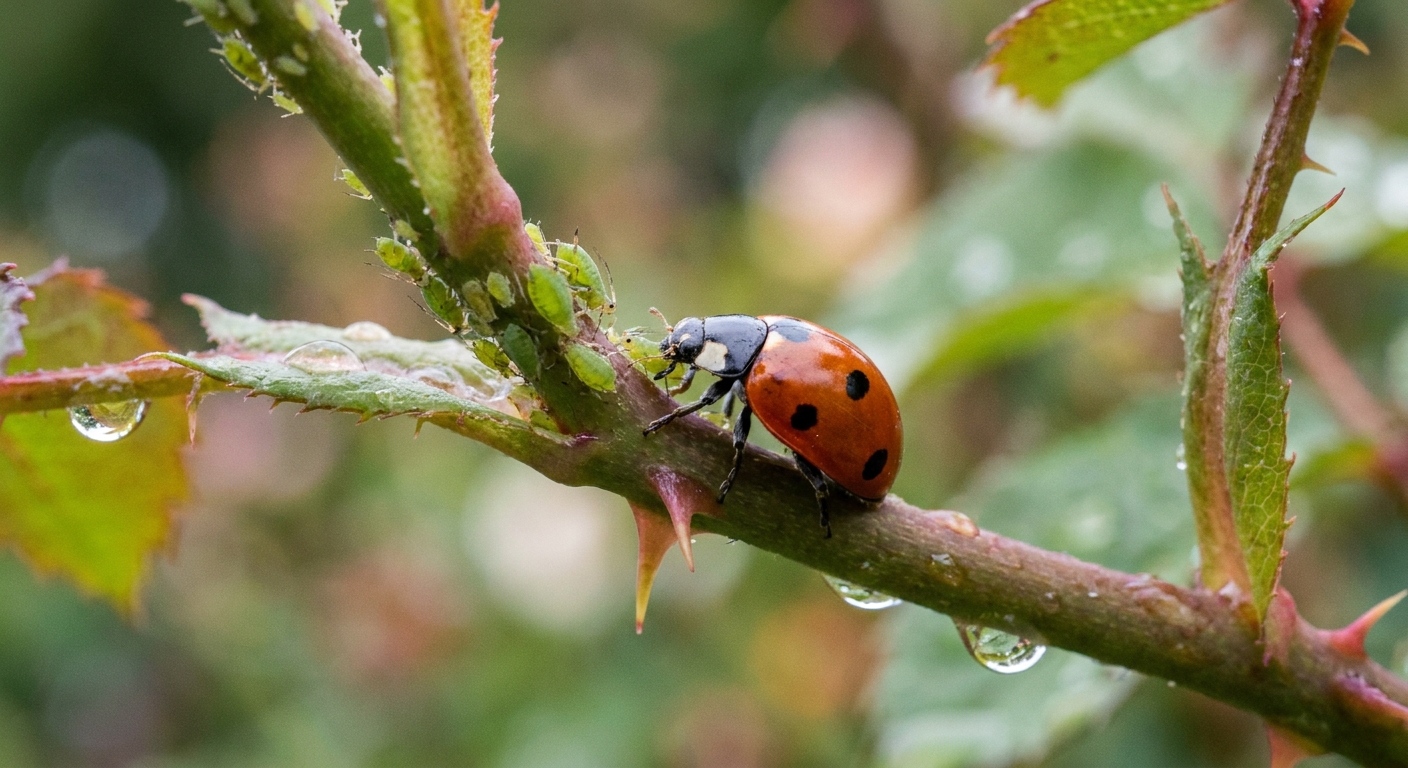
Lady beetles (ladybugs), lacewings, hoverfly larvae, and parasitic wasps are all aphid hunters. If you protect them, they will do ongoing control for you.
- Avoid broad-spectrum insecticides. They kill the good guys too.
- Plant small-flowered nectar sources nearby, like dill, alyssum, yarrow, or cilantro allowed to bloom.
- Leave a little habitat: a mulched bed and a few mixed plantings attract predators.
One helpful nuance: bought-and-released ladybugs often fly off, so I treat them more like a fun bonus than a guaranteed fix. The reliable win is making your garden inviting to the predators that already live nearby. Also, learn what lady beetle larvae look like. They are little alligator-shaped hunters, and people sometimes mistake them for pests.
When water is not enough: targeted sprays
If aphids keep returning, or if you are protecting blooms and new growth, step up to a targeted spray. Two options are usually all you need: insecticidal soap and horticultural oil (including neem oil products).
General spray safety
- Follow the label for mixing rates, reapplication timing, and any days-to-harvest directions for edibles.
- Avoid heat and full sun: many products warn against use around 85 to 90°F, and risk also rises with drought stress and low humidity. When in doubt, spray in the cool part of the day.
- Protect pollinators: avoid spraying open flowers directly. Treat early morning or evening when bees are not active, and aim at stems and leaf undersides.
- Coverage matters: flip leaves. Aphids hide where you are not looking.
Option A: Insecticidal soap
Insecticidal soap kills on contact by disrupting aphids’ protective membranes and cuticle, causing them to dehydrate. It has to touch them to work.
- Spray until the plant is evenly wet, especially undersides of leaves.
- Apply early morning or evening.
- Recheck in 24 hours.
- If you still see live aphids, repeat every 4 to 7 days as needed.
Stop condition: if you do not see live aphids 24 hours after treatment, pause. Keep monitoring and let predators clean up stragglers.
DIY caution: Dish soap is not the same as insecticidal soap. Some dish detergents can burn foliage. If you go DIY anyway, test on a small section first and wait 24 hours before treating the whole plant.
Option B: Horticultural oil or neem oil
Oils work by smothering exposed soft-bodied pests and can help suppress young stages and other repeat-offender pests, but they require thorough coverage.
- Spray in cool parts of the day and avoid wind.
- Do not apply to thirsty, heat-stressed plants.
- Follow the label on mixing rates and reapplication timing.
Note: with aphids, oils are generally about contact control on the plant you have today, not chasing eggs you may never see. That is why coverage and timing matter more than trying to “get ahead of eggs.”
My simple decision rule
- Light: a few clusters on tips, plant still growing strong. Use water spray and inspect every few days.
- Moderate: multiple clusters, some curling. Use water + prune worst tips + insecticidal soap.
- Recurring or stubborn: add horticultural oil (per label, cool part of day) or rotate soap and oil a week apart.
Do not skip this: control ants
If you keep knocking aphids back but they keep returning, look for ants. Ants harvest aphid honeydew like a little sugar operation. In exchange, they guard aphids from predators and sometimes move them to fresh growth.
What to do
- Break the highway: use a sticky barrier on the main cane or trunk (on roses and small shrubs). Do not apply sticky material directly to bark or canes. Wrap with tape or a plant-safe wrap first, then apply the sticky material to the tape.
- Bait ants: use outdoor ant bait stations near the plant, not on blooms.
- Trim bridges: keep branches from touching fences, walls, or other plants that ants use as access routes.
Once ant pressure drops, lady beetles and lacewings have a much easier time cleaning up the remaining aphids.
Roses vs vegetables
For roses and ornamentals
With ornamentals, you are mostly protecting blooms and appearance. Treating is worth it when:
- buds are deforming or not opening
- new growth is curling badly
- you see heavy honeydew and sooty mold
Roses can handle a lot, but repeated heavy infestations can reduce flowering and make plants more vulnerable to other stress.
For vegetables and herbs
On edibles, I lean heavily toward water + pruning + beneficial insects, then use soap or oil only when necessary.
- Treat early: aphids multiply fast, especially in mild spring weather.
- Focus on the growing tips: kale, peppers, beans, and tomatoes often get clusters on new shoots.
- Label first: confirm the product is labeled for your edible crop and check any pre-harvest interval (days-to-harvest) before you spray.
- Wash produce: rinse well before eating, even if the product is labeled for edibles.
When not to panic: if the plant is growing strong and you see predators (lady beetles, lacewing eggs, hoverflies), you may be better off doing nothing but watering and monitoring.
A simple weekend plan
Day 1 (15 to 30 minutes)
- Inspect plants closely, especially undersides of leaves and buds.
- Blast aphids off with water.
- Prune and bag the worst-infested tips.
- Check for ants and set a barrier or bait if needed.
Day 3
- Reinspect new growth.
- If clusters remain, spray insecticidal soap in the cool part of the day and avoid open blooms.
- Recheck in 24 hours. If you do not see live aphids, stop and monitor.
Day 7
- If aphids are still recurring, rotate to horticultural oil (per label, cool weather and no plant stress) or repeat soap per label.
- Keep an eye out for beneficial insects and stop spraying once they move in and control improves.
Mistakes to avoid
- Spraying at noon: heat and sun raise the risk of leaf burn and pollinator contact. Spray early or late.
- Missing the undersides: aphids hide where you are not looking. Flip leaves and spray thoroughly.
- Using the wrong soap: harsh detergents can damage plants. Use a labeled insecticidal soap when possible.
- Ignoring ants: you can win the battle and lose the war if ants keep restocking aphids.
- Over-treating: if predators show up, constant spraying can set you back by killing the cleanup crew.
Prevention that helps
- Do not over-fertilize with nitrogen: lush, tender growth attracts aphids.
- Water consistently: stressed plants are easier targets and more prone to damage.
- Inspect weekly: look at new growth first. Catching aphids early is half the job.
- Encourage diversity: mixed plantings and flowering companions bring in predator insects.
Think of aphid control like home maintenance. A small checkup now saves you from a bigger repair later.
When to escalate
If aphids are overwhelming a valuable plant despite repeated water blasts, pruning, ant control, and labeled soap or oil use, it may be time to:
- consult a local garden center or extension office for region-specific guidance
- consider a stronger, targeted product labeled for aphids on your specific plant type
- evaluate whether the plant is chronically stressed (poor sun, poor airflow, drought cycles), which can make it a magnet
Most of the time though, the basics in this guide are enough to get your roses and outdoor plants back on track.
The 30-Second Cheat Sheet
Essential takeaways for: How to Get Rid of Aphids on Outdoor Plants and Roses
Do this first (no chemicals)
- Blast aphids off with a strong hose spray, especially undersides of leaves and rose buds. Repeat daily for 2 to 3 days.
- Prune badly infested tips and bag them.
- Look for beneficial insects (lady beetles, lacewings, hoverfly larvae). If they are active, spray less and let them work.
If they keep coming back
- Insecticidal soap: kills on contact, so it must hit the aphids directly. Reapply every 4 to 7 days as needed.
- Horticultural oil or neem: helps suppress soft-bodied pests and young stages, but needs full coverage. Follow the label.
- Spray safety: avoid hot sun and heat-stressed plants. Many products warn against use around 85 to 90°F, but always follow your label and spray early morning or evening.
- Pollinators: avoid spraying open blooms. Treat when bees are not active and target stems and leaf undersides.
Do not ignore ants
- Ants “farm” aphids for honeydew and protect them.
- Use ant bait and/or a sticky barrier to stop restocking. Put tape or wrap on the cane first, then apply sticky material to the tape, not directly to the plant.
Roses vs veggies
- Ornamentals (roses): treat when buds deform, leaves curl hard, or honeydew is heavy.
- Vegetables: prioritize water + pruning + predators. Use soap or oil only when necessary, follow the label for days-to-harvest, and wash produce.
💡 Tip: Scroll up to read the full article for detailed, step-by-step instructions.
⬆️ Back to top
About Marcus Vance
Content Creator @ Grit & Home
Marcus Vance is a lifelong DIY enthusiast and self-taught home renovator who has spent the last decade transforming a dilapidated 1970s ranch into his family's dream home. He specializes in budget-friendly carpentry, room-by-room renovations, and demystifying power tools for beginners. Through his writing, Marcus shares practical tutorials and hard-learned lessons to help homeowners tackle their own projects with confidence.