
🚨 In a DIY emergency or rush?
Skip the details and jump straight to our 30-second cheat sheet for the most crucial info.
The first time I noticed broadleaf plantain in my lawn, I did what a lot of us do. I mowed a little lower and hoped it would “clean it up.” It did not. Plantain is built for that. It grows as a low, tough rosette that hugs the soil like a suction cup and it can handle foot traffic, compaction, and neglect better than most turf grasses.
The good news is you can beat it without turning your yard into a chemistry experiment or digging up half the lawn. The trick is starting with the right weed ID, then picking the removal method that matches how established it is, then fixing the conditions that invited it in.
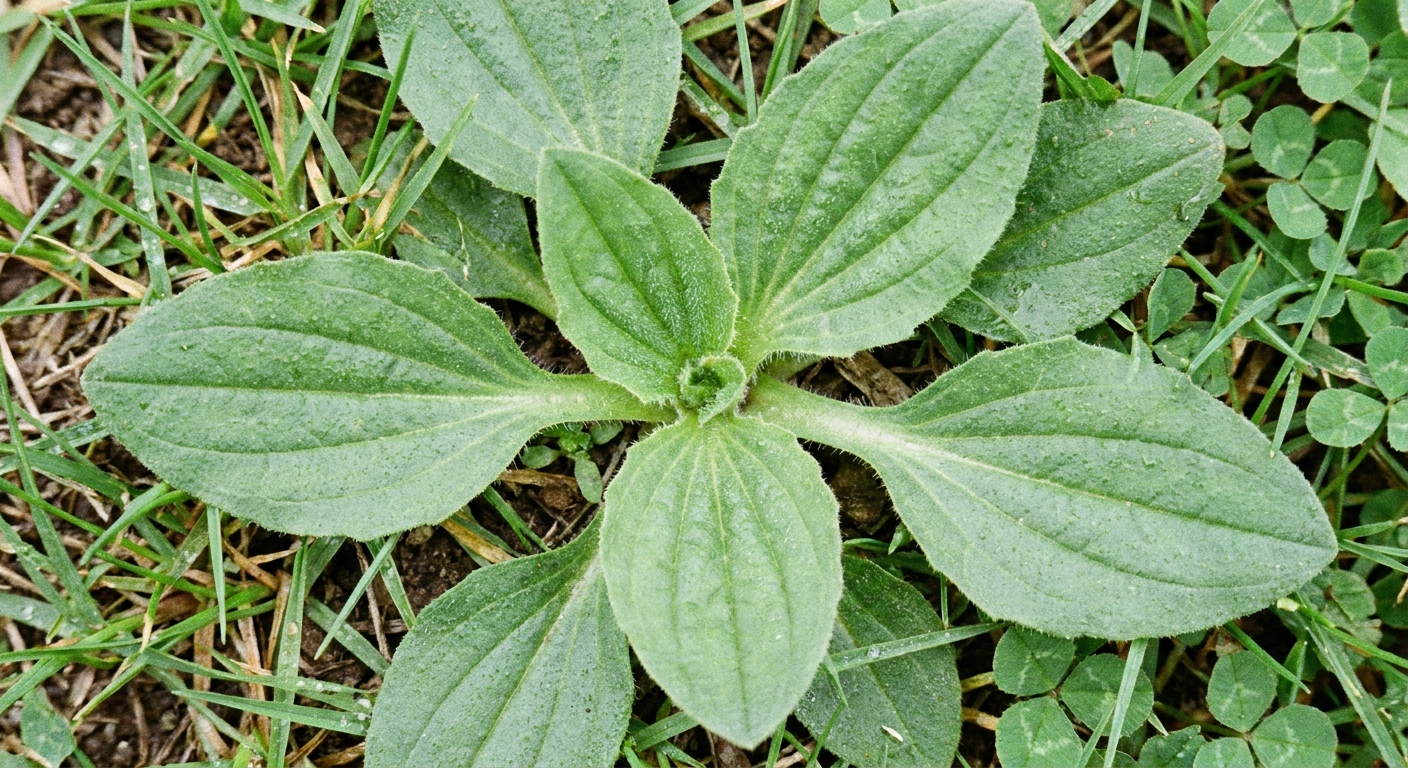
Make sure it is broadleaf plantain first
If you start with the wrong calendar or the wrong “common weed plan,” you can waste weeks. A creeping Charlie or ground ivy schedule is a classic example. Ground ivy spreads on creeping runners and makes a mat. Broadleaf plantain does not. It sits in place as a rosette and anchors itself with a tough crown and roots.
Quick ID checklist
- Growth habit: Low, flat rosette that stays close to the soil.
- Leaves: Oval to egg-shaped, usually smooth-edged, with strong parallel ribs that run from the base to the tip.
- Center: A tough crown where all leaves attach.
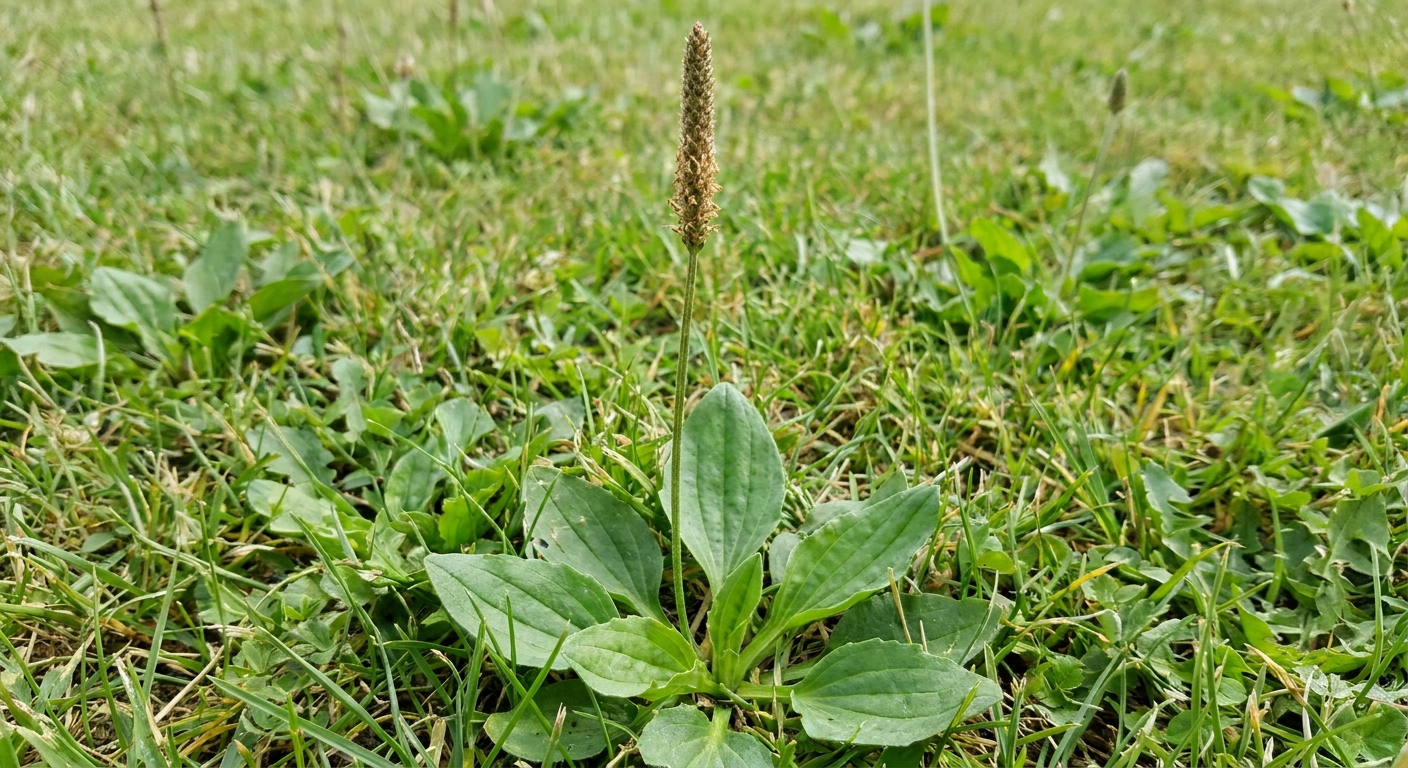
- Seed stalks: Thin vertical stalks with a small, tight seed head, often shooting up above mowing height if you miss them.
- Where it thrives: Compacted soil, thin turf, paths, dog runs, high traffic spots.
Lookalikes: If your “plantain” has fuzzy leaves or lobed edges, pause. Also note that buckhorn plantain (narrowleaf plantain) has long, skinny leaves but behaves similarly, and the control methods below still work.
Why a creeping Charlie plan is the wrong starting point
Ground ivy control is all about breaking up and exhausting a creeping network of stems. Broadleaf plantain is different. It is a single plant with a single crown.
- Plantain’s weak point: The crown and root system. If you remove or kill the crown, that plant is done.
- Ground ivy’s weak point: The leaves and runners. You are usually trying to stop spread and kill a web of stems.
That difference matters because it changes your “best tool.” With plantain, a $10 weeding tool and good timing can outperform a lot of complicated spray routines, especially when the infestation is light.
Choose your method: pull, dig, or spray
Here is the decision rule I use in my own yard.
Pull or dig if
- You have scattered plants or small patches.
- The soil is moist (after rain or watering) and roots release cleanly.
- You can commit to a quick 10-minute patrol once a week for a month.
Use a selective broadleaf spray if
- You have dozens of rosettes or it is throughout the lawn.
- The plants are too mature to pull without cratering the yard.
- You are dealing with other broadleaf weeds at the same time.
Combination approach works great: Dig the big obvious rosettes, then spot spray what pops back up from missed crowns or new seedlings.
How to remove broadleaf plantain by hand
Plantain is easy to pull incorrectly. If you yank leaves, you usually leave the crown behind and it comes right back. Your goal is to pop out the crown and the roots attached to it.
Tools that help
- Garden gloves
- A dandelion weeder, weed puller, or a narrow hand trowel
- A bucket for debris
- Grass seed and a handful of topsoil for quick patching
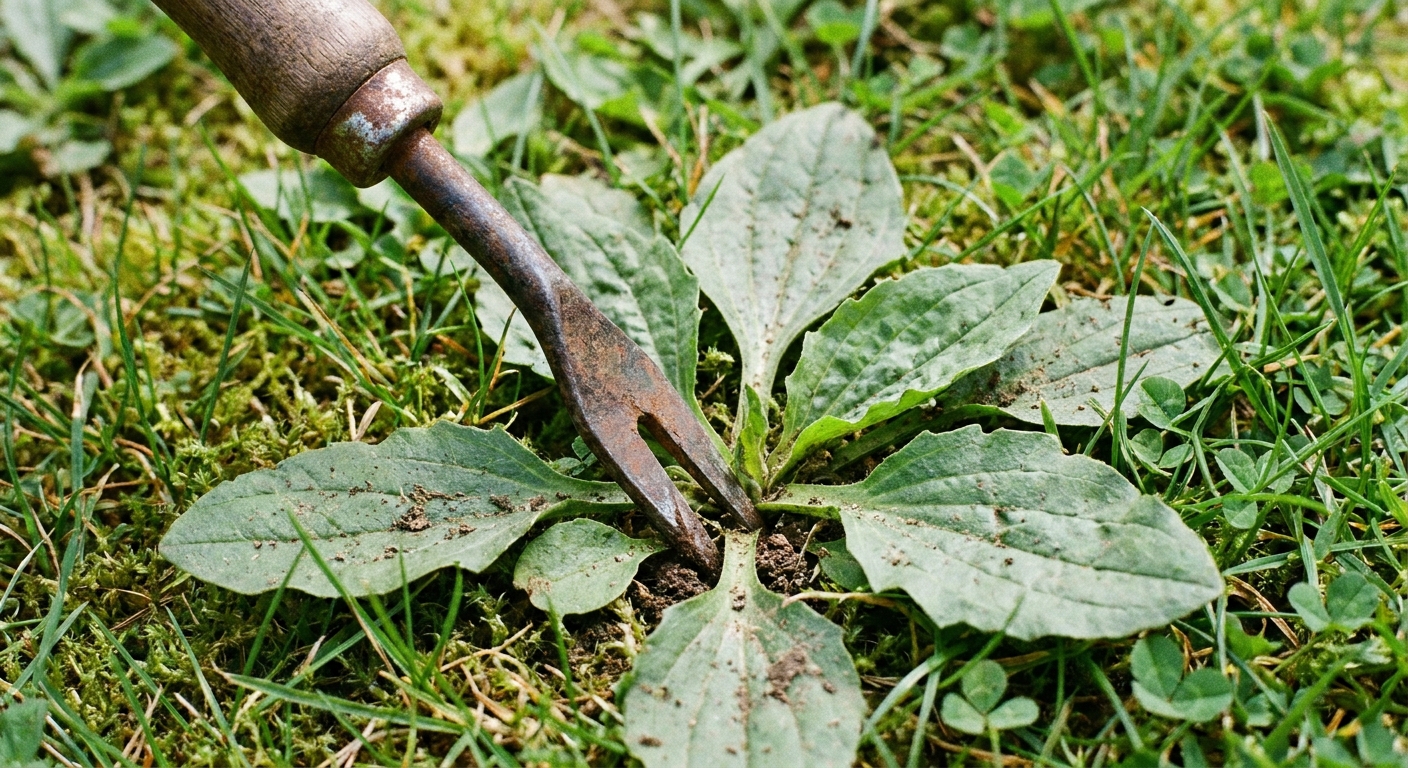
Step-by-step
Soften the ground. Pull after a rain, or water the area for 10 to 15 minutes and give it time to soak in. Dry, compacted soil is where plantain wins.
Find the crown. Push the leaves aside and locate the tight center where the leaves meet the soil.
Slice under the crown. Insert the weeder beside the crown and angle it under the plant, 1 to 2 inches deep.
Pry up, then pull. Use the tool as a lever to lift the plant. Then grasp the crown and pull steadily. You want to see roots coming with it.
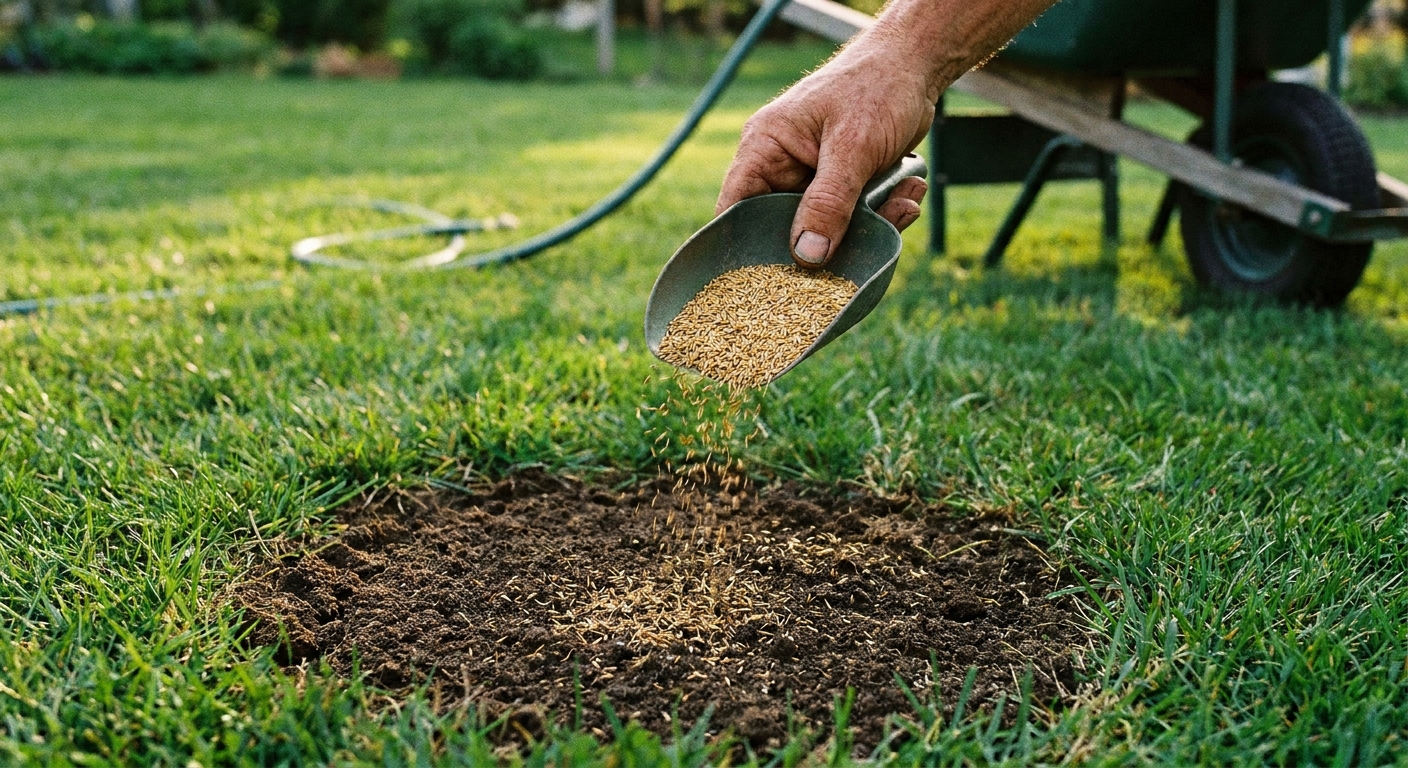
Backfill the divot. Drop in a pinch of topsoil, firm it with your hand or shoe, and sprinkle grass seed. Lightly water.
My most common mistake
I used to leave the hole open, thinking “the grass will fill in.” In thin turf, the hole becomes an invitation for new plantain seedlings. Patch as you go. It takes seconds and saves weeks.
Using a selective broadleaf herbicide
If you are going to spray, go selective. You want something labeled for lawns that targets broadleaf weeds without nuking turf grass when used as directed.
What to look for on the label
- “Selective broadleaf herbicide” for lawns
- Broadleaf plantain listed on the controlled weeds list
- Active ingredients often include combinations like 2,4-D, MCPP (mecoprop), and dicamba. Some products also use triclopyr in mixes.
- Match the product to your turf. What is safe for one grass type may not be safe for another, and local rules can vary, so the label is the boss.
Best timing for plantain
- Fall is prime time in many areas because the plant is storing energy in its roots. Herbicide can follow that pathway down.
- Spring works too when the plant is actively growing and you catch it before it gets old and leathery.
- Avoid extremes: Spraying during drought stress or high heat often disappoints and can stress turf.
How to spot spray without making a mess
Mow 2 to 3 days before you spray, not right before. You want enough leaf area for the product to stick and absorb.
Do not mow again right after. Many labels recommend waiting a bit after treatment before mowing. Follow your product’s instructions.
Choose a calm day. Wind is how herbicide ends up on the flowers, shrubs, or the neighbor’s tomato plants.
Spray when foliage is dry. Coat the leaves lightly (no runoff) unless your label specifically allows application to wet foliage.
Give it time. Many labels call for 24 hours without rain or irrigation. Do not water it off early.
Plan for a second pass. Tough, mature rosettes often need a follow-up application per label directions.
New seed warning: If you just overseeded, pause before spraying. Most products require waiting until new grass is established (label-dependent), and spraying too soon can set your seedlings back.
Kid and pet note: Keep children and pets off treated areas until the product label says it is safe to re-enter. If you are uncomfortable with any herbicide use, stick with digging plus turf thickening and you can still get great results.
Quick safety habit: Avoid drift, avoid spraying near blooms that pollinators are working, and dispose of leftover mix and empty containers the way your label and local rules require.
Why plantain keeps coming back
If plantain is thriving, it is usually telling you something about your lawn. Most often it is soil compaction, thin turf, or both. I see it pop up along routes people actually walk: from the driveway to the front door, around gates, under swings, and where the dog launches off the patio.
Fix #1: Relieve compaction
- Aerate compacted areas. Core aeration is best because it physically removes plugs and opens channels for water and roots.
- Topdress lightly with compost after aeration to improve soil structure over time.
- Reduce traffic on soft soil when possible. Even small changes, like adding stepping stones in a worn path, can help.
Fix #2: Mow higher
Short mowing weakens grass and lets sunlight hit the soil surface. Plantain seedlings love that. If you only change one habit, change this one. As a rough starting point, many cool-season lawns do well around 3 to 4 inches, while warm-season grasses vary more by species.
Fix #3: Feed the grass, not the weeds
A healthy lawn fills in bare spots and shades out new rosettes. Follow a fertilizer program appropriate for your grass type and climate, and do not overdo nitrogen in the wrong season.
Fix #4: Overseed the thin spots
Any place you pulled plantain is a place you should seed. Same goes for any area where you had a cluster of rosettes.
- Scratch the soil surface so seed contacts soil.
- Use a light topdressing of soil or compost to protect seed.
- Keep it consistently moist until germination, then taper to deeper, less frequent watering.
Fix #5: Water deeper, less often
Shallow, frequent watering keeps grass roots near the surface and does not help it compete. Plantain tolerates tough conditions, but turf competes better when it has deeper roots.
Season-by-season game plan
Spring
- Identify rosettes early
- Dig or spot spray small plants
- Address thin turf with overseeding if your spring weather allows it for your grass type
Summer
- Focus on mowing height and smart watering
- Hand dig after watering if needed
- Avoid heavy herbicide applications during extreme heat or drought stress
Fall
- Best window for aeration and overseeding in many regions
- Great timing for selective broadleaf herbicide, especially on established plantain
- Fertilize appropriately to help turf thicken
Winter
- Plan your spring fixes based on where plantain showed up
- Improve traffic patterns in problem areas if you can
FAQ
Will mowing kill broadleaf plantain?
No. Plantain grows low on purpose. Mowing might clip seed stalks, but the rosette usually stays below blade height.
Does vinegar or boiling water work?
They can burn leaves, but they rarely kill the crown reliably, and they can damage surrounding grass. For lawns, digging and selective broadleaf products are more predictable.
Why does plantain love my yard?
Usually compaction and thin turf. If the lawn is struggling where you walk, where kids play, or where the soil stays hard, plantain sees opportunity.
How long until it is gone?
With hand removal, you can make a noticeable dent in a weekend, but plan on follow-up for a few weeks to catch missed crowns and new seedlings. With selective herbicide, you will typically see yellowing and decline over about 7 to 21 days, depending on the product, temperature, and plant maturity, with a second treatment sometimes needed per label.
The real finish line: a thicker lawn
Getting rid of broadleaf plantain is satisfying, but keeping it gone is where the payoff is. Pull or spray what is there, then spend the rest of your effort on turf density: aerate compacted spots, mow higher, overseed thin areas, and water like you are growing roots, not just greening up the surface.
When the grass canopy closes, plantain stops finding sunlight, and those ribbed little rosettes run out of places to land.
The 30-Second Cheat Sheet
Essential takeaways for: How to Get Rid of Broadleaf Plantain in Your Lawn
Identify it fast
- Broadleaf plantain grows as a flat rosette with oval leaves and strong parallel ribs.
- It has a tough central crown and may send up thin seed stalks.
- It is not a creeping runner weed like ground ivy, so ground-ivy timing is not your best starting point.
Best removal method
- Light infestation: Dig it out. Get the crown or it comes back.
- Heavy infestation: Spot spray with a selective broadleaf lawn herbicide that lists plantain on the label.
- Best overall approach: dig the big ones, then spot spray stragglers.
Hand digging in 4 steps
- Pull after rain or watering so soil is soft.
- Slide a dandelion weeder or narrow trowel under the crown.
- Pry up and pull from the crown, not the leaves.
- Fill the divot and seed it so weeds do not reclaim the bare spot.
Spraying basics
- Spot spray on a calm day. Coat leaves lightly, do not soak to runoff.
- Do not mow immediately before spraying. Give it leaf area to absorb.
- Fall and mild spring weather are often the strongest results windows.
- Follow label directions for re-entry (kids and pets) and repeat timing.
Keep it from returning
- Aerate compacted soil and topdress lightly with compost.
- Mow higher to shade the soil surface.
- Overseed thin areas so turf crowds out new rosettes.
- Water deeper, less often to encourage deeper grass roots.
💡 Tip: Scroll up to read the full article for detailed, step-by-step instructions.
⬆️ Back to top
About Grit
Content Creator @ Grit & Home
Grit is Grit & Home’s little blue clay courier, delivering big questions about the place you call home. Expect practical ideas, a raised eyebrow, and a satchel full of curiosity.