
🚨 In a DIY emergency or rush?
Skip the details and jump straight to our 30-second cheat sheet for the most crucial info.
Carpet beetles are one of those pests that make you question your housekeeping. Here is the truth: they are not showing up because you are “dirty.” They show up because most homes have the exact things they love, like wool, feathers, pet hair, lint, and dark, undisturbed edges of rooms.
The good news is you can usually beat them with a thorough clean-out and a few smart storage habits. The trick is to target the larvae, because that is the stage that does the damage.
What carpet beetles are (and why your clothes get holes)
Carpet beetles are small, common household insects. Adults often feed on pollen and nectar outdoors and may wander inside through open doors, windows, or on cut flowers. Indoors, they can show up even if they are not feeding. The real issue starts when they lay eggs near food for the larvae.
Adult vs larvae: which one matters?
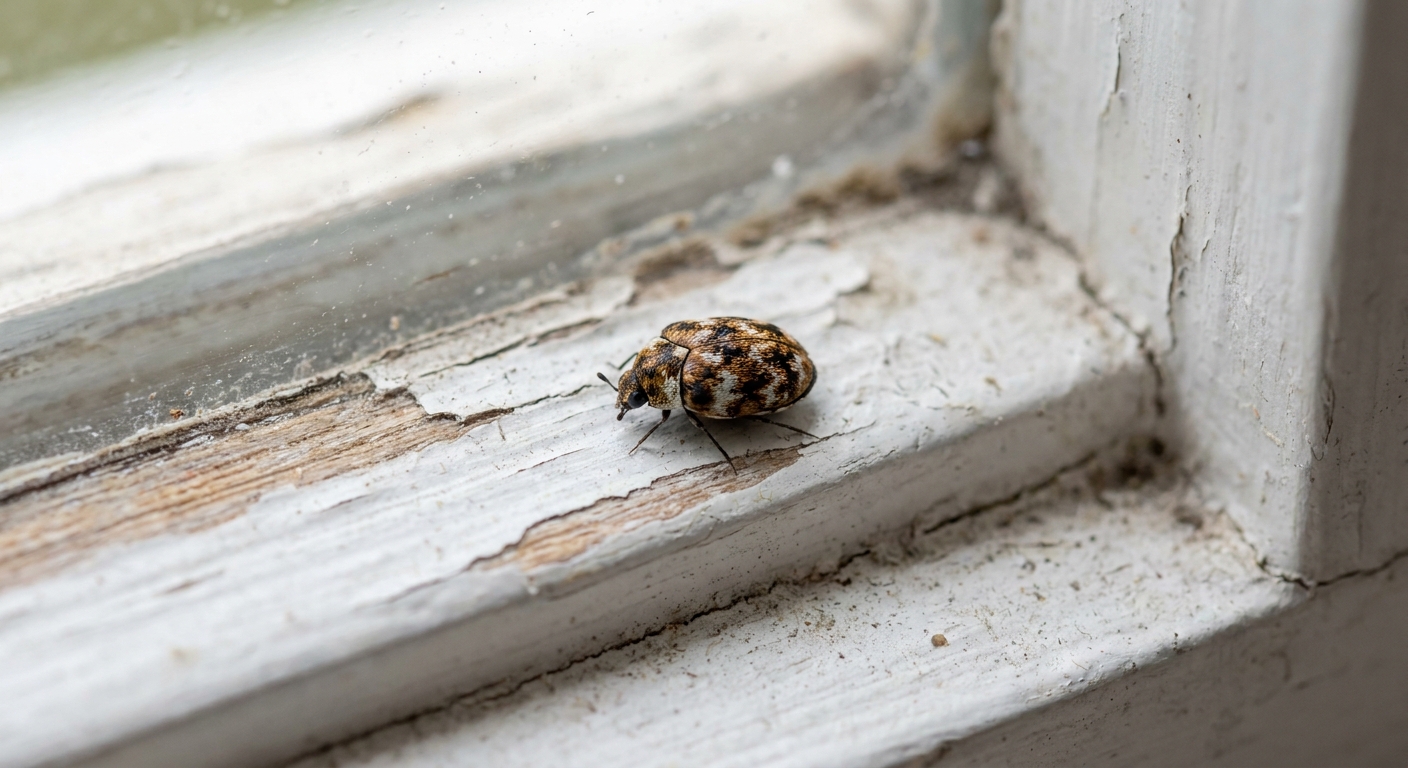
- Adults: tiny oval beetles (often mottled black, white, and brown). You might find them near windows because they are attracted to light. Adults are more of a “clue” than a threat.
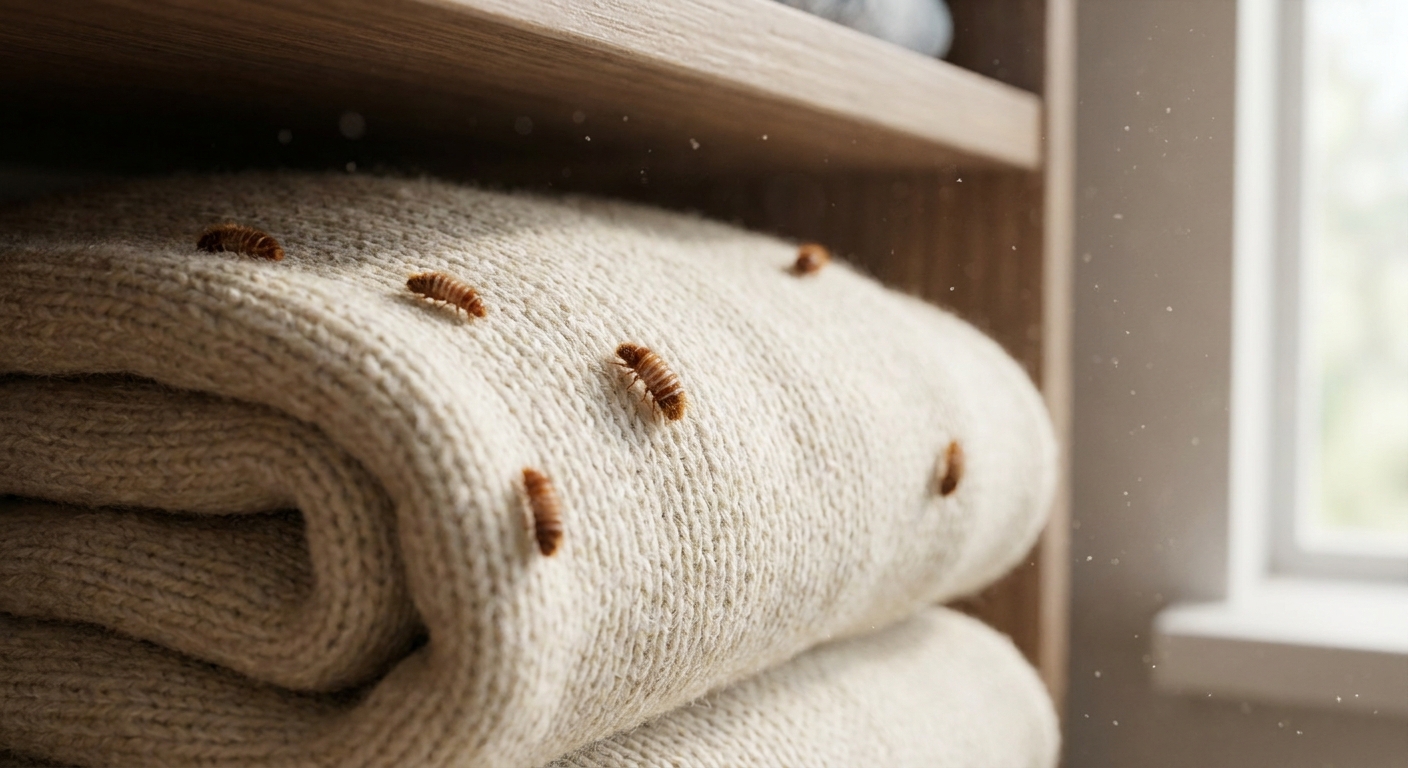
- Larvae: small, bristly, brown to tan “worms” that move slowly and hide in dark places. Larvae are the fabric chewers. They feed primarily on keratin and other animal-based materials.
Why wool gets hit first
Carpet beetle larvae prefer materials that come from animals, especially:
- Wool rugs and wool clothing
- Felt, fur, and taxidermy
- Feathers (pillows, down comforters)
- Silk, leather, and some natural blends
- Pet hair, dander, and lint buildup (even if the fabric is synthetic)
You may also see damage on cotton or synthetics, but usually because the item is blended with animal fibers, contaminated with hair and lint, or soiled with sweat, skin cells, or food. In other words, “clean” fabric is less interesting to them.
Signs you have carpet beetles
- Irregular holes in wool sweaters, scarves, blankets, or rugs (often along folds and edges).
- Shed skins from larvae that look like tiny, empty, bristly shells.
- Larvae in dark, quiet areas like closet corners, under furniture, or along baseboards.
- Adult beetles near windowsills or light fixtures.
- Small “pepper-like” specks (frass) in a hidden spot near infested materials.
One more thing: the tiny hairs on larvae can irritate skin for some people. If you are getting mystery itchy bumps, it can be dermatitis from the hairs, not bites.
If you are seeing adults but no damage yet, you can often stop an infestation early with targeted cleaning, monitoring, and better storage.
Carpet beetles vs clothes moths
Before you treat, make sure you are fighting the right pest. Carpet beetles and clothes moths both go after natural fibers, but the clues look different.
- Carpet beetle larvae are bristly and look like little brown “carrots” or fuzzy worms. You often find shed skins.
- Clothes moth larvae are smoother, often pale, and may leave silken webbing or cases (little tubes) on fabric.
- Adults: carpet beetles are beetles; clothes moths are small tan moths that avoid light.
Where to look first
Carpet beetle larvae avoid traffic and light. My rule is simple: check anywhere dust collects and nobody bothers for months.
High-priority hiding spots
- Closets: corners, baseboards, under shoe racks, and on shelves holding wool or stored linens
- Edges of rugs and wall-to-wall carpet: especially where carpet meets baseboard or transitions
- Under beds and dressers: lint plus darkness is a buffet
- Upholstered furniture: under cushions, along seams, and under furniture skirts
- Pet bedding and favorite nap zones
- HVAC returns and floor vents (lint and hair collect here)
- Stored decor: wreaths, dried flowers, wool felt crafts, baskets lined with fabric
If you find larvae, assume there are more nearby. They often stay close to a food source, but they can wander to find a better spot or to pupate.
Room-by-room plan
This is the part where you win. The goal is to remove larvae, eggs, and their food sources. Vacuuming is your best tool, but only if you do it like you mean it.
Before you start
- Vacuum with strong suction and a crevice tool
- Extra vacuum bags or an empty canister you can dump immediately
- Lint roller (surprisingly useful on fabric surfaces)
- Hot wash access or a dryer
- Sealable storage bins or heavy-duty zip bags
- Optional: sticky traps for monitoring adult activity near windows and closets
- Optional: a labeled residual spray and a labeled crack-and-crevice dust
Quick safety note: If anyone in your home has asthma or chemical sensitivities, lean harder on cleaning, heat, freezing, and sealed storage first. Only add pesticides when necessary, and always follow the label.
Closets and dressers
This is ground zero in a lot of homes because we store wool, blankets, and seasonal clothing here.
- Pull everything out.
- Bag wool, cashmere, silk, and stored linens while you work.
- Vacuum closet floors, baseboards, corners, and shelf edges. Use the crevice tool along every seam.
- Wipe shelves and baseboards with soapy water, then dry.
- Launder what you can on the hottest safe setting. Anything that cannot be washed should be dry cleaned or heat treated in a dryer if the care tag allows.
Heat beats eggs: sustained high heat is one of the most reliable DIY tools, but exact time varies by dryer, load size, and fabric. Follow the garment care label and aim for a thorough, fully heated cycle rather than a quick warm-up.
Delicates option: freezing can work for some items. Seal the item in a bag (push out extra air), freeze, then keep it sealed until it returns to room temperature to reduce condensation. Timing varies by freezer and item thickness, so follow reputable extension or textile care guidance for best results.
Bedrooms
- Move the bed enough to vacuum under it and along the baseboards.
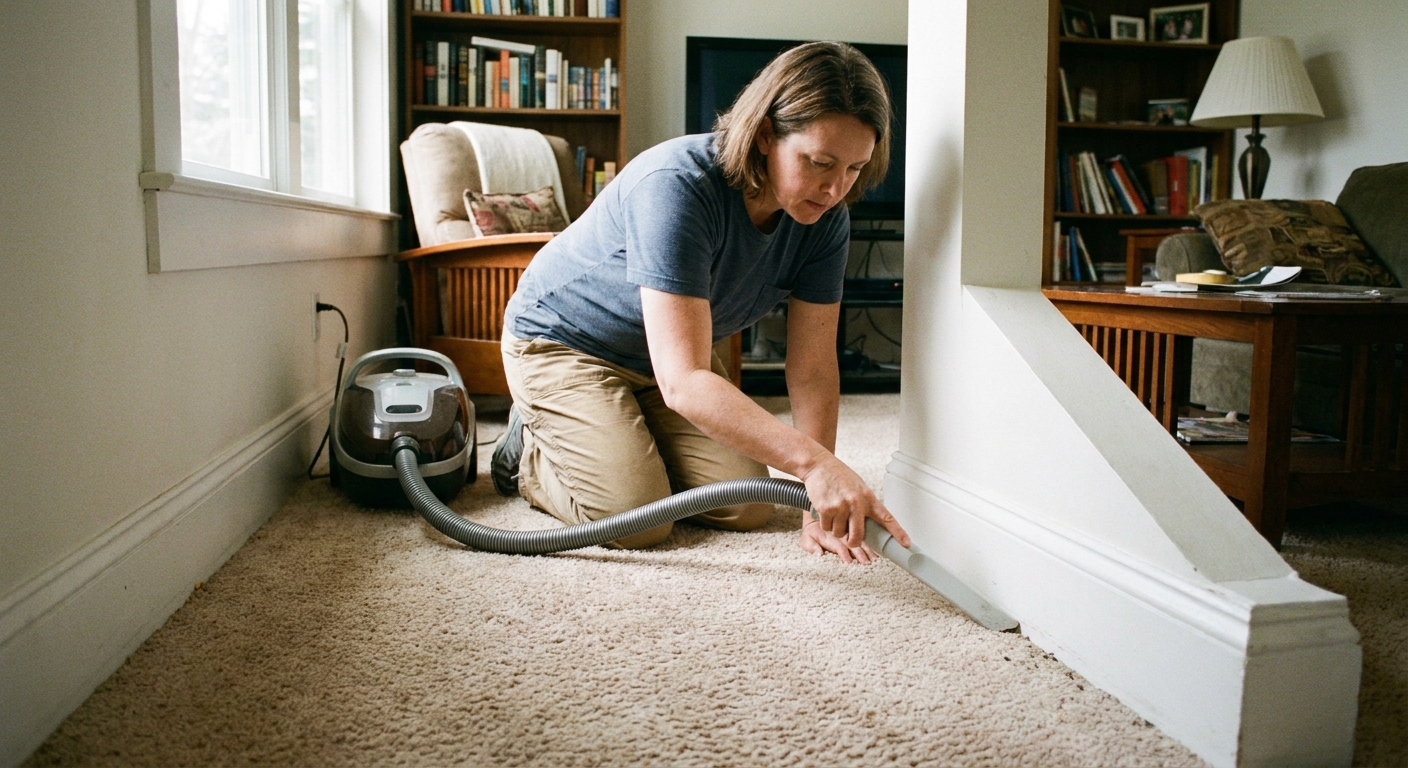
- Vacuum the carpet perimeter slowly. Think “paint the edge” with the crevice tool.
- Vacuum the underside of upholstered headboards and bed skirts if you have them.
- Wash bedding, especially wool blankets and decorative pillows with feather fill that have removable covers.
Living room
- Flip area rugs and vacuum both sides. Pay attention to the binding and fringe.
- Vacuum under the couch cushions and along seams.
- Vacuum under the couch and chairs, then hit the nearby baseboards.
- If you have wool rugs: consider professional cleaning if damage is present, and store them properly if seasonal.
Laundry room and linen storage
- Wash and dry spare blankets, and any stored clothing or linens.
- Vacuum behind machines, around lint traps, and any shelving where dust collects.
- Replace cardboard boxes with sealed plastic bins for long-term storage.
Pet areas
- Wash pet bedding on hot if possible and dry thoroughly.
- Vacuum around pet sleeping spots daily for a week, then weekly.
- Check baseboards near pet beds. Hair drifts into corners and feeds larvae.
Attic, basement, and storage
These areas are often the silent source because they are undisturbed.
- Inspect stored textiles, holiday decor, and old boxes.
- Vacuum edges, corners, and around stored items.
- Seal textiles in bins. Avoid storing wool in cardboard.
- Watch for source issues like old bird or rodent nests in attics, chimneys, or vents, and dead insects in light fixtures or wall voids. Those can keep feeding larvae even after you clean your closet.
Storage tips
Once you clean, storage is what keeps you from repeating this whole project in 3 months.
Clothes and linens
- Wash before storing. Larvae love body oils and food stains.
- Use airtight bins for wool, felt, feathers, and special textiles.
- Skip cardboard for long-term fabric storage. It holds dust and can hide pests.
- Keep closet floors clear so you can vacuum edges quickly.
- Reduce lint and hair with regular vacuuming and HVAC filter changes.
Cedar and mothballs
- Cedar: can help as a deterrent when it is fresh, but it is not a cure. Use it as a backup, not your main plan.
- Mothballs: they can work only in tightly sealed containers, but they are toxic and the odor is stubborn. I avoid them in most family homes. If you use them, follow the label and keep them away from kids and pets.
When to add insecticide
If you have active larvae after thorough cleaning, or you keep finding new damage, it is time to consider targeted products. The keyword is targeted. Spraying the middle of a carpet rarely solves a problem that lives along edges and in cracks.
DIY options
- Residual spray labeled for carpet beetles, applied to baseboards, closet edges, carpet perimeter, and cracks where larvae travel. Do not soak fabrics. Follow drying times and ventilation directions.
- Crack-and-crevice dust (often silica-based) in voids where you cannot vacuum well, like gaps under baseboards or inside built-ins. Apply lightly. More is not better. Avoid open-area dusting.
Important: Always read the pesticide label. The label is the law. If it does not list carpet beetles and indoor use in the area you plan to treat, do not use it there. This also matters for powders, including boric acid type products, since placement and labeling vary.
When to call a professional
If you are dealing with any of the situations below, bringing in a pro can save you money on ruined textiles and weeks of frustration.
- You find larvae in multiple rooms or on multiple floors
- Damage is ongoing despite cleaning and storage fixes
- The source appears to be inside walls, vents, or hard-to-access voids
- You have valuable rugs, antiques, or extensive wool furnishings
- Someone in the home cannot tolerate DIY pesticide use and you need a controlled plan
A good pest pro will focus on inspection, source removal, targeted treatment, and follow-up. If their plan is “spray everything once and leave,” ask more questions.
How long it takes
For a small, localized issue, you can often see a major improvement in 1 to 2 weeks with aggressive vacuuming and heat treating fabrics. For a larger infestation, expect 4 to 8 weeks of follow-up cleaning, because eggs can hatch after your first round.
Follow-up schedule
- Days 1 to 3: deep clean, heat treat or clean fabrics, vacuum edges daily
- Week 1 to 2: vacuum edges every 2 to 3 days, monitor closets and pet areas
- Week 3 to 8: weekly perimeter vacuuming, keep stored items sealed, re-check trouble spots
Common mistakes
- Vacuuming only the middle of the room. Larvae hang out along edges, under furniture, and in corners.
- Storing unwashed wool. Even “looks clean” can mean oils and skin cells.
- Using sprays but not removing the food source. Dust, lint, and pet hair are food.
- Forgetting pet bedding. It is warm, hairy, and often tucked in a quiet corner.
- Not sealing the vacuum contents. If you vacuum larvae, dump the canister outside immediately, or remove the bag and seal it in a trash bag.
Simplest plan
If you only do five things, do these:
- Confirm the pest and find the source by checking closets, rug edges, vents, and pet bedding.
- Heat treat, freeze, or dry clean vulnerable textiles (especially wool and down).
- Vacuum baseboards, carpet edges, under furniture, and closet corners thoroughly.
- Seal stored natural-fiber items in airtight bins.
- If larvae keep showing up, add a targeted labeled residual treatment to perimeter zones or call a pro.
Once you do the unglamorous work, carpet beetles usually fold fast. And you get your closet back without living in fear of mystery holes.
The 30-Second Cheat Sheet
Essential takeaways for: How to Get Rid of Carpet Beetles
What you are dealing with
- Adults are small beetles often seen near windows. They are a clue.
- Larvae are bristly brown “worms” that hide in dark edges. Larvae cause the fabric damage.
- They prefer wool, silk, fur, feathers, felt, plus lint and pet hair.
Where to look first
- Closet corners, shelves, and baseboards
- Edges of rugs and carpet where it meets the wall
- Under beds and dressers
- Under couch cushions and along upholstery seams
- Pet bedding and nearby baseboards
Fast action plan (works for most homes)
- Pull and bag wool and stored linens so larvae cannot spread.
- Heat treat susceptible items: use a hot dryer cycle only if the care label allows, or dry clean.
- Vacuum like a pro: baseboards, carpet edges, corners, under furniture, vents. Use a crevice tool.
- Dump vacuum contents outside right away (seal bag or empty canister).
- Repeat vacuuming every 2 to 3 days for 2 weeks, then weekly.
Storage that prevents return
- Wash items before storing.
- Store wool, feathers, and special textiles in airtight bins, not cardboard.
- Keep closet floors clear so you can vacuum edges easily.
When to use insecticide
- If larvae keep appearing after deep cleaning, use a labeled residual on baseboards, closet edges, and carpet perimeter.
- Use a labeled insecticide dust lightly in cracks and voids you cannot vacuum well. Avoid open-area dusting.
- Follow the label exactly and ventilate.
When to call a pro
- Larvae in multiple rooms, ongoing damage, or suspected wall and vent void sources
- Valuable rugs or extensive wool furnishings at risk
- You need a controlled plan due to sensitivities or heavy infestation
💡 Tip: Scroll up to read the full article for detailed, step-by-step instructions.
⬆️ Back to top
About Marcus Vance
Content Creator @ Grit & Home
Marcus Vance is a lifelong DIY enthusiast and self-taught home renovator who has spent the last decade transforming a dilapidated 1970s ranch into his family's dream home. He specializes in budget-friendly carpentry, room-by-room renovations, and demystifying power tools for beginners. Through his writing, Marcus shares practical tutorials and hard-learned lessons to help homeowners tackle their own projects with confidence.