
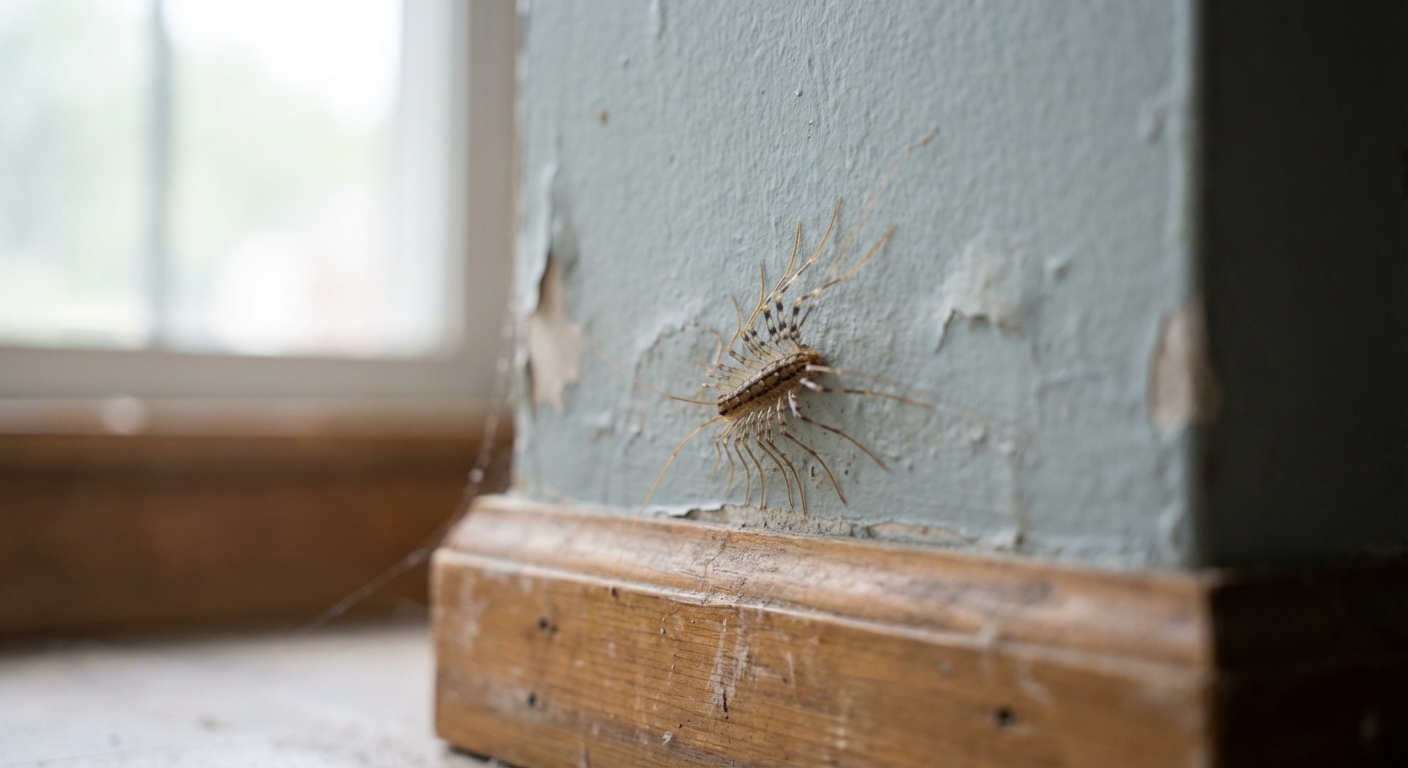
If you have ever flipped on a basement light and watched something with way too many legs sprint into a crack, you have met the house centipede. The good news is they are not wood-eaters like termites, and they do not build nests or form colonies in your walls the way rodents do. The bad news is they show up for three reasons that are fixable: moisture, food, and shelter.
House centipedes are predators. When they are in your home, it usually means there is a humid, damp hiding spot nearby and a steady supply of smaller bugs to hunt. My approach is simple and budget-friendly: dry it out, seal it up, and starve them out. Traps handle the leftovers, and a perimeter treatment keeps new ones from moving in.
Identify what you are dealing with
Most “centipede problems” indoors are the common house centipede (Scutigera coleoptrata). They look alarming, but the ID matters because the fix is different for millipedes, termites, or silverfish.
Quick ID checklist
- Body: slender, about 1 to 1.5 inches long (not counting legs)
- Legs: very long, splayed outward, giving a “feathery” look
- Speed: extremely fast runners
- Where you see them: basements, bathrooms, laundry rooms, crawl spaces, garages, under sinks
- When you see them: mostly at night or when you disturb a damp, dark spot
If the insect you are seeing is slow, rounder, and curls up, that is likely a millipede. Millipedes are more about wet organic debris outdoors. House centipedes are all about hunting other insects indoors.
What attracts centipedes
Centipedes do not move in because your home is “dirty.” They move in because your home is comfortable for their prey and gives them the kind of dark cover they like.
Top attractants
- High humidity: damp basements, condensation on pipes, wet crawl spaces, moisture at the sill and rim joist area
- Standing water: floor drains, sump pits, wet bath mats, slow plumbing leaks
- Available prey insects: roaches, ants, spiders, silverfish, carpet beetles, flies, gnats
- Easy hiding spots: clutter, stored cardboard, gaps behind baseboards, cracks in slab edges
Here is the key mindset shift: centipedes are a symptom. If you remove moisture, reduce prey, and cut down hiding spots, the problem usually collapses on its own.
Step 1: Reduce indoor humidity
If I could only do one thing, it would be controlling humidity. House centipedes prefer high humidity and damp hiding spots, and damp spaces also boost the insects they hunt.
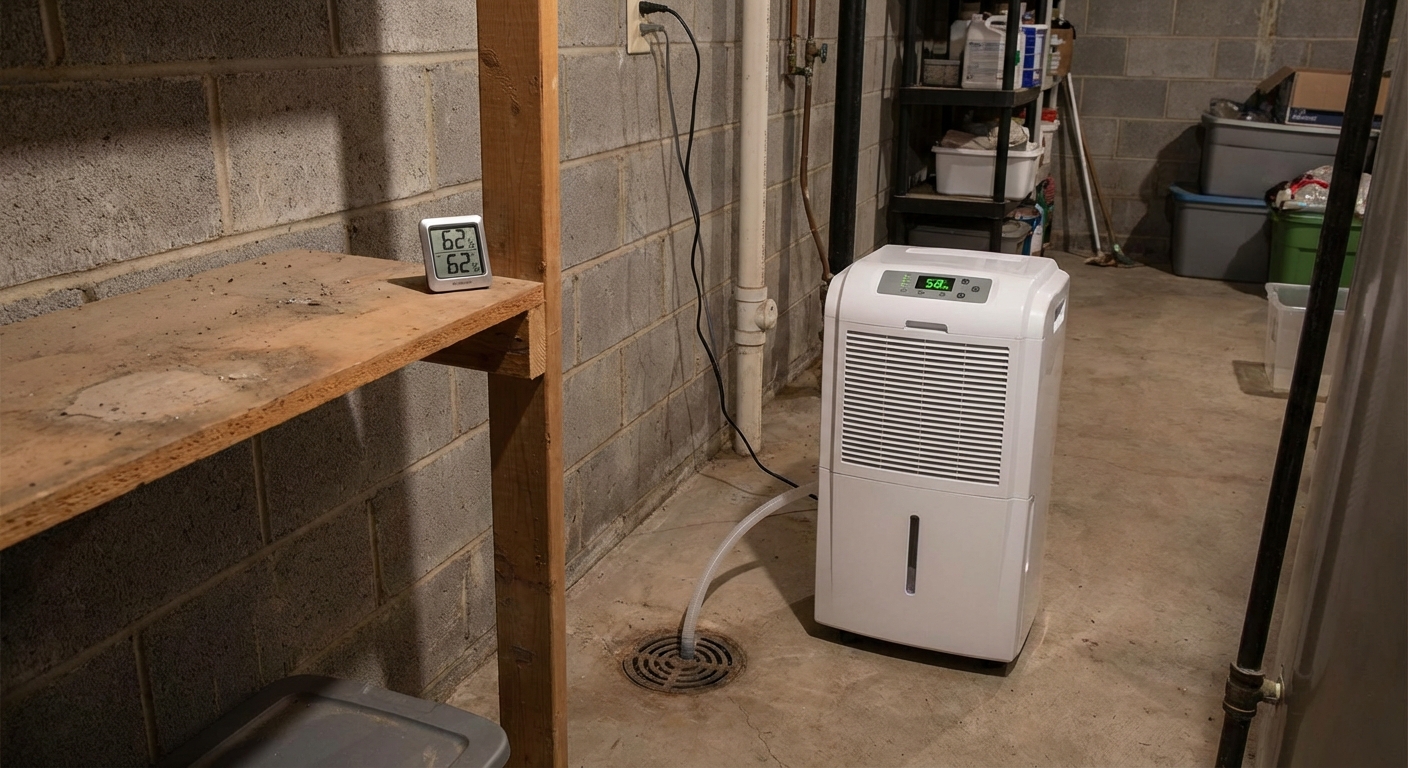
Targets to aim for
- Basements and crawl spaces: aim for about 40% to 50% relative humidity when possible
- If you are consistently above 55%: expect pests and musty smells
- Season note: In some climates and seasons, holding 40% may be unrealistic. The practical goal is to keep it under 50% as often as you can.
Practical ways to dry out your house
- Run a dehumidifier in the basement or the dampest level. Empty it daily at first or run a hose to a floor drain or sump basin.
- Fix obvious leaks: dripping shutoff valves, sweating pipes, toilet supply lines, under-sink traps.
- Vent moisture at the source: use the bath fan for 20 to 30 minutes after showers and make sure it exhausts outdoors, not into an attic.
- Insulate cold water pipes to reduce condensation.
- Improve drainage outside: keep gutters clean, extend downspouts 6 to 10 feet away, and slope soil away from the foundation.
My hard-learned lesson: I once chased centipedes with sprays for weeks before I realized a tiny, slow drip under the laundry sink was keeping the whole corner of the basement “bug-friendly.” Fixing that drip and running a dehumidifier did more than any can ever did.
Seasonal spikes: It is common to see more centipedes after heavy rain, during humid stretches, or when temperatures swing and pests start searching for stable shelter indoors. That is another reason moisture control and sealing pay off long-term.
Step 2: Seal cracks and entry points
Centipedes can squeeze through surprisingly small gaps. Sealing does two things: it blocks new arrivals and it removes the tight, dark hiding spots they love.
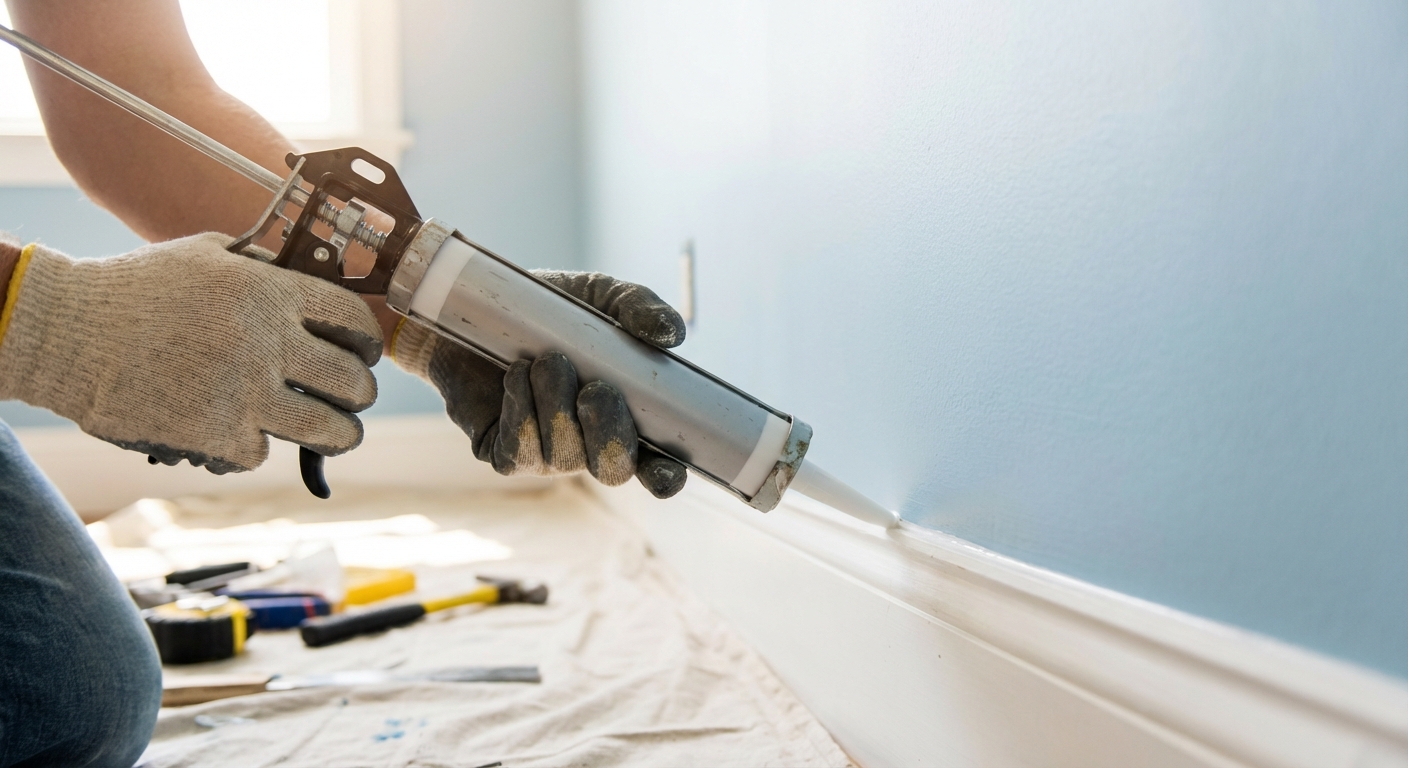
Where to seal first
- Gaps where the foundation meets framing in basements and crawl spaces
- Cracks along baseboards and around door trim
- Utility penetrations: pipes, wires, hose bibs, A/C line sets
- Basement windows and sliding window tracks
- Garage-to-house doorway weatherstripping and door sweep
What to use
- Silicone or acrylic latex caulk for small interior gaps along trim and baseboards
- Expanding foam for larger holes around pipes and penetrations (use minimally and trim after curing)
- Steel wool + caulk for gaps that might also attract rodents
- Weatherstripping for doors and drafty basement windows
Thrifty tip: you do not have to seal your entire house in one weekend. Start with the room where you see them and work outward. You will feel progress fast.
Step 3: Eliminate their prey
A house centipede is basically a many-legged bug vacuum with a bad attitude. If you still have a steady stream of ants, roaches, silverfish, or spiders, centipedes will stick around.
Fast ways to reduce prey indoors
- Vacuum edges and corners weekly in basements, behind stored items, and along baseboards. This removes insects and egg cases.
- Store pantry items in sealed containers and keep pet food in bins with tight lids.
- Fix sticky spots: clean up crumbs, grease, and spilled drinks, especially under appliances.
- Address silverfish conditions: reduce humidity and remove damp cardboard and paper piles.
If you have an obvious roach problem or ants that never stop, handle that first. Centipedes often disappear when the “buffet” is gone.
Step 4: Use sticky traps
Sticky traps are cheap, low-toxicity, and incredibly helpful for finding where centipedes are traveling. Think of them as both a control method and a detective tool.
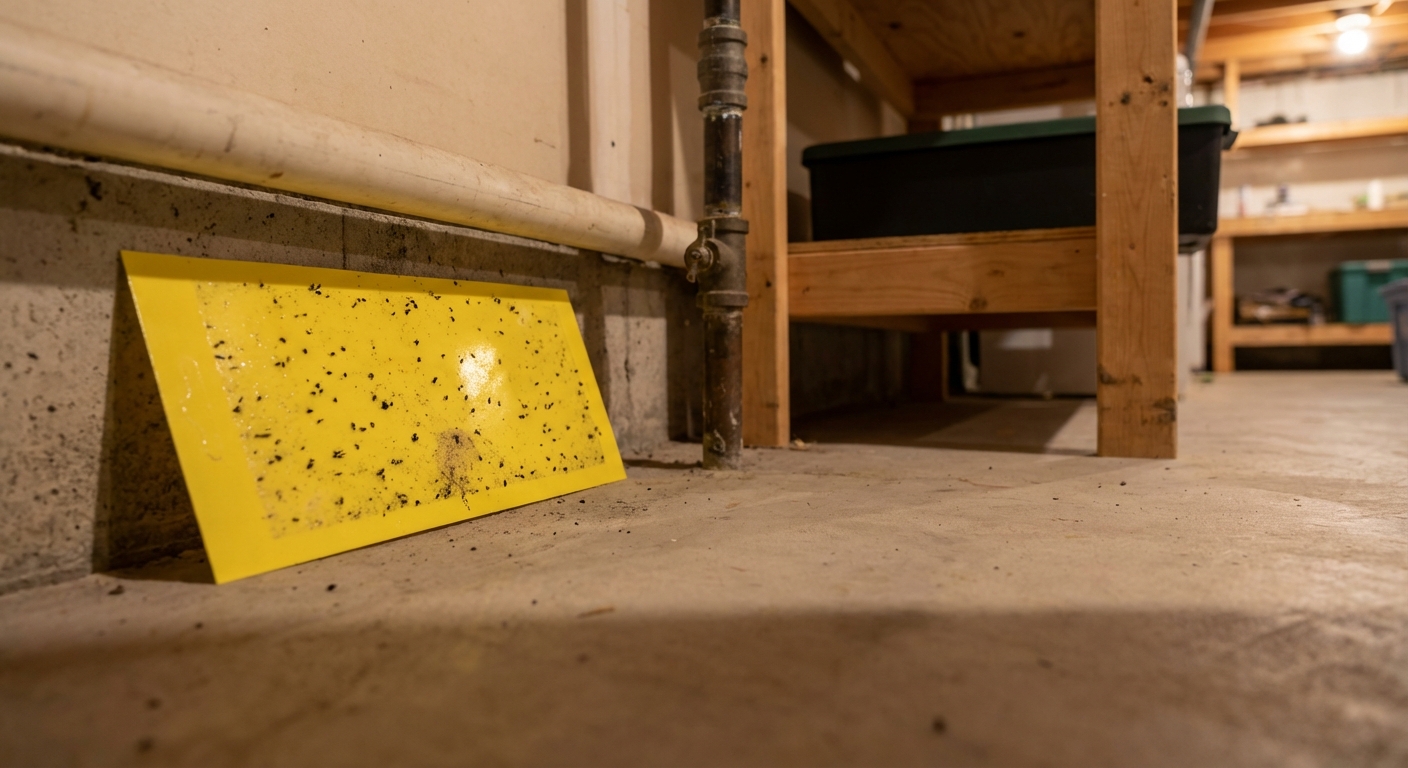
Where to place traps
- Along basement baseboards, especially near floor drains and sump pits
- Under sinks in bathrooms and kitchens
- Behind the washer and dryer
- Near the garage entry door and utility room
How to use them
- Place traps flush to the wall. Centipedes follow edges.
- Set 6 to 12 traps for a typical basement and check them after 48 to 72 hours.
- When one area fills up, that is your “hot zone.” Focus sealing and moisture fixes there.
Traps will not solve a whole-house moisture problem, but they will make a noticeable dent while you fix the root cause.
Step 5: Perimeter treatment
If you have done the moisture and sealing work and you are still seeing centipedes, a perimeter treatment can help stop new ones from wandering in and reduce other insects they feed on.
Two perimeter options
- Outdoor perimeter spray: applied around the foundation, focusing on entry points.
- Indoor crack-and-crevice treatment: limited application in gaps and along baseboards in unfinished utility areas, if the label allows it.
How to do it safely
- Read the label and follow it exactly. The label is the law.
- Choose a product labeled for indoor crack-and-crevice or perimeter use and for the pests you are targeting.
- Keep kids and pets away until the product is dry and the space is ventilated as directed.
- Do not spray on bedding, food prep surfaces, toys, or inside HVAC ducts.
- Avoid foggers and “bug bombs.” They usually miss the cracks where pests hide and can create unnecessary exposure.
- Focus on exterior foundation, door thresholds, window wells, and utility penetrations.
In my experience, perimeter treatments work best when they are the last step, not the first. If the basement is still humid, you are treating symptoms and inviting round two.
Common hiding spots
If you want a quick walkthrough to find the source, grab a flashlight and check these spots in this order:
- Under-sink cabinets, especially around the shutoff valves and drain trap
- Basement corners where the slab meets the wall
- Near the sump pit, floor drain, and water heater pan
- Behind the washer, dryer, and basement freezer
- Bathroom vanity toe-kick area and around the tub access panel
- Crawl space access door and rim joist area
Do centipedes bite?
House centipedes can bite, but it is uncommon. They would rather run than fight, and their venom claws (forcipules) are not well-suited to piercing human skin. If a bite happens, it is usually mild, with localized pain or redness, but sensitivity varies from person to person.
They are not known to spread disease in the way some pests can. The bigger issue is what they indicate: hidden moisture, hiding spots, and other insects.
Quick handling tip
If you do not want to smash them, you can capture one with a cup and stiff paper, or vacuum it up and empty the canister outdoors. If you are squeamish, gloves and a flashlight make the whole process easier.
Crawl space basics
If your crawl space is the source, you will fight this problem on repeat until the moisture is handled. The big upgrades are simple: keep bulk water out, cover the ground, and keep outside air from constantly pumping humidity in.
- Add or repair a vapor barrier on the ground and seal seams.
- Seal obvious openings at the rim joist and penetrations.
- Consider conditioning or dehumidifying the crawl space if humidity stays high.
When to call a pro
If you are seeing multiple centipedes a day for weeks, or you suspect a larger moisture issue, it can be worth bringing in help.
- Water intrusion: damp walls, efflorescence, puddles, recurring mold or musty odors
- Major insect pressure: roaches or ants you cannot control with basic sanitation and sealing
- Crawl space problems: standing water, missing vapor barrier, damaged vents or access doors
A good pest control company should talk moisture and exclusion, not just spraying. If all they offer is “we will fog everything,” keep shopping.
7-day centipede reset
- Day 1: Place sticky traps in hot spots and run a dehumidifier.
- Day 2: Fix leaks and wipe up condensation sources.
- Day 3: Vacuum baseboards, corners, and behind appliances.
- Day 4: Seal cracks at baseboards and utility penetrations.
- Day 5: Improve outdoor drainage: gutters, downspouts, soil slope.
- Day 6: Re-check traps to find remaining travel routes.
- Day 7: If needed, apply an exterior perimeter treatment per label directions.
Stick with it. Once humidity comes down, hiding spots get sealed, and the “bug buffet” dries up, house centipedes typically move on. And you will end up with a healthier basement in the process.

About Marcus Vance
Content Creator @ Grit & Home
Marcus Vance is a lifelong DIY enthusiast and self-taught home renovator who has spent the last decade transforming a dilapidated 1970s ranch into his family's dream home. He specializes in budget-friendly carpentry, room-by-room renovations, and demystifying power tools for beginners. Through his writing, Marcus shares practical tutorials and hard-learned lessons to help homeowners tackle their own projects with confidence.