
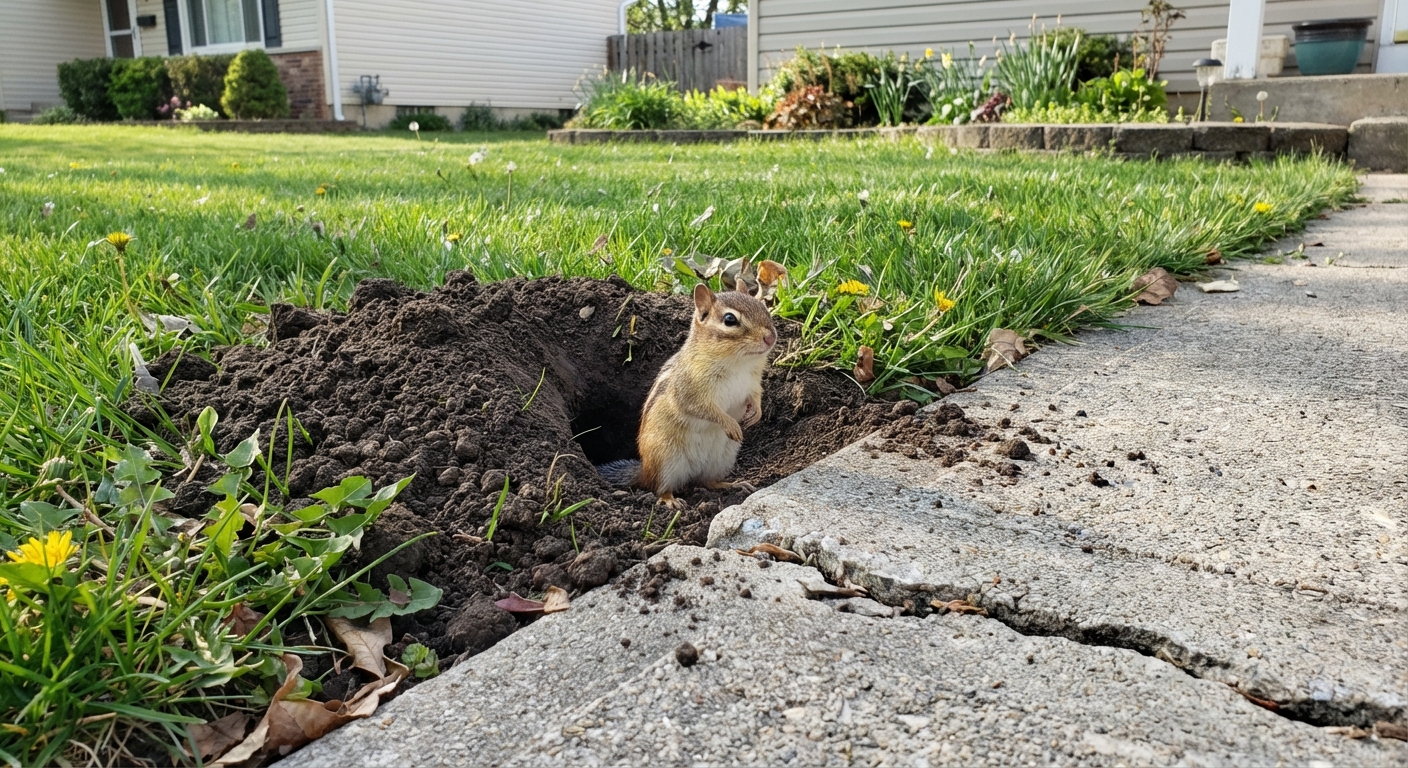
Chipmunks are cute right up until you find a hole next to your patio and realize it was not there last week. I have dealt with plenty of yard pests while rehabbing my old ranch, and chipmunks are a special kind of frustrating because they are small, fast, and shockingly committed diggers. In my case it was new holes along the same paver edge every morning, like they were clocking in for a shift.
This page walks you through what actually works: how to confirm you have chipmunks, why they cause damage, humane trapping options, smart deterrents (including L-shaped barriers), and the yard tweaks that make them pack up and move on.
Why chipmunks are a real problem
Chipmunks mostly mind their own business, but their burrowing behavior can create expensive headaches, especially around hardscaping and structures.
Common damage chipmunks cause
- Undermining slabs and pavers: Tunnels can wash out base material under patios, walkways, and paver edges, leading to settling and wobble.
- Hollowing out retaining walls: Burrows behind block or timber walls can weaken backfill and create voids. The risk goes up fast if the wall is already compromised, poorly drained, or showing signs of movement.
- Burrowing near foundations: Chipmunk tunnels are not usually foundation killers by themselves, but they can contribute to soil movement and create paths for water to travel where you do not want it.
- Chewing and mess: They will raid bulbs, garden beds, and bird feeders. They can also chew into sheds or garages if there is an easy gap.
If you are seeing repeated holes along the same edge (patio, wall, foundation planting bed), treat it like a potential structural issue in the making, not a “nature is cute” moment. If a retaining wall is bulging, leaning, or sinking, get it looked at.
Confirm it is chipmunks
Before you buy traps or repellents, make sure you are targeting the right animal. Each pest leaves different clues.
Quick ID checklist
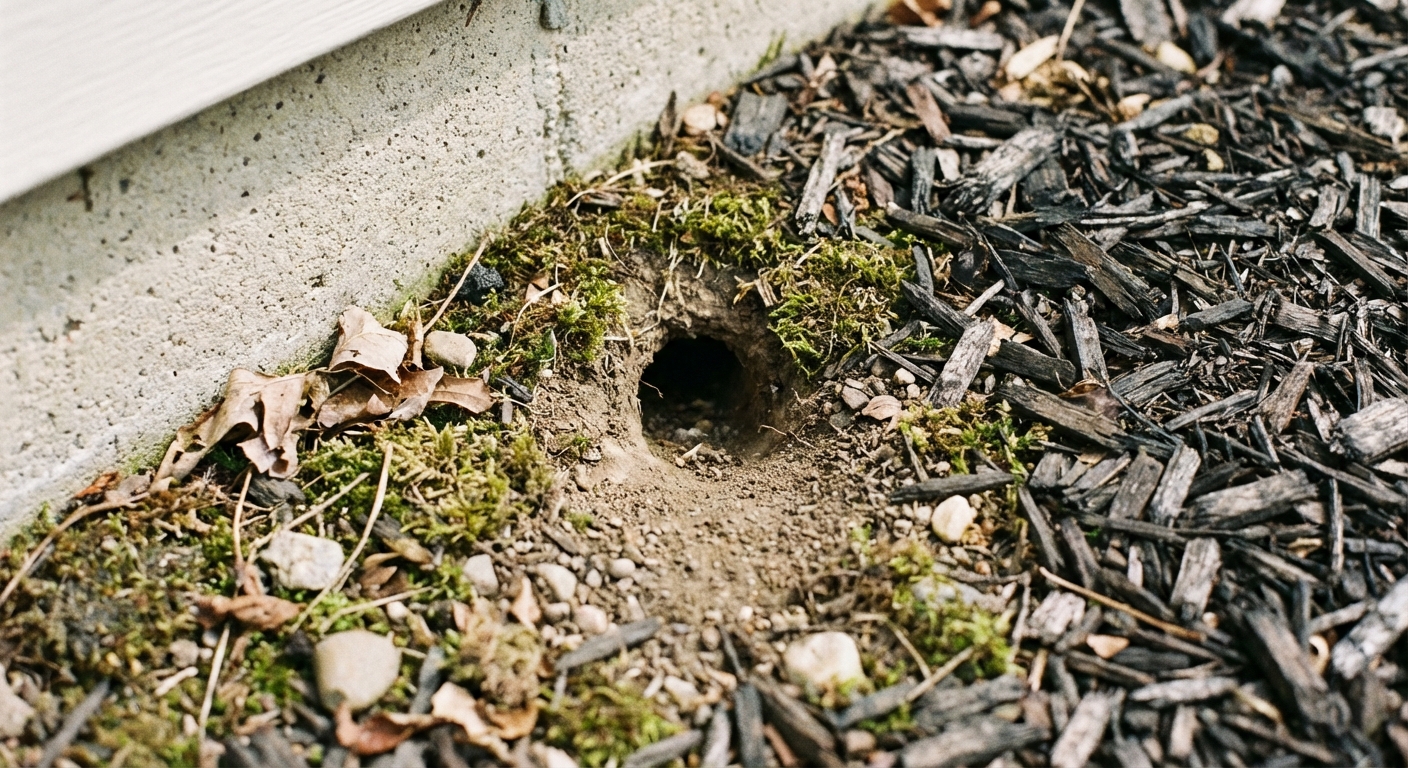
- Chipmunk holes: Clean, round openings about 1 to 2 inches wide. You will often see little or no loose dirt pile nearby because they tend to disperse soil away from the entrance, but it is not a hard rule.
- Typical locations: Along foundations, under steps, at the base of retaining walls, under shrubs, woodpiles, and sheds.
- Activity pattern: Most active in daytime, especially morning and late afternoon.
- Mole sign: Raised ridges and volcano-shaped mounds, not neat holes.
- Vole sign: Surface runways in grass and small openings, often near ground cover.
- Rat sign: Greasy rub marks, droppings, gnawing, and larger, more traveled paths. (Burrow hole sizes can overlap with juvenile rats depending on region, so look for the other clues too.)
Start with the basics
In DIY terms, this is like fixing the leak before you paint the drywall. If you trap a chipmunk but keep the buffet open, the next tenant moves in.
Food sources to lock down
- Bird feeders: Switch to a pole baffle, clean up spilled seed daily, or pause feeding for a couple weeks during control.
- Pet food: Feed pets inside or pick up bowls immediately after meals.
- Fallen nuts and fruit: Rake up acorns, walnuts, and dropped apples or pears regularly.
- Garden bulbs and beds: Use bulb cages or hardware cloth under planting areas.
Shelter you can reduce
- Raise woodpiles off the ground and keep them away from the house.
- Trim dense shrubs off the ground so there is less cover at the base.
- Clean up brush piles, rock piles, and junky corners that create hiding spots.
Safety and health notes
Chipmunks are not typically aggressive, but they can bite if handled. Like any wild animal, they can also carry fleas and ticks. Wear gloves, keep kids and pets away from traps, and wash your hands after working around burrows or droppings.
Humane removal: live traps
If you want chipmunks gone now, trapping is usually the most reliable method. The key is placing traps where chipmunks already travel and using bait that makes sense.
Option 1: Live box traps
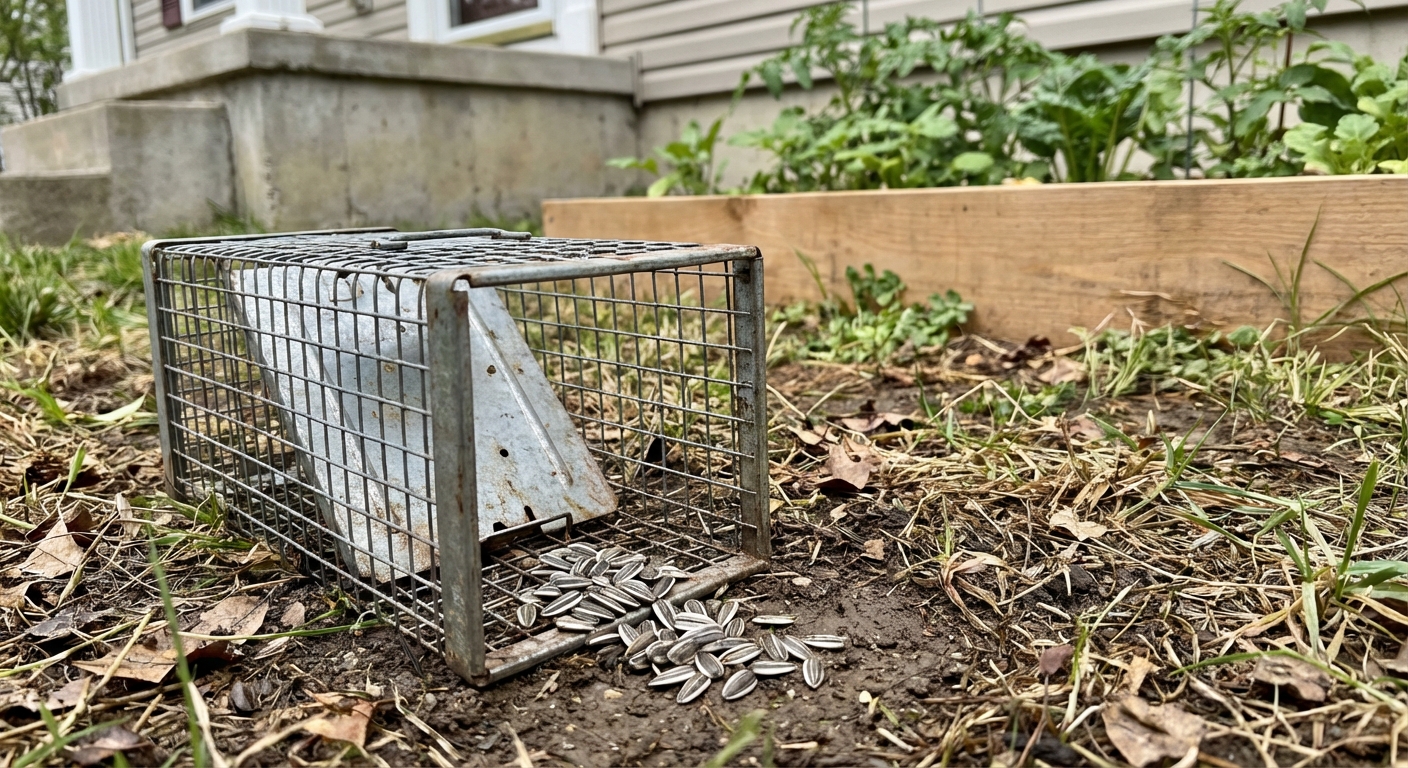
Live box traps are simple, humane, and controlled. Buy a small live trap sized for chipmunks (often sold for squirrels and chipmunks).
How to set a live trap
- Wear gloves to reduce human scent and protect your hands.
- Place the trap on a travel path: next to a wall, fence, foundation edge, or right near an active burrow entrance. Do not set it out in the middle of open lawn.
- Bait it well: sunflower seeds, peanut butter (a thin smear), rolled oats, or chopped nuts work. If you are near gardens, a few slices of apple can help.
- Stabilize it: wobbling traps spook animals. Set it flat and firm.
- Check frequently: at least morning and evening. More often in hot or cold weather.
My neighborly advice: Peanut butter is effective, but it also attracts ants. If ants are a problem, use sunflower hearts or dry oats instead.
Humane removal: bucket trap
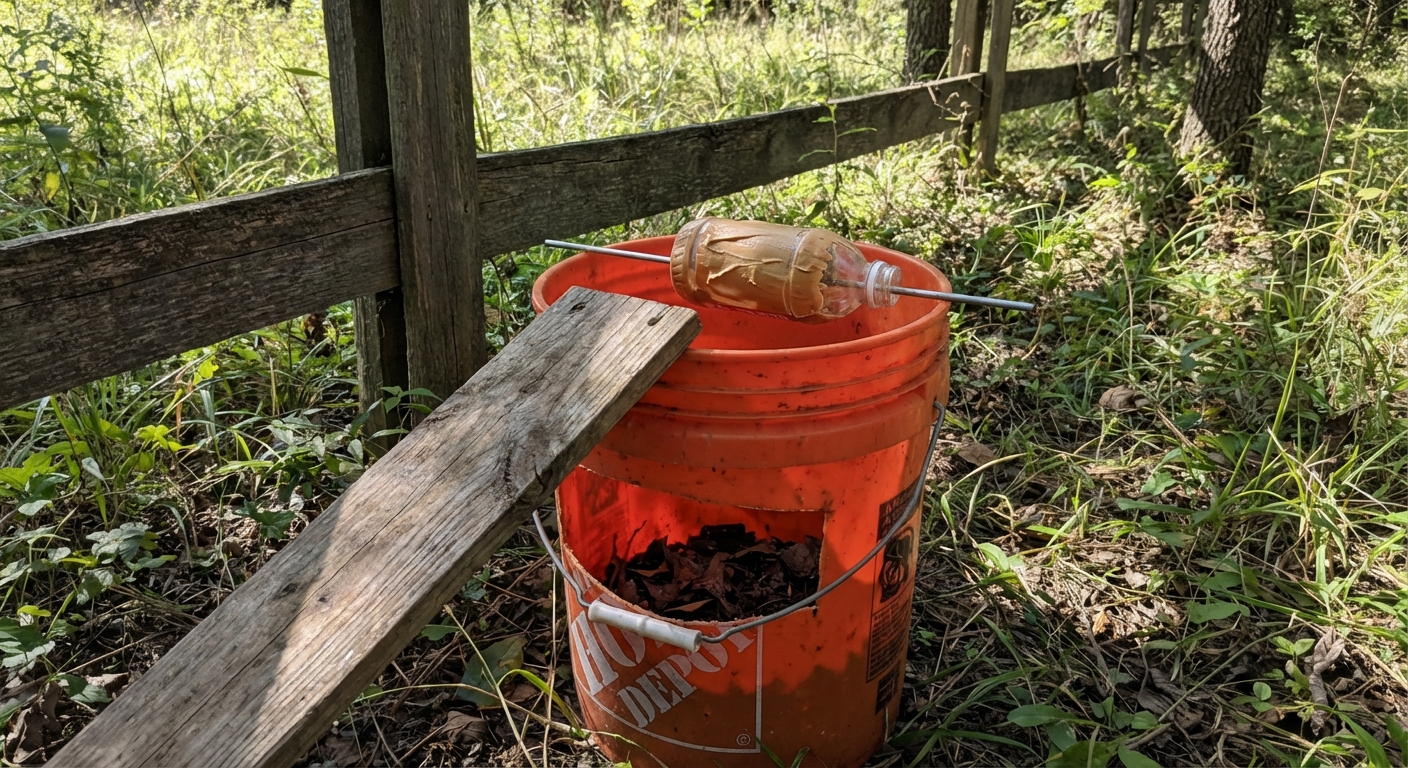
Bucket traps can be effective because chipmunks are curious and light. They are also inexpensive. There are different designs out there, so let me be clear about the humane approach.
Bucket trap done the humane way
- Use a 5-gallon bucket with a ramp (a board with a bit of texture for grip).
- Use a tilting can or rolling bottle over the top as the trigger, baited with peanut butter or seeds.
- Do not use water if your goal is humane removal.
- Place a soft cloth or a generous handful of dry leaves in the bottom to reduce stress if one falls in.
Important: Bucket traps are not selective. You can catch other small animals. If that is a concern, stick with a box trap.
Also important: Chipmunks are territorial. If multiple chipmunks end up in the same dry bucket, they can fight and injure each other. If you use a bucket trap, check it more often than a box trap and add plenty of leaves or cloth so a trapped animal can hide and stay calmer.
Before you relocate
Relocating wildlife is regulated in many states and municipalities. In some areas, it is illegal without a permit. In others, it is legal but must be done within a certain distance or on property you own.
Also, relocation is not always as kind as it sounds. Moved animals can struggle to find food and shelter, get chased off by resident animals, or spread disease between areas. If you are unsure what is allowed or what is best for your situation, check your state wildlife agency guidance or call a licensed wildlife professional.
If relocation is allowed where you live, choose a release spot with natural cover and food, away from homes. Transport the animal calmly, keep the trap shaded, and release promptly.
If relocation is not allowed, contact local animal control or a licensed wildlife professional for options that comply with local regulations.
Deterrents that help
Deterrents work best as part of a one-two punch: reduce food and shelter, then make the target areas uncomfortable.
Predator urine
Predator urine (fox, coyote) can help in small, defined areas like a mulch bed along a foundation or around a shed. It tends to work best short-term and needs reapplication after rain. Results vary, and some chipmunks get used to it, so do not rely on it as a standalone fix.
- Apply around active burrow zones, not randomly across the whole yard.
- Reapply after heavy rain and every 7-10 days during active control.
- Keep it away from spots where kids play and where pets like to roll.
Motion sprinklers and lights
These can be surprisingly effective for daytime activity. Place them to cover the exact runway or digging zone. They work best when you move them occasionally so chipmunks do not get used to them.
Repellent granules and sprays
Some scent and taste repellents help, especially those based on capsaicin, garlic, or peppermint. The downside is maintenance. If you hate reapplying products, you will want a physical barrier instead.
Skip this: Ultrasonic repellents are inconsistent outdoors. If you already own one, fine, but I would not make it Plan A.
Best long-term fix: L-shaped barriers
If chipmunks are digging under a patio edge, shed, steps, or a retaining wall, a physical barrier is one of the most reliable long-term solutions. This is the same idea as critter-proofing a deck, just smaller scale.
Call before you dig
Before you excavate an 8 to 12 inch trench near patios, walks, or foundations, call 811 (or your local utility locator). It is a quick step that can prevent a very expensive day.
What an L-shaped barrier is
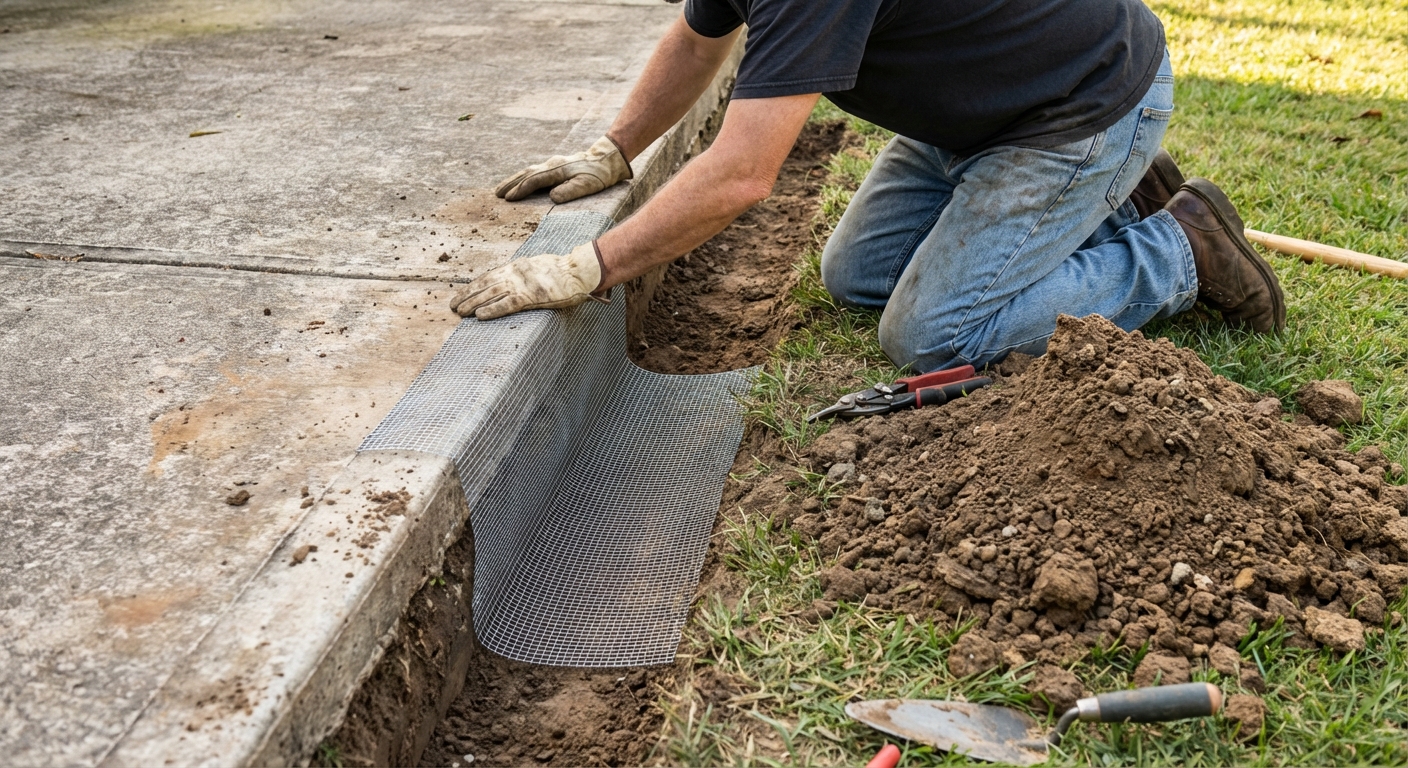
An L-shaped barrier uses buried hardware cloth (wire mesh) that goes down and then turns outward, forming an underground apron. When animals dig at the edge, they hit the mesh and give up.
Materials
- Hardware cloth: 1/4-inch mesh is ideal. Use galvanized.
- Landscape staples or galvanized fasteners (depending on where you are attaching it).
- Shovel, snips, gloves.
How to install it
- Excavate a narrow trench along the edge you want to protect, about 8 to 12 inches deep.
- Bend the mesh into an L: plan for about 6 to 8 inches down and 8 to 12 inches outward.
- Place the mesh with the horizontal section pointing away from the structure.
- Backfill and compact the soil firmly.
- Restore the surface with mulch, gravel, or soil.
Where this shines: along shed perimeters, under stair landings, around small patios, and at retaining wall ends where burrows often start.
Seal and stabilize burrows
Once you are actively trapping and reducing attractants, you can start closing up holes. If you seal too early, you can trap an animal inside and force it to dig a new exit somewhere worse.
When to close burrows
- After you have trapped for several days with no catches.
- When you see no fresh digging, no new soil disturbance, and no sightings in that zone.
How to close them
- Lightly fill the hole with gravel, then top with soil. Gravel helps discourage immediate re-digging.
- Compact firmly with your boot.
- Mark the spot with a small stick so you can tell if it reopens.
If the hole reopens within 24 to 48 hours, you still have an active chipmunk using it. Resume trapping and deterrents.
Keep them out of sheds and garages
If you have chipmunks around the house, do a quick walkaround. They can squeeze through surprisingly small gaps, and once they find a sheltered corner, they keep trying it.
Simple exclusion checklist
- Cover gaps and vents: Use 1/4-inch hardware cloth over vents, weep holes that are too open, and other gaps (do not block required airflow).
- Fix door gaps: Add a door sweep on shed doors and adjust latches so doors close tight.
- Patch low openings: Repair rot or gaps at the bottom of siding, trim, and shed skids where daylight shows.
- Keep storage off the floor: It reduces hiding spots and makes activity easier to spot.
Make your yard less inviting
Chipmunks love edges and cover. Your job is to remove the “safe commute” between hiding spots and food.
Yard changes that reduce traffic
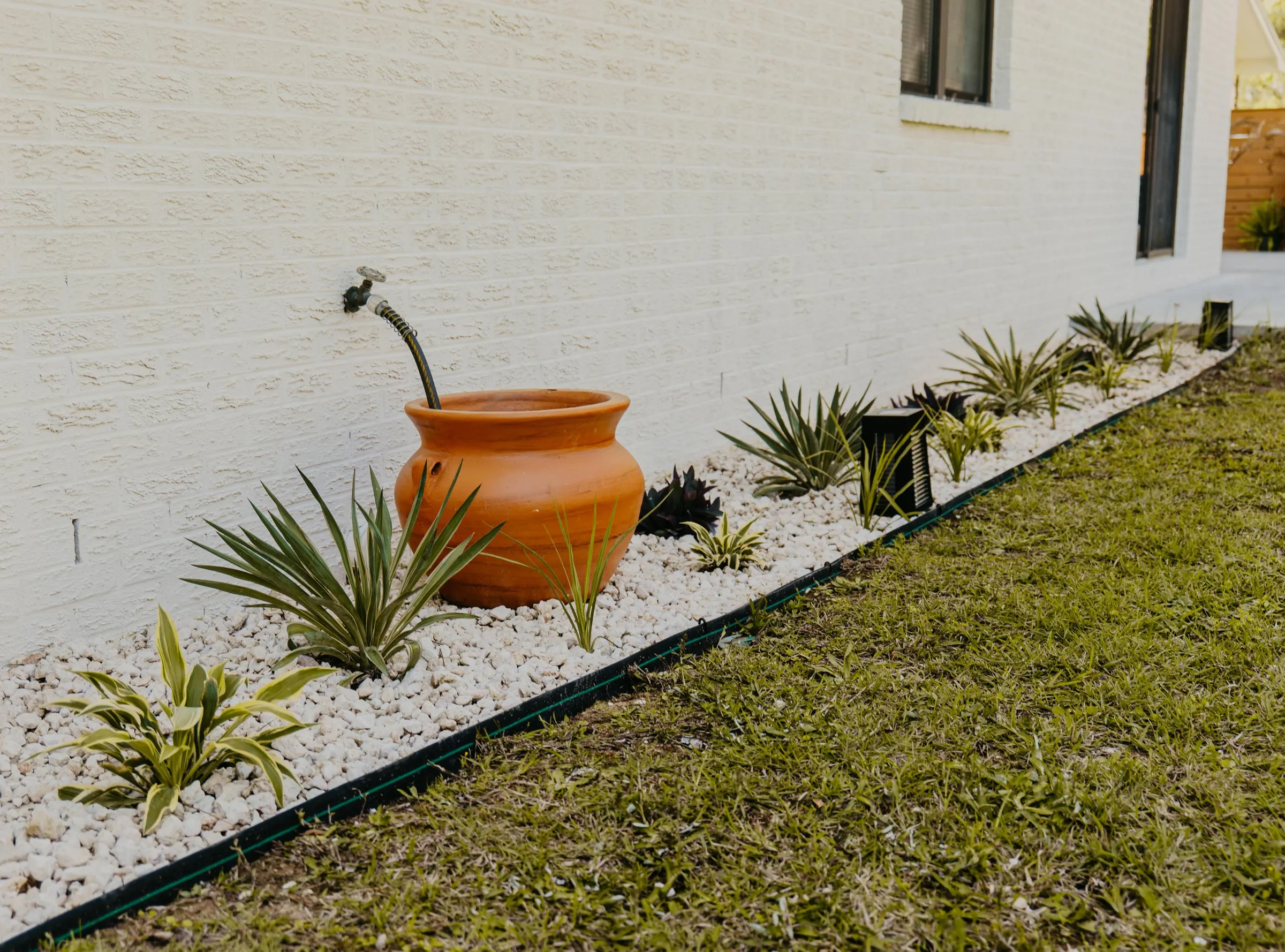
- Create a gravel strip (12 to 24 inches wide) along foundations instead of deep mulch. Mulch is cozy. Gravel is not.
- Trim ground cover and keep plantings from forming a tunnel at ground level.
- Store compost properly and keep it contained.
- Choose bird seed wisely and keep feeder areas clean.
- Fence gaps: Repair low spots where small animals slip through and feel protected.
Seasonal spikes
If this problem suddenly showed up out of nowhere, you are not imagining things. Activity often jumps in late summer and fall as chipmunks stockpile food, and in spring when young chipmunks start exploring and trying to claim territory.
When to call a pro
If chipmunks are burrowing under a large retaining wall, you have repeated reinfestations, or you suspect damage near a foundation or slab edge, it can be worth bringing in a licensed wildlife control operator. They can also advise on legal relocation rules in your area.
Also consider a pro if you are seeing signs of multiple pests. Sometimes chipmunks and rats share the same “good real estate,” and the fix changes depending on who is actually living there.
What not to do
- Do not use poisons or rodenticides: They can harm pets, raptors, and other wildlife, and a chipmunk can die in a wall or under a slab where you cannot reach it.
- Do not seal holes too early: You can trap an animal inside and force a new exit in a worse spot.
- Do not leave traps unchecked: Check at least twice daily, and more often for bucket traps.
- Do not relocate without permission: It can be illegal and it often goes badly for the animal.
Quick action plan
If you want the simplest roadmap, here is the sequence I would follow on my own house.
- Day 1: Remove food sources (especially bird seed) and identify active holes.
- Days 1 to 7: Set live traps on travel paths, check twice daily.
- During trapping: Add deterrents near target zones (predator urine, motion sprinkler).
- After activity stops: Fill burrows and monitor for reopening.
- For repeat problem spots: Install an L-shaped hardware cloth barrier and switch mulch to gravel at the edge.
That combination is what turns chipmunk control from a weekend whack-a-mole into a real fix.
FAQ
Will chipmunks leave on their own?
Sometimes, but if your yard has food and cover, a vacancy usually gets filled quickly. Habitat changes are what make “leaving” stick.
Are chipmunks dangerous?
They are not typically aggressive, but they can bite if handled. Treat them like any wild animal: use gloves, keep distance, and do not try to grab one. Fleas and ticks are another good reason to keep it hands-off.
What is the best bait for chipmunks?
Sunflower seeds and a small smear of peanut butter are the most consistent. If ants are bad, skip the peanut butter and use dry seeds or oats.
How do I keep them from digging under my patio?
Trap to reduce the current population, then install an L-shaped hardware cloth barrier along the patio edge and keep the border area clean and less sheltered.

About Marcus Vance
Content Creator @ Grit & Home
Marcus Vance is a lifelong DIY enthusiast and self-taught home renovator who has spent the last decade transforming a dilapidated 1970s ranch into his family's dream home. He specializes in budget-friendly carpentry, room-by-room renovations, and demystifying power tools for beginners. Through his writing, Marcus shares practical tutorials and hard-learned lessons to help homeowners tackle their own projects with confidence.