
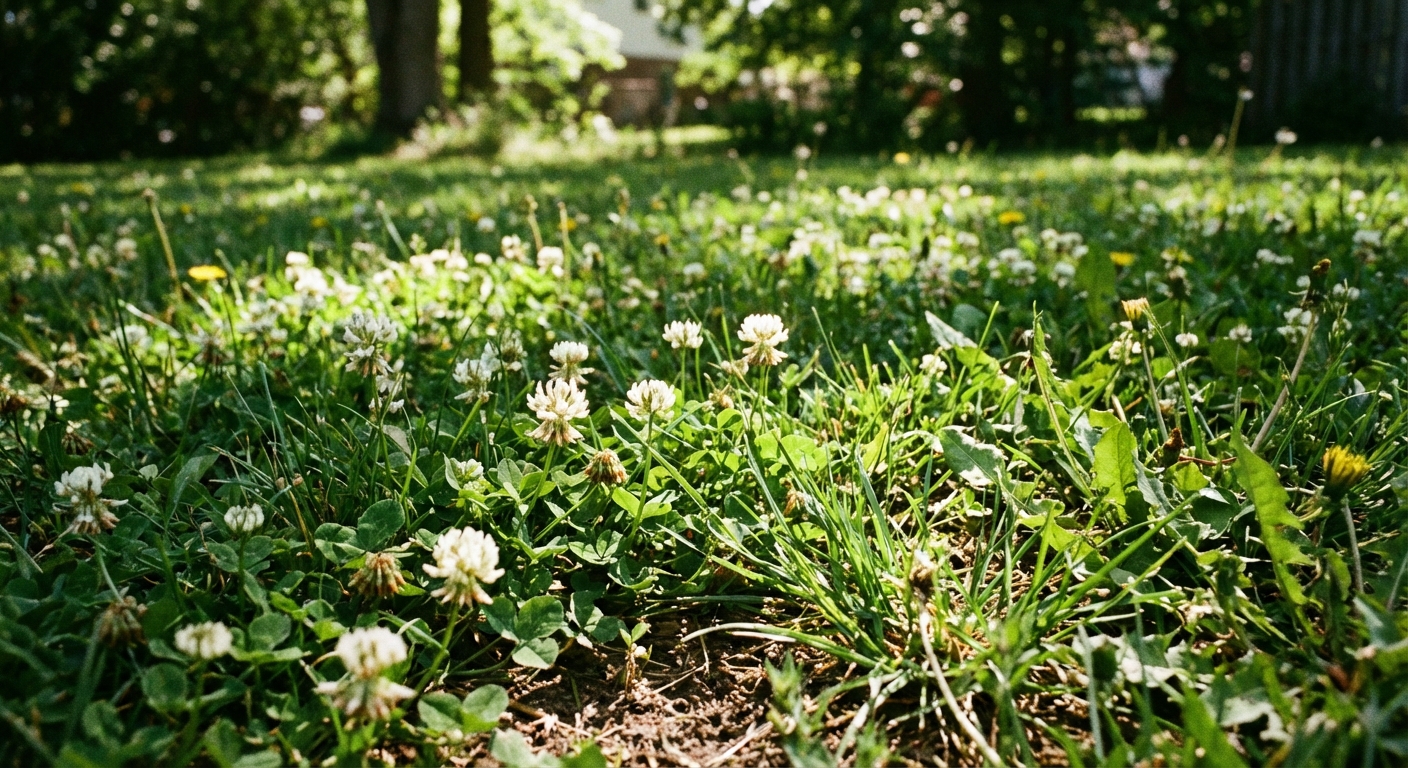
If clover's popping up all over your lawn, you're not alone. I see it most in spring and early summer, usually right after the grass starts greening up and the clover decides it wants the spotlight. The good news is clover is very manageable once you understand why it's thriving. Most of the time, it's less about clover being unstoppable and more about your lawn sending out a welcome sign.
This guide walks you through what to do today (get rid of what you see) and what to do over the next few weeks (make sure it doesn't come right back).
Know what you're dealing with
Most “clover lawns” are one of these:
- White clover (Trifolium repens): low-growing, round leaflets with a faint pale “V,” and small white flowers.
- Red clover (Trifolium pratense): taller and clumpier, with pinkish-purple blooms.
- Oxalis (often called clover): heart-shaped leaflets and small yellow flowers. It's a different plant and can be tougher, often needing repeat applications.
If you've got classic white clover, the control methods below are right on target. If it's oxalis, identification matters because the leaf shape is different (heart-shaped vs. oval/rounded). Look for herbicides that list oxalis on the label, and plan on a follow-up application if it regrows.
Why clover shows up
Clover is a “soil signal.” It tends to move into lawns that are struggling in a few common ways:
- Low nitrogen: Clover is a legume. When it's properly nodulated, it can fix atmospheric nitrogen with the help of soil bacteria. That doesn't instantly feed your surrounding grass, but it does let clover compete well where turf is hungry.
- Thin grass and bare spots: Drought stress, shade, pet traffic, and mowing too short all open the door.
- Compacted soil: Compaction often leads to thin turf and weak roots. Clover takes advantage of those openings.
- Low mowing height: Clover tolerates short mowing better than many cool-season grasses.
That's why the best clover plan is two-part: remove the clover, then improve conditions so grass wins the long game.
Fastest way: selective broadleaf herbicide
If you want the quickest, most reliable results, use a selective broadleaf herbicide labeled for lawns. These target broadleaf weeds like clover while leaving turfgrass alone when used correctly.
Before you spray
- Confirm your weed and your grass type: Clover vs. oxalis matters, and so does turf type.
- Read the label for clover: Don't rely on the active ingredient alone. Make sure clover (or oxalis, if that's what you have) is listed on the label.
- Protect pollinators: If clover is flowering, mow off blooms first or wait until it's not in bloom before treating. Don't spray when bees are actively foraging.
- Pick the right day: Calm wind, moderate temps, and no rain or irrigation for the label's rainfast window (often several hours, but it's product-specific).
- Keep kids and pets off: Follow label re-entry guidance, commonly until the spray has dried.
What to look for on the label
For clover, the most common and effective active ingredients include:
- Triclopyr (often one of the strongest performers on clover)
- 2,4-D
- MCPP (mecoprop)
- Dicamba
Many “3-way” lawn weed killers combine 2,4-D + MCPP + dicamba. They can work on clover, but if yours is stubborn, a product that includes triclopyr is often what moves it from “kind of wilted” to “actually gone.” Just remember performance depends on the formulation, timing, and your turf type, so label guidance wins.
Grass-type caution: Some warm-season grasses (like St. Augustine and centipede) can be more sensitive to certain herbicide mixes, and some products limit dicamba or triclopyr use. Always confirm your grass is listed as safe on the label.
Best time to spray
- Spring and fall are usually the sweet spots because clover is actively growing in cool, moist conditions.
- Spray on a calm day when temps are roughly 60 to 85°F (check your label for exact limits).
- Avoid spraying during drought stress or in hot midsummer when efficacy can drop and turf injury risk can rise.
- Avoid spraying right before heavy rain.
How to apply it
- Mow 2 to 3 days before you spray, not the same day. (If it's flowering, mowing first also helps protect pollinators.)
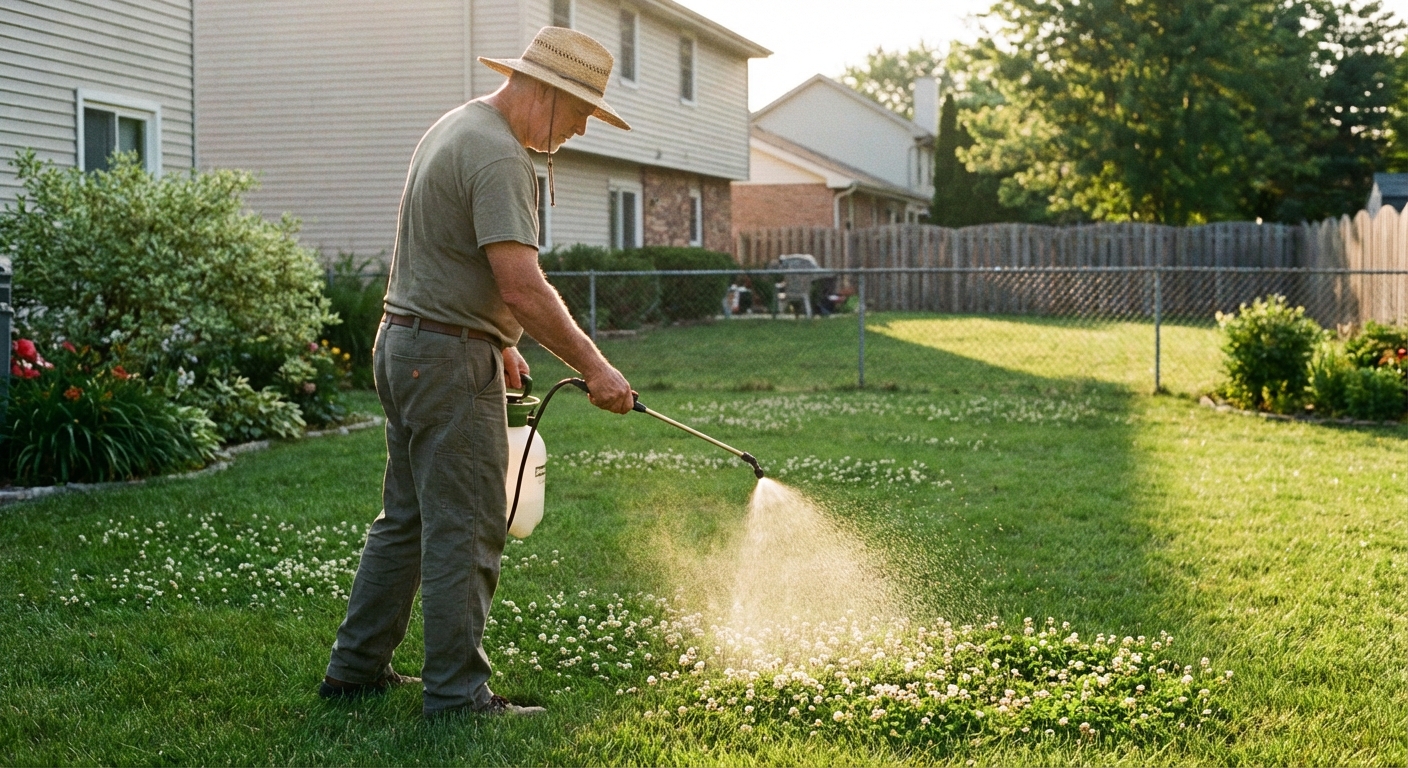
- Choose a pump sprayer for spot treating. Blanket spraying the whole yard is rarely necessary.
- Spray leaves until they're evenly wet, not dripping.
- Don't mow for 2 to 3 days after spraying so the plant can absorb the product.
- Plan on a second application in 10 to 21 days if the label allows and clover is still hanging on.
Common mistakes I see (and have made)
- Spraying too early: Clover needs leaf surface to absorb herbicide. Tiny early spring clover can be slow to respond.
- Mowing right after spraying: This can cut off treated leaf tissue and reduce control.
- Using “weed and feed” at the wrong time: Granular products need wet weed leaves to stick, and timing is everything. Liquid spot spray is more consistent for clover.
- Overapplying: More isn't better. It can stress grass and still not improve clover control.
Safety note: Always follow the label for protective gear, re-entry time, and whether the product is safe for your grass type. Some actives have restrictions near tree roots, on certain warm-season lawns, and around vegetable gardens.
Organic and non-chemical options
If you've only got a few patches, or you're avoiding herbicides, you can absolutely make progress. Just know organic methods usually trade speed for safety and patience.
Hand pulling
White clover has shallow roots, but it spreads by creeping stems. Your goal is to remove the plant and as much of the runner as you can.
- Pull when the soil is moist (after rain or watering).
- Use a dandelion fork or hand weeder to lift the roots.
- Fill the divot with a little topsoil and overseed right away so the spot doesn't get re-invaded.
Corn gluten meal
Corn gluten meal is often marketed as a natural pre-emergent. It may help reduce some seedlings when timed correctly, but it doesn't reliably kill established clover. Also, the research and real-world results are mixed, so expect inconsistency. Think of it as a supporting player, not the cleanup crew.
- Apply in early spring before heavy germination periods.
- It can add a little nitrogen, which may indirectly help turf compete.
- Important: Don't use it right before you plan to overseed, because it can also inhibit grass seed germination.
Smothering tiny patches
For clover in a narrow area (like along a fence line), you can smother it with cardboard and mulch for a few weeks. It's slower, but it's simple and chemical-free.
What I don't recommend
- Vinegar or salt mixes: They can burn foliage, but they also harm grass and soil, and the clover often returns from runners or seed.
- Boiling water: Same story. It's basically a non-selective kill.
Fix the root cause
Once clover's under control, the prevention work is mostly boring in the best way. You're just helping the grass get dense enough to crowd weeds out.
1) Feed with the right nitrogen
Because clover thrives in low-nitrogen soil, a sensible fertilization plan is one of the best long-term fixes. The most reliable way is a basic soil test, but you can also improve things with consistent, moderate feeding during your grass's active growing season.
- Cool-season lawns (most of the northern US): focus fertilizing in early fall and late fall, with lighter feeding in spring if needed.
- Warm-season lawns (many southern areas): fertilize mainly in late spring through summer when grass is actively growing.
If you're not sure what grass you've got, take a close photo and compare it to common turf types in your area, or ask a local extension office. Getting that right helps you avoid fertilizing at the wrong time.
2) Mow higher
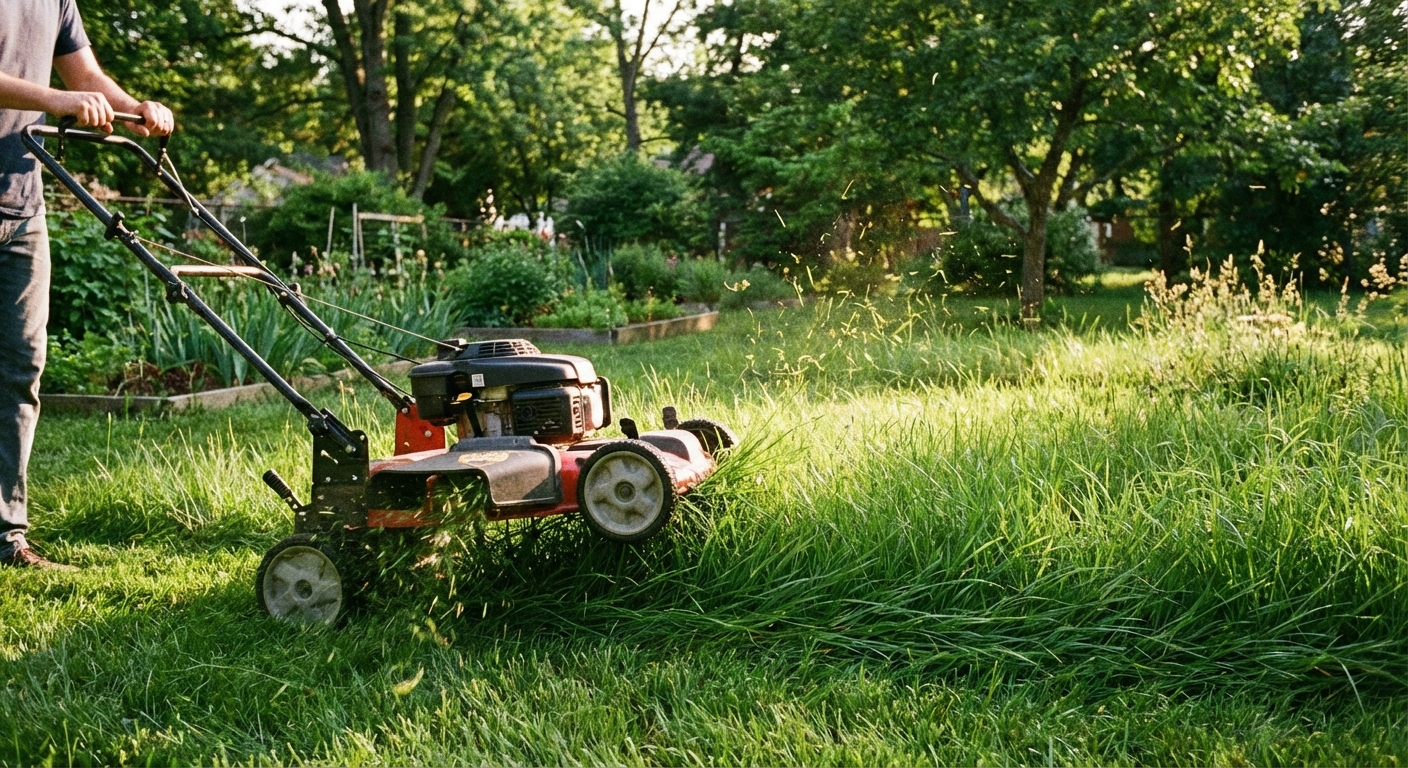
If I could pick one habit that quietly solves a lot of lawn problems, it's mowing a little taller. Taller grass shades the soil, keeps moisture steadier, and makes it harder for clover to spread.
- For many lawns, aim for about 3 to 4 inches (especially for fescue and many bluegrass mixes).
- Follow the one-third rule: never cut more than one-third of the blade height in a single mowing.
- Keep blades sharp. Dull blades tear grass and slow recovery.
3) Aerate compacted soil
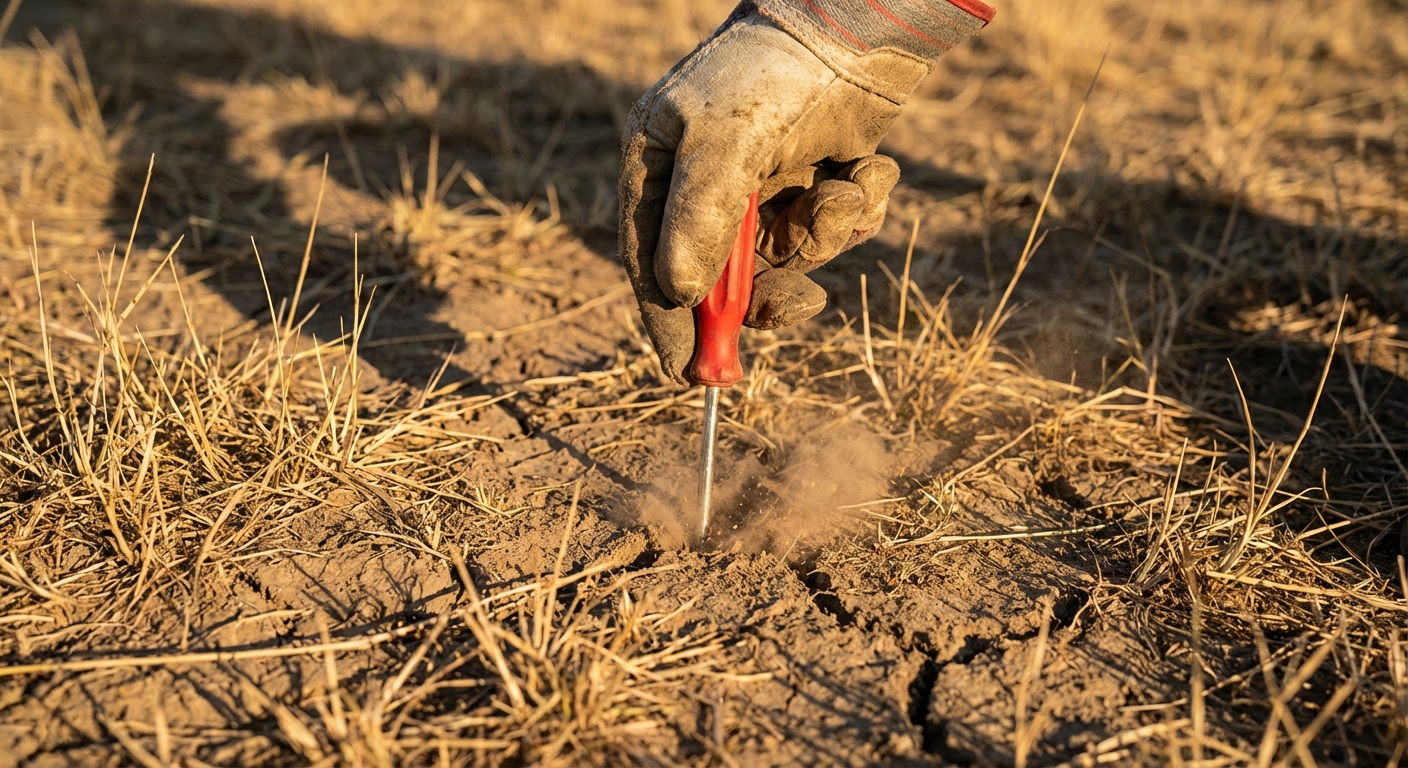
If your soil is hard and the lawn thins out in high-traffic areas, core aeration can make a big difference. It reduces compaction and helps water, oxygen, and nutrients reach the roots.
- Core aerate when grass is actively growing so it can recover quickly.
- Pair aeration with overseeding for a “one-two punch” against clover.
4) Overseed thin spots
Clover loves open real estate. Overseeding fills gaps so weeds have fewer places to land.
- Rake out dead material, scratch up the soil surface, and get seed-to-soil contact.
- Water lightly and consistently until the new grass is established.
- Avoid pre-emergents before seeding unless the product explicitly says it's compatible with overseeding.
5) Water smarter
Steady, healthy turf crowds clover out. In many lawns, that means watering deep and infrequently rather than a little every day. If areas stay soggy, improving drainage can help your grass roots and reduce thin spots that weeds love.
A simple game plan
Fastest results
- Spot spray clover with a selective broadleaf herbicide (often best with triclopyr).
- Reapply per label if needed.
- After clover dies back, overseed bare spots and adjust mowing height.
Low-chemical approach
- Hand pull after rain and immediately overseed the gaps.
- Aerate if the soil's compacted.
- Feed the lawn appropriately so grass outcompetes clover.
FAQ
Will fertilizing alone kill clover?
It can reduce clover over time by helping grass thicken, but it usually won't wipe out established patches quickly. Think of fertilizer as prevention and competition, not an instant remover.
How long does it take for clover to die after spraying?
You often see curling and discoloration within a week, but full die-off can take 2 to 3 weeks. Clover can be stubborn, so a second treatment is common and totally normal if the label allows it.
Is clover always “bad”?
Not necessarily. Clover stays green with less nitrogen and can feed pollinators when it flowers. But if you want a more traditional turf look, or you've got allergies, kids, or pets who track in pollen, controlling it makes sense. It also spreads fast when the lawn is thin.
Can I overseed right after I spray?
Check your herbicide label. Many selective herbicides require waiting a set number of weeks before seeding. If you're planning a big overseed, time your herbicide applications so you don't block your own progress.
My bottom line
If clover's everywhere, it's usually a sign your lawn needs a little help, not a sign you failed. Knock it back with the right selective herbicide or focused hand pulling, then fix the “why” with nitrogen, a better mowing height, aeration, and thicker grass. That combo won't always be a one-time miracle, but it does turn clover control from a yearly fight into a much smaller, occasional touch-up.

About Marcus Vance
Content Creator @ Grit & Home
Marcus Vance is a lifelong DIY enthusiast and self-taught home renovator who has spent the last decade transforming a dilapidated 1970s ranch into his family's dream home. He specializes in budget-friendly carpentry, room-by-room renovations, and demystifying power tools for beginners. Through his writing, Marcus shares practical tutorials and hard-learned lessons to help homeowners tackle their own projects with confidence.