
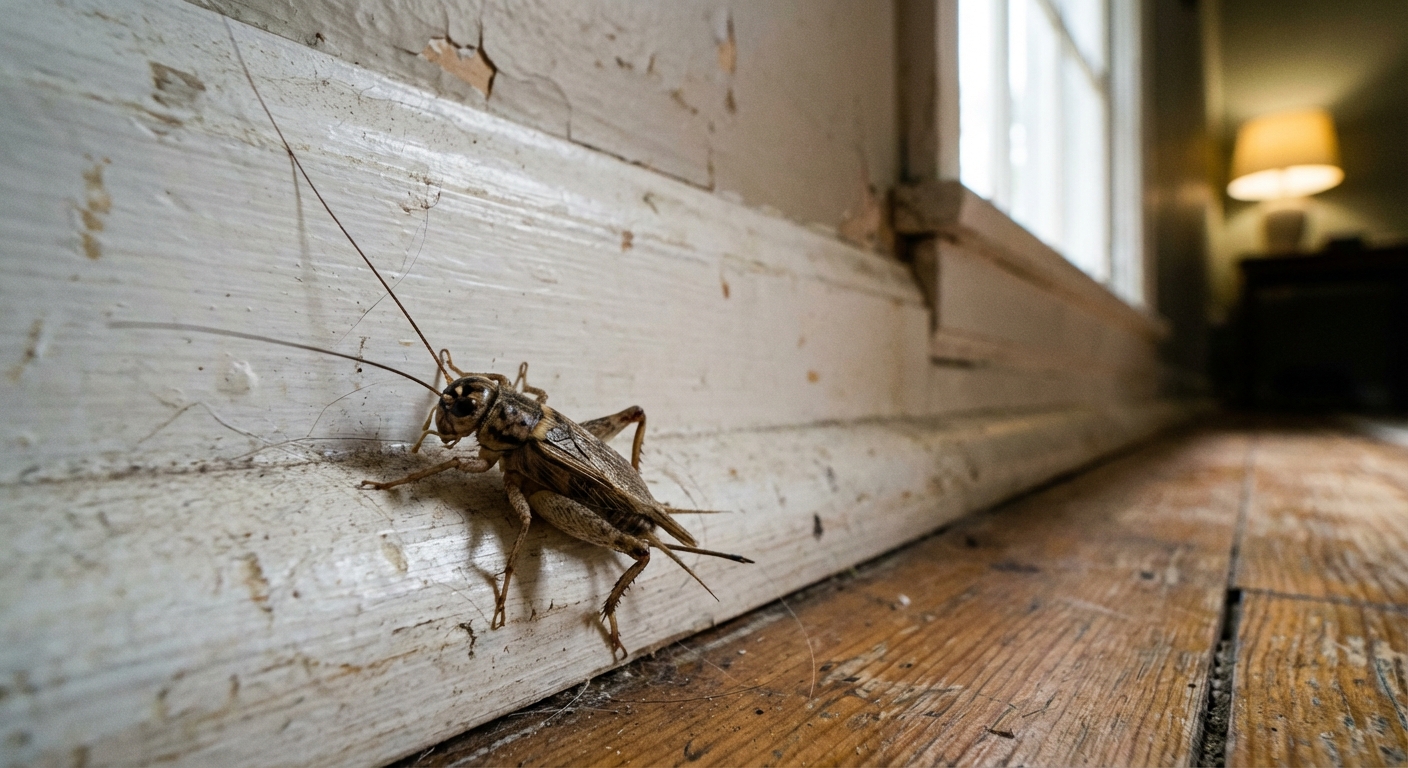
Crickets are one of those pests that can make a perfectly normal house feel haunted. You hear the chirp at 2 a.m., you walk around like a detective, and the moment you get close, it goes silent.
The good news: you do not need to fog your whole house or spend a fortune to fix this. Most cricket problems come down to three things: identifying what you’re dealing with, cutting off entry points, and using simple traps and dusts in the right spots.
House vs. camel crickets
Before you treat, take a minute to ID the culprit. The best strategy changes depending on the species.
House crickets
- What they look like: Tan to light brown, about 3/4 to 1 inch long, long antennae.
- Behavior: Males chirp. They like warmth and can hang out near kitchens, utility rooms, and warm wall voids.
- Common season: Often show up in late summer and fall as temperatures drop at night.
Camel crickets (cave or spider crickets)
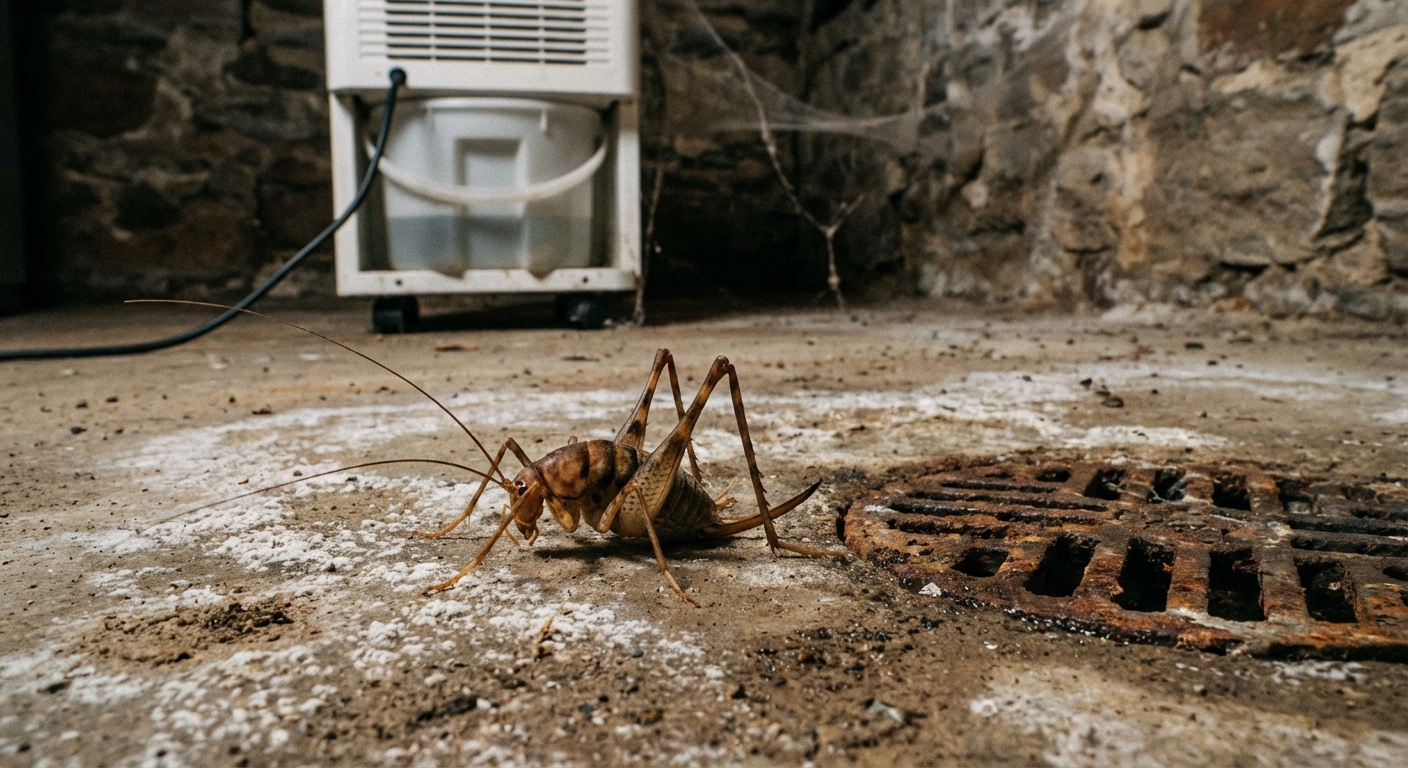
- What they look like: Humpbacked body, long legs, usually brownish, and they look a little like a cricket crossed with a spider.
- Behavior: They do not chirp. They jump when startled. They prefer damp, dark places like basements, crawlspaces, and garages.
- Big clue: If you are not hearing chirping but keep spotting jumpy crickets in the basement, it is often camel crickets.
Field crickets (common fall wanderers)
- What they look like: Usually darker brown to black, a bit stockier than house crickets.
- Behavior: Often come in by accident when nights get cooler. You might find them near doors, garages, and basements.
If you can safely catch one in a cup, snap a photo and zoom in. That quick ID step saves a lot of trial-and-error later.
Quick relief tonight
If the chirping is driving you nuts and you want results fast, do these in order.
1) Reduce insect activity near doors
Crickets are not always “light-seeking” the way moths are, but outdoor lights can increase insect activity near entry doors. That can draw crickets and other pests closer to the exact places you are trying to keep sealed.
- Turn off exterior lights overnight if you can.
- Switch bulbs near doors to warm-colored LEDs (often less attractive than bright cool-white).
- Add motion sensors so lights are on only when needed.
2) Put down sticky traps
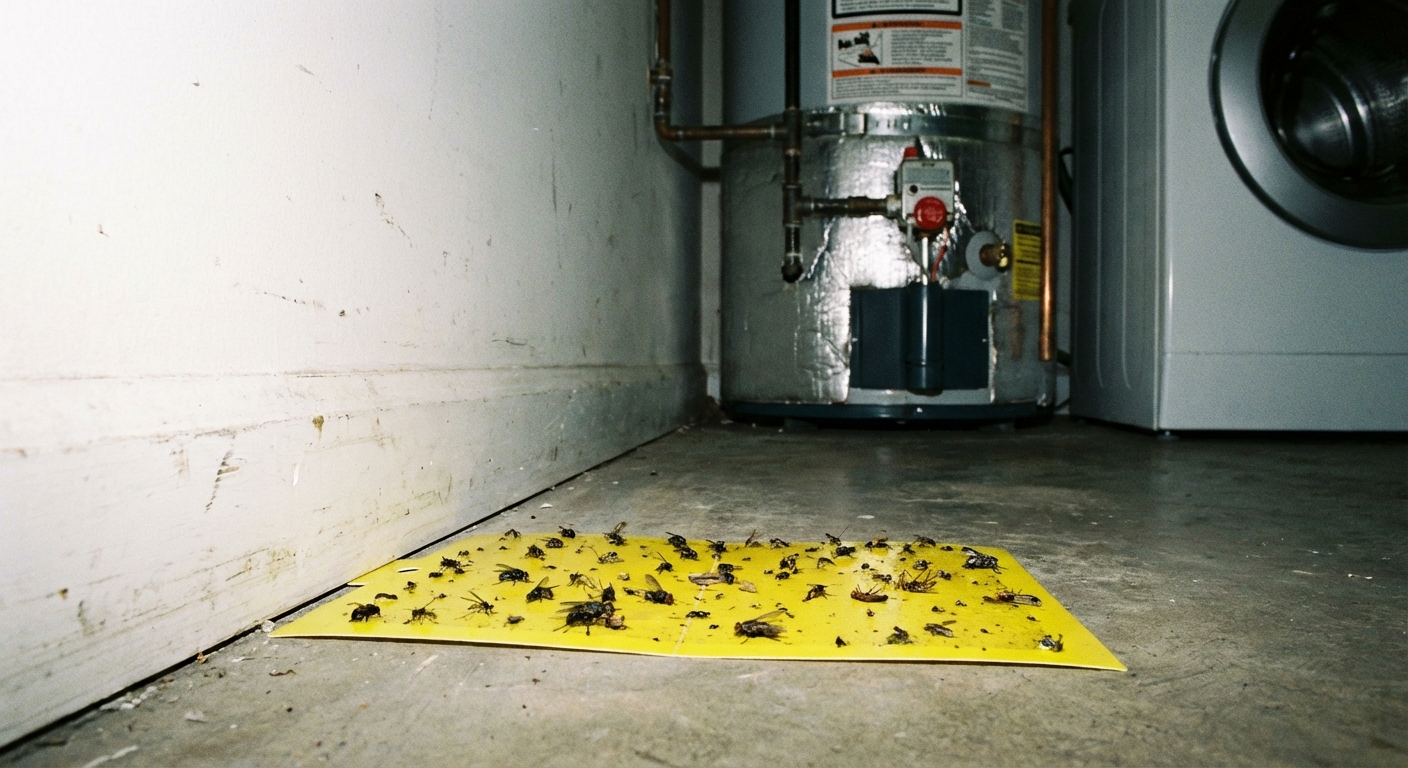
Sticky traps work well because crickets roam along edges. They are also a great “detector” for where activity is highest.
- Place traps tight to baseboards, behind toilets, behind appliances, and near basement walls.
- In basements, set a few along the perimeter and near floor drains, sump pits, and the bottom of stairs.
- Check in the morning. More catches in one area usually means a nearby entry point or harborage.
3) Lower humidity (big for camel crickets)
If you have camel crickets, moisture control is a major lever. A dehumidifier aimed at about 45 to 50% humidity in basements often helps and may reduce activity over 1 to 2 weeks, sometimes sooner depending on how damp the space was.
Seal entry points
In my experience, crickets are less about “dirty house” and more about “tiny gaps.” They can slip in through small openings, especially around doors and utility lines.
Common entry points
- Gaps under exterior doors and between the door sweep and threshold
- Cracks in foundation walls, especially near corners
- Where pipes and wires penetrate siding or brick
- Garage door sides and bottom seal
- Window well gaps and torn screens
- Basement bulkhead doors and crawlspace vents
DIY sealing checklist
- Door sweep: Replace if you can see daylight. For most homes, this is the #1 fix.
- Weatherstripping: Add or replace around exterior doors.
- Caulk small cracks: Use exterior-grade silicone or polyurethane caulk on cracks and gaps under 1/4 inch.
- Fill bigger holes: Use copper mesh or steel wool packed in the void, then seal with expanding foam. This works well around pipes.
- Screen and vent repair: Patch tears and make sure crawlspace vents have intact mesh.
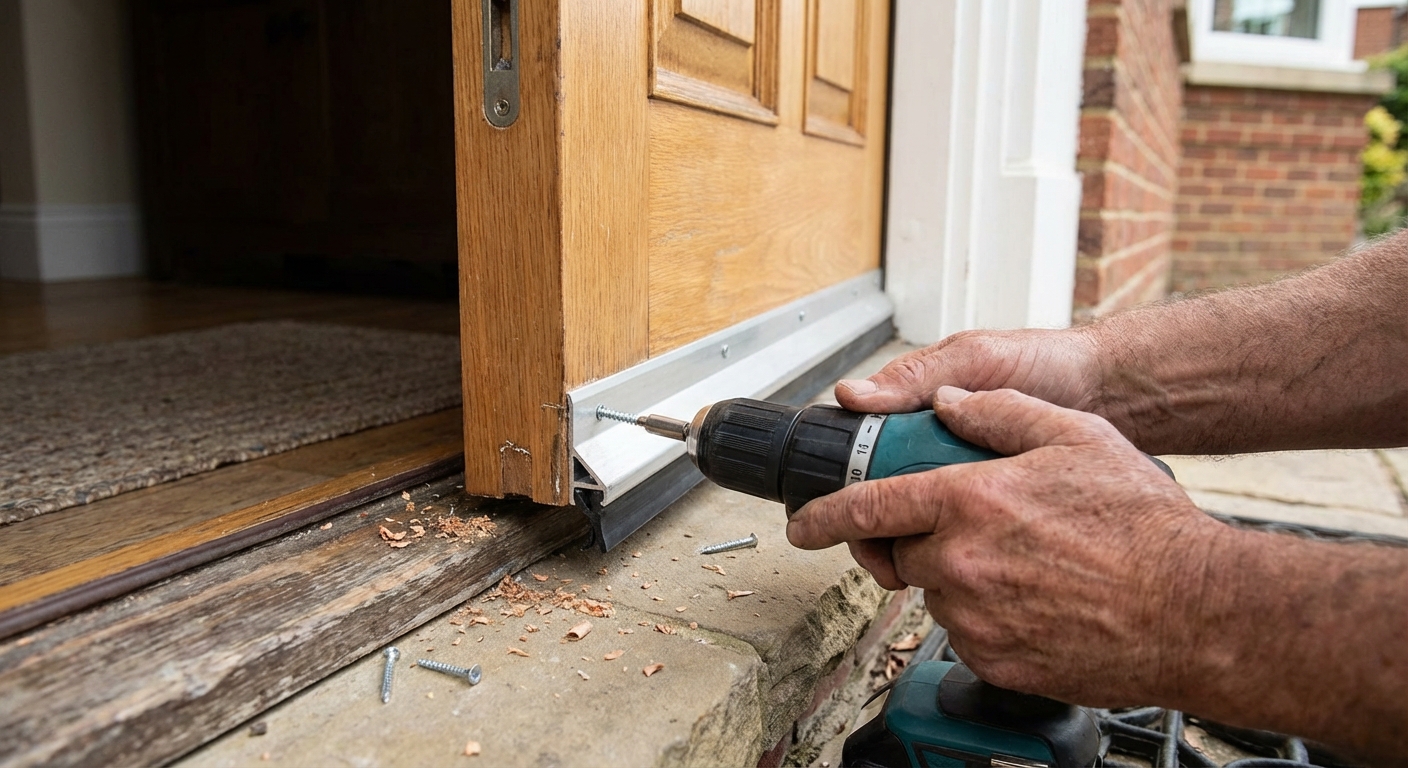
My thrifty rule: If you only have time for one pass, start at the easiest, highest-traffic entry points. Front door, back door, garage service door, then the garage door itself.
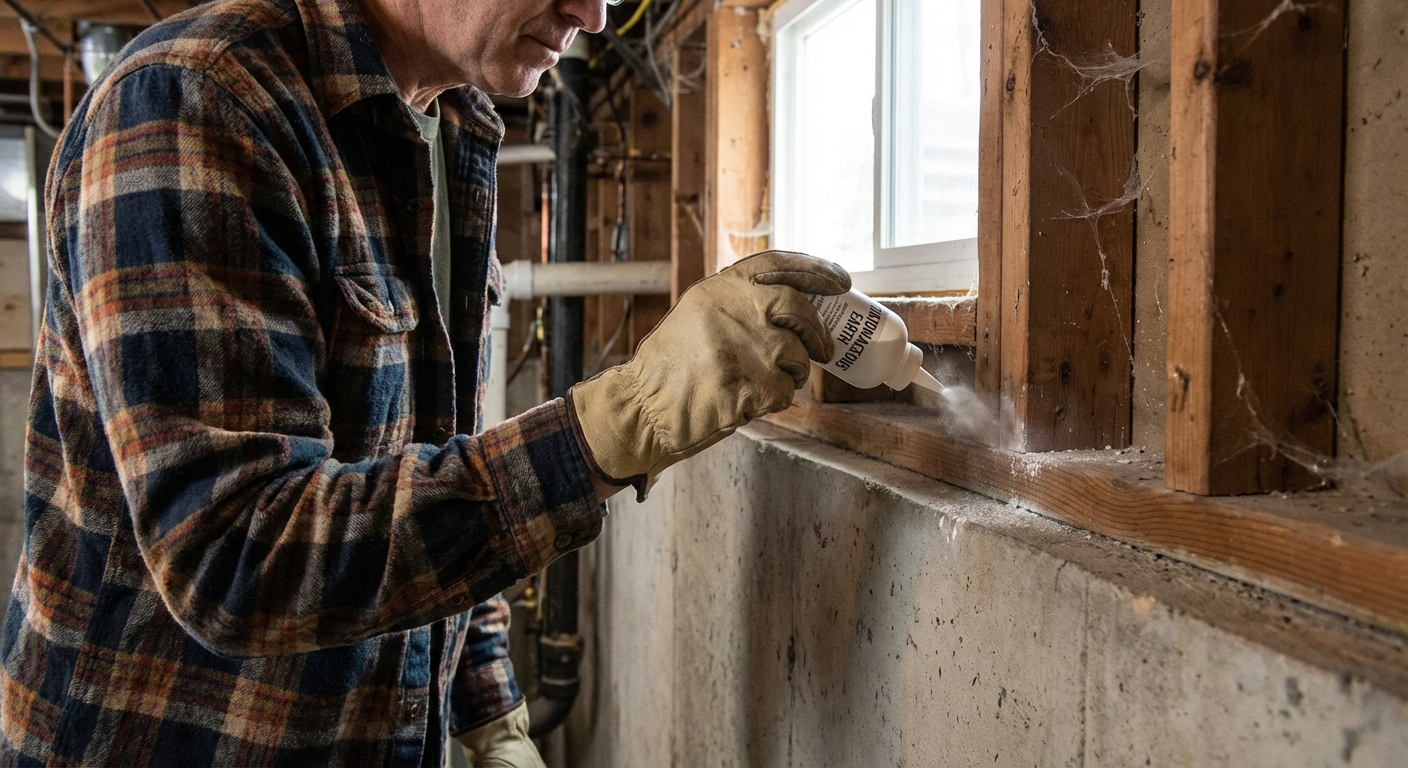
Diatomaceous earth (DE)
Diatomaceous earth is a fine powder made from fossilized diatoms. It works by damaging the insect’s outer coating, which leads to dehydration. It is not an instant knockdown, but it is a solid tool when used correctly.
What to buy
- Many people choose food-grade diatomaceous earth for household use, but it is still a fine dust. “Food-grade” does not mean safe to breathe.
- Get a small hand duster or squeeze bottle. If you dump it in piles, it works worse and makes cleanup harder.
Where to apply DE
- Along baseboards behind furniture you do not move often
- In basement rim-joist areas and sill plates where you see gaps
- Behind and under appliances (dry areas only)
- In crawlspaces around perimeter walls (dry areas only)
How to apply it
- Dust a thin, barely visible layer. Think “light flouring,” not “snowstorm.”
- Keep it dry. DE loses effectiveness when wet.
- Avoid air currents. Do not apply near fans or returns where it can become airborne.
Safety notes
Even food-grade DE can irritate lungs and eyes. Wear a well-fitting mask (a NIOSH-rated N95 is a good upgrade), keep kids and pets away during application, and wipe up any visible piles once you are done. Keep DE away from aquariums and other sensitive air pumps where dust can get pulled in.
Outdoor steps
If you only fight crickets indoors, you will keep seeing new ones. The goal is to make the area right outside your home less inviting.
Reduce harborage
- Pull mulch back 6 to 12 inches from the foundation if possible. Crickets like moist mulch.
- Rake up leaf piles and grass clippings, especially in fall.
- Move firewood stacks away from the house and keep them off the ground.
- Trim dense plants that touch siding.
Fix moisture
- Clean gutters and extend downspouts so water drains away.
- Re-grade soil so it slopes away from the foundation.
- Repair leaky hose bibs and dripping outdoor spigots.
These steps help with camel crickets in particular because damp zones near the foundation can turn into a staging area.
What not to do
- Do not use bug bombs or foggers for crickets. They rarely reach the cracks where crickets hide and they add unnecessary chemical exposure.
- Do not do broad indoor spraying across floors and carpets. Focus on exclusion, traps, and targeted crack-and-crevice treatment only if needed.
- Do not overapply DE. Thick piles are messy and often less effective than a thin dusting.
Chemical options
If you are seeing crickets daily, catching a bunch on traps, or finding them in multiple rooms, you may be dealing with an ongoing source outdoors or an indoor harborage zone. At that point, a targeted insecticide can be appropriate.
Quick reality check: Many people can stop after sealing, traps, and humidity control once trap catches drop and the chirping stops. Chemicals are the “if needed” layer, not step one.
Option A: Exterior perimeter spray
For most homeowners, the highest ROI is an exterior perimeter treatment around the foundation, entry doors, and garage. This reduces the number that make it inside.
- Look for products labeled for crickets and for use on exterior foundations.
- Apply where siding meets foundation, around door thresholds, and around utility penetrations.
- Do not spray where water runs directly into drains or ponds. Follow the label exactly.
Option B: Crack-and-crevice indoors
If you must treat indoors, focus on cracks and crevices only, not broad sprays across floors. Baseboard gaps, utility openings, and unfinished basement edges are typical targets.
Option C: Baits
Some baits can help, but they work best when you remove competing food sources. If there is pet food out, crumbs under appliances, or easy moisture, baits are less likely to be the hero. For most DIY situations, traps plus exclusion still tend to outperform baits.
Basic safety and label notes
- Keep treatments away from kids, pets, and food prep surfaces.
- Ventilate if the label calls for it.
- Use only where the label allows. Product labels and legal use sites vary by region.
When to call a pro
- You are seeing crickets in daylight across multiple rooms
- You have a crawlspace and cannot safely access key areas
- You suspect a hidden moisture problem (standing water, moldy smell, persistent dampness)
- Sticky traps are filling up week after week despite sealing
Hotspots by room
Basement
- Run a dehumidifier and seal rim-joist gaps
- Place sticky traps along perimeter walls
- Check floor drains and sump areas
Kitchen
- Pull the stove and fridge, vacuum crumbs, then set traps behind them
- Seal gaps under sinks around plumbing penetrations
- Fix slow drips and damp cabinet bottoms
Garage
- Replace garage door bottom seal if it is brittle or flattened
- Add side seals if you see light
- Keep cardboard off the floor and reduce clutter along walls
Chirping but cannot find it
This one makes people feel a little crazy, so you are not alone. Crickets chirp to attract mates, and they often do it from protected spots like:
- Behind baseboards or in gaps at the bottom of drywall
- Inside floor registers
- In wall voids near warm appliances or utility lines
When you walk toward them, they stop chirping. That is normal. Set sticky traps near where the sound is loudest and check them the next morning.
Quick troubleshooting: If the sound seems to come from one wall, inspect the exterior on that same side for gaps around hose bibs, dryer vents, AC line sets, and cable penetrations. Those are common “straight into the wall” entry points.
Prevention plan
Once a week for two weeks
- Vacuum edges of rooms and behind appliances
- Check sticky traps and replace as needed
- Empty dehumidifier and keep basement humidity in range
Each fall
- Replace worn door sweeps and weatherstripping
- Pull leaves away from the foundation
- Switch exterior lights to warm LEDs and add motion settings
- Do a quick perimeter walk and caulk new cracks
If you do those basics, most cricket problems go from “every night” to “once in a blue moon.” And when one does slip in, the traps catch it before it settles in and starts serenading your hallway.
FAQ
Are crickets dangerous?
Crickets are not typically dangerous to people. They can contaminate food, damage fabrics or paper in some cases, and their droppings can be messy. The bigger issue is nuisance and the fact that their presence often points to gaps or moisture problems.
Will one cricket mean an infestation?
Not always. A single cricket can wander in. If you are seeing them repeatedly, especially in the same area, that is when you treat it like an ongoing entry problem.
Does vinegar kill crickets?
Vinegar is great for cleaning, but it is not a reliable cricket control method. You will get better results with exclusion, sticky traps, and moisture control.
How long do sticky traps take to work?
Often overnight if you place them correctly along edges and near suspected entry points. Traps also help you confirm whether your other steps are working over the next 1 to 2 weeks.

About Marcus Vance
Content Creator @ Grit & Home
Marcus Vance is a lifelong DIY enthusiast and self-taught home renovator who has spent the last decade transforming a dilapidated 1970s ranch into his family's dream home. He specializes in budget-friendly carpentry, room-by-room renovations, and demystifying power tools for beginners. Through his writing, Marcus shares practical tutorials and hard-learned lessons to help homeowners tackle their own projects with confidence.