
If you have a groundhog problem, you usually find out the hard way. One day your lettuce is thriving, the next day it looks like someone ran a tiny salad bar overnight. And then you spot it: a chunky brown visitor waddling back toward a hole big enough to swallow a basketball.
I am all for sharing the yard with wildlife, but groundhogs can do real damage fast. The good news is you can remove them without turning your weekend into a war. Below is the same step-by-step approach I use on my own place: identify, assess the risk, pick a humane removal method, then lock the yard down so they do not come back.
How to tell if it is a groundhog
Groundhogs, also called woodchucks, are large rodents that love tender garden plants and well-drained soil for burrows. They are most active during the day, especially morning and late afternoon.
Quick ID checklist
- Size: Usually 16 to 26 inches long, with a stocky body and short legs.
- Color: Brown to grizzled brown-gray fur.
- Face: Small ears, blunt nose, and a “serious” expression.
- Tail: Short and bushy, not long like a squirrel.
- Activity: Daytime feeding, often along fence lines, sheds, decks, and brush piles.
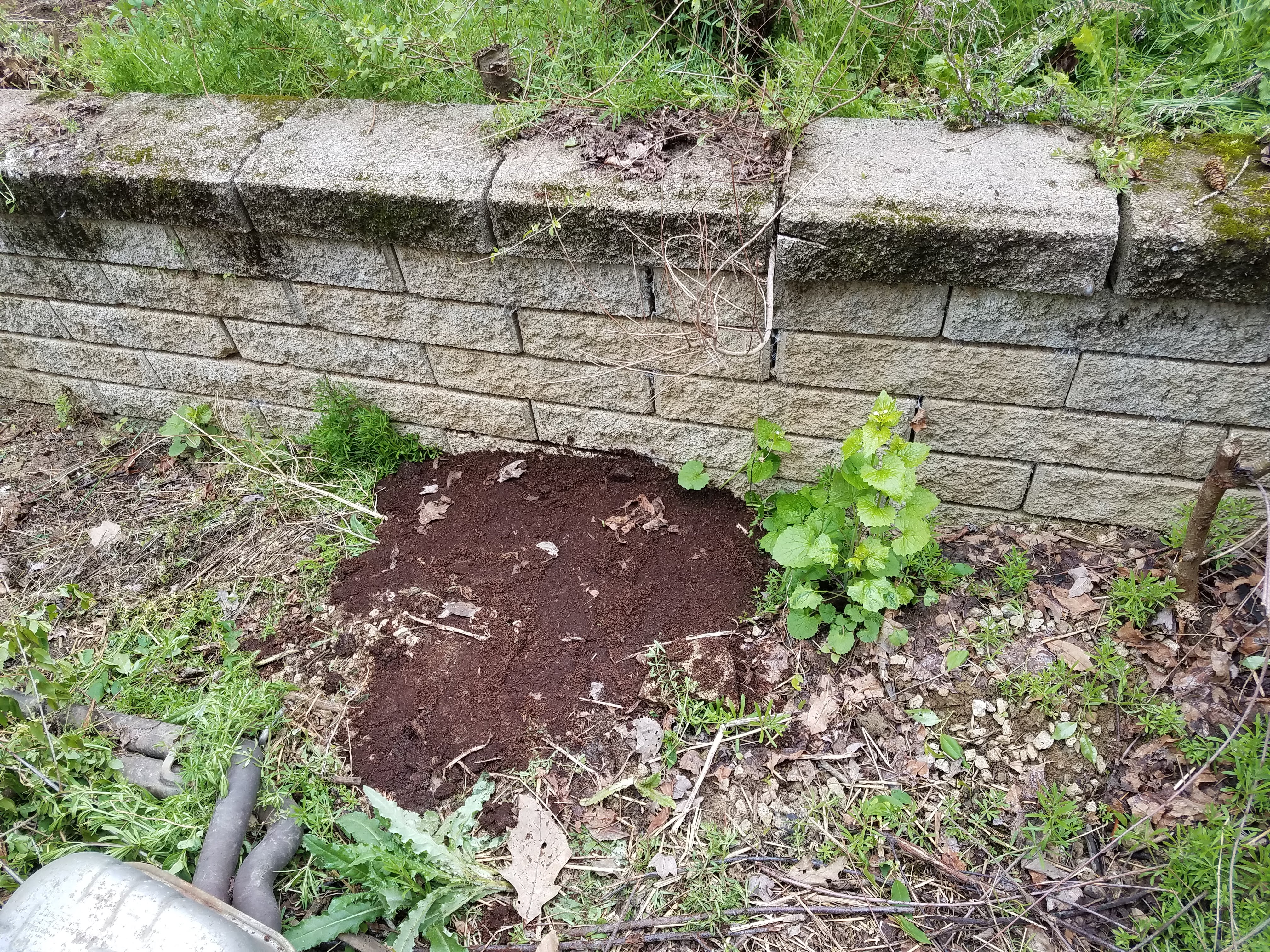
Groundhog burrow signs
- Entrance hole: Often about 8 to 12 inches wide.
- Dirt mound: A fan-shaped pile of fresh soil at the main entrance.
- Runways: Flattened paths through grass leading to the garden or under structures.
- Multiple exits: Burrow systems often have a main hole plus one or more hidden “emergency” holes.
If you are seeing smaller holes (2 to 4 inches), think chipmunks, rats, or snakes. If you see raised ridges and molehills, think moles. Groundhog holes are in the “wow, that is a hole” category.
What damage groundhogs cause (and what to check today)
Groundhog damage tends to fall into three buckets: garden destruction, trip hazards, and burrowing that compromises structures.
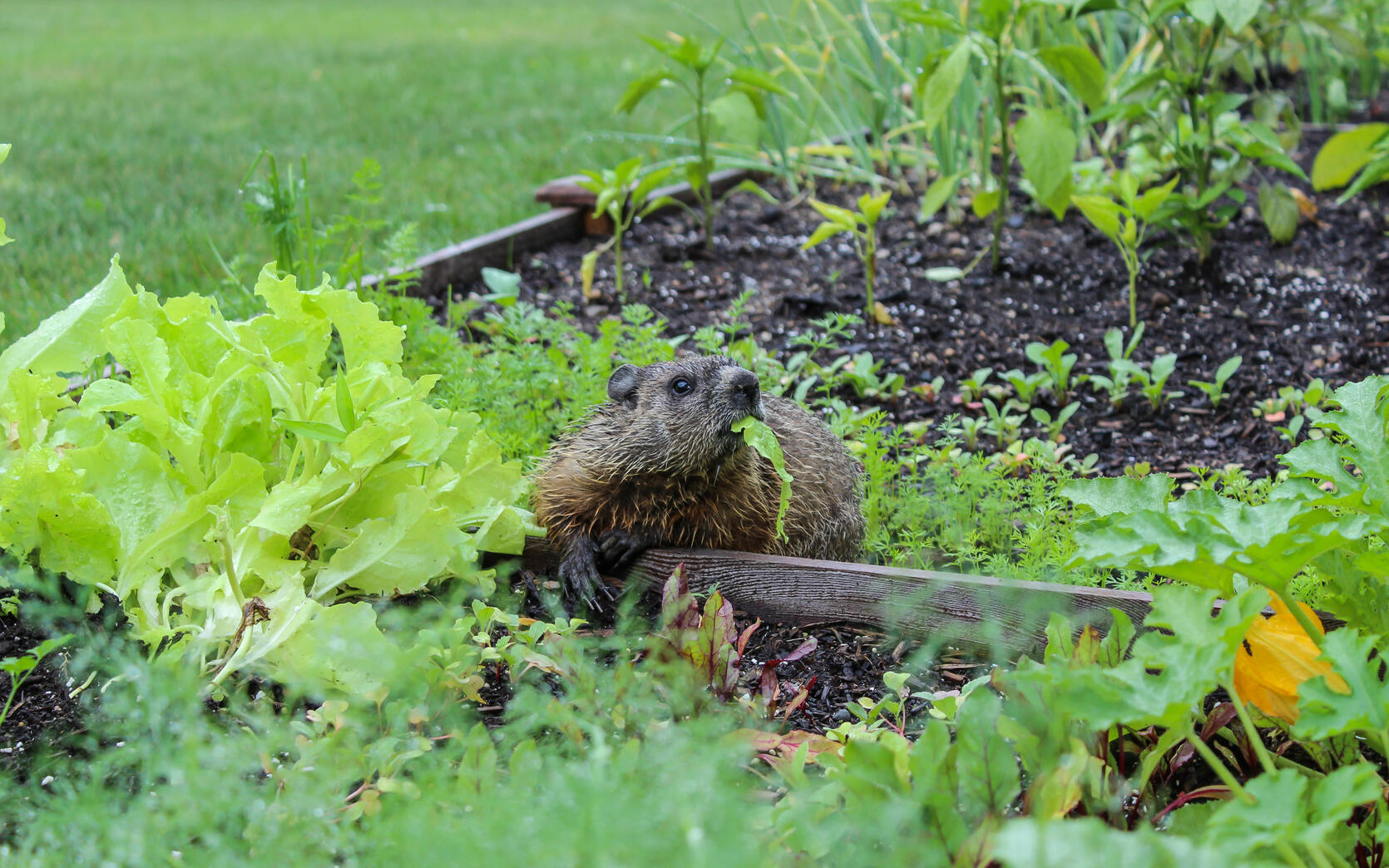
1) Garden destruction
Groundhogs are heavy eaters. They commonly target:
- Leafy greens (lettuce, spinach, kale)
- Beans and peas
- Broccoli, cabbage, and other brassicas
- Squash, cucumbers, and melons
- Young transplants and seedlings
You will often see clean bites and plants clipped low, sometimes pulled down from the edge of a raised bed.
2) Burrow hazards in the yard
Burrows create soft spots that can twist an ankle or swallow a mower wheel. Walk the area and look for:
- Spongy ground near entrances
- Hidden holes in tall grass
- Sunken areas around patios and walkways
3) Foundation, shed, and deck undermining
This is the one I take most seriously. Groundhogs love to dig under:
- Concrete slabs (sheds, patios, steps)
- Decks and porches
- Air conditioner pads
- Fence corners and retaining walls
Over time, tunneling can cause settling, cracked edges, and voids that invite water problems.
Safety note
Do not stick your hand into a burrow. Groundhogs can bite if cornered, and burrows can also be used by other animals. If you suspect a groundhog is under a structure that could shift, bring in a pro.
Start here: confirm the burrow is active
Before you buy traps or start trenching for fence, make sure you are dealing with an active burrow.
- Look for fresh digging: New soil is loose and lighter colored.
- Check for tracks and droppings: Tracks can look like small handprints, but the clue is the toes and claws. Front feet typically show four toes, back feet five, often with visible claw marks. Droppings are usually dark brown pellets (oval to slightly cylindrical) and may be left in a small “latrine” area near the burrow or along a runway.
- Use the “paper test”: Loosely stuff crumpled paper into the entrance in the evening. If it is pushed out by morning, something is using it.
Best ways to get rid of groundhogs (humane first)
Groundhogs are persistent. The most reliable approach is: remove the animal, then exclude the area, then make the yard less inviting.
Before you trap or seal: check for young
One important timing note: in spring and early summer, a burrow may contain dependent young. That is when “just seal it up” can turn into a mess fast. If you are not sure, lean toward a pro, or use a monitored approach (like a one-way door) so you confirm everything is out before you close it up for good.
Option A: Humane live trapping (most effective for many homeowners)
Live trapping works well when you can place a trap right on the travel path or near the burrow entrance.
What you need
- A sturdy live trap sized for groundhogs (commonly 32 to 42 inches long)
- Bait (see below)
- Work gloves
- A tarp or old blanket (to cover the trap and calm the animal)
Best baits to try
- Cantaloupe or watermelon chunks
- Apple slices
- Sweet corn (fresh or cut cob rounds)
- Leafy greens
How to set the trap
- Place it flat and stable on level ground, ideally along the runway or at the burrow entrance. If it rocks, fix it. Groundhogs notice.
- Use light “guides” if needed (a couple boards, a little brush, or garden edging) to funnel them toward the entrance without making it look like a booby trap.
- Pre-bait if needed by wiring the trap open for a day with food inside, then set it the next day. This helps with trap-shy animals.
- Put bait behind the trigger plate so the groundhog has to step fully in.
- Cover the top with a towel or tarp, leaving the ends open. This makes it feel like a tunnel.
- Check the trap often (at least morning and evening, more in hot weather). Many places also have legal trap-check requirements, so follow local rules.
Trap safety and welfare: Set traps where kids and pets cannot mess with them, and do not leave a trapped animal baking in direct sun. Shade the trap and handle it calmly.
My biggest early mistake: I used flimsy “small critter” traps. A groundhog is built like a little bulldozer. Buy or rent a trap that is actually rated for them.
Relocation and legal considerations
Relocating wildlife is regulated in many states and counties. In some places it is illegal without a permit, and in others you can only relocate on your own property or with landowner permission. There are also humane concerns since relocated groundhogs may not survive in unfamiliar territory or may spread disease.
- Check your state wildlife agency rules before moving any captured animal.
- Call your county animal control or a licensed wildlife control operator if you are unsure.
- Never relocate to parks or public land unless explicitly allowed.
Option B: Natural deterrents (best for light pressure)
Deterrents can help push a groundhog to pick an easier yard, especially when combined with fence repairs and removing cover. On their own, deterrents are hit-or-miss.
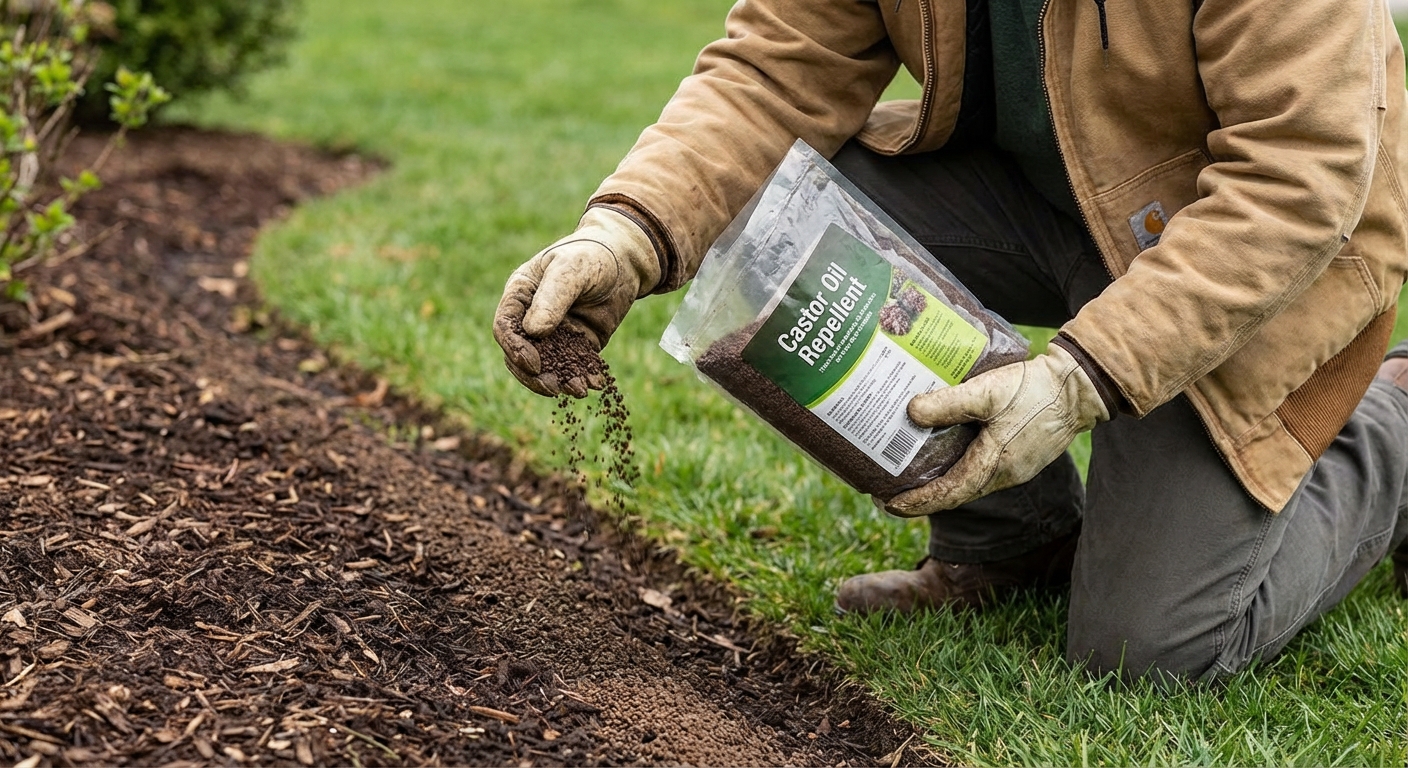
Castor oil repellents
Castor oil products are commonly used for burrowing animals. They are not intended to poison the animal when used as directed, but results vary widely and evidence is mixed in some extension guidance.
- Follow label directions closely, especially for gardens.
- Reapply after heavy rain and during active seasons.
- Expect best results when you treat the burrow perimeter and likely feeding routes.
Garlic, hot pepper, and strong-smell sprays
DIY sprays can reduce nibbling on specific plants, but they wash off easily.
- Reapply after rain or watering.
- Test on a small section of plant first to avoid leaf burn.
- Use as a short-term shield while you install fencing.
Vibration stakes and motion devices
Solar vibration stakes and similar devices sometimes work temporarily, especially in smaller yards. Groundhogs can also get used to them.
- Move the devices every few days so the annoyance zone changes.
- Use multiple stakes if your yard is large.
- Pair with exclusion, or the groundhog may simply shift the burrow 20 feet away.
Option C: Lethal control (regulated, usually a pro job)
Some areas allow lethal control, others restrict it heavily, and methods vary by location and season. If you are considering this route, it is typically best handled by a licensed wildlife professional so it is legal, safe, and as humane as possible.
Fencing that actually stops groundhogs
If you want a long-term fix, focus on exclusion. Groundhogs can scramble over low barriers, but they dig like it is their day job. Your fence needs to address both.
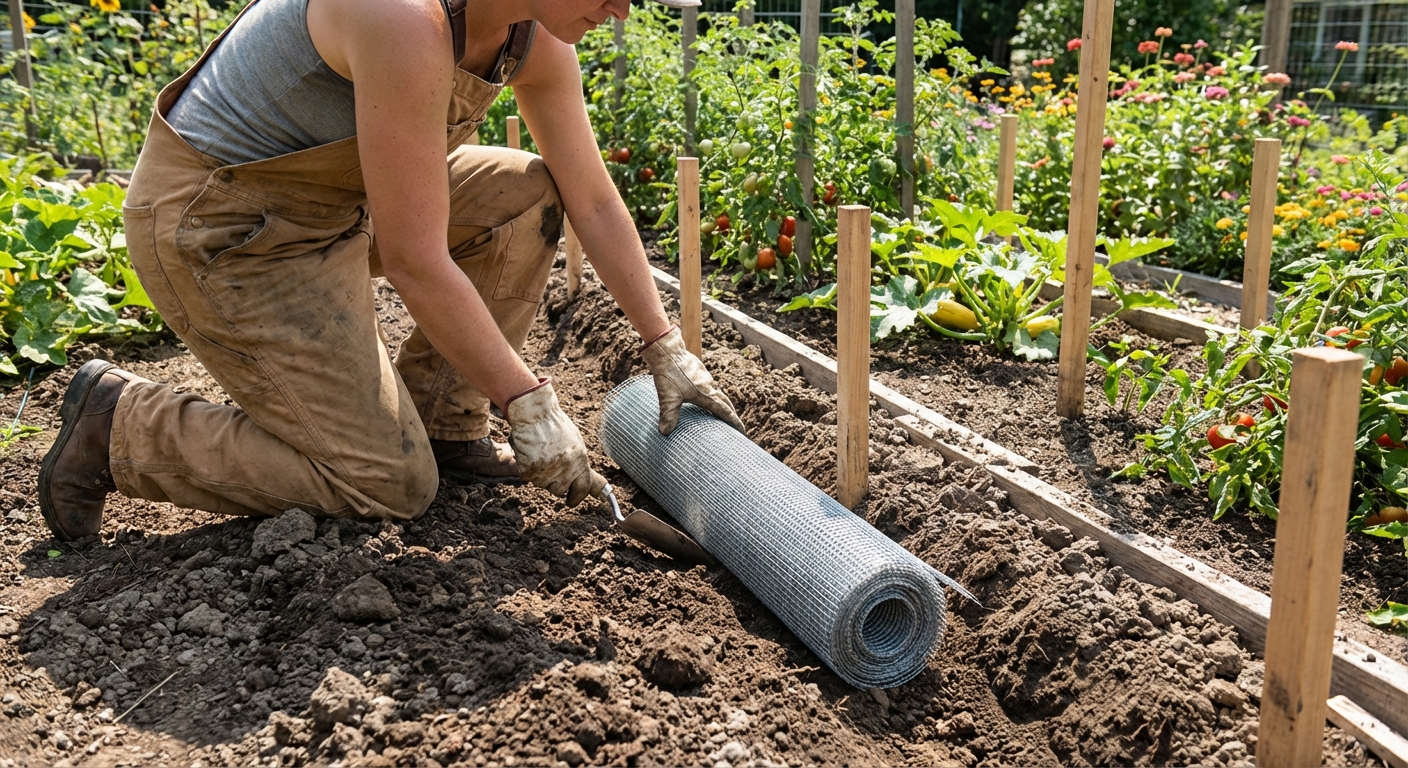
Garden fence specs
- Height: 3 to 4 feet minimum. More is fine.
- Material: Welded wire or hardware cloth with 2-inch openings or smaller. Smaller openings also help protect seedlings.
- Dig barrier: Bury the bottom 10 to 12 inches or create an L-shaped apron.
- Bury method: Drop the mesh straight down and backfill.
- Apron method: Bend the mesh outward 10 to 12 inches at a right angle and bury it shallow. When they dig at the fence line, they hit the mesh and give up.
- Stakes: Place stakes tight enough that the fence does not flex when pushed.
- Gates: Secure the bottom of the gate too. A perfect fence with a “tunnel gate” is a classic rookie problem.
This is the spec that finally stopped the repeat offenders for me. Anything lighter or shallower turned into a groundhog suggestion, not a barrier.
Under decks, sheds, and porches
This is where I see the most repeat offenders. The fix is the same: block access and add a dig barrier.
- Use heavy-gauge welded wire or hardware cloth.
- Bury it 10 to 12 inches or use an outward apron.
- Fasten securely to framing with exterior screws and fender washers.
Important: Make sure the animal is not trapped underneath before you seal it up. Use the paper test for a few nights, or install a one-way exclusion door and confirm the area is empty.
One-way door tip: Check it daily, and remove it once you are confident the groundhog is out so you do not create a new denning problem later.
What not to do
- Do not flood burrows. It rarely solves the problem and can create erosion and foundation water issues.
- Do not use poison baits. These pose serious risks to pets, kids, and predators that may eat a poisoned animal. They are also often restricted or illegal depending on the product, label, and location. Always follow local regs and the label.
- Do not ignore a burrow near a slab or foundation. That is when you call for help sooner rather than later.
When to call wildlife control
If any of the situations below apply, a licensed wildlife control operator is often the safest and fastest route:
- The burrow is under a deck, porch, shed, or concrete slab and you cannot access it well.
- You have multiple active burrows or repeated reinfestations.
- You cannot legally relocate trapped groundhogs in your area.
- You are uncomfortable handling a trap or approaching a captured animal.
- You suspect other wildlife may also be using the burrow.
- It is spring or early summer and you suspect there may be young in the den.
Ask whether they offer exclusion work (wire barriers, trenching, repairs) in addition to trapping. Trapping alone solves today’s problem. Exclusion prevents next month’s problem.
After removal: keep them from coming back
Close the buffet
- Harvest ripe produce promptly.
- Clean up fallen fruit from trees.
- Use plant cages or temporary netting for young plants.
Remove hiding spots
- Trim tall weeds and brush along fence lines.
- Move woodpiles and debris away from the house and garden.
- Keep the area around sheds and decks clear and visible.
Repair and backfill burrows
Once you are sure the groundhog is gone:
- Collapse the tunnel carefully with a shovel.
- Backfill in layers, tamping as you go to reduce settling.
- Add topsoil and seed if needed.
- If the burrow was near a slab or structure, consider compactable fill and monitor for settling.
Groundhog FAQ
Will groundhogs leave on their own?
Sometimes, but not on your schedule. If food and cover are good, they tend to stay. In spring and summer, damage usually increases as they feed heavily.
Do mothballs or ammonia work?
People suggest them a lot, but results are inconsistent and they can be unsafe or illegal to use outdoors depending on local rules. Stick with proven options like exclusion fencing, labeled repellents, and humane trapping.
Can I block the hole to trap it inside?
Groundhogs often have multiple exits, and blocking an active den can create bigger problems. If you are excluding under a structure, use a one-way door or hire a pro so you do not trap an animal inside.
Should I worry about disease?
You do not need to panic, but use basic precautions. Wear gloves, keep your distance, keep pets away from trapped wildlife, and wash up after working around burrows. If an animal is acting strangely or you are bitten or scratched, contact local health or animal control for guidance.
My no-drama game plan
If you want the simplest order of operations, here it is:
- Confirm activity with fresh soil or the paper test.
- Check local rules for trapping, trap-check timing, and relocation before you start.
- Live trap if legal and practical, or call wildlife control.
- Install real exclusion (buried fence or apron) around gardens and under structures.
- Use deterrents as backup, not the main strategy.
- Backfill and monitor old burrows for settling and new digging.
Handle it once, handle it thoroughly, and you can get back to the fun stuff, like growing the vegetables you actually get to eat.

About Marcus Vance
Content Creator @ Grit & Home
Marcus Vance is a lifelong DIY enthusiast and self-taught home renovator who has spent the last decade transforming a dilapidated 1970s ranch into his family's dream home. He specializes in budget-friendly carpentry, room-by-room renovations, and demystifying power tools for beginners. Through his writing, Marcus shares practical tutorials and hard-learned lessons to help homeowners tackle their own projects with confidence.