
🚨 In a DIY emergency or rush?
Skip the details and jump straight to our 30-second cheat sheet for the most crucial info.
The first time I fought a real house-fly problem in our kitchen, I made the classic rookie mistake: I bought a trap and called it a day. The trap filled up, the flies did not quit, and I realized what I should have known from every other home repair I have ever done. If you do not fix the source, you are just managing symptoms.
House flies are not mysterious. They are opportunists. If your kitchen has a steady buffet and a decent place to lay eggs, they will keep showing up. The good news is you can break that cycle with a simple, organized plan: identify the fly, remove breeding sites, block entry points, then trap what is left.
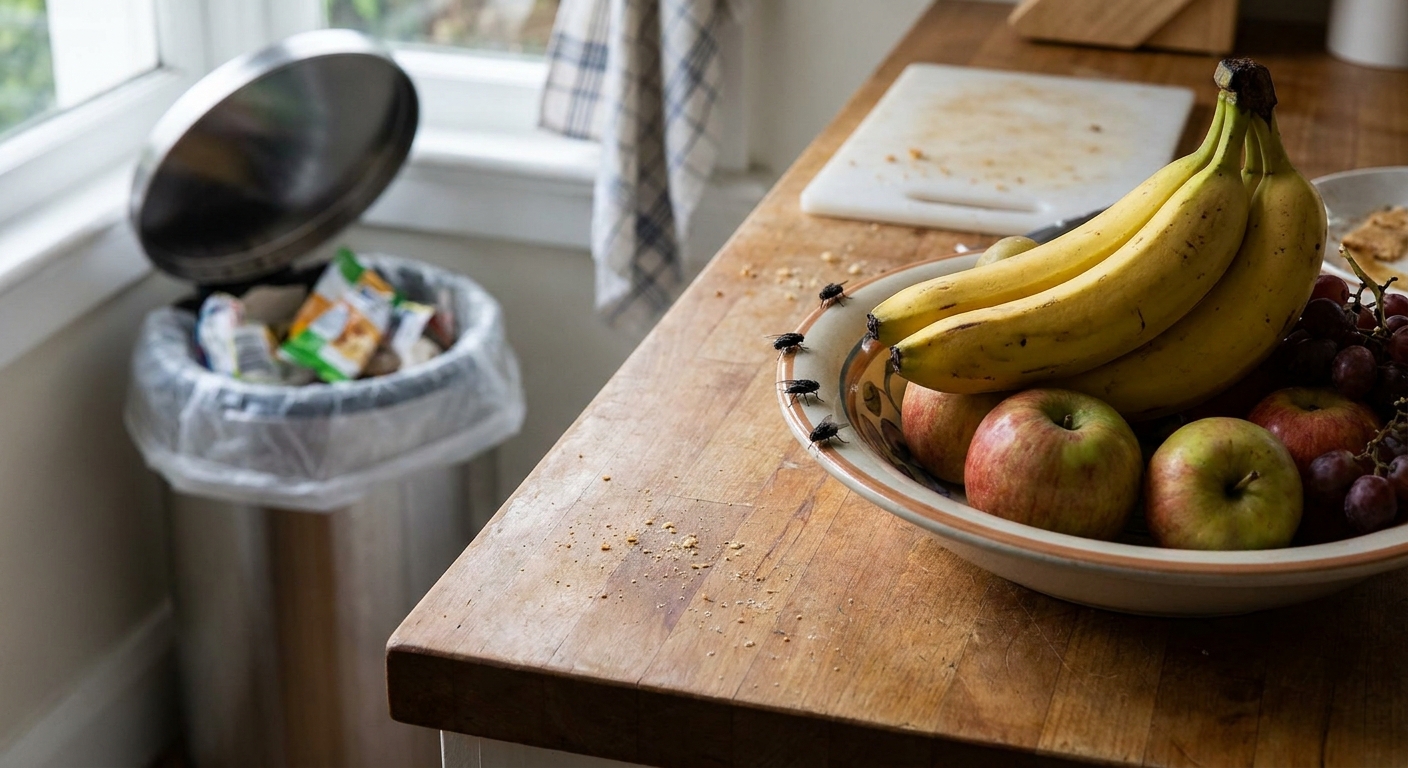
First, make sure you are dealing with house flies
“Flies in the kitchen” can mean a few different pests. The fix depends on which one you actually have.
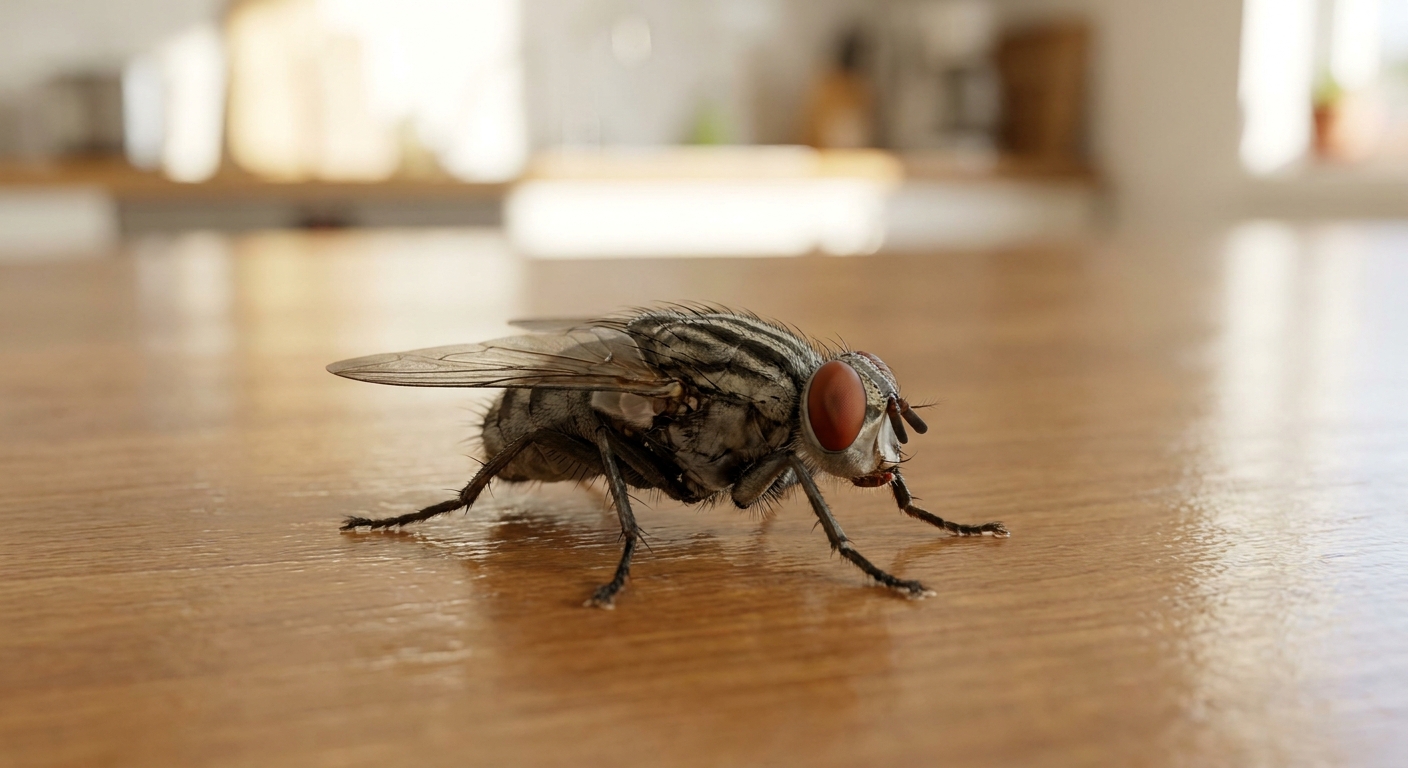
Quick ID: house flies
- Size: About 1/4 inch long.
- Color: Gray body, often with four darker stripes on the thorax.
- Behavior: Buzzing around windows and lights, landing on counters, trash, and food prep areas.
- Where they come from: Breeding in decaying organic material, most commonly garbage, recycling residue, pet waste, and sometimes a dead animal in a wall or attic.
Not house flies: fruit flies (the tiny ones near fruit and drains)
- Size: Very small, about 1/8 inch.
- Color: Tan to brown, sometimes with red eyes.
- Behavior: Hovering around overripe fruit, sticky spills, beer or wine, and especially sink drains.
- Main breeding spot: Slimy organic buildup inside drains, garbage disposals, and wet sponges or rags.
Not house flies: cluster flies (often an attic and wall issue)
- Size: Similar to house flies but a bit larger and slower.
- Color: Dark gray with a “checkered” look. They can seem fuzzy.
- Behavior: They show up in groups, often at windows, and are most common when they are waking up from overwintering inside wall voids or attics.
- Main source: They typically come from outside and get into attics and walls. They are not usually breeding in your kitchen trash.
My rule of thumb: If the flies are medium sized and you are seeing them daily around trash, recycling, and the dog’s feeding area, assume house flies until proven otherwise.
What makes house flies explode in a kitchen
A single house fly is annoying. A kitchen full of them is a sign that eggs are hatching somewhere nearby. House flies go from egg to adult fast in warm conditions, sometimes in about a week. That is why the problem can feel like it “appeared overnight.”
Top breeding and feeding sources to check
- Kitchen trash: Especially meat packaging, diaper trash, or anything sugary.
- Recycling bin: Beer cans, soda cans, wine bottles, and food jars that were “rinsed later.”
- Compost pail: Fruit and veggie scraps are fine, but if it sits uncovered or too wet, it becomes fly heaven.
- Pet areas: Dog poop in the yard, a litter box that needs scooping, or wet pet food left out.
- Dirty floor drains, mop buckets, and rags: Not the most common for house flies, but old organic gunk can support larvae.
- Something dead: If you smell a persistent foul odor or see a sudden surge of flies with no obvious trash issue, consider a dead rodent in a wall, crawlspace, or attic.
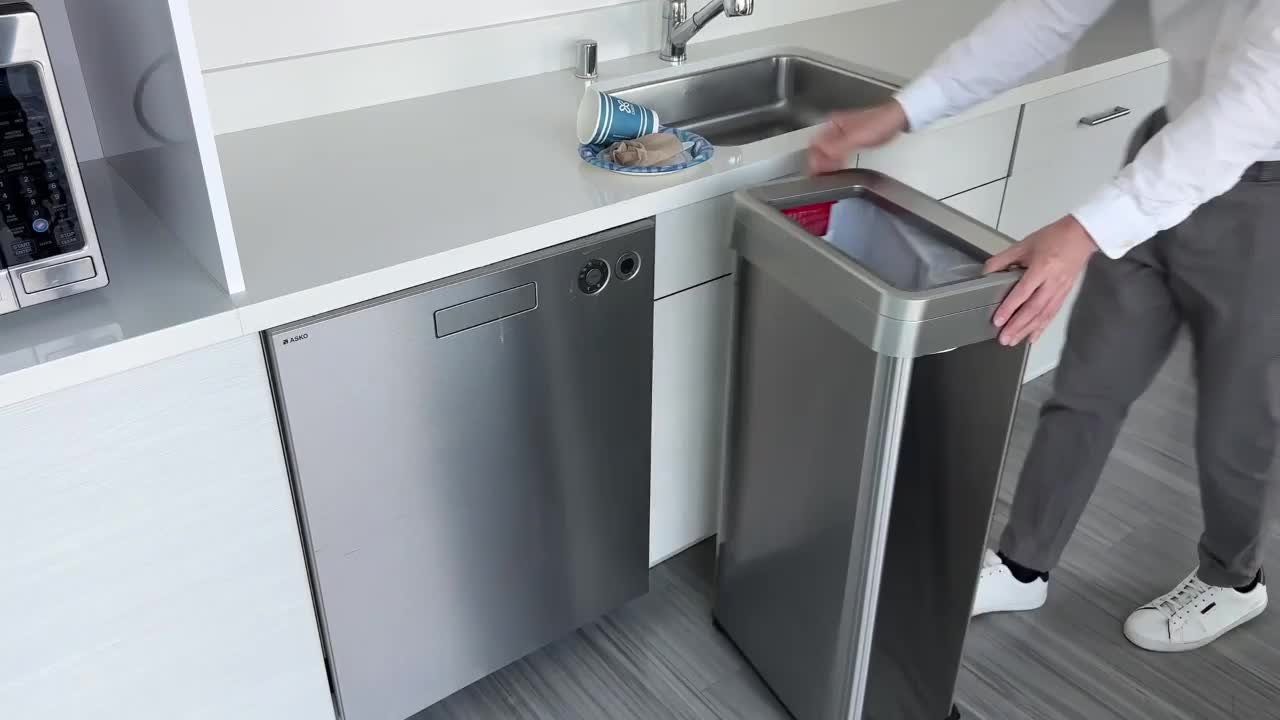
The step-by-step plan that actually ends the problem
I like to tackle house flies the same way I tackle a leaky sink: stop the incoming water, clean up the mess, then repair what caused it. Here is the fly version.
Step 1: Reset the kitchen in one focused hour
This is the fastest way to drop the fly population immediately.
- Bag all trash and take it outside.
- Empty recycling and rinse anything with residue before it goes back in.
- Wipe counters, stovetop, and backsplash with hot soapy water.
- Clean under the toaster, coffee maker, and microwave. Crumbs matter.
- Sweep and mop, especially around trash and pet bowls.
- Put all produce away or cover it.
Step 2: Hunt the breeding site like a detective
If you only do one “deep” thing, do this. The goal is to find where the next generation is coming from.
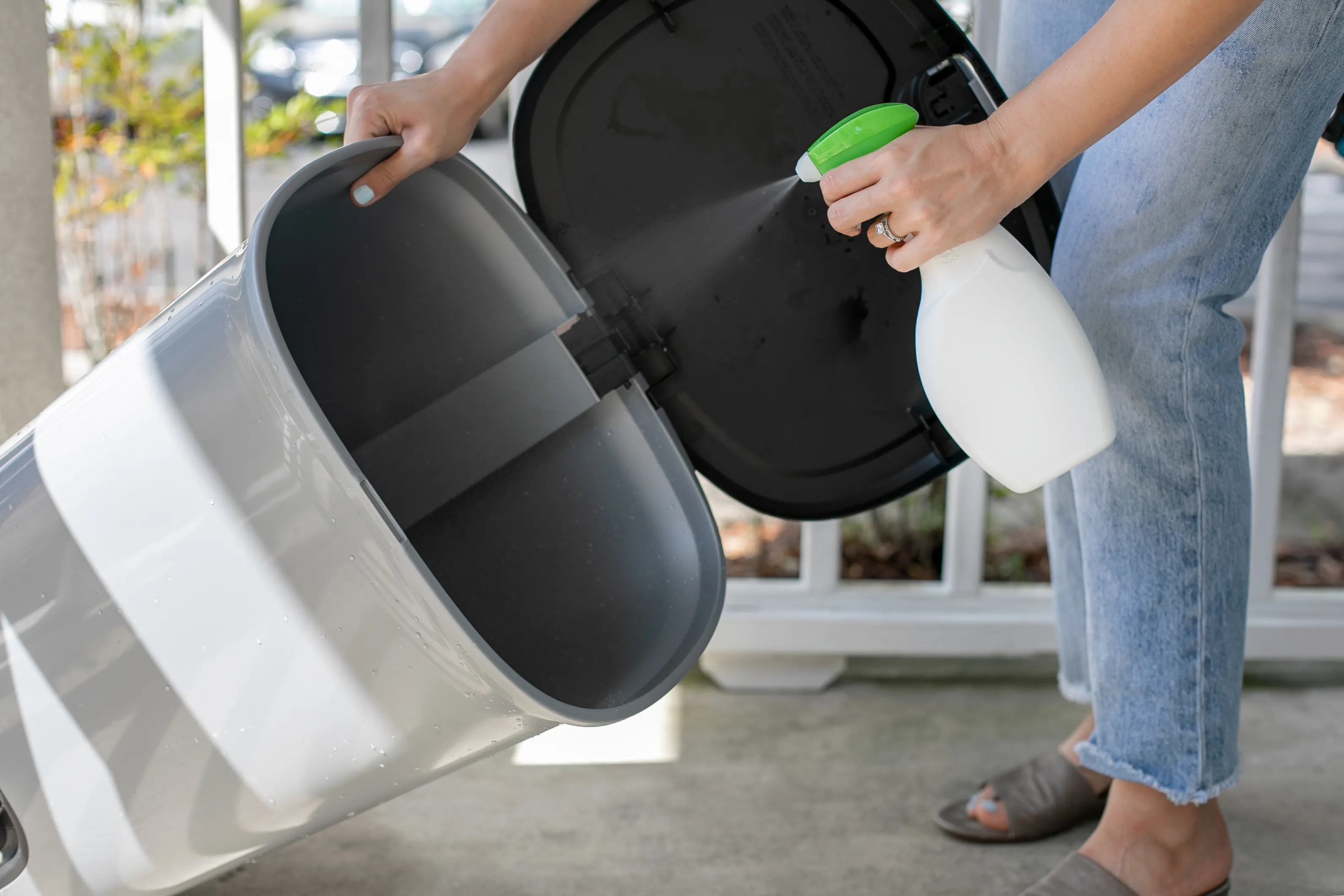
- Trash can itself: Even with a bag, residue builds up. Take it outside, scrub with hot water and dish soap, then rinse and dry. If it reeks, that is your sign.
- Recycling bin: Same deal. Sticky beer and soda film is a magnet.
- Compost container: Empty and wash it. Consider switching to a lidded container or keeping it in the freezer until pickup day.
- Check for “hidden” organic mess: Behind the trash can, under the fridge front edge, under a pet mat, or in a forgotten grocery bag.
Exclusion: keep new flies from getting in
Even if you clean perfectly, flies will keep drifting in if you have easy access points. This is the unglamorous part that pays off all summer.
Simple kitchen entry points to seal
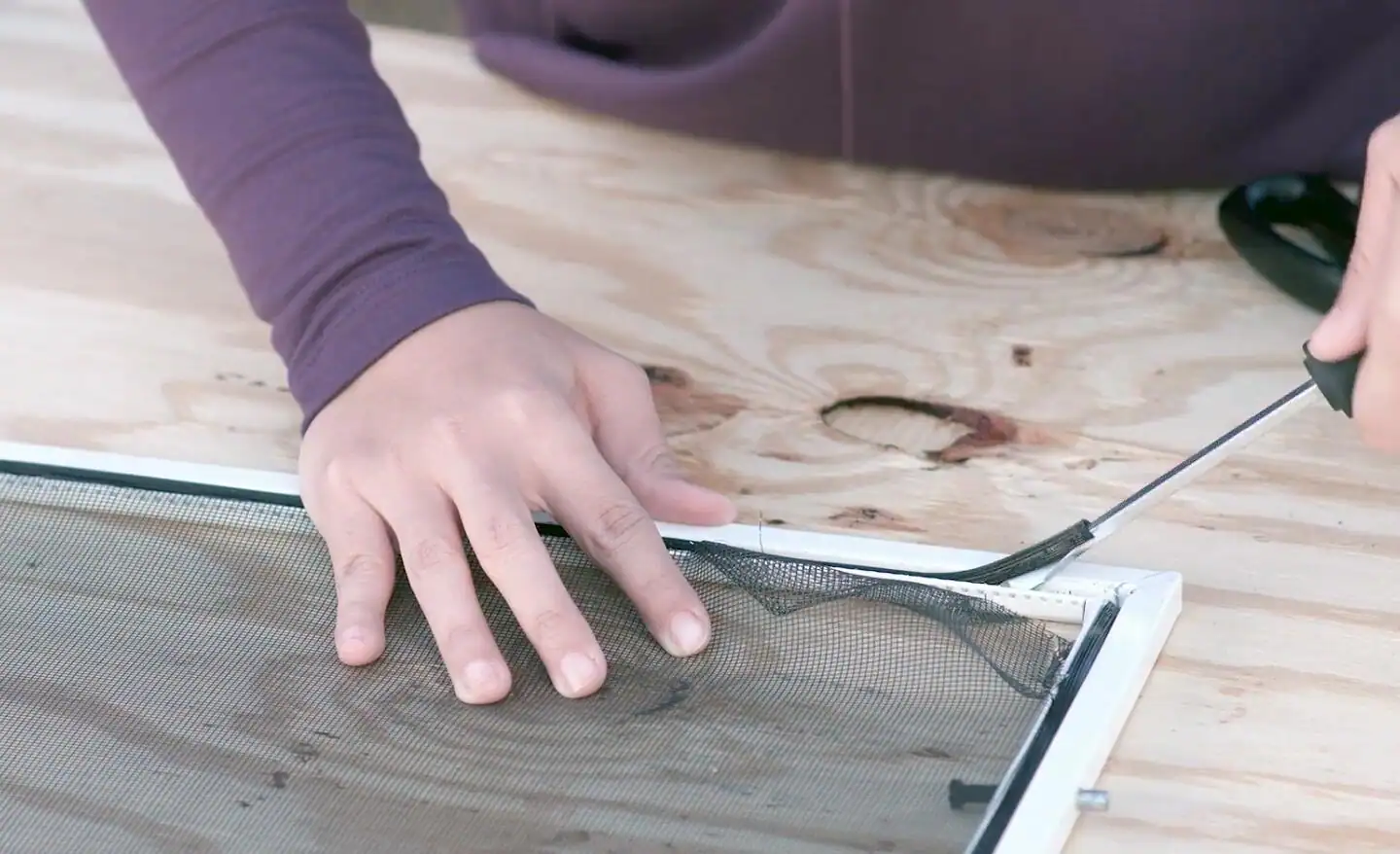
- Window screens: Repair tears and make sure screens sit tight in the frame.
- Door sweeps: Replace a worn sweep so daylight does not show under the exterior door.
- Weatherstripping: Check the sides and top of exterior doors.
- Gaps around plumbing: Look under the sink where pipes enter the wall. Seal openings with silicone caulk for small gaps. Use steel wool as a backing for larger holes before sealing.
- Kitchen exhaust and dryer vent: Make sure exterior flaps close and screens are intact (without restricting airflow).
Sanitation habits that starve house flies
This is the part that feels boring until you realize it is the reason the problem does not come back.
My fly-resistant routine
- Take out kitchen trash nightly during a fly flare-up, even if it is not full.
- Use a lidded trash can and keep the lid closed. If your lid does not seal well, that is worth upgrading.
- Rinse recycling fast or at least drain it. A quick swish is better than a sticky puddle.
- Do not leave pet food out for hours in warm weather. Pick up bowls and wipe the area.
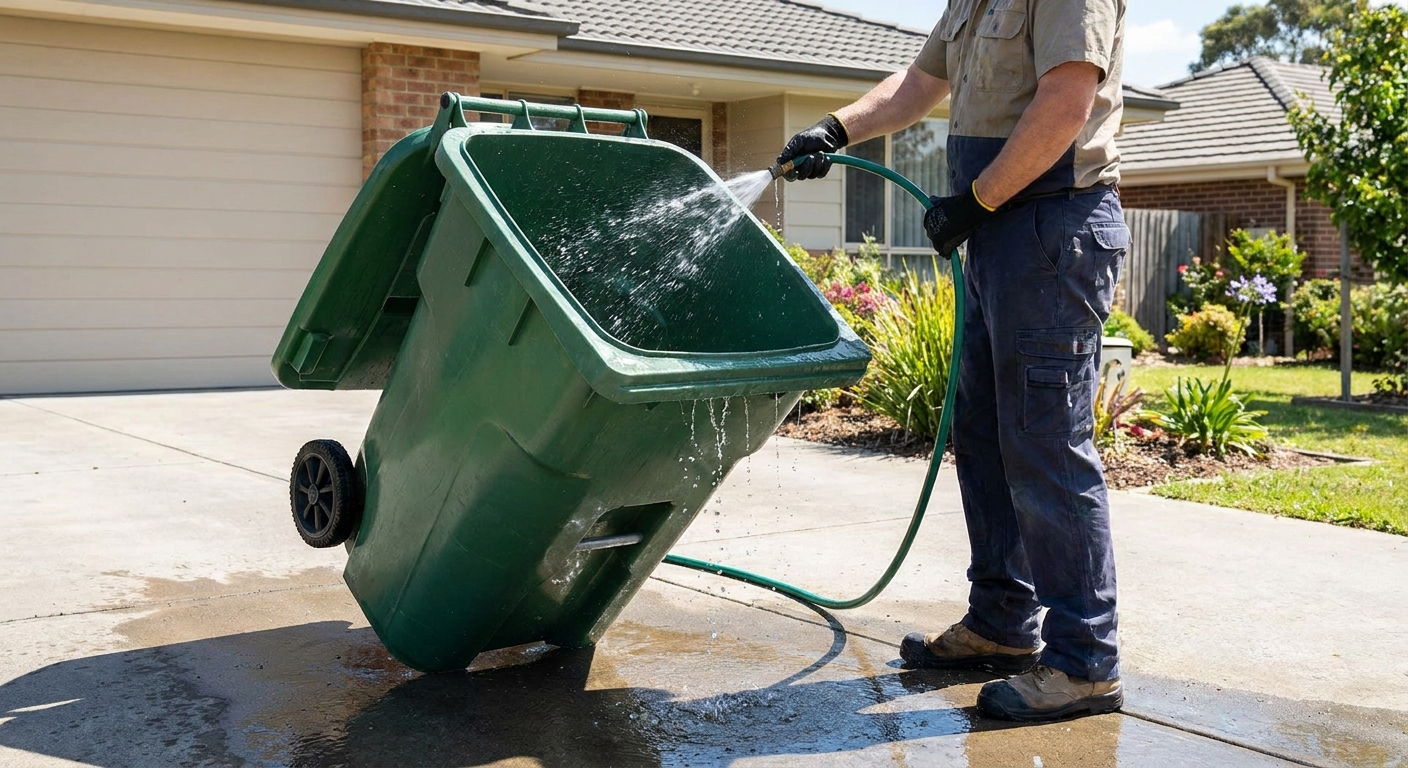
- Clean the trash can weekly in summer. It takes five minutes with a hose and a little dish soap.
- Keep outdoor bins clean and lids shut tight. If your outdoor trash is attracting flies, they will follow you inside when the door opens.
Traps and kill methods that work in a kitchen
Once you have removed breeding sources and tightened up entry points, traps actually start working the way you hoped they would on day one.
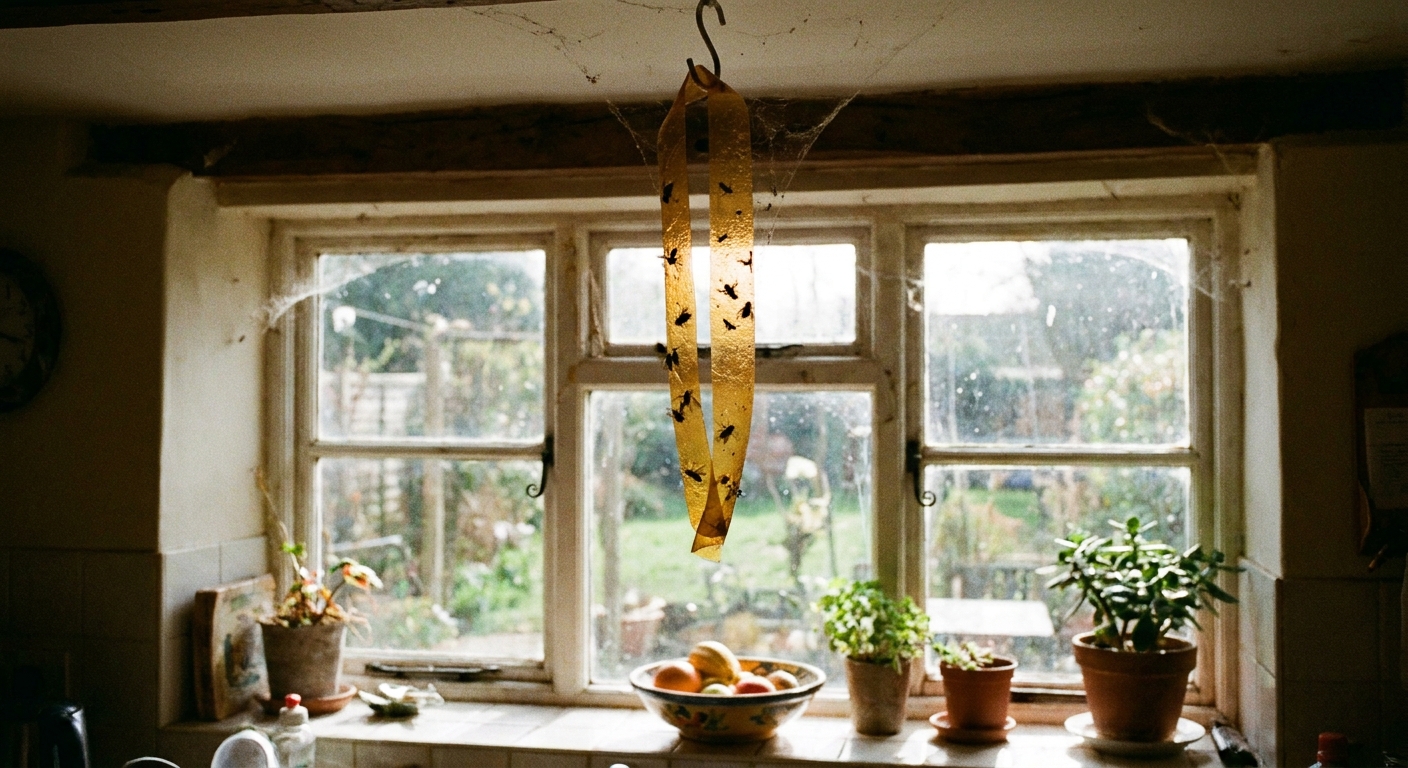
Option 1: Sticky fly ribbons (cheap and effective)
They are not pretty, but fly ribbons catch a surprising number fast.
- Hang near the trash area or near a sunny window where flies gather.
- Keep away from open food prep and from kids and pets.
- Replace when loaded with dust and insects.
Option 2: UV plug-in light traps (good for steady pressure)
For kitchens, I like UV traps that capture flies on a glue board inside the unit. They are cleaner than the zapping type.
- Place it in a darker corner near the problem area, not right next to a bright window.
- Change glue boards on schedule so it stays effective.
Option 3: DIY bottle trap (better for fruit flies than house flies, but can help)
If you are not 100 percent sure whether you have fruit flies mixed in, this is a quick test.
- Put a splash of apple cider vinegar and a drop of dish soap in a jar.
- Cover with plastic wrap and poke small holes.
- If you catch mostly tiny flies, you likely have fruit flies too.
Option 4: Targeted knockdown (when you need immediate relief)
A fly swatter is still one of the most kitchen-safe “tools” because it does not add chemicals. If you use an insect spray indoors, use a product labeled for flying insects and follow the label exactly. In a kitchen, that means paying attention to where it is allowed to be applied and keeping it away from food, dishes, and prep surfaces.
If flies keep coming back, check these overlooked spots
When homeowners tell me “I cleaned everything and they are still here,” one of these is usually the culprit.
- Outdoor trash can juice: If the outdoor bin smells like a landfill, you are breeding flies right at your back door. Hose it out and let it dry in the sun.
- Garage trash: Old paint rags, empty pet food cans, and workshop snacks can draw flies.
- Dog poop in the yard: Not glamorous, but it matters. Pick it up more often during hot weeks.
- Dead rodent: Look for odor, flies concentrating near one wall, or maggots near a window sill. If you suspect this, it may be time to call a pro, especially if the source is inside a wall void.
House flies vs fruit flies vs cluster flies
| What you see | Most likely pest | Most likely source | Best first move |
|---|---|---|---|
| Medium gray flies on trash, counters, windows | House flies | Trash, recycling residue, pet waste, decaying organic matter | Remove and scrub bins, take trash out nightly, add sticky ribbons |
| Tiny flies hovering around bananas and sink | Fruit flies | Overripe fruit, drain gunk, recycling residue | Remove fruit source, clean drains and disposal, set vinegar trap |
| Flies appearing in groups at windows, often seasonal | Cluster flies | Attic and wall voids, overwintering indoors | Vacuum them up, seal attic and siding gaps, consider exterior work |
FAQ
Why are there suddenly so many house flies in my kitchen?
Usually because something started serving as a breeding site. A single messy trash bag, a recycling bin with sugary residue, or pet waste nearby can kick off a cycle that multiplies fast in warm weather.
Will bleach in the trash can kill fly eggs?
Bleach can disinfect, but it is not my go-to because it does not clean grease and residue as well as hot soapy water and scrubbing. If you want results, scrub the can, rinse thoroughly, and let it dry. A dry, clean can is hard for flies to use.
What is the fastest way to get rid of house flies right now?
Take out all trash and recycling, wipe down surfaces, then hang sticky ribbons where flies gather and add a glue-board UV trap in a dim corner. You will reduce the adult population fast, but the long-term win is removing the breeding source.
When should I call a professional?
If you cannot find a source after cleaning trash and recycling, if there is a persistent rotten odor, or if flies are concentrated near one wall or ceiling area, you may have a dead animal in a void or another hidden source that is hard to access safely.
The 30-Second Cheat Sheet
Essential takeaways for: How to Get Rid of House Flies in Your Kitchen
Do this first (10 minutes)
- Bag all kitchen trash and take it outside.
- Empty recycling and remove anything sticky or wet.
- Wipe counters and sweep up crumbs near the trash area.
Find the source (most important)
- Scrub the inside of the trash can and recycling bin with hot soapy water, rinse, and dry.
- Check compost pails, pet feeding areas, and anything organic that could have been forgotten behind or under cabinets.
- If there is a strong rotten odor with no obvious mess, consider a hidden dead animal and get help.
Stop new flies from entering
- Repair torn window screens.
- Replace a worn door sweep and damaged weatherstripping.
- Seal gaps under the sink where pipes enter the wall.
Trap what is left
- Hang sticky fly ribbons near trash or near a sunny window (away from food prep).
- Use a glue-board UV plug-in trap in a dim corner for steady capture.
Quick ID check
- House flies: medium gray flies around trash and counters.
- Fruit flies: tiny flies near fruit and sink drains.
- Cluster flies: group at windows, often tied to attic and wall voids.
💡 Tip: Scroll up to read the full article for detailed, step-by-step instructions.
⬆️ Back to top
About Grit
Content Creator @ Grit & Home
Grit is Grit & Home’s little blue clay courier, delivering big questions about the place you call home. Expect practical ideas, a raised eyebrow, and a satchel full of curiosity.