
🚨 In a DIY emergency or rush?
Skip the details and jump straight to our 30-second cheat sheet for the most crucial info.
Japanese beetles are one of those pests that can make a perfectly healthy yard look like it got hit by a tiny hailstorm of bad decisions. They show up fast, they feed in groups, and they can skeletonize leaves in days if the pressure is heavy. The good news is you can get control without panic-spraying everything that moves.
In this guide, I will walk you through their seasonal lifecycle, how to confirm you are dealing with Japanese beetles (not drought, fungus, or lookalike insects), and a tiered plan that starts with simple, low-risk steps and only escalates when you need it. Pollinator safety stays front and center the whole way.
Japanese beetle lifecycle (seasonal)
If you understand when beetles are active above ground and when they are grubs below ground, you can treat the right thing at the right time. That saves money and avoids unnecessary pesticide use.
Quick timing note: These windows shift by region and weather. In many areas, adults emerge anywhere from May through July, with peak feeding often in June through August.
Late spring to summer: adults emerge
- When: Often May to July, depending on heat and latitude.
- What happens: Adults emerge from the soil, start feeding, and release scent cues that attract more beetles. This is why infestations snowball.
Summer: peak feeding and egg laying
- When: Commonly June through August, sometimes later in cooler areas.
- What happens: Adults feed on leaves, flowers, and fruit, then females lay eggs in turf. Egg laying is often higher in irrigated, well-watered lawns.
Late summer to fall: grubs feed on roots
- When: Often late July or August through October.
- What happens: Eggs hatch into grubs that chew grass roots. This is when lawn damage often starts showing up.
Winter: grubs go deep
- What happens: Grubs move deeper in the soil to ride out the cold. Treatments are much less effective now.
Early spring: brief feeding, then pupation
- What happens: As soil warms, grubs move up and feed some more, then pupate into adults. Spring treatments can work, but late summer to early fall is usually the best window if grubs are the main issue.
Identify damage (and the beetle)
Before you treat anything, confirm what you are seeing. A lot of yards get sprayed for beetles when the real culprit is drought stress, fungus, or a totally different insect.
Adult damage: skeletonized leaves
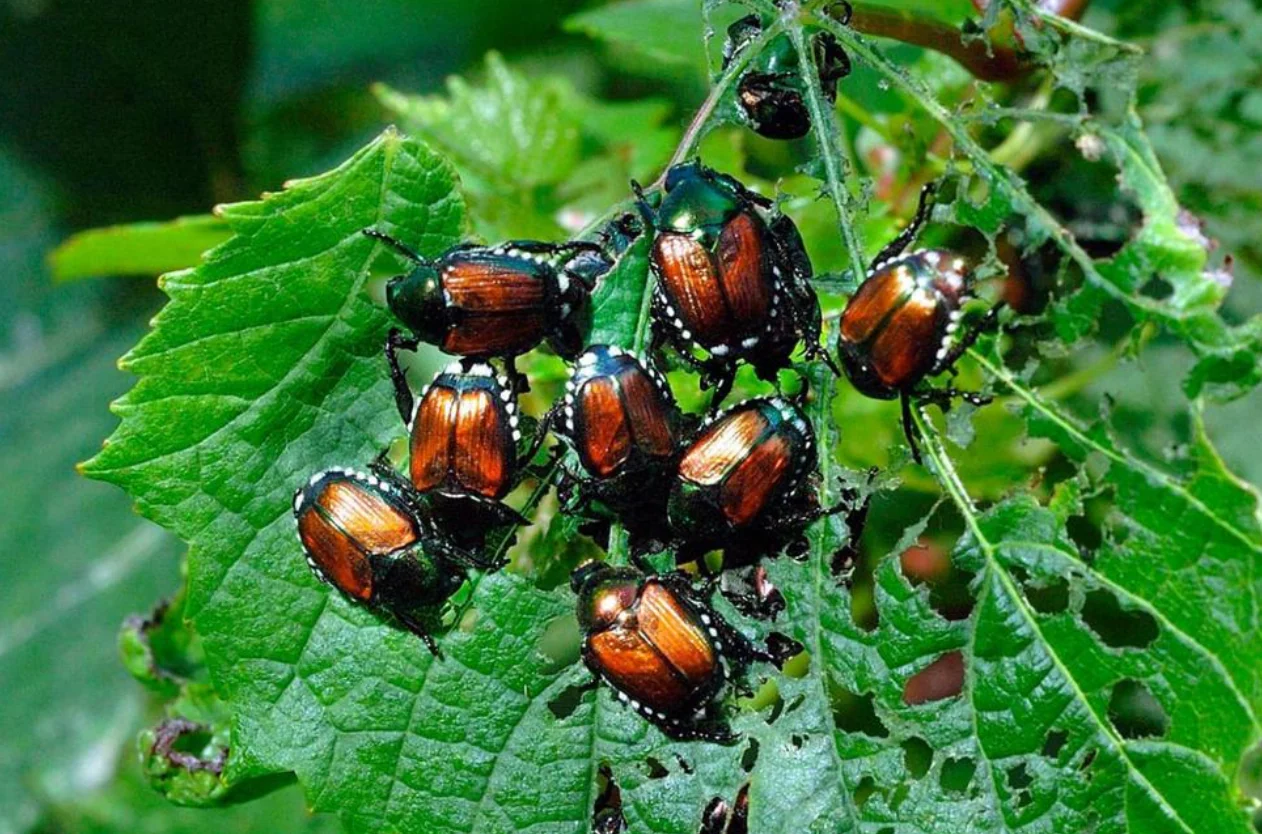
- What it looks like: Leaf tissue chewed away between veins, leaving a lacy, see-through skeleton.
- Common targets: Roses, grapes, linden, crabapple, basil, raspberries, beans, and many more.
- Confirm it: Look for metallic green beetles with coppery wing covers, about 3/8 inch long, often feeding in clusters. A classic field mark is small white tufts along the sides of the abdomen (plus a couple at the tip).
Lawn issues: grub damage vs drought
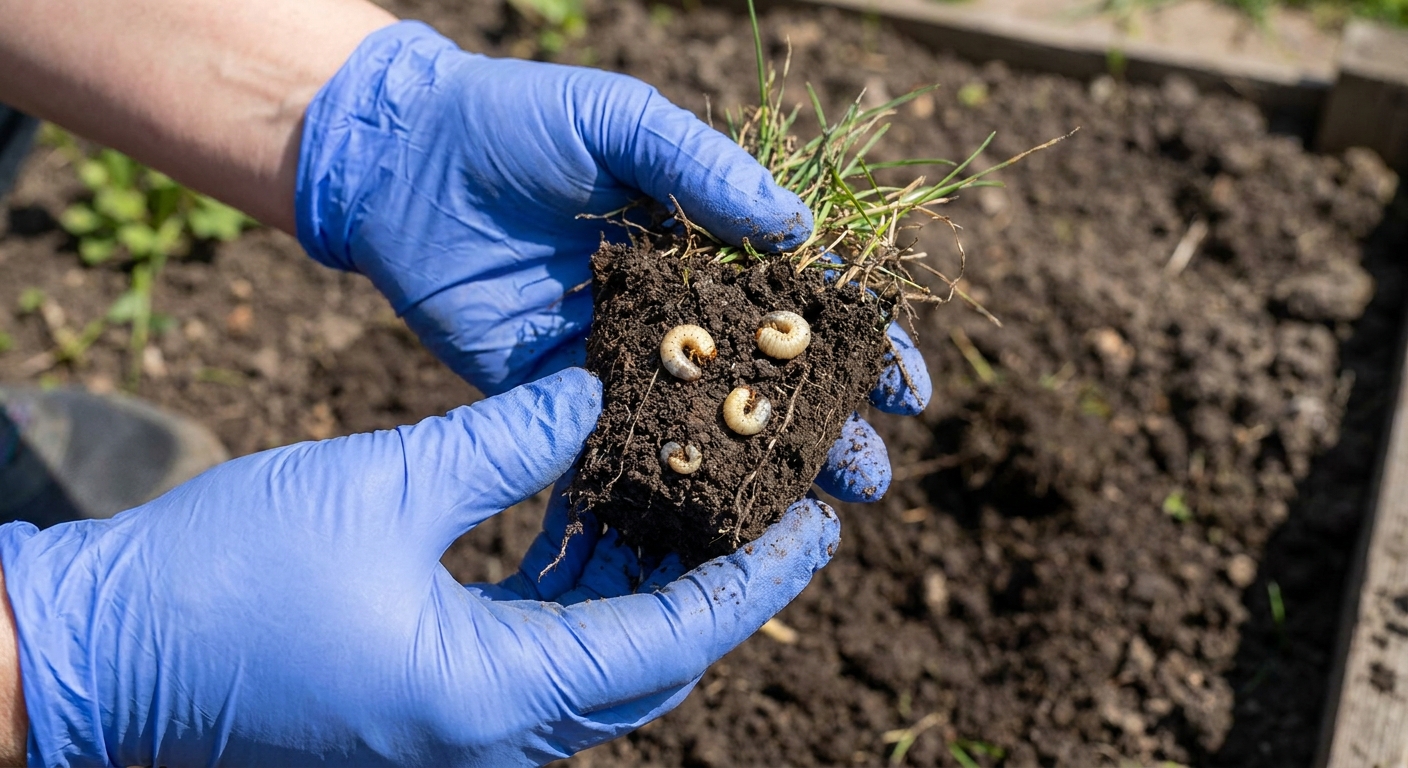
- Grub damage: Irregular brown patches that feel spongy, and turf that pulls up like a loose carpet because roots are gone.
- Drought stress: More uniform browning that improves after watering, and turf stays rooted when you tug.
- Animal digging: Skunks, raccoons, or birds tearing up lawn can be a strong sign you have grubs. They are hunting them.
Lookalikes and grub reality check
- Green June beetle: Larger and bulkier, and not the same copper-green combo. Adult feeding habits differ.
- Asiatic garden beetle: More uniform brown and active at night. Damage can look different.
- About grubs: Turf grubs can be several different scarab species. Identifying grubs to species can require details most homeowners never see (like the raster pattern). For practical purposes, confirm you have grubs and focus on timing and thresholds.
My rule: If you do not actually see the beetles or find grubs in the soil, slow down and confirm before treating.
Tiered plan (start simple)
I like a tiered approach because it keeps you from jumping straight to the harshest option. Think of it like a toolbox: start with the safest hand tools before you fire up the power tools.
Tier 1: Hand-pick daily
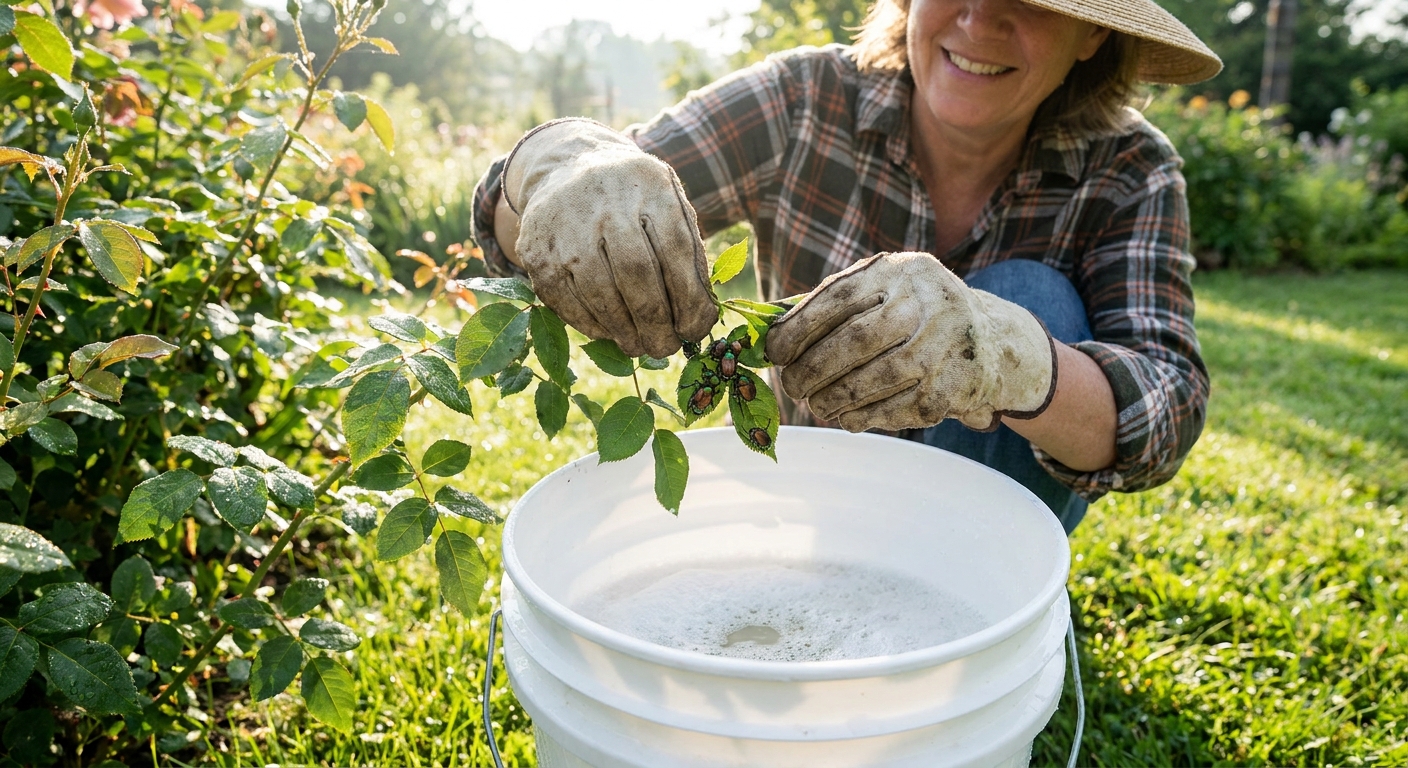
Hand-picking sounds old-school, but it works because Japanese beetles feed in groups. If you remove the first wave early each morning, you can slow the “come join the party” effect.
- When: Early morning when beetles are sluggish.
- How: Hold a bucket of soapy water under the leaf and tap the beetles in. They drop when disturbed.
- How often: Daily during peak season for 1 to 2 weeks, then every few days.
DIY mistake I made once: I tried to crush them on the plant. It is slower, messier, and you end up shaking the plant enough to send half of them flying. The soapy bucket method is cleaner and more effective.
Tier 2: Covers, cleanup, and watering
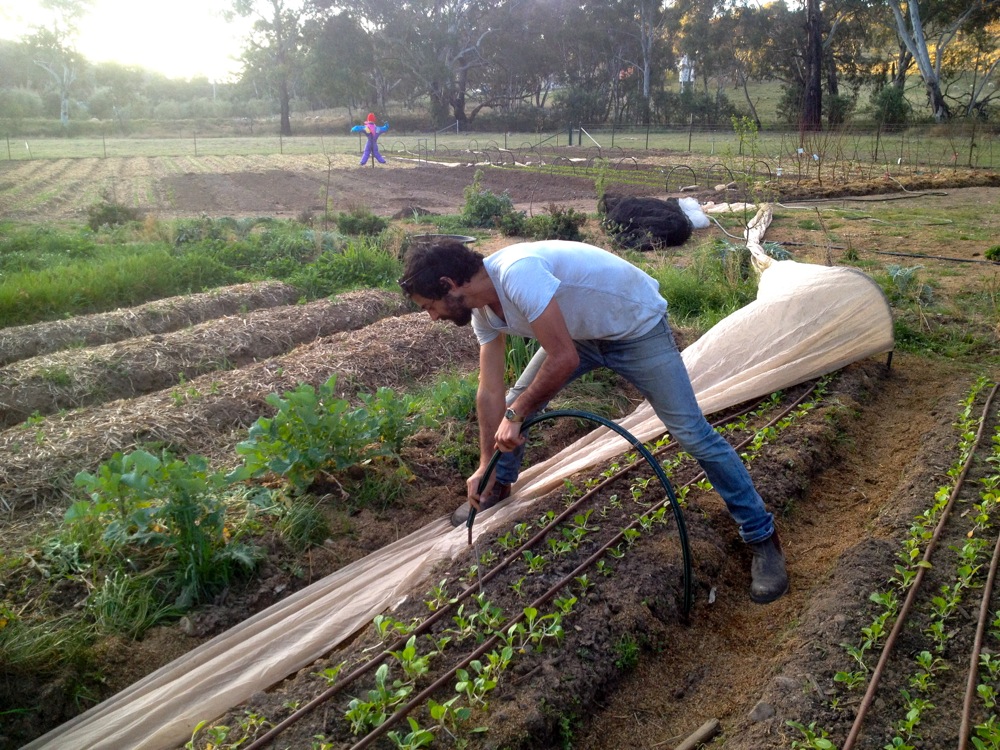
- Row covers or fine netting: Great for small fruit and vegetables. Use hoops so fabric does not rest on leaves.
- Deadhead promptly on susceptible ornamentals: Removing spent blooms can reduce the “easy meal” signal on some plants and keeps you scouting daily.
- Water smart: If you can, avoid heavy irrigation during peak egg-laying weeks. Not “no water,” just do not keep turf constantly moist in late summer if beetles are intense.
Tier 3: Traps (use carefully)
Japanese beetle traps can catch a lot of beetles, but they also attract a lot of beetles. The biggest mistake is placing a trap near the plants you are trying to protect.
- Placement rule: Put traps well away from susceptible plants, often 30 to 50+ feet away (or as far as your space allows).
- Neighbor courtesy: If your houses are close, a trap on the fence line can pull beetles across properties. Consider skipping traps in tight neighborhoods unless you coordinate with neighbors.
- Maintenance: Empty and replace bags regularly. A full, rotting bag is a smell you do not want near your patio.
Tier 4: Targeted treatments (adults and grubs)
If beetles are overwhelming hand-picking, or if you confirm a grub problem in the lawn, targeted products can help. The key is to treat the right stage and avoid harming bees and beneficial insects.
Adult beetles on ornamentals and edibles
- Least toxic contact option: Insecticidal soap can help when you hit beetles directly, but it has little residual effect. It is more of a knockdown tool than a long-term shield.
- Neem, clarified: “Neem” can mean different products. Azadirachtin-based products are often used to reduce feeding. Neem oils can act differently and, in heat or full sun, can increase leaf-burn risk on sensitive plants. Whatever you choose, do not spray open blooms, and apply at dusk per label directions.
- Broad-spectrum sprays: Pyrethrins and similar products can kill beetles, but they can also harm pollinators and beneficials. Use only as a last resort. Avoid blooming plants and follow the label exactly.
Spray timing rules I stick to: Apply at dusk, avoid windy conditions, avoid drift, and skip spraying when plants are heat-stressed or drought-stressed. You will get better results and fewer burned leaves.
Safety checklist: Read the label, follow edible-crop instructions, respect re-entry times, wear gloves and eye protection, and keep kids and pets out until the product says it is safe.
Grubs in the lawn (long-term control)
If your lawn has Japanese beetle grubs (or other turf grubs), treating the soil at the right time can reduce next year’s adult population.
- Confirm first: Cut and peel back a 1-square-foot section of turf and count grubs.
- Action threshold: As a rough rule, many extension guides use about 8 to 10 grubs per square foot as a point where damage is more likely, especially in stressed turf. Healthier turf may tolerate lower or even moderate counts.
- Best timing: Late summer into early fall, when eggs are hatching and grubs are small and near the surface.
- Biological option: Beneficial nematodes (types labeled for turf grubs). Apply in the evening, follow moisture directions, and avoid hot, dry midday conditions.
- Microbial option: Bt galleriae products can help with certain beetles where labeled for your site (turf vs ornamentals) and target (larvae and/or adults). Follow the specific label.
- Preventive vs curative products: Home lawn grub products generally fall into two buckets. Preventives work best before or around egg hatch. Curatives are meant for when grubs are already present and feeding. Timing matters more than brand names, so match the product type to the season and the label window.
- Chemical options: These can be effective but vary by active ingredient and timing. Follow label timing closely, water-in as directed, and avoid runoff into storm drains.
Important: Not every “brown spot” is grubs. If you treat blindly, you can waste money and still have dead grass.
What about milky spore?
People ask about milky spore a lot. It can be a long-term tool in some regions and soils, but results are mixed and it is not a quick fix. If you try it, treat it like a multi-year project and keep your expectations realistic.
Plants they love (and alternatives)
You do not need to redesign your whole landscape, but swapping a couple high-attraction plants near entry points can take pressure off your yard. Also, if you know what they love, you know where to scout first.
High attraction
- Roses
- Grapes
- Linden (basswood)
- Crabapple and some other fruit trees
- Hibiscus
- Raspberry and blackberry foliage
- Bean plants
Often less attractive
Local conditions matter, and beetles can still nibble when populations are high. But these are commonly reported as less preferred in many regions:
- Boxwood
- Holly
- Dogwood
- Red maple
- Lilac
- Forsythia
- Many ornamental grasses
Thrifty move: Before you replace a plant, try protecting it for one season with morning hand-picking plus a temporary cover. If it is still a magnet every single year, then consider a swap.
Seasonal game plan
If you see adults now
- Hand-pick every morning for 7 to 14 days.
- Protect your most valuable plants with netting or covers.
- If using traps, place them well away from susceptible plants.
- Only spray as a last resort, and never on blooms during pollinator activity.
If your lawn is struggling
- Check for grubs with a turf peel test.
- If counts are high and you have damage, treat in late summer to early fall when grubs are small.
- Water-in products as the label requires, and avoid runoff.
If you are planning ahead
- Overseed and strengthen turf to tolerate some root feeding.
- Adjust irrigation practices to avoid perpetually moist turf during peak egg-laying next year.
- Make a short list of plants you will protect or replace.
Quick answers
Do Japanese beetles mean I have grubs?
Not necessarily. Adults can fly in from nearby areas. They may lay eggs in your turf, but you should confirm with a grub check before treating your lawn.
Are Japanese beetle traps worth it?
Sometimes, but placement is everything. A trap near your roses can increase damage by attracting more beetles than it catches.
What is the safest approach around bees?
Hand-picking plus physical barriers is the safest. If you spray anything, avoid blooms, spray at dusk, and follow the label exactly.
The 30-Second Cheat Sheet
Essential takeaways for: How to Get Rid of Japanese Beetles
What you’re fighting
- Adults (late spring to summer): chew leaves and flowers, attract more beetles, then lay eggs in turf.
- Grubs (late summer to fall): chew grass roots and can cause “carpet pull-up” turf.
Identify the damage fast
- Leaves: “Skeletonized” foliage with veins left behind.
- Lawn: irregular brown patches + turf pulls up easily. Animals digging often means grubs.
Tiered plan (do this in order)
- Hand-pick every morning: tap beetles into a bucket of soapy water for 1 to 2 weeks.
- Cover prized plants: use fine netting or row covers (keep fabric off leaves with hoops).
- Traps only if you can place them far away: put traps well away from susceptible plants (often 30 to 50+ feet) and consider neighbors before you hang one.
- Target treatments:
- Adults: avoid broad sprays on blooms. If you spray, do it evenings only and follow the label.
- Grubs: confirm with a turf peel test, then treat late summer to early fall when grubs are small.
Pollinator safety rules I follow
- Do not spray open flowers.
- Apply at dusk when bees are not foraging.
- Use the narrowest, most targeted option that solves the problem.
Plant strategy
- High attraction: roses, grapes, linden, many fruit trees, hibiscus, beans.
- Often less attractive: boxwood, holly, dogwood, red maple, lilac, forsythia, ornamental grasses.
💡 Tip: Scroll up to read the full article for detailed, step-by-step instructions.
⬆️ Back to top
About Marcus Vance
Content Creator @ Grit & Home
Marcus Vance is a lifelong DIY enthusiast and self-taught home renovator who has spent the last decade transforming a dilapidated 1970s ranch into his family's dream home. He specializes in budget-friendly carpentry, room-by-room renovations, and demystifying power tools for beginners. Through his writing, Marcus shares practical tutorials and hard-learned lessons to help homeowners tackle their own projects with confidence.