
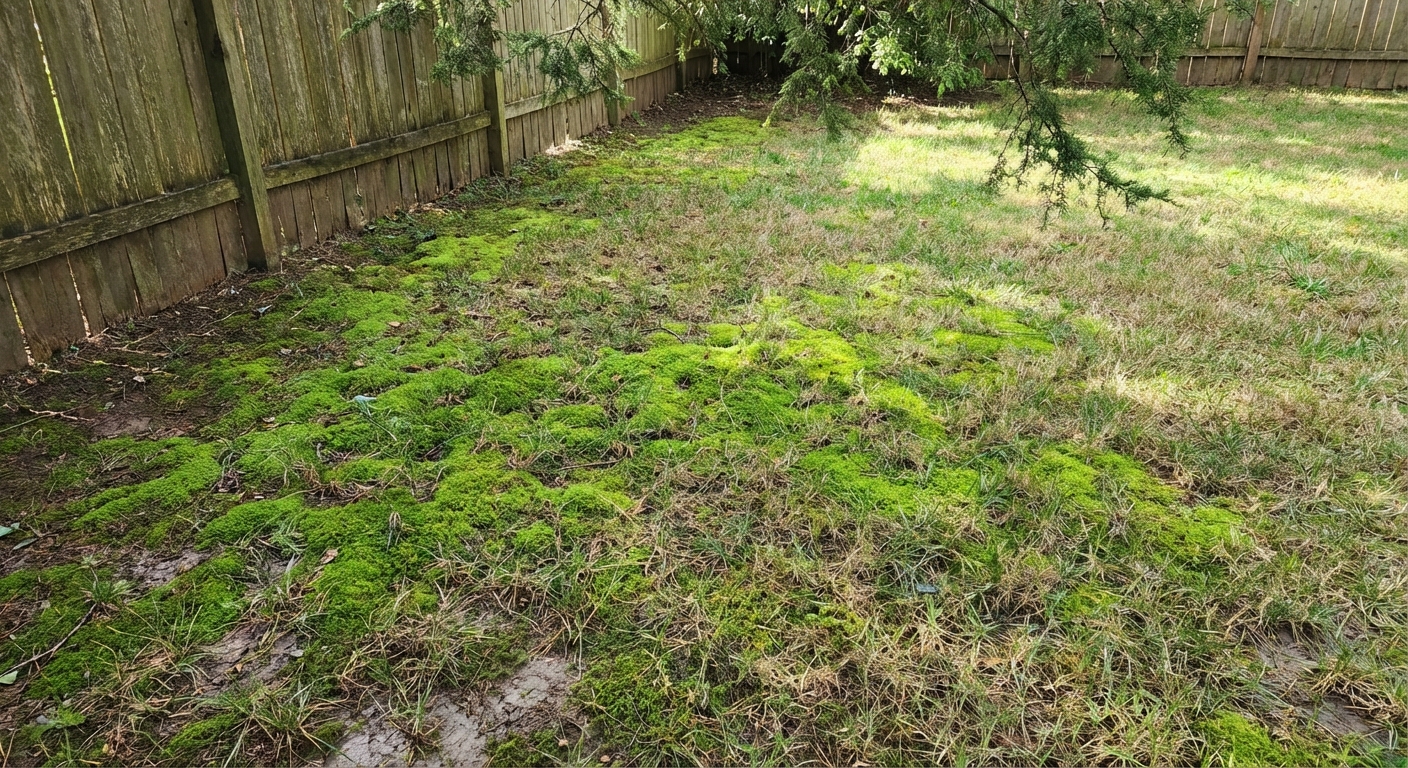
Moss can make a lawn look like it is slowly turning into a forest floor. The frustrating part is that moss is usually not the main problem. It is a symptom of conditions that favor moss over turf, like shade, soggy soil, compacted ground, or low fertility. (And yes, in very shady or low-input yards, moss can show up even when nothing is “wrong.”)
The good news is you can fix it without turning your yard into a science project. The game plan is simple: kill the moss, physically remove it, then change the conditions so grass wins the next round.
Why moss is taking over
Moss does not have true roots like grass. It thrives where grass cannot compete. If you skip this part and only kill the moss, it usually comes right back.
- Too much shade (north side of the house, under trees, between buildings).
- Poor drainage or constantly damp soil (low spots, clay soil, runoff paths).
- Compacted soil (heavy foot traffic, pets, clay, years without aeration).
- Low soil pH (acidic soil), which often goes along with weak turf and mossy areas.
- Thin grass from low fertility or mowing too short.
If you are not sure which one you have, watch the area after a rain. If it stays wet longer than the rest of the yard, drainage and compaction are prime suspects. If it is always dim, shade is the big driver.
Fast results: kill the moss first
There are a couple homeowner-friendly moss killers you will see on store shelves. Both work, but they behave a little differently.
Option 1: Iron-based products (fast browning)
Iron-based products (often listed as ferrous sulfate, ferric sulfate, or just “iron” on the label) are popular because you can see results quickly. The moss typically turns dark or brown within a day or two, which makes it easier to rake out.
- Pros: Fast visible results, widely available.
- Cons: Can stain concrete, pavers, and some decking. Rinse any overspray quickly.
- Best for: Targeting obvious moss patches and getting them ready for removal.
Option 2: Potassium salts of fatty acids (soap-based)
These are often marketed as “fast-acting” moss killers and are related to insecticidal soap type chemistry. They dry out the moss tissue on contact.
- Pros: Typically less staining risk than iron products.
- Cons: Works best with good coverage and proper timing. Might need a repeat in heavy infestations.
- Best for: Smaller lawns, spot treatments, and areas near hardscapes where staining would be a headache.
How to apply moss killer
- Apply when the lawn is moist and temperatures are mild, usually spring or fall.
- Follow the label for rainfastness and watering-in. In general, avoid weather that would wash the product off before it has time to work.
- Keep granules and spray off sidewalks and driveways. If you miss, sweep or rinse right away (especially with iron products).
- Basic safety goes a long way: wear gloves and eye protection, avoid drift onto ornamentals, and do not apply right before runoff-prone rain.
- Follow the label exactly. More is not better. It is just more likely to stress your grass.
Real-world tip from my own yard: The first time I used an iron product, I thought I was being careful. I still tracked tiny granules onto my concrete step and ended up with rusty freckles for months. Now I keep a push broom nearby and sweep hard surfaces immediately after spreading.
Remove the dead moss
Once the moss turns brown or black and feels dry, do not leave it sitting there like a welcome mat. You want that space open so grass seed can touch soil and establish.
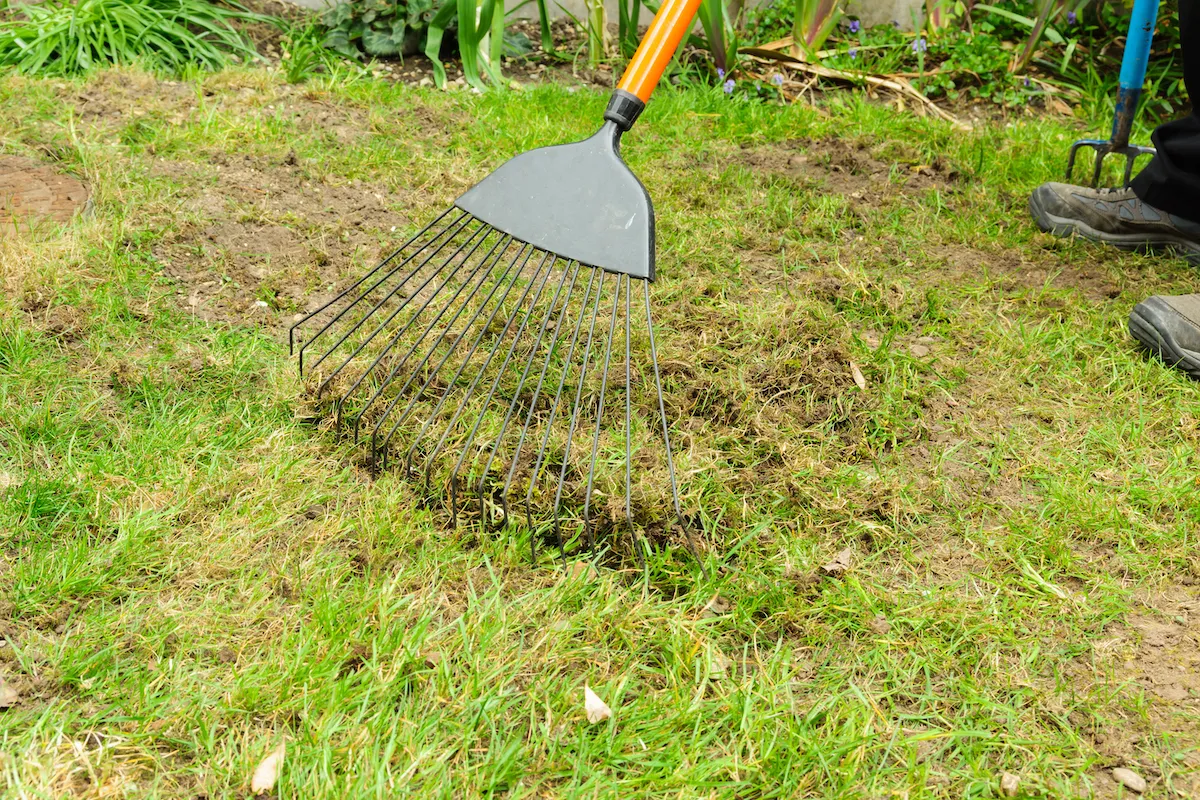
What to use
- Stiff garden rake: Great for small patches and spot work.
- Dethatching rake: Aggressive and effective on thicker mats of moss.
- Power dethatcher or scarifier: Helpful if moss is widespread, but go easy so you do not scalp the lawn.
When to rake
Most people jump in too early. Rake after the moss has clearly browned, usually 24 to 72 hours after treatment, or whenever the label says it is ready.
How to rake it out
- Rake in two directions (north to south, then east to west) to lift the moss mat.
- Bag and remove debris. Moss left on the lawn can smother new grass.
- If you expose bare soil, that is good. You just created a seedbed.
Fix the conditions behind it
This is the long-term win: make your lawn a place where grass thrives and moss struggles.
Improve drainage
Grass roots need oxygen. Waterlogged soil basically suffocates turf and invites moss to move in.
- Fill low spots: Topdress with a soil and compost blend to gradually raise dips. Do it in thin layers so you do not bury existing grass.
- Manage runoff: Extend downspouts, redirect splash blocks, and keep roof water away from lawn edges.
- Aerate compacted areas: Core aeration pulls plugs and opens channels for air and water movement.
- For chronic wet zones: Consider a French drain, dry well, or regrading. It is not glamorous, but it is permanent.
Get more sunlight (or choose the right grass)
Moss loves shade. Grass needs light. You do not have to clear-cut your yard, but even small changes help.
- Prune tree limbs to raise the canopy and let more light through.
- Thin shrubs that block morning sun along fences and walls.
- Use shade-tolerant seed in low-light zones, and accept that deep shade may never look like a sunny front lawn.
Correct soil pH
Acidic soil is common in mossy lawns, but moss can grow in plenty of pH ranges. The only smart way to correct pH is to test first.
- Do a soil test through your local extension office or a reputable home kit.
- If pH is low, apply lime at the recommended rate. Lime works gradually, so think in months, not days.
- Avoid guessing. Over-liming can create its own problems and lock out nutrients.
Reduce compaction and traffic
- Core aerate high-traffic zones (kids, pets, path to the shed).
- Install stepping stones in natural “desire paths” so feet do not pound the same strip of turf all year.
- Keep your mower blades sharp and avoid mowing when the soil is saturated.
Overseed bare spots
This is where a lot of moss battles are won or lost. Moss fills space. If you leave bare soil after removal, you are basically inviting moss to move back in.
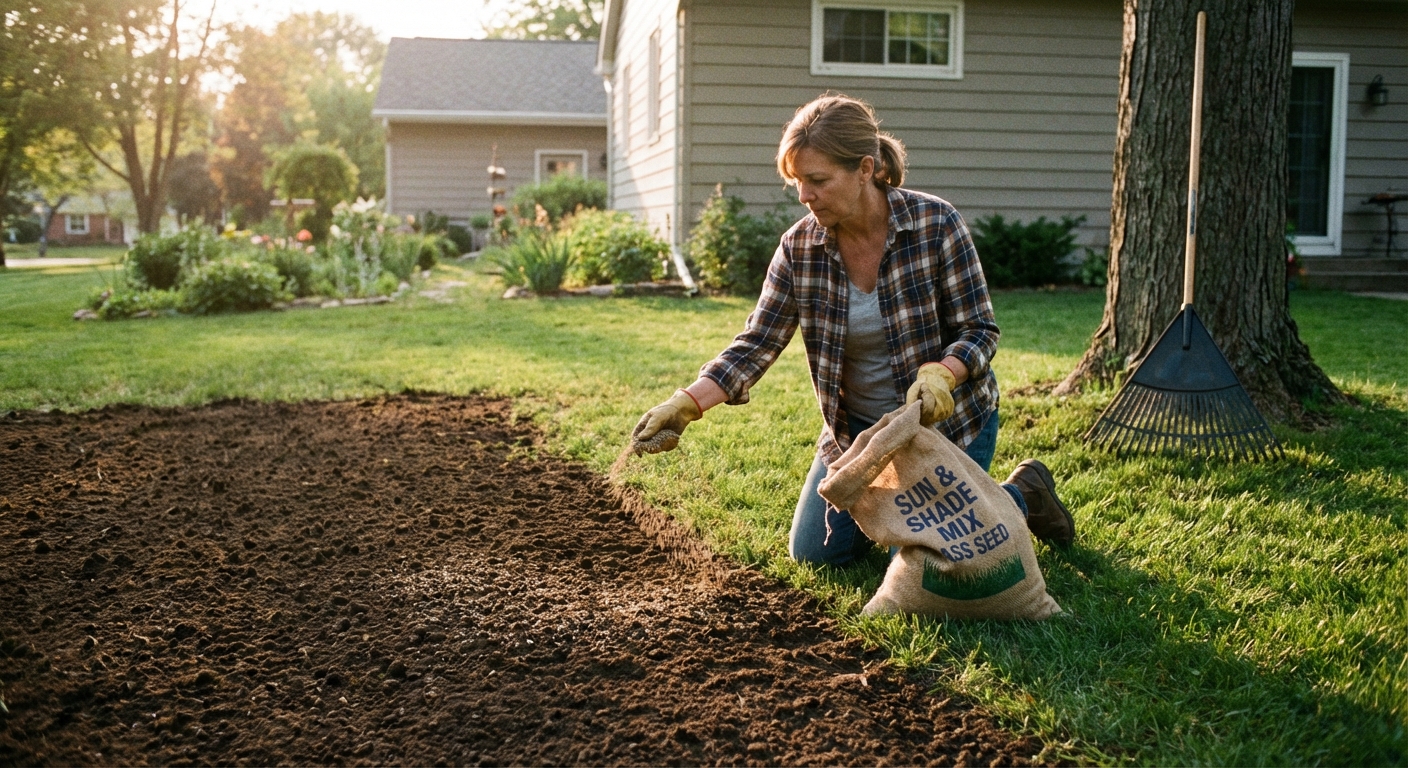
Quick overseeding checklist
- Choose the right seed: Match your lawn type and light level (sun mix vs shade mix).
- Loosen the top layer: Rake the bare soil lightly so seed can nestle in.
- Add a thin topdressing: A light layer of compost or screened topsoil helps retain moisture and improves germination.
- Keep it consistently damp: Water lightly once or twice a day until germination, then transition to deeper, less frequent watering.
- Stay off it: Footprints can wreck new sprouts fast.
Timing tip: Early fall is often the best time to overseed cool-season lawns because the soil is warm, weeds are slowing down, and moisture tends to be more consistent. If you have a warm-season lawn (like Bermuda, zoysia, or St. Augustine), major seeding and repair usually lines up better with late spring into summer, when those grasses are actively growing.
Prevention
Once you have grass growing again, a few habits make a big difference.
- Mow higher: Taller grass shades the soil and strengthens roots. Many cool-season lawns do well around 3 to 4 inches, but follow guidance for your grass type.
- Fertilize appropriately: Underfed lawns thin out. Follow a seasonal plan suitable for your grass type.
- Aerate as needed: If your soil is clay or your lawn sees traffic, plan on aerating periodically.
- Watch irrigation: Water deeply and less often, and avoid keeping the surface constantly wet.
- Clean up heavy leaf cover: A thick layer of leaves blocks light and traps moisture.
FAQ
Will moss killer hurt my grass?
Used according to the label, most lawn-safe moss killers are designed to target moss more than turf. The bigger risk is over-application, applying during heat stress, or leaving staining residue on hardscapes.
Can I just rake moss out without killing it?
You can, but it is usually harder work and less thorough because live moss clings. Killing first makes removal quicker and helps prevent immediate regrowth.
Do I need lime for a moss problem?
Only if a soil test shows low pH. Moss can grow in plenty of pH ranges, but acidic soil often goes hand-in-hand with weak grass. Test first, then lime if recommended.
Why does moss keep coming back in the same spot?
Almost always because the spot stays shaded, damp, compacted, or some combination of the three. Treating and raking is step one. Fixing light, drainage, compaction, and pH is what makes it stick.
A simple weekend plan
If you want a no-drama checklist you can knock out in a couple days, here is what I would do.
Day 1
- Apply moss killer (iron-based or potassium salts) to affected areas.
- Keep kids and pets off until the product is dry and the label says it is safe.
Day 2 or 3
- Rake out dead moss thoroughly and bag it.
- Aerate compacted areas if needed.
- Topdress lightly and overseed bare spots.
- Water lightly and consistently until seed establishes.
Do those steps, and you are not just removing moss. You are rebuilding a lawn that can actually defend itself.

About Marcus Vance
Content Creator @ Grit & Home
Marcus Vance is a lifelong DIY enthusiast and self-taught home renovator who has spent the last decade transforming a dilapidated 1970s ranch into his family's dream home. He specializes in budget-friendly carpentry, room-by-room renovations, and demystifying power tools for beginners. Through his writing, Marcus shares practical tutorials and hard-learned lessons to help homeowners tackle their own projects with confidence.