
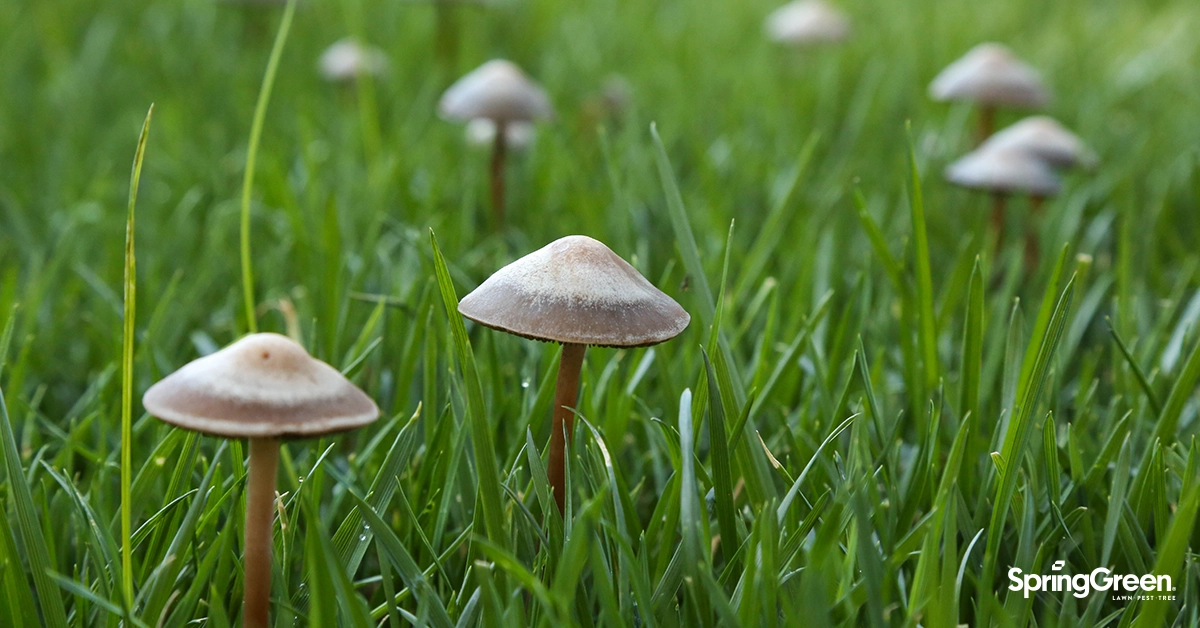
Why mushrooms show up
If you see mushrooms in the lawn, it usually is not because your grass is “sick.” It is because the soil is doing what soil does: breaking down organic material. Fungi are the clean-up crew. When conditions are right, they send up mushrooms (the fruiting bodies) to release spores. The fungus itself lives in the soil or wood as mycelium, which is why the mushrooms can come back.
Most lawn mushroom flare-ups come from one or more of these:
- Excess moisture: frequent watering, poor drainage, heavy shade, or a stretch of rainy weather.
- Decaying organic matter: buried wood (old stumps, roots, construction scraps), leaf litter, thick thatch, or mulch that has migrated into the grass.
- Compacted soil: water sits near the surface and roots struggle, which keeps things damp longer.
In my own yard, the “mushroom season” got a lot shorter once I stopped watering on autopilot and started treating soggy areas like a drainage problem, not a mushroom problem.
Are lawn mushrooms harmful?
To your grass
Usually, no. Many lawn mushrooms are just saprophytes feeding on organic material in the soil, not your living grass blades. That said, they can also be a sign the lawn is staying too wet, or that there is buried wood under the turf. That is not always “bad,” but it is worth paying attention to if the yard stays soggy.
To kids and pets
This is the real concern. Some mushrooms are toxic if eaten, and most homeowners (including me) cannot reliably identify species at a glance. I am not trying to help you ID mushrooms here. I am trying to help you keep your yard safe.
- If you have kids or pets that might snack on yard finds, treat all mushrooms as potentially poisonous.
- Remove them promptly and supervise play until you get the situation under control.
To you
Touching mushrooms is generally not dangerous, but wear gloves if you have sensitive skin. If you have a big flush, avoid mowing over it first. Mowing can spread mushy debris and may move spores around locally, and it makes cleanup messier.
Quick removal
If you just want the mushrooms gone right now, you can remove the visible ones. Just know that the mycelium is in the soil, so mushrooms can return until conditions change.
Option A: Pick and bag
- Put on gloves.
- Pluck mushrooms at the base, including the little “button” ones that have not opened yet.
- Bag them and toss them in the trash.
- If you want to compost, only do it if you run a hot compost system that reliably heats up. Most home piles do not stay hot enough long enough to make that a sure thing.
Option B: Rake them up
For a scattered patch, a stiff rake can grab clusters quickly. Bag the debris.
Option C: Mow only if it is light
If it is a few small caps here and there, mowing can knock them down. For heavier growth, I prefer picking first, then mowing, because chopped mushrooms spread everywhere.
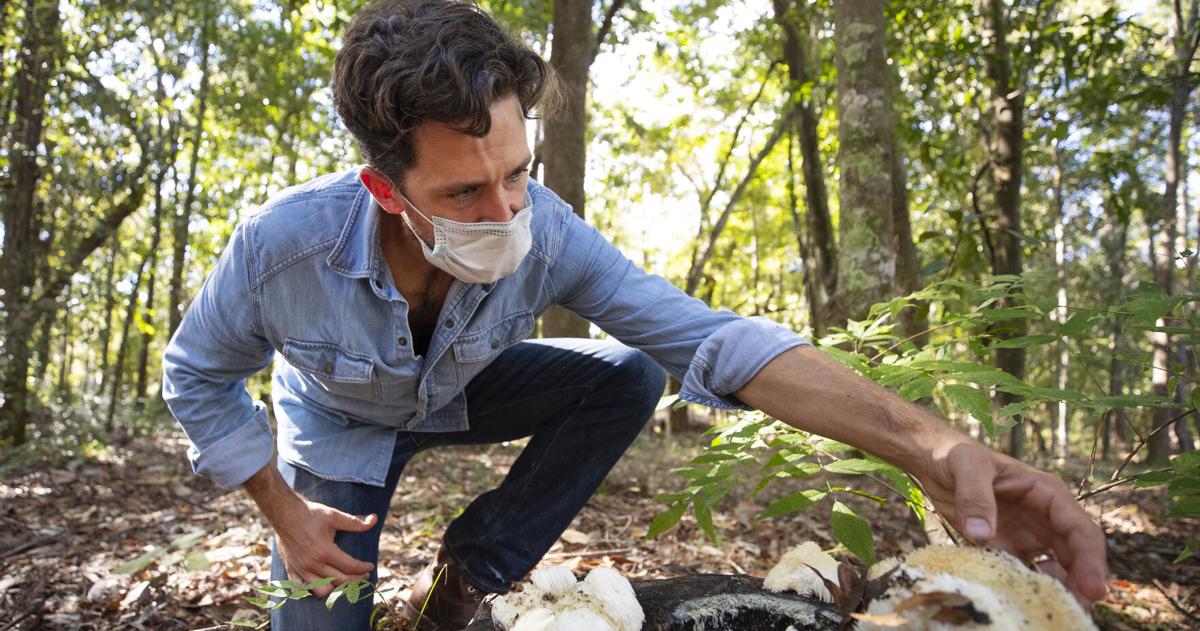
The real fix
Think of mushrooms like the check-engine light. You can turn off the light by removing them, but the long-term fix is moisture control and reducing what the fungus is feeding on.
1) Adjust watering
Mushrooms love consistently damp soil. Your goal is to water less often but more deeply, and only when the lawn needs it.
- Water in the early morning so blades dry out quickly.
- Avoid evening watering, which keeps the lawn wet overnight.
- Skip irrigation after rain. If you have a controller, use a rain sensor or at least check the forecast like it is part of the job.
- Watch the shady side of the house. That area often needs half the water of the sunny front yard.
A quick check: press a screwdriver into the soil. If it slides in several inches, you probably still have moisture down in the root zone. Pair that with what you can see. If the grass looks dull, footprints linger, or blades start to fold, it is time to water. Soil type matters here (sand and clay behave differently), so treat this as a simple field test, not a lab measurement.
2) Improve drainage
If mushrooms pop up in the same low spot every year, odds are water is pooling there or moving too slowly through the soil.
- Regrade minor dips: topdress with a soil and compost mix (not straight compost) in thin layers so you do not smother the grass.
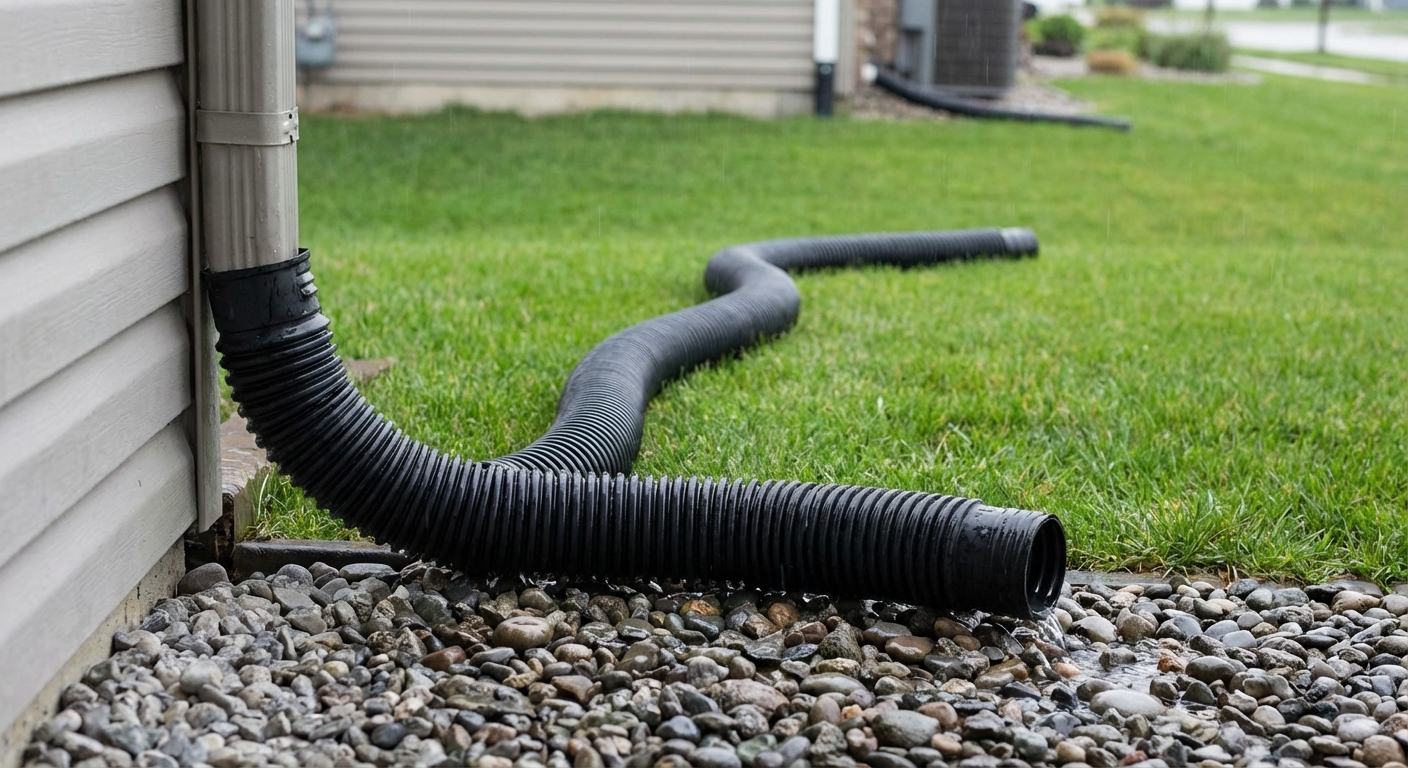
- Extend downspouts: one of the cheapest “drainage projects” you can do is getting roof water farther from the lawn.
- Fix hardpan and clay issues: aeration (next step) plus organic matter over time helps water infiltrate instead of sitting on top.
- Consider a French drain if you have standing water for days. That is beyond mushrooms and into property drainage.
3) Core aerate
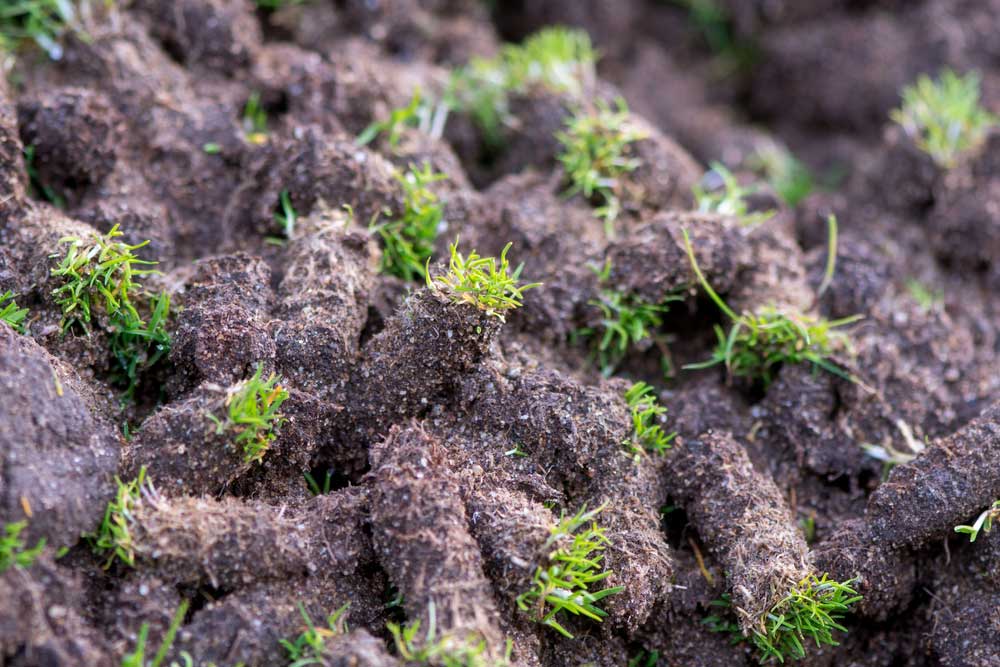
Compaction traps moisture near the surface, and fungi love that. Core aeration pulls plugs of soil out, creating channels for air, water, and roots.
- Plan to aerate during your grass’s active growing season (cool-season lawns: fall is prime, warm-season lawns: late spring to summer).
- If the soil is extremely compacted, aerate more than once (spaced out), and topdress lightly after.
- Leave the plugs to break down. They look messy for a bit, but they disappear fast and improve soil structure.
4) Dethatch if needed
Thatch is the layer of dead grass stems and roots between green grass and soil. A little is normal. Too much holds moisture like a sponge and gives fungi plenty to eat.
Rule of thumb: if the thatch layer is about 1/2 inch (or more), it is time to address it.
- Use a dethatching rake for small lawns or a power dethatcher for larger areas.
- Rake up the debris and remove it from the lawn.
- Follow with overseeding if dethatching thins the grass.
5) Remove buried wood
This is the one that surprises people. If a mushroom patch keeps returning in the same place, you may have buried wood: an old stump ground below grade, a dead tree root, or leftover lumber from a past project.
Signs you have buried wood debris:
- Mushrooms form a ring or repeat in the same footprint year after year.
- The area feels spongy, and the soil may be darker when you dig.
- You recently removed a tree, had construction, or built a fence or deck nearby.
What to do:
- Dig a small test hole 6 to 10 inches deep where mushrooms cluster.
- If you hit wood, roots, or chunks of mulch, remove what you can.
- Backfill with topsoil, tamp lightly, and reseed or patch with sod.
I have pulled out surprising things from lawns: old landscape timbers, a buried stump grind pile, even scraps from a long-gone shed. Fungi will find it all eventually.
Mushrooms in a ring
If mushrooms show up in a circle, it might be buried wood arranged in a rough ring, or it might be a classic fairy ring fungus. Fairy rings can be harmless, or they can cause a green arc (extra nutrients) and sometimes a dry, brown band where the soil turns water-repellent.
What helps:
- Core aeration to open channels for water.
- Deep, slow watering to push moisture through any hydrophobic layer.
- Wetting agents (soil surfactants) if water beads up and runs off that area.
If you have a strong ring pattern with thinning or dead turf, that is a good time to get local guidance from an extension office or a turf pro, because management can be more involved than simple mushroom pickup.
Should you use fungicide?
In most cases, I would not start there. Over-the-counter fungicides rarely solve the underlying issue because the fungus is feeding on organic matter in the soil or buried wood. You might knock down fruiting bodies for a bit, but if the lawn stays wet, mushrooms will be back.
Consider fungicide only if:
- You have identified a specific turf disease affecting grass (not just mushrooms).
- You corrected watering and drainage but still have widespread fungal problems.
If you are unsure, your local extension office or a reputable lawn care pro can help you confirm whether you are dealing with a turf disease versus normal saprophytic mushrooms.
Weekend checklist
- Day 1: Pick and bag mushrooms. Rake up any leaf litter or clumps of old grass.
- Day 1: Check your irrigation settings. Switch to morning watering and reduce frequency.
- Day 2: Walk the yard after rain. Mark puddling areas and check downspouts.
- Next good window: Core aerate compacted areas.
- Seasonally: Dethatch if the thatch layer is thick. Topdress lightly and overseed if needed.
- If mushrooms repeat in one spot: Dig a test hole and remove buried wood or roots.
Common mistakes
- Watering “just in case”: lawns do not need daily watering in most climates, and mushrooms take advantage of the extra moisture.
- Ignoring downspouts: roof runoff can keep one area soaked even if the rest of your lawn is fine.
- Overcomposting the lawn: compost is great, but thick layers can hold moisture and feed fungi. Apply thin, even topdressing layers.
- Only treating the symptom: removing mushrooms helps, but you need at least one moisture or soil change for lasting results.
FAQ
Will mushrooms go away on their own?
Often, yes. When the weather dries out, mushrooms may disappear. The mycelium can remain in the soil, though, and return when conditions are damp again.
Are mushrooms a sign I overwatered?
Very often, yes. Overwatering or watering at night is a common trigger, especially in shaded areas.
Do mushrooms mean my lawn has grubs?
Not directly. Grubs can cause spongy turf and stress that changes moisture patterns, but mushrooms are more closely tied to moisture and decaying organic matter.
Is it safe to mow mushrooms?
If you have a few small mushrooms, it is generally fine. If you have lots of mushrooms, pick and bag them first to reduce the mess and keep debris from getting smeared around the yard.
When should I call for help?
If mushrooms are extremely persistent, if you have a clear ring with dead or thinning turf, or if you have frequent kid or pet exposure and you are worried about toxicity, it is worth calling your local extension office or a reputable lawn pro for a site-specific plan.
Bottom line
Mushrooms are usually a moisture and organic-matter story, not a grass-killer. Start with quick removal for safety, then focus on the long-term fixes: water smarter, improve drainage, aerate compacted soil, reduce thatch, and dig out buried wood when a patch keeps coming back. Do that, and mushrooms go from a recurring annoyance to an occasional blip after heavy rain.

About Marcus Vance
Content Creator @ Grit & Home
Marcus Vance is a lifelong DIY enthusiast and self-taught home renovator who has spent the last decade transforming a dilapidated 1970s ranch into his family's dream home. He specializes in budget-friendly carpentry, room-by-room renovations, and demystifying power tools for beginners. Through his writing, Marcus shares practical tutorials and hard-learned lessons to help homeowners tackle their own projects with confidence.