
🚨 In a DIY emergency or rush?
Skip the details and jump straight to our 30-second cheat sheet for the most crucial info.
Nutsedge is one of those weeds that makes a decent lawn look like it needs a full renovation. It shoots up faster than your grass, it laughs at normal weed killers, and if you grab it and pull, it often comes back with friends.
The good news is you can beat it without scorching your whole yard. The trick is understanding what it actually is, why it thrives, and how to time your control so you’re not just mowing the tops off forever.
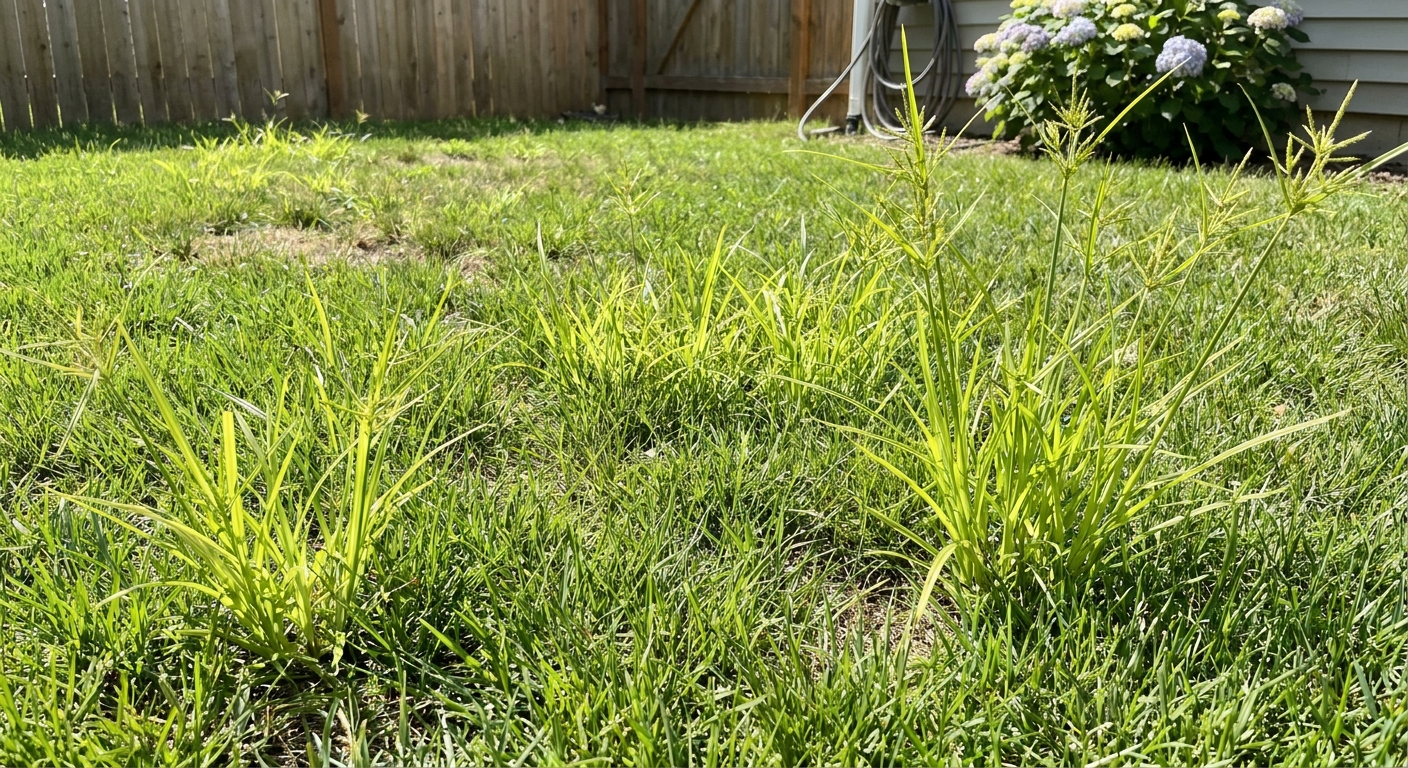
What nutsedge is
Nutsedge is a sedge, not a grass. That sounds like trivia until you try to kill it and realize most “weed and feed” products are designed for broadleaf weeds like dandelions, not sedges.
Here is why sedge biology matters:
- It grows from underground tubers. Those little storage “nuts” are why it comes back after mowing and after a lot of herbicides.
- It loves moisture. Poor drainage, overwatering, and compacted soil are basically an invitation.
- It grows faster than turf. You often notice it because it’s suddenly taller and a brighter green than everything around it.
One quick note: there are different types, most commonly yellow nutsedge and purple nutsedge. Control is similar, but purple is often tougher, so don’t be surprised if it takes a little longer.
How to identify it
Before you treat, confirm you actually have nutsedge. Misidentifying it is the fastest way to waste money and time.
Quick ID checklist
- Color: usually a lighter, shiny, yellow-green compared to your turf.
- Growth habit: shoots up faster and stands more upright than most lawn grasses.
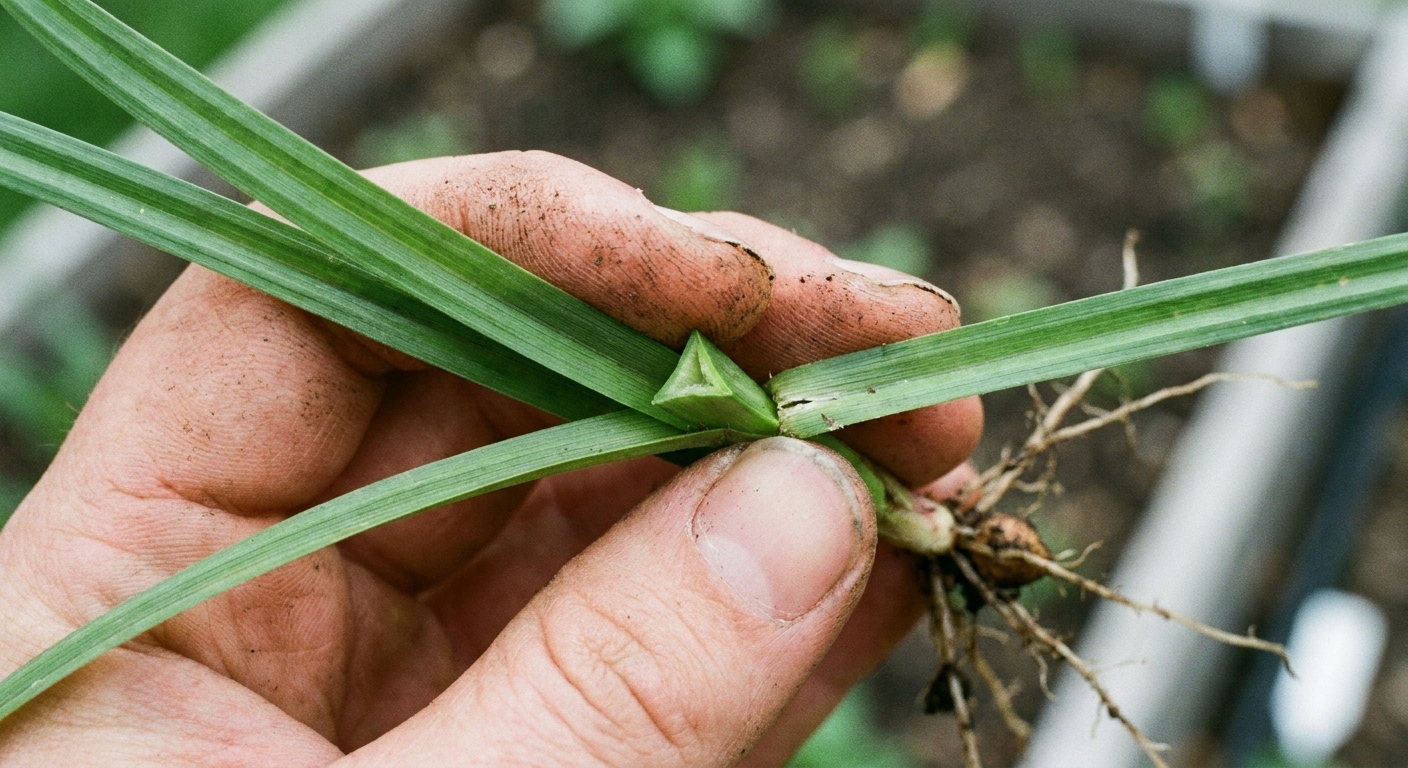
- Stem shape: sedges have a triangular stem. Roll the stem between your fingers and you may feel edges.
- Leaf arrangement: leaves tend to come off the stem in three directions.
Vs. crabgrass
Crabgrass grows low and spreads outward like a wagon wheel. Nutsedge grows upright in clumps and often looks like random “spikes” above the lawn.
Vs. wild onion or garlic
Wild onion and garlic have hollow, round leaves and smell strongly when crushed. Nutsedge does not have that onion smell and the leaves are flat.
Why pulling fails
I know the instinct: you spot a few shoots, you yank them, you feel productive. With nutsedge, that satisfaction is usually short-lived.
Here is what is happening underground. Nutsedge spreads through rhizomes and tubers. When you pull the top growth, you rarely remove the full tuber chain. That means the plant has plenty of “backup” underground, and the patch often refills quickly.
When is pulling okay? Only when the soil is loose enough that you can remove the whole plant including the tubers, and you can bag and dispose of it (not compost it). In most lawns, that is rare.
Step 1: Fix the cause
If you only spray but never fix the “why,” nutsedge is likely to return next season. Cultural fixes also reduce how much herbicide you need. Even in a “good” lawn, existing tubers can hang around for a while, so think progress, not perfection.
Improve drainage
- Check downspouts and splash blocks. Make sure roof water isn’t dumping into the same soggy area.
- Fill low spots. A shallow depression can stay wet for days and become a nutsedge nursery.
- Aerate compacted soil. Core aeration improves infiltration and helps turf outcompete sedge.
- Consider a simple French drain or swale if water consistently pools after rain.
Water smarter
Nutsedge thrives with frequent, shallow watering. Turf does better with deeper, less frequent watering.
- Aim for about 1 inch per week total from rain and irrigation, adjusted for your climate and soil.
- Water in the early morning. Evening watering keeps things damp longer.
- Reduce irrigation in chronically wet zones. If a corner stays green without sprinklers, stop feeding it water.
Mow high
A thick lawn is your best long-term defense. Mow at the top end of the recommended height for your grass type and keep blades sharp (for example, many tall fescue lawns look best around 3 to 4 inches, while Bermuda is often kept lower). Avoid pushing nitrogen too hard in summer, especially if you’re already fighting weeds.

Step 2: Spray the right product
Most general lawn weed killers will barely touch nutsedge. Look for a product specifically labeled for nutsedge or sedges. The label is the law, and it will also tell you whether it’s safe for your specific grass type.
What works
- Halosulfuron (commonly sold for nutsedge control)
- Sulfentrazone (often faster burn-down, sometimes mixed with other actives)
- Imazosulfuron (another sedge-active ingredient in some lawn products)
Do not guess. Turf type matters, and some products or mixes can injure certain grasses or cultivars (St. Augustine, centipede, and fine fescues are common “read the label twice” situations depending on the active and brand).
Best timing
Nutsedge is easiest to control when it’s actively growing, typically late spring through summer. Early applications can absolutely work, too, as long as the plant has enough leaf area for the spray to hit and the label timing fits your situation. Either way, plan on follow-ups because the underground tubers do not give up easily.
Application tips
- Spot spray whenever possible. It saves product and reduces stress on the lawn.
- Use a surfactant if the label recommends it. Nutsedge leaves can be waxy. A surfactant helps the spray stick and absorb.
- Do not mow right before spraying. Give it a couple days of leaf growth for better uptake.
- Do not irrigate immediately after. Many labels call for a rainfast window. Follow that exactly.
- Expect more than one round. Nutsedge commonly needs a second application 2 to 4 weeks later (and sometimes a third), depending on the product, the species (yellow vs. purple), and the size of the infestation.
Quick safety notes
- Wear basic PPE: gloves, closed-toe shoes, and eye protection are a smart baseline.
- Avoid drift: spray on calm days, keep the nozzle low, and watch edges near beds and ornamentals.
- Respect heat limits: some labels warn against spraying above certain temps to reduce turf stress and off-target movement.
What about pre-emergent?
Most common crabgrass pre-emergents are not reliable nutsedge prevention because nutsedge often emerges from tubers, not just seed. That said, a few specialty pre-emergents in certain products can suppress yellow nutsedge in some settings. If you want that route, check labels carefully and match the product to your turf type and situation.

Step 3: Patch thin spots
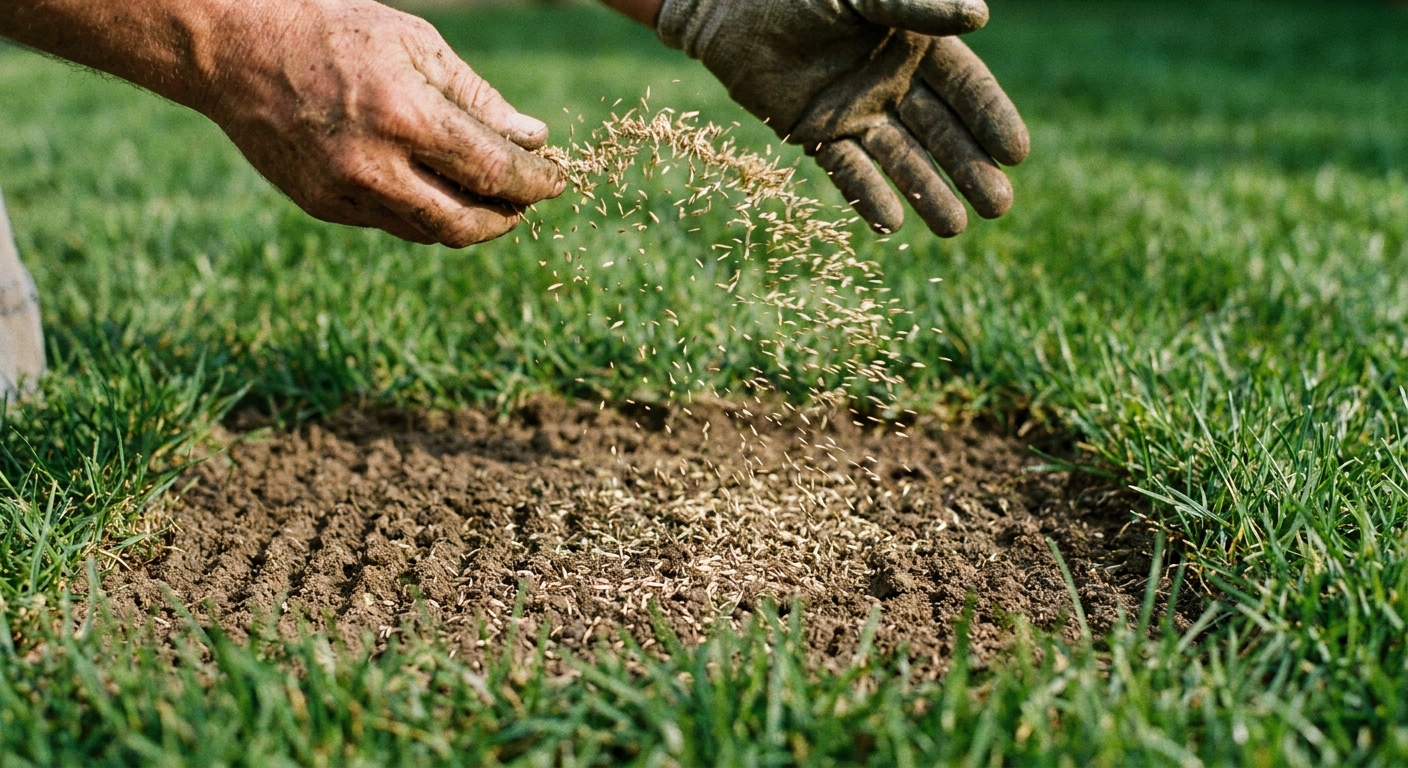
Once nutsedge thins out, you may be left with small bare patches. If you ignore them, weeds will volunteer into that open real estate.
Cool-season lawns
- Best time to seed: usually late summer to early fall.
- After spraying: check the herbicide label for how long you must wait before overseeding. Some products require a waiting period.
- Patch method: rake the area, add a thin layer of screened topsoil or compost, seed, lightly rake in, and keep evenly moist until germination.
Warm-season lawns
- Best time to fill: late spring through summer when the grass is actively spreading.
- Patch method: plug or sod small areas, or encourage spread with light topdressing and proper watering.
- Be careful with seed. Many warm-season lawns are not commonly seeded from big box mixes for an exact match.
Common mistakes
- Spraying once and expecting a miracle. Nutsedge is a campaign, not a single battle.
- Using the wrong product. If it does not list nutsedge on the label, assume it will disappoint you.
- Overwatering to “help the lawn recover.” That extra water often helps the sedge more than the turf.
- Mowing it short. Short mowing stresses grass and opens the canopy, which gives nutsedge more light.
- Ignoring the soggy area. If one corner stays wet, that corner will keep re-infesting everything around it.
When to call a pro
If nutsedge covers large areas, or you have persistent standing water that you cannot solve with simple grading and downspout fixes, it may be time for a lawn pro or drainage contractor. Sometimes the real “weed solution” is moving water away from the house and out of the yard.
My simple game plan
If you want the shortest path from frustration to progress, here is the order I follow:
- Confirm ID using color, growth habit, and triangular stem.
- Stop pulling unless you can get the tubers, then bag and dispose of it.
- Reduce moisture with drainage fixes and less frequent watering.
- Spot spray a labeled sedge herbicide during active growth, then repeat as directed (often 2 to 3 total treatments).
- Patch thin spots at the right time for your grass type so weeds do not move back in.
The 30-Second Cheat Sheet
Essential takeaways for: How to Get Rid of Nutsedge in Your Lawn
Fast ID
- Nutsedge is a sedge, not grass. It grows faster, stands taller, and is often a lighter yellow-green.
- Triangular stem. Roll the stem between your fingers and feel the edges.
- Clumpy, upright shoots instead of low, spreading growth like crabgrass.
Don’t do this
- Do not keep pulling it. You usually leave tubers behind, so it comes right back and the patch can look worse over time.
- Do not rely on “weed and feed.” Many products do not control sedges.
- Do not compost it. Bag and dispose of pulled plants and any tubers to avoid spreading it.
Do this instead (order matters)
- Fix wet conditions: redirect downspouts, fill low spots, aerate compacted soil, and avoid frequent shallow watering.
- Spot spray a selective nutsedge herbicide labeled for your grass type (common actives: halosulfuron, sulfentrazone, imazosulfuron).
- Time it right: treat during active growth (late spring through summer) when there is enough leaf to spray. Expect 2 to 3 treatments in a season, spaced per label.
- Patch bare spots: reseed cool-season lawns in late summer to early fall, or plug/sod warm-season lawns in late spring to summer. Check the herbicide label for seeding wait times.
One-sentence rule to remember
Dry out the problem area, then spray what is left with a sedge-specific product, then thicken the turf so it cannot come back.
💡 Tip: Scroll up to read the full article for detailed, step-by-step instructions.
⬆️ Back to top
About Marcus Vance
Content Creator @ Grit & Home
Marcus Vance is a lifelong DIY enthusiast and self-taught home renovator who has spent the last decade transforming a dilapidated 1970s ranch into his family's dream home. He specializes in budget-friendly carpentry, room-by-room renovations, and demystifying power tools for beginners. Through his writing, Marcus shares practical tutorials and hard-learned lessons to help homeowners tackle their own projects with confidence.