
🚨 In a DIY emergency or rush?
Skip the details and jump straight to our 30-second cheat sheet for the most crucial info.
Opossums look like they wandered in from a different century, but they are pretty common in suburban yards. Most of the time they are just passing through for a snack. The problems start when an opossum decides your deck, shed, or crawl space is a safe place to bed down.
I am all for handling things the humane, low-drama way. The good news is that with opossums, that usually means removing the buffet and closing the door behind them. This guide walks you through how to confirm what you are dealing with, what attracts them, and how to exclude them without turning your yard into a war zone.
First: Is It an Opossum?
Before you buy traps or start digging, take ten minutes to verify the visitor. Opossums, raccoons, and skunks all like the same real estate: easy food, easy cover, and a dark space under a deck.
Quick ID
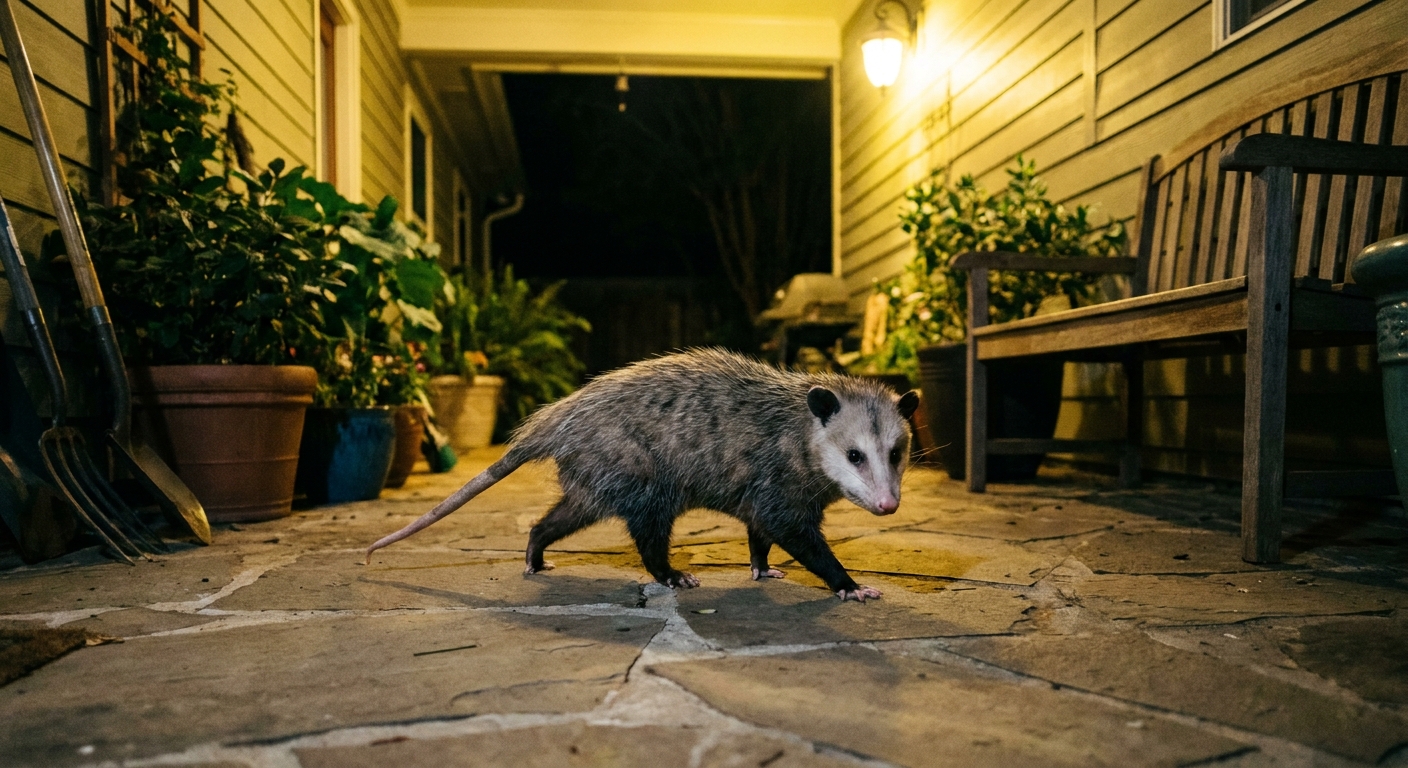
- Opossum: pointy white face, naked-looking tail, waddling walk. Usually alone. Often freezes, hisses, or “plays dead” when scared, but can bite if handled or cornered.
- Raccoon: bigger and stockier, black “mask” face, ringed tail. Often leaves hand-like tracks and can be aggressive if cornered.
- Skunk: low and stout with obvious stripes. The smell is the giveaway, especially near a den.
Tracks and droppings
- Opossum tracks: five toes front and back, with a thumb-like toe on the back foot that points outward. Prints often look splayed.
- Raccoon tracks: five long “fingers” that look like tiny hands.
- Skunk tracks: five toes too, but smaller and usually paired with little claw marks in soft soil.
- Droppings: use this as a clue, not a verdict. Scat identification overlaps a lot between species. Opossum scat is often smooth and tapered and may contain berry seeds or insect bits. Raccoons often use repeated “latrine” spots. Skunk droppings often show insect parts and can be found near digging areas.
Under-deck clues
- A shallow nest of leaves, insulation, or shredded material tucked in a corner.
- A single entry path through plants or a low gap under lattice.
- Light digging, but usually not the deep cone-shaped holes skunks make when hunting grubs.
Safety note: Treat any wild animal as potentially sick or defensive. Keep kids and pets away. Homeowner fear #1 is rabies. The reassuring part is that opossums are remarkably resistant to rabies because of their naturally low body temperature. Still, do not handle them. If you see an animal out in broad daylight acting confused, stumbling, or unusually bold, call animal control for guidance.
Why They Pick Your Yard
Opossums are opportunists. They are following calories and cover. If you remove the easy stuff, they usually move on.
Food attractants
- Pet food: bowls left outside overnight are basically a neon sign.
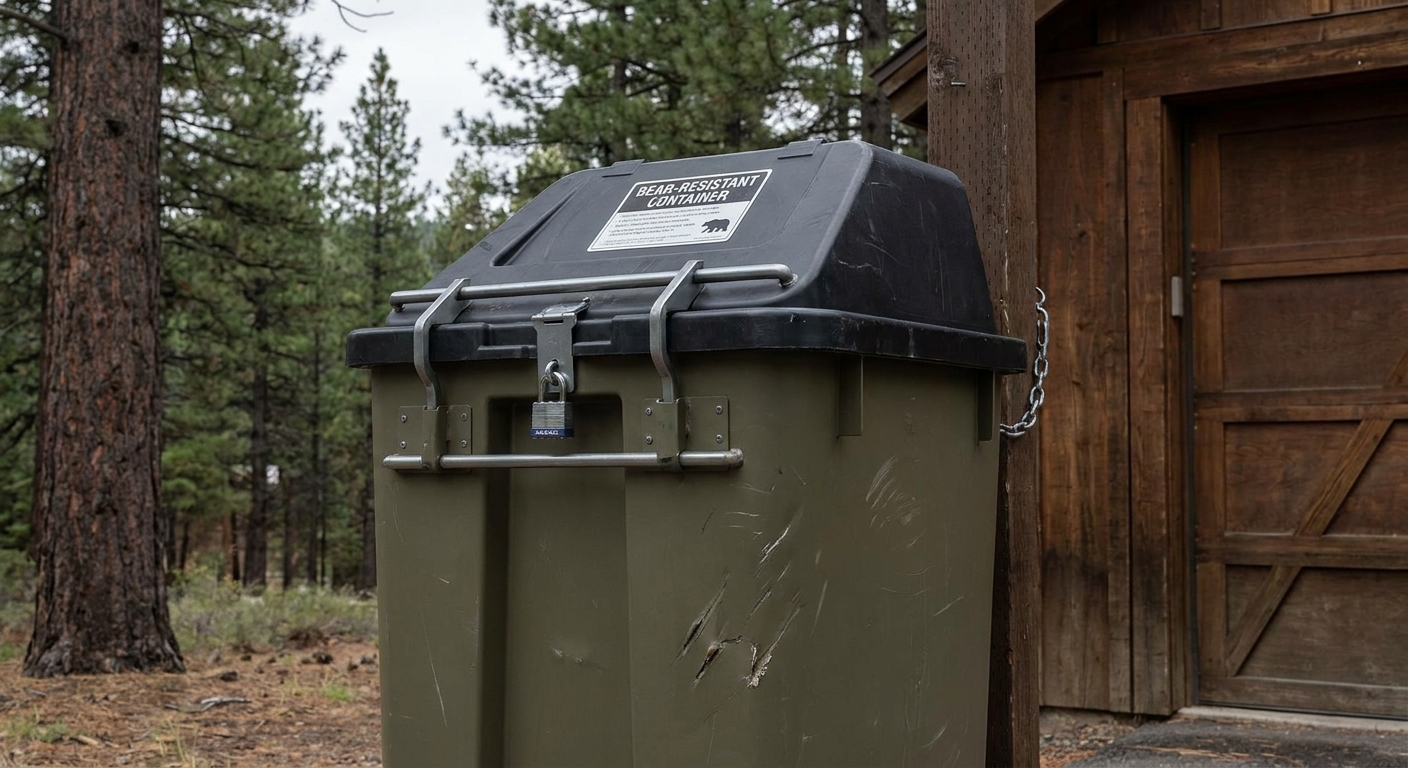
- Trash: loose lids, torn bags, or cans stored outside without a critter-proof container.
- Bird seed: spilled seed under feeders and suet blocks within reach.
- Fallen fruit: apples, pears, plums, and persimmons on the ground.
- Compost: especially if it contains meat, grease, or dairy.
Shelter attractants
- Low gaps under decks, porches, and sheds. If its head fits, the rest usually follows, so treat any gap larger than a few inches as a problem.
- Open crawl space vents or damaged screens.
- Brush piles, wood piles, and dense groundcover right up against the house.
- Easy access to water like leaky hose bibs or pet water bowls.
If you do nothing but remove food sources and tighten up trash storage, you will solve a surprising number of opossum problems.
Humane Exclusion (My Go-To)
Exclusion is the cleanest solution: you let the animal leave, then you block re-entry. No poisons. No home remedies that just make your yard smell like a science fair. The key is doing it in the right order.
Tools and materials
- Galvanized hardware cloth (1/2-inch mesh for opossums; 1/4-inch if you want to block smaller pests too)
- Tin snips and work gloves
- Screws with fender washers (or heavy-duty staples) and a drill or staple gun
- Shovel or trenching spade for the apron
- Headlamp or flashlight
Step 1: Check for dependent young
Opossums are marsupials. Mom carries tiny young in her pouch, and later they often ride on her back. That means you are less likely to have a pile of helpless babies left behind the way you might with raccoons. Still, older juveniles can sometimes stay put under a structure, and you do not want to accidentally block an animal inside.
- Check at dusk or after dark from a distance. Use a flashlight and look for movement.
- Listen for persistent rustling, chirping, or repeated movement in the same spot.
- Look for a well-worn path in grass or soil leading to one main opening.
If you suspect dependent young, or you cannot safely verify what is in there, skip to “When to Call Wildlife Control.”
Step 2: Find every opening
Do not assume the big hole is the only hole. Get down at eye level and walk the perimeter.
- Mark gaps with painter’s tape or a landscaping flag.
- Check corners, where lattice meets posts, and where stairs attach.
- Quick lattice reality check: deck lattice is decorative, not a barrier, unless it is backed with hardware cloth and secured at the bottom.
- For crawl spaces, check vents, access doors, and where pipes penetrate.
Step 3: Add a one-way door
A one-way exclusion door lets the opossum leave but prevents it from getting back in. You can buy a wildlife one-way door, or make a simple flap-style setup with sturdy mesh and fasteners. The point is the same: exit only.
- Timing tip: install the one-way door near dusk, when they are most likely to head out for the night. Do not seal the opening shut during the day if the animal may be inside.
- Leave the one-way door in place for 2 to 4 nights of decent weather. Extend the time if weather is bad, or if flour or sand shows fresh tracks and activity.
- Use flour or a light layer of sand outside the opening to see fresh tracks the next morning.
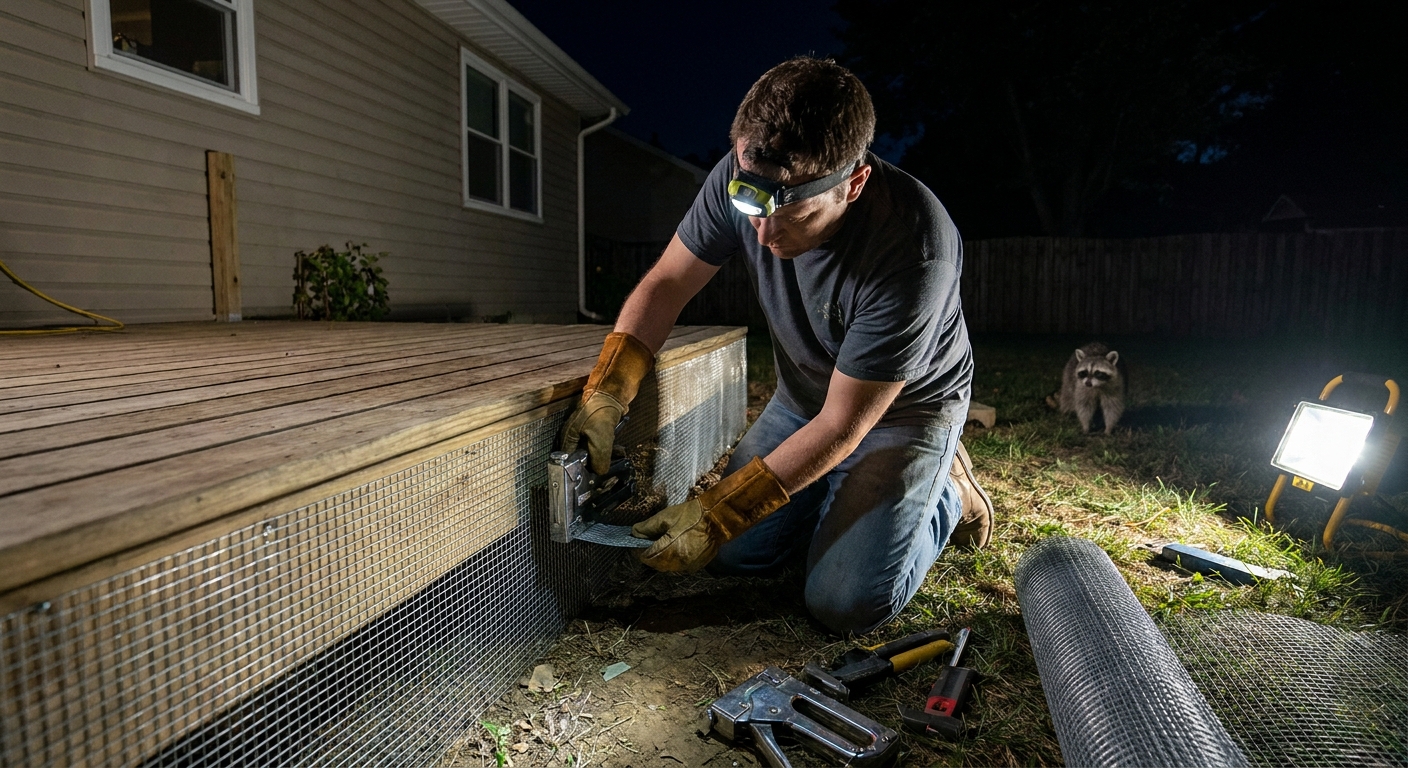
Step 4: Close it up with hardware cloth
Once you are confident it is empty, seal it up.
- Use galvanized hardware cloth (not chicken wire). A 1/2-inch mesh is a solid all-around choice for opossums.
- Run the mesh along the entire opening and attach to framing, posts, or a ground-contact board using screws with fender washers or heavy-duty staples.
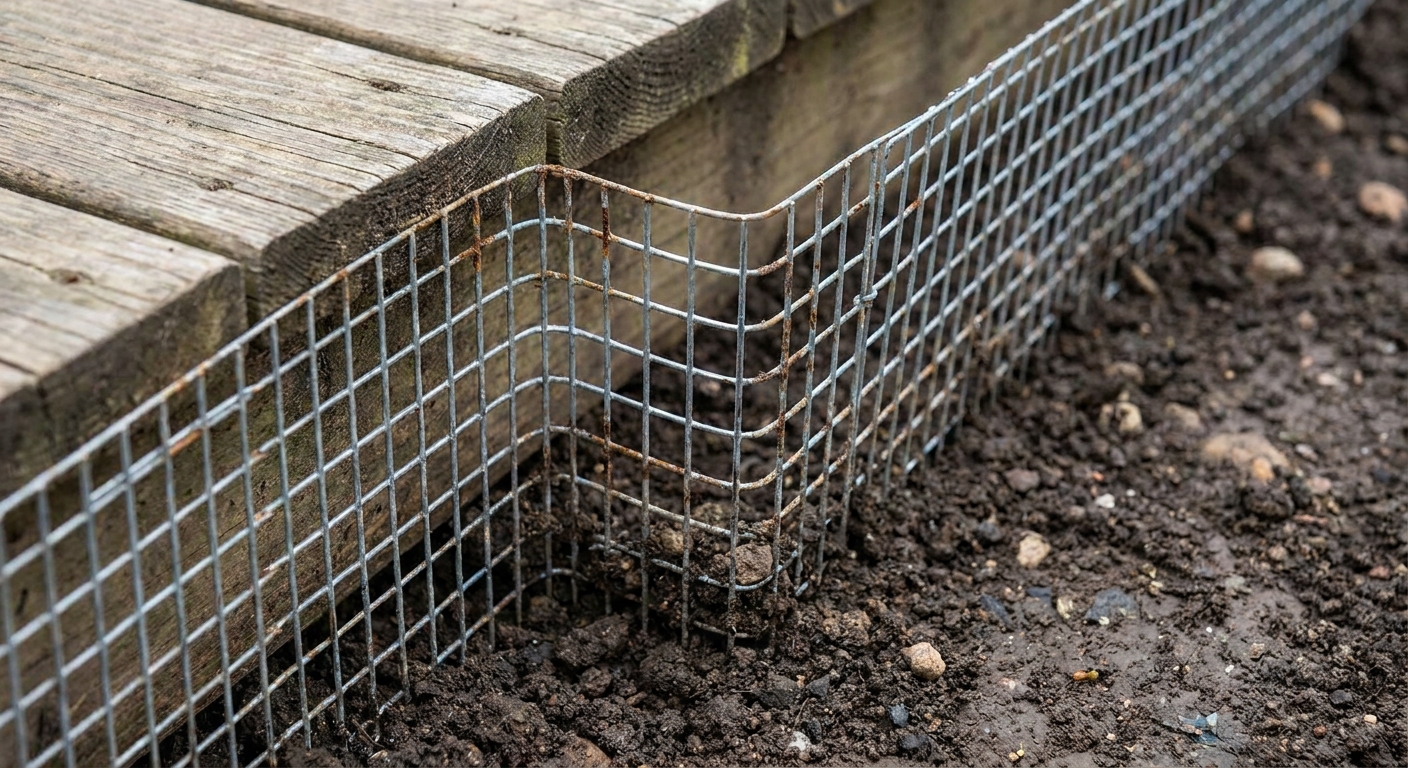
- Bury an apron: extend the mesh out on the ground in an L-shape. I aim for at least 12 inches, and 12 to 24 inches is even better if skunks or raccoons are common where you live. Cover with soil or mulch.
- Seal small gaps around pipes with metal mesh and an exterior-rated sealant where appropriate.
Beginner-friendly tip: If your deck edge is wavy or uneven, do not fight perfection. I cut the mesh in manageable lengths, overlap seams by a couple inches, and fasten like I am hanging a screen. Tight enough to hold, not so tight it kinks.
Make the Yard Boring
After exclusion, do a quick attractant audit. Otherwise the next opossum will simply camp under the shed instead.
My checklist
- Bring pet food indoors before dusk. If you must feed outside, pick up bowls immediately after.
- Use a tight-lid trash can. If raccoons are also around, consider bungee cords or a locking can.
- Clean up fallen fruit weekly during season.
- Move bird feeders away from the house and use seed trays to reduce spill. Sweep under feeders.
- Trim shrubs so you can see under decks and porches. Visibility makes animals nervous.
- Store lumber and firewood off the ground and away from the house if possible.
- During active exclusion, keep dogs leashed and cats indoors at night. It reduces drama and reduces the chance of a cornered-animal moment.
Repellents and Scare Tactics
People try a lot of things: mothballs, ammonia rags, ultrasonic devices, predator urine, hot sauce sprays. In my experience, most of these are either short-lived or just move the animal a few feet.
- Mothballs and chemicals: not recommended. They can be harmful to pets, kids, and the environment, and using them outdoors or in open areas may be illegal because pesticides must be used according to their label directions.
- Motion-activated lights or sprinklers: can help for yard roaming, but they rarely solve a committed under-deck den on their own.
- Strong-odor rags: sometimes encourages a temporary exit, but do not count on it as the main plan.
If you want a simple non-contact nudge, use light and disturbance briefly while the one-way door is in place. Then finish the job with solid exclusion.
Humane Trapping Basics
Sometimes you cannot do exclusion right away, or the animal is coming and going from multiple spots. A live trap can work, but it comes with responsibilities.
Legal and ethical notes
- Rules vary by state and city. In many places, relocating wildlife is illegal or strongly discouraged because it spreads disease and the animal may not survive.
- If relocation is not allowed, a pro may be required to handle removal.
- Never trap during extreme heat or cold.
Trap setup tips
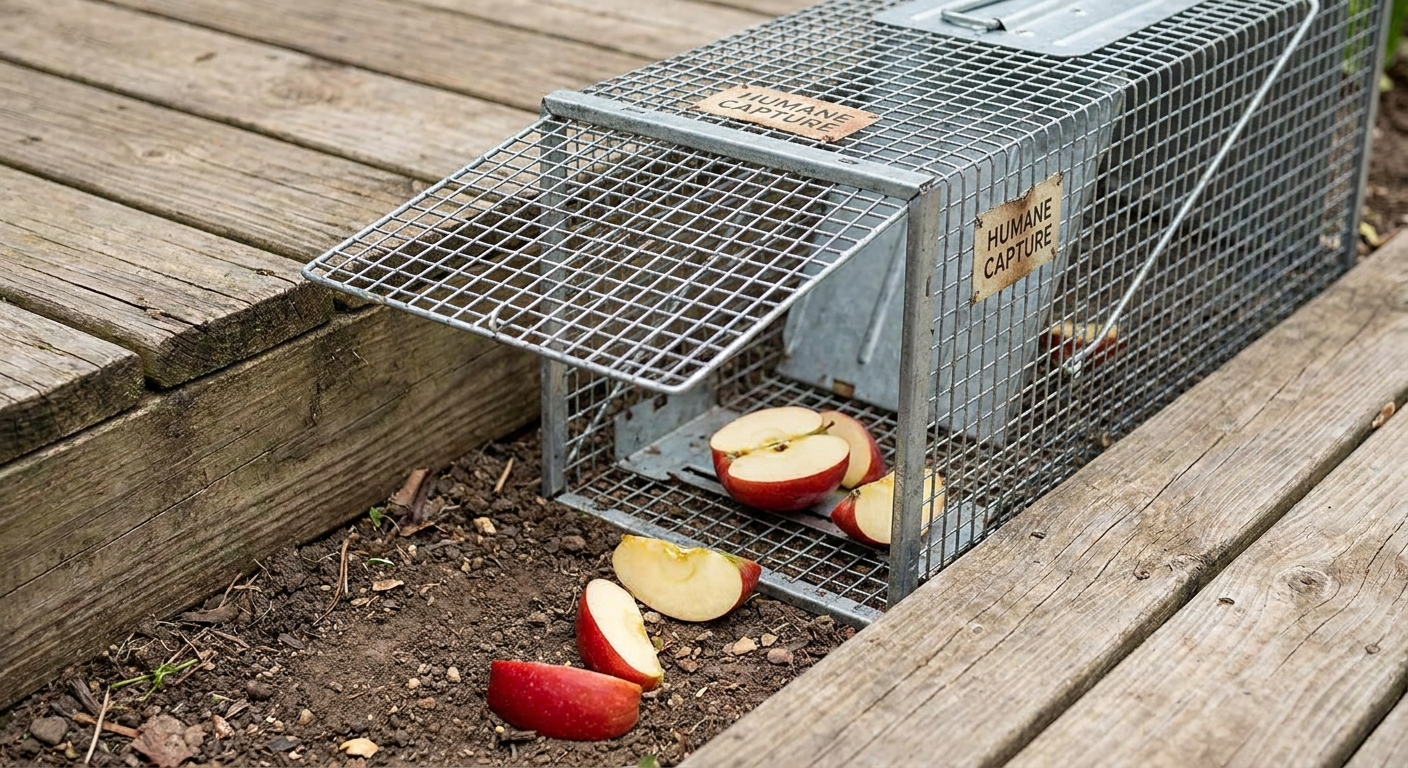
- Use a sturdy live trap sized for medium animals. Place it on level ground near the travel path.
- Wear gloves and keep pets away from the trap. Make sure your pets are up to date on rabies vaccination, especially if raccoons or skunks are in your area.
- Bait ideas: fruit (grapes, apple slices), canned cat food, or sardines can work, but bait can also attract raccoons and stray cats.
- Cover the trap with an old towel once the animal is inside. Darkness reduces stress.
- Check traps early in the morning. Do not leave an animal trapped all day.
- Skunk note: if there is any chance the visitor is a skunk, trapping can get spicy fast. That is a good time to call a pro.
My honest DIY take: If you are not 100 percent comfortable handling a live, frightened animal in a cage, skip trapping and focus on exclusion, or call a licensed wildlife operator. There is no shame in that.
When to Call Wildlife Control
I love DIY, but there are times when paying for help is the safest and cheapest option in the long run.
- You suspect dependent young in a den, or you hear persistent chirping under the deck.
- The animal is in a crawl space and you cannot safely access it.
- You see signs of multiple animals, or it is not clear if it is raccoon, skunk, or opossum.
- There is an aggressive animal, a bite risk, or a pet has already had an encounter.
- You have contamination concerns: droppings, parasites, or damaged insulation.
- Your local laws restrict trapping, handling, or relocation.
Ask the company specifically about humane exclusion, one-way doors, and entry-point repairs. Removal without exclusion often turns into repeat visits.
Cleanup and Repair
If the animal was under your deck briefly, cleanup may be minimal. If it was living in a crawl space, take it seriously.
- Wear gloves and an N95 or better mask when dealing with droppings or nesting material.
- Lightly mist dry debris with water to reduce dust before removal.
- Bag waste securely and dispose of it according to local guidance.
- Inspect for chewed screens, damaged vents, and gaps at corners.
If you find significant droppings or soiled insulation, consider a professional cleanup. It is not glamorous work, and there are real health risks.
Prevention
The best long-term solution is making “under the deck” a boring, inaccessible place.
- Keep the hardware cloth barrier intact and check it seasonally for rust, loose staples, or digging at edges.
- Maintain a 12 to 18 inch inspection strip of open space near the deck perimeter by trimming plants back.
- Fix dripping outdoor faucets and avoid leaving water out overnight.
- Store bird seed and pet food in sealed bins.
If you do those four things, you will solve most repeat wildlife issues around a home, not just opossums.
FAQ
Are opossums dangerous?
They are generally not aggressive and prefer to avoid conflict. They may hiss, growl, freeze, or play dead when frightened. Like any wild animal, they can bite or scratch if cornered or handled. Give them space and do not try to pick one up.
Do opossums carry rabies?
It is uncommon. Opossums are remarkably resistant to rabies because their body temperature tends to be lower than many other mammals. Still, you should treat any wild animal as unpredictable and keep pets vaccinated.
Do opossums dig under decks?
They can dig a little, but they often use existing gaps and weak spots. If you see significant digging and cone-shaped holes in the lawn, skunks are a more likely culprit.
Will fencing work?
For a deck or porch, the most effective “fence” is hardware cloth attached to the structure with a buried apron. A yard fence can reduce travel, but it rarely solves denning under a structure by itself.
The 30-Second Cheat Sheet
Essential takeaways for: How to Get Rid of Opossums in Your Yard and Under Your Deck
Confirm it is an opossum
- Look for a pointy white face and a naked-looking tail at night.
- Tracks: five toes with a thumb-like back toe pointing outward.
- Usually a single animal and one main entry path under the deck.
Remove the attractants (do this tonight)
- Bring pet food indoors before dusk.
- Secure trash with a tight lid or locking can.
- Pick up fallen fruit and spilled bird seed.
- Trim shrubs and clear brush piles near the house.
Best fix: humane exclusion
- Find every opening under the deck or crawl space.
- Install a one-way door on the main opening for 2 to 4 nights (longer if weather is bad or tracks show activity).
- After no activity, seal the perimeter with 1/2-inch galvanized hardware cloth (go wider and sturdier if skunks or raccoons are in your area).
- Bury an L-shaped apron at least 12 inches (wider is better) to discourage digging at the edge.
Trapping basics (only if needed)
- Check local laws. Relocation may be illegal in some areas.
- Use a sturdy live trap, bait with fruit or canned cat food.
- Check early morning and keep pets away.
Call wildlife control if
- You suspect dependent young or you cannot verify what is in the den.
- The animal is inside a crawl space and you cannot safely access it.
- You smell skunk, see raccoon “hand” tracks, or cannot ID the animal.
- There is heavy contamination or damaged insulation.
💡 Tip: Scroll up to read the full article for detailed, step-by-step instructions.
⬆️ Back to top
About Marcus Vance
Content Creator @ Grit & Home
Marcus Vance is a lifelong DIY enthusiast and self-taught home renovator who has spent the last decade transforming a dilapidated 1970s ranch into his family's dream home. He specializes in budget-friendly carpentry, room-by-room renovations, and demystifying power tools for beginners. Through his writing, Marcus shares practical tutorials and hard-learned lessons to help homeowners tackle their own projects with confidence.