
🚨 In a DIY emergency or rush?
Skip the details and jump straight to our 30-second cheat sheet for the most crucial info.
Rabbits look harmless until you walk out one morning and your bean seedlings are clipped clean at the soil line like someone took scissors to them. I have been there. The good news is rabbits are one of the more “fixable” garden pests because their habits are predictable, and solid exclusion works incredibly well.
This guide focuses on humane, homeowner-friendly control: figure out which critter you have, block access with the right fence and hardware cloth, reduce hiding spots, use repellents as backup, and choose plants that are less tempting. I will also cover the best timing for veggie gardens and flower beds and what to do when bark or seedlings are already chewed.
First, make sure it is rabbits
Before you buy fencing, confirm the culprit. Rabbits leave a pretty specific calling card.
Common rabbit damage
- Clean, angled cuts on tender stems, especially seedlings, peas, beans, lettuce, and young perennials.
- Grazed tops on low plants and uniform “mowed” looking patches.
- Bark gnawing in winter on young trees and shrubs, often close to the ground. In snow, the damage can be higher because they stand on packed snow.
- Feeding height is low, usually under 2 feet unless snow provides a boost.
Clues on the ground
- Pellets: small, round, dry droppings about pea-sized, often in clusters.
- Tracks: two larger hind prints ahead of two smaller front prints, especially visible in snow or soft soil.
- Hiding spots: brush piles, tall weeds, dense groundcover, spaces under sheds and decks.
Rabbit or deer?
Deer tend to leave ragged, torn plant ends because they pull and rip. Rabbits usually leave clean cuts. If damage is higher than 2 to 3 feet without snow involved, deer climbs the suspect list.
Rabbit or groundhog?
Groundhogs can do similar damage but usually leave a bigger footprint: wider trails, larger droppings, and they can flatten plants and eat bigger chunks. Rabbits are more “nibblers” with neat clipping.
The fix that works: a real barrier
If you want the most reliable, long-term solution, build a barrier that matches how rabbits move. They do not usually dig like a determined dog, but they absolutely squeeze under gaps and push through weak spots.
Fence specs (what to buy)
- Material: galvanized welded wire or hardware cloth. Chicken wire is too flexible and rabbits can squeeze through, deform it, or go under it.
- Opening size: 1 inch by 1 inch welded wire is usually fine for adult rabbits. If you have small cottontails or want “set it and forget it,” go with 1/2 inch hardware cloth at least along the bottom.
- Height: 36 inches is a solid default for rabbit pressure. You can sometimes get away with 30 inches in low-pressure yards, but 36 gives you fewer surprises. If deer are also an issue, you will need a much taller fence.
- Fully enclosed: make sure the fence connects all the way around the garden, including the ends. Rabbits will happily “walk around” an open side.
- Bottom edge: eliminate gaps. As a rule, do not leave openings larger than about 1 inch at ground level, especially near gates and corners.
Bottom-edge options (pick one)
Option A: Bury an apron (my go-to)
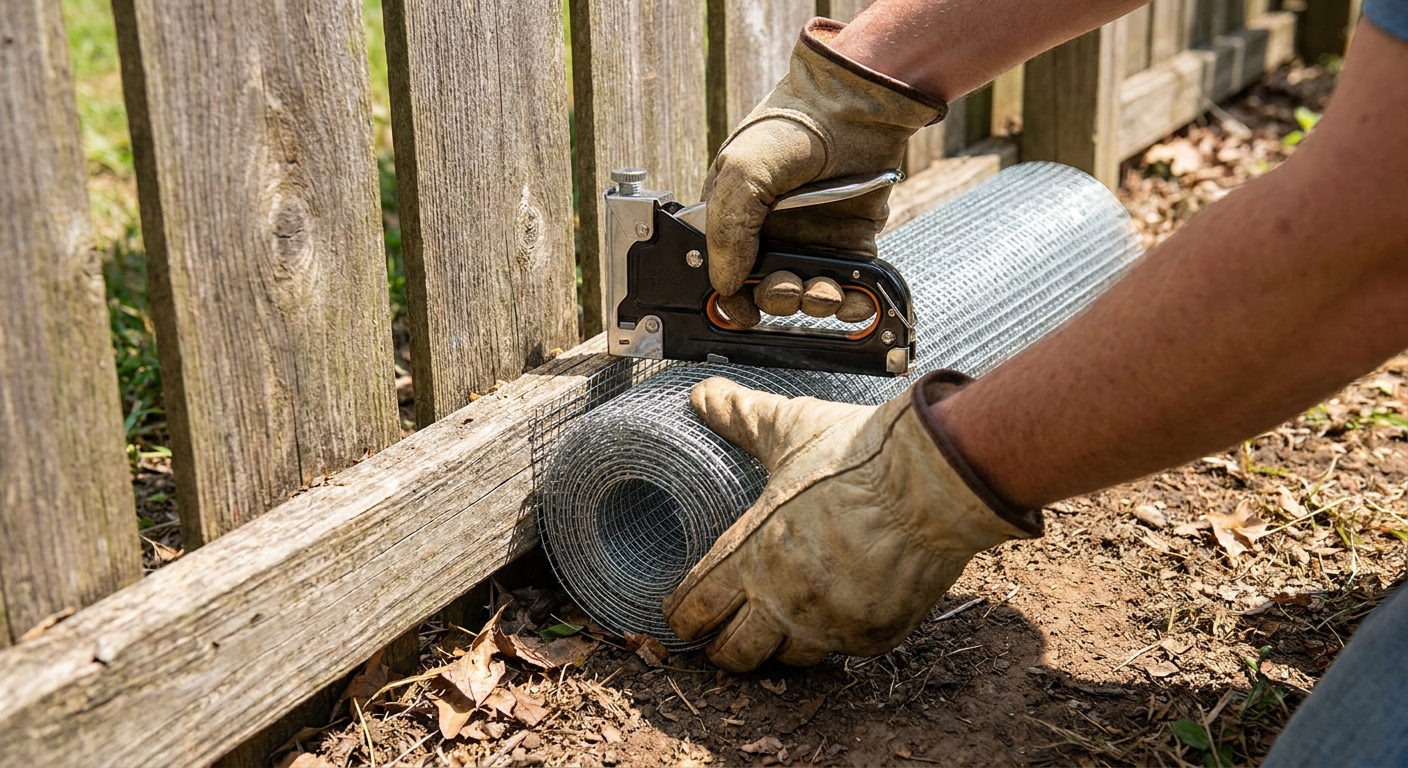
- Dig a trench 4 to 6 inches deep along the fence line.
- Drop the wire down, then bend it outward in an L shape so it extends 6 to 10 inches outward away from the garden.
- Backfill with soil and tamp it.
This “apron” blocks sneaking and discourages light digging without requiring deep trenching.
Option B: Pin it tight to the ground (fast)
- Let the wire sit tight to the soil.
- Secure it every couple feet with landscape staples, tent stakes, or a 2x4 screwed to the fence line.
This works best on flat ground and when you stay on top of erosion and low spots.
Gates and gaps are where rabbits win
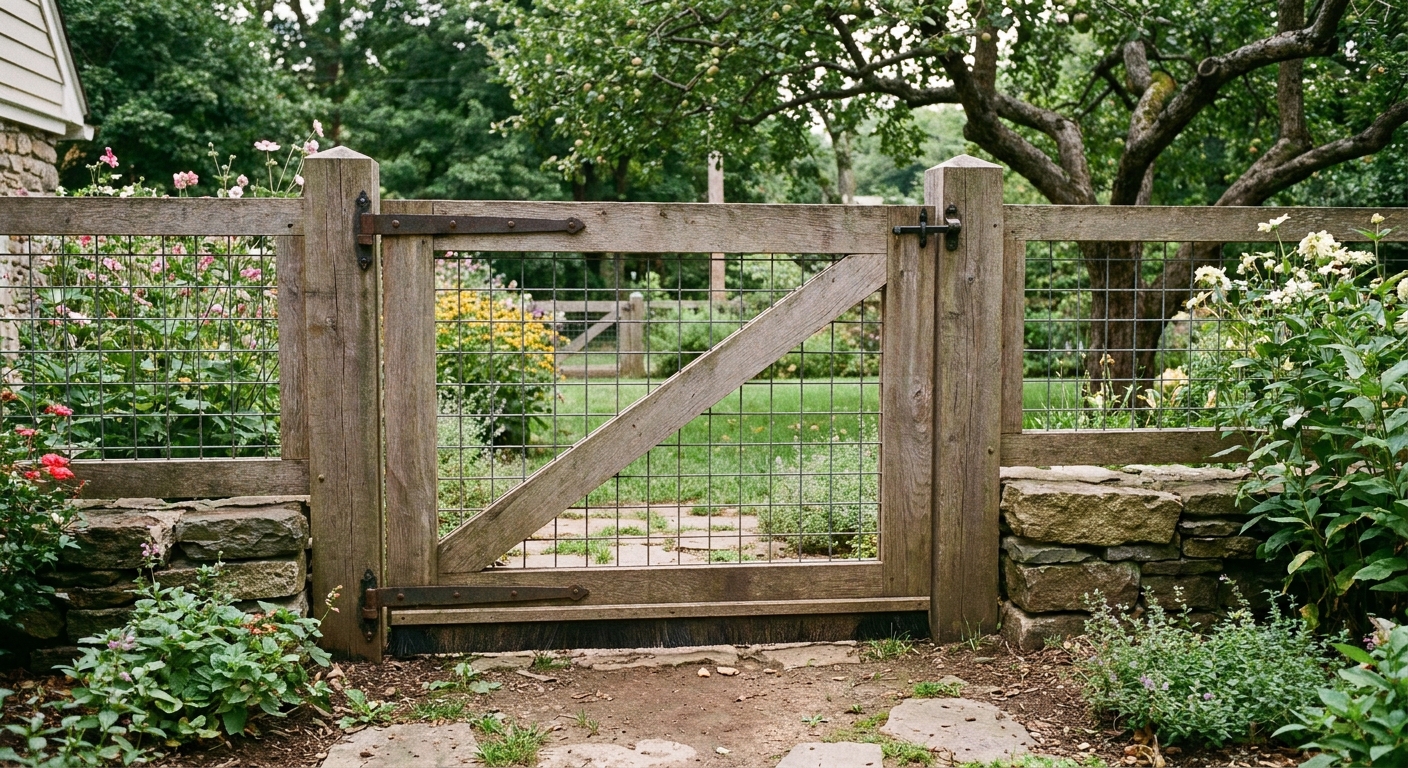
A perfectly built fence is useless if the gate has a 2-inch gap under it. For gates:
- Add a gate sweep or screw a pressure-treated board to the bottom edge.
- Make sure the wire overlaps the gate frame.
- Use a latch that pulls the gate tight so it cannot sag open over time.
Hardware cloth: beds, trees, and weak spots
If you do not want to fence your whole yard, hardware cloth lets you protect the high-value areas like a raised bed, a tulip patch, or young fruit trees.
Raised bed protection
- Staple or screw 1/2 inch hardware cloth around the outside of the bed frame.
- If rabbits are slipping under, extend the hardware cloth down and create a small buried apron like described above.
Trunk guards (winter must-do)
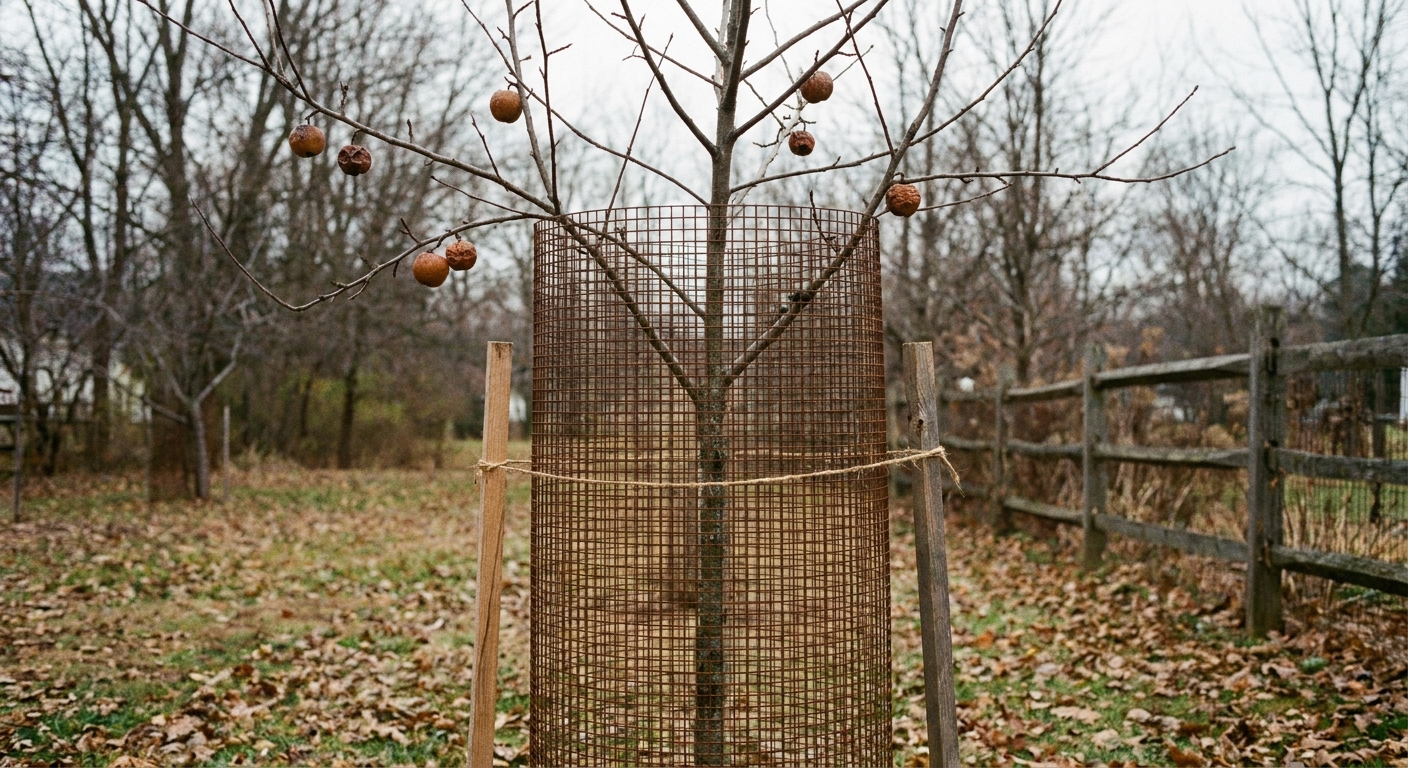
When food is scarce, rabbits chew bark, especially on young apple, cherry, maple, serviceberry, and many ornamentals. Protect trunks before hard winter sets in.
- Wrap the trunk with 1/4 to 1/2 inch hardware cloth formed into a cylinder.
- Keep the guard 1 to 2 inches away from the bark so it cannot rub.
- Height: I consider 30 to 36 inches a better minimum than 24 inches for most yards, and 36 to 48 inches if snow drifts are common.
- Anchor with stakes or wire ties, not tight around the trunk.
Repellents: helpful, but maintenance
Repellents can reduce browsing pressure, especially when paired with fencing and cleanup. But they are not magic. They wear off in rain, irrigation, and heavy dew, and hungry rabbits may ignore them.
Types that can work
- Odor-based (often predator scent, putrescent egg solids, garlic, or sulfurous smells).
- Taste-based (bitter agents that make chewing unpleasant).
How to use repellents well
- Start early: apply before rabbits form the habit of eating that plant.
- Reapply on a schedule: typically every 7 to 14 days, and after rain or overhead watering.
- Rotation sometimes helps: if rabbits seem to ignore one product, switching can help in some situations, especially where animals habituate.
- Spot-test plants: some sprays can discolor delicate foliage. Test a few leaves first.
- Avoid spraying edible parts close to harvest: follow label instructions carefully for vegetables and herbs.
Homemade remedies?
People swear by hot pepper sprays, soap shavings, and human hair. In my experience, these can help for a short window, but they are inconsistent outdoors. If you use them, treat them as a temporary bridge while you build real exclusion.
Habitat reduction
Rabbits stay where they can eat and hide quickly. Your job is to make hiding inconvenient.
Quick wins
- Mow and edge regularly, especially along fence lines and around beds.
- Clean up brush piles, stacked lumber, and debris where rabbits can tuck in.
- Lift low evergreen branches (carefully) or thin dense groundcover near gardens.
- Seal openings under sheds and decks with 1/2 inch hardware cloth. Bury the bottom edge a few inches or use an apron.
Watch nesting season
Rabbits nest in shallow depressions in grass, often in the open, lined with fur. If you find a nest, give it space and delay major cleanup in that immediate spot. Most nests are temporary, and the young leave fairly quickly.
Plant choices
No plant is truly rabbit-proof when food is scarce, but you can stack the deck. Rabbits tend to avoid strong scents, fuzzy leaves, and many toxic or bitter ornamentals.
Often avoided
- Aromatic herbs: rosemary, sage, thyme, oregano, mint (mint spreads, so contain it).
- Strong-smelling flowers: marigolds, lavender, salvia.
- Many daffodils and alliums: daffodils, ornamental onions, garlic, chives.
- Textured foliage: lamb’s ear is often left alone.
Local rabbit pressure matters, so consider these as “less likely,” not “never touched.”
Common targets
- Vegetables: lettuce, peas, beans, beet tops, carrot tops, young brassicas.
- Flowers: tulips, pansies, hostas, young daylilies.
- Woody plants in winter: young fruit trees and tender shrubs.
Simple layout trick
Plant “rabbit favorites” inside protected zones (fenced beds), and use stronger-smelling plants as border plantings outside the fence line. This does not replace a barrier, but it can reduce casual browsing.
Seasonal timing
Rabbits do not show up on your schedule. You get ahead of them by timing your defenses around the seasons.
Late winter to early spring
- Install fencing now while beds are empty and you can work without stepping on seedlings.
- Wrap young trees with hardware cloth guards before late-winter bark chewing peaks.
- Clean up hiding spots before fresh growth draws them in.
Spring planting time
- Use temporary covers for the first 2 to 4 weeks: wire hoops with mesh, cloches, or hardware cloth cylinders around individual plants.
- Row cover works well for rows: lightweight fabric over hoops (a simple low tunnel), with the edges pinned or buried so rabbits cannot slip underneath.
- Repellent schedule matters most now, because one night of clipping can wipe out a whole row.
Summer
- Inspect fence bottoms weekly for erosion, digging, or gaps at gates.
- Keep weeds down around the perimeter so rabbits feel exposed.
- Reapply repellents after storms and heavy watering.
Fall
- Protect perennials and shrubs that rabbits browse as other food sources dry up.
- Install trunk guards before the first hard freezes.
- Remove brush and leaf piles near the garden that become winter cover.
Winter
- Check guards after snowfalls. Snow banks can turn a 36-inch guard into a step stool situation.
- Keep paths and perimeters shoveled when possible so rabbits do not get “free height” to reach branches.
Recovery
Once the damage is done, you have two goals: help the plant recover and prevent round two.
If seedlings are clipped
- Check where the cut happened: if it was above the growing point on something like peas or beans, it may regrow. If it was at soil level on many veggies, consider replanting.
- Re-seed fast if you are still in the planting window. Keep extra seed on hand for rabbit season.
- Use a temporary barrier immediately (mesh cover, row cover secured at the edges, hardware cloth ring, or a small fence). Do not wait until the new sprouts emerge.
- Water gently and avoid heavy nitrogen right after stress. Focus on steady moisture and time.
If bark is chewed
Bark damage is more serious because it can interrupt nutrient flow.
- Assess the girdling risk: if bark is removed in a full ring around the trunk, the tree may decline. Partial damage is often survivable.
- Do not paint the wound with tar or sealer. Trees generally heal best when left to callus naturally.
- Clean ragged edges lightly with a sharp, clean knife if needed, just enough to remove loose flaps. Do not carve deeper.
- Protect immediately with a hardware cloth guard to prevent further chewing.
- Give it low-stress care: consistent watering during dry spells, mulch kept a few inches away from the trunk, and avoid heavy pruning right after damage.
If a valuable young fruit tree is heavily girdled, it is worth calling a local arborist or extension office for options specific to your species and timing.
Trapping and other control
Laws and best practices vary a lot by state and even city. If fencing and habitat changes are not enough, check your local regulations before using live traps. Relocation is often restricted and can be hard on the animal. In some jurisdictions, a trapped rabbit may have to be euthanized legally and ethically, so do not start down that road without knowing the rules. In many areas, professional wildlife control is the most straightforward option when numbers are high and damage is severe.
My simple rabbit plan
- Step 1: Confirm it is rabbits (clean cuts, pellets, low feeding height).
- Step 2: Fence the garden with welded wire plus a tight bottom edge or buried apron, and make it fully enclosed.
- Step 3: Use hardware cloth for raised beds, gates, and tree trunk guards.
- Step 4: Clean up hiding spots and keep edges mowed.
- Step 5: Use repellents early as backup, not as the foundation.
Do those five things and you will go from “rabbits own my yard” to “I see one sometimes, but my plants are fine.”
The 30-Second Cheat Sheet
Essential takeaways for: How to Get Rid of Rabbits in Your Garden and Yard
Fast ID
- Rabbit damage: clean, angled cuts on seedlings and low plants; pea-sized pellet droppings; feeding usually under 2 feet (higher with snow).
- Not deer: deer leave ragged, torn plant ends and browse higher.
Best fix (most reliable)
- Fence the garden: 36 inches tall welded wire or hardware cloth (30 inches only for very low pressure).
- Bottom matters: bury 4 to 6 inches with a 6 to 10 inch outward apron, or pin the fence tight to the ground.
- Gate gaps: add a gate sweep or board so there is no space under the gate.
Hardware cloth must-dos
- Raised beds: wrap sides with 1/2 inch hardware cloth if rabbits can reach.
- Winter trunk guards: make a cylinder of 1/4 to 1/2 inch hardware cloth, 30 to 36 inches tall minimum (go 36 to 48 inches with snow), kept 1 to 2 inches off the bark.
Repellents (backup only)
- Use odor or taste repellents early and reapply every 7 to 14 days and after rain.
- Rotation sometimes helps reduce habituation if browsing continues.
Habitat reduction
- Mow and edge; remove brush piles and dense cover near beds.
- Seal under-deck and under-shed gaps with hardware cloth.
Seasonal timing
- Late winter: install trunk guards and fix fences before planting.
- Spring: protect seedlings immediately with small covers or rings.
- Fall: clean up cover and prep for winter bark chewing.
Recovery after damage
- Clipped seedlings: re-seed quickly and protect before new sprouts emerge.
- Chewed bark: do not paint wounds; protect with a guard and provide steady watering and low-stress care.
💡 Tip: Scroll up to read the full article for detailed, step-by-step instructions.
⬆️ Back to top
About Marcus Vance
Content Creator @ Grit & Home
Marcus Vance is a lifelong DIY enthusiast and self-taught home renovator who has spent the last decade transforming a dilapidated 1970s ranch into his family's dream home. He specializes in budget-friendly carpentry, room-by-room renovations, and demystifying power tools for beginners. Through his writing, Marcus shares practical tutorials and hard-learned lessons to help homeowners tackle their own projects with confidence.