
First, confirm what you are dealing with
Silverfish are one of those pests that make homeowners feel gross even though they are not usually dangerous. The good news is that many silverfish problems can be handled without a full pest control overhaul. The trick is to correctly identify the bug, then make your home less comfortable for it.
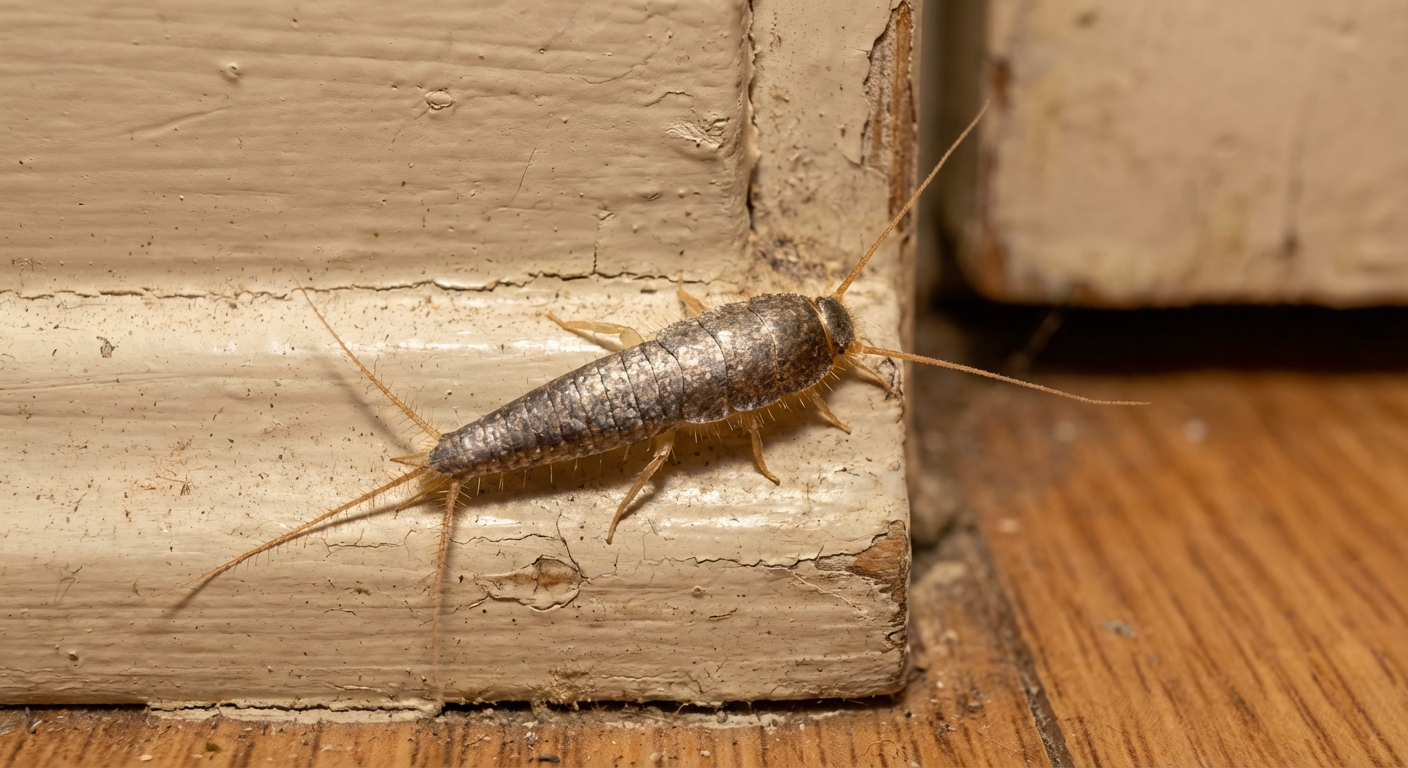
Silverfish and their close cousin, the firebrat, are both small, wingless insects that scuttle fast and hide even faster. They are active at night, love moisture, and snack on starchy stuff like paper, glue, and certain fabrics.
Quick ID checklist
- Shape: Teardrop or carrot-shaped body that narrows toward the tail.
- Tail: Three long tail filaments (two side bristles plus one in the middle).
- Movement: Fast, fish-like wiggle when it runs.
- Color: Silverfish tend to look silvery gray and shiny; firebrats are more mottled brown or gray.
Silverfish vs. firebrats
- Silverfish: Silvery gray, carrot-shaped body, usually found in cooler, damp areas like bathrooms, basements, laundry rooms, and under sinks.
- Firebrats: Mottled brown or gray, more often found in warmer, humid areas like near water heaters, furnace rooms, boiler rooms, and sometimes warm attics or around fireplaces.
If you see them near a steamy bathroom or a damp basement wall, odds are strong you are dealing with silverfish. If they keep showing up in warm utility spaces, firebrats are more likely.
Common lookalikes
- Earwigs: Have pincers on the back end (not three tail filaments).
- Roach nymphs: More oval-bodied, not fish-shaped, and do not have three long tail filaments.
- Carpet beetle larvae: Fuzzy or bristly larvae that crawl slowly and do not have the silver “scale” look.
If you are not sure, sticky traps (below) are the easiest way to confirm what you are catching.
Where they hide (and why)
When I renovated our 1970s ranch, I learned the hard way that pests do not show up “randomly.” Silverfish are a clue. Usually it is moisture, clutter, or an easy food source.
Common hiding spots
- Under sinks and behind toilets
- Inside vanity cabinets, especially along back corners
- Basement rim joists and sill plates where condensation forms
- Cardboard boxes and paper stacks in storage areas
- Behind baseboards, door trim, and loose flooring
- Attics where bathroom fan ducts leak moist air
- Near sump pumps, floor drains, and laundry hookups
What they eat
- Paper, books, magazines, and wallpaper paste
- Cardboard and the glue used in packaging
- Dry foods like flour, oats, and pet food (especially dusty crumbs)
- Lint, hair, and dead insects
- Natural fabrics like cotton, linen, and sometimes stored clothing
Moisture is the big one. If you remove the dampness, you are already halfway to winning.
One more thing: Silverfish can wander in from outdoors, but long-term problems usually come from indoor conditions that stay damp and provide shelter and food. That is why “dry and seal” works so well.
Quick check: How bad is it?
Before you start dusting powders everywhere, spend 10 minutes figuring out whether you have a stray visitor or a real population.
Signs of an active problem
- Seeing them more than once a week, especially in the same room
- Small dark specks (droppings can look pepper-like) or faint yellowish staining near baseboards or in cabinets (easy to confuse with other pests, so confirm with traps)
- Tiny holes or notches in paper, book pages, wallpaper, or stored pantry items
- Shed skins in corners, under rugs, or behind stored items
If you are seeing multiple in daylight, it can indicate a bigger issue (crowded harborage or disturbance like cleaning, temperature shifts, or moving stored items). Either way, it is a good cue to act.
DIY removal plan
Here is my favorite approach because it is organized, affordable, and it does not rely on one magic product. We are going to hit them from five angles: trap, dry, dust, clean, and seal.
Step 1: Set sticky traps
Sticky traps are not just for catching silverfish. They are your detective tool. Place them where silverfish travel: along baseboards, behind toilets, under sinks, near floor drains, and beside stored boxes.
- Place 4 to 10 traps in the problem area.
- Check them after 3 to 7 nights.
- Move traps toward the spots catching the most bugs.
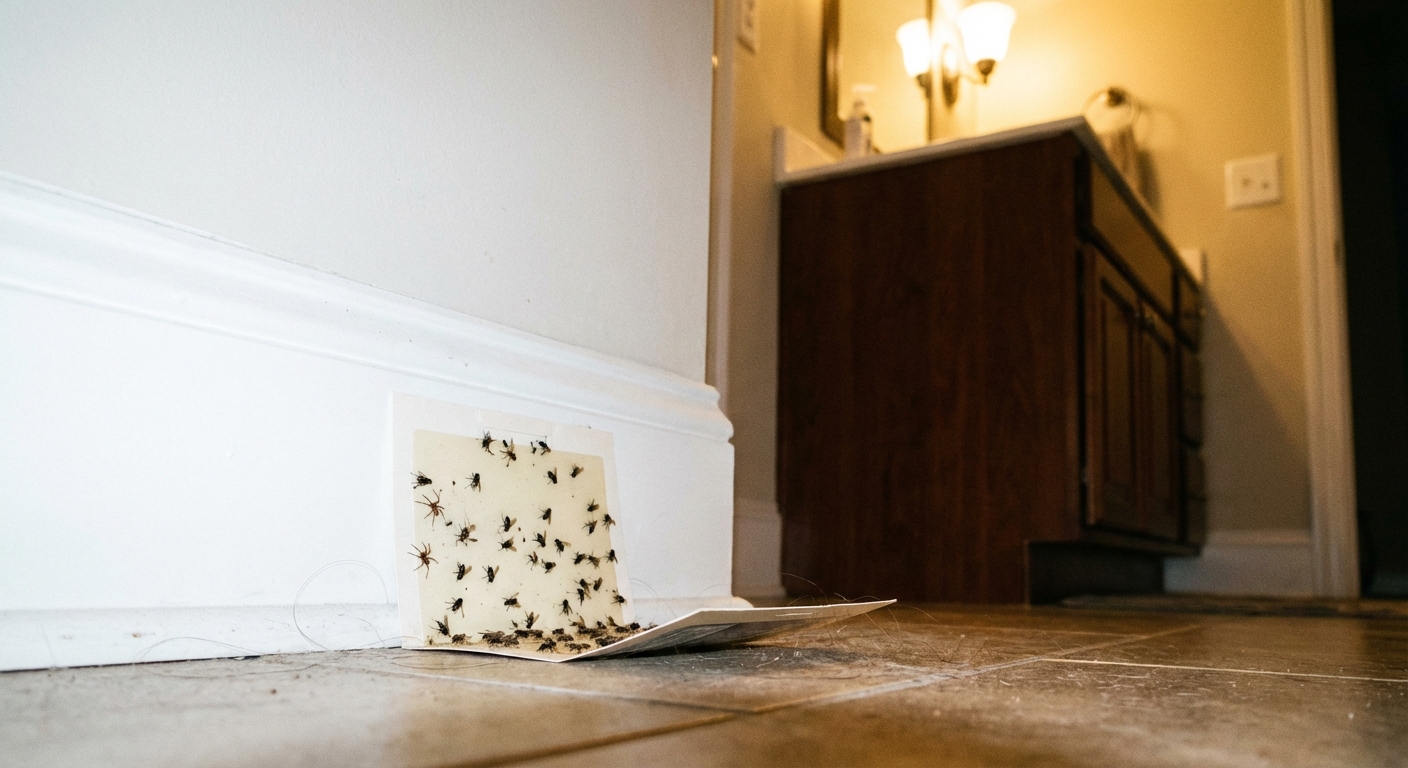
Tip: Write the date and room on each trap with a marker so you can track whether your efforts are working week to week.
Step 2: Lower humidity
Silverfish thrive when indoor humidity stays high. A good target for most homes is below 50 percent relative humidity. Many people land in the 40 to 50 percent range for comfort, and going lower can help in stubborn hotspots if it still feels comfortable for your household.
- Run a dehumidifier in basements and damp rooms.
- Fix plumbing drips and sweating pipes, even small ones.
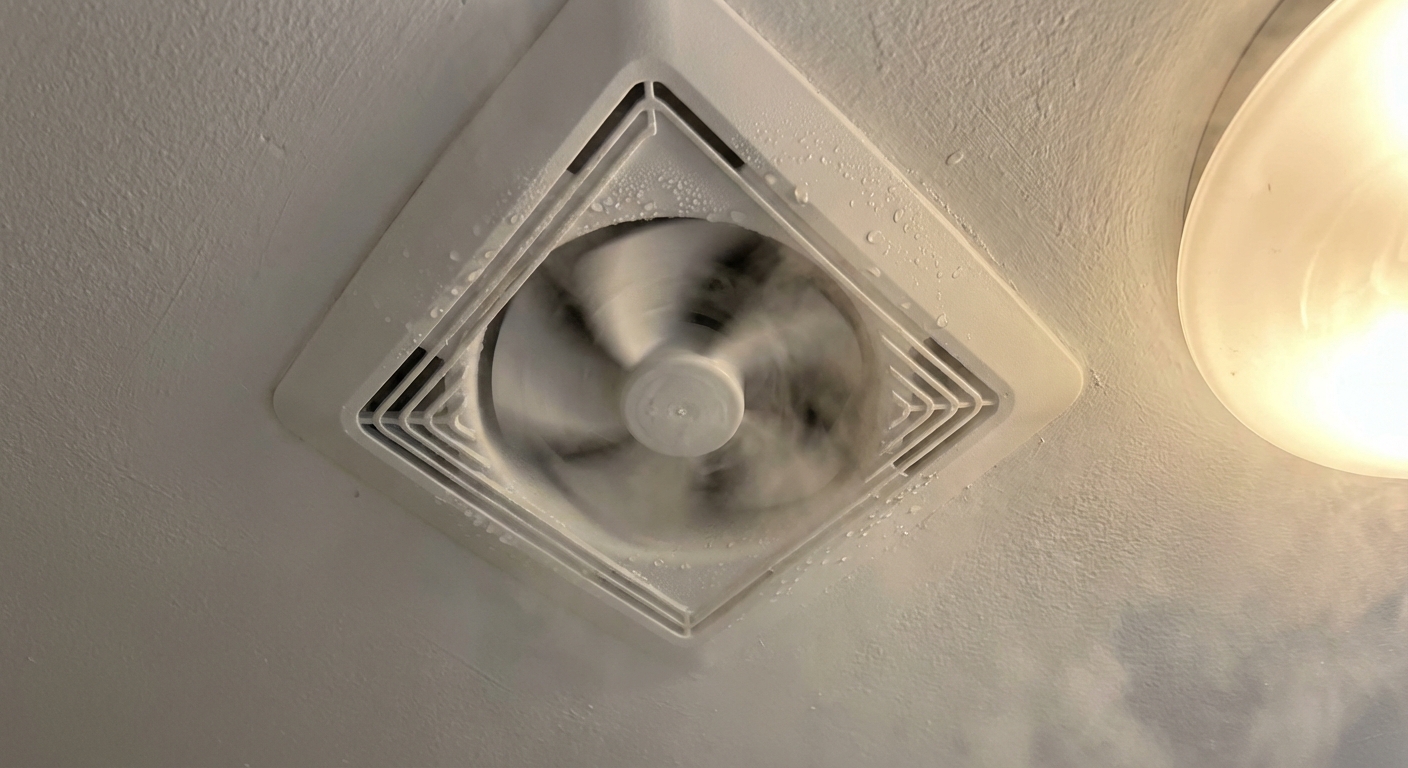
- Use bath fans during showers and run them 20 minutes after.
- Increase airflow in cramped cabinets by not packing them wall-to-wall.
If you want a simple metric: once the area feels dry enough that towels and bath mats actually dry out fast, silverfish pressure usually drops.
Step 3: Apply diatomaceous earth (DE)
Diatomaceous earth (DE) is a fine powder made from fossilized algae. It works by abrading and drying the insect’s waxy outer coating, which leads to dehydration. It is a solid DIY option when applied correctly.
- Choose food-grade DE, not pool filter DE.
- Apply a thin dusting in cracks, gaps, and voids, not piles.
- Focus on baseboards, under sinks, behind appliances, and along basement edges.
- Keep it dry. If it gets wet, it stops working until replaced.
Safety note: Avoid breathing any fine dust. Wear a mask during application, keep it out of high-traffic areas where it can get kicked up, and keep kids and pets away from treated spots until the dust settles.
Step 4: Use boric acid carefully
Boric acid can be very effective, but it needs more caution than DE. It is toxic if ingested, so I treat it like a “use it where fingers and paws cannot reach” product. Always follow the product label and local rules for use.
- Apply a light dusting inside wall voids, behind toe-kicks, and deep cracks.
- Avoid open shelves, countertops, and anywhere food is prepped.
- Avoid any place pets or small children can access.
If you are not comfortable using boric acid, stick with DE plus humidity control and sealing. That combo solves the majority of cases.
Step 5: Clean up their food supply
This is the unglamorous part, but it pays off. Silverfish love crumbs, paper dust, lint, and forgotten storage.
- Vacuum baseboards and corners using a crevice tool.
- Clean under the bathroom vanity and around toilet bases.
- Store pantry items in sealed containers.
- Replace cardboard storage with plastic bins with lids.
- Declutter paper stacks, magazines, and old boxes in basements and attics.
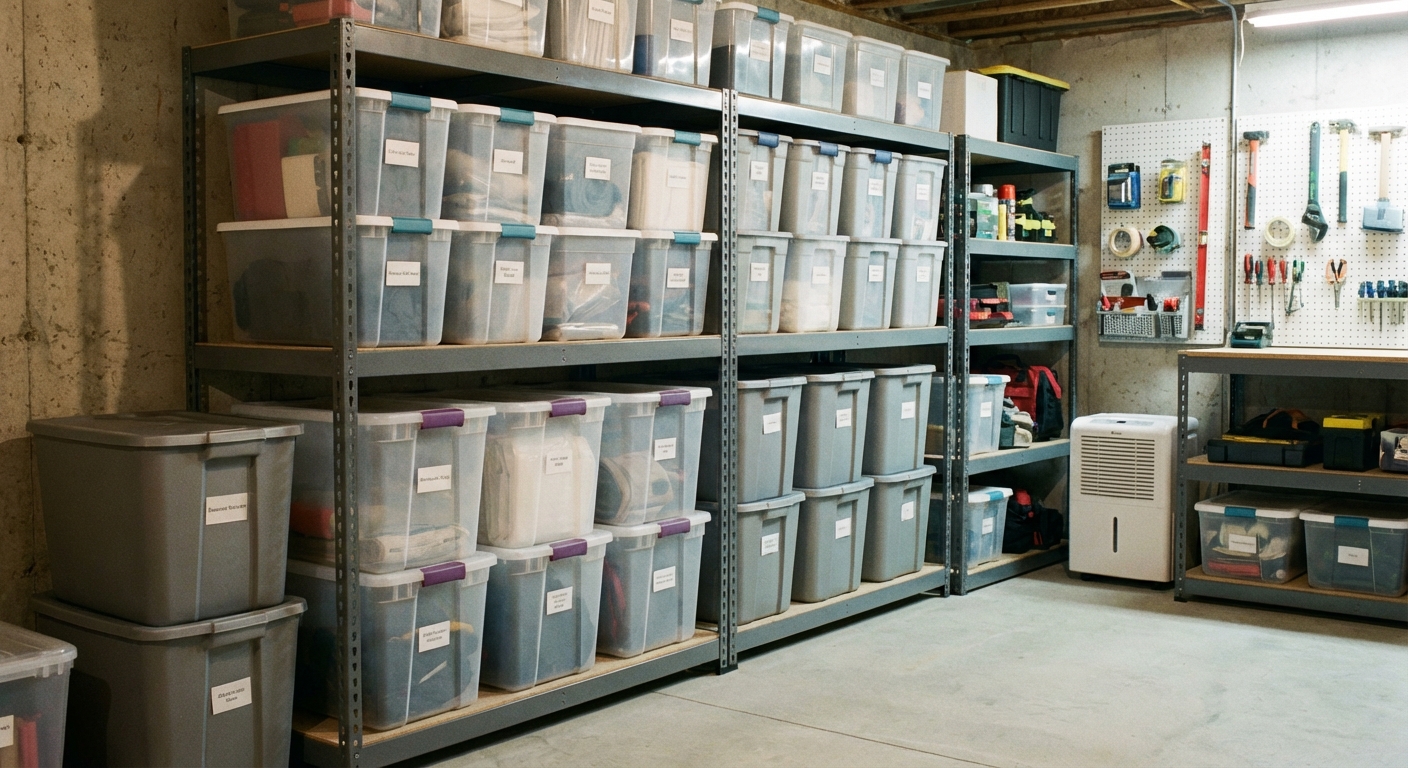
Protect valuables: Store books, photos, and textiles in a dry interior closet when possible. If you must store them in a basement, use sealed bins and consider silica gel packs to keep the bin environment dry.
Step 6: Seal gaps and cracks
Silverfish are excellent at squeezing into tiny gaps. Sealing does two things: it reduces entry and removes protected travel lanes and hiding cracks.
- Caulk gaps along baseboards, around trim, and at tub or shower edges.
- Seal plumbing penetrations under sinks with caulk or expanding foam (use foam sparingly, it expands a lot).
- Add door sweeps to exterior doors and weatherstrip where light leaks in.
- Repair screens and clear window weep holes so moisture does not build up.
I like to do this step after traps show me the busiest corners. It keeps you from caulking your entire house on day one.
After you gain control
- Vacuum up visible dust lines if they are in accessible areas.
- Reapply only in cracks and voids where it will stay put.
- Keep a couple of traps out for a month as an early warning system.
Room-by-room prevention
Silverfish prevention is mostly about keeping specific rooms dry and boring. Here is how I handle the usual problem areas.
Bathrooms
- Run the fan during showers and 20 minutes after.
- Fix a running toilet or slow leak at the shutoff valve.
- Hang towels so they fully dry, do not wad them on the floor.
- Re-caulk tub and shower edges to prevent moisture getting behind walls.
- Keep toiletries in bins so you can wipe the cabinet floor quickly.
Basements
- Run a dehumidifier and drain it automatically if possible.
- Insulate cold water pipes that sweat.
- Keep storage off the floor using shelving.
- Replace cardboard boxes with sealed bins.
- Check downspouts and grading outside so water is not pushing in.
Attics
- Make sure bathroom fans vent outside, not into the attic.
- Fix roof leaks promptly and replace any wet insulation.
- Store seasonal items in sealed bins, not open boxes.
- Seal attic hatch gaps and add weatherstripping if warm moist air leaks up.
What not to do
I have made at least one of these mistakes myself, usually while trying to solve the problem fast.
- Do not over-apply powders. Thick piles of DE or boric acid get kicked around, make a mess, and can be easier for pests to avoid.
- Do not ignore humidity. You can trap and dust all day, but if the room stays damp, the population tends to rebound.
- Do not store paper long-term in damp rooms. Books and boxes in basements are basically silverfish groceries.
- Do not spray random chemicals into outlets or wall cavities. If you use an insecticide product, follow the label exactly and keep it away from kids, pets, and food areas.
How long does it take?
With traps plus humidity control, you usually see improvement within 1 to 2 weeks. Full control can take 3 to 6 weeks, especially if you are also sealing cracks and cleaning out storage areas.
A practical goal is this: you want trap counts to drop week after week. If they do, your plan is working.
When to call a pro
If you have tried the steps above and you are still seeing frequent silverfish after a month, it is time to consider professional help. Also call a pro if:
- You suspect a hidden moisture issue like a slow leak inside a wall.
- You see silverfish in multiple rooms across different floors.
- You have a chronic damp basement where DIY dehumidification is not enough.
Even if you bring in a pest company, you will still save money long-term by fixing moisture and sealing entry points. Otherwise you are paying to treat symptoms, not the cause.
My simple checklist
- Confirm silverfish vs. firebrats (and rule out lookalikes)
- Set sticky traps and identify the hotspots
- Keep humidity below 50 percent (often 40 to 50 percent is a comfortable target)
- Dust cracks with food-grade DE (and boric acid only where safe and labeled)
- Vacuum corners, reduce paper clutter, and switch to sealed bins
- Caulk and seal gaps around baseboards and plumbing penetrations
If you do those six things, most silverfish problems go from “I see them every week” to “I forgot we had them” pretty quickly.

About Marcus Vance
Content Creator @ Grit & Home
Marcus Vance is a lifelong DIY enthusiast and self-taught home renovator who has spent the last decade transforming a dilapidated 1970s ranch into his family's dream home. He specializes in budget-friendly carpentry, room-by-room renovations, and demystifying power tools for beginners. Through his writing, Marcus shares practical tutorials and hard-learned lessons to help homeowners tackle their own projects with confidence.