
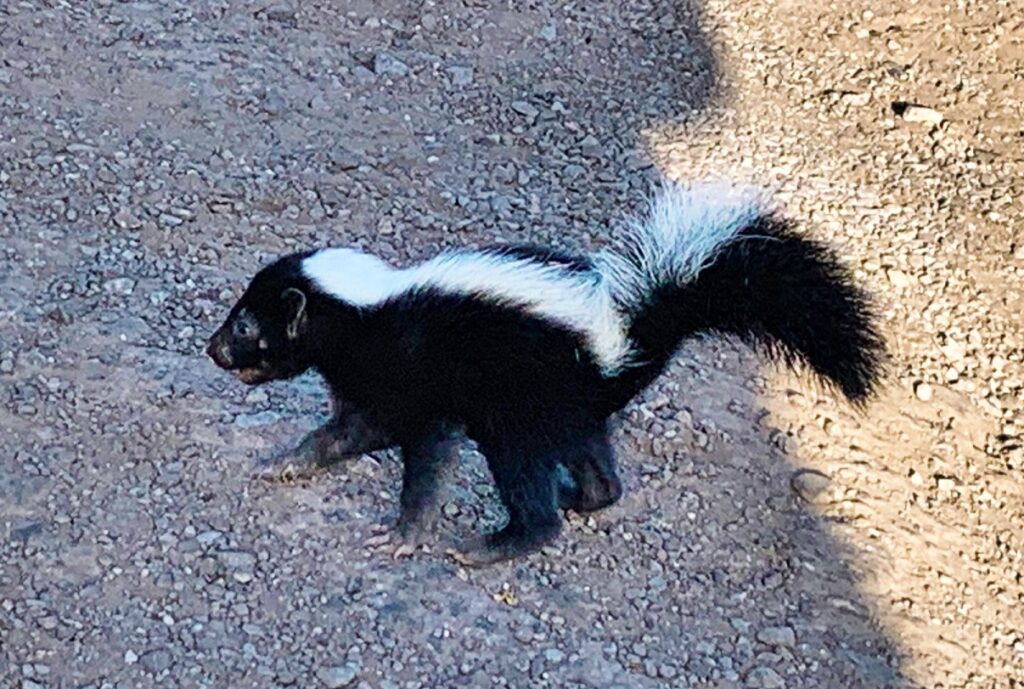
First, how to not get sprayed
Skunks are not looking for a fight. They spray when they feel cornered or surprised. Your goal is to make every interaction slow, predictable, and boring.
- Give them an exit. Do not block the path between a skunk and its cover (bushes, deck, shed).
- Move like you are carrying a full cup of coffee. Slow steps, no sudden lunges, no yelling.
- Use light and distance. From inside, flip on porch lights and give it time to wander off.
- Watch the warning signs. Stomping, tail raising, and turning their rear toward you means “back up now.”
- Keep pets inside. Many sprays happen when a dog rushes in at full speed.
I learned this the hard way: the one time I tried to “shoo” a skunk fast, I almost earned myself a week of regret. Slow and calm almost always wins.
Know the rules
Before you trap, relocate, or try anything aggressive, check your local rules. Wildlife laws vary, and relocation is illegal in some places. It can also be inhumane, since relocated skunks may not survive or may simply become someone else’s problem.
Why skunks show up
In most yards, skunks are there for a few simple reasons: easy food, easy shelter, and easy water. If you remove those, skunks often move along on their own. Bonus: they do eat a lot of insects and grubs, so a passing skunk is not always a disaster.
- Food: grubs and insects in the lawn, fallen fruit, open compost, pet food, trash cans, bird seed, chicken feed.
- Shelter: under decks, sheds, porches, slabs, woodpiles, or thick shrubs.
- Water: pet bowls outdoors, leaky spigots, shallow ponds.
Step 1: Remove attractants
If you do nothing else, do this. Deterrents are a lot more effective when the “free buffet” is gone.
Lock down food sources
- Trash: Use tight-lid cans. If wildlife can open it, upgrade it. Bungee cords are a cheap fix.
- Pet food: Feed pets indoors. If you must feed outside, pick bowls up immediately after meals.
- Bird feeders: Use a seed catcher tray or pause feeding for 1 to 2 weeks if skunks are persistent.
- Fallen fruit: Clean up daily during fruit season. Skunks love the easy calories.
- Compost: Keep it sealed and avoid adding meat, grease, or oily foods.
Reduce lawn grubs (without going overboard)
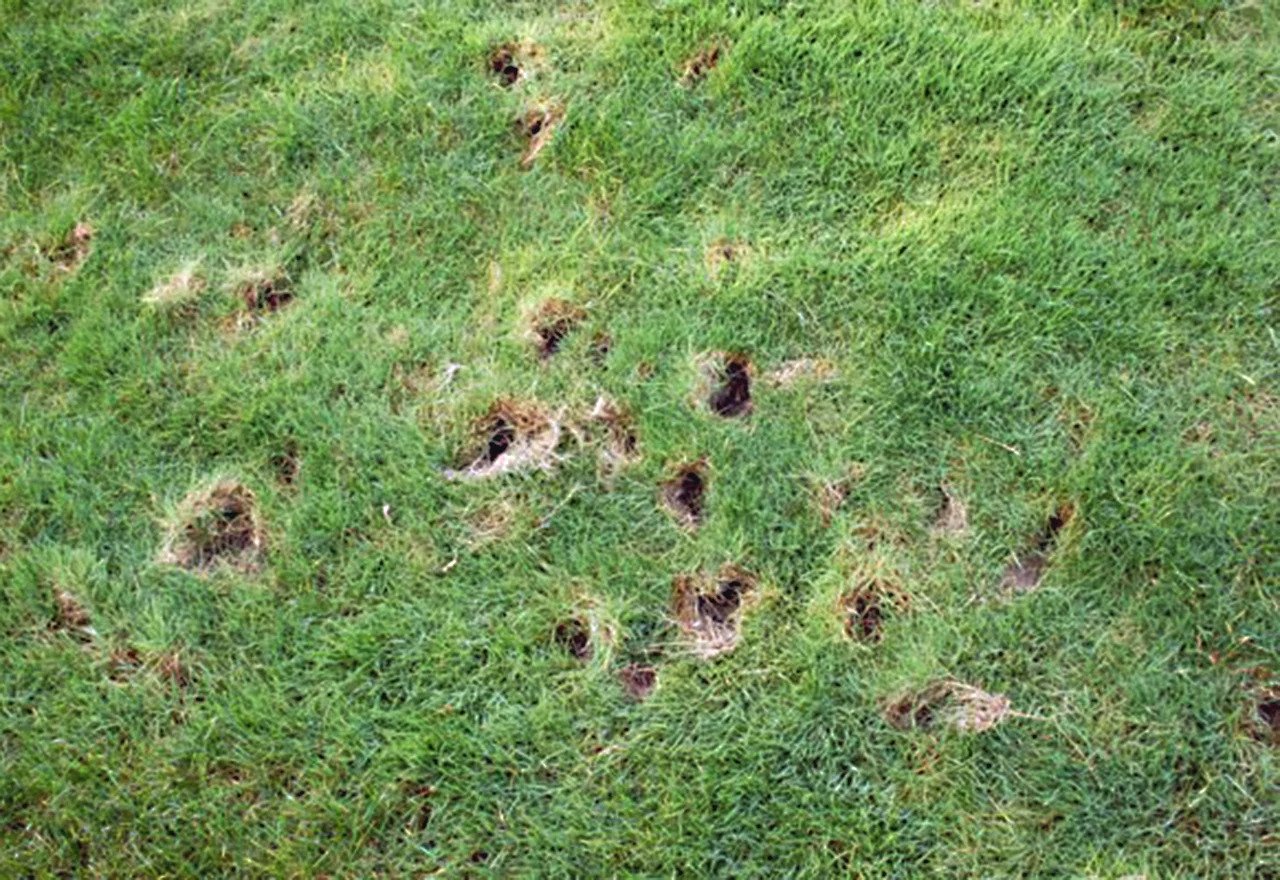
If your yard looks like someone poked it with a screwdriver, skunks may be hunting grubs. That said, similar damage can also come from raccoons, birds, or (regionally) armadillos. Consider confirming grub activity before treating. A quick check is to peel back a small patch of turf and look for C-shaped larvae.
- Water smarter: Overwatering can increase grub-friendly conditions.
- Target the cause: If you treat, follow local extension office guidance for timing and product selection.
Remove easy water
- Bring water bowls in overnight.
- Fix leaky hose bibs and dripping irrigation heads.
Step 2: Check for a den
A skunk passing through is one problem. A skunk living under your deck is another. Before you seal anything up, confirm whether it is actively denning.
Common den locations
- Under decks and porches
- Under sheds and steps
- Under concrete slabs with gaps at the edge
- In woodpiles or thick brush
Signs a skunk is using the spot
- A shallow opening (often D-shaped) with loose soil at the entrance
- Strong musky odor near the structure
- Tracks in dust or soft soil (five toes, often with visible claw marks)
- Consistent sightings at dusk or dawn
Important: In spring and early summer, dens can contain babies. If you suspect that, skip DIY eviction and call a licensed wildlife professional. Separating a mother from kits is when people get sprayed and animals suffer.
Step 3: Humane deterrents
Here is the order that tends to work best: confirm whether there is a den, encourage the skunk to leave, then lock the place down so it cannot come back.
Deterrents work best as a “make this place annoying” strategy. Combine two or three for a week or two while you also remove food and shelter.
Light and motion
- Motion-activated lights aimed at common travel paths can push skunks to quieter yards.
- Motion-activated sprinklers are one of the most effective humane tools for nighttime visitors.
Make the den area uncomfortable
If you are confident there are no babies and the skunk can leave freely:
- Place a bright work light near the suspected den entrance (not inside it).
- Add a radio at low volume during daylight hours.
Smell-based repellents
Commercial repellents can help, but they are not magic. Reapply after rain and follow label directions. Avoid mixing homemade chemicals in ways that could harm pets, plants, or you.
If you want a low-risk homeowner approach, focus on physical exclusion and motion deterrents first, then use repellents as backup.
Step 4: Exclude them for good
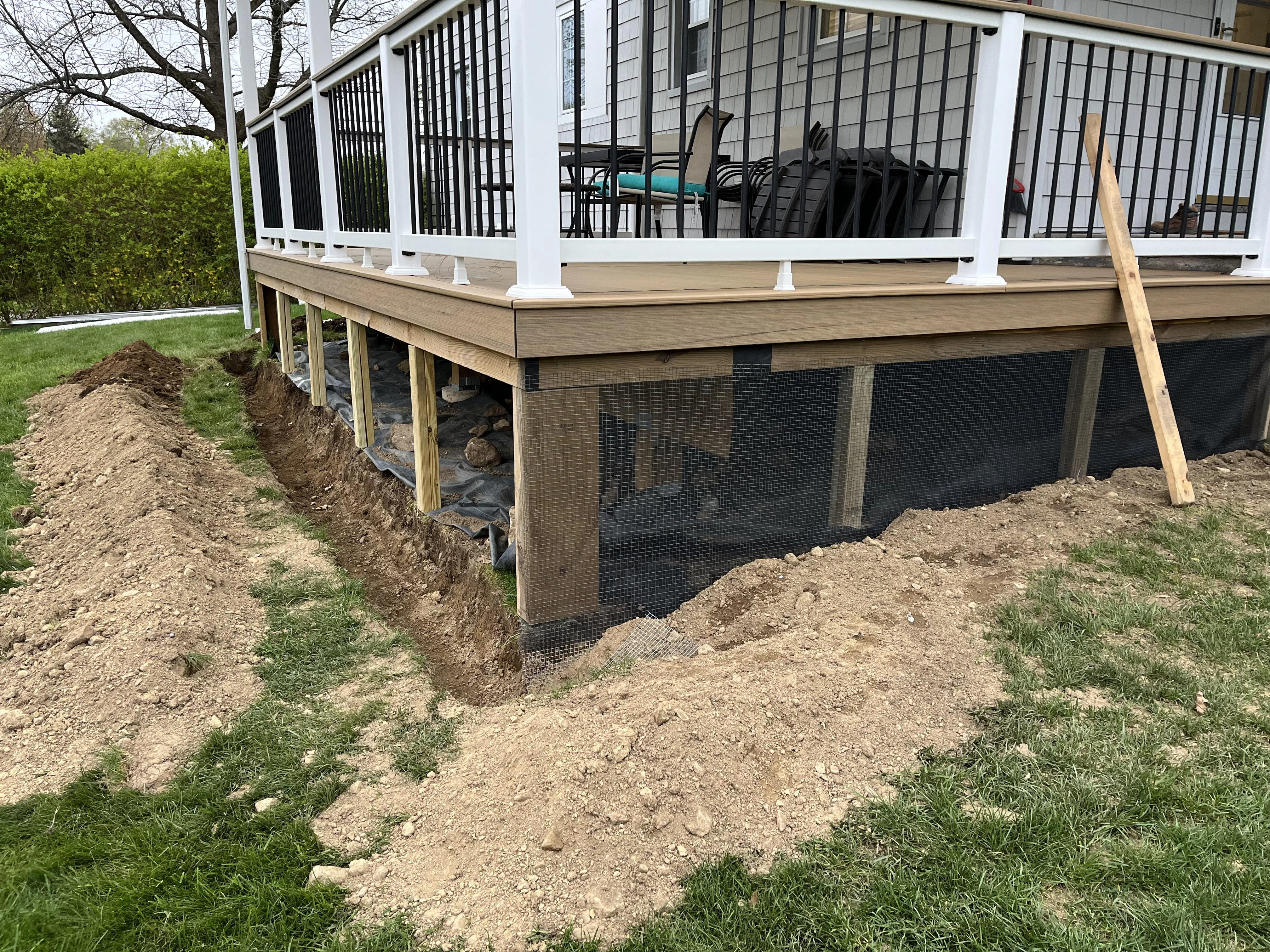
Once the skunk is out, exclusion is the long-term win. Skunks are excellent diggers, so the barrier needs to go down into the soil, not just across the opening.
Best materials
- Hardware cloth: 1/2-inch galvanized is a common choice. In some situations, 1/4-inch may be even better. Avoid chicken wire, since it bends and fails too easily.
- Fasteners: landscape staples, or exterior screws with washers (depending on your structure). Aim for snug attachment and frequent fasteners so there are no gaps.
Basic exclusion method
- Confirm the skunk is out. Look for fresh tracks and activity at dusk for 2 to 3 nights.
- Use a one-way door if needed. If the animal is still exiting nightly and you need to prevent re-entry, a one-way door can help. Wildlife pros often do this best.
- Dig a trench about 8 to 12 inches deep along the opening.
- Create an L-shaped barrier: run the hardware cloth down, then bend it outward 8 to 12 inches underground to stop digging at the edge.
- Backfill and secure the top edge to your deck framing or shed base.
Do not seal a hole if an animal might be inside. That is how you end up with damage, odor, and a bigger problem.
Keep pets safe
Skunks and dogs are a classic bad matchup. Most sprays are defensive and happen at close range, often right on a dog’s face.
- Supervise night potty breaks. Leash your dog after dark until the issue is resolved.
- Remove outdoor food. That includes spilled birdseed and any chicken feed.
- Block access to den zones. Temporary fencing is fine while you work on permanent exclusion.
- Vaccinations: Talk to your vet about rabies vaccination schedules and local risk. Skunks can carry rabies in some regions.
What not to do
- Do not corner or chase a skunk. That is how you get sprayed.
- Do not seal entry points until you are sure the animal is out.
- Do not try to smoke them out or flush dens with chemicals. It is dangerous and can be illegal.
- Avoid online “cures” like mothballs or ammonia. They can be harmful to pets, people, and wildlife, and they are not a reliable fix.
- Avoid poisons and inhumane traps. They are often illegal or restricted, and they can cause suffering and secondary poisoning of pets and wildlife.
When to call a pro
I am all for tackling projects yourself, but skunks are one of those times where the safest and most humane choice can be professional help.
Call a licensed pro if:
- You suspect a den with babies
- The skunk is inside a window well, crawlspace, or garage
- Someone in the home is immunocompromised (risk from parasites and disease exposure)
- The skunk is acting oddly (staggering, unusually aggressive, or out in full daylight)
- You have repeated spray incidents and cannot locate the entry point
If an animal is behaving strangely, do not approach. Keep people and pets away and contact animal control or your local public health guidance line. Rabies is a concern in some areas, and other illnesses like canine distemper can also cause abnormal behavior in wildlife.
If you get sprayed
Skunk spray is an oily organosulfur compound. The goal is to break it down, not just cover it up. Here is the homeowner-level approach that is commonly recommended.
Tomato juice?
It is a classic myth. Tomato juice mostly makes you smell like skunk and tomatoes. Use a real odor-breaking solution instead.
For people and dog fur
- Act fast. The longer it sits, the more it bonds.
- Start on dry fur. Wetting the coat first can help the oils spread and cling. Apply the solution to dry fur, work it in, then rinse.
- Use a proven de-skunk solution. Many people use a mix based on hydrogen peroxide, baking soda, and a small amount of dish soap, or they buy a commercial skunk shampoo formulated for pets.
- Protect eyes and sensitive areas. Keep it out of eyes, nose, and mouth. If spray got in eyes, contact a vet or urgent care for guidance.
- Cat caution: Do not use peroxide-based mixes on cats without veterinary guidance.
- Do not store mixed peroxide solutions. Make it fresh and dispose of leftovers safely. Do not cap it in a bottle, since pressure can build.
For fabrics and outdoor surfaces
- Wash removable fabrics promptly with detergent and an odor-fighting booster if safe for the material.
- Peroxide can discolor some dyed fabrics. Spot test first, or use a commercial skunk odor remover designed for fabrics.
- For hard outdoor surfaces, use warm soapy water first, then an odor neutralizer designed for skunk spray if needed.
If odor persists indoors or in HVAC intakes, that is another good moment to call a pro. Skunk smell can settle into porous materials and return on humid days.
Quick plan for tonight
- Bring pet food and water inside, secure trash lids.
- Turn on porch lights and keep pets leashed after dark.
- Walk the perimeter with a flashlight and look for under-deck or shed openings.
- Set up a motion light or motion sprinkler near the travel path.
- Over the next few days, clean up fallen fruit, spilled seed, and cluttered hiding spots.
- Once you are sure the skunk is out, exclude with an L-shaped hardware cloth barrier.
Do those steps in order, and in most yards the skunk problem fades without drama. Quiet yard, secured food, no cozy den. That is the whole game.

About Marcus Vance
Content Creator @ Grit & Home
Marcus Vance is a lifelong DIY enthusiast and self-taught home renovator who has spent the last decade transforming a dilapidated 1970s ranch into his family's dream home. He specializes in budget-friendly carpentry, room-by-room renovations, and demystifying power tools for beginners. Through his writing, Marcus shares practical tutorials and hard-learned lessons to help homeowners tackle their own projects with confidence.