
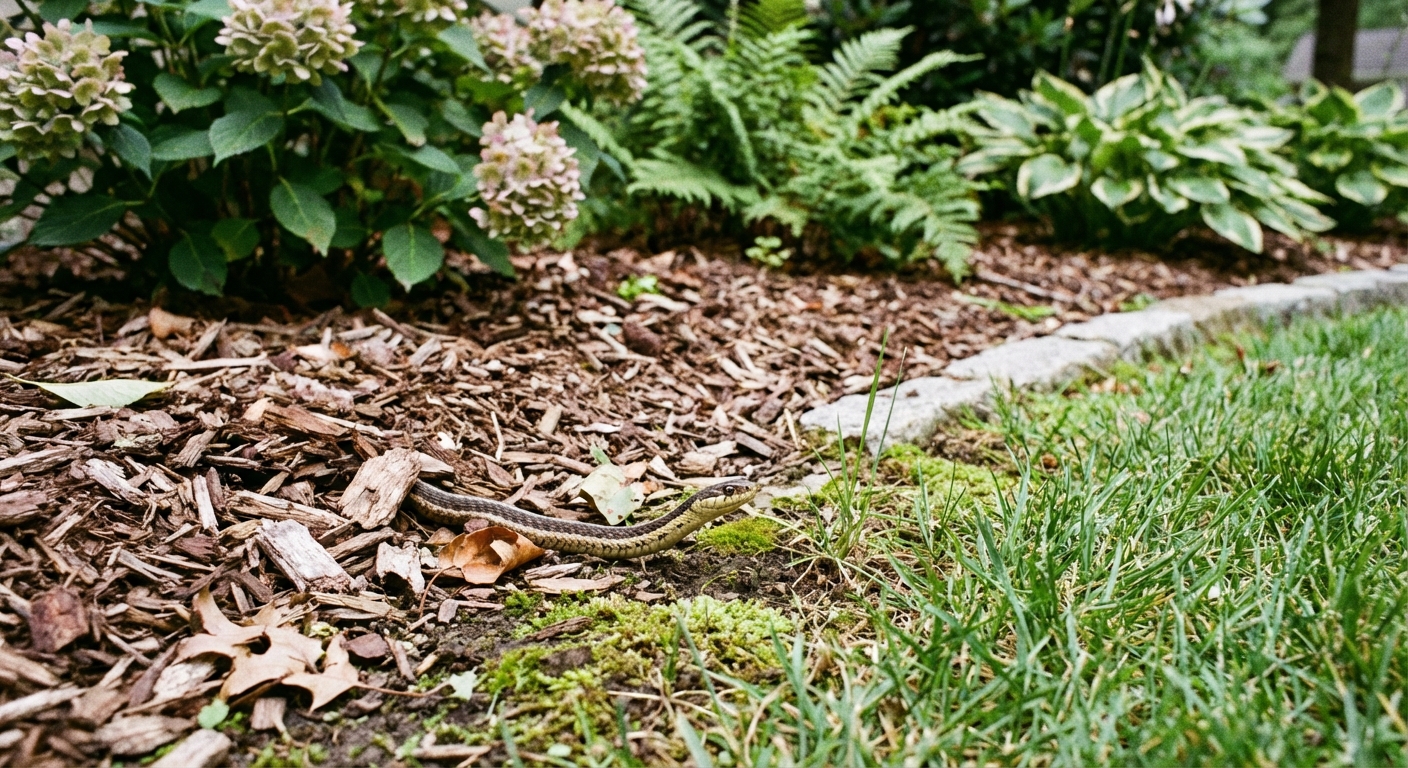
Seeing a snake in the yard can turn a normal Saturday into a full-body adrenaline event. I get it. The goal is not to start a backyard war with nature. It is to make your yard a place snakes do not want to hang out in, and to handle the urgent stuff safely when one shows up.
Quick reality check: snake species and laws vary a lot by region. Some areas have no venomous snakes at all. Others have several. Regulations on handling, harming, or relocating wildlife can also vary by state, province, or species. When in doubt, keep your distance and check local guidance.
This page walks you through (1) quick safety steps, (2) basic ID from a safe distance, (3) removing what attracts snakes, (4) using repellents realistically, (5) excluding snakes with fencing and sealing, and (6) when it is time to call wildlife removal.
First: quick safety rules
If you take nothing else from this article, take this: a big chunk of bites happen when people try to catch, kill, or “move” a snake themselves. The safest plan is distance, patience, and prevention.
- Keep your distance. Back up and give the snake an exit route.
- Bring kids and pets inside. Leash dogs before you step out again.
- Do not reach into tall grass, brush piles, or under steps. Use a long-handled tool if you must move something.
- If you cannot identify it from a safe distance, treat it as venomous.
- If bitten (human): call emergency services immediately. Keep the person still, remove rings and watches, and do not cut, suck, ice, or use a tourniquet.
- If a pet is bitten: keep them calm, carry them if possible, and call an emergency vet right away. Do not try home remedies.
Snakes are protected in some areas and for certain species, and rules can be strict about killing or relocating them. Even where it is legal, attempting to kill a snake is where many people get hurt. Making your yard less attractive is the safer long-term win.
Identify the snake (from a safe distance)
You do not need to become a herpetologist overnight, but a little ID goes a long way. Non-venomous snakes often help by eating rodents and slugs. Venomous snakes require a higher level of caution and usually a phone call.
Important: quick “one-feature” ID tricks are unreliable. For example, head shape alone is not a safe test. Many harmless snakes flatten their heads when scared, and lighting or posture can fool you.
Common non-venomous yard snakes
- Garter snakes: slender, often with stripes. Common near gardens, mulch, and water. Generally shy.
- Rat snakes: longer, good climbers, often found near sheds or barns. Great mousers.
- Kingsnakes: patterned bands or speckles depending on region. They can eat other snakes.
Common venomous snakes (region-dependent)
- Rattlesnakes: heavier-bodied in many species, often found near rocks, dry brush, and edge habitat. The rattle can be a clue, but do not count on hearing it.
- Copperheads: coppery color with hourglass-like bands. Very good camouflage in leaves.
- Cottonmouths (water moccasins): heavier-bodied, often near water in some regions. Frequently confused with non-venomous water snakes.
- Coral snakes: distinctive banding in a limited range. Many “coral-looking” snakes are harmless mimics. Do not rely on rhyme-based rules, as patterns vary by location.
Rule of thumb: If you cannot confidently ID it from several feet away, do not approach. Take a zoomed photo from a safe distance and contact your local wildlife agency or a licensed wildlife removal pro.
Why snakes are in your yard
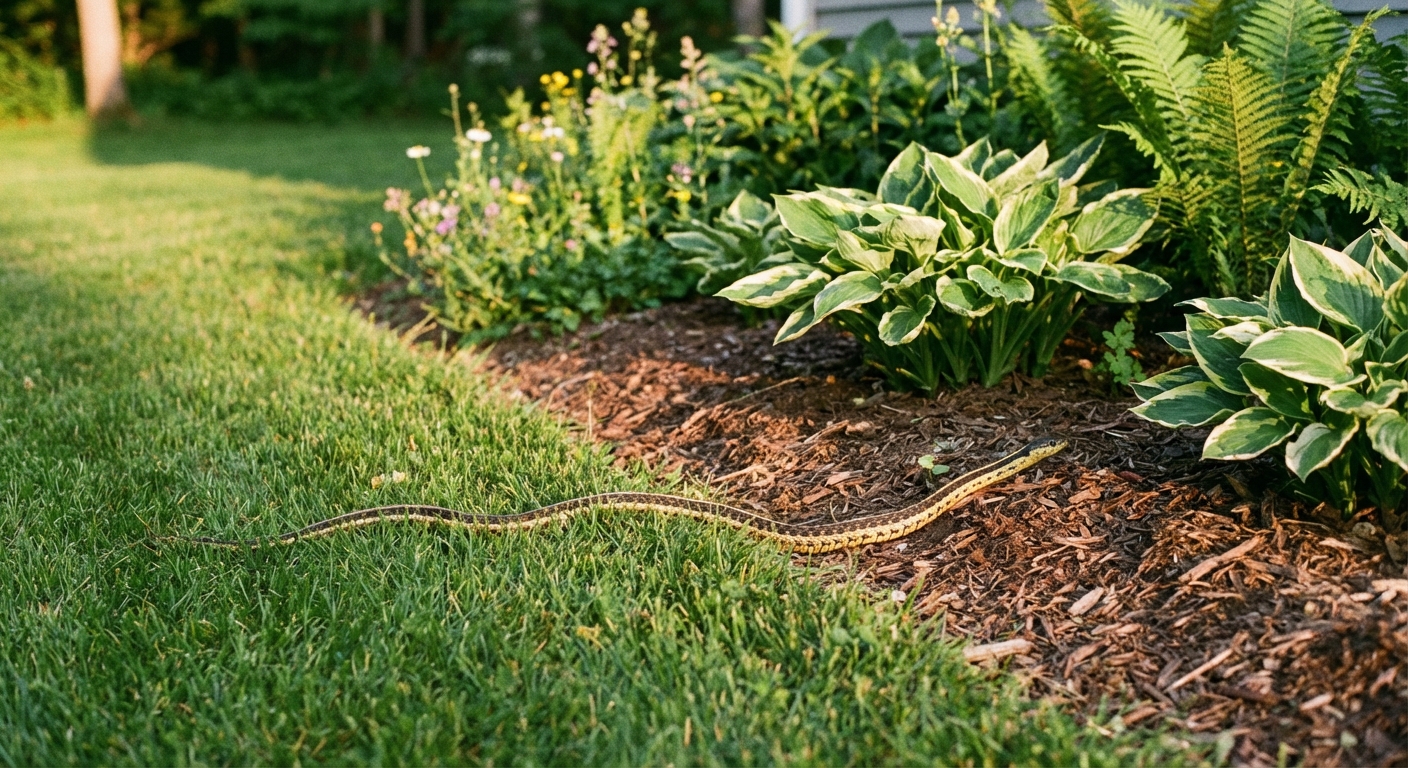
Snakes show up for the same reasons you would: food, shelter, water, and a comfortable temperature. If you remove a couple of those, visits often drop fast, but season and local habitat matter.
- Food: mice, rats, voles, chipmunks, frogs, lizards, insects.
- Shelter: brush piles, lumber stacks, tall grass, rock borders, dense groundcover, junk under decks.
- Water: birdbaths, leaky spigots, low wet areas, ponds.
- Warmth: sunny rock walls, concrete slabs, patio edges.
Season matters
- Spring: snakes become more active as temperatures rise and food moves around.
- Summer heat: they may seek shade, water, and cool cover near foundations, dense shrubs, and irrigation.
- Fall: some species look for denning spots and can show up around rock piles, retaining walls, and outbuildings.
Step 1: remove the food source
If you have regular snake sightings, assume you also have something they like to eat. You will not win the snake battle while feeding the rodent population.
Reduce rodents fast
- Secure trash. Use lidded cans that actually latch.
- Stop feeding them. Clean up fallen bird seed, store pet food in sealed bins, and do not leave compost exposed to critters.
- Pick up fallen fruit and nuts. This is a sneaky one that spikes rodent traffic.
- Trim back “runways.” Rodents love moving under cover. Reduce dense groundcover near the house.
- Use traps thoughtfully. If you are comfortable and it is legal where you live, traps can reduce activity quickly. Keep them away from kids, pets, and non-target wildlife.
If rodents are heavy and ongoing, consider addressing that problem directly first. Fewer mice usually means fewer snakes.
Step 2: remove hiding spots
This is the part that feels like plain old yard work, because it is. But it is also the most reliable “repellent” you will ever use.
Clean-up checklist
- Mow and edge regularly. Keep grass short, especially along fences and sheds.
- Remove brush piles and leaf piles. If you keep one for composting, place it far from the house and keep it contained.
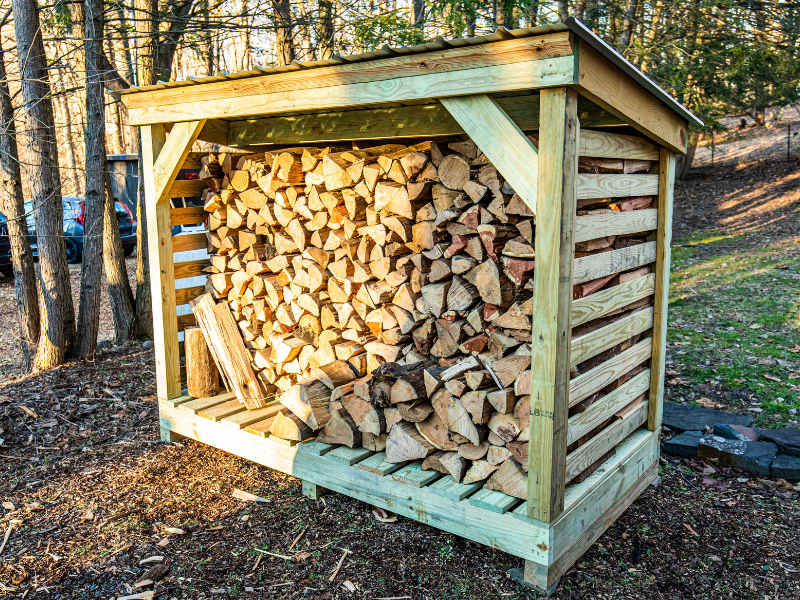
- Stack firewood correctly. Keep it off the ground (on a rack or pallets), neat, and ideally 20 to 30 feet from the house.
- Declutter around buildings. Old planters, scrap lumber, and stored items become “snake condos.”
- Thin dense shrubs. Especially around foundations and AC pads.
Step 3: yard upgrades that last
Once the obvious clutter is gone, a few upgrades can make your yard consistently less snake-friendly.
Create an open border
A simple perimeter strip helps because snakes prefer moving under cover.
- Keep an 18 to 36 inch border around the foundation that is low and open. Adjust based on your yard and local species pressure.
- Use gravel or rock instead of thick mulch right against the house.
- Avoid dense groundcover that creates a shaded tunnel.
Manage water
- Fix leaky hose bibs and irrigation heads.
- Dump standing water and improve drainage in low spots.
- Keep birdbaths clean and consider placing them away from heavy cover.
Use rocks carefully
Rock borders and stacked stone look great, but they create cool crevices. If you live in an area with venomous snakes, keep rock stacks away from play areas and entries, and avoid loose piles.
Snake repellents: what to expect
I am a thrifty DIY guy, so I understand the temptation to grab a bag of granules and call it done. The honest truth is that repellents are unreliable compared to habitat changes and exclusion.
Common options
- Sulfur and essential-oil granules: may irritate a snake’s senses, but results are inconsistent and they wash away with rain.
- Mothballs: not recommended. They are a pesticide and can be dangerous to kids, pets, and wildlife. In some places, using them outdoors is not legal.
- Ammonia rags: a short-term smell deterrent at best, and not a safe long-term yard strategy.
- Ultrasonic stakes: mixed reviews and no dependable real-world results.
My practical take: If you want to try a store-bought snake repellent, treat it like a temporary helper while you do the real work: mowing, cleanup, prey reduction, and exclusion. Always follow the label and keep products away from vegetable beds and pet areas unless the label specifically allows it.
Exclusion: fence and seal
If you have repeated sightings, live near woods or water, or have venomous snakes in your area, exclusion can be the most effective “set it and forget it” solution.
Snake fence basics
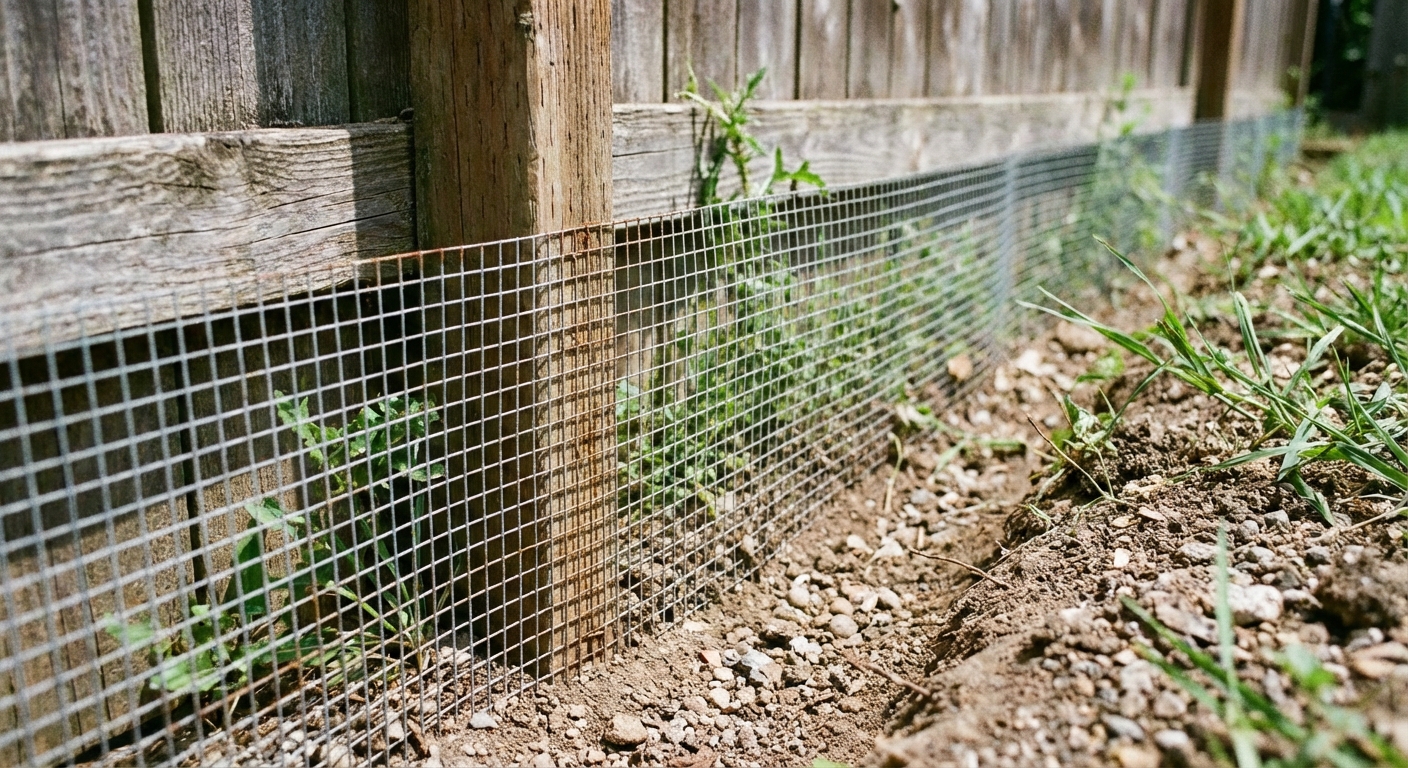
- Material: 1/4 inch hardware cloth (galvanized) or solid snake fencing designed for exclusion.
- Height: 30 to 36 inches above ground is typical. Some situations may need more depending on terrain and species.
- Buried apron: bury 6 to 12 inches, or bend an L-shaped apron outward to discourage digging under.
- Angle: an outward angle at the top (about 20 to 30 degrees) helps prevent climbing.
- No gaps: snug to the ground and tight at gates, corners, and posts.
It is not a small project, but it is very doable for a handy homeowner. If you have ever wrestled a roll of hardware cloth, you already know the secret tools: thick gloves, tin snips, and patience.
Seal entry points
Even if you only care about the yard, stopping snakes from getting under structures reduces scary surprise encounters.
Where to look
- Gaps under sheds and decks
- Crawlspace vents and damaged screens
- Garage door gaps and torn weatherstripping
- Gaps around pipes, conduits, and AC line sets
- Cracks in foundation and steps
Materials that work
- Hardware cloth for vent covers and under-deck screening
- Concrete patch or mortar for gaps in masonry
- Door sweeps and weatherstripping for garages and outbuildings
- Expandable foam only when paired with a pest-resistant barrier (foam alone is easy to chew through for rodents)
If you have rodents entering the structure, fix that too. A mouse problem indoors invites snakes to investigate.
If you see a snake right now
Here is the calm play-by-play I use.
Do this
- Back up and give it space. Most snakes want out as much as you want them out.
- Bring kids and pets inside. Keep dogs leashed when you go back out.
- Open a path out. From a distance, remove obstacles so it can leave.
- Use a hose from far away to gently encourage it toward an exit route. Do not blast it.
- Document it safely. A zoomed photo and a quick note of time and exact location helps a pro or wildlife officer ID it.
Do not do this
- Do not try to pin it with a shovel or “tap” it toward a bucket. That is how hands and ankles get tagged.
- Do not try to trap it in a bin or corner it with boards.
- Do not try to pick it up with gloved hands, tongs, or a stick unless you are trained and equipped.
- Do not crowd it for a better photo.
If it is venomous or unknown
- Keep everyone inside.
- Watch it from a safe distance so you can tell a pro where it is.
- Call a licensed wildlife removal service or your local animal control guidance line, depending on what is available in your area.
If you have close neighbors and a snake is in a shared edge area (fence line, sidewalk, trail), a quick heads-up can prevent someone from walking into the problem.
When to call a pro
There is no shame in handing this one off. In fact, it is often the smart move.
- You suspect or confirm a venomous snake.
- The snake is in a garage, basement, crawlspace, or wall.
- You have repeated sightings despite cleanup and mowing.
- You have small kids, pets, or neighbors who cannot reliably avoid risk areas.
- You find multiple snakes or a possible den.
Ask the company what they will actually do: capture (and relocate only when legal), identify entry points, and recommend exclusion. Many places limit how and where wildlife can be moved. A one-time removal without fixing habitat and access is usually a temporary reset, not a solution.
Maintenance plan
Most snake problems fade when your yard stops offering cover and food. Here is a routine that is realistic for busy homeowners.
Weekly (warm months)
- Mow and edge
- Pick up dog toys, kid toys, and yard clutter
- Quick check for new holes, rodent droppings, or chewed bags
Monthly
- Trim shrubs away from the house
- Rake out thick leaf build-up in shady corners
- Inspect under decks and around sheds for gaps
Seasonal
- Re-stack firewood neatly and keep it elevated
- Refresh gravel border and drainage where needed
- Walk the fence line and repair openings
FAQ
Will snakes leave on their own?
Often, yes. If you remove cover and food sources, many snakes move along within a day or two. If they are finding steady prey or a safe den spot, they may stick around.
Do snakes come back to the same yard?
They can, especially if your yard keeps offering the same hiding spots and prey. Habitat modification and exclusion are what prevent repeat visits.
Is it bad to have non-venomous snakes in my yard?
Not necessarily. Many are beneficial rodent control. The question is whether your household can safely coexist. If kids and pets use the yard heavily, you may prefer a more aggressive prevention plan.
What smells do snakes hate?
You will see a lot of claims online. In real life, strong smells might discourage a snake briefly, but they do not replace mowing, cleanup, and sealing gaps.
The bottom line
If you want fewer snakes, focus on the boring stuff that works: remove prey, remove cover, manage water, and block access. Repellents can be a short-term assist, but they are not the foundation. And if you even suspect a venomous snake, slow down, keep your distance, and call a pro. A safe yard is always worth more than a DIY victory lap.

About Marcus Vance
Content Creator @ Grit & Home
Marcus Vance is a lifelong DIY enthusiast and self-taught home renovator who has spent the last decade transforming a dilapidated 1970s ranch into his family's dream home. He specializes in budget-friendly carpentry, room-by-room renovations, and demystifying power tools for beginners. Through his writing, Marcus shares practical tutorials and hard-learned lessons to help homeowners tackle their own projects with confidence.