
First, take a breath
Termites are one of those pests that make your stomach drop. I get it. They can cause real structural damage, and the worst part is they are often working quietly where you do not look. The good news is this: most termite problems are manageable if you identify them early and choose the right treatment for the type of termites you have.
This guide will help you spot the classic warning signs, understand what you can realistically DIY, and know when it is time to bring in a licensed pro.
Signs of termites (and what they really mean)
Termites are not like ants that you see marching across your counter. Most of the time, you are looking for clues they leave behind.
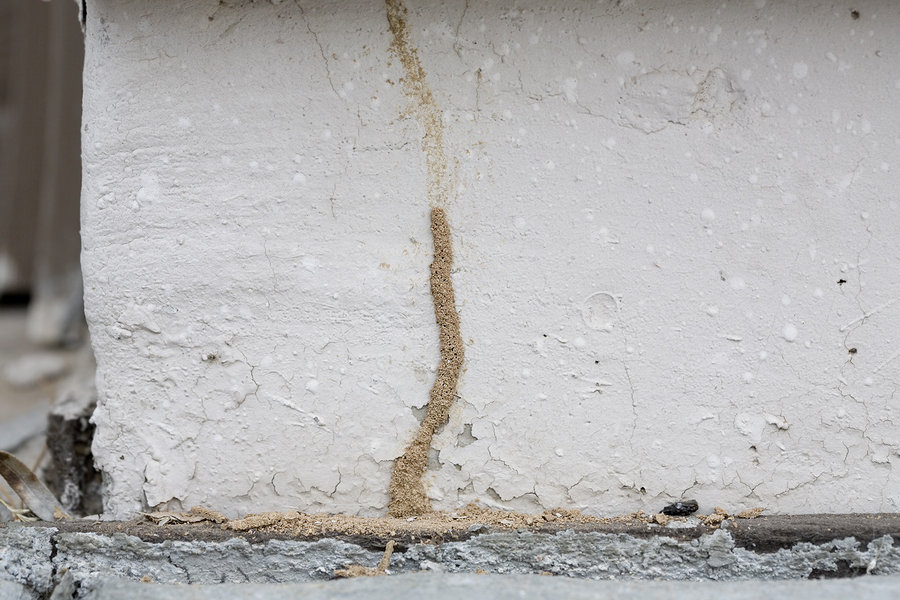
1) Mud tubes
Subterranean termites (often the most common and destructive in many U.S. regions) build mud tubes to travel between the soil and the wood in your home while staying moist and hidden. Tubes are often pencil-sized, but they can be wider depending on conditions.
- Where to look: foundation walls, crawlspace piers, inside garage along slab edges, behind stored items, along plumbing penetrations, and under deck ledger boards.
- DIY check: break a small section of a tube. If it is active, it may be repaired within 24 to 72 hours or within a few days. This is a helpful clue, not a definitive test.
2) Hollow-sounding or damaged wood
Termites eat wood from the inside out, so the surface can look fine until it is not.
- What it feels like: wood sounds papery or hollow when tapped, or it dents easily with a screwdriver.
- Common places: window sills, baseboards, door frames, floor joists in crawlspaces, rim joists, and the underside of subflooring near bathrooms and kitchens.
3) Frass (termite droppings)
Frass looks like tiny pellets or sawdust piles. This is most associated with drywood termites, which live inside the wood and push waste out of small “kick-out” holes.
- Where to look: along baseboards, on top of window trim, below attic framing, beneath wooden furniture, near exposed beams.
- Quick tip: if you vacuum it up and it returns in the same spot, treat it as an active clue, not old debris.
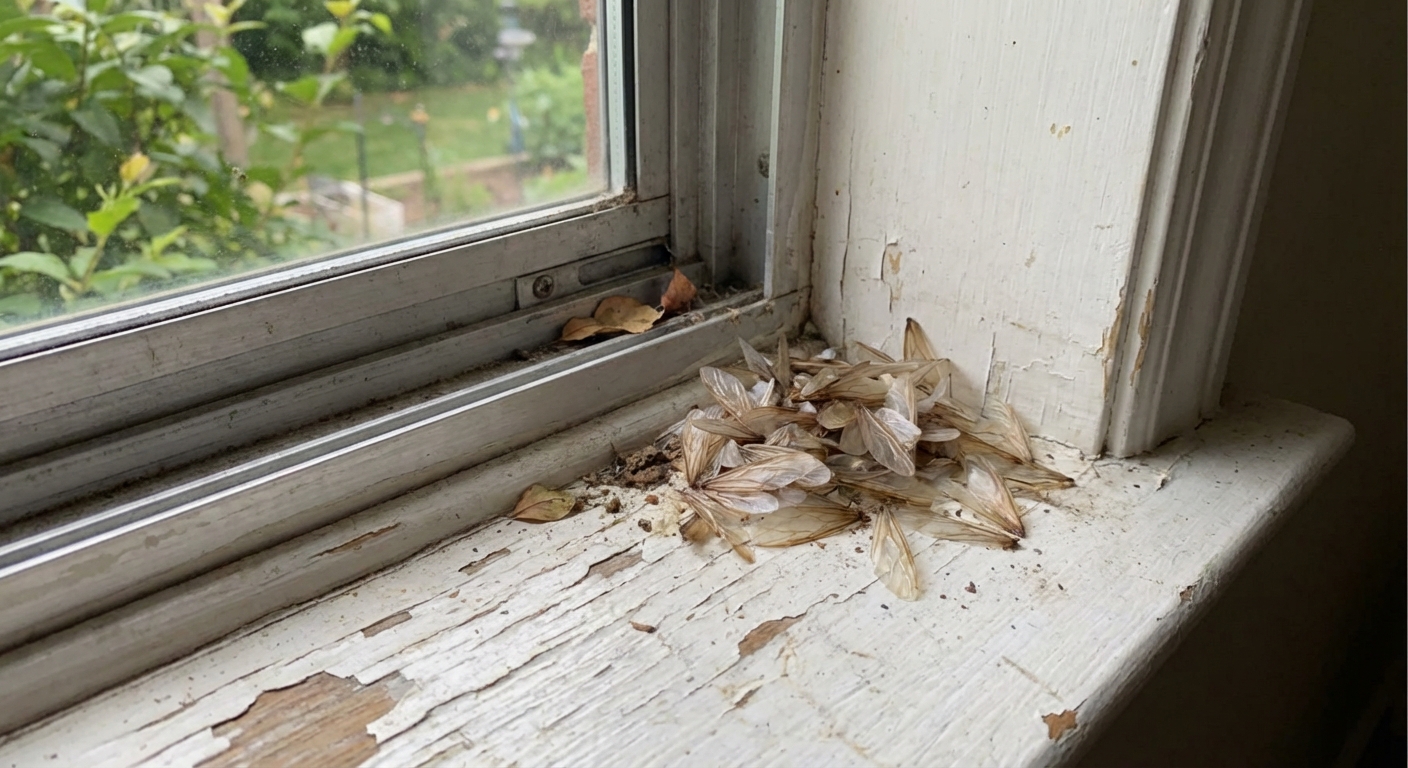
4) Swarmers and discarded wings
Swarmers are reproductive termites that leave a colony to start a new one. Seeing them indoors is a strong red flag that there may be a colony in or very near the structure. Occasionally, swarmers can also wander in from outside through gaps, so take it seriously, but do not assume it is proof by itself.
- What you will see: small winged insects near windows, light fixtures, or dead in spider webs, plus piles of translucent wings.
- Timing: swarms often happen seasonally, commonly in spring, but it depends on species and climate.
Other clues homeowners miss
- Blistering paint or bubbling drywall: can mimic water damage, but sometimes indicates termite activity underneath.
- Tight doors or hard-to-open windows: termites can introduce moisture and deform wood, though humidity can do this too.
- Clicking sounds: soldier termites may bang their heads when disturbed, but this is not a reliable sign by itself.
Quick ID: termites vs ants
Misidentifying termites as ants is common. A few fast tells can help before you treat the wrong thing:
- Antennae: termites have straight or gently curved antennae; ants have elbowed antennae.
- Waist: termites have a thicker, more uniform body; ants have a pinched waist.
- Wings (swarmers): termite wings are about equal length; ant wings are often uneven (front wings longer).
Confirm what you are dealing with
Before you buy treatments, do a quick, common-sense ID. The treatment approach changes depending on the termite type.
Subterranean termites
- Usually linked to mud tubes and ground contact
- Often require soil treatments or baiting
Note for high-risk areas: Formosan termites are an aggressive type of subterranean termite found in some warmer coastal and southern regions. They can cause damage faster than many other subterranean species, which is one reason homeowners in those areas should not delay inspection or treatment.
Drywood termites
- Often linked to frass pellets and small kick-out holes
- May be localized to a beam, attic framing, or furniture
Dampwood termites
- Strongly tied to ongoing moisture issues and decaying wood
- Fixing moisture and replacing damaged wood is a big part of control
If you are unsure, take clear photos and bring in a pro for identification. Misidentifying termites as ants is common, and it can cost you weeks of time.
DIY termite treatment options (what works and what does not)
I am all for DIY when it is safe and effective. With termites, DIY can be helpful in specific situations, but it is not always the best tool for the job.
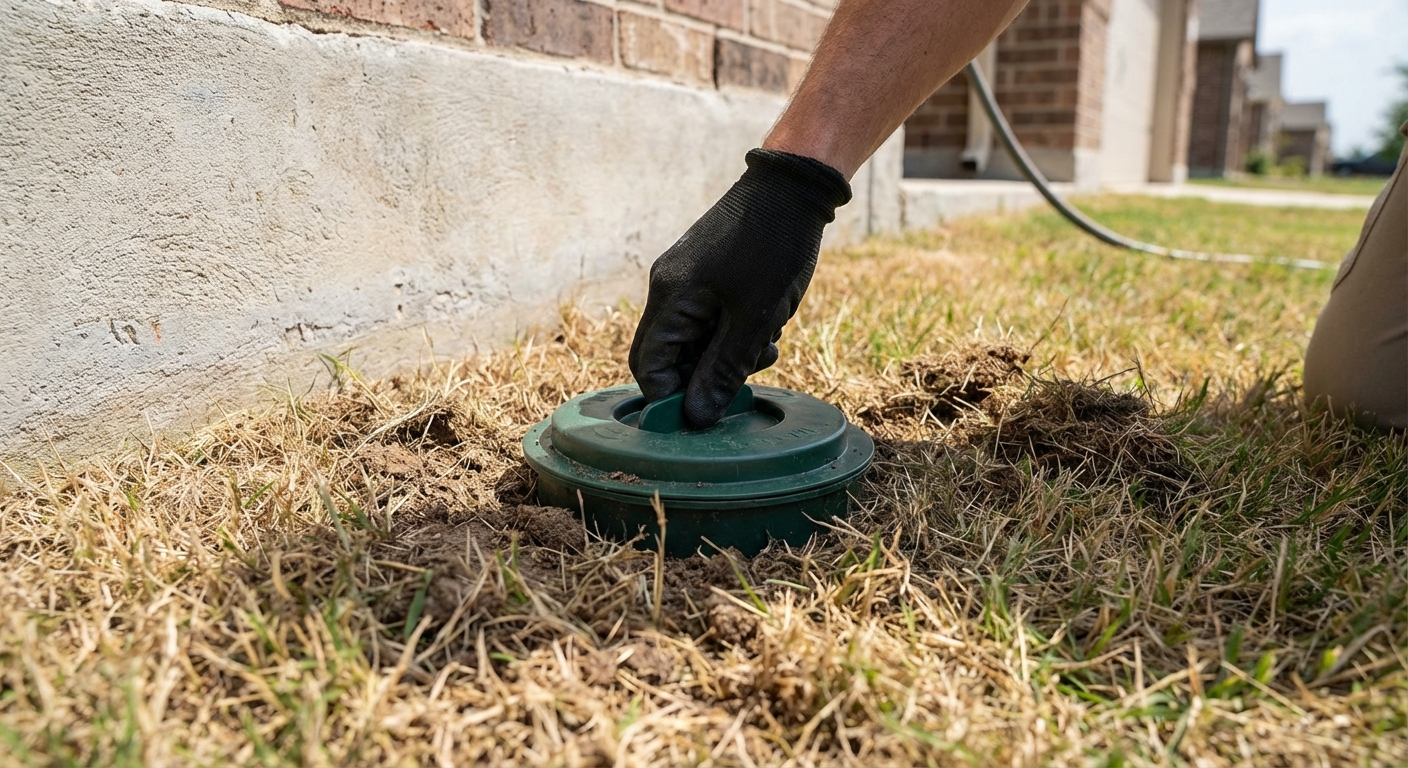
Option A: Termite bait stations
Baiting systems use a cellulose-based bait matrix with a slow-acting active ingredient (often an insect growth regulator). Worker termites feed on it and share it back in the colony. The goal is to impact the colony over time, not just kill the termites you see.
- Best for: subterranean termites, long-term control, homes where trenching or drilling is difficult
- Pros: lower chemical volume in soil, can reduce the colony, minimal disruption
- Cons: slower results, needs correct placement and monitoring, may not be enough for heavy activity close to the structure
Why it is slower: bait has to be found, eaten, and shared, and many bait actives work as termites molt. That takes time and steady feeding.
DIY reality check: off-the-shelf bait stations can help, but professional bait systems often include better monitoring and replacement schedules. If you choose DIY bait, commit to checking it on a schedule so it does not turn into “set it and forget it.”
Option B: Liquid termiticide (soil barrier)
Liquid termiticides are designed to create a treated zone in soil that termites travel through. Some products are non-repellent, which can allow transfer within the colony.
- Best for: subterranean termites when you can create a continuous barrier
- Pros: can work faster than bait, strong protection when applied correctly
- Cons: application is technical, requires careful measuring and trenching, mistakes can leave untreated gaps
DIY reality check: the hard part is not buying the chemical. The hard part is getting full coverage around the structure and applying it according to the label. A few missed feet can become the termite “doorway.”
Option C: Spot treatments (foams and sprays)
Foam termiticides or borate sprays can help with localized activity in accessible wood. They are most often used for drywood termites or as a supplement after repairs, not as a primary plan for a subterranean infestation coming from the soil.
- Best for: small, confirmed drywood activity in a defined piece of wood, or supplemental treatment after repairs
- Pros: targeted, minimal mess, useful for DIYers
- Cons: rarely eliminates a larger colony on its own, easy to miss hidden galleries
Option D: Borate wood treatment (prevention plus limited control)
Borate solutions can be applied to unfinished wood (like attic framing or crawlspace joists) to make it less appetizing to insects and fungi.
- Best for: prevention during renovations, exposed framing, crawlspaces and attics
- Important limitation: it does not soak through paint or sealed surfaces well
What does not work well
- “Just spray what you see”: termites you see are a tiny fraction of the colony.
- Bleach, gasoline, DIY concoctions: unsafe, unreliable, and can damage your home.
- One-time perimeter spraying: general insect sprays are not a termite plan.
One more reality check: some effective termiticides and application methods are restricted to licensed professionals in certain states or countries. Always follow local rules and the product label.
When to call a professional (and why it is worth it)
Here is my line in the sand. If any of the items below are true, I would strongly consider calling a licensed termite pro for inspection and treatment:
- You see mud tubes inside a crawlspace or along interior foundation walls.
- You find swarmers indoors or recurring piles of wings.
- Damage is near structural areas like sill plates, rim joists, beams, or floor framing.
- Your home is on a slab and proper liquid treatment would require drilling through concrete.
- You have had termites before and the history is unclear.
- You cannot confidently identify the termite type.
What a good pro brings: species identification, moisture and entry-point assessment, access to stronger treatment methods, and in many cases a warranty or ongoing monitoring plan. They can also help distinguish termite damage from water damage or rot by probing wood, checking crawlspace conditions, and measuring moisture where needed.
What to ask before you sign anything
- What type of termites are you treating, and how did you confirm it?
- Will you use a liquid barrier, baiting, or both? Why?
- What areas will be treated, and how will you ensure continuous coverage?
- Is there a warranty or retreatment policy, and what does it exclude?
- Do you recommend repairs or moisture fixes before treatment?
Step-by-step: what to do now
- Do a calm inspection: check foundation edges, crawlspace, attic access, window sills, and baseboards.
- Document everything: take photos of tubes, frass, wings, and any damaged wood.
- Do not disturb everything: breaking every tube or tearing out wood can scatter activity and complicate identification.
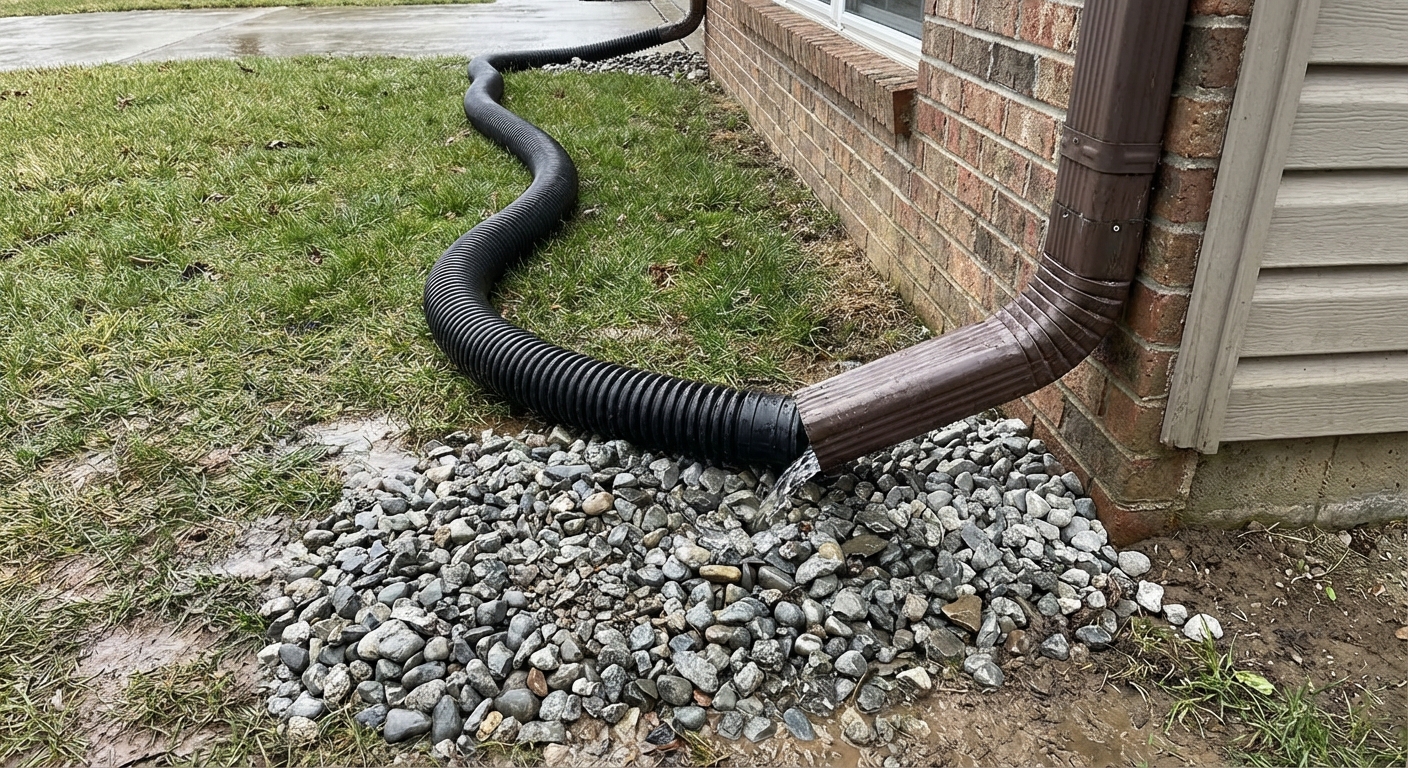
- Address moisture immediately: fix plumbing leaks, improve crawlspace ventilation, redirect downspouts.
- Check the yard for sources: remove stumps, buried wood scraps, and old lumber piles near the house. Keep firewood well away from the structure.
- Decide on DIY vs pro: small, localized drywood signs might be DIY. Subterranean signs usually justify pro help.
- If you DIY, follow the label exactly: termiticides are not “more is better” products. They are “apply correctly or it fails” products.
Prevention tips (the boring stuff that saves thousands)
Termite prevention is mostly moisture control and keeping wood away from soil. Not glamorous, but it is the real win.
Outside the house
- Keep soil and mulch below siding: aim for several inches of clearance so you can visually inspect the foundation.
- Fix drainage: downspouts should send water away from the foundation, and soil should slope away.
- Remove wood-to-ground contact: fence pickets, deck posts, and lattice should not bury into soil without proper rated materials and hardware.
- Remove stumps and wood debris: old stumps, buried roots, and scrap wood can support subterranean colonies near your home.
- Store firewood away from the house: and keep it off the ground if possible.
- Seal entry points: around utility penetrations and cracks, while recognizing sealing alone does not stop subterranean termites.
Inside the house
- Repair leaks fast: toilets, supply lines, water heaters, and under-sink traps are common culprits.
- Control humidity: use a crawlspace vapor barrier and dehumidifier if needed.
- Do a yearly check: a quick crawlspace and basement perimeter inspection can catch issues early.
During renovations
- Treat exposed framing with borates where appropriate.
- Replace damaged wood with the right materials: pressure-treated lumber where code calls for it, and proper flashing where water meets wood.
- Do not cover problems: if you find suspicious damage, pause the project and confirm what caused it before drywall goes back up.
Do this / do not do this
- Do this: confirm termite type, document signs, fix moisture, and choose a plan you can apply correctly.
- Do this: treat indoor swarmers, fresh frass, and active mud tubes as urgent reasons to investigate.
- Do not do this: rely on a quick spray or mystery home remedies.
- Do not do this: assume one broken tube means “problem solved.”
- Do not do this: ignore stumps, buried wood, or persistent drainage issues near the foundation.
Safety notes
- Read and follow all pesticide labels and local regulations. Labels are the law.
- Wear PPE: gloves, eye protection, and appropriate respiratory protection if required by the product.
- Keep kids and pets away from treated areas until the product label says it is safe.
- If you have a well: be extra cautious with soil treatments and consider professional guidance.
FAQ
How fast do termites cause damage?
It depends on colony size, species, and moisture conditions. Serious structural damage typically takes time, but homeowners often discover it late. That is why early clues like tubes, wings, and frass matter so much.
Can I get rid of termites without chemicals?
For active infestations in a structure, chemical or professional methods are usually the most reliable. You can reduce risk dramatically with moisture control, repairs, and wood-soil separation, but those steps are best viewed as prevention and support, not a guaranteed cure.
If I see swarmers, does that mean my house is infested?
Swarmers indoors often point to a colony in the structure or very close by, but they can occasionally come in from outside through gaps. Swarmers outdoors could be coming from nearby trees or stumps. Either way, it is worth an inspection.
Are termite treatments permanent?
No treatment is truly permanent. Liquid barriers can last for years depending on the product and soil conditions, and baiting requires ongoing monitoring. Prevention steps like drainage and moisture control are what keep protection strong long-term.
My honest takeaway
If you are staring at mud tubes or finding wings inside, do not gamble on a quick spray and hope. Termites are too expensive to “wait and see.” Start with identification, fix moisture, and choose a treatment plan you can execute correctly. When the job requires full perimeter coverage, slab drilling, or structural assessment, calling a professional is not giving up. It is protecting your biggest investment.

About Marcus Vance
Content Creator @ Grit & Home
Marcus Vance is a lifelong DIY enthusiast and self-taught home renovator who has spent the last decade transforming a dilapidated 1970s ranch into his family's dream home. He specializes in budget-friendly carpentry, room-by-room renovations, and demystifying power tools for beginners. Through his writing, Marcus shares practical tutorials and hard-learned lessons to help homeowners tackle their own projects with confidence.