
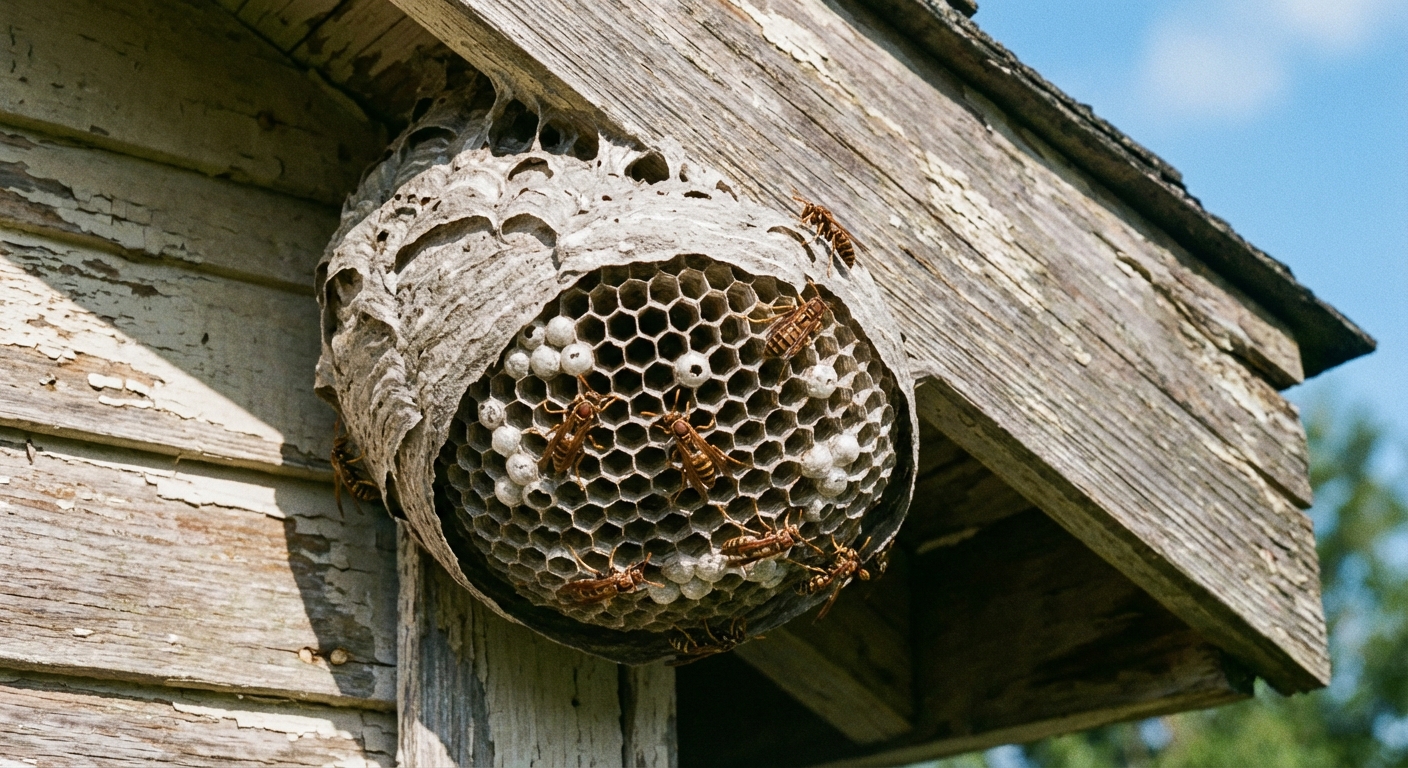
Wasps are one of those homeownership problems that goes from “no big deal” to “everyone inside, now” in about three seconds. I get it. A couple of summers back, I was halfway up a ladder to scrape old paint when I noticed a steady stream of wasps disappearing into the soffit. I climbed down a lot faster than I climbed up.
This page will walk you through a safe, structured way to: identify what you are dealing with, locate the nest, choose the right removal method, and keep wasps from moving back in. I will also be very clear about when DIY is not worth the risk.
First, a quick safety gut check
If any of the items below apply, skip the DIY and call a licensed pest control pro. No shame in it. Stings can be serious, and some nests are genuinely dangerous.
- Anyone in your home has a known allergy to stings, or you are not sure.
- The nest is inside a wall, attic, soffit, chimney, or crawlspace.
- You see heavy activity (dozens of wasps coming and going every minute).
- The nest is higher than one story or requires a ladder you cannot set up securely.
- It is a large hornet nest (basketball-sized or bigger) or the wasps are acting aggressively from a distance.
- You cannot keep kids, pets, or neighbors away from the area for a full day.
Important: if you are actively being swarmed, get indoors, close doors, and do not jump into a pool. Wasps can remain in the area for a while. Give it time, then reassess calmly.
If you get stung
I am not a doctor, but here is the practical line most homeowners need. If you have trouble breathing, swelling of the face, lips, or throat, hives spreading rapidly, dizziness or fainting, or vomiting, treat it as an emergency and call local emergency services. If you have an epinephrine auto-injector, use it as directed.
For typical stings, wash with soap and water, use a cold pack, and consider an OTC antihistamine or hydrocortisone for itch and swelling if you can safely take them. If a sting is near the eye or you get multiple stings, it is worth calling a clinician for guidance.
Identify what you are dealing with
Most homeowner “wasp problems” fall into three buckets: paper wasps, yellow jackets, and hornets. The removal approach changes based on the nest location and how defensive the species tends to be.
Paper wasps
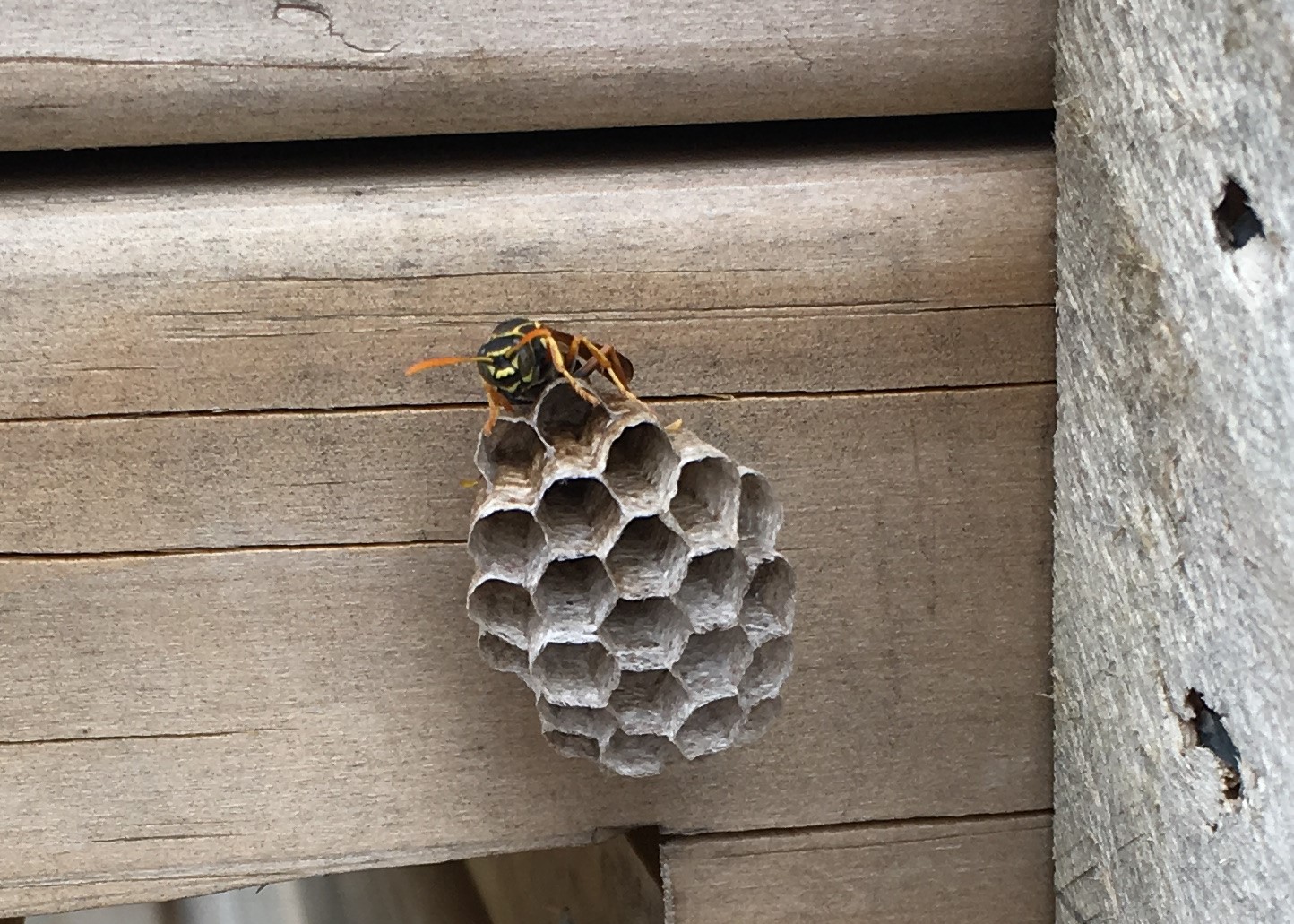
- What they look like: slender bodies, long legs that dangle when they fly.
- Where they nest: under eaves, porch ceilings, deck joists, fence rails, light fixtures, outdoor furniture, shed rafters.
- Nest type: open comb, visible hex cells, looks like gray paper. Usually not enclosed.
- Temperament: can be defensive if you get close, but often less chaotic than yellow jackets.
Yellow jackets
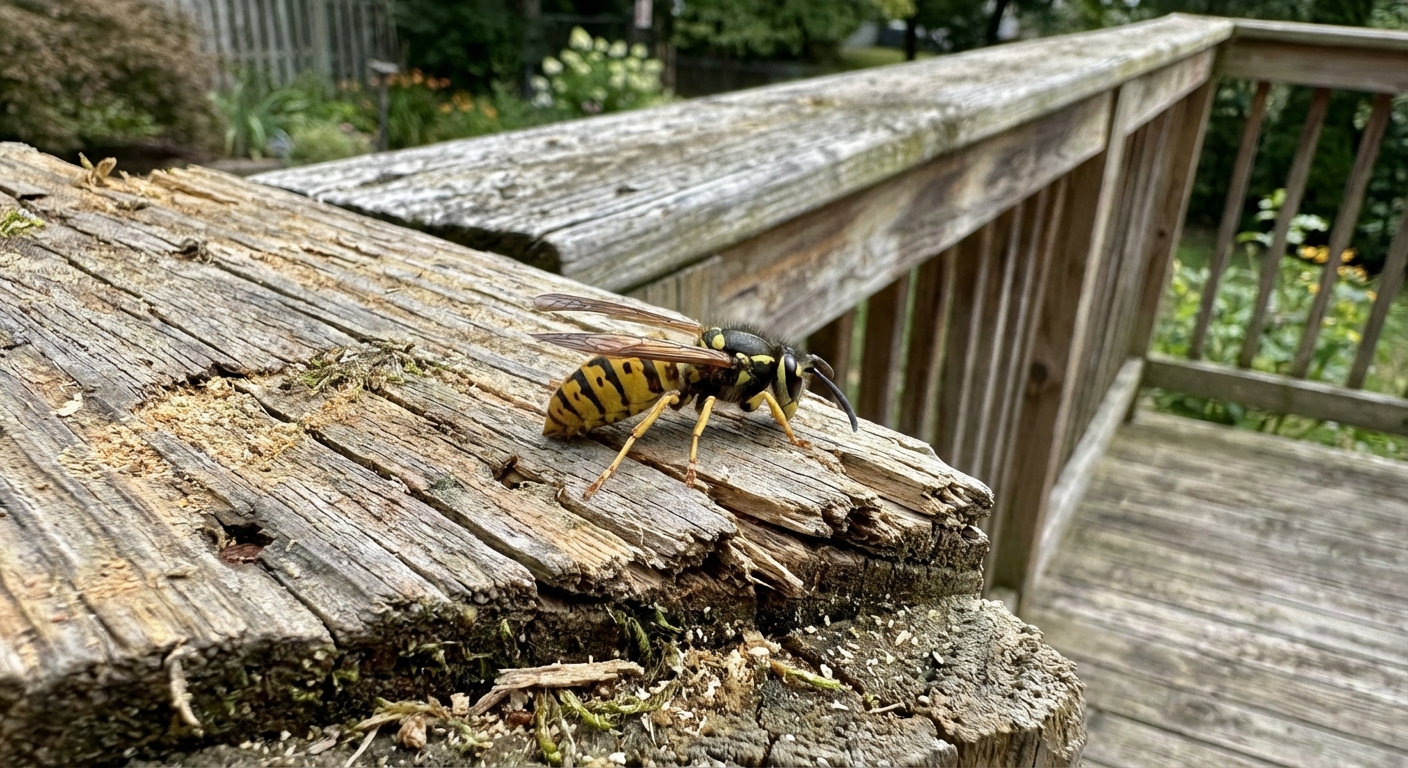
- What they look like: compact, bright yellow and black, fast and confident flyers.
- Where they nest: often in the ground (old rodent burrows, landscaping beds) or inside wall voids and structures.
- Nest type: papery nest hidden underground or in cavities, often with one main entrance and sometimes more than one.
- Temperament: very defensive near the nest and more likely to swarm.
Hornets (a type of wasp)
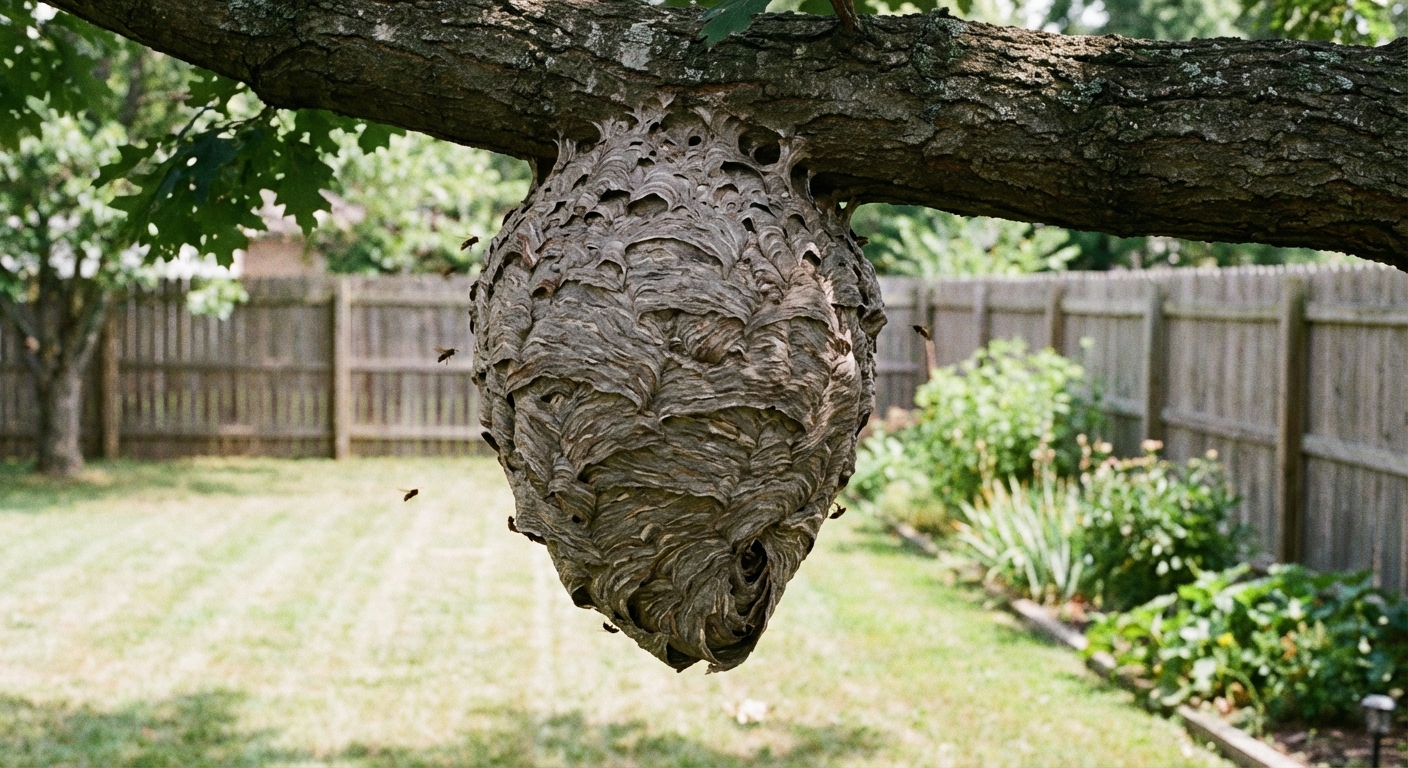
- What they look like: larger than most wasps; depending on the species, may be black and white or brownish.
- Where they nest: trees, shrubs, under eaves, sometimes attics or wall voids.
- Nest type: enclosed “football” or “basket” with a single opening.
- Temperament: can be very defensive. Treat big nests as pro territory.
Quick clarity: a lot of “hornet” calls (especially in North America) end up being yellow jackets, like bald-faced hornets. They are still wasps, still defensive, and still not something you want to guess wrong on.
Note: Honey bees are different. If the insects are fuzzy and you see them clustering or you suspect a hive, do not spray. Contact a local beekeeper or bee removal service.
Bees vs. wasps basics
- Bees: typically fuzzier, less “shiny,” and more focused on flowers. Honey bees often cluster as a swarm on a branch or wall while scouts look for a new home.
- Wasps: smoother bodies, narrow waists, and they often patrol food and trash. Many species build papery nests in the open or hidden in cavities.
If you cannot tell, treat that as a sign to call a pro. Also keep in mind that rules vary by location and species. When in doubt, get local guidance before you spray.
How to locate the nest
The safest way to find a nest is to watch traffic patterns from a distance.
- Stand 15 to 25 feet back and look for a steady “flight line” where wasps travel the same route repeatedly.
- Check common hot spots: eaves, gutters, soffit corners, porch ceilings, behind shutters, under deck boards, around outdoor lights, inside shed rafters.
- For yellow jackets: scan the lawn and beds for a small hole with consistent in and out movement. You may see wasps dropping low and disappearing into one spot.
- Listen at dusk: from inside a garage or attic access area, you may hear activity in a wall or ceiling. If you suspect an indoor void nest, call a pro.
Timing matters: plan removal for late evening or very early morning when wasps are least active and most are in the nest.
Gear checklist for safer DIY
You do not need to look like a movie beekeeper, but you do need to stack the odds in your favor.
- Long sleeves and long pants (thick fabric is better)
- Closed-toe shoes and socks
- Gloves (leather or thick work gloves)
- Eye protection
- A headlamp with a red filter or a flashlight you can set down (optional but helpful)
- Wasp/hornet aerosol with a long-distance stream (typically 15 to 25 feet)
- A clear escape path (seriously, plan this before you spray)
Skip: hitting nests with a hose, swatting, or sealing openings before treating. Those are great ways to force wasps into the house or into full defense mode.
Also: avoid spraying near fish ponds or open water. Many insecticides are highly toxic to aquatic life. Follow the label and choose a different method if water is nearby.
Method 1: Spray treatment
For paper wasp nests under eaves and smaller hornet nests that are accessible from the ground, a labeled wasp and hornet spray is usually the most effective DIY option.
Step-by-step
- Wait for night or dawn. You want cool temps and low activity.
- Keep people and pets inside. Close nearby doors and windows.
- Stand at the far end of the spray range so you are not right under the nest.
- Spray the right spot: for enclosed nests, spray the opening. For open-comb paper wasps, spray the comb and the attachment point where it meets the structure.
- Leave the area immediately using your planned escape route.
- Recheck the next day. If there is still activity, repeat at night.
- Remove the inactive nest 24 to 48 hours later by knocking it into a trash bag and sealing it.
My honest mistake: the first time I did this, I stood too close because I wanted “good aim.” Bad call. Use the distance the can is designed for. The goal is not a perfect shot, it is staying calm and safe.
When spray is a bad DIY choice
- Nests inside walls or soffits where you cannot see the full structure
- Ground nests with yellow jackets (spray can help, but it is easy to get rushed)
- Large, enclosed hornet nests within striking distance of a doorway or walkway
Method 2: Traps
Traps are a slower, steadier approach. They work well when you have wasps hovering around a patio or garbage area, or when you want to reduce numbers before addressing a nest. They are also handy when you cannot find the nest right away.
Store-bought wasp traps
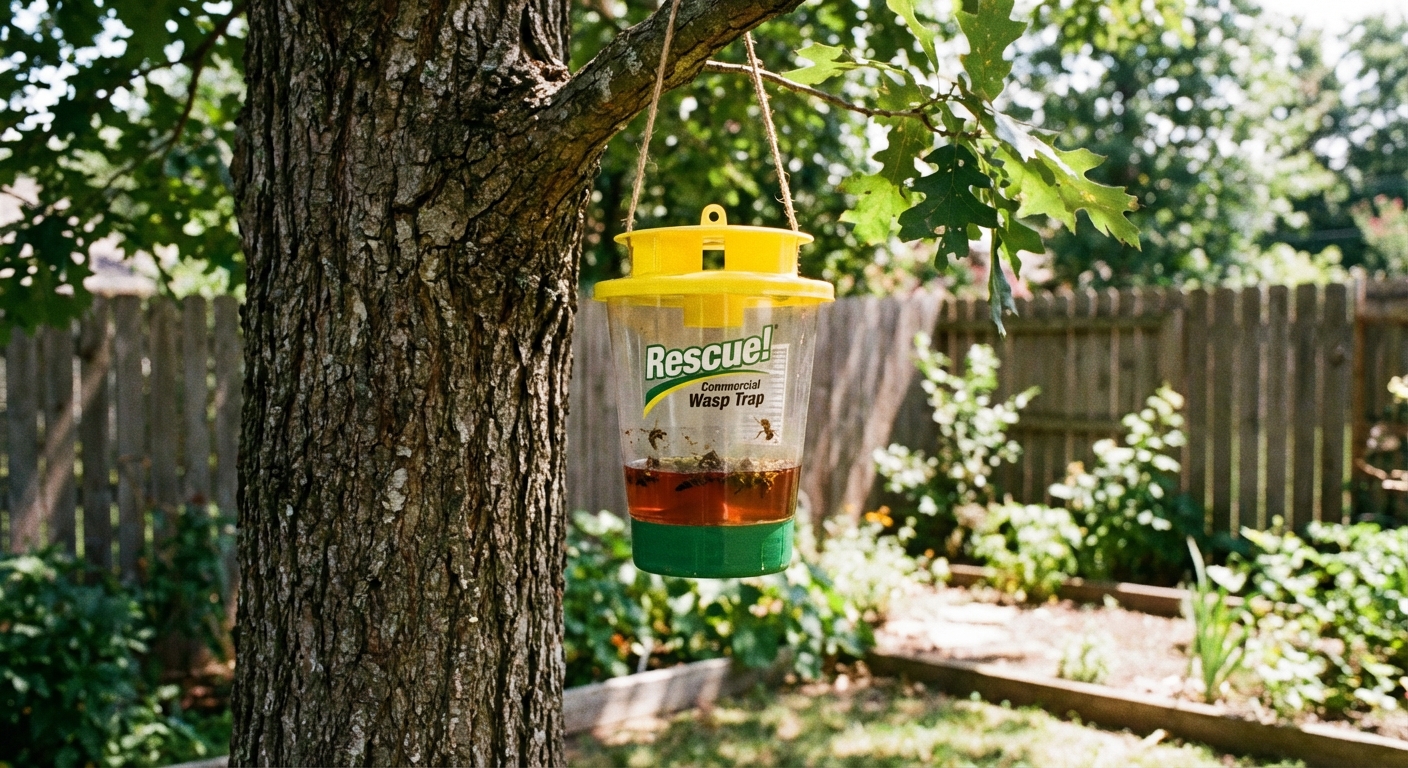
- Hang traps away from where people sit. I like 20 to 30 feet away from patios and play areas.
- Place them near flight paths, trash cans, compost, or along fence lines.
- Follow the bait directions. Many baits are seasonal, protein-based early, sugary later.
Two trap realities: (1) They can catch non-target insects, so place thoughtfully and use the right lure. (2) A trap will not solve a serious nest inside a wall, it just masks the symptom.
Simple DIY bait note
If you DIY a bait, be careful. Sweet baits can attract more wasps to your yard if placed too close to the house. If you are already nervous, buy the purpose-made trap and hang it far from the action.
Method 3: Ground yellow jacket nests
Yellow jackets nesting in the ground are where most DIY attempts go sideways. They defend aggressively, and the entrance is usually right at ankle level. If the nest is near a door, walkway, driveway edge, or kids’ play area, I recommend hiring this out.
If you DIY anyway
- Do it at night when all activity is down.
- Locate the entrance in daylight from a distance and mark it with a rock or stake placed several feet away, not right next to the hole.
- Use a product labeled for yellow jackets and follow label directions exactly.
- Consider insecticidal dust: for ground nests, dust products are often more effective than aerosols or liquids because returning workers can track the dust deeper into the colony.
- Do not shine bright light directly into the hole. Keep lighting minimal.
- Retreat immediately after application. Do not stand there to “check.”
Do not: pour gasoline, bleach, or boiling water into the ground. Besides being dangerous and often illegal, it can contaminate soil and still not solve the problem.
After removal
Once activity is gone, you are not quite done. The cleanup and prevention steps are what keep the problem from coming back next weekend.
- Remove the old nest when inactive. For paper wasps, scrape gently into a bag and seal it.
- Wash the area with soapy water. This may help reduce lingering scent cues and makes it easier to spot new starts.
- Inspect for entry points around soffits, fascia, siding corners, and vents.
- Repair wood if needed. Soft trim and exposed framing invite rebuilding.
For cavity nests: do not rush to seal or patch an entry hole if you suspect wasps are in a wall void. Sealing too early can push them deeper into the structure or into the living space. This is one of the big reasons pros are worth it for wall and attic nests. Also, a dead nest inside a wall can sometimes lead to odor or secondary pests like ants.
Keep wasps from coming back
Prevention is mostly about removing “easy mode” conditions: food, water, shelter, and gaps into the house.
Seal and screen
- Seal cracks around soffits, fascia joints, and utility penetrations with exterior-grade sealant.
- Add or repair screens on attic vents, gable vents, and crawlspace vents.
- Replace missing caulk around windows and door trim.
Reduce food sources
- Use trash cans with tight lids. Rinse sticky containers before tossing.
- Pick up fallen fruit quickly if you have fruit trees.
- Keep outdoor eating areas clean. Sugary spills are wasp magnets.
Make your yard less inviting
- Fix dripping spigots and leaky hoses.
- Keep dense shrubs and low branches trimmed away from the house.
- Check under decks and eaves every couple of weeks in late spring and early summer. Catching a golf-ball-sized nest is a whole different world than catching a basketball-sized one.
When to call a pest control pro
Call a pro if any of the following are true:
- You suspect a nest is inside a wall, ceiling, or attic.
- The nest is large, enclosed, or in a high traffic area.
- You need a ladder or roof access to reach it.
- You tried once and still have heavy activity 24 hours later.
- You cannot confidently identify whether they are wasps vs. bees.
A good company will identify the species, treat it safely, and advise on exclusion. For structural nests, they also know how to avoid driving insects deeper into the home.
FAQ
Will wasps leave a nest on their own?
In many temperate climates, most wasp colonies die off after the first hard frost, and the old nest is typically not reused the next year. The catch is that you may not want to wait months, and in warmer climates some species can persist longer or expand. Even when the exact nest is abandoned, new queens can build nearby next season if conditions stay inviting.
Is it safe to knock down a nest first and spray later?
No. That is the fastest way to get stung. Treat first when they are inactive, then remove the nest after the colony is neutralized.
Why do wasps keep hovering around my porch after I removed a nest?
There may be another nest nearby, or they are hunting for food and water. Put a trap well away from your sitting area, clean up food sources, and inspect eaves and under furniture for small new starts.
A calm plan beats a brave plan
If you take one thing from this: do not rush it. Identify the species, pick the method that matches the nest location, work at night, and keep your escape route clear. And if the nest is inside the structure or the risk feels even slightly too high, this is exactly what pest control pros are for.

About Marcus Vance
Content Creator @ Grit & Home
Marcus Vance is a lifelong DIY enthusiast and self-taught home renovator who has spent the last decade transforming a dilapidated 1970s ranch into his family's dream home. He specializes in budget-friendly carpentry, room-by-room renovations, and demystifying power tools for beginners. Through his writing, Marcus shares practical tutorials and hard-learned lessons to help homeowners tackle their own projects with confidence.