
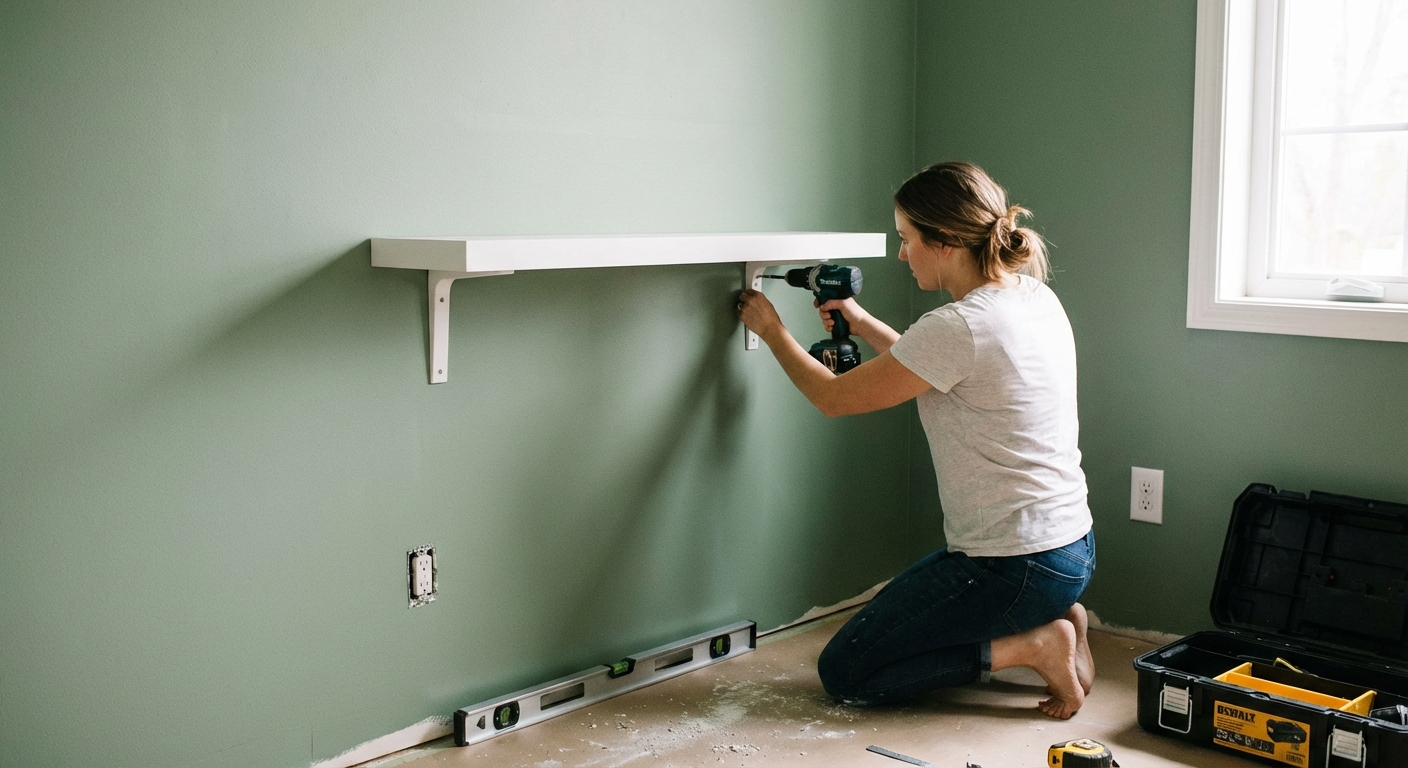
If you have ever tried to hang a shelf “where it looks best” only to discover there is no stud in sight, welcome to the club. The good news is you can absolutely mount shelves on drywall without studs, as long as you match the right anchor to the job and install it correctly.
In this guide, I will walk you through the most common drywall anchors, how to pick one based on shelf weight, and the exact steps I use in my own 1970s ranch when stud spacing is not cooperating.
First, a reality check on drywall strength
Drywall is basically compressed gypsum with paper faces. It is great for walls, not great for point loads. When you hang a shelf, the wall is dealing with two forces:
- Shear (downward load) from the stuff on the shelf
- Tension (pull-out force) as the shelf bracket tries to peel away from the wall
Anchors work by spreading that force over a larger area behind the drywall. The more surface area an anchor grabs, the more reliable it tends to be. That is why toggles usually beat basic plastic anchors for shelves, especially once you move past “pure decor.”
Marcus note: Most “my shelf ripped out of the wall” stories are not because drywall is weak. They happen because the anchor type was wrong for the load, the hole was drilled too big, the bracket was not snug to the wall, or the wall itself was old and crumbly enough that it crushed around the fastener.
Drywall anchor cheat sheet (quick reference)
Use this as your starting point, then keep reading for the how-to and the common mistakes to avoid.
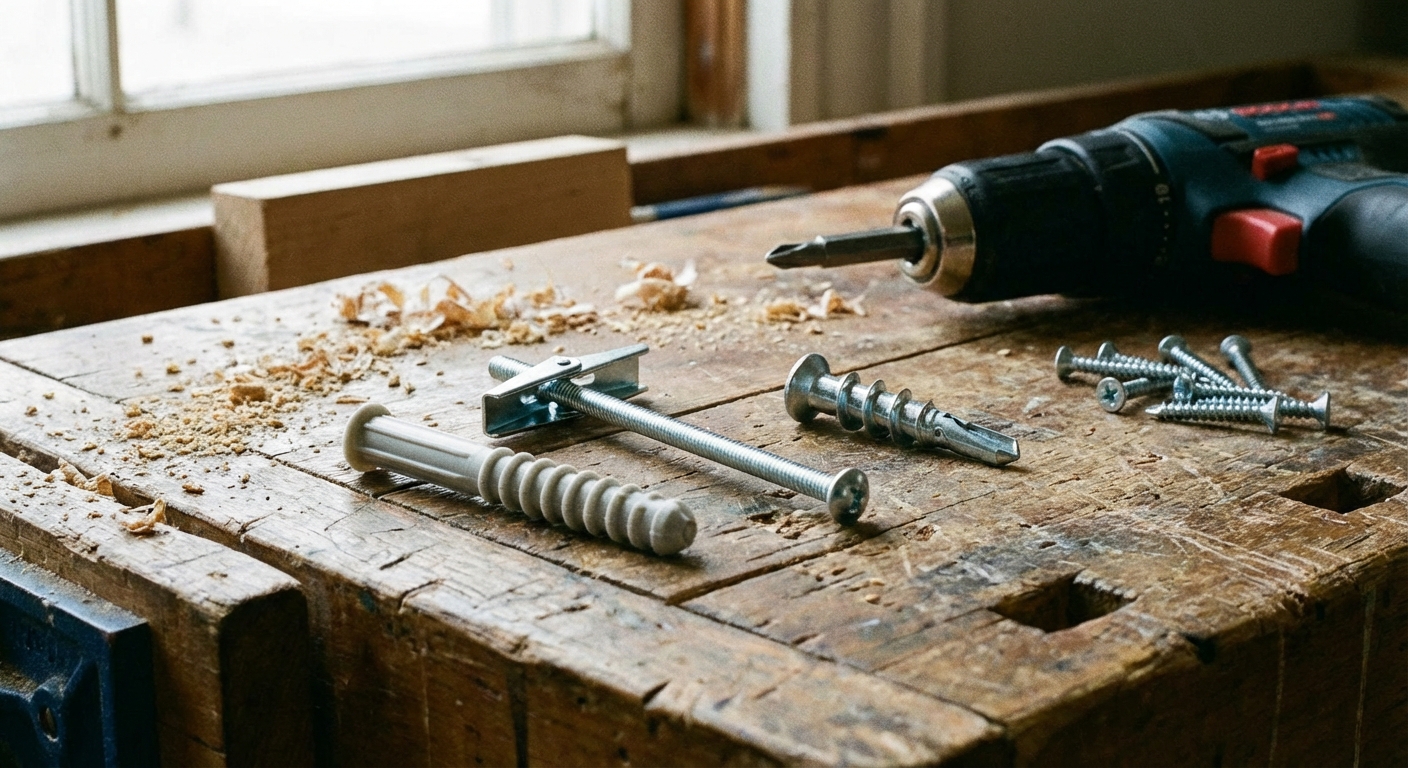
- Plastic expansion anchors: Best for very light shelves and decor. Cheap, fast, easy. Not my first choice for real storage.
- Threaded (self-drilling) drywall anchors: Popular mid-tier option. Faster than toggles and often fine for light to medium loads, but not my favorite for deep shelves or anything with big pull-out force.
- Toggle bolts (spring wing): Strong, affordable, great for heavy loads. Needs a larger hole and can be fiddly.
- Snap toggles (straps): My go-to for shelves when there is no stud. Strong, consistent, and easier to install and remove than spring toggles.
Important: Exact weight ratings vary by brand and drywall thickness (typically 1/2 inch in most homes, sometimes 5/8 inch). Also, published ratings are often from ideal test setups. Real shelves create leverage, people bump them, and loads shift. Treat ratings as optimistic and build in a safety margin by upgrading the anchor type and using more fasteners.
How to choose the right anchor
Step 1: Estimate your “real” shelf load
Do not plan for what you are putting on the shelf today. Plan for what you will pile on it later. A few common ballparks:
- Decor shelf: 5 to 15 lb (picture frames, small plant)
- Bathroom shelf: 10 to 25 lb (bottles add up fast)
- Kitchen display shelf: 20 to 40 lb (plates and mugs are heavy)
- Books: Heavy. A couple feet of books can be 30 to 60 lb or more.
Step 2: Think about leverage, not just weight
A shelf is not just “weight straight down.” The deeper the shelf and the farther the load sits from the wall, the more it tries to pry the bracket outward. That outward peel is where basic anchors get humbled fast.
Step 3: Light duty or storage
- Light duty shelves (small floating shelves, short spans, decorative use) can sometimes be fine with plastic expansion anchors or threaded anchors if the load is truly light and the shelf sits tight to the wall.
- Storage shelves (books, pantry items, kids’ room bins) deserve toggles or snap toggles. Drywall anchors are cheap. Fixing a torn-out wall is not.
Step 4: Match anchor to the shelf
- Choose plastic expansion anchors if the shelf is small, the load is light, and the hardware stays tight to the wall.
- Choose threaded (self-drilling) anchors if you want a quick, decent upgrade over plastic for light to medium duty. I still avoid them for deep shelves, heavy loads, and hidden floating systems that want to peel out.
- Choose toggle bolts if you need high strength and do not mind drilling a larger hole. Great for heavy bracketed shelves.
- Choose snap toggles if you want toggle-like strength plus easier installation and better repeatability. Excellent for shelves where you want the option to remove and reinstall the bracket later.
Anchor deep dive
Plastic expansion anchors
These are the basic plastic sleeves that expand when you drive the screw. They rely on friction and a little bit of mechanical bite. They can work, but they are less forgiving if the hole is oversized or the shelf gets bumped.
- Best for: Small shelves, towel hooks, light decor
- Avoid for: Long shelves, heavy loads, anything kids can yank on
- Pro tip: If you can push the anchor into the wall with your thumb easily, the hole is too big or the anchor is too small.
Threaded (self-drilling) drywall anchors
These are the screw-in style anchors you will see everywhere (EZ Ancor is a common example). They bite into the drywall and spread load better than a cheap plastic plug, but they are still relying on the drywall core and paper face. In solid, modern drywall, they can be a nice middle step.
- Best for: Light to medium loads, hardware that sits tight to the wall, faster installs
- Avoid for: Deep shelves, heavy storage, and floating shelf brackets that put a lot of outward pull on the fasteners
- Pro tip: If the anchor starts to “walk” or chew up the paper while you drive it, stop and switch to a toggle style. That paper face matters more than people think.
Toggle bolts (spring wing)
Toggle bolts use spring-loaded wings that open behind the drywall. They spread the load across a wider area, which is why they are strong. The downside is you typically need a bigger hole, and the wings can fall into the wall if you remove the screw.
- Best for: Heavy bracket shelves, big loads, high confidence installs
- Watch out for: Drilling too big a hole and letting the toggle spin while tightening
- Pro tip: Use a washer if the bracket hole is oversized so the bolt head has a solid seat.
Snap toggles (strap toggles)
Snap toggles have a metal channel that flips behind the wall and plastic straps that hold it in place while you start the screw. They give you toggle-like strength with a lot less frustration. When I am hanging shelves in drywall without studs, this is usually what I grab first.
- Best for: Floating shelf brackets, closet systems, heavy shelves where placement matters
- Big advantage: The metal channel stays put if you remove the screw, so you can take the bracket down and put it back up later.
- Pro tip: Pull the straps toward you as you tighten the screw so the channel stays tight against the back of the drywall.
Shelf hardware matters
Anchor choice is only half the story. Your shelf hardware design changes the forces on the wall.
- Bracketed shelves (L-brackets, decorative brackets) usually play nicer with toggles because the bracket spreads load and the screw heads have room to seat.
- Hidden floating shelf brackets often create more “peel” force and can be picky about fastener head size and clearance.
Quick pro tip: Toggle bolt heads and washers can be bulky. On narrow or completely flush floating shelf brackets, that bulk can interfere with the bracket sitting flat. In those cases, snap toggles with the correct machine screw head style (or a different anchor system recommended by the shelf manufacturer) can save you a lot of frustration.
Tools and materials
- Stud finder (still helpful to confirm there truly are no studs where you want them)
- Level (2 ft is fine for most shelves)
- Tape measure and pencil
- Drill and drill bits sized for your anchors
- Screwdriver or driver bit
- Anchors and screws (often included with toggles and snap toggles, sometimes not with shelves)
- Optional: painter’s tape (great for marking and reducing tear-out)
Step-by-step installation
1) Confirm studs and avoid surprises
Even though this is a “no studs” project, I still scan the area with a stud finder. Sometimes you get lucky. Also, you want to avoid:
- Electrical boxes and likely wire runs near switches and outlets
- Plumbing near sinks and wet walls
- HVAC returns or ducts
If you find anything unusual (very hard wall, extra thickness, crumbling gypsum, or you are clearly not in standard drywall), pause and reassess your plan. Plaster and lath, double drywall, and odd wall builds can change everything about what anchor makes sense.
2) Mark bracket locations
Hold the shelf or bracket where you want it. Mark the top line lightly in pencil, then mark each fastener hole.
Tip: Put a small piece of painter’s tape where each hole will go. Mark on the tape. It is easier to see, and it helps protect the paint when drilling.
3) Plan fastener count and spacing
If the bracket gives you multiple holes, use them. If you are hanging a long shelf, add brackets instead of asking two anchors to do hero work.
- Rule of thumb: Use at least two anchors per bracket when possible.
- Spacing: Put fasteners as far apart as the bracket allows to reduce rocking.
- Long shelves: More brackets beats “stronger anchors” once the span gets long.
4) Drill the correct hole size
This is where most installs go wrong. Anchor packaging specifies a drill bit size for a reason.
- Plastic expansion anchors: Often a smaller pilot or a bit that matches the anchor body
- Threaded anchors: Some are self-drilling, others want a small pilot. Follow the specific anchor instructions.
- Toggle bolts and snap toggles: Usually require a larger hole so the toggle can pass through
Drill straight and steady. Let the bit do the work. If you wallow the hole around, the anchor has less to bite into.
5) Install the anchors
For plastic expansion anchors: Tap the anchor in until it is flush with the wall, then drive the screw through the bracket into the anchor. Stop when snug. Over-tightening can strip the hole.
For threaded (self-drilling) anchors: Drive the anchor in straight so it seats flush. Then run the screw through the bracket into the anchor. If the anchor spins before it grabs, that is your sign to upgrade to a toggle style.
For toggle bolts: Put the bolt through the bracket first, thread the wings on, pinch them, push through the wall, then tighten while pulling the bracket gently toward you so the wings seat behind the drywall.
For snap toggles: Push the metal channel through the hole, pull the straps to seat it, then snap off the excess straps. Put the bracket over the hole and drive the screw into the channel.
6) Level and tighten evenly
Before you fully crank anything down, check level. Then tighten each fastener a little at a time so the bracket pulls in evenly and stays flat to the wall.
7) Load test gently
Do not immediately stack your heaviest stuff. Press down on the shelf with your hands first. If anything shifts, squeaks, or starts to gap at the wall, stop and fix it now.
Common mistakes
Mistake: Using the wrong anchor size
If the screw is too small for the anchor, it will not expand properly. If the screw is too large, it can split the anchor or strip it before it bites.
- Fix: Use the screw size listed on the anchor package. If your shelf hardware is questionable, buy anchors that include matching screws.
Mistake: Drilling an oversized hole
An oversized hole is one of the most common reasons plastic anchors spin and toggles feel sloppy.
- Fix for plastic anchors: Step up to a larger anchor, or switch to a toggle style that uses a larger hole by design.
- Fix for toggles: If the hole is only slightly oversized, a fender washer under the screw head can help the bracket clamp better. If it is badly oversized, relocate the hole or patch and re-drill.
Mistake: Over-tightening
When you keep turning after the bracket is snug, you can strip the drywall around the anchor. Suddenly the screw just spins.
- Fix (quick): Remove the screw and anchor. Move the bracket hole up or down 1 to 2 inches and install a new anchor.
- Fix (same spot): If you must reuse the same spot, switch to a toggle bolt or snap toggle that can grab behind the drywall even if the front paper is a bit chewed up.
Mistake: Trying to “repair” a stripped anchor hole with toothpicks
That trick can work for wood, not for drywall anchors holding a shelf load.
- Fix: Use a bigger, better anchor or move the hole slightly and patch the old one properly.
Fixing a stripped anchor hole
If you are staring at a cratered hole and you want it solid and neat, here is what I do:
- Remove the failed anchor. For plastic anchors, sometimes you can pull them with needle-nose pliers. If it is stuck, push it gently into the wall cavity.
- Patch the hole. Use setting-type joint compound (or spackle for small holes). Press it in, smooth it flush.
- Let it dry fully. Do not rush this. Soft patch material will just fail again.
- Sand lightly and re-mark.
- Re-drill correctly and upgrade the anchor. If the shelf matters, this is where I jump to snap toggles.
Shelf safety tips
- Use more than two fasteners when you can. Spreading load across more anchors is the simplest way to increase reliability.
- Keep shelves shallow for heavy stuff. The deeper the shelf, the more leverage it has to pull on the wall. If you are planning a deep shelf with heavy storage, prioritize studs or add more brackets and better anchors.
- Do not rely on drywall anchors for grab bars or life-safety items. Those need blocking or studs, period.
- Do not hang anything that might be used as a handhold. If there is any chance someone (kids especially) will climb it, lean on it, or use it like a step, do not trust drywall anchors alone.
- Watch for old drywall. In older homes, drywall can be brittle or poorly fastened. If it crumbles easily, even toggles can fail by crushing through. Consider opening the wall to add backing for important shelves.
FAQ
Can I hang a shelf with only drywall anchors?
Yes, for many shelves. Use an anchor designed for the expected load, install it correctly, and use enough anchors to spread the weight. For heavy storage or deep shelves that create leverage, toggles and snap toggles are your friends.
Are snap toggles stronger than toggle bolts?
Both can be very strong when installed properly. Snap toggles are often easier to install neatly and they are more convenient if you need to remove the bracket later. Ratings vary by brand, size, and drywall thickness, so always go by the manufacturer rating for the specific fastener you are using.
What if my shelf bracket holes are too small for the toggle bolt?
Use hardware that fits the bracket, or choose snap toggles that work with smaller machine screws. Also watch screw head and washer clearance on hidden floating brackets. Do not drill out a bracket unless you are sure it will not weaken it.
Are self-drilling anchors good for shelves?
They can be, especially for light to medium duty shelves that sit tight to the wall. For deep shelves, heavy storage, or floating shelf brackets that try to peel outward, I usually step up to toggles or snap toggles.
My simple recommendation
If you want one default choice for most “no stud” shelf situations, pick snap toggles, install them carefully, and use enough of them. If the shelf is truly light duty, plastic expansion anchors or threaded self-drilling anchors can work. If you are building serious storage or anything that might get leaned on, consider changing the plan so you can hit studs or add backing inside the wall.
Do that, and you will not have to re-hang the same shelf twice. Ask me how I know.

About Marcus Vance
Content Creator @ Grit & Home
Marcus Vance is a lifelong DIY enthusiast and self-taught home renovator who has spent the last decade transforming a dilapidated 1970s ranch into his family's dream home. He specializes in budget-friendly carpentry, room-by-room renovations, and demystifying power tools for beginners. Through his writing, Marcus shares practical tutorials and hard-learned lessons to help homeowners tackle their own projects with confidence.