
🚨 In a DIY emergency or rush?
Skip the details and jump straight to our 30-second cheat sheet for the most crucial info.
Small courier. Big home questions.
If you are about to overseed, lime can feel like a magic wand. Sprinkle white dust, grow a perfect lawn. But lime is less wand, more long-term diplomacy. It works slowly, it works best when you actually need it, and it can work against you if you toss it down blindly the same day you seed.
Here is how to lime with intention: start with a soil test, pick the right kind of lime, apply a realistic amount, then time your overseeding so the seed gets cozy contact with soil instead of getting caught in a chemistry project.
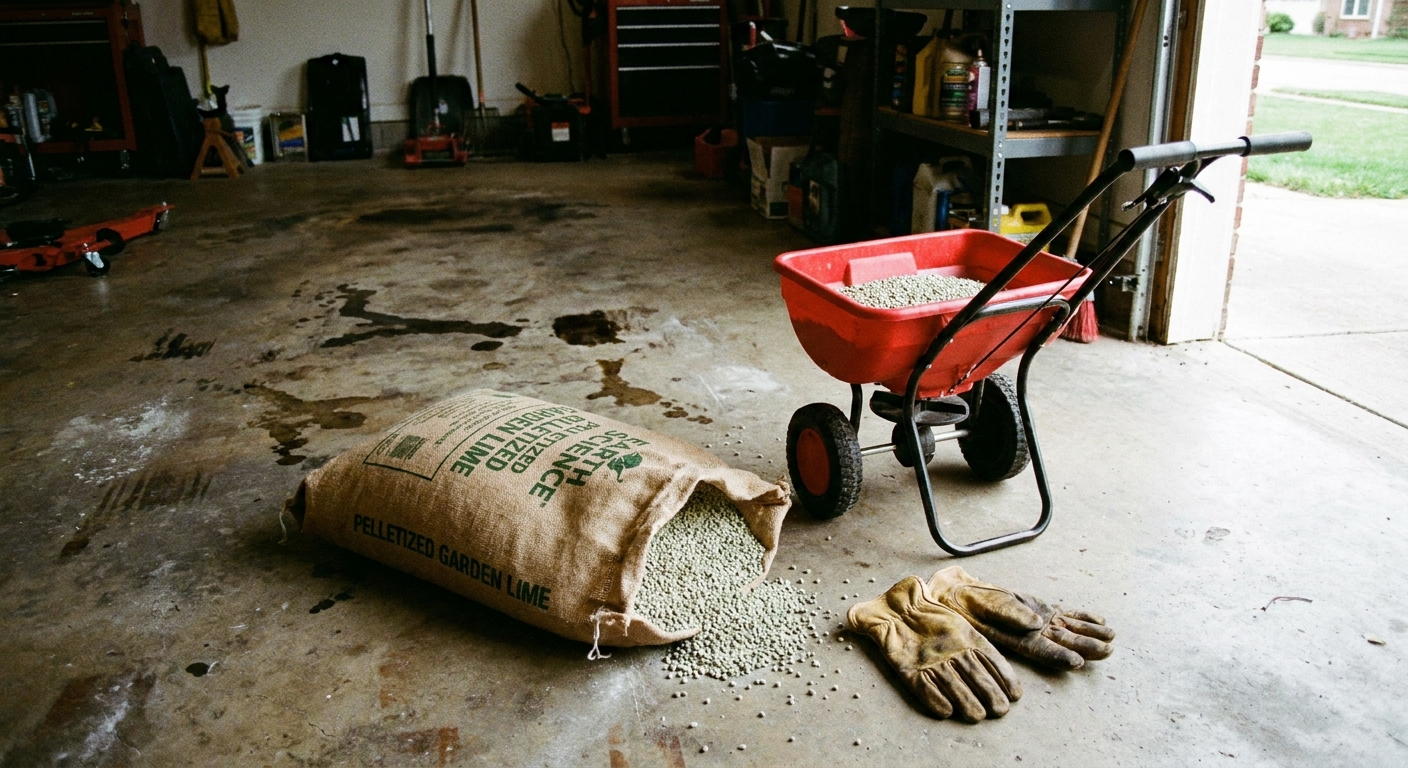
Do you even need lime?
Lime is for raising soil pH (making acidic soil less acidic). It is not a fertilizer, and it is not a cure-all for thin turf.
Signs lime might help
- A soil test shows low pH. This is the only sign that matters.
- Moss keeps winning in shady, damp areas. Moss can tolerate acidic conditions better than grass, but shade and moisture are often the bigger drivers.
- Fertilizer seems to underperform. At low pH, nutrients can be less available to turfgrass.
Times lime is not the answer
- Your pH is already in a good range for your grass type.
- You are fighting compaction, poor drainage, heavy shade, or chronic drought stress.
- You want green-up fast. Lime is slow by design.
Overseeding fixes density. Lime fixes acidity. Sometimes you need both, but only the soil can tell you.
Start with a soil test
If you do one “grown-up” lawn thing this year, make it this. A proper lab soil test gives you pH and, crucially, a lime recommendation based on your soil’s buffering capacity. A cheap in-store pH probe tells you a number, but it usually cannot tell you how much lime it takes to change that number.
What to test
- Soil pH
- Buffer pH (or “lime requirement”) if offered
- Macronutrients (P, K, sometimes Ca and Mg)
- Organic matter is a bonus
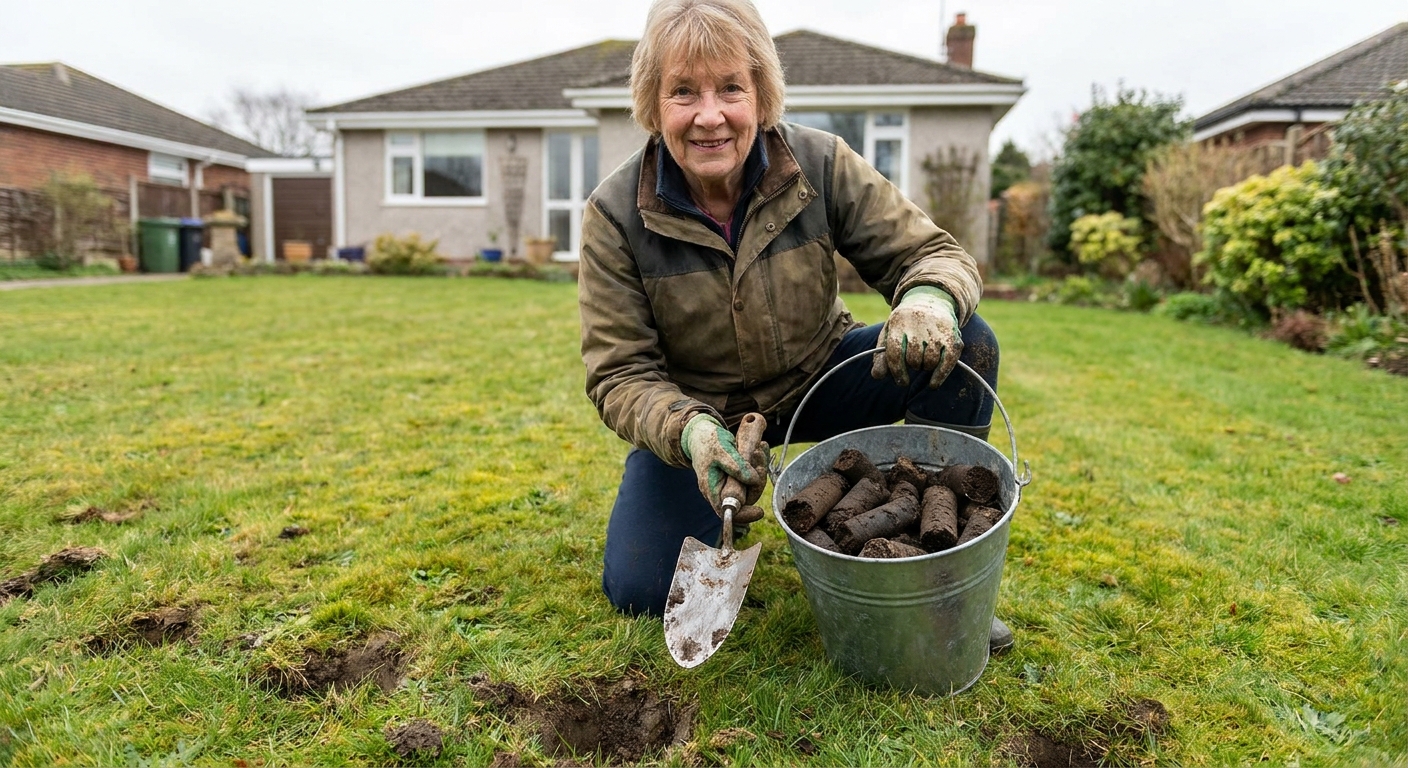
How to take a sample
- Wait several weeks after any fertilizer or lime application if possible, or follow your lab’s guidance, so results reflect your soil, not yesterday’s plans.
- Use a clean trowel or soil probe.
- Take 10 to 15 cores across the area you plan to overseed.
- Depth: 3 to 4 inches is typical for turf.
- Mix in a clean bucket and send the combined sample.
One small translation that helps: Soil labs may report lime rates in lb per 1,000 sq ft (very homeowner-friendly) or in tons per acre (very farm-friendly). If you get tons per acre, you can convert it: 1 ton per acre is about 46 lb per 1,000 sq ft.
What pH should your lawn be?
Most cool-season lawn grasses do well around pH 6.0 to 7.0, with many thriving near 6.2 to 6.8.
Warm-season grasses often tolerate a wider range. Many do well in the low to mid 6s, but some, like centipedegrass, are commonly happiest lower (often around 5.0 to 6.0). This is why your soil test’s target range matters more than any single internet number.
A practical decision rule
- If your pH is only slightly low (for example, 5.8 when the target is 6.2), you may be able to lime lightly and still overseed on schedule.
- If your pH is very low (for example, low 5s), you can still overseed, but set expectations: lime is a multi-season improvement, not an overnight flip.
Calcitic vs. dolomitic lime
Both types raise pH. The difference is magnesium.
- Calcitic lime is primarily calcium carbonate. Choose it when your soil test does not show low magnesium, or when magnesium is already adequate to high.
- Dolomitic lime contains calcium carbonate and magnesium carbonate. Choose it when your soil test indicates low magnesium.
Do not choose dolomitic lime just because it sounds fancier. Extra magnesium is not automatically helpful, and in some fine-textured soils, excess magnesium can contribute to tighter, less friable soil structure over time. The simplest win is to let the soil test call the shot.
Pelletized vs. pulverized
- Pelletized lime is easier to spread evenly with a typical broadcast spreader and less dusty. The pellets break down with moisture.
- Pulverized (powdered) lime can react a bit faster because of finer particle size, but it is messier and harder to apply uniformly without specialized equipment.
If you are using powdered lime, protect your lungs and eyes. A dust mask and safety glasses are cheap insurance.
Quick safety note: When lawn people say “lime,” they usually mean agricultural or garden lime (calcitic or dolomitic). Hydrated lime and quicklime are caustic materials and are not typical lawn products.
How much lime to apply
Here is the part that trips people: the “right” amount depends on your soil test’s lime recommendation, your soil texture, and the product’s neutralizing value.
Because product labels and soil reports vary, the safest move is simple: follow the lab recommendation first, and then match your product to that recommendation as closely as you can.
Homeowner-safe limits
Many extension-style guidelines for turf avoid heavy single applications. A common, conservative approach is:
- Keep single applications modest, often around 25 to 50 lb of lime per 1,000 sq ft. If you need more than that, split it into multiple applications spaced out over time.
That is not a universal law, and your lab or local extension may allow a higher single rate depending on your soil and the product’s effective neutralizing value. But for overseeding season, “spreadable and even” beats “heroic and lumpy.”
Quick math
- 1,000 sq ft is roughly a 25 ft by 40 ft rectangle.
- If your lab recommends 40 lb per 1,000 sq ft and your yard is 2,500 sq ft: 40 × 2.5 = 100 lb total.
Note: Different lime products have different strengths (often shown as calcium carbonate equivalent, neutralizing value, or ENV/ECCE). If your soil test assumes a certain liming material and your bag is different, your local extension office or the lab can help you adjust the rate. When in doubt, err slightly light and re-test later.
Timing: lime vs. overseeding
Lime starts reacting when it is watered in, but meaningful pH change takes time. Think weeks to months, not days.
The ideal timeline
- Best: Apply lime in advance, 4 to 8 weeks before overseeding, and water it in. This gives it a head start without turning seeding week into a juggling act.
- Still good: Apply lime 2 to 4 weeks before you seed. You probably will not hit the final pH target by seeding day, but you are moving the soil in the right direction.
- If you are out of time: You can overseed now and lime later, or lime lightly now and avoid burying seed under lime.
Seed establishment beats perfect pH on paper.
Will lime hurt grass seed?
Lime itself is not “hot” like some fertilizers can be, but problems show up when:
- You apply a heavy layer and leave it sitting on the surface, which can interfere with good seed to soil contact.
- You combine it with the wrong products in the same pass, especially if you are also correcting nutrients aggressively without a soil test.
The main goal during overseeding is physical: seed touching soil, consistently moist. Anything that interrupts that is the enemy, even if it is technically “good for soil.”
A simple plan
Step 1: Test and buy the right lime
Use your soil test to pick calcitic or dolomitic, and to estimate total pounds needed.
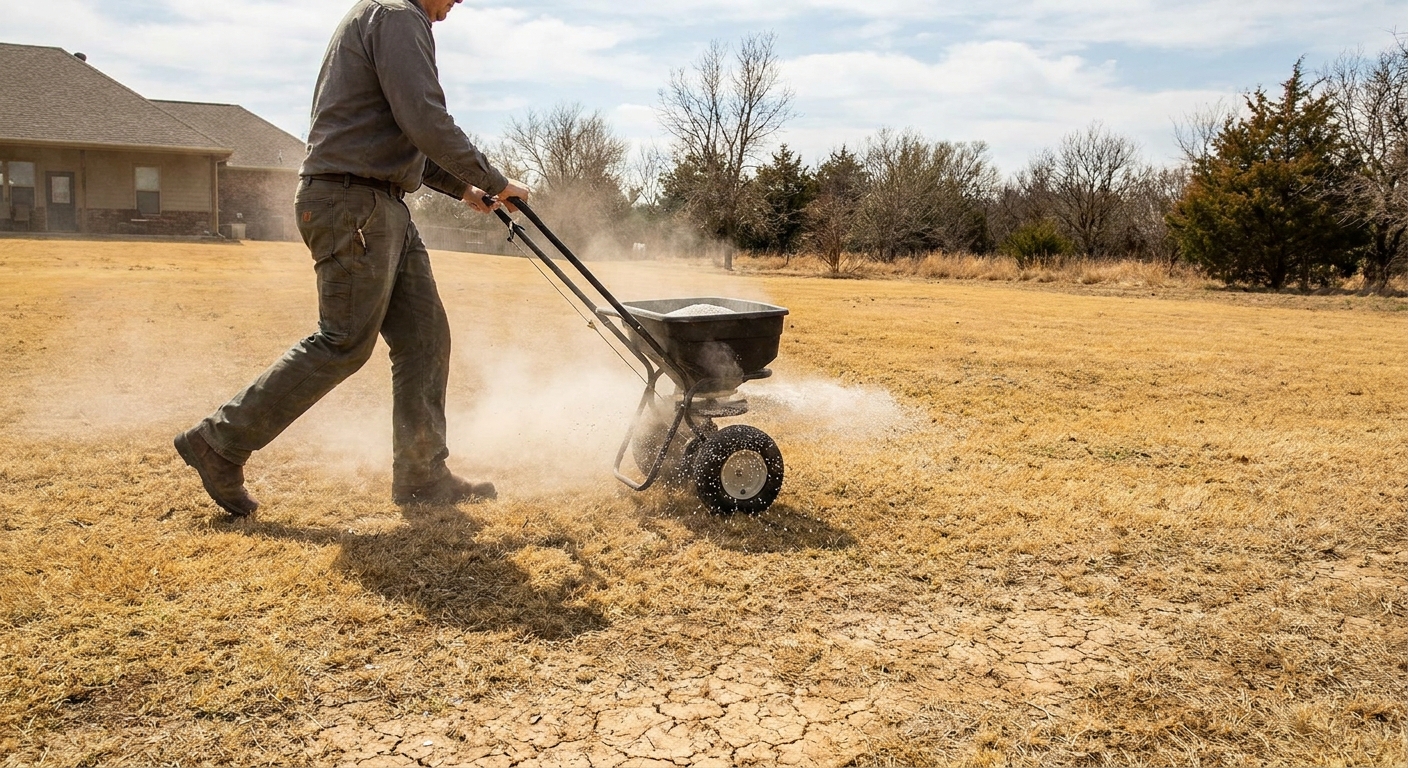
Step 2: Apply lime when the lawn is dry
- Mow first if your grass is long.
- Set your broadcast spreader to a low setting and make two perpendicular passes for even coverage.
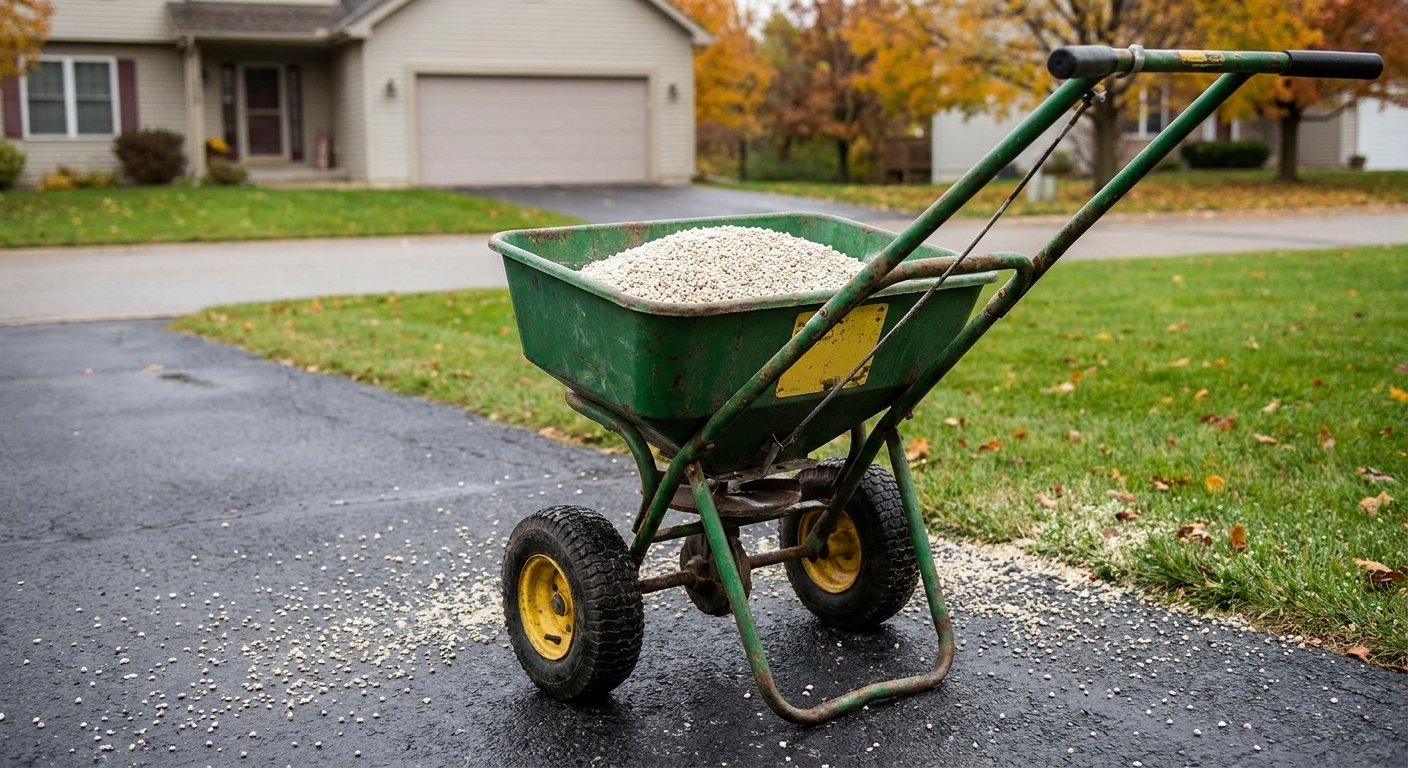
- Blow or sweep granules off sidewalks and driveways back into the lawn so they do not wash into storm drains.
Step 3: Water it in
Watering helps pellets break down and gets the reaction started. A good rule is to apply before a rain or irrigate afterward.
Step 4: Wait, then prep for overseeding
If you can, give lime a few weeks. Then proceed with your overseeding prep: mowing lower, raking out debris, core aerating if you are doing it, and topdressing if that is part of your routine.
Step 5: Seed first, then keep the surface seed-friendly
On seeding week, prioritize:
- Firm seed to soil contact
- Light coverage with compost or peat alternatives if you use them
- Frequent light watering until germination and early establishment
If you did not lime earlier, you can apply lime after seedlings are established and you are back to deeper, less frequent watering.
Same day lime and seed?
You can, but it is not my favorite juggling trick.
If you must do both close together, keep it gentle:
- Use pelletized lime for easier, more even distribution.
- Stay on the lighter end of the recommended rate and plan to split applications.
- Seed after you spread lime, then lightly rake so seed contacts soil, not a layer of pellets.
- Water to settle everything and break down pellets.
If the yard ends up looking dusted like a powdered donut, you probably went too heavy for seeding day.
Common mistakes
- Skipping the soil test. Lime is for low pH, not vibes.
- Using the wrong lime. Stick with agricultural or garden lime for lawns, not caustic products like hydrated lime or quicklime.
- Choosing dolomitic lime without a magnesium deficiency. Extra magnesium is not automatically helpful.
- Trying to fix pH in one weekend. pH moves slowly, especially in heavier soils.
- Overapplying and leaving granules on hard surfaces. Wasteful, messy, and not great for waterways.
- Letting lime replace basic overseeding prep. Even perfect pH cannot overcome seed that dries out or never touches soil.
FAQ
How long does lime take to change soil pH?
You may see some movement in weeks, but meaningful change often takes months. The full effect can take a season or more depending on soil texture, how much lime you applied, and how well it is incorporated into the soil (lawns are mostly surface applications).
Will lime burn new grass?
Lime is not typically a burn risk like high-nitrogen fertilizers, but heavy surface applications can interfere with seedling establishment by reducing seed to soil contact and creating an uneven surface layer.
Should I lime before or after aeration?
Either works, but after aeration can help lime move slightly deeper through the holes with watering and rainfall. If you are liming weeks ahead, timing relative to aeration matters less than getting an even application and watering it in.
Can I apply starter fertilizer and lime together?
Often, yes. But it is smartest to base both on a soil test. Also, on seeding week, spreader overload is real. Too many products at once increases the odds of uneven coverage and poor seed contact.
How often should I re-test soil pH?
For most lawns, every 2 to 3 years is a reasonable rhythm, or sooner if you made a significant correction and want to check progress.
The calm takeaway
If overseeding is your lawn’s “new hair,” lime is the “better diet.” Both help. One is fast, one is slow.
So test first. Lime only when the numbers say so. Choose calcitic or dolomitic based on magnesium. Apply a realistic rate you can spread evenly, water it in, and give it time. Your seed will thank you by actually touching soil and actually germinating, which is the kind of gratitude you can mow.
The 30-Second Cheat Sheet
Essential takeaways for: How to Lime Your Lawn Before Overseeding
What to do
- Soil test first. Lime is only for low pH. A lab test with buffer pH (or “lime requirement”) gives the best lime rate.
- Use the right kind of lime. For lawns, that usually means agricultural (garden) lime (calcitic or dolomitic), not hydrated lime or quicklime.
- Pick the right lime type: Calcitic for low pH with normal magnesium, dolomitic only if magnesium is low.
- Use realistic rates. Many turf guidelines suggest keeping single applications modest (often 25 to 50 lb per 1,000 sq ft). If your recommendation is higher, plan to split it into multiple applications.
- Best timing: Apply lime 4 to 8 weeks before overseeding (2 to 4 weeks is still helpful). Water it in.
- Seeding week priority: Seed to soil contact and consistent moisture. Do not bury seed under a heavy lime layer.
If you are short on time
- You can overseed now and lime later, or apply a lighter lime rate now and plan a second application after seedlings establish.
Avoid these mistakes
- Liming without a soil test
- Choosing dolomitic “just because”
- Heavy lime layers right at seeding time
- Expecting pH to change in a few days
💡 Tip: Scroll up to read the full article for detailed, step-by-step instructions.
⬆️ Back to top
About Grit
Content Creator @ Grit & Home
Grit is Grit & Home’s little blue clay courier, delivering big questions about the place you call home. Expect practical ideas, a raised eyebrow, and a satchel full of curiosity.