
🚨 In a DIY emergency or rush?
Skip the details and jump straight to our 30-second cheat sheet for the most crucial info.
The first time moles tore through my yard, I made the classic DIY mistake: I treated it like a full renovation. I went after the ridges with too much aggression, scalped the grass, and turned a handful of tunnels into a bigger bare patch that took all season to hide.
The good news is you usually do not need to rip up your lawn to fix mole damage. Once you have addressed the mole activity, the repair is mostly about re-leveling the soil, reconnecting grass roots to dirt, then topdressing and spot-seeding where the turf cannot bounce back on its own.
If new ridges are showing up daily, pause the cosmetic repair and focus on stopping the digging first. Otherwise, you will just redo the work.
Also worth a quick check: raised surface runways and mounds are usually moles, while narrow, chewed paths and plant damage can point to voles. The lawn repair steps below are similar either way, but control methods differ.
What tunnels do to your lawn
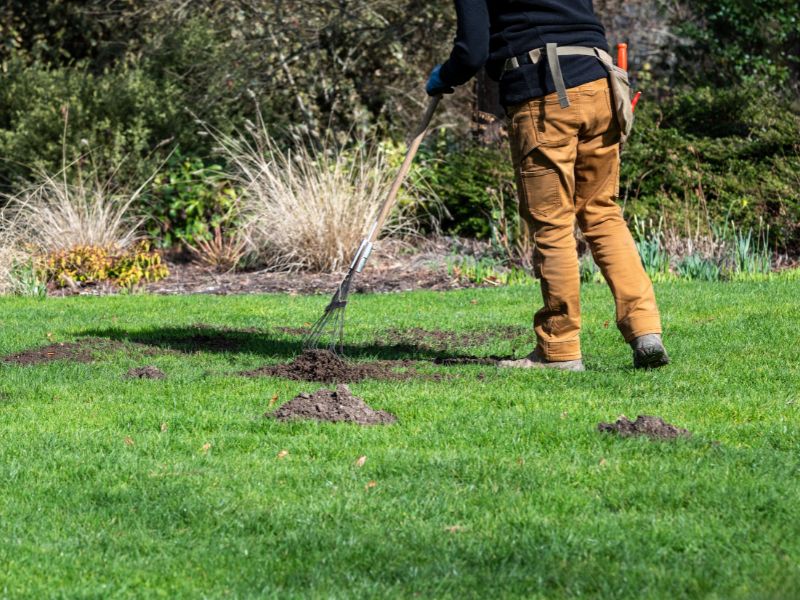
Moles tunnel just under the surface looking for earthworms and soil insects. They are not trying to eat your grass roots, but the tunneling can still damage turf by lifting it off the soil.
As they push through, they create:
- Raised runways (ridges) where the turf is lifted and roots lose contact with soil
- Collapsed low spots that show up after rain or after you tamp things down
- Thin or dead strips where grass dries out because the root zone got disturbed
Your goal is to get the ground flat enough to mow safely, then get grass growing again before weeds move in.
Tools and materials
You can do most of this with basic yard tools. Here is what I keep in my “lawn triage” corner of the garage:
- Garden hose with spray nozzle (or a sprinkler)
- Work boots
- Leaf rake and stiff garden rake
- Flat shovel or transfer shovel (helpful for low spots)
- Hand tamper or a scrap 2x6 to press turf down
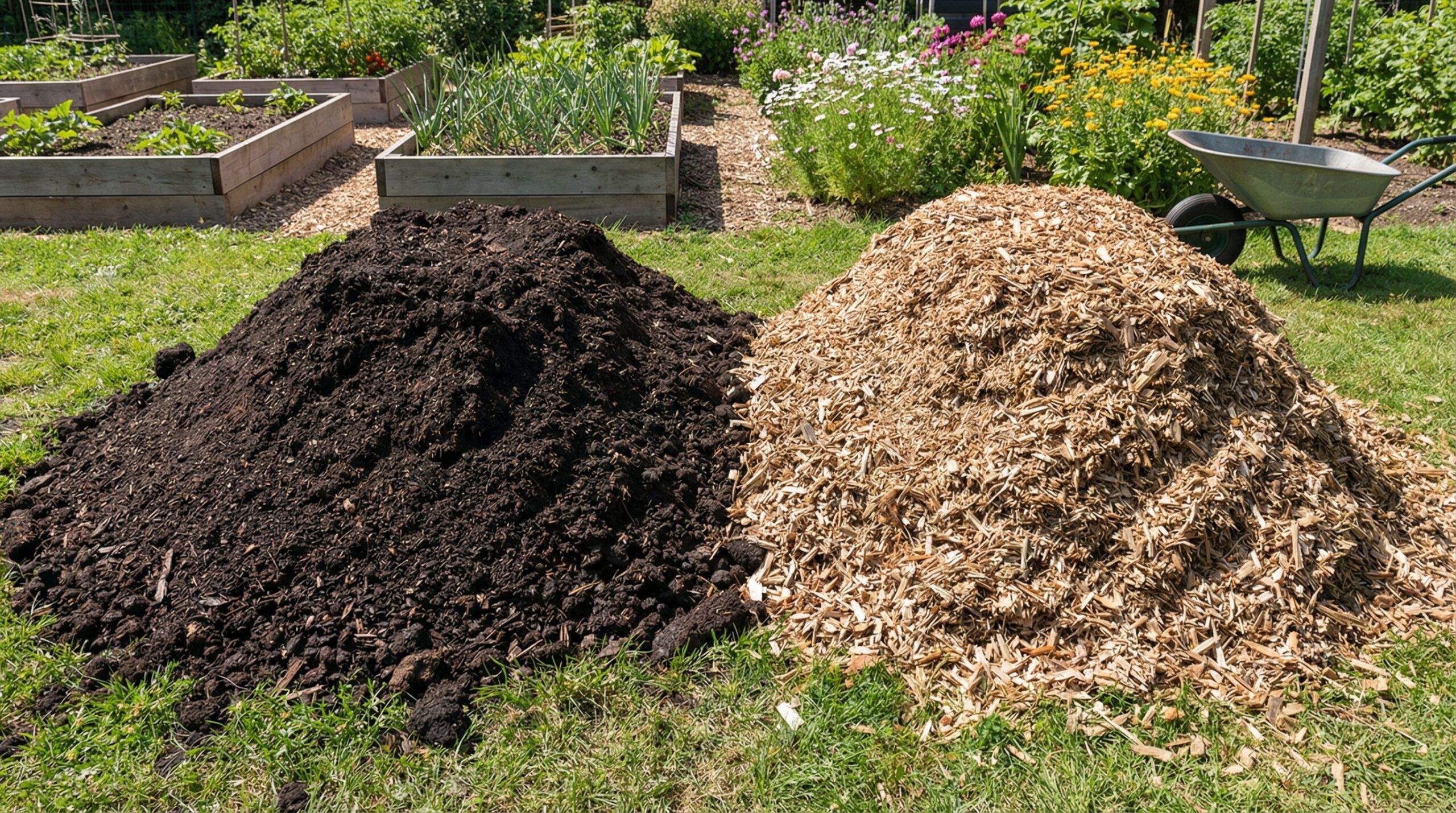
- Topdressing material: screened topsoil, compost, or a topsoil-compost blend
- Grass seed that matches your lawn type
- Optional: straw or seed blanket for erosion control
- Optional: starter fertilizer (especially for new seed)
Step 1: Pick the right day
The easiest time to repair runways is when the soil is slightly moist, not dusty-dry and not muddy.
- Too dry: the ridges fight you and the turf can crack
- Too wet: you create deep footprints and smear soil, which compacts and suffocates roots
If the yard is dry, water the tunnel area lightly for 15 to 30 minutes and wait an hour. You want “bends but does not ooze.”
A quick hand test: squeeze a handful of soil. It should hold together briefly, then crumble when you poke it, not smear like putty.
Step 2: Flatten raised runways
For most raised ridges, the grass is still alive. It is just lifted. The fix is simple: push it back down so the roots touch soil again.
Two good ways to flatten runways
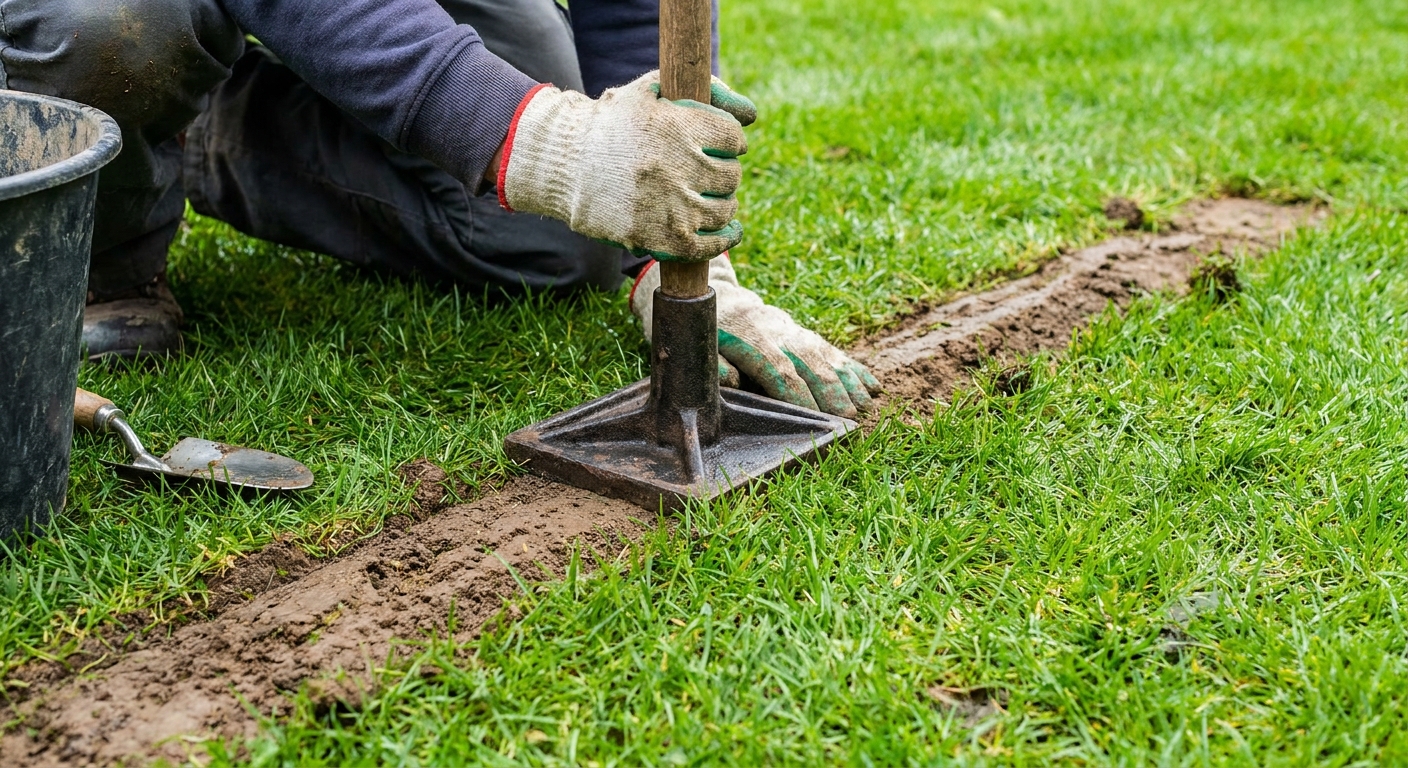
- Boot method: Walk along the ridge with flat steps. Keep your weight centered and move slowly. This works well for long skinny runways.
- Tamper method: Use a hand tamper, or press down with a short 2x6. This spreads pressure and reduces the chance you scalp the grass.
What to avoid: Do not go at it with a shovel edge like you are chopping ice. That is how you slice roots and turn recoverable turf into a dead strip.
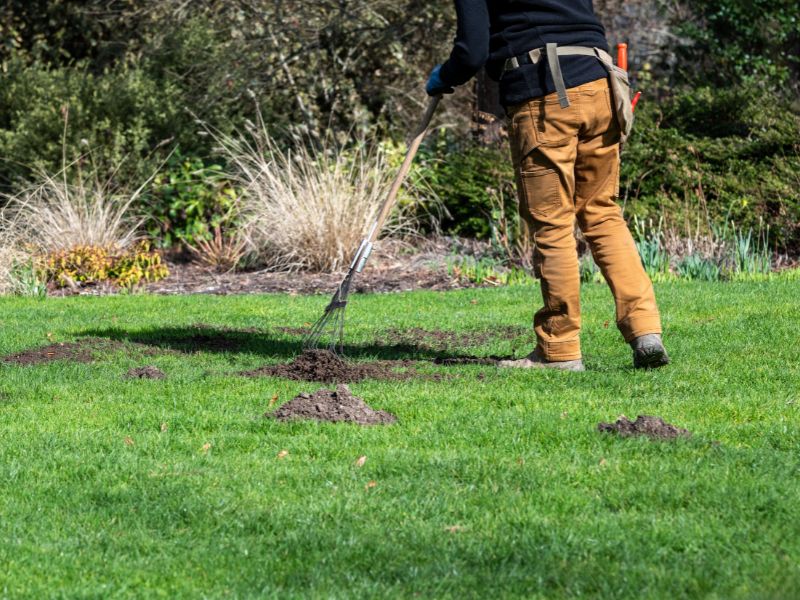
Step 3: Rake smooth
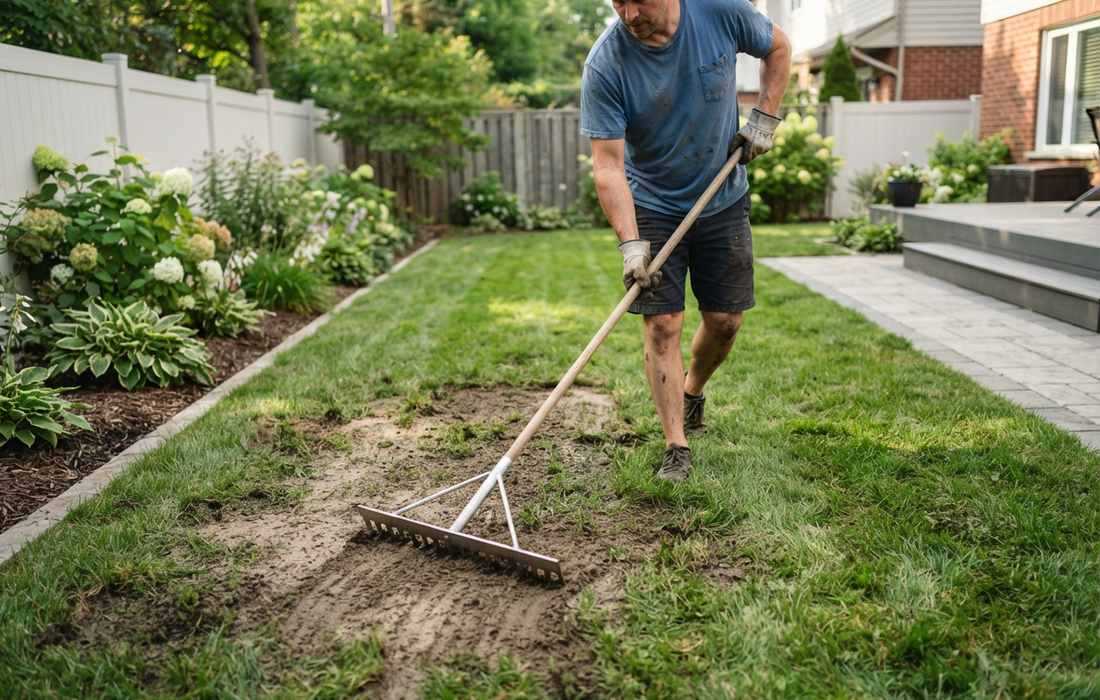
After you flatten the ridge, you will often have loose soil sitting high in spots and low in others. This is where raking makes the repair look intentional instead of patched.
How I rake for a clean finish
- Use a stiff garden rake first to pull extra soil off high spots.
- Feather that soil into nearby low spots with lighter strokes.
- Switch to a leaf rake at the end to lift the grass blades back up.
If you expose roots or you can see daylight under the turf, that area needs topdressing next.
Step 4: Topdress low spots
Topdressing is just adding a thin layer of good soil over damaged areas so grass can re-root and new seed has something to grab.
What to use
- Screened topsoil: best for filling low spots
- Compost: great for improving soil and feeding microbes, but can be too fluffy alone for deeper fills
- Blend: my go-to for most repairs
How much to apply
For shallow repairs, spread about 1/4 inch to 1/2 inch over the area. You should still see grass tips poking through. If you bury existing grass, it can smother.
For true depressions, fill in lifts (thin layers), tamp lightly, then add more. Trying to dump two inches at once usually settles unevenly and leaves you with a new dip.
Step 5: Spot-seed bare areas
If the grass is still intact after flattening, you may not need seed at all. Give it a couple of weeks of decent moisture and it often knits back together.
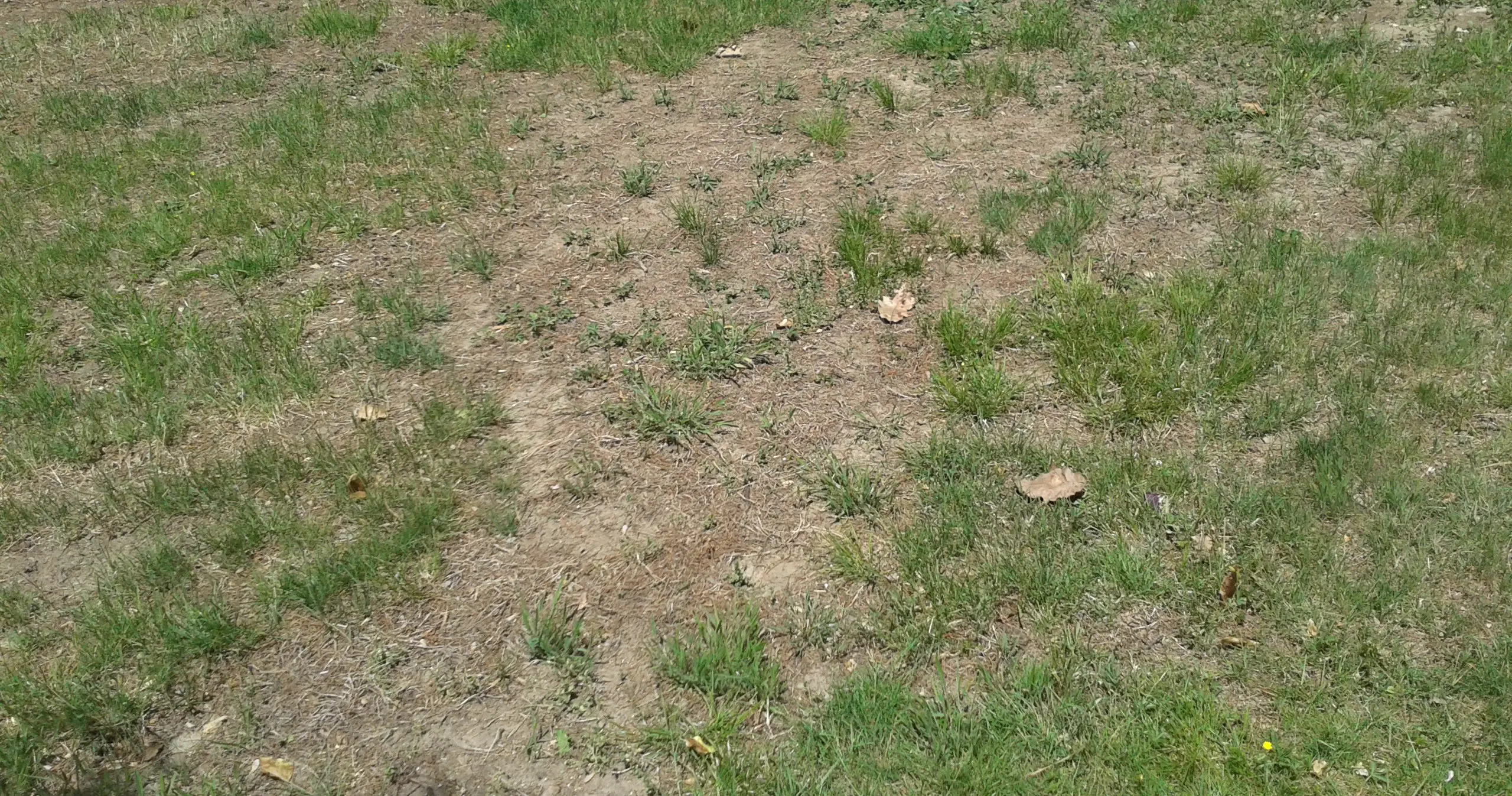
Seed where you see:
- Bare soil strips
- Yellowed turf that pulls up easily
- Thin areas wider than a couple of inches
My simple spot-seeding method
- Scratch the surface with a rake so the top 1/4 inch is loose.
- Spread seed a little heavier than normal, since this is a repair area.
- Press the seed in with your shoe or the back of a rake. Seed needs soil contact.
- Top with a dusting of topsoil or compost, just enough to lightly cover the seed.
If birds are a problem or the area is on a slope, add a thin layer of straw or use a seed blanket. Keep it light. You want sunlight and air getting through.
Step 6: Watering that works
Most lawn repairs fail because watering is inconsistent. You do not need fancy gear, just a plan.
For newly seeded spots
- Water lightly 1 to 2 times per day so the top 1/4 to 1/2 inch stays consistently moist.
- Do not flood. Puddles wash seed away and create crusty soil on top.
- After germination, shift to deeper watering less often to encourage roots.
For flattened but still-living turf
- Water deeply 2 to 3 times per week depending on heat and rainfall.
One practical trick: if you can push a screwdriver into the soil easily for a few inches, moisture is probably fine.
Step 7: Mowing and foot traffic
Give your repair areas a fighting chance.
- Stay off seeded spots as much as possible for 2 to 3 weeks.
- Do not mow new grass until it reaches about 3 to 4 inches, then mow high.
- Keep the mower blade sharp. Dull blades can tear and even pull up tender new seedlings.
- Avoid heavy rolling. A light tamp is fine, but rolling the whole area can compact the soil and slow recovery.
Common mistakes (and ones I made)
- Flattening in wet soil: You end up with footprints and compacted ruts.
- Trying to fix everything with seed: If you do not level and topdress first, seed sits on a bumpy, drying surface.
- Using the wrong grass seed: Mixing cool-season and warm-season grasses can look patchy for years.
- Smothering with thick topsoil: If you bury existing grass, it can rot out and leave you a larger bare area.
- Skipping aftercare: The “repair” is really the first two weeks of watering and babying it.
When you need a bigger fix
Sometimes spot repairs are not worth the fuss. Consider a more involved overseed or renovation if:
- The yard is crisscrossed with runways and feels like a washboard
- You have widespread thinning and weeds are taking over
- The soil is extremely compacted or rocky and tunnels keep collapsing into voids
But for typical mole damage, the steps above usually get you back to a smooth lawn with minimal disruption.
FAQ
Will tunnels go away on their own?
Some raised runways settle over time, but they often leave bumps, low spots, or dead strips. Flattening them and topdressing early helps the grass re-root before it dries out.
Should I roll the lawn to flatten tunnels?
A heavy lawn roller can flatten ridges, but it can also compact the soil, especially if the ground is wet. I prefer tamping or walking the runways, then raking and topdressing only where needed.
What is the fastest way to make it look better?
Flatten the ridges, rake smooth, and topdress low spots. Even before seed comes in, a smooth surface makes the yard look 80 percent improved.
Can I use sand to level mole tunnels?
Sand can work for leveling, but it is easiest when your underlying soil is already sandy. If you have clay soil, straight sand can create a distinct layer that affects drainage. If you use sand, blend it into the existing soil and consider mixing it with topsoil or compost for small repairs.
How long until the patches blend in?
In good growing weather, you often see improvement in 2 to 4 weeks. Full blend-in depends on grass type, sun, and watering. Cool-season lawns typically repair best in early fall or spring, while warm-season lawns like late spring into summer.
How can I tell if it is moles or voles?
Surface ridges and volcano-shaped soil mounds usually point to moles. Voles are more likely to leave narrow above-ground paths and chew marks on grass or plant stems. Either way, you will get the best repair results after the active critter problem is under control.
The 30-Second Cheat Sheet
Essential takeaways for: How to Repair a Lawn After Mole Tunnels
What to do (fast)
- Moisten the area if the soil is dry so the turf bends instead of tearing.
- Flatten raised runways by walking them down or using a hand tamper or a short 2x6.
- Rake smooth with a stiff rake, then finish with a leaf rake to lift grass blades back up.
- Topdress low spots with 1/4 to 1/2 inch of screened topsoil, compost, or a blend. Do not bury healthy grass.
- Spot-seed bare strips: scratch soil, spread seed, press it in, then dust with a thin layer of soil or compost.
- Water smart: keep the top 1/4 to 1/2 inch consistently moist for seed until germination, then water deeper less often.
Don’t do this
- Do not chop at ridges with a shovel and slice the roots.
- Do not flatten when the lawn is muddy. You will compact it and leave ruts.
- Do not dump thick topsoil over grass. Smothering creates bigger dead patches.
- Do not mow new seedlings until they are about 3 to 4 inches tall.
My go-to materials
- Stiff garden rake + leaf rake
- Hand tamper (or scrap 2x6)
- Topsoil-compost blend for topdressing
- Grass seed that matches your existing lawn
💡 Tip: Scroll up to read the full article for detailed, step-by-step instructions.
⬆️ Back to top
About Grit
Content Creator @ Grit & Home
Grit is Grit & Home’s little blue clay courier, delivering big questions about the place you call home. Expect practical ideas, a raised eyebrow, and a satchel full of curiosity.