
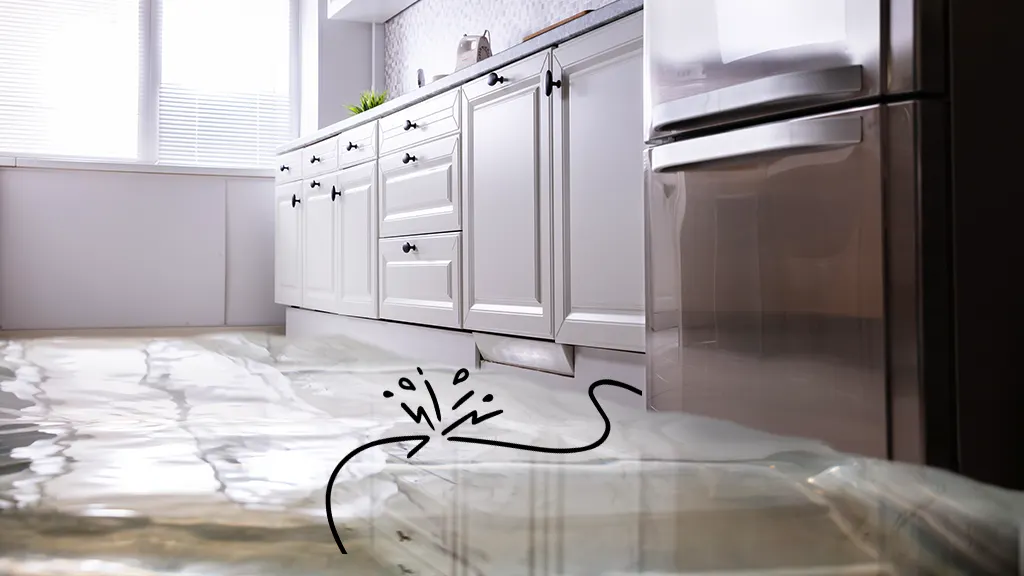
First: make it safe and find the leak fast
If your ice maker is leaking, you are usually dealing with one of two things: water escaping before it reaches the ice mold, or water melting/overflowing after ice is made. There is also a very common third bucket that gets blamed on the ice maker: defrost or condensation water that has nothing to do with the ice maker at all (I cover that below). The good news is you can narrow it down quickly without getting deep into appliance surgery.
Safety and quick prep
- Unplug the fridge if you will be removing panels or working near wiring.
- Turn off the water supply to the refrigerator if there is active dripping. Usually it is a small shutoff valve under the sink, in the basement, or behind the fridge.
- Lay down a couple towels and keep a shallow pan handy.
- Tools you will want: flashlight, towels, a small level, a turkey baster or squeeze bottle, a hair dryer (low), and a phone for photos.
Quick isolation test (10 to 60 minutes)
- Dry everything in and under the freezer and under the fridge. You want a clean slate.
- Look for the highest wet spot. It often points you toward the source, but fridges can fool you because water can wick along insulation, follow tubing, or drip from a high point and travel. Practical tip: follow shiny water trails, wet dust, and any mineral deposits that mark the path.
- Turn the ice maker Off for 10 to 20 minutes (switch to Off or lift the shutoff arm). If the leak stops quickly, the problem is likely in the ice maker fill system or ice maker assembly.
- Leave the ice maker Off, but turn water back On for 10 minutes. If it still leaks with the ice maker Off, suspect the water inlet valve or water line connections.
- Pull the fridge forward and check the rear lower area for drips at the water line, valve, and fittings. Protect your flooring and move slowly so you do not kink the water line.
Quick location clue: If the puddle is under the front of the fridge, do not assume the ice maker. A defrost drain or drain pan issue can send water forward and out, especially after a defrost cycle.
Most common causes (and what the symptoms look like)
Here are the usual suspects I see, in the order I would check them on a weekend troubleshooting session.
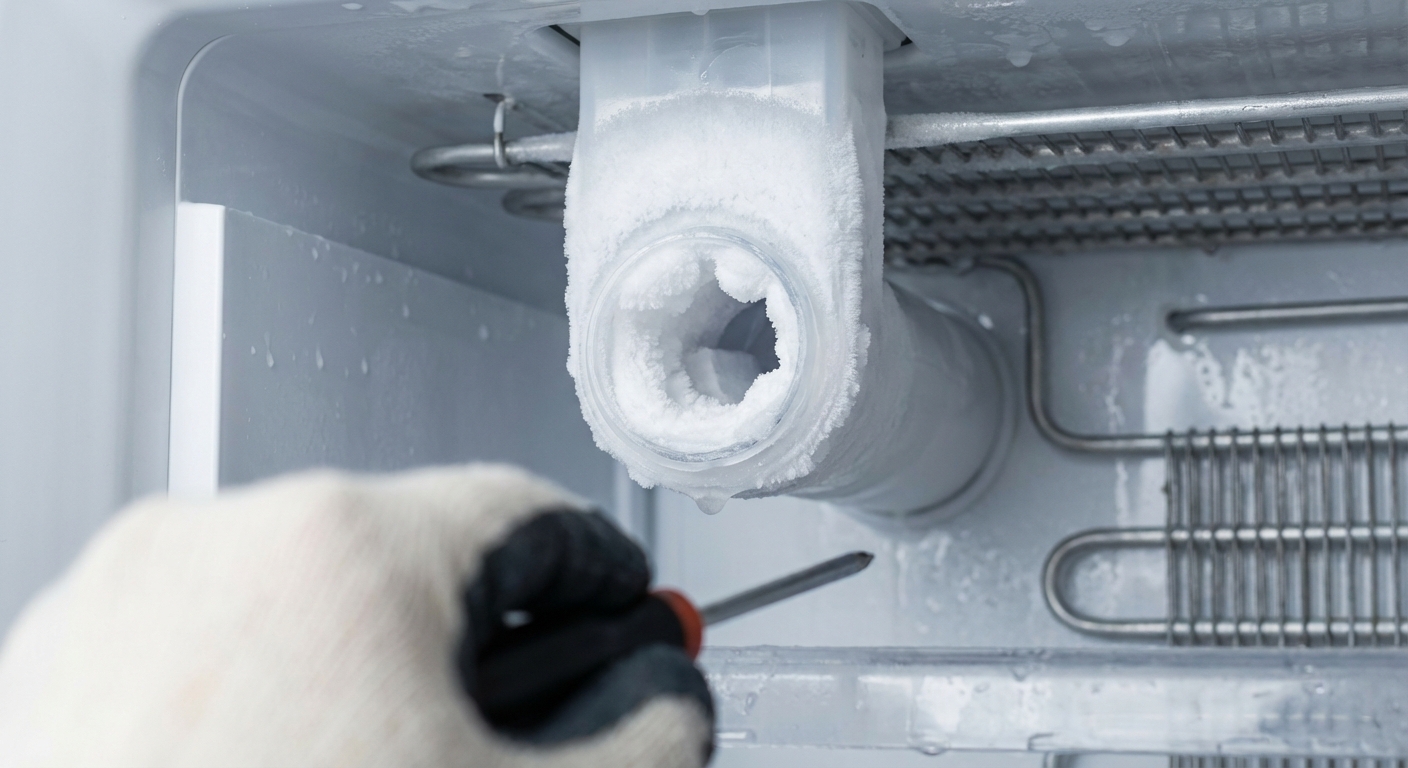
- Frozen or misaligned fill tube: Water sprays, drips into the freezer, or makes a sheet of ice on the back wall or bottom of the freezer.
- Water inlet valve seeping: Slow leak even when not making ice, sometimes an overfilled ice mold or giant ice clumps.
- Cracked ice mold or ice maker housing: Water ends up in the bin, freezes into a block, or drips down from the ice maker assembly.
- Clogged or iced defrost drain: Water pools at the bottom of the freezer and can creep forward and leak out the door.
- Fridge not level: Water spills out of the ice mold during fill or harvest, or the ice maker overflows intermittently.
- Loose or damaged water line fittings: Drips behind the fridge, sometimes only during fill cycles.
- Filter housing or filter not seated: Drips during dispensing or fill cycles, often near the filter area.
Quick note by fridge type
- Top-freezer fridges: Leaks often show up as ice sheets on the freezer floor (fill tube spray or defrost drain).
- Side-by-side and French-door: Water can appear under the right front corner, behind the toe-kick, or under the freezer drawer depending on where the ice maker and drain routing live.
- Ice maker in the door: Check the hinge area where the water line routes through the door. A leak there can show up at the bottom hinge or under the front edge.
Fix 1: fill tube problems
The fill tube is the small plastic or rubber tube that delivers water into the ice maker. When it freezes or shifts out of position, water cannot enter the mold normally. It then backs up or sprays and finds a new path, usually down the back wall of the freezer.
How to confirm
- Ice maker is making small cubes or no cubes, plus you see ice buildup near the tube.
- During a fill cycle, you hear water, but it seems to splash or you see icicles forming nearby.
- If you can safely watch a fill, listen for the valve buzz and look for spraying at the fill tube or fill cup.
How to fix it
- Turn off the water to the fridge.
- Gently warm the fill tube area with a hair dryer on low. Keep it moving and do not cook plastic parts.
- Safety note: Keep the hair dryer away from standing water. Do not use a heat gun. Avoid overheating foam and plastic.
- Clear the tube opening with a pipe cleaner or cotton swab once thawed.
- Check that the fill tube points into the ice maker fill cup or inlet, not above or beside it. Re-seat it if it has slipped.
Why it freezes in the first place: A seeping inlet valve (next section) can slowly drip water into the tube between cycles, creating an ice plug. But it is not the only cause. A freezer set too cold, warm air leaks around the fill tube grommet, or airflow issues that chill the tube too aggressively can also contribute. If it refreezes quickly, keep reading.
Fix 2: water inlet valve leaking
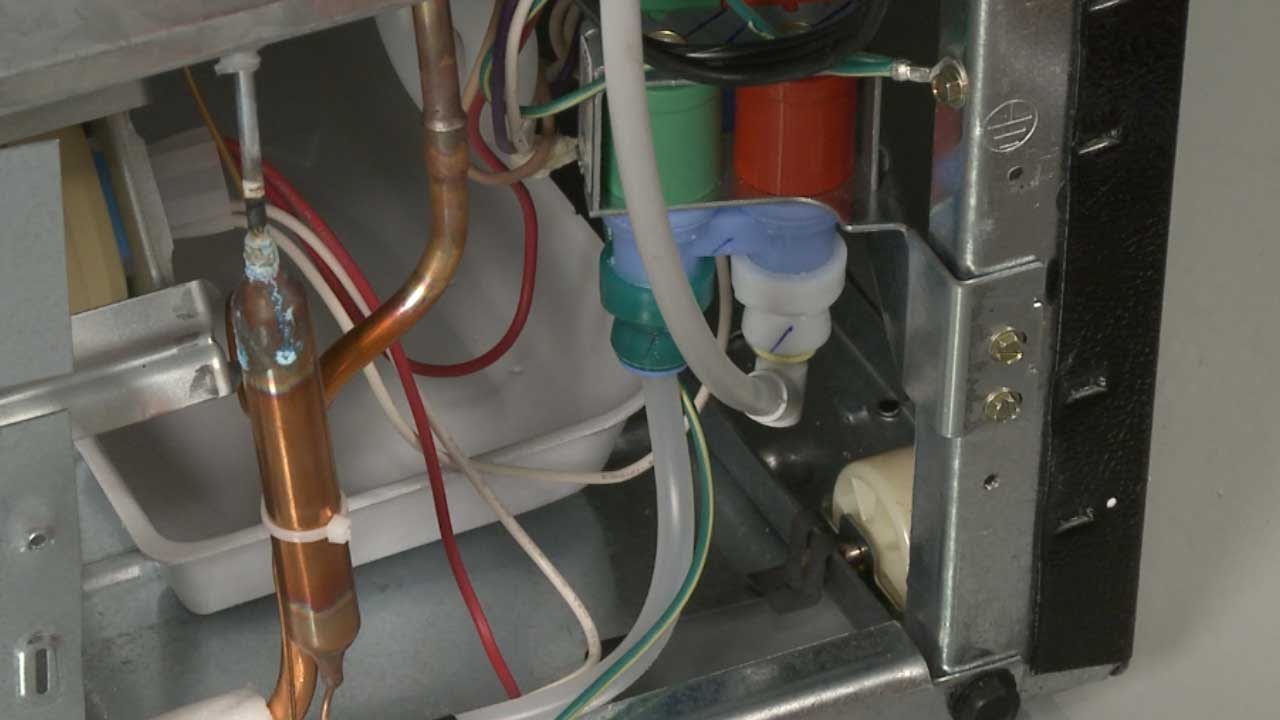
The water inlet valve is an electrically controlled valve (usually at the back of the fridge, near the bottom) that opens for a few seconds to fill the ice maker. When it fails, it can leak internally or not close fully. That can cause overfilling, frozen fill tubes, or mystery puddles (like a puddle that keeps showing up under the right front corner).
Signs the inlet valve is the culprit
- Dripping continues even when the ice maker is turned Off.
- Fill tube keeps freezing up again after you thaw it.
- Ice maker mold overfills or you get large fused cubes.
- You may see ice stalactites or chunky ice buildup at the fill tube or ice maker inlet area.
What you can do
- Check fittings first: With water Off, inspect the supply line connection and outlet line connection at the valve. A loose compression nut or push-to-connect fitting can drip.
- Replace the valve if it seeps internally: In most cases, you cannot reliably rebuild a modern fridge valve. Replacement is the normal fix.
- Less common: If your house water pressure is unusually high, it can contribute to weeping, overfill behavior, or stressed fittings. If you suspect that, consider checking pressure and adding a regulator based on local codes and manufacturer guidance.
Budget note: Inlet valves are often a reasonable DIY part, but take a photo of your model number and the existing valve wiring before ordering. There are look-alike valves that are not actually interchangeable.
Fix 3: ice maker cracks or loose parts
If water is reaching the ice maker but still ending up outside the mold, the problem can be the ice maker itself. Plastic ages, ice expands, and a tiny crack becomes a slow leak that freezes into a bigger mess.
What to look for
- Water or ice buildup directly under the ice maker, but the fill tube area looks fine.
- Ice bin turns into a solid block because water drips and refreezes.
- Visible crack lines in the mold, fill cup, or housing.
DIY checks
- Remove the ice bin and look up with a flashlight.
- Inspect the ice maker mold and corners for hairline cracks.
- Confirm the fill spout or fill cup is seated and not warped.
Repair vs replace: If the mold or housing is cracked, replacement is usually the only real fix. If it is just a loose mounting screw or a shifted fill cup, you may get away with tightening and re-seating parts.
Fix 4: defrost drain clogs
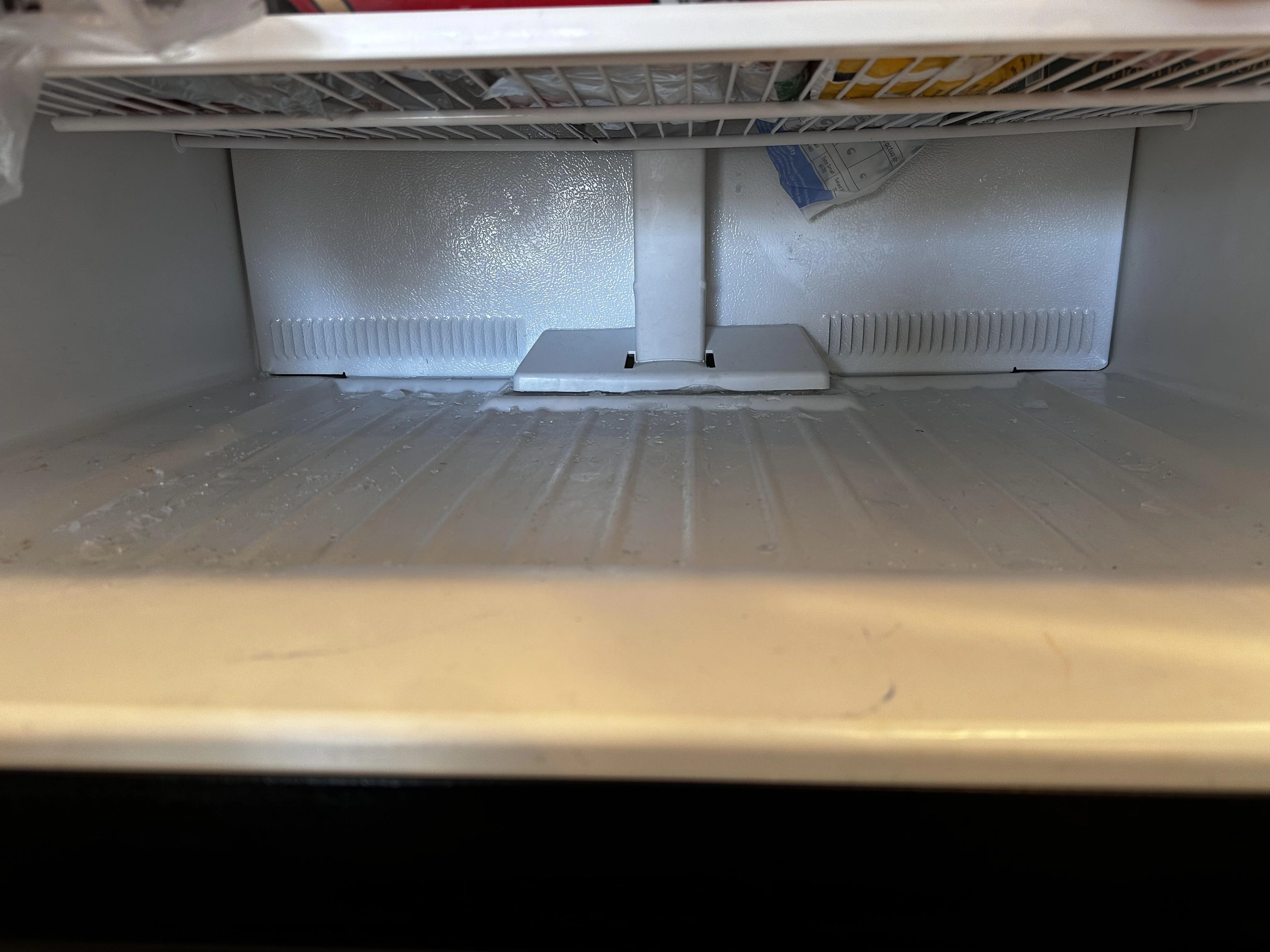
This one fools a lot of homeowners because the water shows up near the front of the freezer or under the fridge, and the ice maker gets blamed. A clogged defrost drain allows meltwater from the evaporator to overflow and freeze in the bottom of the freezer, then leak out.
Clues it is the defrost drain, not the ice maker
- Water pools at the bottom of the freezer, especially under drawers.
- Leak appears after a defrost cycle, not necessarily during ice making.
- Ice maker may still function normally.
Basic clearing steps
- Unplug the fridge.
- Remove freezer contents and any bottom panel needed to access the drain trough (model-dependent).
- Melt ice with warm air (hair dryer on low) and soak up water.
- Flush the drain with warm water using a turkey baster or squeeze bottle until it flows freely.
Also check: If water is showing up underneath the fridge, take a look at the drain pan under the unit. If it is cracked, out of place, or overflowing due to a blocked drain, it can mimic an ice maker leak.
If the drain line refreezes repeatedly, you may have an airflow issue, a missing drain heat clip (on some models), or a deeper blockage that needs more involved access.
Fix 5: leveling and door seals
I know this sounds too simple, but an unlevel fridge can create weird water behavior. If the cabinet is leaning forward or sideways, the ice mold may not sit the way it was designed, and water can slosh or overflow during fill.
How to check level
- Place a small level on a shelf inside the fridge and then on the freezer floor.
- Many manufacturers recommend the fridge be slightly higher in front, meaning a slight tilt back so doors self-close. Check your owner manual for the exact spec.
Quick fix
- Adjust the front leveling legs using a wrench or pliers (varies by model).
- Check the door gasket for gaps, tears, or frost buildup that suggests warm air intrusion.
Other leak points worth checking
Water line connections behind the fridge
Even a slow drip at a fitting can travel along a tube and show up far from the source.
- Look for mineral deposits, wet dust, or a shiny trail on the line.
- Check the saddle valve or shutoff valve (older saddle valves are notorious for seeping).
- If you have a push-to-connect fitting, make sure the tubing is cut clean and seated fully.
Door hinge water line routing
On some models, the ice maker water line routes through the door hinge area. A leak there can drip down the hinge, behind the toe-kick, and onto the floor.
Filter housing or filter not seated
If your fridge has an internal filter, a slightly mis-seated filter can leak during dispensing or ice maker fill cycles.
- Remove and reinstall the filter firmly.
- Inspect the O-rings for nicks.
When to repair vs replace
I am a big fan of repairing what you own, but I am also a fan of not sinking $300 into a $600 fridge that is already on its last legs.
Usually worth repairing
- Frozen fill tube due to a one-time airflow issue
- Loose water line fitting
- Defrost drain clog
- Inlet valve replacement on a fridge that is otherwise healthy
Consider parts or a pro
- The ice maker assembly is cracked and the replacement is expensive
- Repeated icing after multiple fixes, suggesting a control or temperature regulation problem
- You see water near wiring harnesses, control boards, or the cabinet insulation is waterlogged
Rule of thumb: If the fridge is under 8 years old and in good shape, a valve or ice maker replacement often makes sense. If it is older, compare the part cost plus your time against the price of a new unit and the risk of another failure next month.
My troubleshooting order
If you want the shortest path to a fix, this is the order I would personally follow.
- Confirm whether the leak stops when the ice maker is turned Off.
- Inspect and thaw the fill tube, then verify alignment.
- Watch or listen for a fill cycle (valve buzz) and check for spray at the tube or fill cup.
- Check behind the fridge for dripping fittings and wet trails. Move the fridge carefully and do not kink the line.
- Test for inlet valve seepage (leaks with ice maker Off, recurring fill tube freeze).
- Inspect ice maker mold and housing for cracks.
- Check freezer bottom for a defrost drain ice sheet and confirm the drain pan is in good shape.
- Level the fridge and inspect door gaskets.
If you get stuck, grab your refrigerator model number (usually inside the fridge compartment on a sticker) and take a few clear photos of where the water is starting and where it ends up. That combination saves a ton of time whether you are ordering parts or calling in help.
FAQ
Why does my ice maker leak only sometimes?
Intermittent leaks often come from an inlet valve that sticks occasionally, a fill tube that is starting to ice up, or a fridge that is just barely out of level so it only spills during certain fill cycles. It can also be a defrost drain that only overflows after defrost.
Can I keep using the ice maker while it leaks?
I would not. Water can freeze into the fan area, warp plastic parts, or seep into places it should not. Turn the ice maker Off until you identify the source.
Is a leaking ice maker dangerous?
Water and electricity are never best friends. Most leaks are minor, but water can reach wiring or create a slip hazard. If you see water near electrical connectors or you are unsure, unplug the fridge and call a technician.

About Marcus Vance
Content Creator @ Grit & Home
Marcus Vance is a lifelong DIY enthusiast and self-taught home renovator who has spent the last decade transforming a dilapidated 1970s ranch into his family's dream home. He specializes in budget-friendly carpentry, room-by-room renovations, and demystifying power tools for beginners. Through his writing, Marcus shares practical tutorials and hard-learned lessons to help homeowners tackle their own projects with confidence.