
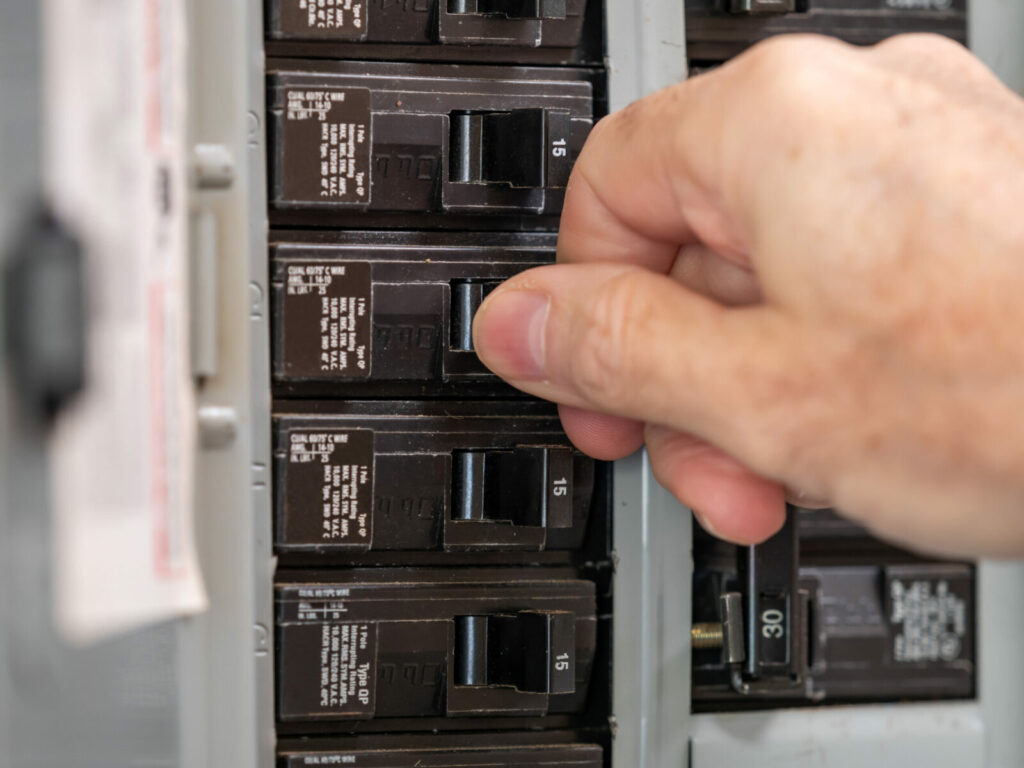
If your kitchen circuit breaker keeps tripping, it is doing its job: stopping a dangerous amount of current or reacting to a fault it thinks could start a fire or shock someone. The trick is figuring out which of those problems you have without guessing, and without turning your Saturday into an electrical science fair.
I have chased this exact issue in my own 1970s ranch more than once. The fastest path is a calm, incremental test: reduce the circuit to “nothing running,” then add one thing at a time until the protection device tells you what it hates.
First, a quick safety check
Before you start, keep this rule: do not open the electrical panel cover (the metal deadfront). You can flip breakers with the door open, but anything beyond that is electrician territory for most homeowners.
Stop and call an electrician now if you notice any of these
- Burning smell, smoke, sizzling, buzzing, or visible charring at an outlet, switch, or the panel.
- An outlet or faceplate is hot to the touch.
- The breaker will not reset (it immediately trips even with everything unplugged).
- Lights dim noticeably or flicker on that circuit, especially right before it trips (this can point to overload or a loose, overheating connection).
- You have aluminum branch wiring (common in some homes) and see loose connections or overheating signs.
- Water intrusion around outlets, under-sink wiring, dishwasher area, or the panel.
If none of those apply, you can do safe detective work.
Step 1: Figure out what is tripping
In kitchens you are often dealing with one of three devices reacting: the circuit breaker in the panel, a GFCI outlet, or an AFCI breaker (or a combo AFCI/GFCI breaker). Depending on your home’s age and local code adoption, you may have all of these, some of these, or just a standard breaker plus one GFCI outlet.
Breaker trips in the panel
- Common causes: overload (too many appliances at once), short circuit, arc fault, or a failing appliance or motor.
- Clue: handle sits in the middle, not fully OFF.
GFCI trips (outlet or breaker)
- Common causes: moisture, a faulty appliance with leakage current, a nicked cord, or miswired load terminals.
- Clue: outlet power is dead until you hit RESET on the GFCI device.
AFCI trips (breaker usually)
- Common causes: damaged cords, loose connections, failing appliance switches, or compatibility issues with certain motors and older appliances.
- Clue: many AFCI breakers have a small indicator light or trip code label inside the panel door. If yours does, read it.
What you do with this information: if the panel breaker trips, you are hunting overload, a bad appliance, or wiring trouble. If a GFCI trips, you are hunting moisture or leakage. If an AFCI trips, you are hunting arcing and cord or connection problems, and also verifying the appliance is in good shape and plays nicely with AFCI protection.
Step 2: Do the unplug test
This is my go-to because it works even when the kitchen is wired in unexpected ways.
What you need
- A phone or notepad
- A lamp or outlet tester (optional but helpful)
- Patience for 20 to 40 minutes
How to do it
- Unplug everything you can on that circuit first. Do this before you reset anything. If a plugged-in appliance has a dead short, resetting the breaker with it still connected can cause an immediate, hard trip that is startling and hard on the breaker.
- Think broader than the countertop. Include the microwave, toaster, coffee maker, kettle, air fryer, mixer, under-cabinet lights that plug in, and anything tucked in corners. Also look for power strips or extension cords. They do not belong in most kitchen setups, and they can add heat and connection problems.
- Remember: “nothing plugged in” is not always “no load.” Some kitchens have hardwired or semi-hidden loads on the same circuit, like a dishwasher, disposal, built-in microwave, hood, or even a refrigerator outlet you never think about. Keep that in mind if you swear everything is unplugged and it still trips.
- Reset any tripped GFCIs. A GFCI by the sink may protect other outlets downstream, so a different dead outlet can still be “because of” that one GFCI.
- Now reset the breaker the right way. Turn it fully OFF, then ON (most people skip the fully OFF step).
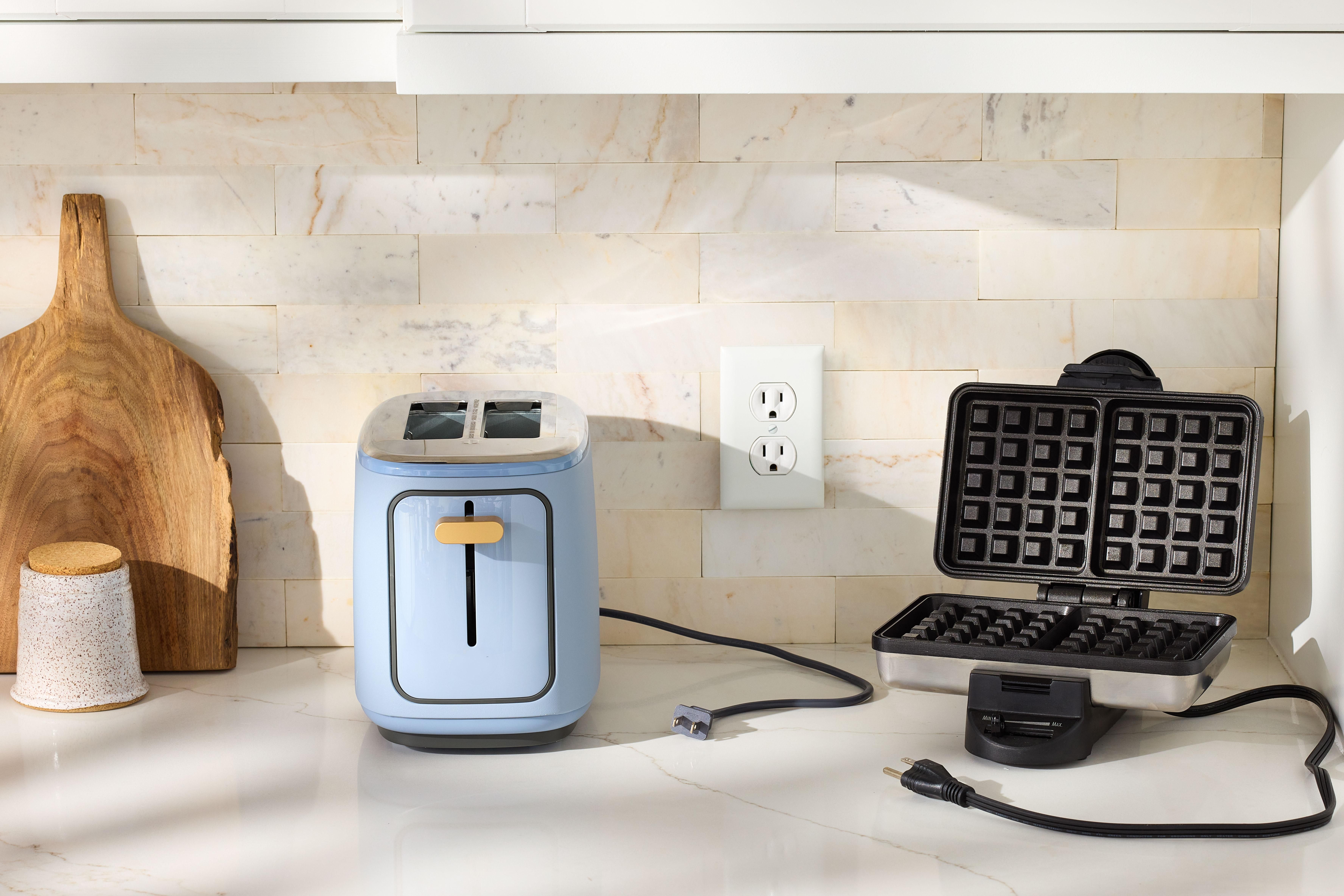
- Plug items back in one at a time. Wait 30 to 60 seconds between items, then switch the appliance on. For heating appliances (kettle, toaster oven, air fryer), let it run through the start and initial heating cycle. If the breaker trips right when you turn on one device, that device or its cord is a prime suspect.
- Confirm the suspect. Unplug it, reset the breaker, then run a different appliance in the same outlet. If the breaker holds, the outlet is probably fine and the suspect appliance is the issue.
If it only trips when two things run together
That screams overload. Kitchens are famous for this, especially when a microwave overlaps with a toaster, kettle, or air fryer. More on that below.
Step 3: Map what is on the breaker
In a perfect world, your panel label tells you exactly what is on “Kitchen Countertops.” In the real world, especially in older homes, the same breaker might feed a dining room outlet, a pantry light, and the receptacle behind the fridge.
Quick mapping method
- Plug a lamp (or tester) into a countertop outlet.
- Flip the suspected breaker OFF.
- Walk the kitchen, dining area, pantry, and nearby rooms and note everything that lost power.
- Move the lamp or tester to other outlets you suspect are tied in (including the fridge area, pantry, island, dining room) and repeat until you have a solid list of “dead when this breaker is off.”
Why this matters: if your breaker trips “randomly,” it might be because someone is running a vacuum in the dining room or a space heater in the breakfast nook on the same circuit.
Step 4: Check for overload
Most nuisance kitchen trips I see are not mysterious faults. They are plain old math.
The simple load rule of thumb
Watts ÷ 120 volts = amps. A 1500W appliance pulls about 12.5A. Many countertop appliances live in the 1200 to 1800W range.
Common overload combos
- Microwave + toaster
- Microwave + electric kettle
- Air fryer + toaster oven
- Coffee maker (heating cycle) + anything else “hot plate” style
- Holiday buffet: slow cooker + griddle + warming tray
What to do: run heating appliances one at a time, or move one to a different circuit. In many jurisdictions that follow NEC-style rules, at least two 20A small-appliance branch circuits are required to serve kitchen, pantry, breakfast, and dining receptacles, and countertop receptacles are typically served by them. That said, older homes and DIY rewires do not always match that ideal, and the loads are not always split the way you would expect.
Step 5: AFCI and GFCI trips
AFCI and GFCI protection saves lives, but it can also be picky. The key is learning what patterns suggest a real hazard.
When it is likely a real fault
- It trips with one specific appliance every time, especially when you wiggle the cord near the plug.
- It trips when moisture is present (dishwasher steam, wet countertop, under-sink leak).
- It trips more often over time, not less.
When it might be a compatibility issue
- It only trips during motor start-up on certain appliances (older refrigerators, some microwaves, some vacuums), and everything checks out otherwise.
- It trips during storms or utility switching events and then behaves normally.
Important: “compatibility issue” does not mean “ignore it.” It means you still confirm the appliance is healthy and listed, and that cords and outlets are in good condition. Some AFCIs are simply more compatible than others. If you suspect the breaker itself is the problem, that is a job for a licensed electrician who can test and replace it safely.
Step 6: Inspect cords and outlets
This is where my early DIY confidence got me humbled. I once chased a “bad breaker” for half a day and the culprit was a half-crushed appliance cord shoved behind a rolling cart.
What to look for
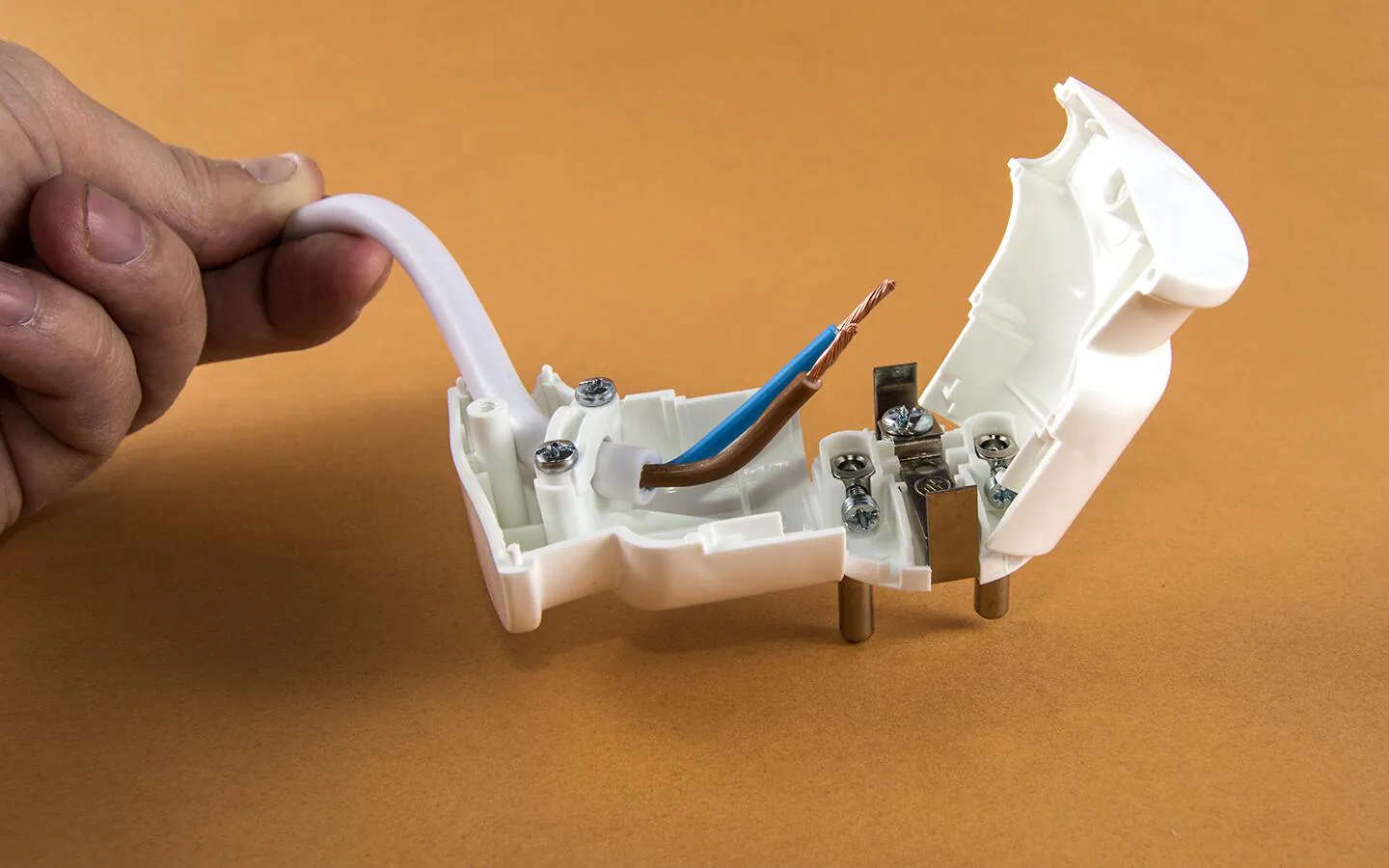
- Cracked insulation, flattened sections, or kinks near the plug.
- Brown marks, melting, or a hot-plastic smell at the plug blades.
- Loose plug fit in the outlet (it should grip firmly).
- GFCI outlets that will not reset, feel warm, or have a “mushy” reset button.
- Appliance cords pinched by a fridge, dishwasher, or a drawer track.
- Power strips and extension cords used as “permanent wiring,” especially under sinks or behind appliances.
If you find a damaged cord or plug, stop using it. Replace the cord if the appliance allows it, or replace the appliance. If the outlet shows heat damage or the plug fit is loose, that outlet should be replaced by someone comfortable working safely, or by an electrician.
Step 7: Check under the sink
Kitchens add one ingredient other rooms do not have: water. A tiny drip can turn into a trip, especially on GFCI protected circuits.
Check these areas
- Under the sink: leak trails, damp cabinet floor, wet extension cords (should not be there), disposal wiring.
- Dishwasher: moisture at the junction box, damaged cable sheath, signs of overheating.
- Garbage disposal: jammed motor drawing high current, water intrusion at the switch or outlet.
Stop and call a pro if you see wet wiring, corrosion on electrical connections, or any heat discoloration.
Quick culprit checklist
- Trips when two appliances run: overload. Stagger use or move one appliance to a different circuit.
- Trips when one appliance turns on: suspect appliance, cord, or plug.
- Trips with nothing unplugged and nothing hardwired running: wiring fault, bad breaker, or a hidden load you have not found. Call an electrician.
- GFCI trips mostly with water or humidity: moisture or leakage. Investigate under-sink and dishwasher areas.
- AFCI trips with a certain cord: damaged cord or arcing at plug or outlet. Replace the cord or device, and inspect the outlet.
When to call an electrician
I am all for DIY, but I am also a big fan of sleeping at night. Call an electrician if:
- The breaker trips immediately with the circuit unloaded.
- You suspect a hardwired appliance (dishwasher, disposal, built-in microwave) is involved and you are not 100 percent comfortable verifying safely.
- There is any sign of heat damage, arcing, or melted plastic.
- The kitchen has repeated AFCI or GFCI trips you cannot tie to one appliance or moisture event.
- Your panel is older, crowded, or shows corrosion.
A good electrician can test circuit load, check connections, verify proper GFCI protection and wiring, and confirm whether you need a dedicated circuit for a microwave or other heavy hitter. They can also evaluate whether a breaker is failing or weakened, which happens, but is less common than overload or an actual fault.
My takeaway
Most tripping kitchen breakers come down to one of three things: too much load, a failing appliance or cord, or a real wiring issue. The unplug test plus outlet mapping will separate those fast.
If you want, tell me what trips (panel breaker or GFCI), what appliances you were running, and whether it trips instantly or after a few minutes. I can help you narrow down the most likely culprit.

About Marcus Vance
Content Creator @ Grit & Home
Marcus Vance is a lifelong DIY enthusiast and self-taught home renovator who has spent the last decade transforming a dilapidated 1970s ranch into his family's dream home. He specializes in budget-friendly carpentry, room-by-room renovations, and demystifying power tools for beginners. Through his writing, Marcus shares practical tutorials and hard-learned lessons to help homeowners tackle their own projects with confidence.