
🚨 In a DIY emergency or rush?
Skip the details and jump straight to our 30-second cheat sheet for the most crucial info.
If your double-bowl kitchen sink is backing up on both sides at the same time, it feels like the whole kitchen just turned against you. The good news is: this symptom is actually helpful. Most of the time it means the clog is not in one bowl’s little branch line. It is usually after the two drains meet.
In my old 1970s ranch, I learned this the hard way after I “fixed” the left bowl three different times and still couldn’t run water for more than 10 seconds without a murky pool showing up on both sides. Once you understand how a double sink is plumbed, the troubleshooting gets a lot more straightforward.
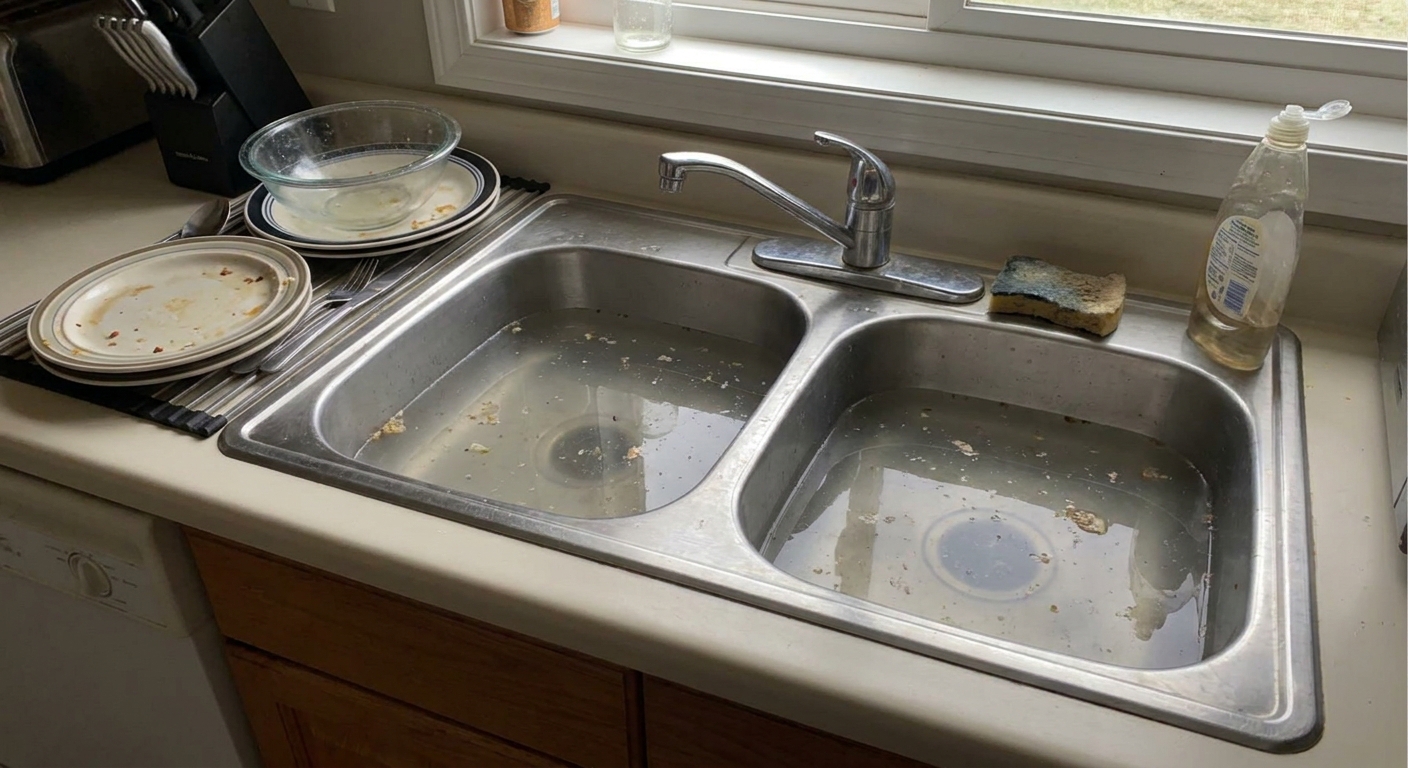
Why both sides back up
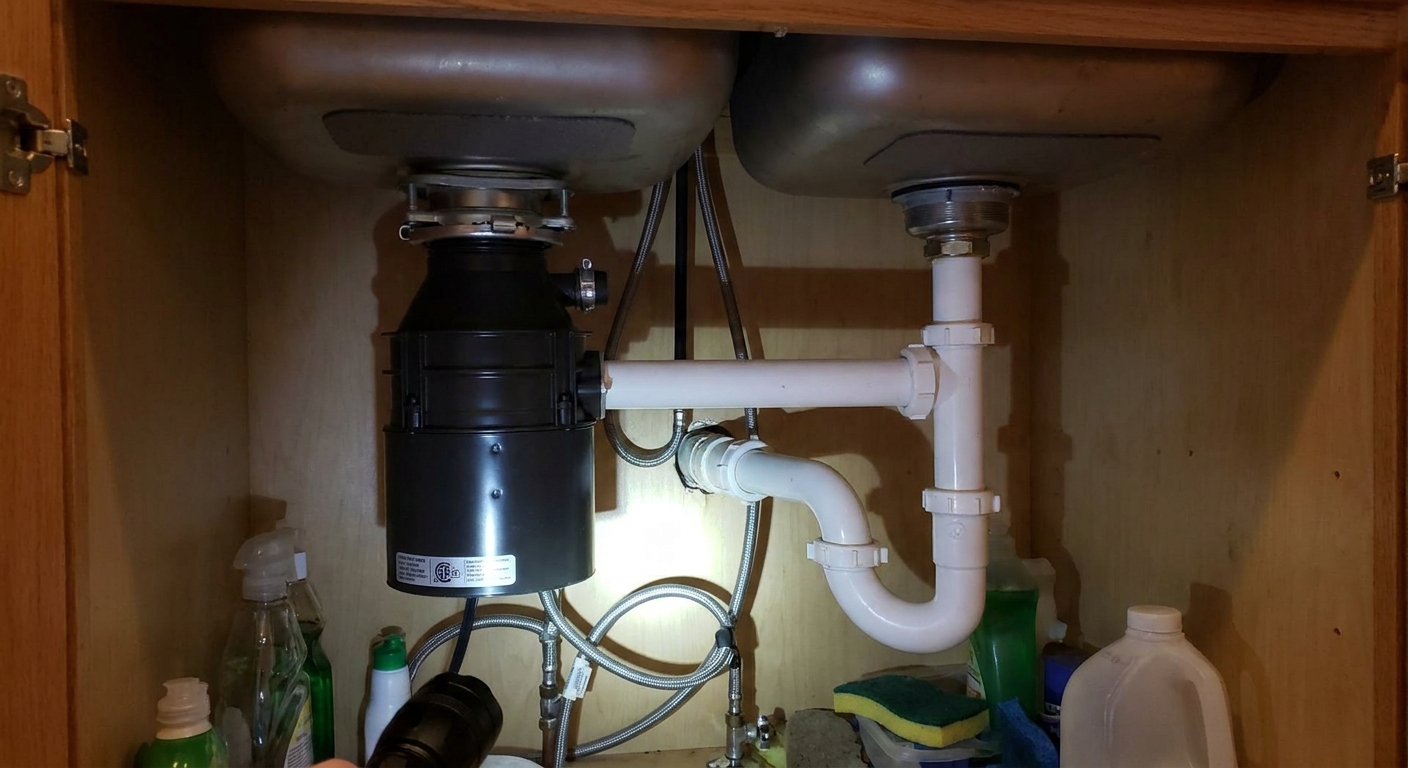
A typical double-bowl setup has two drains that merge into one line, then drop into a trap (often a P-trap) and out to the wall drain. In many homes, the dishwasher and disposal also tie into this same zone.
Translation: If both bowls fill, the blockage is usually in one of these places:
- At the shared connection where both bowls meet (often called a continuous waste tee or center outlet waste)
- In the P-trap or trap arm (the pipe between the trap and the wall)
- Downstream in the branch drain in the wall or under the floor
- Less commonly, a venting issue that makes the drain slow and more prone to backing up
Common causes
1) A clog in the shared drain line
This is the big one. If the clog is after the two bowls combine, water from either side has nowhere to go, so it backs up into both basins.
Common culprits: grease that cooled in the pipe, starchy sludge from pasta and rice, coffee grounds, and “just a little bit” of food that went down the disposal for months.
2) Grease coating further downstream
Grease often does not form a perfect cork right at the sink. It tends to coat the pipe wall downstream, slowly narrowing the opening until the drain cannot keep up. That is why the sink might drain “okay-ish” for a while, then suddenly back up when you run a full stream of water.
3) Disposal tie-in clogs
If one bowl has a disposal, it often connects to the other bowl through a horizontal run. That run can pack up with fibrous food (celery, onion skins), egg shells, and grease. When it plugs, it can act like a dam and cause both bowls to rise together.
Watch for: the disposal side fills first, then the other side follows as the water level equalizes.
4) Venting problems
Drains need air to move water smoothly. If the vent is blocked, or if the system relies on an air admittance valve (AAV, sometimes called a “cheater vent”) that has failed, the drain can gurgle and drain slowly.
Important reality check: venting issues usually show up as slow draining and gurgling first. A true both-bowls standing backup is more often a physical clog, but poor venting can make an already marginal line back up more easily.
Clues: gurgling, “glug-glug” sounds, bubbles, or a sink that drains noticeably worse when you run a heavy flow.
5) A bigger branch or main line issue
Sometimes a kitchen backup is the first sign your main sewer line or a shared branch is restricted. Kitchens send a lot of grease and solids, so they can be the “weak link” that shows symptoms first.
Clues it is bigger than the kitchen: a nearby bathroom tub backs up, toilet bubbles when the kitchen drains, or multiple fixtures are slow at the same time.
Before you start
- Stop running water. It sounds obvious, but it prevents making the mess worse.
- Cut power to the disposal. Unplug it under the sink, or switch off the breaker. Never put your hands near a disposal that can turn on.
- Protect yourself and the cabinet. Put a shallow pan or old baking sheet under the trap, keep towels nearby, and consider gloves and eye protection before you loosen anything.
If the sink is full and gross, I also like to scoop some water into a bucket so I am not doing plumbing work with both bowls brim-full.
DIY fixes in order
Step 1: Quick test
Do a simple test to narrow down where the restriction is:
- Fill one bowl with a few inches of water.
- Run a small stream into the other bowl.
- Watch how fast the water level rises and whether water crosses over through the shared connection.
How to read it: If both bowls rise quickly and the water seems to “hunt” for level in both basins, suspect a clog after the bowls join (trap, trap arm, or beyond). If crossover happens immediately with very little draining, the restriction can be closer to the sink, like the continuous waste tee area or the trap.
Step 2: Plunge the right way
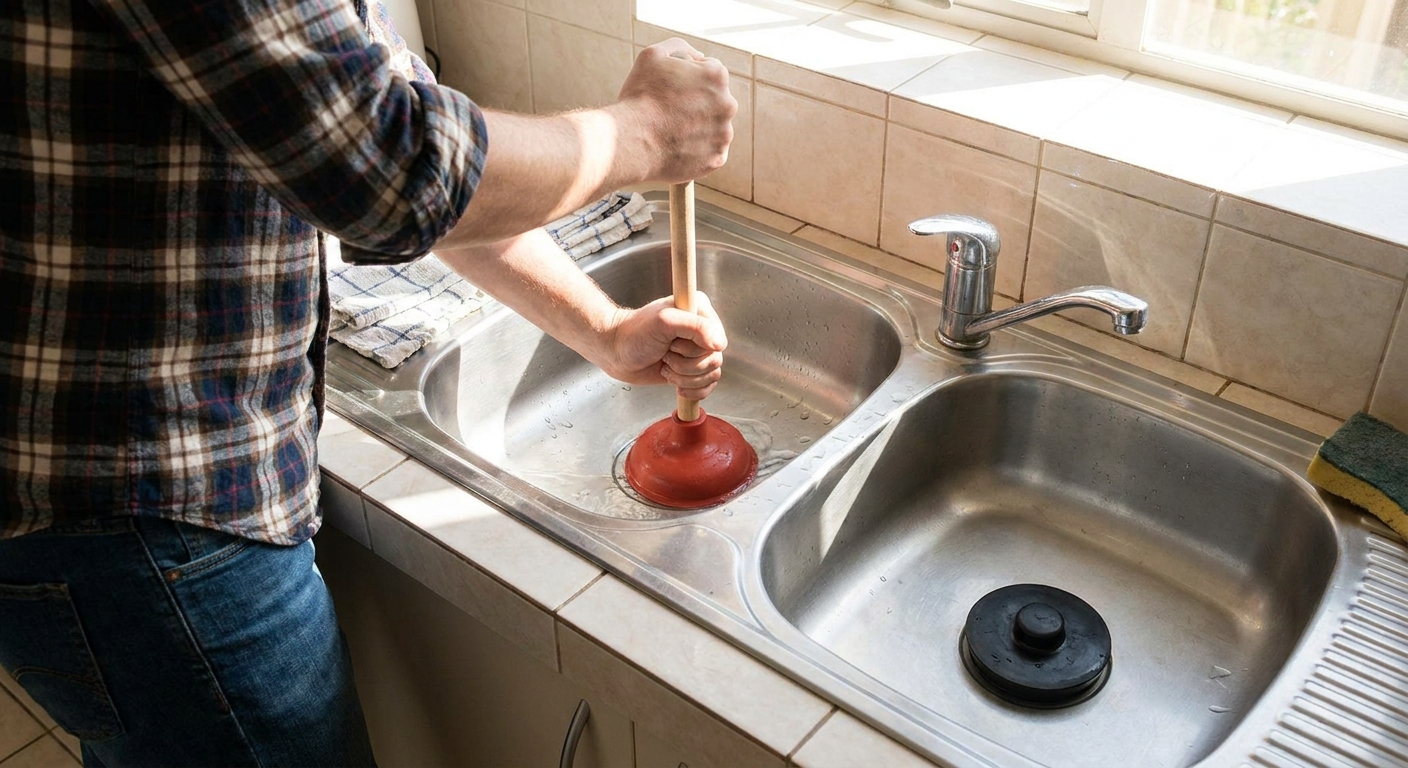
Plunging works best when you can build pressure. With a double sink, the second drain is basically a pressure leak unless you block it.
- Seal the other drain with a snug stopper or wet rag.
- If your sink has an overflow opening, tape or plug it so you can actually build suction.
- If one side has a disposal, plunge the non-disposal side first. It is usually easier to get a seal.
- Add enough water to cover the plunger cup.
- Give 10 to 20 strong plunges, keeping the seal tight.
- Release and see if the water drops.
Tip from my own mistakes: gentle “pumping” usually just aerates the water and makes you feel productive. You want firm, rhythmic strokes that actually move the clog.
Avoid: plunging right after using chemical drain cleaners. Splash-back is not worth it.
Step 3: Check disposal and dishwasher tie-ins
If your dishwasher is not draining or you see backup when it runs, the clog is often at one of these points:
- Dishwasher hose to the disposal or tailpiece (food sludge can build up at the port)
- Knockout plug in a newly installed disposal (if it was never punched out, dishwasher water has nowhere to go)
- Disposal discharge elbow (small bend that catches debris)
If the problem started right after a disposal install, the knockout plug is a prime suspect.
Step 4: Clean the P-trap
If plunging does not clear it, the next best DIY move is inspecting the trap. This is where a lot of kitchen gunk collects, and it is accessible.
What you’ll need
- Bucket or shallow pan
- Channel-lock pliers (optional if slip nuts are hand-tight)
- An old toothbrush or small bottle brush
- Gloves and eye protection
- New slip-joint washers (nice to have)
How to do it
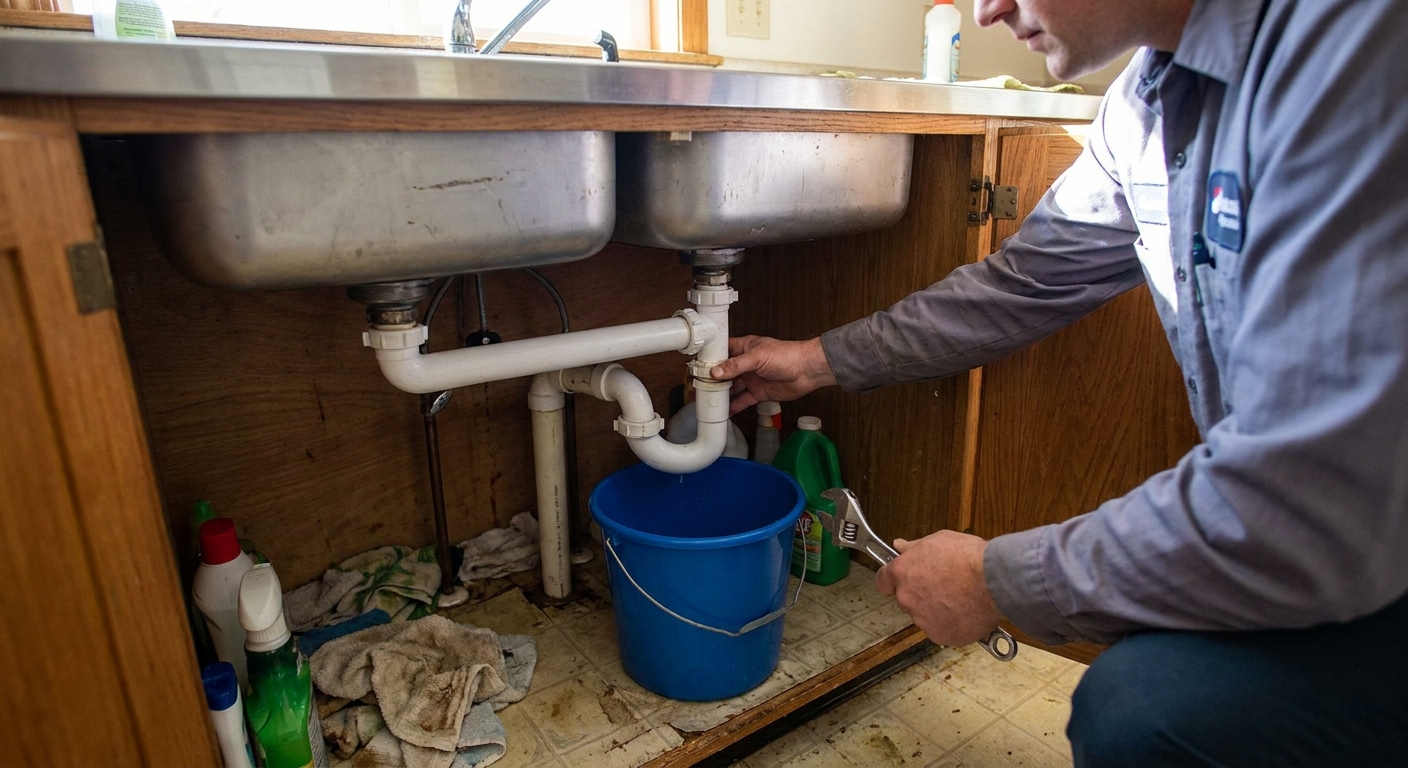
- Place the bucket under the trap.
- Loosen the slip nuts on both sides of the P-trap.
- Lower the trap carefully. Expect water and sludge.
- Check for a solid plug (grease, pasta, a lemon wedge, a surprise bottle cap).
- Clean the trap and inspect the washers.
- Reassemble hand tight, then a small additional snug if needed.
- Test for leaks with a paper towel around each joint.
Important: If the trap is clean and water still will not drain with the trap removed, the blockage is almost certainly in the wall line (the trap arm or beyond).
Step 5: Snake the wall drain
If you removed the P-trap and the pipe in the wall is holding water or draining painfully slow, a small hand auger or drill-driven drain snake can often clear the restriction.
- For many kitchen lines, a 1/4 inch or 5/16 inch cable is a good starting point.
- Feed the snake into the wall pipe a little at a time.
- When you hit resistance, rotate and work it through.
- Pull it out and clean the cable as you go.
- Reassemble the trap and flush with hot tap water (not boiling) for a minute.
Caution: Big powered drain machines can kink cables, whip in a cabinet, and generally turn a small problem into a loud one. If you are not comfortable controlling the tool, this is a solid place to stop and call a plumber.
My thrifty note: You do not need a giant rental machine for many kitchen clogs. A basic hand auger can solve a lot, especially in homes where the issue is grease and sludge, not tree roots.
If you have an AAV
Some kitchen sinks use an air admittance valve under the sink instead of a traditional roof vent connection. It often looks like a small capped cylinder attached to a vertical stub of pipe.
- If it has failed, you may notice persistent gurgling and sluggish draining.
- Replacement is usually straightforward, but it can be code dependent and access matters.
If you suspect venting and you are not sure what you have, this is one of those cases where a quick plumber visit can save you a lot of second-guessing.
When it is bigger than the sink
Here are the situations where I stop tinkering and start thinking bigger:
- Multiple fixtures back up (kitchen plus a tub, or a toilet that bubbles when the sink drains)
- You cleared the trap and trap arm but the sink still backs up quickly
- Water comes up in a different drain when you run the kitchen faucet
- Repeated backups every few days or weeks, especially after normal use
- Sewage smell or dirty water in low drains
Those signs often mean a clog in a bigger branch line or the main. That is where a pro with a camera and proper machine can save you money in the long run by clearing it fully and diagnosing the cause.
What not to do
- Do not dump chemical drain cleaners down a kitchen sink with standing water. They often sit in the trap and can damage older plumbing, and they make later DIY work hazardous.
- Do not keep running the disposal hoping it will “chew through” a backup. If the line is blocked, it just churns water and can overheat.
- Do not overtighten slip joints when reassembling the trap. Hand tight plus a small snug is usually enough. Cracked fittings are an avoidable pain.
- Do not ignore vent symptoms like consistent gurgling. If you keep clearing clogs and symptoms return fast, venting should be on your radar.
How to prevent it
- Grease goes in the trash, not the drain. Wipe pans with a paper towel before washing.
- Use the disposal like a helper, not a trash can. Small scraps only, lots of cold water, short runs.
- Strain the sink. A simple basket strainer catches the stuff that turns into sludge later.
- Hot water rinse (hot tap water for a minute after dishwashing). This is not a cure for grease, but it can help move a little residual oil along.
- Know your cleanout location. If you ever do get a bigger backup, a cleanout can be the difference between a quick fix and a cabinet full of water.
FAQ
Why does my double sink back up when the disposal runs?
Because the disposal discharges a lot of water fast, and if the drain line downstream is restricted, it cannot keep up. That water rises into the other bowl through the shared connection. The clog is usually after the bowls join, or in the horizontal tie-in between bowls.
One side drains, but the other fills up. Is that still a downstream clog?
Often, yes. Water will seek the easiest path. If one bowl has a slightly different geometry or a disposal, you can see uneven behavior even with a shared blockage. Start with plunging while sealing the other drain, then check the trap.
If the P-trap is clear, what is the next most likely spot?
The trap arm in the wall and the branch line immediately beyond it. That is where grease buildup loves to live, especially in older homes with longer horizontal runs.
Could a blocked vent really cause a backup?
A vent issue usually causes slow draining and gurgling first. It can contribute to backups by making the system drain inefficiently, but if you have standing water in both bowls, a physical restriction downstream is the most common root cause.
The 30-Second Cheat Sheet
Essential takeaways for: Kitchen Sink Backing Up on Both Sides: Causes and Fixes
What it usually means
If both bowls of a double kitchen sink back up at once, the clog is usually downstream of where the two drains join (P-trap, trap arm, wall drain, or further). A venting issue (including a failed air admittance valve) can make drains slow and gurgly, but a true standing-water backup is most often a physical restriction.
Fast DIY order of operations
- Stop using water and unplug the disposal (or switch off the breaker).
- Plunge correctly: seal the other drain with a stopper or wet rag. If your sink has an overflow opening, tape or plug it for better suction. Plunge 10 to 20 strong strokes.
- Check disposal and dishwasher tie-ins: clogged disposal elbow, gunked dishwasher port, or a disposal knockout plug that was never removed.
- Remove and clean the P-trap with a bucket underneath. Wear gloves and eye protection. If the trap is clean but the wall pipe will not drain, the clog is beyond the trap.
- Snake the wall drain (trap arm) with a hand auger (often 1/4 inch or 5/16 inch cable for kitchen lines) if the trap was not the issue. Go slow and avoid aggressive power machines in tight cabinets.
Signs it is a main line or bigger branch clog
- More than one fixture is slow or backing up (kitchen plus tub/toilet)
- Toilet bubbles when the kitchen drains
- Clearing the trap does nothing
- Repeated backups every few days or weeks
Stop and call a pro
- Sewage is backing up anywhere, or you smell strong sewer gas
- Water is leaking into the cabinet, walls, or ceiling below
- You are on septic and multiple drains are acting up
- You cannot safely access the piping or a cleanout
What to avoid
- Chemical drain cleaners with standing water (hazardous and often ineffective on grease plugs)
- Running the disposal over and over during a backup
- Overtightening slip-joint nuts when reassembling
Prevention
- Keep grease out of the drain and wipe pans first
- Use a sink strainer
- Run plenty of cold water when using the disposal
💡 Tip: Scroll up to read the full article for detailed, step-by-step instructions.
⬆️ Back to top
About Marcus Vance
Content Creator @ Grit & Home
Marcus Vance is a lifelong DIY enthusiast and self-taught home renovator who has spent the last decade transforming a dilapidated 1970s ranch into his family's dream home. He specializes in budget-friendly carpentry, room-by-room renovations, and demystifying power tools for beginners. Through his writing, Marcus shares practical tutorials and hard-learned lessons to help homeowners tackle their own projects with confidence.