
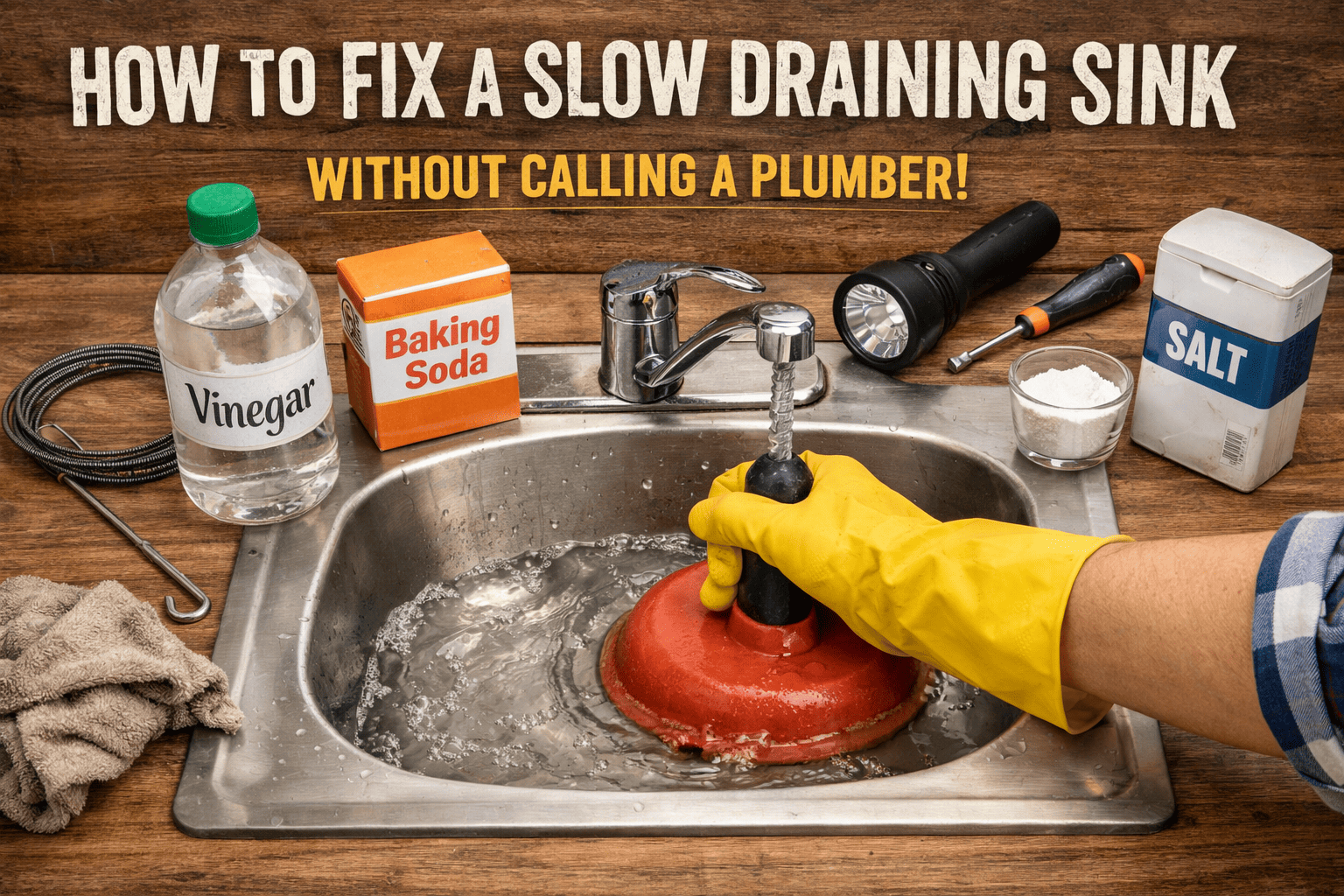
A slow-draining kitchen sink is one of those problems that feels minor until the basin keeps filling up every time you rinse a pan. The good news is this usually is not a “pipe is completely blocked” emergency. It is more often a partial clog made of grease and food sludge, a restriction at the disposal, or a venting issue that makes the drain act sluggish.
I have lived this one more times than I care to admit. My early mistake was going straight to harsh chemicals, which did not fix the real cause and was a headache when I later had to take the trap apart. Below is the step-by-step I use now, starting with the least invasive options.
What “slow but not clogged” usually means
If your sink eventually drains, you are typically dealing with one of these:
- Grease buildup in the drain line that narrows the pipe. Water still passes, just slowly.
- Gunk in the P-trap (the curved pipe under the sink) catching coffee grounds, rice, onion skins, and soap scum.
- Restriction at the disposal or drain inlet, like a partially blocked disposal outlet, baffle, or a clogged dishwasher nipple.
- Venting issues that slow flow and cause gurgling, especially when other fixtures run.
- Downstream partial blockage in the branch line to the wall or farther along the main.
Quick clue: If the sink drains slow only after you run the disposal, the restriction is often at the disposal outlet or the dishwasher connection. If it drains slow even with no disposal use, suspect the trap or the line in the wall.
Tools and supplies
- Bucket and towels
- Cup plunger (not a toilet flange plunger)
- Flashlight
- Dish soap
- Adjustable pliers or channel locks (optional)
- Bottle brush or old dish brush
- Gloves and eye protection (especially for snaking)
- Small hand snake or drill-powered drain auger (if needed)
Safety and what to avoid
- Skip chemical drain cleaners for slow kitchen drains. They rarely dissolve grease plugs completely, can damage some plumbing over time, and make any later disassembly risky.
- Unplug the disposal or switch it off at the breaker before you touch anything underneath.
- Have a bucket and towels ready. Even a “slow drain” trap holds plenty of water.
Step-by-step fixes
Step 1: Test and narrow it down
This takes 2 minutes and saves a lot of guessing.
- Run hot tap water only for 30 to 60 seconds and watch whether it drains steadily or starts to pool.
- If you have a disposal, run water and flip it on briefly. If the sink backs up or drains noticeably worse while the disposal runs, suspect a restriction at the disposal outlet elbow or dishwasher inlet nipple. (Running the disposal can also temporarily stir things up, so I pay more attention to “worse during disposal” than “better after disposal.”)
- Run the dishwasher or put it in a drain cycle. If the sink backs up during dishwasher draining, the dishwasher connection or branch line is a prime suspect.
- Listen for gurgling. Gurgling can point to venting problems or a downstream restriction, so it is a clue, not a verdict.
Step 2: Clear the easy stuff up top
Before you grab tools, clear the obvious choke points.
- Pull out and scrub the sink strainer or stopper area.
- If you have a disposal, shine a flashlight inside and remove any visible buildup around the inner lip.
- If your dishwasher just started backing up after a new disposal install, check that the dishwasher knockout plug inside the disposal inlet was removed. That one gets a lot of people.
Step 3: Plunge the right way
Plunging a kitchen sink is different from a toilet. You are trying to move a greasy slug, not a solid blockage.
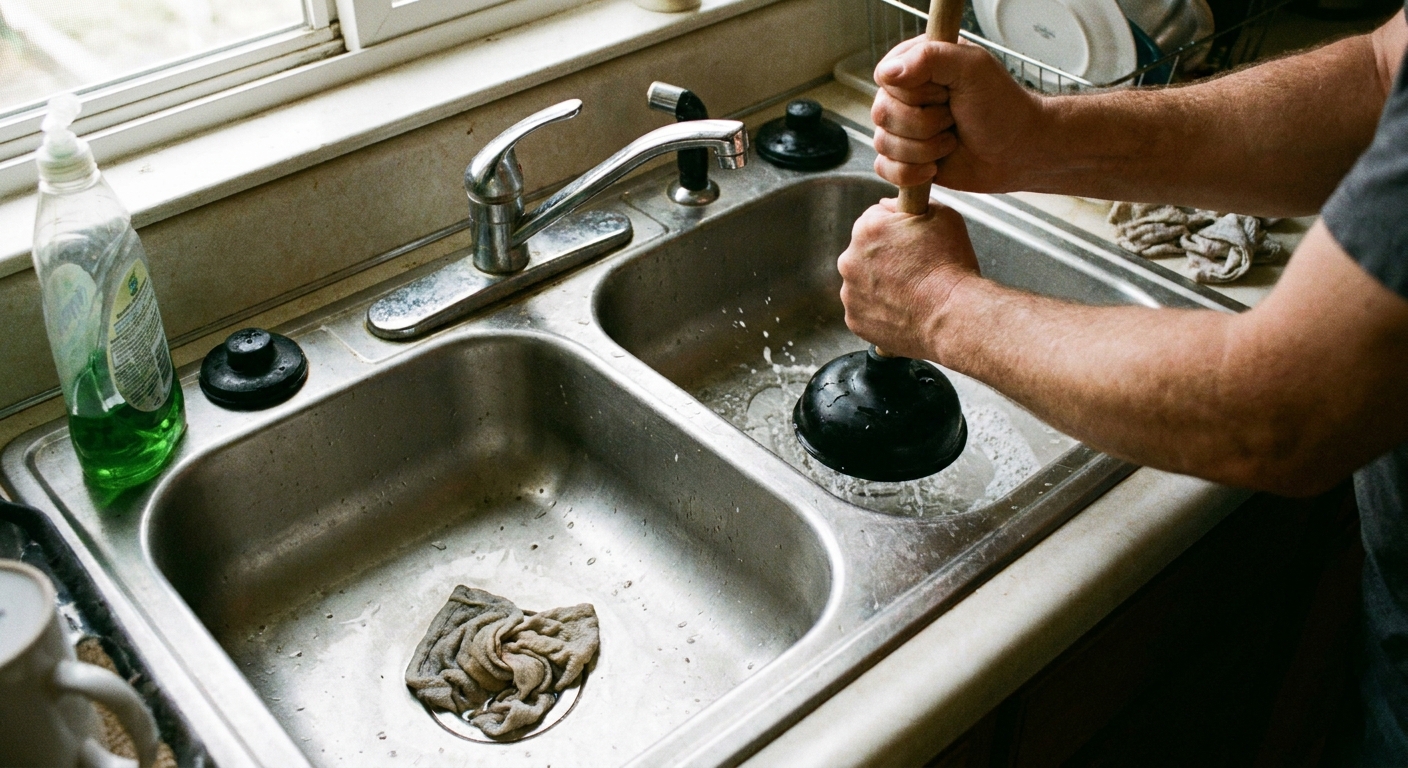
- Add 2 to 3 inches of hot water to the basin. If the sink is already full, bail it out first so you are not splashing gross water everywhere.
- Double-bowl sink: plug the other drain with a wet rag or stopper. Many double sinks tie together under the counter (often both bowls ultimately drain through the disposal side), so if you do not seal the other bowl you just push air back and forth instead of pressurizing the clog.
- Place a cup plunger over the drain and do 10 to 15 firm strokes, then lift to break suction.
- Run hot water and see if the drain speed improved.
Step 4: Flush grease safely
Grease is one of the most common causes of a slow kitchen sink. The goal is to soften and carry it away, not to “cook” it deeper into a cool pipe run.
- Start with hot tap water for a minute.
- Squirt a small amount of dish soap into the drain.
- Follow with more hot tap water, letting it run in stages.
- If you want to use a kettle, use very hot water, not a rolling boil, and pour slowly.
Plastic pipe note: If you have PVC or ABS drains, avoid repeated dumps of boiling kettle water. Very hot water can soften plastic or stress older seals and slip-joint washers over time. Hot tap water plus dish soap is usually enough for a partial slowdown.
Step 5: Check common disposal restrictions
If your sink has a garbage disposal, there are two common slow-down points that are not a full clog.
- Disposal outlet elbow: Grease and sludge collect right where the disposal exits into the trap.
- Dishwasher inlet nipple: If your dishwasher drains into the disposal, that small connection can clog with food sludge.
If you are comfortable under the sink, remove the trap (details below) and inspect the disposal outlet and the dishwasher nipple for buildup.
Step 6: Clean the P-trap
If plunging and flushing did not do it, the trap is the next stop. This is still a beginner-friendly job, and it is where I find the “mystery paste” most of the time.
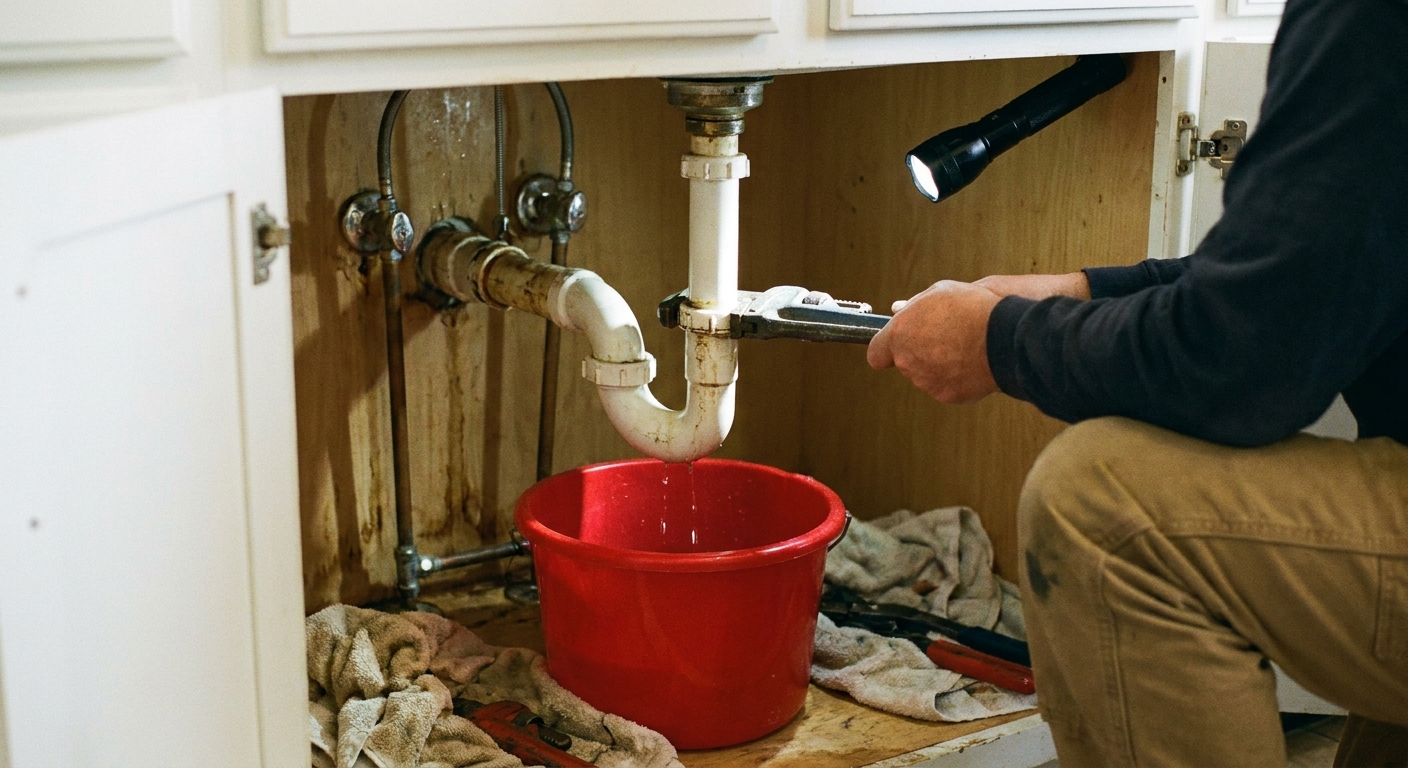
- Unplug the disposal (if present).
- Place a bucket under the trap and lay down towels.
- Support the trap with one hand while you loosen the slip nuts with the other, so you do not stress the piping.
- Loosen the slip nuts by hand. Use pliers gently if they are stubborn.
- Remove the trap and dump it into the bucket.
- Scrub the inside with a bottle brush or old dish brush.
- Check the trap arm going into the wall for gunk at the opening.
- Reinstall and hand-tighten, then snug slightly. Do not over-tighten.
- Run water and check for leaks.
Step 7: Snake the line
If the P-trap was fairly clear and the sink still drains slowly, the restriction is likely in the line beyond the trap. This is where a small hand snake or a drill-powered drain auger earns its keep.
- Wear gloves and eye protection.
- Remove the P-trap again and insert the snake into the pipe going into the wall.
- Feed slowly, rotating as you go.
- Do not force it. If you hit something solid and it will not advance, back off and try again. Forcing a cable can damage older piping or punch through a weak spot.
- Pull the snake back and wipe it clean. Repeat until it comes back mostly clean.
- Reassemble the trap and flush with hot tap water and dish soap.
Tip from my own mess-ups: Put down a piece of cardboard and an old towel before snaking. Drain cables love to fling little black dots of sludge right when you think you are being careful.
When it is venting
A kitchen drain needs air to flow smoothly. If venting is poor, water can drain slowly and you may hear gurgling or see the trap water get pulled around.
Important: Gurgling and slow drainage can also be caused by a downstream restriction. If you are not getting results after trap cleaning and a basic snake, venting is worth a closer look, and it may take a pro to confirm.
Signs you might have a vent issue:
- Gurgling from the sink drain or nearby fixtures.
- Drain speed changes depending on whether another fixture is running.
- A sewer smell that comes and goes, especially after draining.
What you can do as a homeowner:
- Confirm the trap is installed correctly and not an S-trap configuration (which can siphon).
- If you have an air admittance valve (AAV) under the sink, make sure it is upright and not buried behind stored items. A failed AAV can cause sluggish draining and odor.
- If there is no AAV and you suspect the roof vent is blocked, that is usually a job for a pro unless you are comfortable with roof work.
Disposal-related slow drains
If the sink drains slow only on the disposal side, focus here:
- Run plenty of water during disposal use and for 15 to 20 seconds after. Many manufacturers recommend cold water, but the bigger point is volume and flow.
- Do not put grease down the drain. Even if it seems to go away, it can re-solidify farther down the line.
- Clean the rubber splash guard (baffle) by scrubbing the underside. That rim can hold slime that slows flow.
- Inspect the disposal outlet elbow when you remove the trap. That is a classic choke point.
- Dishwasher backup? Clear the dishwasher inlet nipple on the disposal if it is clogged, and confirm the knockout plug is removed if the disposal is new.
Local clog or bigger issue?
Sometimes the kitchen sink is the first place you notice a bigger drainage issue. Here is the simple decision tree I use.
Probably local to the kitchen
- Only the kitchen sink is slow.
- The bathroom sinks, tubs, and toilets are draining normally.
- Cleaning the trap and snaking a short distance improves things.
Might be a bigger line issue
- More than one fixture is slow or backing up.
- The kitchen sink backs up when the washing machine drains.
- You see water in a floor drain or hear gurgling across multiple drains.
If multiple fixtures are involved, that is when I stop “spot treating” the kitchen and start thinking about a longer snake, a cleanout, or calling a plumber.
When to call a plumber
I am all for DIY, but I am also a big believer in knowing when you are about to spend three hours to avoid a 45-minute service call.
- You snaked from the trap into the wall and still have slow drainage.
- There are signs of a blocked vent and you do not have safe roof access.
- You see leaks at glued joints, cracked fittings, or corrosion on metal drains.
- Backups involve multiple fixtures or you suspect a main line restriction.
Preventing a repeat
- Keep grease out of the drain. Wipe pans with a paper towel and toss it, or pour grease into a can to throw away.
- Use a sink strainer even if you have a disposal. Disposals are not magic, they are just fast grinders.
- Monthly flush: hot tap water plus a good squirt of dish soap for 30 seconds can help keep grease from building.
- Be picky about disposal inputs: fibrous foods (celery), starches (rice, pasta), coffee grounds, and peels are repeat offenders for slow drains.
- Skip the “it will dissolve” mindset: eggshells, bones, and grease tend to come back as trouble later.
FAQ
Why does my kitchen sink drain slow but never fully clogs?
Most often it is a partial restriction from grease and food sludge coating the pipe walls. Water can still pass, but the effective pipe diameter is smaller, so flow is slow.
Should I use baking soda and vinegar?
It is not harmful, but it is usually not strong enough for kitchen grease. If you want a simple approach, dish soap plus hot tap water and mechanical clearing (plunger, trap cleaning, snake) tends to work better.
Is a slow drain a sign my disposal is failing?
Not usually. A slow drain is more commonly a restriction in the outlet elbow, trap, or branch line. If the disposal hums, trips the reset often, leaks, or drains poorly only when it runs, then you might have a disposal-side issue.
How far should I snake a slow kitchen sink?
If the trap is clean, start by snaking into the wall several feet until you feel resistance and can pull back debris. If you keep coming back clean and it is still slow, the restriction may be farther downstream and worth a longer snake via a cleanout or a plumber visit.

About Marcus Vance
Content Creator @ Grit & Home
Marcus Vance is a lifelong DIY enthusiast and self-taught home renovator who has spent the last decade transforming a dilapidated 1970s ranch into his family's dream home. He specializes in budget-friendly carpentry, room-by-room renovations, and demystifying power tools for beginners. Through his writing, Marcus shares practical tutorials and hard-learned lessons to help homeowners tackle their own projects with confidence.