
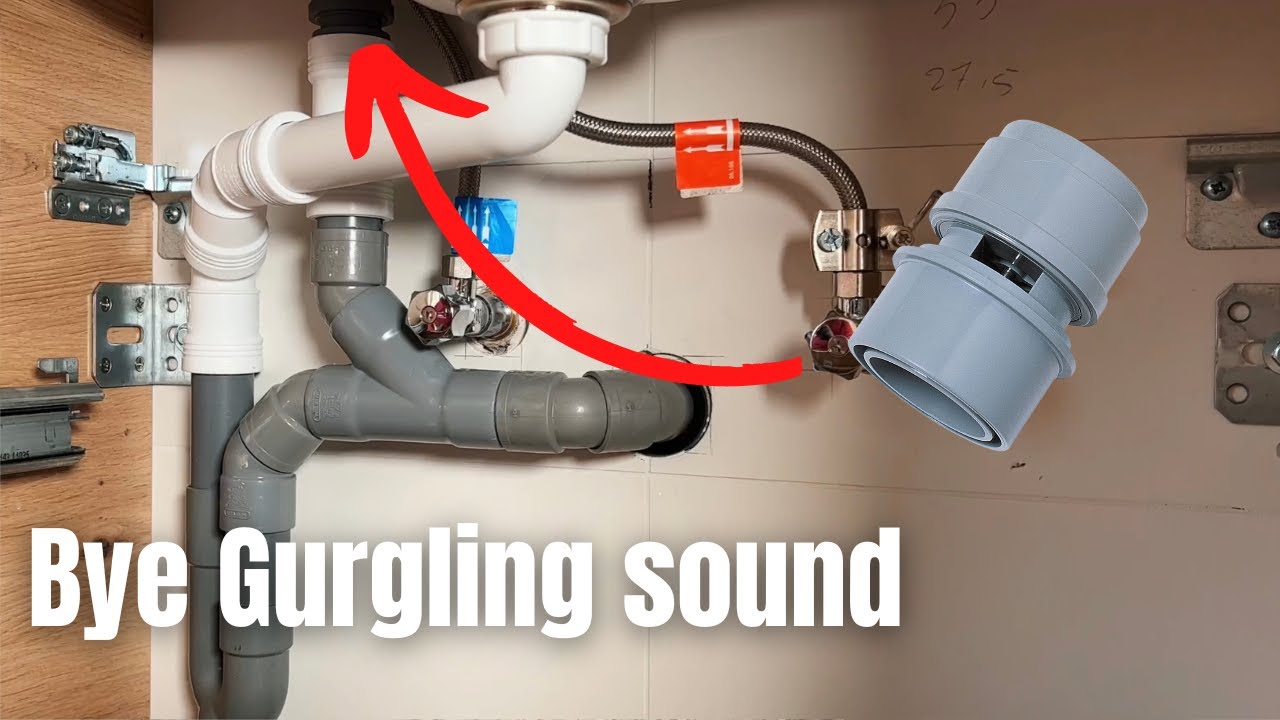
If your kitchen sink makes that hollow glug-glug sound right when the dishwasher starts pumping out, you are not imagining things. That timing is the clue. A dishwasher dumps water fast, and when a drain line cannot move air and water together smoothly, it starts stealing air from the nearest place it can, often your sink drain. The result is gurgling, bubbling, and sometimes a faint sewer smell.
The good news: a lot of these causes are fixable with basic checks. The bad news: a few are early warnings of a bigger blockage. Let’s sort out the common culprits in the order I would troubleshoot them in my own 1970s kitchen.
Why it only happens when the dishwasher drains
Most faucets drain slowly and steadily. Dishwashers are different. They use a pump to push a surge of water through the discharge hose into the sink drain or garbage disposal. That surge can:
- Fill the branch drain quickly (the horizontal drain line that serves the sink and dishwasher).
- Create negative pressure behind the rushing water if the plumbing is not venting correctly.
- Reveal partial clogs that are not obvious during normal sink use.
So if the sink only gurgles during the dishwasher drain cycle, treat it like a stress test that is exposing a restriction, a venting problem, or an installation issue at the dishwasher hose, not a “mystery dishwasher noise.”
Quick safety notes
- Do not mix chemical drain cleaners, and avoid them around dishwashers and disposals. They can damage parts and make future repairs dangerous.
- Turn off the dishwasher if water is backing up into the sink or leaking under the cabinet.
- Unplug the disposal or switch it off at the breaker before putting hands near it.
- If you smell strong sewer gas or see repeated backups, skip to the red flags section.
Common causes (check these first)
1) Missing high loop or air gap
This one is easy to overlook, and it matters. The dishwasher drain hose should either:
- Go up into a high loop that is secured as high as possible under the countertop, then back down to the disposal or tailpiece, or
- Run through a countertop air gap (common in some regions and required by some codes).
Without a high loop or air gap, the hose can act like a siphon or allow dirty water to slosh the wrong way. That can show up as gurgling, funky smells, or occasional backflow into the dishwasher or sink depending on how the plumbing is laid out.
Safe DIY checks:
- Look under the sink and find the dishwasher drain hose. If it runs low and flat straight to the disposal, fix that first.
- Create a high loop by routing the hose up and securing it to the underside of the countertop with a clamp or strap. Do not just drape it there. Actually fasten it.
- If you have a countertop air gap, check for clogs inside it. A blocked air gap can cause dishwasher draining issues and can spit water during drain.
2) Partially clogged branch drain (the usual suspect)
The branch drain is the shared path from your sink or disposal to the main drain. Grease, coffee grounds, starchy pasta water, and soap residue can build up into a nasty sludge that still “sort of drains” until the dishwasher hits it with a high-flow dump.
What you will notice: gurgling during dishwasher drain, slow sink drainage sometimes, and occasional standing water in one basin.
Safe DIY checks:
- Run hot water in the sink while the dishwasher drains. If the gurgle gets worse or water rises, the line is struggling.
- Use a sink plunger (with a little water in the basin). If you have a double-bowl sink, plug the other drain tightly with a wet rag or stopper first.
- Clean the P-trap under the sink. Place a bucket, loosen the slip nuts, and remove gunk. This is messy but straightforward.
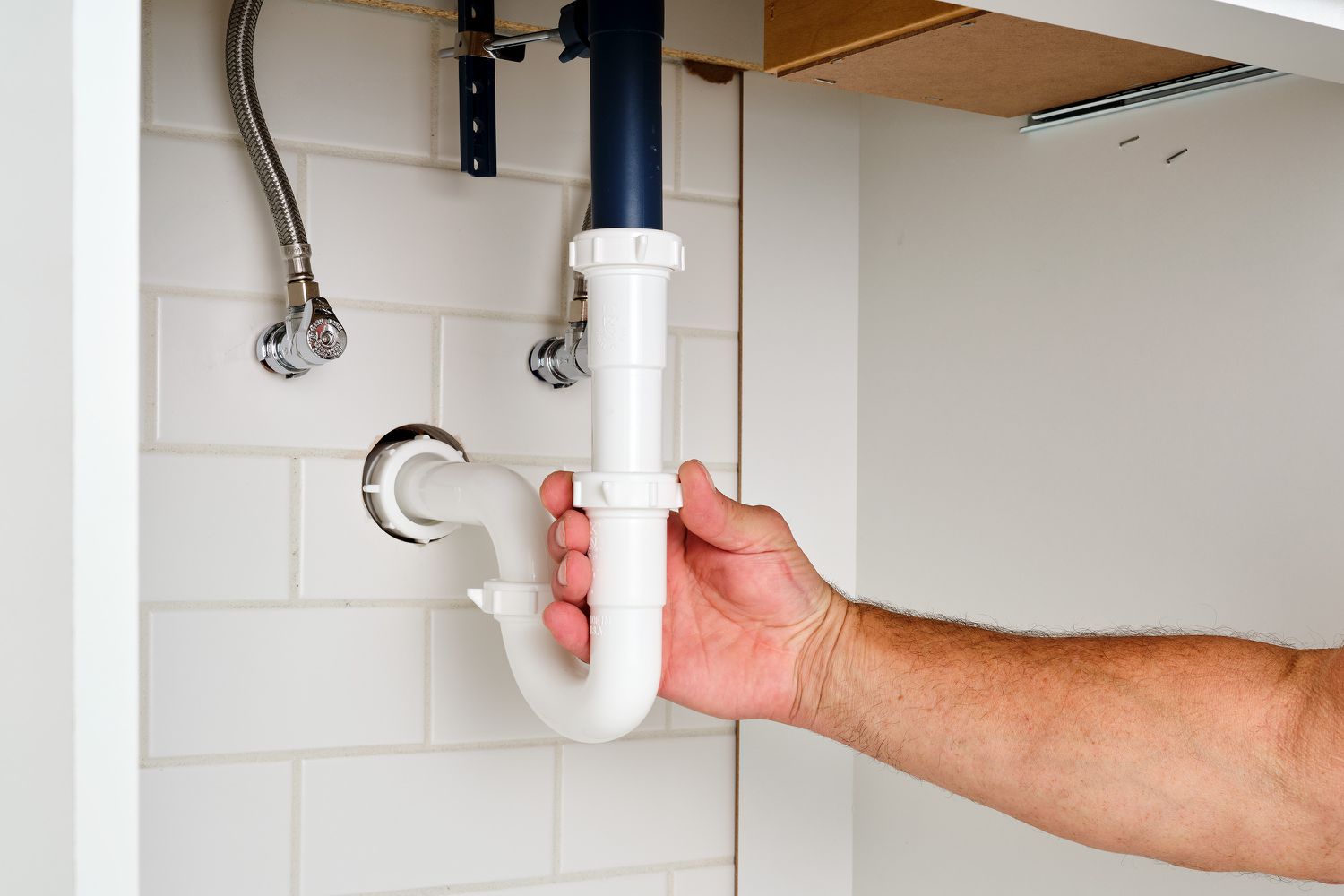
Hard-learned lesson from my own place: a P-trap can look “fine” and still have a smear of grease that catches everything else. If you pull the trap, clean it like you are washing a paint roller, not like you are rinsing a cup.
3) Garbage disposal inlet restriction (or the infamous knockout plug)
Many dishwashers discharge into the garbage disposal through a small inlet nipple. Two common problems show up here:
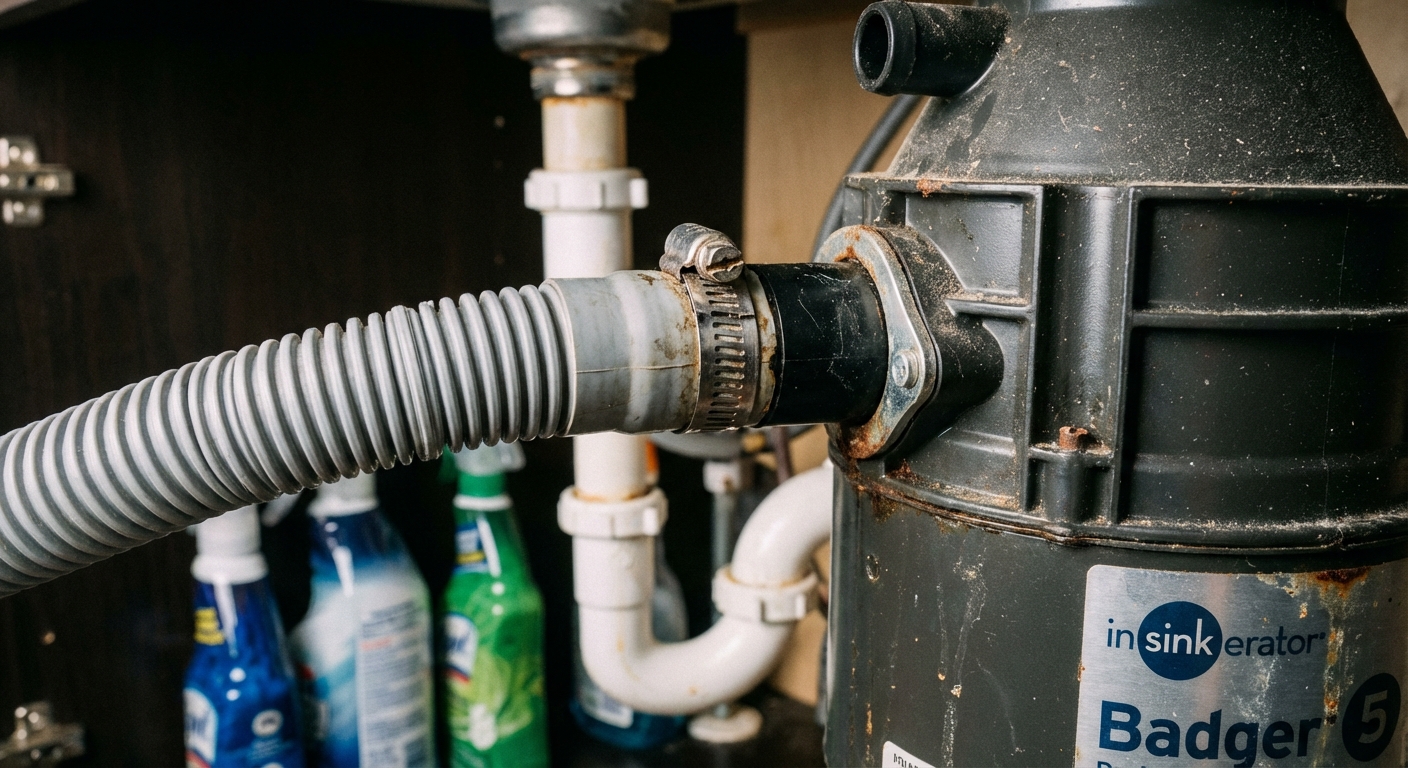
- Clogged disposal inlet or hose from greasy sludge, food paste, or mineral buildup right at the connection. This can slow the discharge enough to cause gurgling and occasional sink backup.
- Dishwasher knockout plug never removed after a new disposal install. If that plug is still intact, the dishwasher usually cannot drain into the disposal at all. The more common symptom is water backing up into the dishwasher (often with an error code), not a subtle sink gurgle.
Safe DIY checks:
- With power off to the disposal, inspect the dishwasher hose connection at the disposal or tailpiece. Look for kinks and sludge buildup.
- Remove the dishwasher hose and check the inlet nipple for blockage. A bottle brush works well here.
- If you recently replaced the disposal and the dishwasher will not drain, confirm the knockout plug was removed. If it was not, fix that before chasing anything else.
4) Air-admittance valve (AAV) stuck or missing
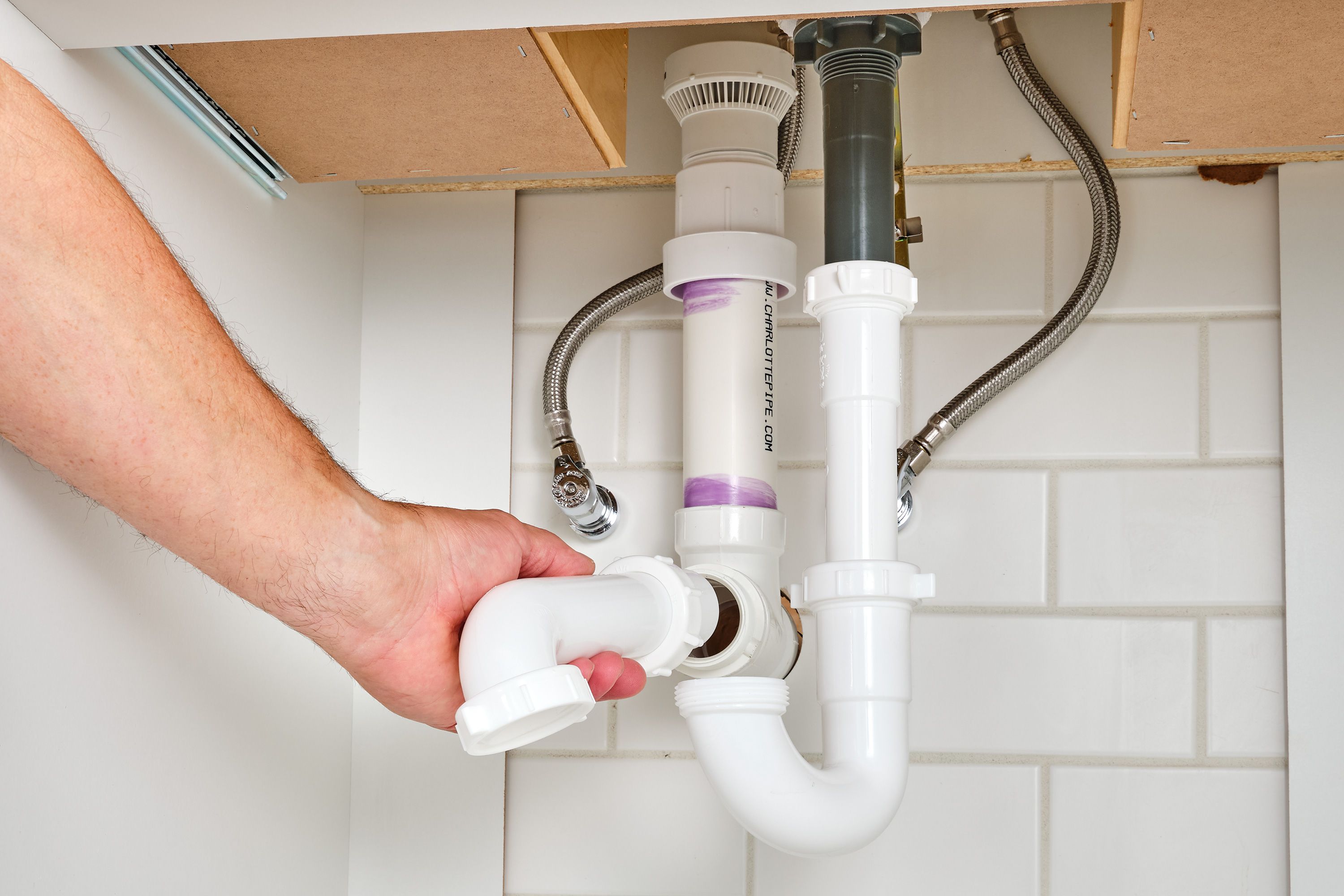
An air-admittance valve is a one-way vent device that lets air into the drain system when water flows, but (in theory) does not let sewer gas out. In many kitchens, it is used when a traditional vent pipe is not practical.
If the AAV sticks shut, the drain cannot pull air fast enough when the dishwasher dumps water, so it tries to pull air through the sink trap instead. That makes the trap gurgle.
What it looks like: typically a small plastic valve under the sink, sometimes on a vertical pipe, sometimes tucked high in the back of the cabinet.
Safe DIY checks:
- Look under the sink for an AAV. It is often labeled and has air slots.
- During a dishwasher drain, listen near the valve. A working AAV may make a soft air-in sound, but it should not leak sewer odor.
- If it is accessible, replace it rather than trying to clean it. They are relatively inexpensive and are considered a wear item.
Important: AAVs must be installed upright, above the drain’s weir level, and accessible. If yours is buried behind drywall or jammed low in the cabinet, it is worth correcting.
5) Venting problems in the wall or roof vent stack
If your kitchen drain is tied into a traditional vent system and the vent is blocked or poorly configured, the dishwasher’s discharge can create pressure changes that you hear as gurgling.
Common causes:
- Bird nest or debris in the roof vent
- Improper slope or sagging horizontal sections holding water
- Older remodel work that created a bad vent tie-in
DIY reality check: diagnosing venting inside walls can get complicated fast. If you have done the easy under-sink checks and the gurgle persists, this is where a plumber’s camera and experience can save you a lot of guesswork.
Troubleshooting order
- Confirm the timing. Run the dishwasher until it hits a drain cycle. Listen for gurgle and watch if the sink water level changes.
- Check the dishwasher hose setup. Make sure you have a proper high loop or an air gap, and clear the air gap if you have one.
- Check for a backup. If water rises in the sink, you have a restriction, not just a noise.
- Inspect the disposal and dishwasher hose. Look for kinks, clogs at the inlet nipple, and the knockout plug issue if the dishwasher is not draining.
- Clean the P-trap. If you find heavy gunk, you probably found your culprit.
- Plunge the sink properly. Seal the second basin if you have one.
- Evaluate the AAV. If present and accessible, replace it if it is old or suspicious.
- If symptoms remain, suspect venting or a downstream clog. That is when I stop and decide whether it is time to call for a snake or camera inspection.
Red flags
Sometimes a gurgle is just a minor clog. Other times it is the kitchen being the first place you notice a bigger drainage problem. Call a plumber soon if you see any of the following:
- Water backing up into the sink when the dishwasher drains, especially repeatedly.
- Gurgling in multiple fixtures (kitchen sink, nearby tub, laundry standpipe).
- Sewer smells that come and go, especially after draining appliances run.
- Slow drains throughout the house, not just the kitchen.
- Overflow or wet spots near a floor drain or cleanout.
Those symptoms can point to a main line restriction, root intrusion, or a vent stack issue that is beyond typical under-sink DIY work.
Common questions
Is sink gurgling always a vent problem?
No. In kitchens, it is very often a partial clog, a restriction at the disposal or trap, or a dishwasher hose that is not looped high. Venting is absolutely on the list, but I would not start on the roof.
Can I just run the disposal to fix it?
Sometimes it helps if the restriction is right at the disposal. But if the branch drain downstream is coated with grease, running the disposal is like revving your car when the road is blocked. It makes noise, not progress.
What if the dishwasher drains fine but the sink gurgles?
That usually means the dishwasher pump is pushing past a restriction that is still creating negative pressure. You might not get a dishwasher error, but the plumbing is still telling you something is off.
Keep it from coming back
- Keep grease out of the drain. Wipe pans with a paper towel before washing.
- Use the disposal for scraps, not sludge. Fibrous peels and starchy paste are drain trouble.
- Run plenty of water when using the disposal, and let it run a few seconds after it sounds clear.
- Keep the dishwasher hose looped high. If you store cleaners under the sink, do not knock the hose down into a low sag.
- Flush the kitchen drain occasionally with hot water and a small squirt of dish soap, especially after heavy cooking weeks.
- If you have an AAV, plan to replace it when it is old or starts acting up.
If you want the simplest takeaway: dishwasher draining is the moment your plumbing system is asked to breathe and drain at the same time. When it cannot, the sink will complain first, loudly.

About Marcus Vance
Content Creator @ Grit & Home
Marcus Vance is a lifelong DIY enthusiast and self-taught home renovator who has spent the last decade transforming a dilapidated 1970s ranch into his family's dream home. He specializes in budget-friendly carpentry, room-by-room renovations, and demystifying power tools for beginners. Through his writing, Marcus shares practical tutorials and hard-learned lessons to help homeowners tackle their own projects with confidence.