
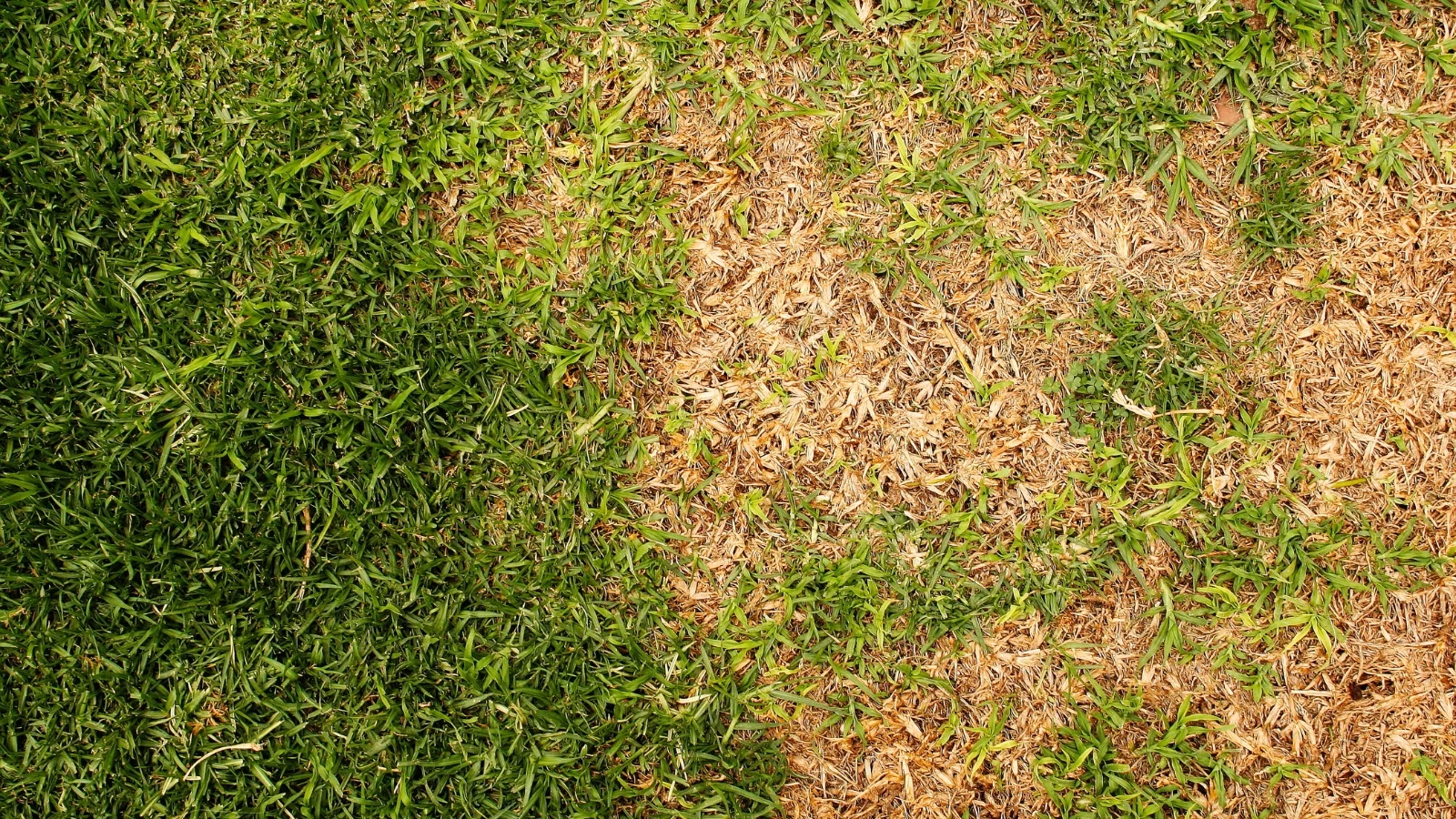
I learned the hard way that not every brown spot is a watering problem. Sometimes you can crank the sprinkler schedule, throw down fertilizer, and still watch patches expand like spilled coffee. That can be one clue that you are not dealing with simple drought stress, but it is not a guarantee. Insects, heat injury, herbicide drift, pet urine, and compaction can also creep outward.
This page will help you identify three common culprits, Brown Patch, Dollar Spot, and Fairy Ring, then walk through treatment basics that do not require a chemistry degree. I will stay general, because grass type, climate, and local regulations matter a lot.
Before you treat: rule out look-alikes
If you only take one thing from this guide, take this: fungus treatment works best when you are treating the right problem. Here are the most common mix-ups homeowners make.
Drought stress (not fungus)
- Pattern: large, uneven areas that follow sun exposure, slopes, or where irrigation coverage is weak.
- Blades: grass looks bluish-gray first, then tan. Footprints linger when you walk across it.
- Test: push a screwdriver 4 to 6 inches into the soil. If it is hard to penetrate, you are dry.
Grubs (or other root feeders)
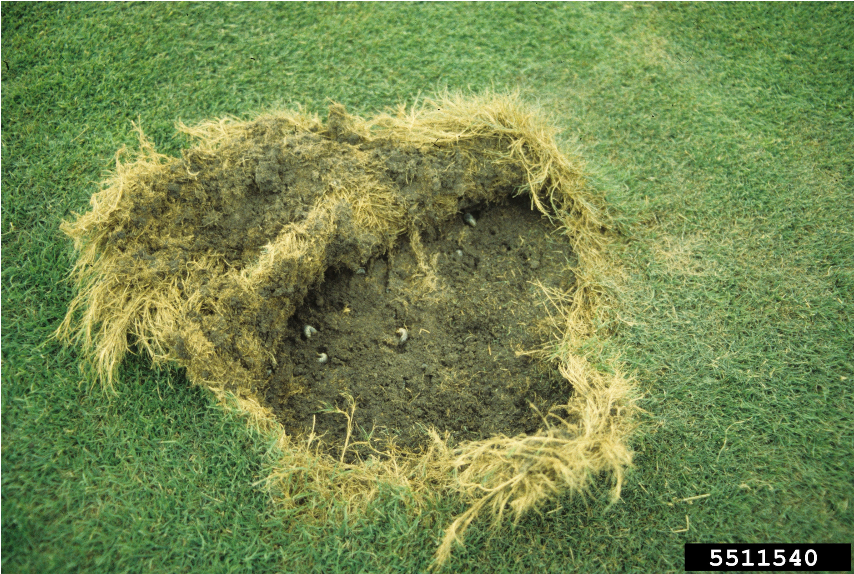
- Pattern: irregular patches that feel spongy and get worse quickly, often late summer into fall.
- Tell: turf peels up like a loose rug because roots are gone.
- Test: cut a small flap (about 1 square foot) and sift through the top 2 to 4 inches of soil. If you find roughly 5 to 10 or more grubs per square foot (varies by species and region), you may have a problem worth treating.
Pet urine and spill damage
- Pattern: small spots, often with a dark green ring around a dead center.
- Clue: repeat locations near paths, fences, or where pets stop.
Quick ID: what patterns suggest
When I am diagnosing my own lawn, I start with three things: shape, timing, and whether the grass is wet in the morning. Think of this as building probabilities, not certainties. Symptoms can overlap, especially when the lawn is stressed.
Brown Patch
Typical look: irregular circular patches that can grow from 1 foot to 10+ feet wide. In some cases you will see a darker “smoke ring” edge early in the morning when the lawn is wet.
- When it shows up: warm, humid stretches, especially when nights stay damp.
- Common triggers: overwatering, watering late in the day, heavy nitrogen fertilizer during hot weather, poor airflow.
- Where it likes to start: shady or poorly drained areas, and lawns cut too short during heat.
- Blade-level clue: leaf lesions are often tan to light brown with a darker border. On some grasses they form an “hourglass” shape across the blade.
Dollar Spot
Typical look: lots of small straw-colored spots, often 1 to 2 inches across at first (classic “silver dollar” size), but they can expand and merge into 3 to 6 inch patches.
- When it shows up: warm days with cool nights and heavy dew, spring through fall depending on region.
- Common triggers: low nitrogen, drought stress, and long dew periods.
- Blade-level clue: small lesions that can look like bleached patches with reddish-brown borders. Sometimes you will also see a thin, cobwebby mycelium in the morning dew.
Fairy Ring
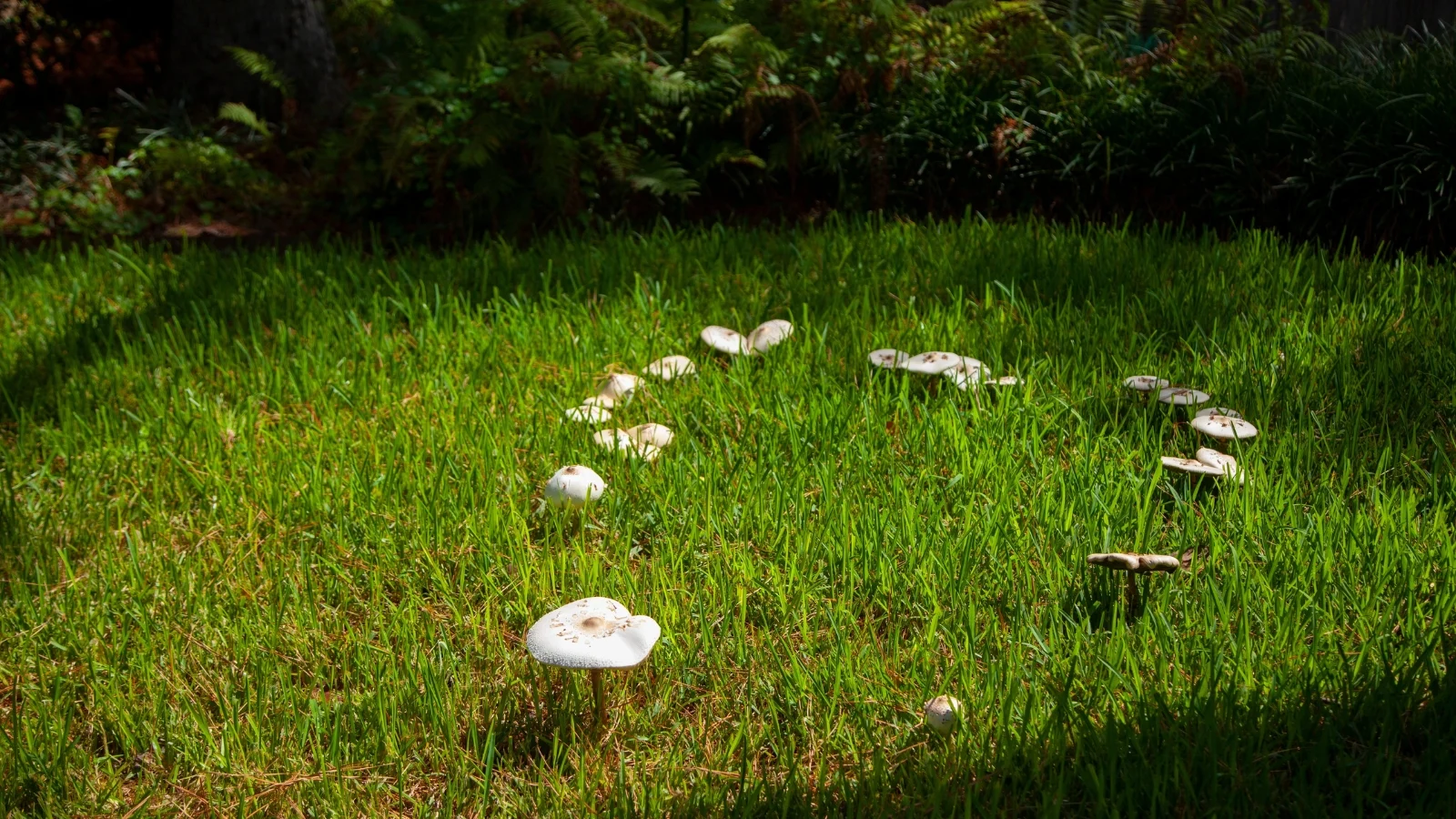
Typical look: arcs or full circles of darker green grass, sometimes with mushrooms popping up, sometimes with dead grass in the ring. The ring can be a few feet to many yards across.
- What is happening: fungi are breaking down buried organic matter, like an old tree root, and changing nutrient and water movement in the soil.
- Common “types” you may see: dark green ring only, mushrooms only, or a ring with stressed or dead turf when the soil turns water-repellent.
- Why it confuses people: it can look like “fertilizer burn” in a circle, or like a sprinkler made a perfect ring (which obviously it did not).
How to check your lawn
Step 1: Look early in the morning
Fungus signs are easiest to see when dew is still on the grass. Brown Patch edges, Dollar Spot mycelium, and leaf lesions show up better before the sun dries everything out.
Step 2: Get down at blade level
Grab a handful from the edge of a patch and inspect individual blades. You are looking for spots, lesions, and a “water-soaked” look on leaves, not just an overall tan color.
Step 3: Check water and soil
- Soil wet at the surface but dry underneath: often points to shallow watering that encourages weak roots and stress.
- Constantly damp soil: points to overwatering or poor drainage, both of which invite disease.
- Thatch check: if there is a thick, spongy layer between grass and soil, it can hold moisture and increase disease pressure.
Step 4: Take photos for a week
If the patch expands noticeably in 3 to 7 days during humid weather, fungus moves higher on the suspect list. If it stabilizes after deeper, less frequent watering, it may have been drought stress or another non-fungal issue.
First line treatment: fix conditions
Most lawn fungi are opportunists. They love a stressed lawn plus long hours of leaf wetness. Before you reach for any product, tighten up these basics.
Watering timing and technique
- Water early: aim for early morning so blades dry quickly after sunrise.
- Avoid evening watering: wet grass overnight is fungus-friendly.
- Water deeply, less often: the goal is to encourage deeper roots and reduce constant surface moisture.
- Reduce dew time if possible: improve airflow by trimming back overgrown shrubs and thinning dense shade where you can.
- Drainage matters: low spots and compacted zones stay wet longer and tend to be repeat offenders.
Mowing habits that help
- Do not scalp: follow the one-third rule. Removing too much at once stresses turf and opens the door to disease.
- Mow when the lawn is dry: mowing wet grass can move spores and leaves clumps that hold moisture.
- Keep blades sharp: ragged cuts heal slower and are more vulnerable.
- Give it sun: where possible, pruning back shade and improving airflow can be a long-term disease reducer.
Mower hygiene (simple, not obsessive)
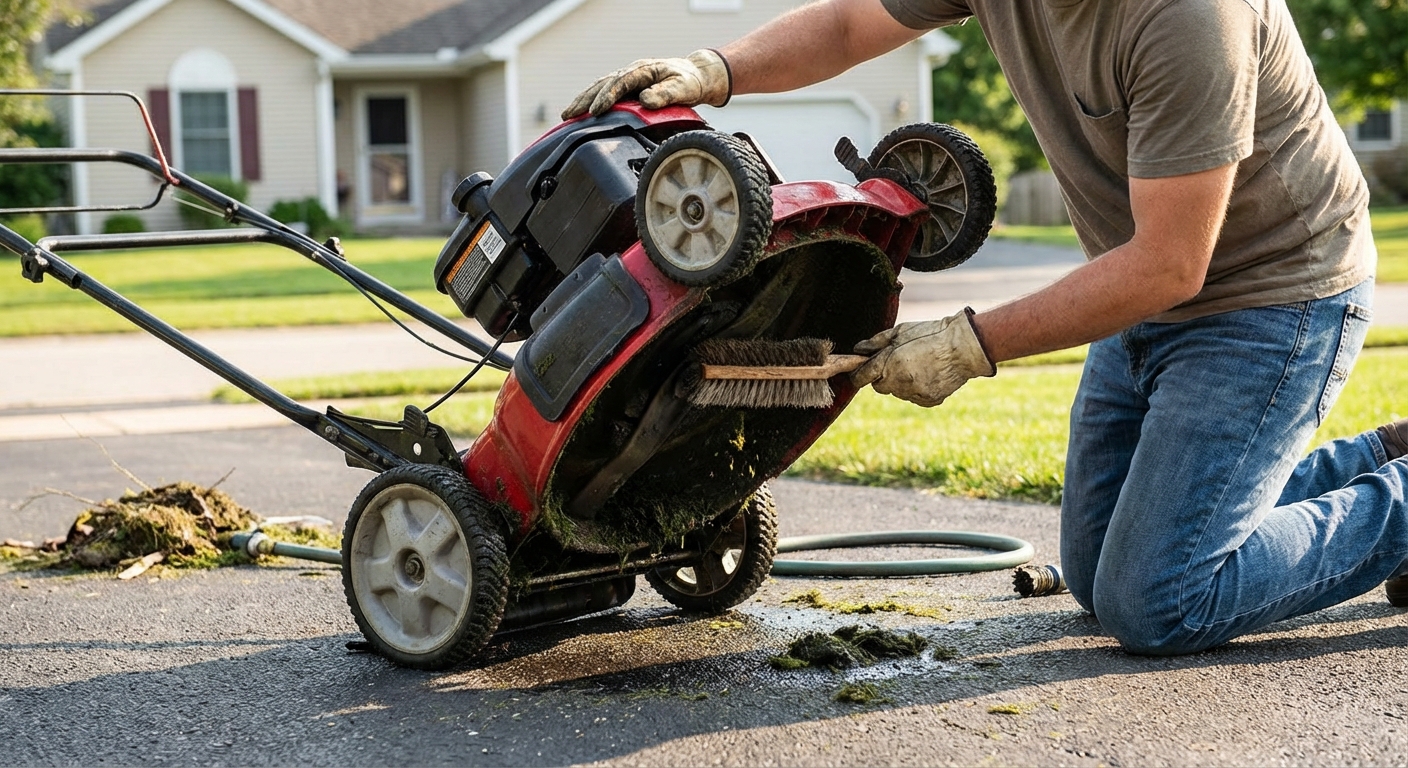
You do not need a white-glove routine, but if you are mowing through active disease, a quick cleanup helps.
- Brush off clippings from the deck and wheels after mowing infected areas.
- Rinse if needed and let the mower dry before storing.
- Bagging: in heavy disease, bagging clippings for a couple of mows can reduce the amount of infected material left behind.
Fertilizer note (do not make it worse)
This is one of the easiest ways to accidentally step on the gas at the wrong time.
- Brown Patch often gets worse with heavy nitrogen during hot, humid weather, especially if the lawn stays wet overnight.
- Dollar Spot often improves with modest nitrogen if the lawn is underfed, but you still want to avoid pushing growth during extreme heat or drought stress.
Fungicide basics (high level)
If cultural fixes are not enough, or the disease is spreading fast during peak conditions, fungicides can be part of the plan. The most important thing to understand is that fungicides are not all the same, and rotating modes of action helps reduce resistance.
Important: follow the label and local regulations. If you are unsure, your local extension office is often the best place for region-specific recommendations.
Preventive vs curative
- Preventive: works best when applied before or at the very first signs, especially for Brown Patch in hot, humid stretches.
- Curative: some products have limited “kickback,” but most results come from stopping new spread while the grass grows out.
Contact vs systemic (plain English)
- Contact: stays mostly on the leaf surface. Coverage matters. It tends to protect treated tissue.
- Systemic: some systemic (or locally systemic) products move within the plant to a degree and can help protect new growth, depending on the active ingredient and timing.
Rotation and label discipline
Different fungicide groups target fungi in different ways. Rotating categories, rather than repeating the same mode of action all season, is a common best practice to slow resistance. Read the label for:
- Target diseases listed
- Application intervals
- Maximum yearly amount
- Watering-in instructions (some are meant to stay on leaves, some need irrigation)
- Safety notes for kids, pets, and pollinators
My thrifty homeowner note: if you are not sure what you have, do not shotgun multiple treatments. Diagnosis first is usually cheaper than guessing.
Disease game plans
Brown Patch
- Switch irrigation to early morning and shorten run time if the lawn is staying wet.
- Avoid heavy nitrogen applications during hot, humid weather. Push growth later when conditions are less favorable.
- Raise mowing height a bit during summer heat to reduce stress.
- If fungicide is used, timing is often most effective when conditions are primed for outbreaks, not after large areas are already browned out.
Dollar Spot
- Check whether the lawn is underfed, especially if growth has slowed and color is pale.
- Improve irrigation consistency. Avoid the cycle of “dry all week, flood on Saturday.”
- Manage thatch if it is excessive, because it can hold moisture at the surface.
- Fungicide may be warranted for severe outbreaks, but basic fertility and watering fixes often reduce recurrence.
Fairy Ring
- Core aeration can help water penetrate hydrophobic (water-repellent) soil in some Fairy Ring cases.
- Wetting agents are sometimes used to improve infiltration where the ring causes dry spots.
- Fungicide control is variable and can be difficult. Many homeowners aim for management rather than eradication.
- If mushrooms are present, remember they are a symptom. Raking them up improves appearance, but it does not remove the underlying fungus network.
Grass type and region (quick reality check)
- Cool-season lawns (like many fescues, bluegrass, rye) often see Brown Patch pressure in summer humidity and Dollar Spot during dewy stretches from spring into fall.
- Warm-season lawns (like bermuda, zoysia, St. Augustine) can still get these diseases, but timing, severity, and best mowing height can be very different.
When a lab diagnosis is worth it
There is no shame in calling in backup. I have done it, especially when I was about to spend money on treatments. Consider a local extension office or turf lab when:
- Patches keep spreading despite corrected watering and mowing.
- You see multiple patterns at once and cannot tell what is primary.
- The lawn is valuable to you, like a new sod install or a front yard you are trying to sell a house with.
- You are dealing with recurring issues year after year in the same zones.
How to take a sample
Most labs want a plug that includes healthy grass, the transition edge, and the damaged section. Avoid dried-out dead-only samples.
- Cut a small square or plug that crosses the edge of the patch.
- Keep it slightly moist, not soggy.
- Send quickly, and include notes about mowing height, watering schedule, recent fertilizer, and the date symptoms started.
Common mistakes
- Watering at night “to help the lawn recover”: it often feeds the fungus instead.
- Mowing too low during heat: short grass stresses faster and has less energy to grow out of damage.
- Over-fertilizing a sick lawn: pushing growth during the wrong weather can make some diseases worse.
- Expecting instant green: fungicides do not paint grass green. They slow spread. Recovery is mostly new growth.
- Treating the whole yard blindly: start by confirming the problem and focusing on hotspots and underlying conditions.
This week checklist
- Inspect patches in the morning and note the shape and size.
- Confirm soil moisture with the screwdriver test.
- Move watering to early morning and avoid evening runs.
- Sharpen your mower blade and mow only when dry.
- Clean the mower deck after mowing infected sections.
- If the pattern suggests fungus and it is spreading fast, consider a fungicide plan based on label-listed diseases and rotating categories.
- If you are still unsure, contact your local extension office for region-specific guidance.
If you want, tell me your grass type (if you know it), your region, and what the patches look like, including size and whether there is a ring. I can help you narrow down the most likely cause and the simplest next steps.

About Marcus Vance
Content Creator @ Grit & Home
Marcus Vance is a lifelong DIY enthusiast and self-taught home renovator who has spent the last decade transforming a dilapidated 1970s ranch into his family's dream home. He specializes in budget-friendly carpentry, room-by-room renovations, and demystifying power tools for beginners. Through his writing, Marcus shares practical tutorials and hard-learned lessons to help homeowners tackle their own projects with confidence.