
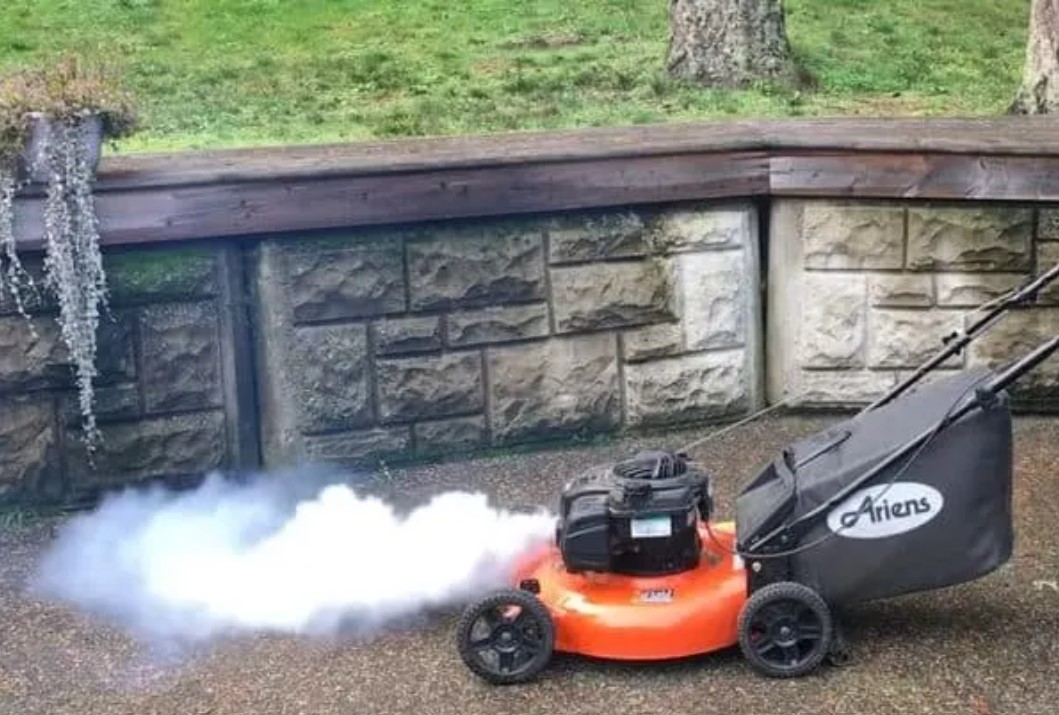
If your lawn mower is smoking, treat it like a warning light on your car. Sometimes it is harmless and temporary, like oil spilled onto a hot muffler. Other times it is your engine telling you it is running too rich, burning oil, or overheating.
The good news is that smoke color usually points you in the right direction. The better news is you can do a few safe checks before you spend money or accidentally make the problem worse.
Quick note: Most walk-behind mowers are 4-stroke (separate gas and oil). If you have an older 2-stroke engine that uses mixed gas and oil, a light blue or white smoke haze can be normal, especially on cold starts or if the mix is a little rich.
First: shut it down safely
Before you diagnose anything, get the machine safe. A smoking mower is a fire risk, and it is also easy to burn yourself on the muffler or cylinder head.
Safe shutdown checklist
- Disengage the blade (if your mower has a blade control) and release the operator presence bar to stop the engine.
- Move to a clear, flat spot away from dry grass, leaves, or spilled fuel.
- Turn the fuel valve off (if equipped).
- Let it cool until it is safe to touch around the engine and muffler.
- Pull the spark plug wire off before you put hands near the blade or reach around the engine.
Do not tip the mower yet. If you tip it the wrong direction, you can dump oil into the air filter and carburetor, which creates more smoke and a hard-start situation. Tipping direction varies by model, but for many walk-behind mowers you want the carburetor and air filter side up. If you are not sure, check your manual or look up your model first.
What the smoke color usually means
Smoke color is not perfect, but it is one of the fastest ways to narrow down likely causes. In daylight, white and blue can look very similar, so use the clues below as a guide, not a verdict.
White smoke
Most common causes: oil spilled on the muffler, oil overfilled, mower tipped incorrectly, or oil leaking onto hot parts. On air-cooled mowers, this is usually oil burn-off, not steam.
- Brief smoke right after starting is often oil that dripped onto the muffler or heat shield. It may burn off in a few minutes.
- Smoke that keeps going is often oil getting into places it should not be, especially after a tip-over or oil change.
Blue or bluish-white smoke
Most common causes: the engine is burning oil internally, or oil is getting pulled into the intake through the breather. This can happen from overfilling oil, a stuck crankcase breather, worn rings, or worn valve guides and seals (on engines that have them).
If you see steady blue smoke and the oil level keeps dropping, that is your sign to stop running it until you pinpoint why.
Black smoke
Most common causes: too much fuel and not enough air. Think dirty air filter, choke stuck on, or a carburetor issue (float/needle, adjustment, or a clogged air passage). Old fuel can contribute to poor running, but black smoke is most often a rich-mixture problem.
- Black smoke is often paired with a rough idle, fuel smell, or soot around the muffler.
- This is usually a tune-up problem, not an engine rebuild problem.
Gray smoke
Most common causes: less specific. Gray can show up with mixed oil and fuel issues, heavy load, restricted cooling airflow, or oil burning off externally that is not a fresh white plume.
Gray smoke plus a hot, sharp smell, loss of power, or pinging can mean the engine is working too hard, low on oil, or not getting enough cooling airflow.
Quick triage: external or internal?
This is the fork in the road. Oil on the muffler is usually annoying but fixable fast. Oil burning inside the engine can get expensive.
Clues it is external
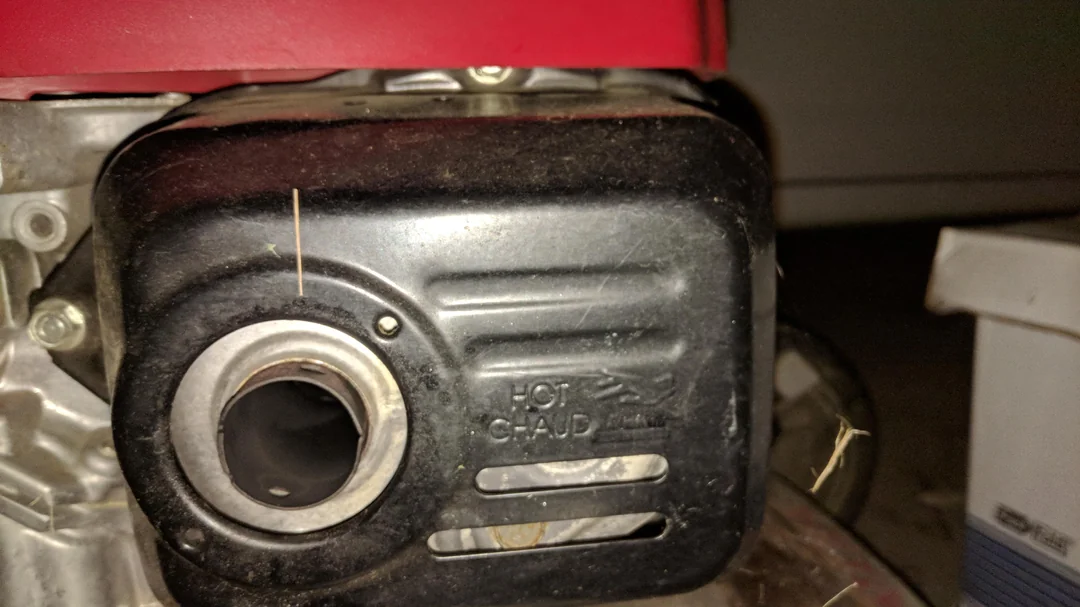
- Smoke seems to rise from the muffler or heat shield area, not as a steady exhaust stream.
- It started right after an oil top-off, oil change, or after the mower was stored on its side.
- Smoke fades as the mower warms up.
Clues it is internal
- Smoke is coming out of the exhaust steadily.
- The mower runs rough and oil level drops over time.
- The spark plug tip is wet with oil or heavily carboned.
Before restarting: 8 checks
I'm all for saving money, but I'm more for not turning a small problem into a big one. Work through these in order.
1) Check the oil level and smell
- With the mower on a level surface, pull the dipstick, wipe, reinsert, and recheck.
- If oil is above the full mark, it can get whipped into foam and pushed into the breather or intake, causing smoke.
- Smell the dipstick. If it smells strongly like gasoline, fuel may be leaking into the crankcase. Don't run it until the oil is changed and the fuel issue is fixed.
2) Look for oil on hot parts
Use a flashlight and look around:
- Valve cover area (if your engine has one)
- Crankcase seam and oil fill tube
- Base of the engine near the muffler
If you see oil on the muffler or heat shield, that can smoke like crazy. Let it cool completely, then wipe it down with a rag. Don't spray flammables on a hot engine.
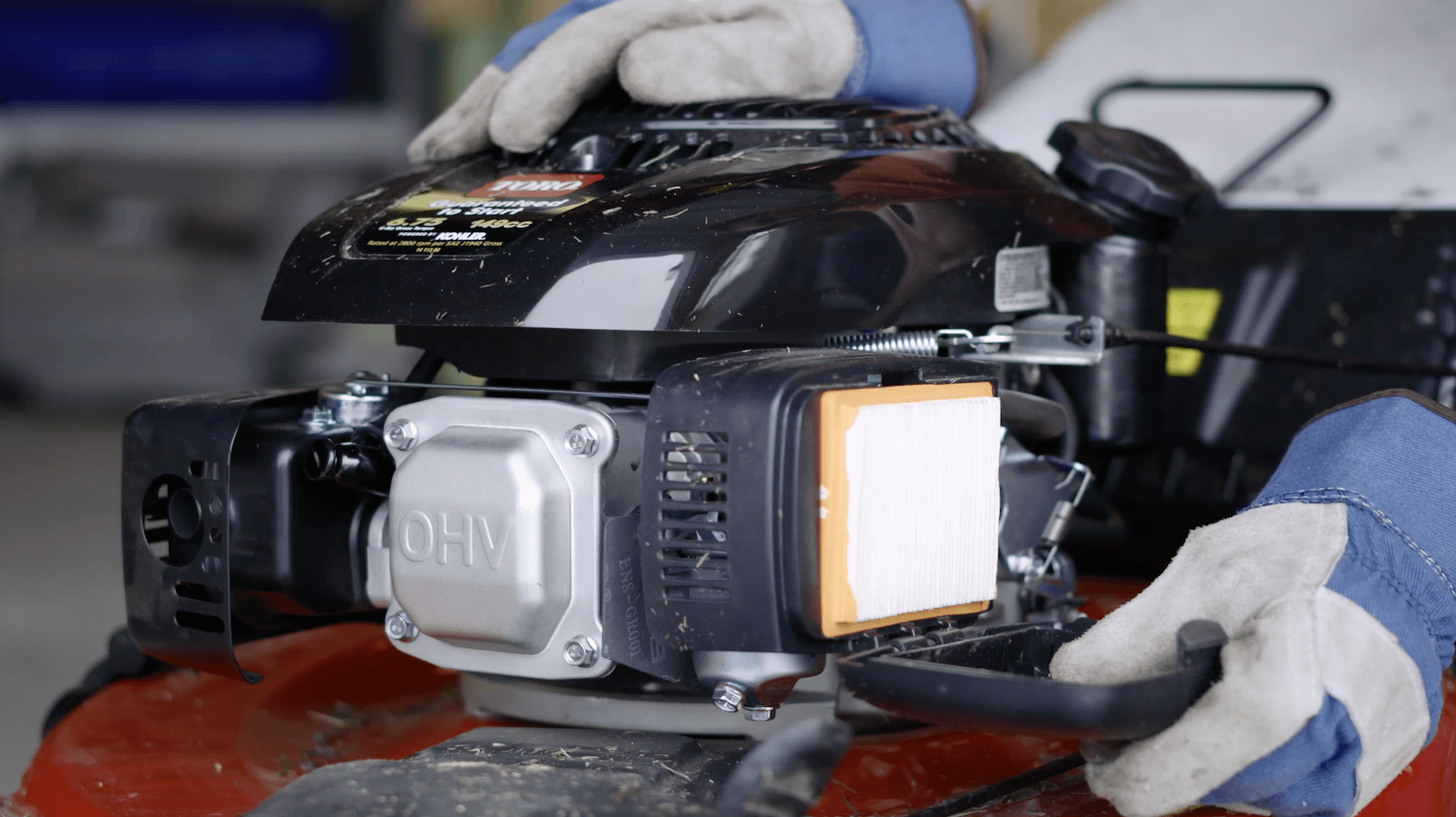
3) Inspect the air filter
A dirty filter can cause black smoke. An oily filter can cause white or blue smoke and hard starting.
- Foam filter: wash with warm soapy water, dry fully, then apply a small amount of clean engine oil and squeeze out the excess.
- Paper filter: tap gently to remove loose dust. If it is stained with oil or very dirty, replace it.
4) Make sure the choke opens
A stuck choke can make a mower run rich, smoke black, and smell like raw fuel. Confirm the choke lever and linkage move freely and return to the run position.
5) Think back: tip-over or wrong-side storage
If the mower was tipped for blade work or stored on its side, oil can migrate into the intake. A common beginner mistake is tipping the mower with the air filter side down. I've done it. The next start looked like a fog machine.
- If it was tipped, set it level and let it sit 30 to 60 minutes.
- Check the air filter for oil. Replace or clean as needed.
6) Look at the spark plug
Pull the plug wire, remove the plug, and take a look.
- Dry and light brown: generally normal.
- Black and sooty: running rich, often air filter or choke.
- Wet with oil: oil getting into the cylinder.
If the plug is fouled, replacing it is cheap and often makes a dramatic difference.
7) Check cooling airflow
Overheating and hot smells are often airflow problems. Look for packed grass on the deck, debris around the muffler, and blockage at the engine cooling intake (often a flywheel screen) or clogged cooling fins.
With the spark plug wire removed, you can tip the mower carburetor and air filter side up (for many walk-behind mowers) and scrape the deck clean. If you are unsure about your model, confirm the correct tipping direction first.
8) Check fuel basics
- If fuel is old, drain and refill with fresh gas.
- If you suspect flooding, wait a few minutes with the choke off and try again.
- If the oil smells like gas or the oil level is rising, the usual culprits are a leaking carburetor (stuck float or needle) or leaving the fuel valve on with a gravity-fed system. Fix the source, then change the oil.
Color-by-color fixes
If it is white smoke
- Oil spilled on muffler: wipe down after cooling, then run outside on pavement for a few minutes to burn off residue.
- Overfilled oil: drain a little oil until it sits at the full mark. A cheap suction pump makes this tidy, but loosening the drain plug works too.
- Oil in air filter or carb from tipping: replace or clean the filter, then run with choke off. Expect a short smoke period as the remaining oil clears.
If it is blue smoke
- Verify oil is not overfilled first. This is the simplest win.
- Check the breather and air filter for oil saturation.
- If blue smoke continues after oil level is correct and the filter is clean, you may be looking at internal wear. At that point, it is worth pricing a small engine shop evaluation versus replacement, depending on mower age and quality.
If it is black smoke
- Replace or clean the air filter.
- Open the choke fully after starting and make sure it is not sticking.
- Check carburetor basics if it still runs rich (flooding, fuel dripping, sticky float).
- Drain stale fuel and add fresh fuel if it has been sitting a long time.
When not to run it again
Sometimes the safest and cheapest move is to stop and diagnose before you keep pulling the cord.
Pause and get help if you notice
- Smoke that gets worse instead of better after 1 to 2 minutes.
- Oil pouring out of the muffler, air filter box, or onto the ground.
- Knocking, metallic clanking, or squealing noises.
- Strong burning smell plus visible glowing or sparks.
- The oil dipstick smells like gas, or the oil level is mysteriously rising.
In those cases, you can do real damage by continuing to run it, especially if the engine is low on oil or fuel is thinning the oil.
Prevent it next time
- Check oil on level ground and fill slowly. Most overfills happen because we get impatient.
- Tip the mower the right direction: in general, keep the air filter and carburetor side up, but confirm for your model.
- Replace the air filter once a season if you mow dusty lawns, or at least inspect it monthly.
- Clean the deck a few times per season to keep airflow and cutting performance strong.
- Keep cooling inlets clear so the flywheel screen and cooling fins can do their job.
- Use fresh fuel and do not store gas in the mower over the off-season unless it is treated and you know your storage plan.
Quick recap
- White: often oil spilled or oil where it should not be (overfill, tipping, leak onto muffler). Can look like blue in bright sun.
- Blue: burning oil internally or oil getting into the intake.
- Black: too much fuel, not enough air (filter, choke, carb).
- Gray: less specific. Check load, airflow, oil level, and fuel mixture issues.
If you're still unsure, write down your mower type (push, self-propelled, rider), engine brand (Briggs, Honda, Kohler, etc.), and the smoke color. That little bit of info makes it much easier to search the right fix or talk to a shop without guessing.

About Marcus Vance
Content Creator @ Grit & Home
Marcus Vance is a lifelong DIY enthusiast and self-taught home renovator who has spent the last decade transforming a dilapidated 1970s ranch into his family's dream home. He specializes in budget-friendly carpentry, room-by-room renovations, and demystifying power tools for beginners. Through his writing, Marcus shares practical tutorials and hard-learned lessons to help homeowners tackle their own projects with confidence.