
Before you wrench: quick safety reset
I have burned more Saturday mornings than I care to admit chasing a “dead” mower that was really just one small thing out of place. Before we dig in, do these quick safety steps so you do not get surprised by a sudden start.
- Work outside or in a wide-open garage with the door up. Gas vapors accumulate quickly.
- No flames or sparks: no smoking, and let the engine cool before you drain fuel or refuel.
- Turn the fuel valve off (if your mower has one) before you tip it or remove parts.
- Pull the spark plug wire off the plug any time your hands go near the blade area.
- If you must tip the mower, tip it with the air filter side up to reduce oil and gas spills. If your manual says otherwise, follow the manual.
Fast diagnostic flow
This is my “two-minute triage.” You are trying to figure out whether the problem is fuel, air, spark, or a safety/battery issue. Most no-starts are one of those.
Step 1: What happens when you try?
- Engine cranks and tries to fire (coughs, sputters, runs for a second): usually fuel delivery or carburetor.
- Engine cranks but never even hints: check spark plug, kill switch/safety bar, and fresh fuel.
- Electric start does nothing (no crank): likely dead battery, blown fuse, bad starter switch, or a safety interlock.
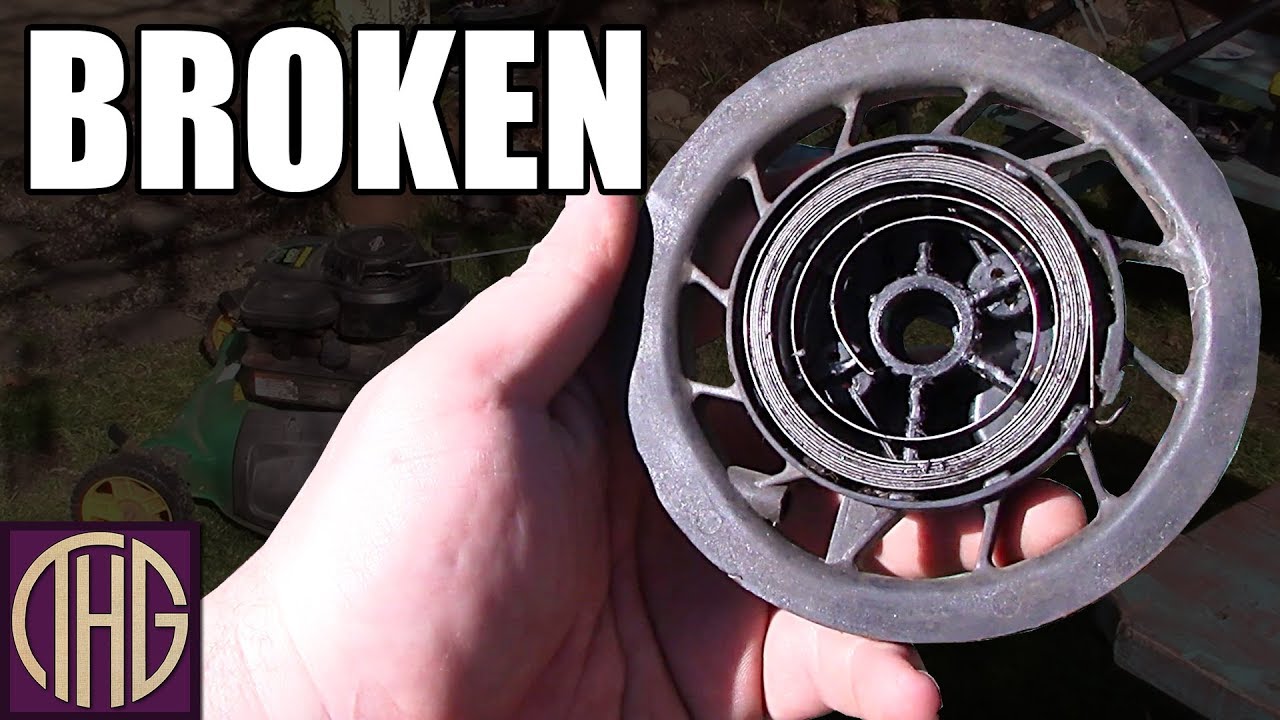
- Pull cord is hard to pull: possible hydro-lock from oil or fuel in the cylinder, a grass-jammed blade, or a mechanical issue. Stop and check oil level and whether the mower was tipped the wrong way. Then, with the spark plug wire disconnected, look under the deck for a wad of wet grass or debris stopping the blade.
Step 2: Do the easiest checks
- Fresh gas? If the gas is older than a month or two (especially ethanol fuel), or it has been sitting through storage, drain and replace. Fuel stabilizer can extend that window.
- Oil level okay? Some engines have a low-oil shutdown that prevents starting. Check level on flat ground.
- Air filter clean? A clogged filter can choke the engine.
- Spark plug okay? A fouled plug is common and cheap to replace.
If it still will not start after those, jump to the carburetor section. That is the next most common culprit.
1) Stale fuel
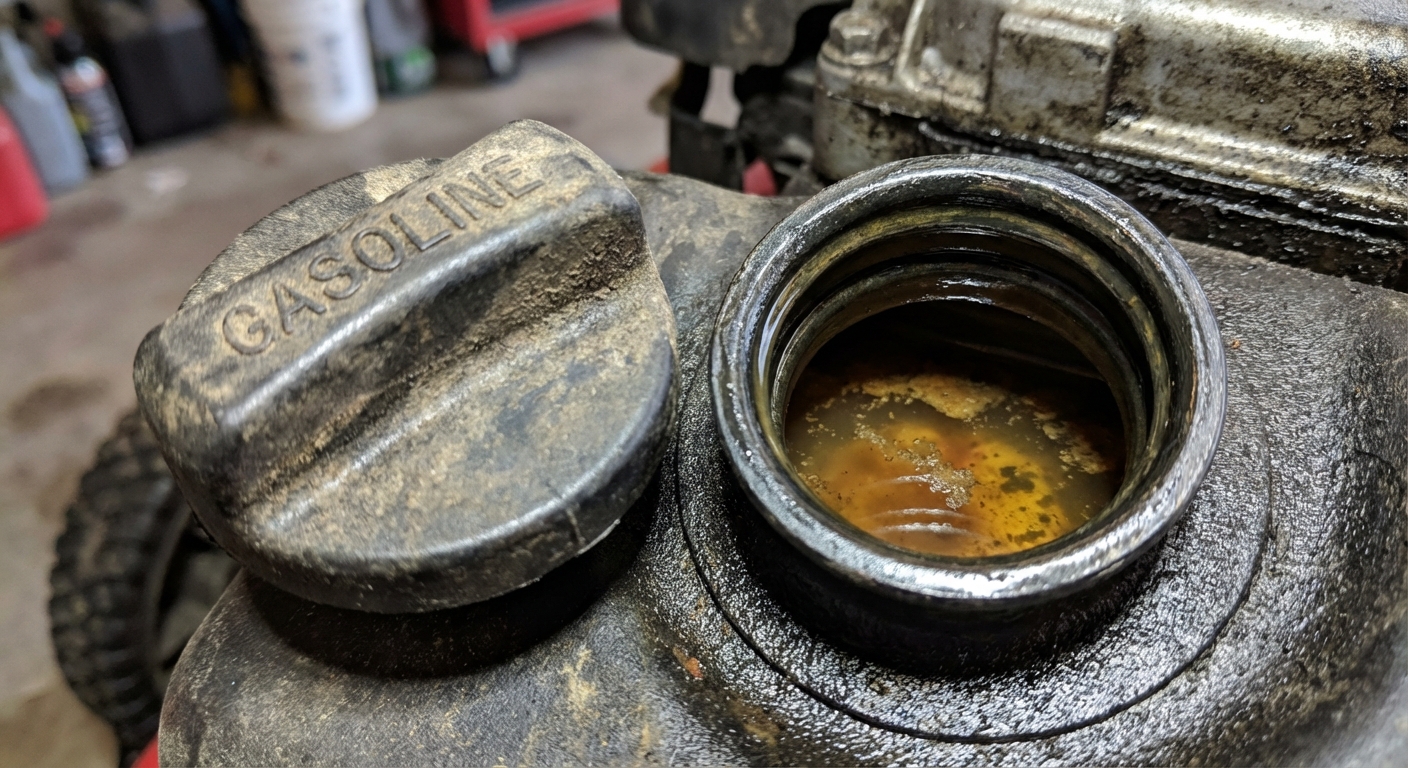
If your mower sat over winter or even a few hot weeks with ethanol gas, the fuel can go stale and leave varnish behind. The mower may start and die, surge, or not start at all. This is one of the most common causes I see.
Signs it is fuel related
- Gas smells sour or “varnishy” instead of sharp and fresh.
- Mower ran fine last season, now it will not.
- It starts with starter fluid but dies right away (often a fuel-delivery or carb issue, and old fuel is a frequent root cause).
Fix
- Drain the tank into an approved gas container. If your mower has a drain plug or you can remove the fuel line safely, use that. Otherwise, siphon.
- Refill with fresh fuel. If you can, use ethanol-free gas for small engines.
- Add fuel stabilizer to the fresh gas if you are not mowing weekly.
Thrifty tip: Some people use a small amount of clean, fresh-looking old gasoline in a car tank to dilute it. If you do that, be conservative (think very small amounts), follow local rules, and do not use it if you suspect water, debris, or phase separation. When in doubt, dispose of it properly. Do not dump it on the ground. Your local recycling center or auto parts store may take old fuel.
2) Dirty air filter
A gas engine needs air just as much as fuel. When the air filter is packed with grass dust, the mower can run rich and refuse to start, especially when warm.
Fix
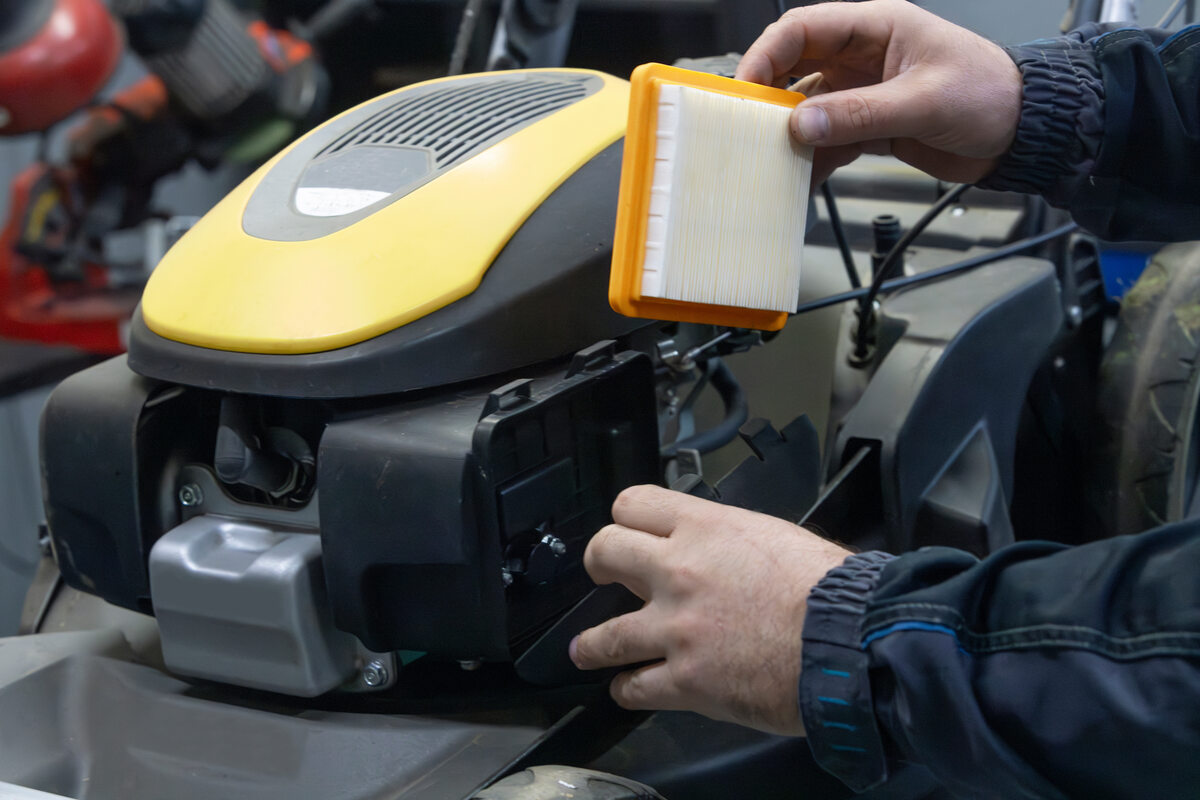
- Pop the filter cover off.
- Paper filter: tap it gently to knock out loose debris. If it is dark, oily, or clogged, replace it.
- Foam filter: wash with warm soapy water, rinse, squeeze dry, then apply a light amount of clean engine oil if your manual calls for it. Do not install dripping-wet foam.
If the mower starts briefly with the filter removed but dies when you reinstall it, you have basically confirmed it. Replace the filter.
3) Fouled spark plug
If you have fuel and air but still no start, spark is next. A plug can foul from running rich, old fuel, or an engine that was tipped and ingested oil.
Quick checks
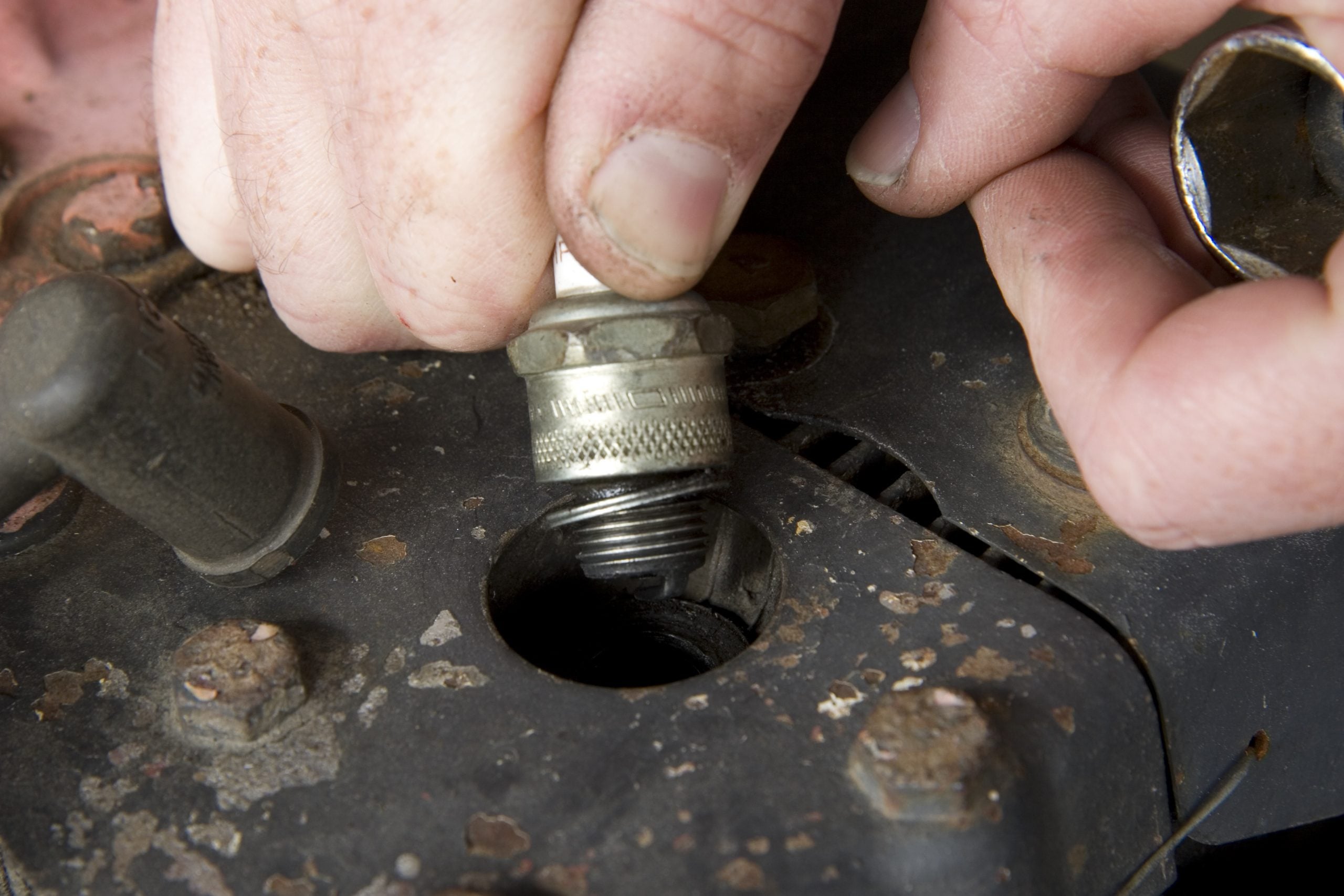
- Pull the plug and look at the tip. Dry and tan is usually fine. Wet with fuel suggests flooding. Black and sooty suggests rich running. Oily suggests oil got into the cylinder.
- Inspect the porcelain for cracks and the electrode for heavy wear.
Fix
- If it is just lightly dirty, clean it with a wire brush and check the gap (use the spec in your manual or the sticker on the mower).
- If it is old, cracked, heavily fouled, or you are not sure, replace it. Spark plugs are inexpensive and often fix the problem immediately.
If you suspect flooding
- Turn the fuel valve off (if equipped).
- Set the control to RUN/FAST if your mower has a throttle control. Many walk-behind mowers do not.
- Pull the cord a few times to clear the cylinder.
- Let the plug dry before reinstalling.
Note on testing spark: The safest way is an inline spark tester. Avoid holding the plug against the engine while pulling the cord.
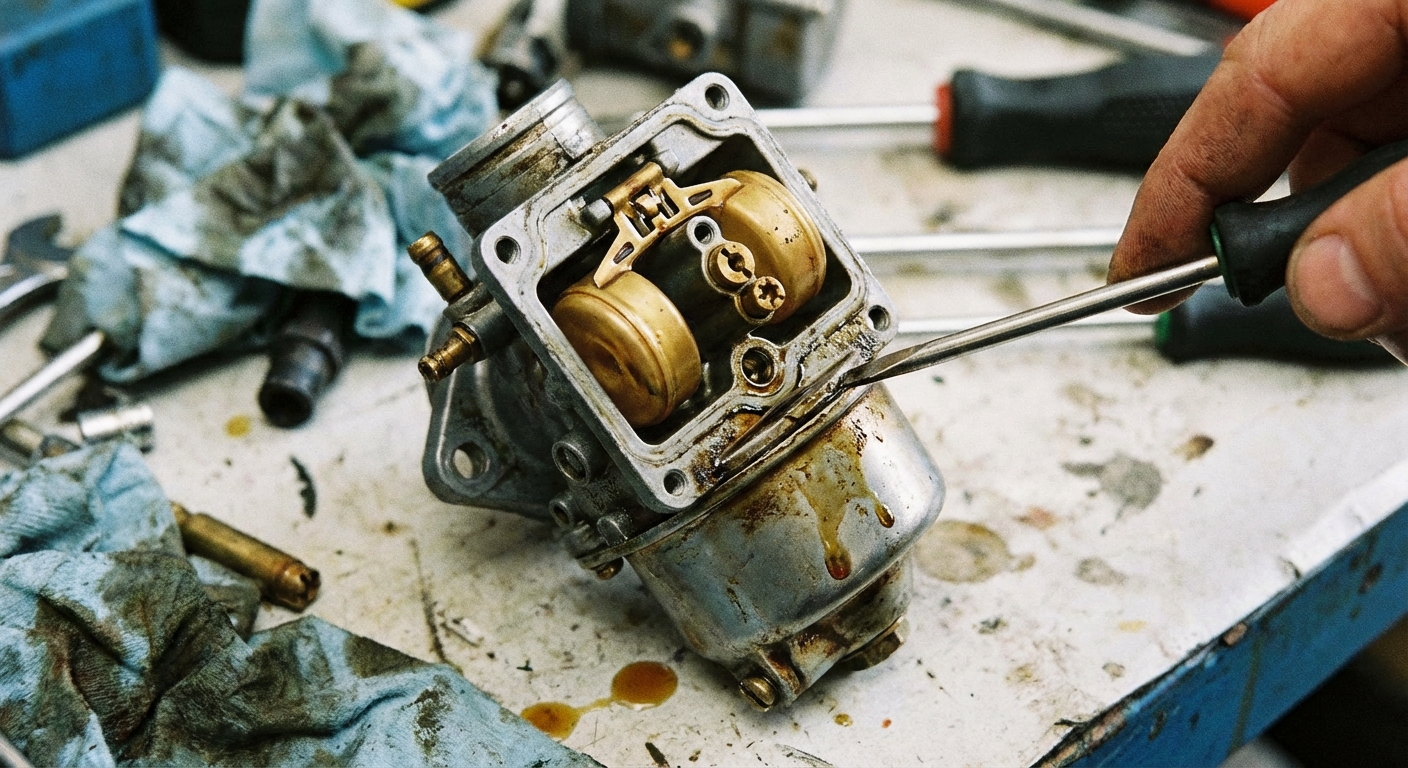
4) Clogged carburetor
If your mower cranks and maybe even fires with starter fluid, but will not stay running, the carburetor is often gummed up. Ethanol fuel can leave deposits that block the tiny passages inside.
Common symptoms
- Starts for 1 to 2 seconds then dies
- Needs choke to run, then stalls when choke is opened
- Surging or hunting at idle
Fix option A: Quick carb clean
- Remove the air filter and housing so you can access the carb throat.
- Spray carburetor cleaner into the throat and around linkages (follow the product directions and keep it off plastic and rubber when possible).
- If accessible, remove the float bowl (usually one bolt on the bottom). Clean the bowl and the bolt holes. That “bowl bolt” often has tiny jets that clog.
- Reassemble, add fresh fuel, try again.
Reality check: A spray-in cleaning can be a good diagnostic step and sometimes a short-term fix, but it will not reliably clear a truly clogged jet.
Fix option B: Clean or replace
If the quick clean does not work, you are at the point where you either do a deeper carb clean (removing jets, cleaning passages) or replace the carburetor. For many common walk-behind mowers, a replacement carb is affordable and can be the most time-effective solution.
- Take photos as you remove linkages and springs. Future-you will thank you.
- Replace gaskets if they tear during removal.
- After reinstalling, check for fuel leaks before starting.
Two quick extras to check
- Choke and primer: make sure the choke is actually closing (or auto-choke linkage is moving) and the primer bulb is not cracked.
- Fuel cap vent: a blocked vent can cause start-then-die. Try loosening the cap slightly as a quick test, then tighten it back up.
5) Safety switch or cable
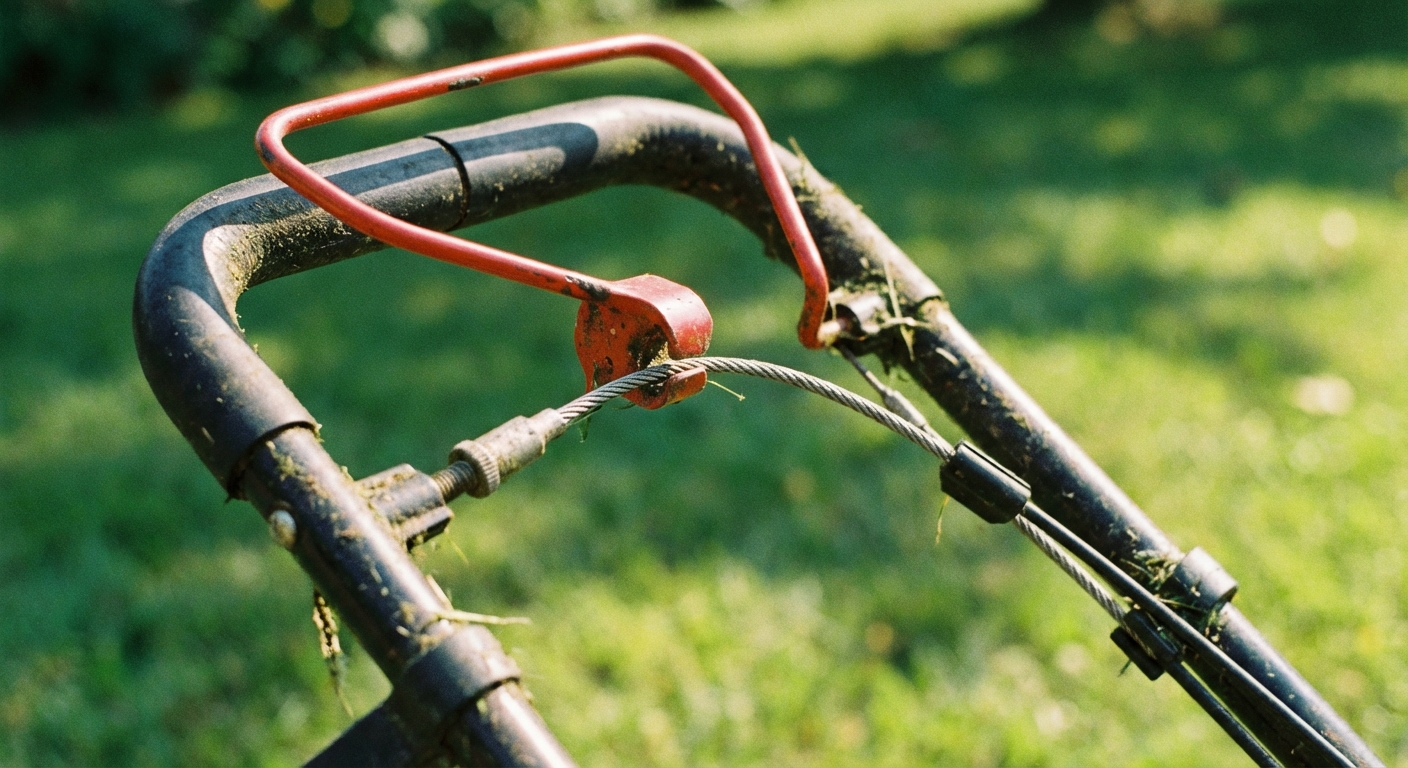
Modern mowers are full of simple safety interlocks. If the mower thinks the operator control is not engaged, it will kill spark or stop cranking.
Common safety no-starts
- Blade control bar (bail) not fully engaged or the cable is stretched.
- Loose or damaged kill switch wire near the engine or handle.
- Seat switch issues on riding mowers.
- Brake or PTO switch not set correctly on riding mowers.
Fix
- Check that the handle bar is pulled tight and the cable moves freely.
- Inspect for a pinched, broken, or unplugged wire, especially after handle folding or transport.
- On riding mowers, confirm: brake pedal fully pressed, PTO disengaged, and you are seated (or seat switch is functioning).
Important: Do not permanently bypass safety switches. They exist for a reason and can prevent serious injury.
6) Dead battery
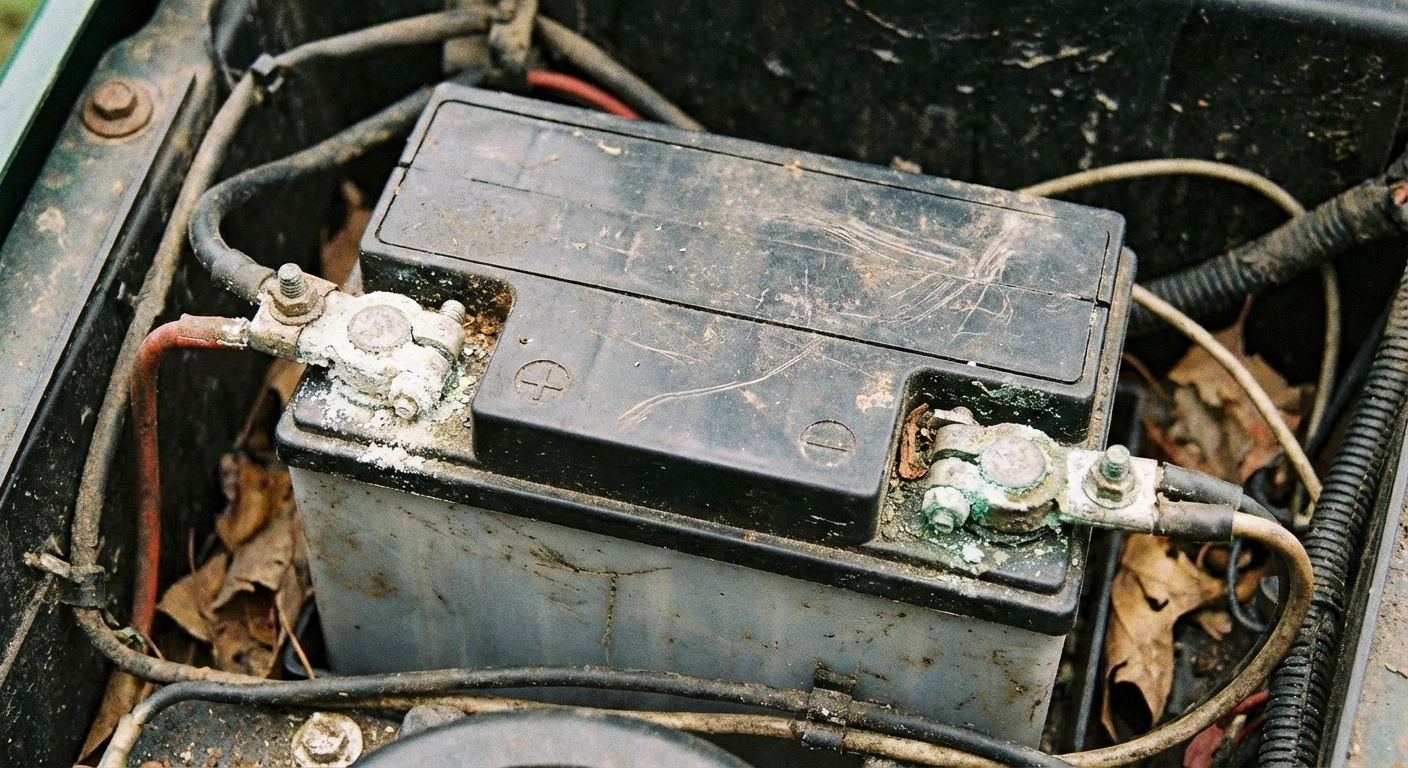
If you turn the key or push the start button and get nothing, start with the battery. Electric-start mower batteries can die quietly, especially after winter storage.
Quick checks
- Headlights dim or no click: battery is likely discharged.
- Single click: could be low battery, corroded terminals, or a bad solenoid.
- Rapid clicking: classic low battery symptom.
Fix
- Clean corrosion off terminals (battery disconnected, negative cable first).
- Charge with the correct charger for your battery type.
- If the battery will not hold a charge, replace it.
- Check for an inline fuse near the starter circuit if you have power but no crank.
When to call for service
Most homeowners can handle fuel, air filter, spark plug, and basic carb cleaning. But it is smart to pause if you hit any of these:
- Strong gas smell and visible fuel leaks
- Pull cord is locked up or the engine will not turn over
- Metallic knocking sounds when cranking
- You suspect internal engine damage or the mower was run without oil
Seasonal storage tips
The cheapest “repair” is preventing the no-start in the first place. Here is the routine that has saved me the most headaches.
End of season checklist
- Decide: drain or stabilize. Either run the tank dry (and drain the carb bowl if you can) or fill with fresh fuel plus stabilizer and run it 5 to 10 minutes to pull treated fuel into the carb.
- Change the oil if it is due. Dirty oil sitting all winter is not doing you favors.
- Replace or clean the air filter so it is ready for spring.
- Inspect the spark plug and replace if it is questionable.
- Battery care (electric start): remove the battery if your manual recommends it and keep it on a maintainer in a cool, dry place.
First start of spring
- Add fresh fuel if the tank is not full of stabilized gas.
- Check oil level (especially if the mower was moved around).
- Verify choke or primer operation (if equipped), then start.
If you take only one thing from this page, let it be this: fresh fuel and a clean carburetor solve a huge percentage of no-start mowers. Start simple, work in order, and you will usually be back to mowing before the coffee gets cold.

About Marcus Vance
Content Creator @ Grit & Home
Marcus Vance is a lifelong DIY enthusiast and self-taught home renovator who has spent the last decade transforming a dilapidated 1970s ranch into his family's dream home. He specializes in budget-friendly carpentry, room-by-room renovations, and demystifying power tools for beginners. Through his writing, Marcus shares practical tutorials and hard-learned lessons to help homeowners tackle their own projects with confidence.