
🚨 In a DIY emergency or rush?
Skip the details and jump straight to our 30-second cheat sheet for the most crucial info.
If your leaf blower won’t start, don’t panic and definitely don’t toss it yet. Most “dead” blowers are dealing with one of a handful of common problems: no power, stale fuel, a clogged air path, a cranky spark plug, or a carburetor that is gummed up from sitting.
I’ve been that guy who swore a machine was done for, only to find the kill switch was on or the fuel was last season’s leftovers. Let’s walk through the smartest checks first, in the right order, so you spend minutes before you spend money.
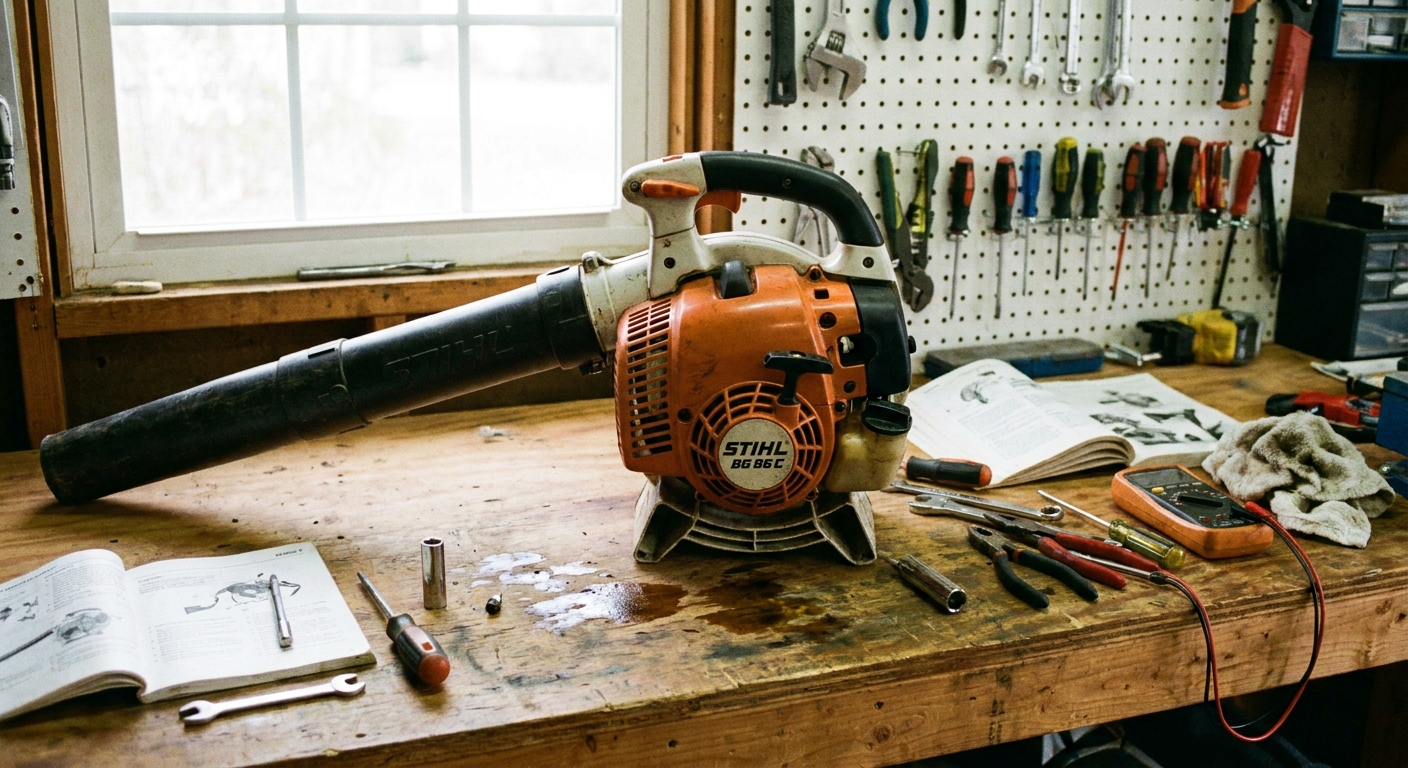
Quick symptoms (fast clues)
- Nothing happens (no sound, no lights): power issue, safety switch, trigger, cord, outlet, or battery lockout.
- Hums or tries to start, then stops (electric): extension cord too light, jammed impeller, or overload protection.
- Cranks but won’t start (gas): fuel, spark, air, or flooding.
- Starts then dies: stale fuel, clogged filter, fuel line air leak, or carb issue.
- Only runs on choke: almost always fuel delivery or carb.
- Pull cord won’t pull: possible hydro-lock, seized engine, or debris jam. Stop and inspect before forcing it.
Safety first (seriously, take 30 seconds here)
- Turn the blower off and let it cool before you touch the muffler or cylinder area.
- Disconnect power first:
- Battery: remove the battery pack.
- Corded electric: unplug it.
- Gas: pull the spark plug boot off before deeper checks.
- Work outside or in a well-ventilated area if you’re dealing with fuel.
- Keep sparks and flames away from fuel, rags, and vapors.
- Eye protection is non-negotiable if you’re blowing out filters or using compressed air.
- Dispose of old fuel properly using a local hazardous waste or recycling option. Do not dump it on the ground.
Step 1: Identify what you have (gas, battery, or corded)
This matters because “won’t start” means different things.
- Corded electric: motor does nothing or hums.
- Battery: lights blink, nothing happens, or it runs for a second then quits.
- Gas (2-cycle or 4-cycle): it will not fire, fires then dies, or only runs on choke.
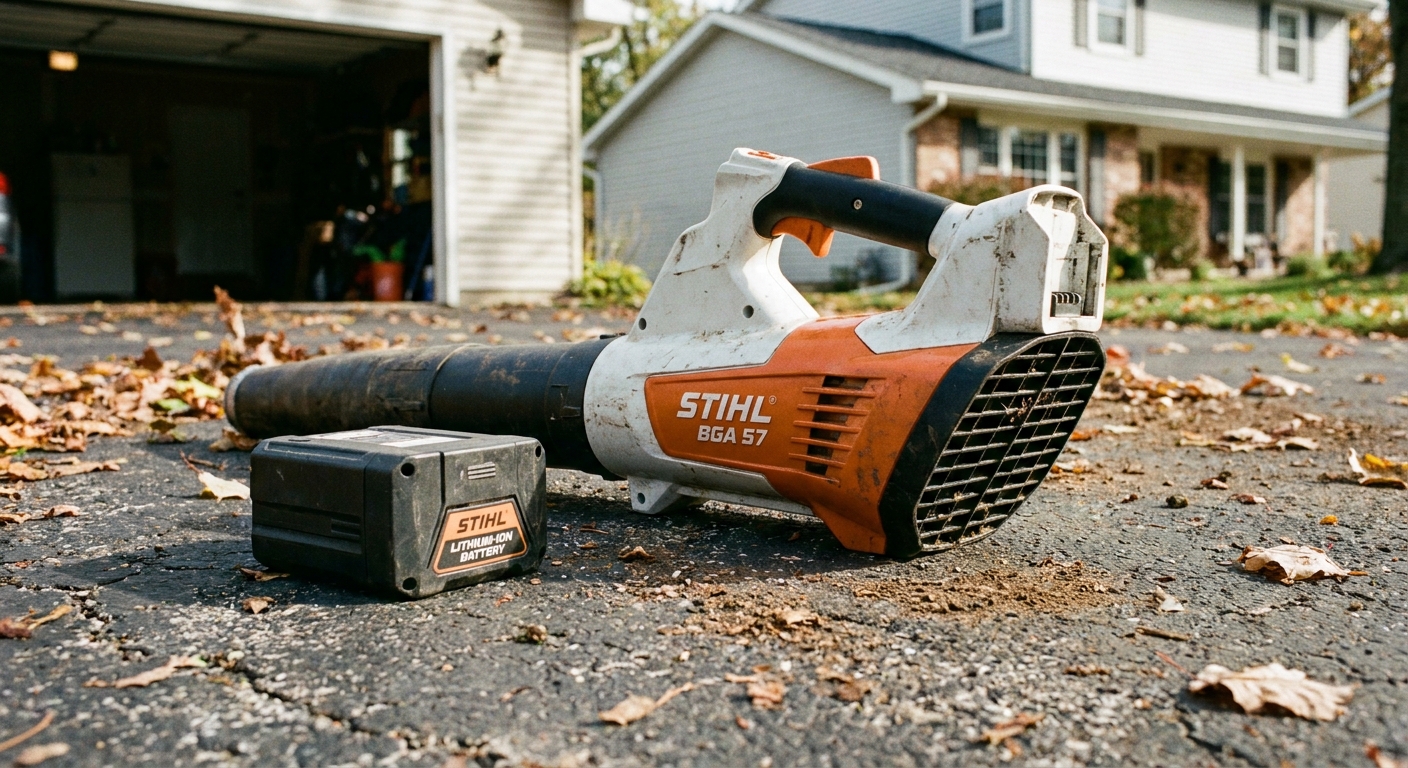
Battery and corded blowers: quick checks
Power and charging basics
- Battery is fully seated. Many packs click twice. If it is half-latched, you get lights but no run.
- Try a different battery if you have one. Battery or charger issues are very common.
- Charge until the charger indicates full. If the charger shows “fault,” the pack may be too hot, too cold, deeply discharged, or failing.
- Cold battery note: some packs will not run well when cold. Bring the battery indoors for a bit and try again.
- Charger check: if you can, try another charger. Also look for debris or corrosion on the battery and charger contacts and wipe them clean (dry cloth first).
- For corded models: try a different outlet and verify the GFCI did not trip.
- Extension cord check: use a heavy enough cord. Too light can cause voltage drop and weird behavior.
- For typical 10 to 15A corded blowers: up to 50 ft, aim for 14 gauge or thicker.
- For typical 10 to 15A corded blowers: 50 to 100 ft, 12 gauge is safer.
- Always check your blower’s nameplate/manual for amperage and match the cord to it.
Safety switches and controls
Electric blowers often have a trigger lock or safety lever that must be engaged in a specific order.
- Make sure the lock-off button is pressed as designed.
- Check for a cracked trigger or sticky debris around it.
- If it has a tube installed sensor, confirm the blower tube is fully snapped in.
Overheat and overload protection
If the blower stopped mid-job and now it “won’t start,” it may be protecting itself.
- Let it cool 15 to 30 minutes.
- Check the air intake screen for leaf debris.
- Look for a clogged impeller housing if the unit sucked in mulch or wet leaves.
Gas blowers: 5-minute checklist
Gas blowers need three things: fresh fuel, spark, and air. We’re going to check them in the order that fixes the most blowers with the least effort. If you get past these and it still will not run, skip ahead to the next-level checks.
1) Switch and choke
- Confirm the stop switch is set to ON or RUN.
- Start cold with the choke ON, then move to half-choke or run once it pops.
- Some 4-cycle models use a different routine (or minimal choke). If the decal on the blower disagrees with generic advice, follow the decal.
- If you have been pulling for a while, you may have flooded it. More on that below.
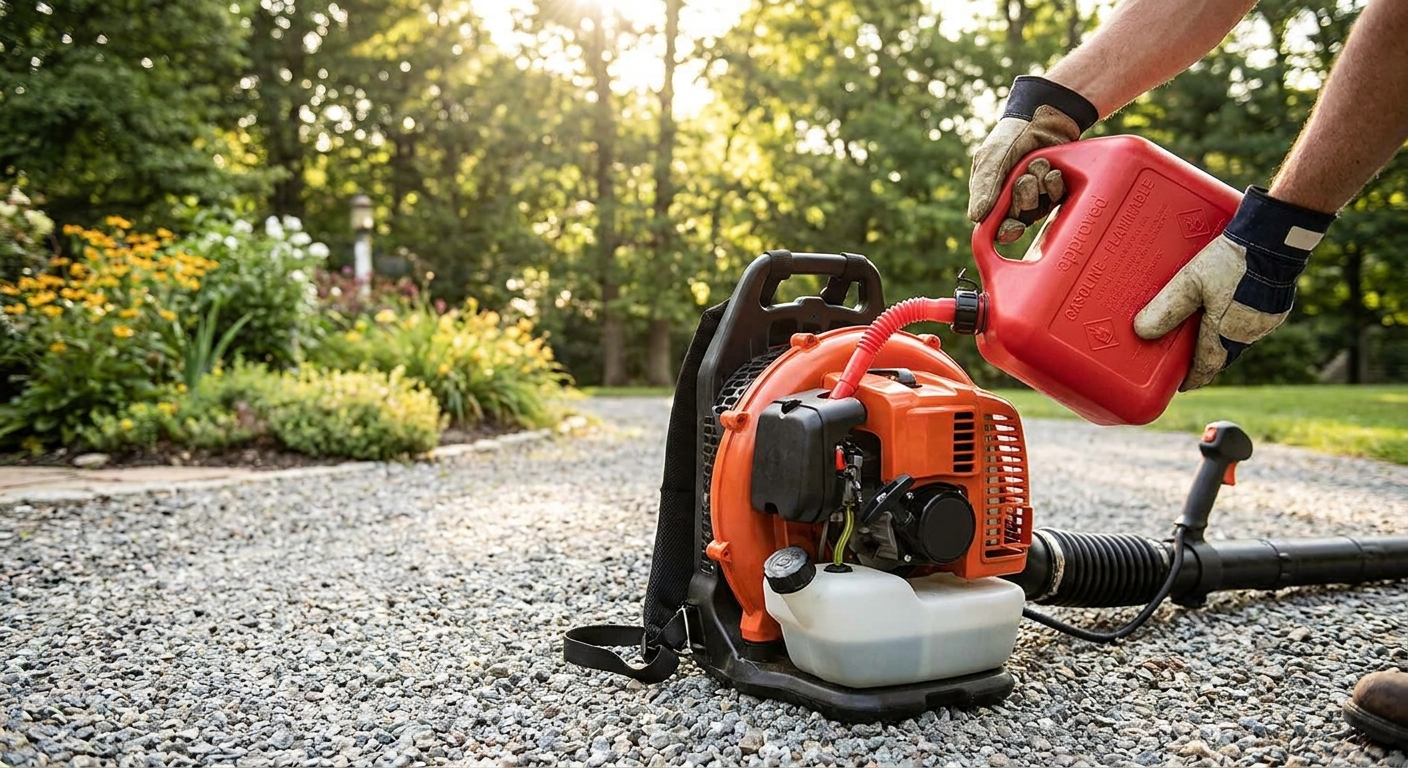
2) Fresh fuel (the big one)
If fuel has been sitting, especially ethanol-blend gas, it can begin to degrade in as little as 30 days. Stored in a sealed container and treated with stabilizer, it can last longer, but if you are unsure, assume the fuel is guilty until proven innocent. I know it feels wasteful, but stale gas is cheaper to replace than a carburetor.
- 2-cycle blowers: verify the gas-oil mix ratio in your manual (common ratios are 50:1 or 40:1). Wrong mix can cause hard starts and damage.
- 4-cycle blowers: confirm there is straight gas in the tank and the oil level is correct.
- If in doubt, drain the tank and add fresh fuel. For 2-cycle, use a known-good pre-mix or a fresh batch you just mixed.
3) Prime it (if equipped)
The primer’s job is to pull fuel into the carburetor. Most manufacturers want 5 to 10 presses, but follow your model’s decal or manual.
- Press the bulb slowly. If you have clear lines, you may see fuel moving in the return line. If your lines are opaque, go by feel and behavior instead.
- If the bulb won’t fill, you never see any movement in a clear line, or it doesn’t rebound normally, you may have a fuel line, filter, or carb issue.
- If the bulb is cracked or sticky, it can suck air instead of fuel.
4) Air filter
A clogged air filter can turn a normal start into a no-start.
- Remove the filter and tap it gently outside.
- If it is foam, wash with warm soapy water, dry completely, and lightly oil it if the manual calls for it.
- If it is paper and dark with grime, replace it.
5) Flooded reset
If you smell gas strongly or the plug is wet, you likely flooded it.
- Set choke to OFF/RUN.
- Hold the throttle wide open (if applicable).
- Pull the starter 6 to 10 times.
- If it still will not fire, remove and dry the spark plug (next step).
If it won’t crank at all (gas)
Pull cord stuck or engine locked
- Do not force the rope. You can break the starter assembly.
- Check for obvious debris jams around the fan/impeller area (on units where you can safely inspect it).
- If you suspect hydro-lock (too much fuel in the cylinder), remove the spark plug, keep the plug wire away, and pull the cord a few times to clear the cylinder. Then reinstall a dry plug and try the normal start routine.
- If the rope still will not move or it feels mechanically jammed, you may be looking at internal damage or seizure. That is a good time to stop and consider a shop.
Spark plug: a small part, big headaches
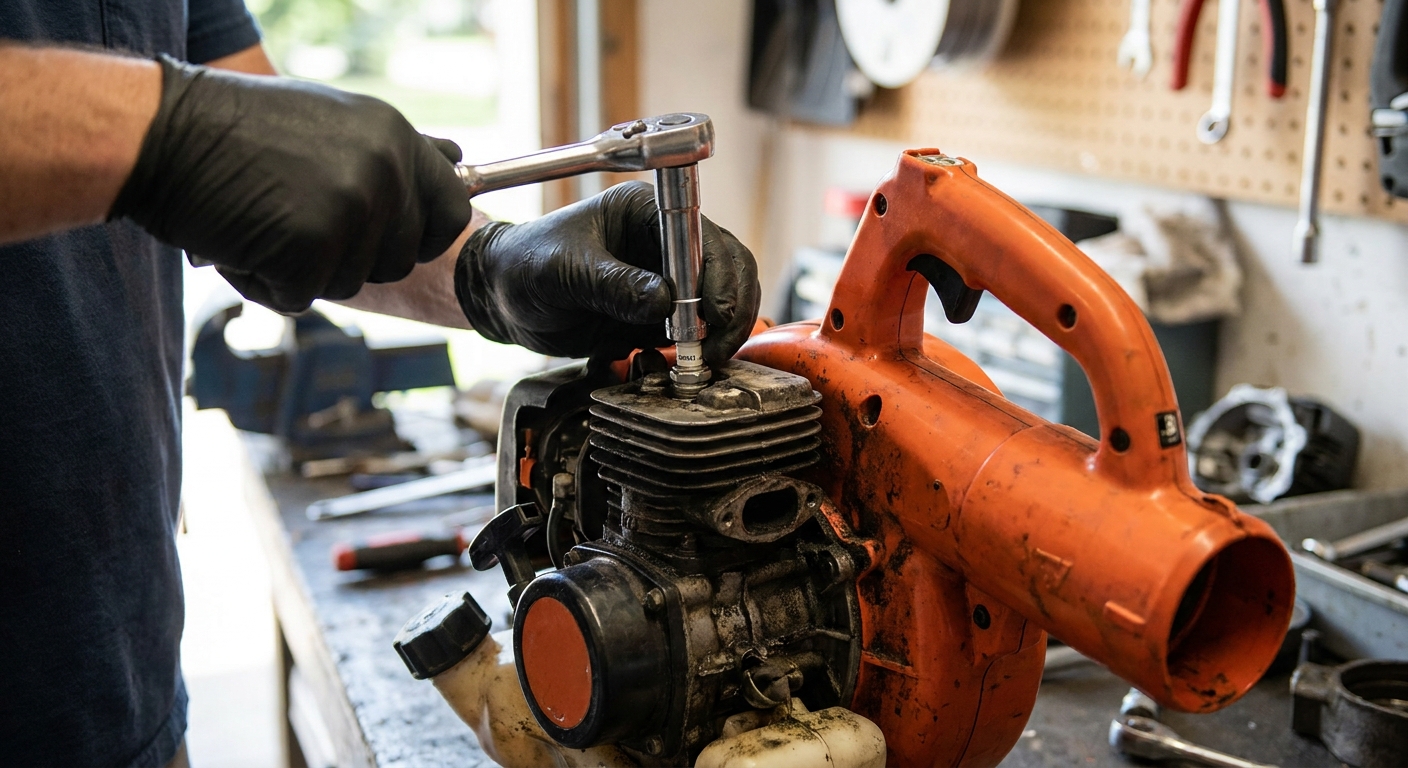
If your blower cranks but won’t start, the spark plug is one of the best “bang for your buck” checks.
Remove and read the plug
- Dry and light tan: plug is probably okay. Look elsewhere.
- Wet with fuel: engine is flooded or spark is weak.
- Black and sooty: running rich, dirty filter, too much choke, or plug overdue.
- White and blistered: running lean or overheating. Do not keep yanking on it until you find out why.
What to do
- Clean light deposits with a wire brush.
- Check the gap using the spec from your manual (or the sticker on some machines).
- When in doubt, replace the plug. It is usually inexpensive (often in the $5 to $10 range) and removes a big question mark.
Quick spark check
If you are comfortable doing it, you can verify spark using an inline spark tester. If you do not have one, this is a good point to stop and consider a shop, because unsafe spark testing methods are common and not worth it.
Fuel filter, fuel lines, and primer bulb
If you have fresh fuel and a decent plug but the primer will not pull fuel, focus on the fuel delivery parts you can actually see.
Fuel filter
- Most handheld blowers have a small weighted filter inside the fuel tank.
- Hook it gently with a clean wire or hemostat and pull it out.
- If it looks dark, crusty, or clogged, replace it. This is another inexpensive part that causes a lot of no-starts.
Fuel lines
- Look for cracks, kinks, or lines that have turned hard and brittle.
- If a line falls off a fitting easily, it may be stretched. Air leaks here can mimic carb problems.
Primer bulb
- Replace if cracked, cloudy, or it does not rebound correctly.
- A leaky primer bulb can make a blower start only with choke and die when you open it.
Carb basics
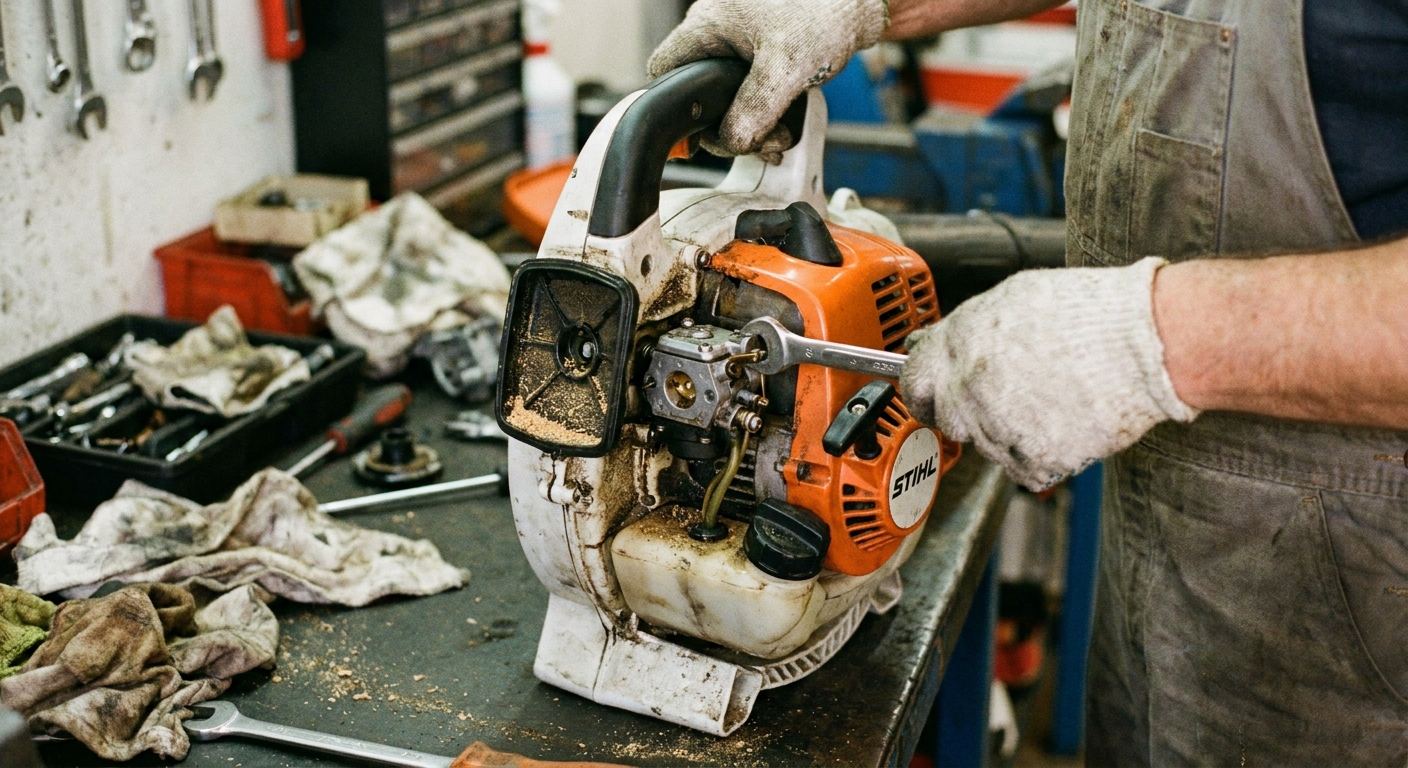
Carburetors get blamed for everything, but here’s the truth: they do fail, and they also get gummed up when fuel sits. If your blower starts for a second on choke or only runs with the choke partially on, the carb is a prime suspect.
Before you touch screws
Many newer carbs are non-adjustable or have limiter caps. Between emissions rules and tiny passages, improper adjustment can make things worse. I like to try the simple cleaning moves first.
- Replace the air filter if it is questionable.
- Drain old fuel and refill with fresh.
- Try a small-engine fuel system cleaner in fresh gas (per label directions) and run it if you can get it to start at all.
When to clean or replace the carb
- Primer bulb will not pull fuel even with a new filter and good lines.
- Starts only with starting fluid, then dies immediately.
- Runs rough and surges after fresh fuel, clean filter, and a good plug.
- The carb is a sealed, non-serviceable style where replacement is the most homeowner-friendly option.
For many homeowner-grade blowers, a complete replacement carburetor can cost about the same as a rebuild kit and save a lot of fiddling. If you go that route, take photos before removing linkages so you can put everything back exactly as it was.
Other issues that look like “won’t start”
Spark arrestor screen
Many mufflers have a tiny mesh screen that can clog with carbon, especially on 2-cycle engines run rich.
- If the blower starts then bogs down, or it will not rev, check the spark arrestor.
- Clean gently with a wire brush or replace it if damaged.
4-cycle oil problems
- Low oil can trigger shutdown on some models.
- Overfilled oil can cause hard starting and smoking.
Compression and wear
If the starter rope suddenly feels “too easy” with very little resistance, the engine may have low compression. At that point, you’re moving from maintenance into repair territory.
Next-level stop points
- No spark confirmed with an inline tester after a known-good plug: likely ignition issue (coil, switch, wiring). Consider a shop if you do not want to chase it.
- Fuel leaks from lines, tank, or primer: stop and repair before further starting attempts.
- Low compression symptoms (rope pulls too easily, will not even pop with correct fuel and spark): internal repair may exceed the value of the blower.
When repair exceeds replacement
I love fixing things, but I also love not throwing good money after bad. Use this quick decision filter.
- Replace it if: the blower is a low-cost model and needs a carb plus fuel lines plus coil, or if parts are hard to find.
- Repair it if: it likely needs a plug, filter, primer bulb, fuel filter, or a simple carb clean. Those are normal wear items.
- Consider upgrading if: you are done with mixing fuel and dealing with storage issues. A battery platform you already own can be a smart long-term move.
My rule of thumb: if parts are going to exceed about 50 percent of the cost of a comparable new blower, I stop and think hard about replacement.
How to keep it from happening again
- Do not store ethanol fuel in the machine for months. Run it dry or use a stabilizer and follow the product directions.
- Use fresh 2-cycle mix. Label the can with the mix ratio and date.
- Clean the intake areas after each season so the motor can breathe.
- Charge and store batteries properly and avoid leaving them in extreme heat or cold.
The 30-Second Cheat Sheet
Essential takeaways for: Leaf Blower Won’t Start? Try This Before You Toss It
Fast triage (pick your blower type)
- Battery blower: try a known-good battery, make sure it clicks fully in, let it cool 15 to 30 minutes if it overheated, clean battery/charger contacts, and confirm the tube and trigger lock are fully engaged.
- Corded blower: test a different outlet, reset the GFCI, and use a heavier extension cord (for typical 10 to 15A blowers: 14 gauge up to 50 ft, 12 gauge up to 100 ft). Always check your nameplate/manual for amperage.
- Gas blower: check kill switch ON, correct choke position, fresh fuel, prime 5 to 10 times (per decal), and check the air filter.
If it cranks but won’t start (gas)
- Fresh fuel (old fuel is the #1 cause). If it has been sitting, drain and refill with fresh gas or fresh 2-cycle mix.
- Flooded? Choke OFF, throttle wide open, pull 6 to 10 times. If plug is wet, dry or replace it.
- Spark plug: replace if questionable. Cheap and often fixes it.
- Fuel filter and lines: replace clogged tank filter, fix cracked or loose lines, replace a cracked primer bulb.
- Carb suspect if it only runs on choke or dies immediately after starting.
When to stop repairing
- If it needs multiple major parts (carb + ignition coil + lines) and the total is over about 50% of a new blower, replacement is usually the smarter buy.
💡 Tip: Scroll up to read the full article for detailed, step-by-step instructions.
⬆️ Back to top
About Marcus Vance
Content Creator @ Grit & Home
Marcus Vance is a lifelong DIY enthusiast and self-taught home renovator who has spent the last decade transforming a dilapidated 1970s ranch into his family's dream home. He specializes in budget-friendly carpentry, room-by-room renovations, and demystifying power tools for beginners. Through his writing, Marcus shares practical tutorials and hard-learned lessons to help homeowners tackle their own projects with confidence.