
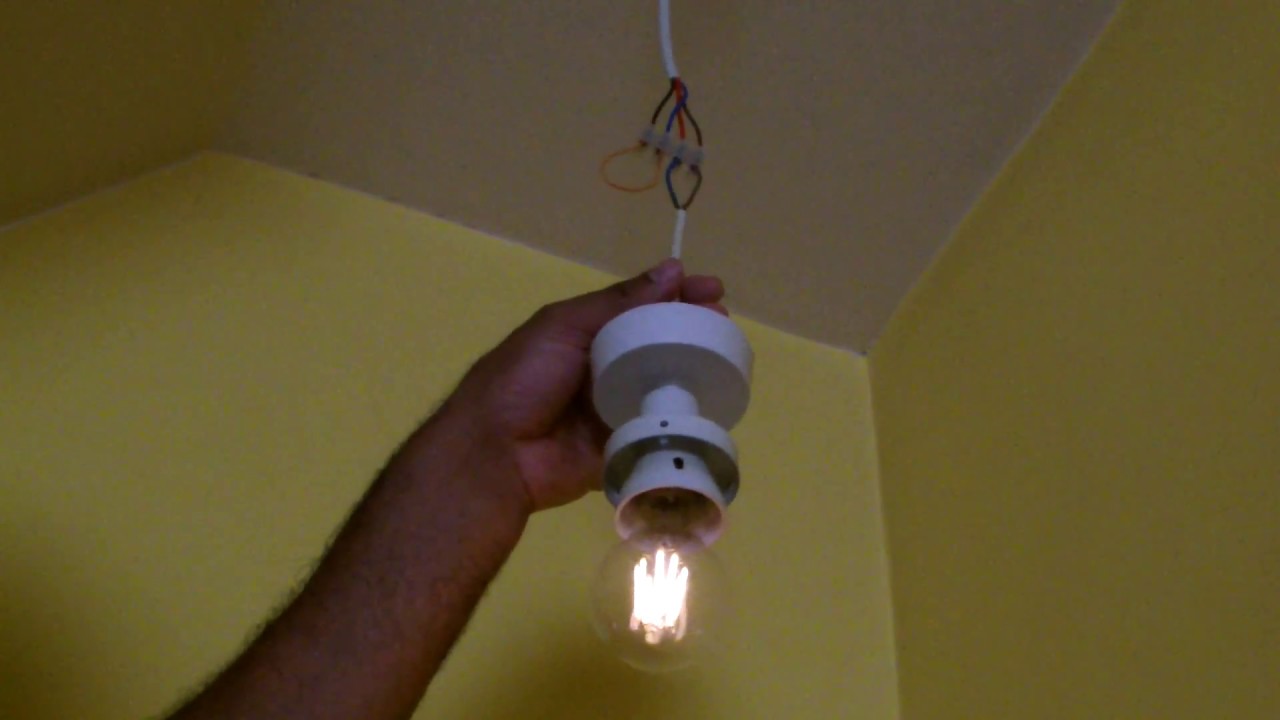
That faint little glow when the switch is off can make you feel like your house is haunted. The good news is it is usually not a dangerous mystery. In most LED setups, it is a side effect of a tiny leakage current sneaking through the circuit, enough to tickle an LED driver but not enough to light an old incandescent.
In this guide I will walk you through the most common causes, how to narrow down which one you have, and what fixes actually work. I will also draw a hard line on what is DIY-friendly versus “call a licensed electrician.”
What “ghost glow” is
LEDs use very little power. That is the whole magic. But it also means a tiny amount of current can charge the electronics inside the bulb (the driver) and make it:
- Glow faintly all the time when off
- Flash or flicker every few seconds or minutes (the driver charges, then dumps)
This is typically caused by one of these:
- An illuminated switch (the kind with a little locator light)
- A dimmer that is not LED-friendly or not playing nicely with your specific bulb
- A switch loop (no neutral in the switch box) or a neutral-free smart switch that steals a tiny bit of power through the load
- Induced voltage from parallel wiring runs (often called ghost or phantom voltage)
- Other electronic controls like motion sensors, occupancy sensors, timers, GFCI/AFCI devices, or smart relays that can leak a small amount of current
Safety boundaries
I am all for DIY, but electricity does not grade on effort. Use these boundaries:
- If you see burning smell, scorch marks, crackling, buzzing, or warm switches, stop and call an electrician.
- If the flicker happens when the switch is on too, you may have a loose connection. That is a different problem and can be hazardous.
- If you are not comfortable identifying a neutral and verifying power is off, stick to bulb and switch swaps only, or hire it out.
When you do open a box, turn off the breaker, verify power is off with a proper tester, and do not trust the wall switch alone.
Quick diagnosis
Step 1: Bulb vs control
- Swap in a different LED bulb brand or model.
- If you have one, try an old incandescent temporarily. If the issue disappears with incandescent, you are almost certainly dealing with leakage current or induced voltage that only LEDs react to.
- If this is an integrated LED fixture (no screw-in bulb), skip the bulb swap and focus on the switch, dimmer, sensor, or wiring instead.
Step 2: Identify the switch
These are the usual suspects:
- Illuminated toggle or rocker: a small light in the switch body that stays on when the load is off.
- Dimmer: slider, rotary, or smart dimmer.
- Smart switch that does not require a neutral wire.
- Motion sensor or timer: anything with electronics inside can leak a trickle.
Step 3: Check for 3-way
3-way circuits (two switches controlling one light) can be more prone to ghost glow depending on the devices used and how the travelers are run. It is not guaranteed, but it is a common place to see odd LED behavior.
Cause 1: Illuminated switches
Locator lights need a tiny path for current. On many illuminated switches, that current flows through the bulb when the switch is “off.” Incandescent bulbs ignore it. LEDs do not.
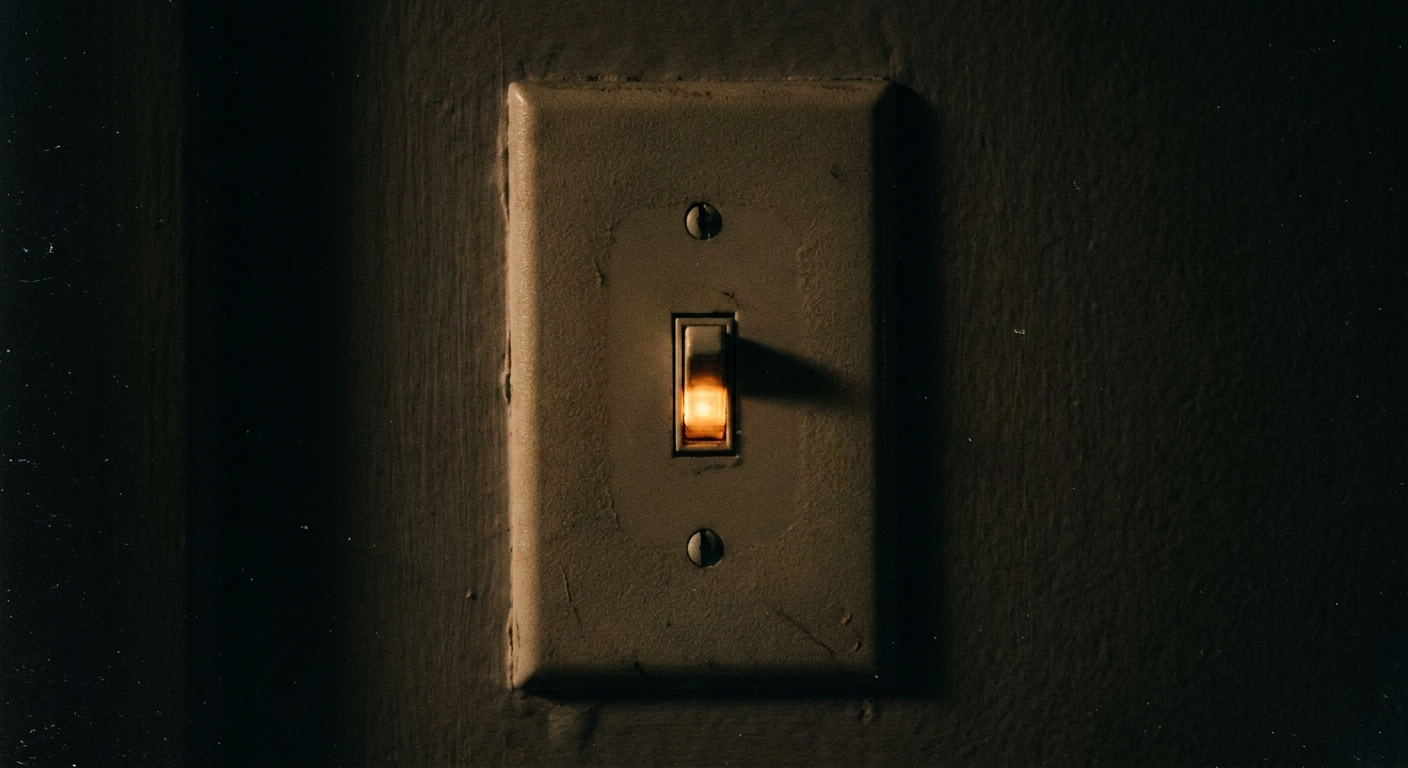
Typical fixes: replace the illuminated switch, use an LED-compatible locator switch, or add a listed bypass at the fixture (see the summary section below).
Cause 2: Dimmer issues
Many dimmers leak a small amount of power even when “off,” especially older models, certain electronic low-voltage dimmers, and some smart dimmers. Others are fine on paper but have a minimum load requirement that a single LED bulb does not meet.
Signs it is the dimmer
- The bulb glows faintly when off, or pulses every few seconds
- The bulb flickers more at certain dimmer positions
- The problem started right after you switched to LEDs
Typical fixes: switch to an LED-rated dimmer, use a dimmable LED that is on the dimmer maker’s compatibility list, or add a listed bypass if the dimmer needs a minimum load (see summary).
My thrifty lesson here: the cheapest dimmable LEDs are often the most sensitive. If you are chasing weird glow, trying one or two higher-quality bulbs can save you hours.
Cause 3: Switch loops (no neutral)
In many older homes, the switch box was wired with a switch loop: power goes to the ceiling box first, and only a hot and switched-hot are sent down to the switch. Often, that means no neutral in the switch box.
That matters because many modern devices want a neutral to power their electronics. Neutral-free smart switches and some electronic controls “borrow” a tiny bit of current through the light. That can make LEDs glow or flicker when the switch is off.
How to spot it
- You open the switch box and see no white neutral bundle tied together with wire nuts.
- The white wire on the switch is not in a neutral bundle and may be used as a hot (sometimes marked with tape when done correctly).
Typical fixes: use a switch that has neutral (if available), add a listed bypass if the device requires it, or have an electrician run a neutral to the box for the cleanest long-term solution.
Cause 4: Induced voltage
Sometimes the switched leg runs right alongside an always-hot conductor for a long stretch. That parallel run can induce a tiny voltage on the switched leg even when the switch is open. A high-impedance digital meter may show surprising readings, and an LED may glow faintly.
What to know
- This is more common in long cable runs and multi-gang boxes with crowded wiring.
- The current is usually extremely small, but it can still charge an LED driver.
Typical fixes: try a different bulb, add a listed bypass at the fixture, or reroute wiring during a remodel if you are already opening walls.
Fixes that work
1) Upgrade the bulb
Not all LEDs are built the same. Higher-quality bulbs tend to have better drivers that do not glow as easily. If you are dealing with one problem fixture, try a known reputable bulb before tearing into wiring.
2) Replace the switch, dimmer, or sensor
If you have an illuminated switch, replace it with a standard switch. If you have a dimmer, replace it with an LED-rated model that matches your load type. If you have a motion sensor, timer, or smart control, check whether it is rated for LED loads and whether it requires a bypass.
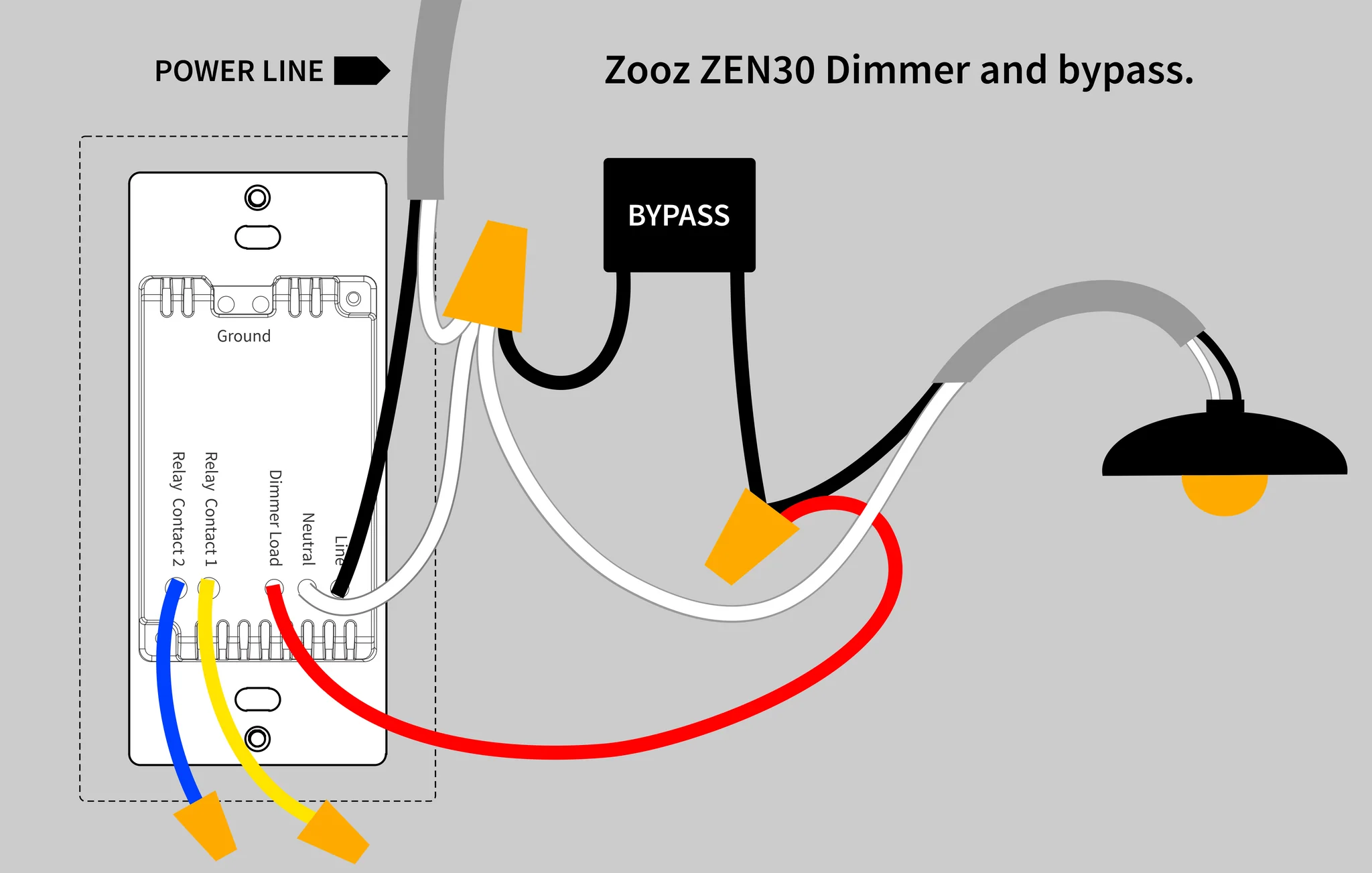
3) Add a bypass (load resistor) at the fixture
A bypass provides a small alternative path for that trickle of current so it does not charge the LED driver. These are typically installed at the fixture junction box, often across hot and neutral, but wiring varies by product and application, so follow the manufacturer instructions.
- Where it goes: usually in the ceiling box or fixture canopy, not in the switch box.
- When it helps: illuminated switches, neutral-free smart switches, dimmers with minimum load issues, and induced voltage.
- What to search for: “dimmer bypass” or a common example is the Lutron LUT-MLC (often used to stabilize LED loads). Match the device to your switch type and follow its instructions.
Important: Use a product listed for this purpose and follow its instructions. These devices can generate heat and they intentionally draw a small amount of power. If you are not comfortable working in electrical boxes even after shutting off and verifying power, hire it out.
4) Get a neutral to the switch
If you are remodeling anyway, this is the time to fix the root cause. A properly wired switch box with a neutral gives you more reliable options for dimmers and smart controls and reduces the chance of off-state glow.
When to stop
Off-state glow is usually a nuisance. But if you see any of the following, treat it as a real electrical issue:
- Flickering happens with the switch on across multiple fixtures
- Lights are dimming when appliances start, or you hear buzzing in the panel
- You find a loose, burned, or corroded connection in a box
- Breakers trip or the switch plate feels warm
- You discover unusual wiring, like the neutral being switched, a bootleg neutral, or anything that does not match standard diagrams
Those symptoms can point to loose neutrals, failing connections, or overloaded circuits. That is not a “try a different bulb” situation.
DIY checklist
- Try a different LED bulb brand in the same socket
- If there is a dimmer, confirm the bulb is dimmable and the dimmer is LED-rated
- If there is an illuminated switch, swap to a standard switch
- If there is a sensor, timer, or smart switch, confirm it is LED-compatible and see if it calls for a bypass
- If it still glows, consider a listed bypass/load resistor installed at the fixture (per instructions)
- If you want smart controls and suspect no neutral in the switch box, plan for a neutral or hire an electrician
FAQ
Is a faint LED glow when off dangerous?
Most of the time it is not dangerous, just annoying. But if the switch or wiring shows heat, buzzing, or burn marks, treat it as hazardous and call an electrician.
Will the glow waste a lot of electricity?
The glow itself is typically tiny. The bigger note is that a bypass device is designed to draw a small amount of power on purpose, and it may feel warm. Either way, the main goal is stable, safe operation.
Can I ignore it?
If it is a mild glow only when off and everything else is stable, many people ignore it. If it bothers you, the cleanest fixes are usually a compatible bulb, a different switch or dimmer, or a listed bypass device.
Why does only one bulb in a multi-bulb fixture glow?
LED drivers vary. One bulb might be more sensitive and show the effect while the others stay dark.

About Marcus Vance
Content Creator @ Grit & Home
Marcus Vance is a lifelong DIY enthusiast and self-taught home renovator who has spent the last decade transforming a dilapidated 1970s ranch into his family's dream home. He specializes in budget-friendly carpentry, room-by-room renovations, and demystifying power tools for beginners. Through his writing, Marcus shares practical tutorials and hard-learned lessons to help homeowners tackle their own projects with confidence.