
🚨 In a DIY emergency or rush?
Skip the details and jump straight to our 30-second cheat sheet for the most crucial info.
The first time I saw a little spark in a switch, my stomach dropped. I pictured a wall fire starting behind the drywall while I stood there like a deer in headlights. The good news is that some sparking can be normal. The bad news is that certain kinds of sparking are a real warning sign, and you should treat them like one.
Let’s walk through what you might be seeing, what it means, and what to do next without guessing.
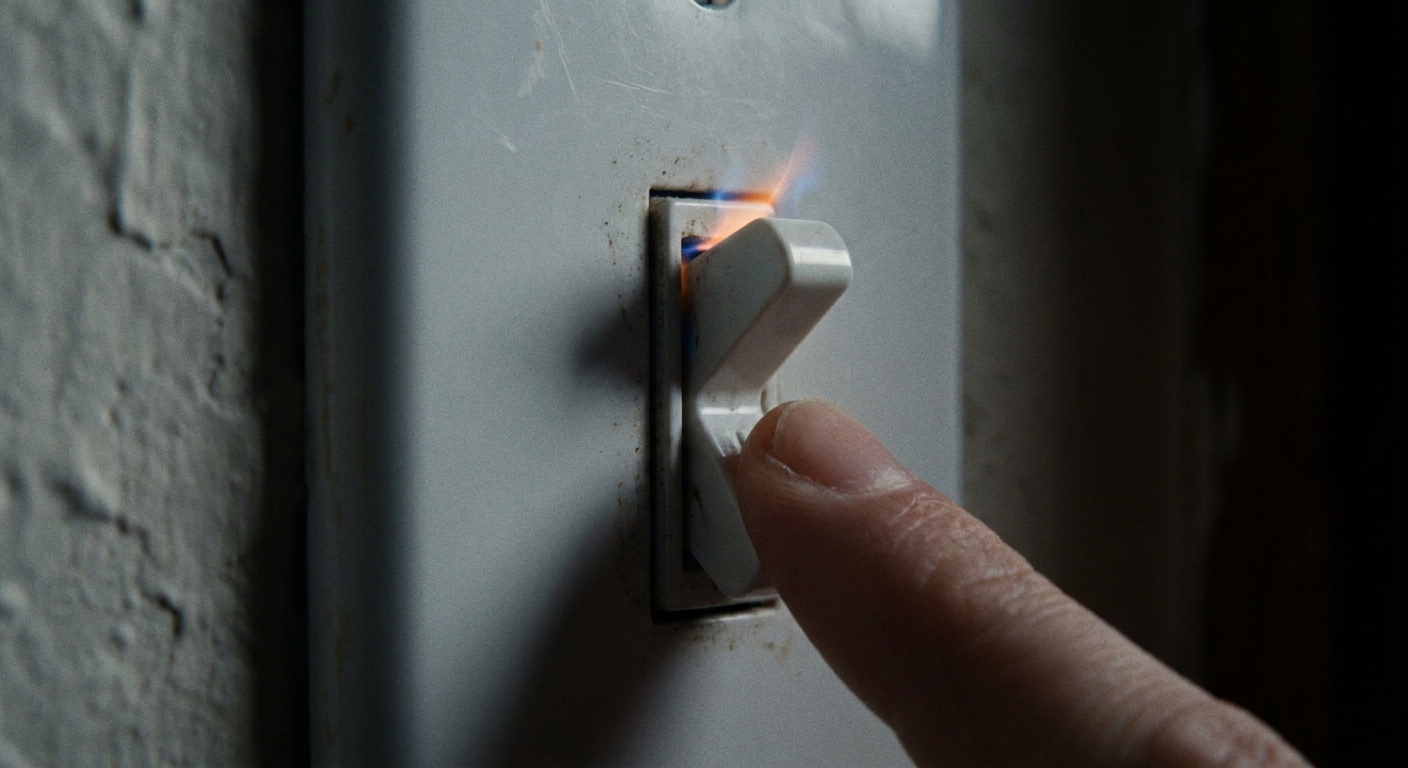
Is a spark in a light switch ever normal?
Yes. A brief, tiny blue-white flicker right as you flip the switch can be normal. Inside every standard mechanical switch, two metal contacts separate and come together. As they do, electricity can jump a microscopic gap for a split second. That is an arc.
How often you notice it depends on the switch, the load, and whether you’re switching on or off. Some people see it only occasionally. Others might notice a tiny arc more regularly with certain loads.
What “normal” looks like
- One quick, small flicker at the moment of switching.
- No sound, or just the normal switch click.
- No smell, no heat, no discoloration.
- Lights work normally and the switch feels normal.
Why some loads make it obvious
Some loads are harder on switches than others:
- Incandescent and halogen bulbs can have high inrush current when cold.
- LED drivers can create an inrush spike too, especially cheaper bulbs or a big group of them on one switch.
- Bathroom fans and small motors can arc more because motors are inductive loads.
If the arc is tiny and everything else is calm, you’re probably seeing normal contact arcing. But if any of the red flags below show up, treat it like a problem. If you’re not sure, play it safe and treat it as unsafe until it’s checked.
When a sparking switch is dangerous
A light switch shouldn’t look like a tiny welder. Use this as your quick danger filter.
Red flags
- Big, bright sparks you can see clearly in daylight.
- Repeated sparking every flip, or sparking that continues after the switch is on.
- Popping, crackling, sizzling sounds.
- Burning smell or a hot plastic odor.
- Warm or hot switch plate or the switch feels warm to the touch.
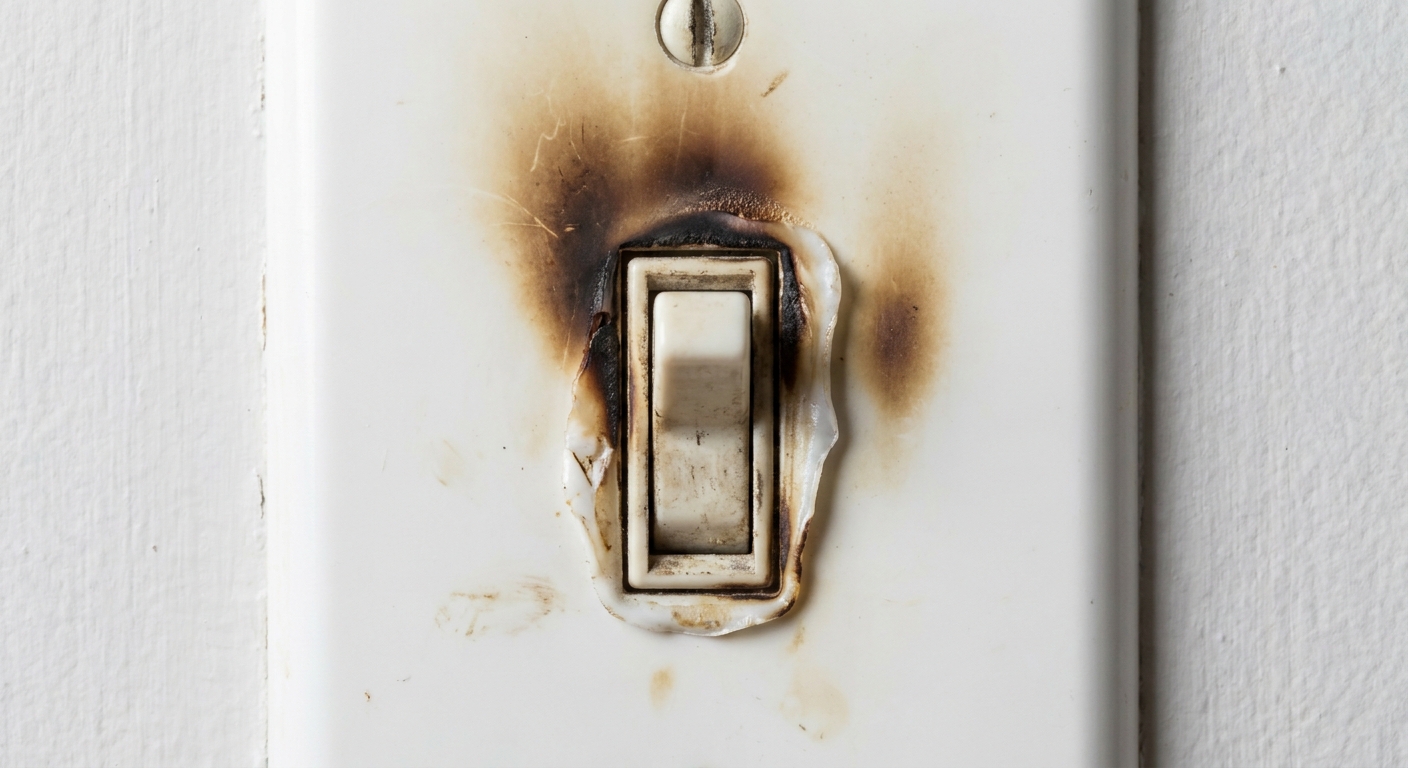
- Discoloration on the switch, cover plate, or wall.
- Flickering lights, buzzing, or intermittent operation.
- Breaker trips, especially an AFCI breaker.
Any one of those means the safest move is to stop using the switch until you know what’s going on.
What to do now
If you think the spark is more than a tiny one-time flicker, do this in order:
1) Turn the switch off
If it’s already on and you hear crackling or smell burning, turn it off once. Don’t keep flipping it to “test.”
2) Turn off the breaker
Go to the electrical panel and switch the correct breaker to OFF.
If you’re not sure which breaker it is, you can shut off the main disconnect, but keep this in mind: some homes have subpanels or more than one disconnect, and some wiring setups can leave conductors energized in a box even when you think you’ve killed power. If anything still tests live, stop and call a pro.
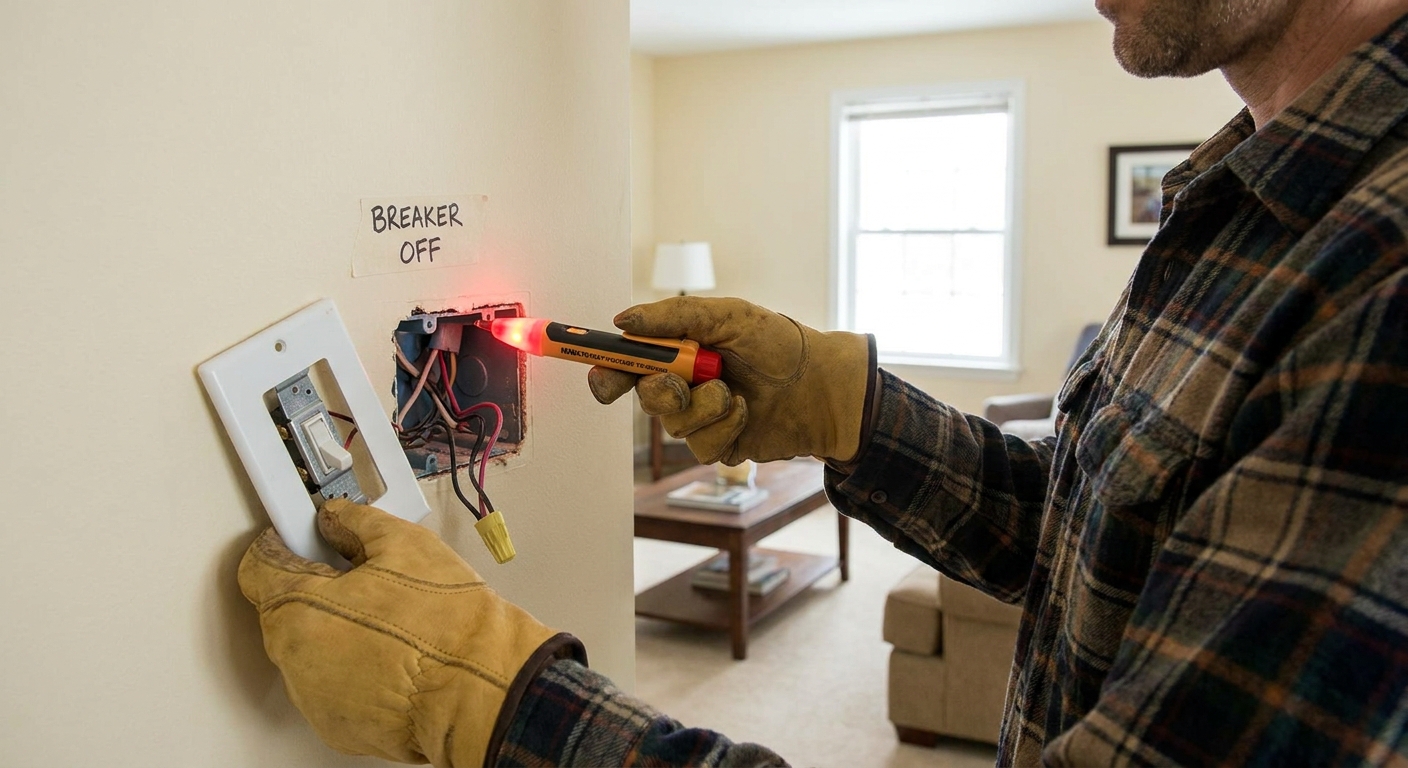
3) Confirm it’s actually dead
A non-contact voltage tester is a great quick screen, but it can sometimes give false positives or false negatives.
Do the simple safety routine electricians use:
- Live: test your non-contact tester on a known live source first (like a lamp cord or an outlet you know is on).
- Dead: test at the switch and in the box area.
- Live again: re-test on the known live source to make sure the tester didn’t fail.
For real confirmation that a circuit is de-energized, use a properly rated two-pole tester or multimeter, or have an electrician verify it.
4) Look and smell, but don’t touch bare wires
If you smell burned insulation, see melted plastic, or see blackened marks, keep the breaker OFF and call a licensed electrician. Heat damage means something’s been cooking behind that plate.
5) If there was smoke or active burning
Call emergency services. Electrical fires inside walls can spread fast and quietly.
Common causes
Loose connections
This is one of the most common and most fixable causes. A loose terminal screw or backstabbed connection can create high resistance. High resistance means heat, and heat leads to more arcing and damage.
- Clues: switch feels warm, lights flicker, occasional crackle, sparking seems to get worse.
- Why it matters: heat can degrade insulation and lead to arcing faults in the box.
Worn-out switch
Switches are mechanical devices. Internal contacts pit and wear over years. Eventually they stop making a clean connection and start arcing more.
- Clues: older switch, sparking seems more frequent, switch feels loose, buzzing sound.
- Why it matters: arcing accelerates failure and heat buildup.
Load too high for the switch
There are two separate ratings that matter: the circuit breaker size and the switch’s own rating (usually 15A or 20A). Some loads can be tough on a standard light switch even when the breaker is sized correctly.
- Examples: a switched receptacle feeding a space heater, lots of high-wattage lamps, or a motor load on a switch that isn’t rated for motor or horsepower use.
- Clues: spark is worse when more things are on, switch gets warm, occasional trips.
- Why it matters: a switch can overheat at the contacts even if the breaker doesn’t trip immediately.
Dimmers and LED compatibility
Not all dimmers play nicely with all LED bulbs. The more common symptoms are flicker, buzzing, or overheating, not a dramatic visible spark. Still, if you’re seeing any visible sparking at the wall device, it’s worth investigating.
- Clues: issues started after swapping to LED bulbs or installing a dimmer.
- Why it matters: overheating and premature failure of the dimmer or driver.
Aluminum wiring
This one changes the risk profile. Aluminum expands and contracts more than copper, and it oxidizes differently. That combination can lead to loose connections and heat.
- Clues: homes wired roughly mid-1960s through late-1970s in many areas (but it can show up outside that window), silver-colored conductors at devices, history of warm outlets or switches.
- Why it matters: loose aluminum connections are a known fire risk if not handled with the correct methods and connectors.
If you suspect aluminum wiring, don’t DIY device swaps unless you’re specifically trained and using approved remediation methods. This is a call-a-pro moment.
Damaged insulation in the box
If a wire was nicked during installation or shoved into the box too aggressively, insulation can be compromised. That can create arcing to ground or to the metal box.
- Clues: sparking is intermittent, breaker trips, evidence of a cramped box or sharp metal edges.
- Why it matters: arcing faults can ignite surrounding materials.
Moisture
Moisture and electricity don’t mix. Condensation or leaks near exterior walls or bathrooms can create corrosion and tracking paths.
- Clues: bathroom switch, exterior wall switch, signs of dampness, corrosion on screws.
- Why it matters: corrosion increases resistance and heat and can lead to arcing.
AFCI breaker trips
Many newer homes (and many updated circuits) use AFCI breakers. AFCI stands for Arc-Fault Circuit Interrupter, and it’s designed to detect dangerous arcing conditions.
- What it can mean: a loose connection, a failing switch, damaged wiring, or a problem with a cord, device, or fixture on that circuit.
- What not to do: don’t ignore it, don’t keep resetting it, and don’t replace it with a non-AFCI breaker “to make it stop.” Get the cause diagnosed.
Quick checklist
Usually normal
- A tiny flicker inside the switch only at the instant you flip it
- No heat, no smell, no odd sounds
- Lights work normally
Not normal
- Bright, visible sparks or a flash
- Crackling or popping
- Warm or hot switch plate
- Burning smell or discoloration
- Flickering lights, buzzing, or breaker trips (especially AFCI)
DIY checks
I’m all for DIY, but electricity is where we earn our slow down and be boring badge. If you don’t have a tester, or you feel unsure at any point, stop and call an electrician.
Before you remove the cover
- Turn OFF the breaker.
- Verify power is off with a non-contact voltage tester, and do a quick Live-Dead-Live check (test on known live, test on the switch, test on known live again).
- Have a flashlight ready so you’re not working in the dark.
What you can look for
- Scorch marks on the switch yoke or around terminals
- Melted plastic
- Loose switch rocking in the box
- Backstabbed wires (wires pushed into holes on the back instead of secured under screws or in clamp terminals)
If you see heat damage, stop and call a pro. If you only see loose mounting screws, you can snug them, but don’t crank them like a lug nut.
Quick don’t list
- Don’t keep flipping a switch that’s cracking, sparking brightly, or smelling hot.
- Don’t keep resetting a breaker that trips, especially AFCI.
- Don’t spray cleaner into a switch.
- Don’t upsize a breaker to “solve” tripping.
Call an electrician
- You smell burning, see smoke, or see melting
- The switch or plate is warm or hot
- Sparks are large, frequent, or accompanied by crackling
- The breaker trips, especially an AFCI breaker
- You suspect aluminum wiring
- The switch controls a bathroom fan, heater, disposal, or any motor load and it’s acting up
- You open the box and see crowded wiring, brittle insulation, or anything you don’t recognize
Electricians aren’t just swapping parts. They’re diagnosing why the part failed, checking box fill, verifying grounding, and making sure the circuit is protected correctly. That’s what you’re paying for.
Prevention
- Replace old switches during room renovations. They’re inexpensive compared to the risk.
- Use the right switch for the load, especially for dimmers and motor loads.
- Keep loads reasonable. If one switch controls a ton of fixtures or heavy loads, it might be time to split the load or rework the plan.
- Avoid backstabs when installing devices. Screw terminals or approved clamp-style back wiring is generally more reliable.
- Address moisture issues near bathrooms and exterior walls.
- Take AFCI trips seriously. They’re often telling you something important.
My rule of thumb: if a switch has ever felt hot, smelled funny, or made noise, it’s already used up its benefit of the doubt. Replace it or get it professionally inspected.
FAQs
Can a light switch spark and still be fine?
Yes, a very small arc inside a mechanical switch can be normal. But if it’s bright, frequent, noisy, or paired with heat or odor, it’s not fine.
Is it dangerous to keep using a switch that sparks?
If the spark is large or persistent, yes. Continued arcing creates heat and can damage the switch, wiring, and box connections.
Could the problem be at the light fixture, not the switch?
Sometimes. A failing ballast, loose fixture connection, or damaged socket can cause symptoms that show up when you flip the switch. If you’re seeing flicker, buzzing, burning smells, or breaker trips, the safest approach is to shut off the circuit and get it checked end-to-end.
What if the spark only happens when turning the switch on?
That can be normal if it’s tiny. If it’s bright or happens every time, it could be excessive inrush current, a loose connection, or a worn switch.
The 30-Second Cheat Sheet
Essential takeaways for: Light Switch Sparks When You Flip It? What’s Normal vs Dangerous
What’s normal
- A tiny blue-white flicker right as you flip the switch
- No crackling, no burning smell, no heat, no discoloration
What’s dangerous
- Bright sparks, repeated sparking, or sparking that continues after the switch is on
- Popping, crackling, sizzling
- Burning smell, melted plastic, scorch marks
- Warm/hot switch or cover plate
- Flickering lights, buzzing, or breaker trips (especially AFCI)
Do this now
- Stop using the switch.
- Turn the breaker OFF for that circuit.
- Confirm power is off. Test your non-contact tester on a known live source first, then check the switch, then re-test on the known live source (Live-Dead-Live).
- Non-contact testers are a quick screen. For true confirmation, use a two-pole tester/multimeter or call an electrician.
- If there’s odor, heat, discoloration, noise, or an AFCI trip: call an electrician and keep the breaker off.
Common causes
- Loose connections on terminals or backstabbed wires
- Worn-out switch contacts
- Load too high for the switch (inrush, many bulbs, motors, heaters on switched receptacles)
- Wrong dimmer or LED incompatibility (often causes buzz/flicker/overheating)
- Aluminum wiring (higher risk, pro recommended)
- AFCI breaker tripping because it detected a risky arc
Call a pro immediately if
- You suspect aluminum wiring
- The switch is hot, smells burned, or shows scorch marks
- The breaker trips (especially AFCI), or you hear crackling
💡 Tip: Scroll up to read the full article for detailed, step-by-step instructions.
⬆️ Back to top
About Marcus Vance
Content Creator @ Grit & Home
Marcus Vance is a lifelong DIY enthusiast and self-taught home renovator who has spent the last decade transforming a dilapidated 1970s ranch into his family's dream home. He specializes in budget-friendly carpentry, room-by-room renovations, and demystifying power tools for beginners. Through his writing, Marcus shares practical tutorials and hard-learned lessons to help homeowners tackle their own projects with confidence.