
When I renovated our living room, I thought flooring would be the easy part. Pick a “wood look,” click it together, done. Then I fell down the rabbit hole of wear layers, underlayment types, and marketing terms that all sound the same.
If you are stuck between luxury vinyl plank (LVP) and laminate, you are in the right place. Below is the straightforward, homeowner-first comparison I wish I had on day one, with a special focus on what matters in a living room: dents, scratches, spills, comfort underfoot, sunlight, and how forgiving the install is for a weekend DIYer.

Quick take: Which one should you pick?
- Pick LVP if you have kids, pets, frequent drink spills, a leaky sliding door, a concrete slab, or you just want the most water-forgiving option.
- Pick laminate if you want the most realistic wood look and a stiffer, more “wood-like” feel underfoot, and your living room stays reliably dry.
If you are still torn, skip down to the decision checklist. It usually makes the answer obvious.
What LVP and laminate actually are
LVP (Luxury Vinyl Plank)
LVP is a vinyl-based plank floor. Most modern products are a rigid core (often called SPC or WPC) with a printed wood image and a clear wear layer on top. It is typically installed as a floating click-lock floor, though glue-down versions exist.
Laminate
Laminate is usually a fiberboard core (think dense, engineered wood) with a printed wood image and a tough clear top layer. It also commonly clicks together and floats. The big “gotcha” is that the core is still wood-based, so standing water is the enemy unless you buy a product designed for water resistance.
Durability: dents, scratches, chair legs, and toys
Scratch resistance
Laminate often wins on scratch resistance in everyday life, especially at similar price points. That hard top layer can take a lot of abuse from grit, dog nails, and the occasional LEGO migration.
LVP can scratch too, and scratch performance varies a lot by finish and topcoat, not just by category. Some higher-end LVPs hold their own, while some budget options show scuffs fast.
- DIY tip: Whichever you choose, put felt pads on furniture, and keep a doormat at entries. Most scratches are just sandpaper in disguise.
Dent resistance
This is where things flip depending on the product.
- Laminate tends to be more rigid and can resist light dents, but it can chip on sharp impacts.
- LVP can dent under heavy point loads (like narrow chair legs) if the core is softer, but many SPC rigid-core products do well.
For living rooms with recliners, sectionals, and rolling toy bins, I look for a thicker plank in either category and spread loads with wide furniture feet or pads.
Wear layer and AC ratings (what to look for)
- LVP: Wear layer thickness is usually listed in mil. For a living room, I aim for 12 mil minimum, and 20 mil if you have a busy household. One important nuance: mil is thickness, not hardness. A thicker wear layer can help long-term durability, but scratch resistance also depends on the coating and finish.
- Laminate: Look for an AC rating. For a living room, AC3 is usually fine, AC4 is a nice upgrade if you have pets or heavy traffic.
My honest mistake: I once bought a bargain LVP with a thin wear layer for a small area thinking “it’s just one room.” The first time we slid a chair wrong, it left a permanent reminder. Since then, I buy less flooring, but better flooring.
Water resistance: the biggest difference
LVP: the safer bet around moisture
LVP is highly water resistant, and many products are marketed as waterproof. In a living room, that matters more than you would think: wet boots at the door, spilled drinks, pet accidents, a humidifier that gets knocked over, or a slow leak you do not notice for a day.
Even with “waterproof” LVP, moisture can still sneak under the floor at edges or through gaps and cause problems like odor or mold if it stays trapped. But in general, LVP is far more forgiving.
Laminate: improved, seams still matter
Modern laminates are better than older versions, and some have water-resistant cores, sealed edges, and time-limited spill warranties. Still, the core is wood-based on most products, and standing water is the risk. Seams are usually the weak point. If water gets into joints and sits, you can see swelling or peaked edges.
- If you choose laminate: Be disciplined about wiping spills quickly. In a living room that connects to a kitchen or exterior door, I still lean LVP.
Sunlight and heat: a living room gotcha
Big windows are great until they are not. Both floors can fade over time, but LVP is the one that can get tricky with heat. Some LVP products have temperature limits, can expand more, and may not love intense sun in a south-facing room unless the product is rated for it.
- What I do: Check the box (or spec sheet) for temperature and sun exposure notes, keep the required expansion gap, and use window coverings during the hottest parts of the day if your room turns into a greenhouse.
- When laminate can be the better pick: If your top priority is a more rigid, “wood-like” feel and solid scratch resistance for the money, and your room stays dry, laminate can be a very smart call even in a bright space.
Cost: material, prep, trim, and the stuff nobody budgets for
Prices vary by region and style, but here is the pattern I see most often:
- Laminate is often cheaper per square foot for a “looks-like-real-wood” visual.
- LVP can be slightly higher, especially for thick rigid-core planks with a 20 mil wear layer.
Also, LVP sometimes brings higher subfloor prep costs because it can be less forgiving of dips and humps (more on that below).
Budget items to include either way
- Underlayment (unless the product has an attached pad)
- Transition strips for doorways and changes in flooring
- Baseboards or quarter round (at minimum, plan for repainting and patching)
- Subfloor prep (self-leveler, patch, sanding, screws for squeaks)
- Tools (tapping block, pull bar, spacers, jigsaw or miter saw, utility knife, straightedge)
Thrifty note: The most expensive floor is the one you replace early. If your living room is high traffic, it is often smarter to upgrade the finish quality (and wear layer or AC rating) than to chase the lowest price.
DIY install: which is easier?
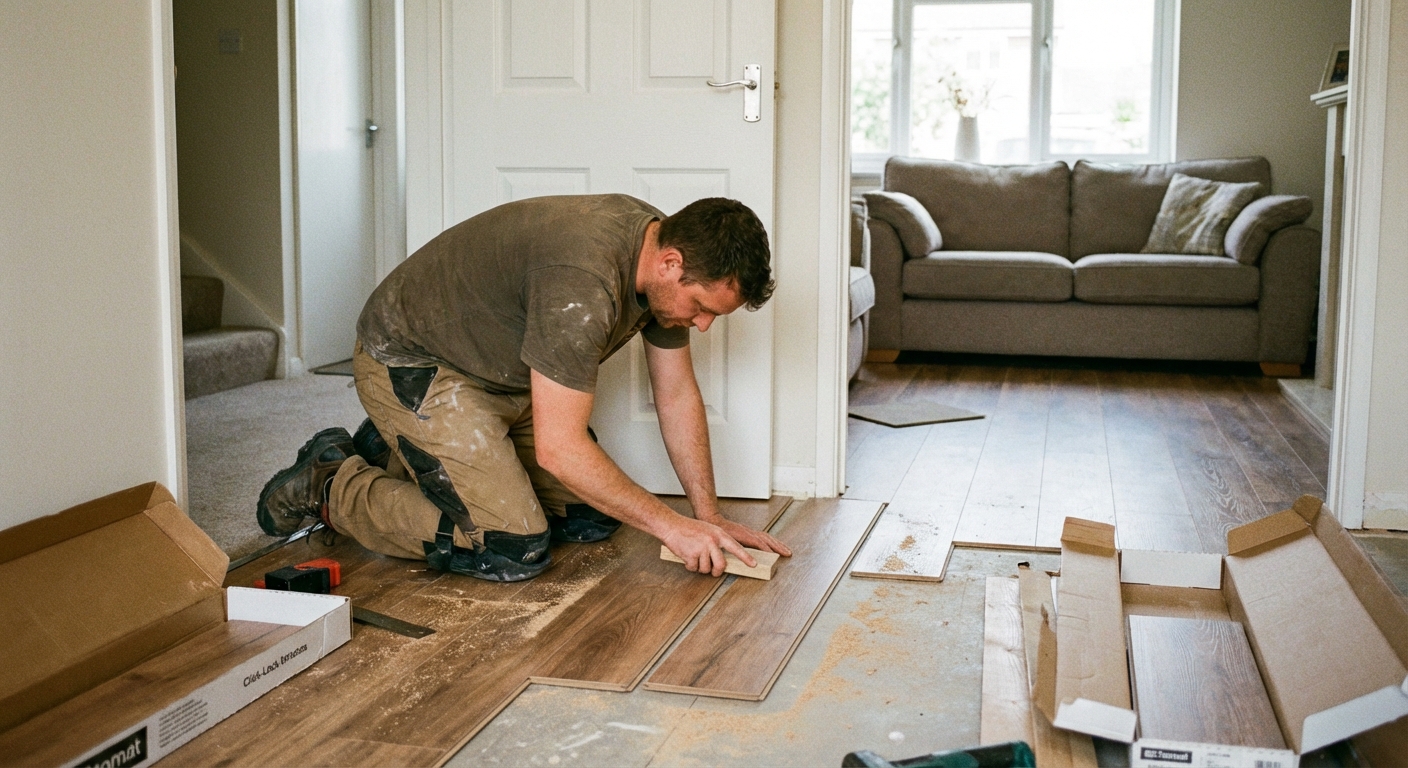
Both are very DIY-friendly, especially click-lock products. The “best” one depends on your patience level and the condition of your subfloor.
Subfloor flatness (do not skip this)
Rigid-core LVP often demands a flatter subfloor than people expect. If your subfloor has dips or humps, the planks can rock, joints can separate, or the floor can feel hollow.
Laminate is also picky, but its stiffness can sometimes bridge tiny imperfections a bit better. Either way, plan to spend time on prep. It is the unglamorous step that makes the floor feel professional.
Typical manufacturer tolerances are often around 3/16 inch over 10 feet or 1/8 inch over 6 feet (it varies). Do not guess. Look up your exact product requirement and measure at home.

Cutting and handling
- Laminate: Typically cuts best with a miter saw, circular saw, or jigsaw. It can chip, so a fine-tooth blade helps. It also makes more dust, so plan for cleanup.
- LVP: Many LVP planks can be scored with a utility knife and snapped, which is beginner-friendly and cleaner. Some cuts still require a saw, especially for notches and tricky corners.
Click-lock learning curve
Both take a few rows to get the “feel.” LVP can be a little more flexible and fussy at the joints depending on the locking system. Laminate joints can be tight and satisfying when they seat correctly, but forcing them can damage the tongue.
- DIY tip: Open multiple boxes and mix planks as you go. It avoids color blotches and repetitive patterns in the middle of the room.
Underlayment and vapor barrier
This is a big one, because the wrong underlayment can make a good floor feel cheap or fail early.
- LVP: Many products come with an attached pad. If not, use the manufacturer-approved underlayment. Do not “upgrade” to a thick, squishy foam unless the instructions allow it. Too much cushion can stress the click joints.
- Laminate: Underlayment is often separate and can improve sound and comfort. In living rooms above another level, investing in a better underlayment can make a noticeable difference.
- Concrete slab note: Some floors require a vapor barrier (often 6 mil poly) over slab, some build it into the underlayment, and some have specific rules. Follow the product instructions, not the guy in aisle seven.
Comfort and sound
Underfoot feel
- Laminate usually feels closer to a traditional wood floor. It is stiffer and can feel more solid.
- LVP can feel slightly softer, especially with thicker attached pads, but it depends heavily on subfloor prep.
Sound
Floating floors can sound “clicky” or hollow if the subfloor is uneven or the underlayment is wrong.
- Laminate can be louder in some homes, especially on the main level with open floor plans.
- LVP can be quieter with a good pad, but a poorly prepped slab can still make it echo.
Looks: getting the wood vibe without the wood headaches
Both floors can look great. Laminate has a reputation for strong visuals, and it has earned that. Many laminates have deeper embossing, sharper printed detail, and a more realistic sheen.
LVP has come a long way too. The best LVP lines look fantastic, but the lower-end stuff can still read a little “plastic” in bright daylight.
- My reality check: Bring home samples and view them at three times: morning sun, evening lamps, and lights off with TV glow. Living rooms are lighting chameleons.
Cleaning and maintenance
Most living room floors die a death of a thousand “helpful” cleaning products.
- LVP: Usually fine with sweeping and a damp mop, but avoid waxes, polish, and harsh solvents unless the manufacturer says they are safe. Too much product buildup can make it look cloudy.
- Laminate: Think “damp,” not wet. Avoid steam mops and puddles. If you use a spray mop, spray lightly and keep it moving.
Repairs and worst-case scenarios
- Plank replacement: Both can be repaired by replacing planks, but it is easiest if the damaged plank is near a wall. Middle-of-the-room repairs often mean unclicking rows back to the problem area (or calling a pro).
- If a seam gets damaged: Laminate tends to show swollen edges if moisture gets in. LVP may survive the surface event, but the subfloor below can still be the real problem.
- After a flood: Laminate usually has to come out. LVP may be reusable in some situations, but you still have to dry everything underneath quickly to avoid mold and odor.
Indoor air and eco notes
Both LVP and laminate can off-gas VOCs, especially when new. In a living room where you spend a lot of time, I like to look for low-emissions certifications like FloorScore or GREENGUARD Gold. It is a quick way to shop smarter without getting lost in marketing.
Eco-friendliness can vary wildly by brand and product, so I focus on: certified low VOCs, reputable warranties, and buying something durable enough that I will not be ripping it out in five years.
Resale value: does it matter?
In most markets, neither LVP nor laminate boosts resale like real hardwood. But a clean, modern, well-installed floor absolutely helps a home show better. If you go with a neutral, believable wood look and you keep transitions tidy, the bigger resale swing is usually “looks new” vs. “looks tired,” not which of these two categories you chose.
Decision checklist
You will probably be happier with LVP if:
- Your living room connects to an exterior door, mudroom, or kitchen
- You have pets, small kids, or frequent drink spills
- You are installing over concrete slab or a basement-adjacent space
- You want the most forgiving floor if life happens
You will probably be happier with laminate if:
- Your living room stays dry and you are good about quick cleanup
- You care most about a realistic wood look and texture
- You want a stiffer feel that reads closer to hardwood
- You are prioritizing scratch resistance for the money
My pick (most of the time)
For a typical, family-used living room, I usually recommend a quality rigid-core LVP with at least a 12 mil wear layer. It buys you peace of mind on spills and moisture, and that is a big deal in a room you actually live in.
That said, if your living room is consistently dry and you want the most convincing “wood” look at a reasonable price, laminate is absolutely a smart choice. Just treat water like the problem it is, and you will be fine.
Before you buy: 7 questions to ask
- What is the wear layer (LVP) or AC rating (laminate)?
- What topcoat or finish is used? Scratch resistance varies more than people think.
- Is there an attached pad? If yes, what underlayment is allowed (if any)?
- Do I need a vapor barrier on my subfloor? Especially over concrete.
- What does the manufacturer require for subfloor flatness? Ask for the number, then measure at home.
- What is the warranty coverage for residential living areas? Look for details on scratches, dents, and water or spill-time limits.
- Is it certified low VOC? Look for FloorScore or GREENGUARD Gold.
If you want, tell me a little about your living room setup (pets, kids, slab vs. wood subfloor, big sunny windows, and whether the room connects to an exterior door) and I can point you toward the safer choice and what specs to shop for.

About Marcus Vance
Content Creator @ Grit & Home
Marcus Vance is a lifelong DIY enthusiast and self-taught home renovator who has spent the last decade transforming a dilapidated 1970s ranch into his family's dream home. He specializes in budget-friendly carpentry, room-by-room renovations, and demystifying power tools for beginners. Through his writing, Marcus shares practical tutorials and hard-learned lessons to help homeowners tackle their own projects with confidence.