
If there is one home maintenance task I never “get around to later,” it is checking smoke and carbon monoxide alarms. They are easy to ignore because they sit quietly on the ceiling until the day you truly need them. This guide gives you a simple schedule you can stick to, plus the real-world details that trip people up like chirps that are not a low battery, detectors that quietly expire, and what “end of life” actually means.

Know what you have
Before you can maintain detectors, you need to know what type is installed. Spend five minutes and do a quick house walk. Snap a photo of the label on the side or back of each unit so you can read it without balancing on a ladder later.
Smoke alarm types
- Ionization smoke alarms are generally quicker to detect fast-flaming fires.
- Photoelectric smoke alarms are generally quicker to detect smoldering fires.
- Dual-sensor smoke alarms use both technologies.
Many fire safety groups recommend photoelectric or dual-sensor alarms for homes because smoldering fires are common in residential settings. If you are buying new, dual-sensor is a solid “set it and forget it” option. Also worth knowing: photoelectric alarms often cause fewer nuisance alarms near kitchens than older ionization models, so swapping types can be better than playing musical chairs with placement.
Carbon monoxide (CO) alarm types
- Plug-in with battery backup is common in bedrooms and hallways.
- Battery-only is flexible for placement.
- Hardwired with battery backup is common in newer homes.
- Combination smoke and CO alarms are convenient, but you must track replacement dates carefully.
Pro tip from my own trial-and-error: combination units reduce ceiling clutter, but when the smoke alarm hits end-of-life you replace the whole unit even if the CO side would have lasted longer.
Smart and connected alarms
More homes now have Wi-Fi-enabled detectors (like Nest Protect or First Alert Onelink). They can run automated self-checks and send phone notifications for alarms, low batteries, and end-of-life. That is genuinely useful, but do not let the app replace the basics. You still need to test, clean, and replace the unit on the manufacturer’s schedule.
Your maintenance schedule (the one I actually follow)
If you only remember one part of this article, make it this routine.
Monthly: press the test button
- Press and hold the TEST button until you hear the alarm.
- For interconnected alarms, listen for multiple units sounding.
- If a unit does not respond, treat it as failed until proven otherwise.
Pick a recurring date, like the first Saturday of the month. I do it right after I change the HVAC filter so it becomes a habit.
Twice a year: batteries and cleaning
- Replace batteries in battery-powered alarms unless the unit uses a sealed 10-year battery.
- Vacuum dust from vents using a soft brush attachment.
- Wipe the exterior lightly with a dry or slightly damp cloth. Never spray cleaner into the alarm.
Daylight saving time is a popular reminder, but any two dates are fine. Consistency beats perfection.
Every 5 to 10 years: replace the alarm
Smoke alarms are typically replaced every 10 years. CO alarms are typically replaced somewhere in the 5 to 10 year range depending on the manufacturer and model. Combination smoke and CO alarms should be replaced based on the shorter lifespan listed on the label.
If you do not know the age, assume it is old and replace it. Previous owners rarely leave a detector history, and the plastic does not come with a warranty of honesty.
How to test alarms the right way
Pressing the test button is the minimum and it is still valuable. In most units it verifies power, electronics, and the alarm sound. Depending on the model, it may not fully replicate “real” smoke or CO entering the sensor.
Test button vs real smoke
You might hear people say “the test button does not test the sensor.” That can be partially true depending on the model, but it is still the recommended homeowner test method because it is safe and standardized.
If you want to be extra thorough, use a smoke alarm test aerosol designed for detectors. Do not use a lighter, candle, or random smoke source. That can damage the sensor, leave residue, or create a hazard.
For CO alarms, do not DIY a gas test
There are professional CO test methods, but as a homeowner you should stick with the test button and replacement schedule. Never try to “see if it works” by running a car in the garage or manipulating fuel appliances.

Battery rules that prevent the 2 a.m. chirp
What to do when it chirps
A chirp every 30 to 60 seconds often means low battery, but not always. Start here:
- Replace the battery with a fresh one.
- Check battery orientation and that the drawer fully closes.
- Hold the test button for 15 to 20 seconds to clear residual charge (common on some models).
- Vacuum dust from the alarm.
- Check the date. If it is past end-of-life, replacement is the fix.
Use the right battery
- Use the battery type printed on the alarm.
- Stick to quality alkaline batteries unless the manufacturer specifies lithium.
- Avoid mixing old and new batteries in the same device.
My thriftiness has limits here. Saving a couple bucks on a no-name battery is not worth the headache.
Sealed 10-year batteries
Some alarms have sealed batteries designed to last about 10 years. You do not replace the battery. You replace the whole alarm when it chirps end-of-life or reaches the date on the label.
Replacement dates (the part most homeowners miss)
Detectors do not last forever. Sensors drift, components age, and the plastic yellows while the reliability fades. Manufacturers and many fire codes treat replacement as non-negotiable.
Typical replacement intervals
- Smoke alarms: replace every 10 years.
- CO alarms: typically replace every 5 to 10 years. Check the label or manual.
- Combination smoke/CO alarms: replace based on the shorter lifespan listed.
How to find the date
- Look for a manufacture date on the back or side.
- Some units list a replace by date.
If you find a smoke alarm manufactured in 2014, it is time. If you find a CO alarm manufactured in 2018, it might be time soon depending on the brand. The label is the boss here.
What “end-of-life” sounds like
Many modern alarms have a distinct chirp pattern that indicates expiration. The manual will describe it, but if the unit keeps chirping after a fresh battery and cleaning, assume end-of-life and replace it.
Local rules and newer code trends
When you replace alarms, take 60 seconds to check local requirements. Some jurisdictions and newer code adoptions push toward hardwired alarms with battery backup, sealed 10-year batteries, and interconnection. Even if your house is grandfathered in, upgrading is often a smart move.
Cleaning and placement checks
Clean without damaging the sensor
- Vacuum the vents gently.
- Do not paint over alarms.
- If you use compressed air, keep your distance and follow the manufacturer’s guidance. Too close can force dust deeper into the sensing chamber.
Placement basics to confirm
I am not going to rewrite the whole code book here, but these basics catch a lot of problems in older homes:
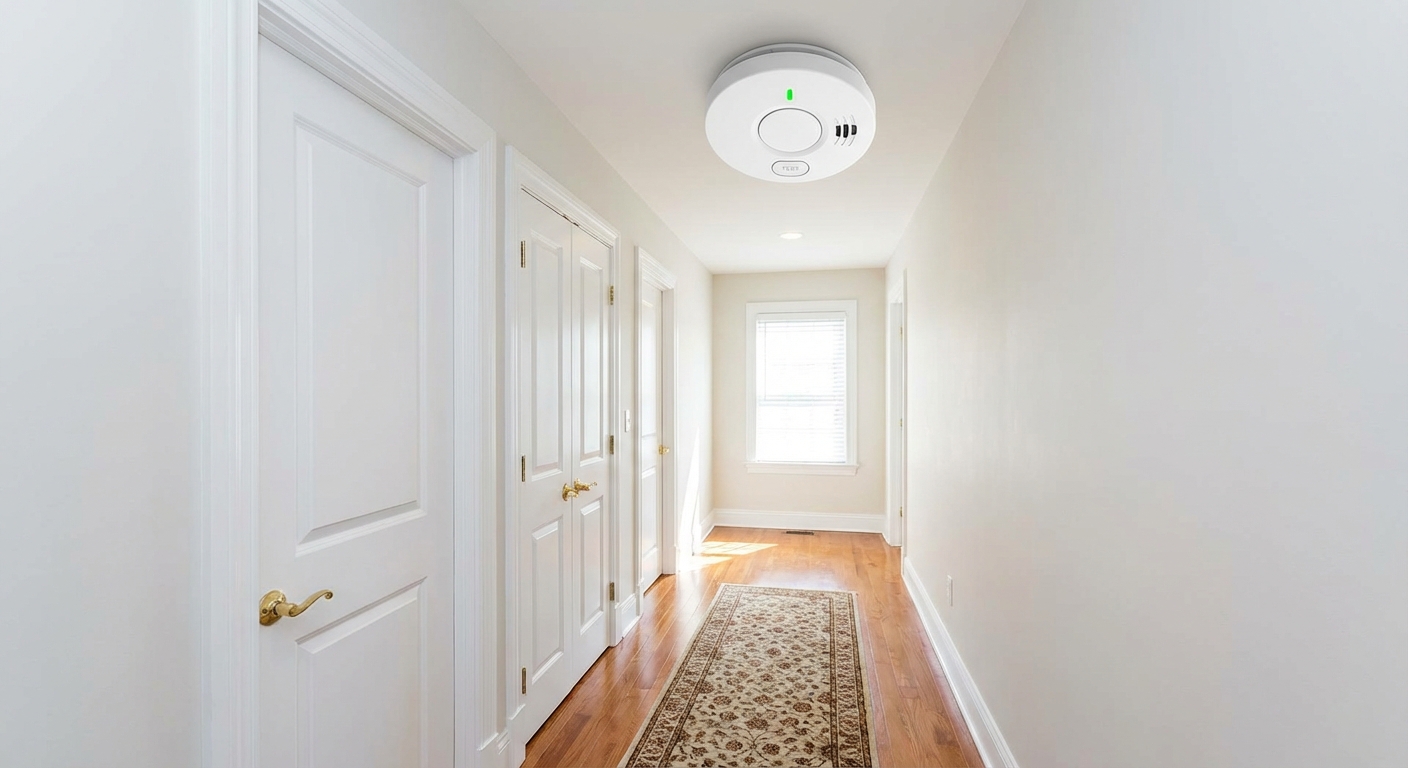
- Put smoke alarms inside each bedroom and outside sleeping areas.
- Have at least one smoke alarm on every level of the home.
- Place CO alarms outside sleeping areas and on levels with fuel-burning appliances or an attached garage. Some authorities recommend CO alarms on every level, so check local guidance.
- Follow the manufacturer’s guidance for distance from bathrooms, kitchens, and supply registers to reduce nuisance alarms.
When in doubt, check your local fire department guidance and the unit’s manual. Local requirements can vary.
Interconnected alarms
Interconnection is the “whole house wakes up” feature. If one alarm detects trouble, the others sound too. It is one of the best safety upgrades you can make.
Hardwired interconnected
Hardwired alarms still need maintenance. The “hardwired” part powers the unit, but the battery backup is what protects you during an outage.
- Press test on one unit and confirm others sound if they are interconnected.
- Replace backup batteries on schedule (unless sealed).
- If one hardwired alarm fails, consider replacing all alarms together if they are the same age.
On my own place, replacing all the same-aged alarms at once felt painful at checkout, but it simplified everything. One replacement date, one battery schedule, less guessing.
Wireless interconnected (no hardwiring needed)
If you do not have hardwired interconnection, you still have options. Many brands now sell battery-powered wireless interconnected alarms that link to each other by radio. You get the “all alarms sound” benefit without opening walls or hiring an electrician. Follow the manufacturer instructions carefully, especially for pairing and range.
Troubleshooting quick fixes
Nuisance alarms while cooking
- Use the hush button if your model has one.
- Improve ventilation. Run the range hood, open a window.
- Check placement. Smoke alarms too close to the kitchen are a common culprit.
- If it is a chronic problem, consider swapping an older ionization alarm near the kitchen for a photoelectric model (and still keep proper coverage elsewhere).
Do not remove batteries “just for dinner.” That is how alarms stay dead for months.
Alarm chirps after battery replacement
- Confirm you removed the battery pull-tab (common on new units).
- Hold test button to reset.
- Clean dust.
- Check end-of-life date.
Intermittent chirp that seems to move around
Sound travels. A chirp in the hallway can sound like it is coming from a bedroom. Stand under each alarm and listen closely, or have a second person help locate it.
A simple home log you can keep in 3 minutes
You do not need a fancy app. A note in your phone works. Track:
- Location of each alarm (example: “Upstairs hall outside bedrooms”)
- Type (smoke, CO, combo)
- Manufacture date and replacement date
- Battery type (9V, AA, sealed 10-year)
This is one of those tiny homeowner habits that pays you back for years.
When to call a pro
Most maintenance is DIY-friendly. Get help when:
- You have repeated false alarms even after cleaning and placement checks.
- You suspect a CO issue. If the CO alarm sounds, treat it as real, get everyone outside, and call emergency services or your local fire department.
- You need to add new hardwired, interconnected alarms and are not comfortable with electrical work.
Quick checklist
- Monthly: press TEST on every alarm.
- Twice a year: replace batteries (if not sealed 10-year) and vacuum vents.
- Smoke alarms: replace every 10 years.
- CO alarms: replace per the label, typically 5 to 10 years.
- Any alarm that will not test: replace it.
If you want one takeaway, it is this: detectors are not lifetime devices. Treat them like a filter or a tire. They do a job, they age out, and replacing them on schedule is the safest bargain in your whole house.

About Marcus Vance
Content Creator @ Grit & Home
Marcus Vance is a lifelong DIY enthusiast and self-taught home renovator who has spent the last decade transforming a dilapidated 1970s ranch into his family's dream home. He specializes in budget-friendly carpentry, room-by-room renovations, and demystifying power tools for beginners. Through his writing, Marcus shares practical tutorials and hard-learned lessons to help homeowners tackle their own projects with confidence.