
Sheet goods are one of those “simple” purchases that can quietly wreck a project if you choose the wrong one. I have been there. Early on, I built a set of garage shelves with the cheapest board I could find, tossed paint on it, and felt like a genius until the first humid summer turned the edges into something that looked like a science experiment.
Let’s make this easy. MDF, plywood, and particle board are all useful. They just shine in different places. Below is how I decide what to buy, based on strength, moisture, finish quality, and how forgiving the material is for a weekend DIY build.
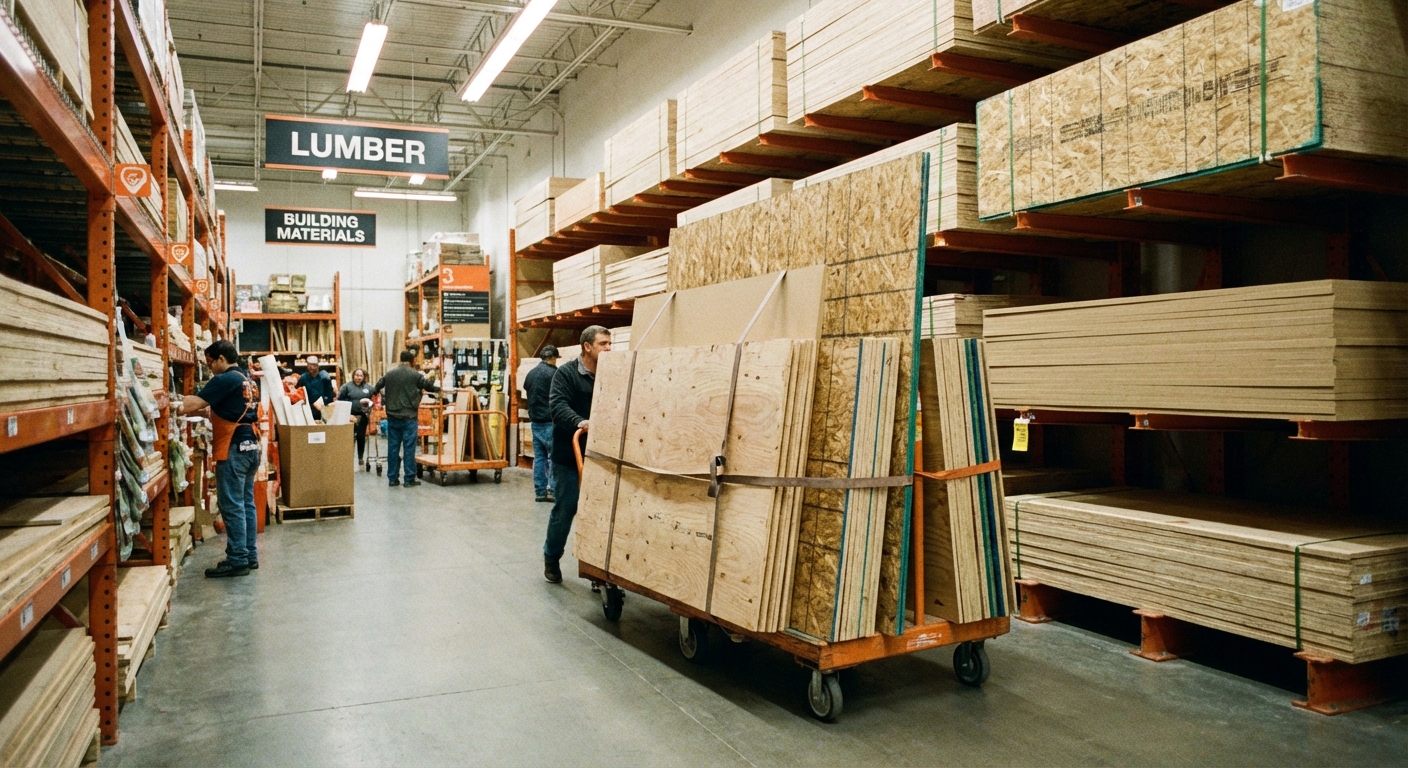
Quick take: which one should you buy?
- Choose plywood when you need strength, screw holding, and better moisture tolerance (cabinets, shelving, subfloor, shop jigs).
- Choose MDF when you want the smoothest paint finish and dead-flat panels (painted built-ins, shaker-style doors, wainscoting panels, templates).
- Choose particle board when you need the lowest cost and the project will stay dry with minimal abuse (budget furniture cores, closet organizers, temporary utility builds).
If you are on the fence and the project matters, I default to plywood. If it is paint-grade and needs to look like a factory finish, I lean MDF. If it is a short-term or ultra-budget build, particle board can be fine.
What each material actually is
Plywood
Plywood is made from thin wood veneers (plies) glued together with the grain direction alternating each layer. That cross-grain structure is why plywood is strong for its thickness and why it is generally more resilient than MDF or particle board when life gets messy.
One important caveat: not all plywood is glued the same. Interior plywood can swell at the edges and some types can delaminate if they get soaked. If moisture is even a possibility, look for an exterior-rated panel (or a higher-end cabinet-grade core) and plan to seal edges and cutouts.
MDF (medium-density fiberboard)
MDF is wood fibers mixed with resin and pressed into a dense, uniform panel. No grain, no voids, very flat. It machines cleanly and paints beautifully, but it hates water and it is heavier than you expect.
Particle board
Particle board is wood chips and sawdust bonded with resin and pressed into a sheet. It is typically the least expensive and the least durable. It can work, but it is less friendly to screws, edges, and moisture.
OSB (oriented strand board)
You will also see OSB in the aisle. It is made from large wood strands pressed and glued into a sheet. OSB is a construction workhorse (sheathing, subfloors) and is often priced well, but it is not my first pick for furniture or paint-grade work. The surface texture telegraphs through paint, and the edges can swell if they stay wet. For structural builds where looks do not matter, OSB can be a smart buy.

The comparisons that matter
Strength and sagging (shelves)
This is where a lot of DIY projects succeed or fail. All sheet goods can sag, but they do it at different rates. Thickness, span, and how the shelf is supported matter as much as the material.
- Best overall: Plywood, especially cabinet-grade and baltic birch. Great stiffness for shelves, and it gets even better with a front edge band, hardwood lipping, or face frame support.
- Middle: MDF. It is dense and flat, but it can sag under weight on longer spans. It also tends to take a permanent set once it sags.
- Often weakest (standard products): Particle board. It sags easier and can crumble around fasteners when loaded. That said, some melamine/particle board shelving can do fine on short spans when properly supported.
My shelf rule of thumb: If I am building a 12 inch deep shelf for books or pantry items, I keep spans conservative. As a starting point, 3/4 inch plywood is usually comfortable around 28 to 36 inches depending on load. 3/4 inch MDF or particle board I try to keep closer to 24 to 30 inches unless I add a stiff front edge or mid supports. If you want a more exact answer, use a shelf sag calculator or manufacturer span tables. They are worth it when you are pushing length.
If you need long spans, use thicker material (or a higher-quality core), add a front lip, or add supports. Even a simple 1x2 along the front edge does more than people realize.
Screw holding and joinery
- Plywood: best overall, but it depends on the core. Cabinet-grade and baltic birch hold screws far better than voidy construction ply. Screws bite into real wood veneers, but edge holding can still be weak if the core has voids. Predrill and avoid driving too close to edges.
- MDF: decent if you predrill and do not over-torque. Coarse-thread screws work better. Edges can “mushroom” if you drive fasteners aggressively. Dados and rabbets plus glue make MDF behave.
- Particle board: weakest with typical wood screws. Screws can strip easily and blow out the edge. Confirmat screws help a lot, and so do cam locks in flat-pack style builds, but it is still not my first choice for anything that needs to be moved and re-screwed.
If you are building cabinets or furniture that will get moved around, plywood earns its keep. If you are assembling MDF, plan your joinery: glue plus screws into predrilled holes, or use dados and rabbets where you can. Particle board needs gentle handling and realistic expectations.
Moisture resistance
There is “a little humidity” and there is “a spill behind the trash can.” These boards react differently, and the exact product matters.
- Plywood: best overall. Not waterproof, and interior panels can delaminate if soaked, but it tolerates occasional moisture better than MDF or particle board. Exterior-rated plywood (and properly sealed edges) is the safer play when things might get wet.
- MDF (standard): swells fast at edges and seams. Once it puffs up, it rarely goes back.
- Particle board (standard): also swells and can crumble, sometimes worse than standard MDF. Specialty versions like MR particle board (often rated P3) can perform better than the bargain stuff, but I still treat it as “keep it dry.”
There are moisture-resistant MDF products (often green-tinted) and exterior-rated plywood grades, but even then, I treat MDF and particle board as indoor-dry materials unless I have a very specific plan for sealing and protecting them.
Finish quality (paint and stain)
- Paint: MDF wins for smoothness. Plywood can look great too, but you will see some grain telegraphing unless you fill and build primer. Particle board paints fine on the flat face, but edges need extra help.
- Stain/clear coat: For a traditional wood look, hardwood plywood is the go-to because the face veneer is real wood. MDF and particle board do not stain well on their own. However, veneered MDF or particle board can absolutely be stained because you are staining the veneer, not the core.
Edge finishing tip: MDF edges drink primer like a sponge. I seal edges with a dedicated MDF primer/sealer, thinned wood glue, or a couple of heavy coats of high-build primer, then sand. For plywood, iron-on edge banding or solid wood edging makes it look finished fast.

Cost, weight, and workability
Cost
Prices swing by region and grade, but the usual order is:
- Least expensive: particle board
- Middle: MDF
- Most expensive: plywood (especially cabinet-grade)
If your budget is tight, consider mixing materials: plywood carcass with MDF painted doors, or plywood shelves with MDF panels where you want a seamless paint finish.
Weight
- Heaviest: MDF
- Middle: particle board
- Lightest (usually): plywood
Weight matters for wall-mounted cabinets and for your back. A 3/4 inch MDF sheet can feel like you are carrying a small planet. Plan your cuts so you are not wrestling full sheets alone.
Cutting and dust
All three create dust, but MDF and particle board create very fine dust that gets everywhere. Use a respirator and dust collection if you have it.
- Plywood: cuts well, but can splinter. Use a sharp blade and painter’s tape for cleaner cuts.
- MDF: very clean cuts, but lots of fine dust. Edges can burn with a dull blade.
- Particle board: prone to chip-out and blowout, especially on the bottom face. A zero-clearance insert and sharp blade help.
Thickness: what I buy most
- 1/4 inch: cabinet backs, drawer bottoms (with proper support), skins, and light paneling
- 1/2 inch: smaller cabinet parts, drawer boxes, lighter-duty shelving with supports
- 5/8 inch: a nice middle ground for some shelves and panels, but less common in stores
- 3/4 inch: my default for cabinet boxes, built-ins, and real shelving
If something will carry weight, I would rather buy 3/4 inch and sleep at night. If I need extra stiffness without going thicker, I add a face frame, a front stiffener, or a back cleat.
Edge treatments that make it look pro
- Plywood: iron-on edge banding for quick and clean, or hardwood lipping for the most durable edge. If you are painting, a thin hardwood edge plus filler and primer hides plywood layers nicely.
- MDF: seal cut edges first (MDF sealer, thinned wood glue, shellac primer, or high-build primer), then sand smooth. For high-wear edges, I will sometimes add a thin hardwood strip.
- Particle board and melamine: edge banding is not optional if you want it to last. The edge is where moisture and chipping start. Iron-on banding works, and peel-and-stick can be okay for low abuse, but proper banding is worth the extra minute.
Best uses (what I build with each)
Plywood: my go-to for strength
- Kitchen and bath cabinet boxes (especially where plumbing leaks are possible)
- Garage and basement shelving
- Workbenches and shop cabinets
- Subfloor and underlayment (use the right rated product)
- Furniture that needs to survive moves and kids
MDF: my go-to for paint-grade work
- Painted built-ins and bookcase sides
- Shaker-style cabinet doors (common in paint-grade kitchens)
- Wainscoting and wall panels
- Templates and jigs for routing
- Trim details where you want crisp profiles (indoors, dry areas)
Particle board: my go-to when budget is the point
- Closet systems and melamine projects (often particle board core)
- Temporary shop surfaces and disposable jigs
- Budget furniture cores that will be veneered or laminated
- Low-load storage in dry rooms

Grades and terms that matter
Plywood grades
Plywood quality varies wildly. Two sheets can both say “3/4 inch plywood” and behave like different species.
- Sheathing plywood: built for walls and roofs, not furniture. More voids, rough faces.
- Sanded plywood: smoother faces, better for paint-grade projects.
- Cabinet-grade and hardwood plywood: veneer faces (oak, maple, birch, etc.), flatter, fewer voids, better edges. Costs more for a reason.
- Baltic birch: usually a more uniform core with fewer voids. Great for boxes, drawers, and shelves.
- Exterior-rated: uses waterproof glue. Great for exposure, but still needs proper sealing for outdoor use.
MR MDF and specialty panels
- Moisture-resistant MDF: better for humid areas, still not “waterproof.”
- MR particle board (often P3 rated): better than standard particle board in humidity, still not something I want in a true wet zone.
- Melamine panels: usually particle board core with a durable coating. Great for closets, but edge banding is key.
- Veneered MDF and particle board: can look great and can be stained because the veneer is real wood. Edges and water protection still matter.
Health and safety notes
Quick reality check: MDF and particle board are held together with resins, and some products can off-gas VOCs and small amounts of formaldehyde, especially when new. Most big brands now offer low-emitting options (CARB Phase 2 and TSCA Title VI compliant in the US). If you are building for a nursery, a bedroom, or a tight space, I look for those labels and I let parts air out before installation.
Also, MDF dust is no joke. You already know I am a respirator person, but it is worth repeating: wear a respirator, use dust extraction, and clean up thoroughly. Sealing and painting also helps “lock in” the surface for everyday use.
How I choose at the store
- Where will it live? Basement, garage, bathroom, or near a sink pushes me toward plywood (and often exterior-rated).
- What finish do I want? Smooth paint points to MDF. Wood grain points to hardwood plywood or a veneered panel.
- How will it be joined? Lots of screws into edges points to higher-quality plywood. Lots of dados and glue can make MDF work beautifully.
- How long does it need to last? If I want it to survive being moved, bumped, and re-screwed, plywood again.
- Can I handle it safely? If I am working solo, I plan cuts in the parking lot or have the store break it down.
I also look for obvious red flags: warped sheets, crushed corners, water staining, and sloppy veneers. With MDF and particle board, I check edges for damage because that is where problems start.
Mistakes I made so you do not have to
- I used MDF where a leak was possible. It looked great until it didn’t. Near plumbing, plywood is the stress-free choice.
- I expected particle board to behave like plywood. It does not. If your plan relies on strong screws and durable edges, upgrade or use the right fasteners (like Confirmat screws) and proper edge banding.
- I ignored edge finishing. Most sheet-good projects look “DIY” because the edges are an afterthought. Edge banding, wood edging, or proper sealing changes the whole vibe.
Bottom line
Plywood is the best all-around performer for strength and durability, especially when you choose a decent grade for the job. MDF is hard to beat for smooth, paint-grade results when kept dry and supported properly. Particle board earns its place for tight budgets and dry, low-abuse applications, especially when you use the right joinery and protect the edges.
If you tell me what you are building, where it will live, and how you plan to finish it, I can help you pick the thickness and the best sheet good for the job.

About Marcus Vance
Content Creator @ Grit & Home
Marcus Vance is a lifelong DIY enthusiast and self-taught home renovator who has spent the last decade transforming a dilapidated 1970s ranch into his family's dream home. He specializes in budget-friendly carpentry, room-by-room renovations, and demystifying power tools for beginners. Through his writing, Marcus shares practical tutorials and hard-learned lessons to help homeowners tackle their own projects with confidence.