
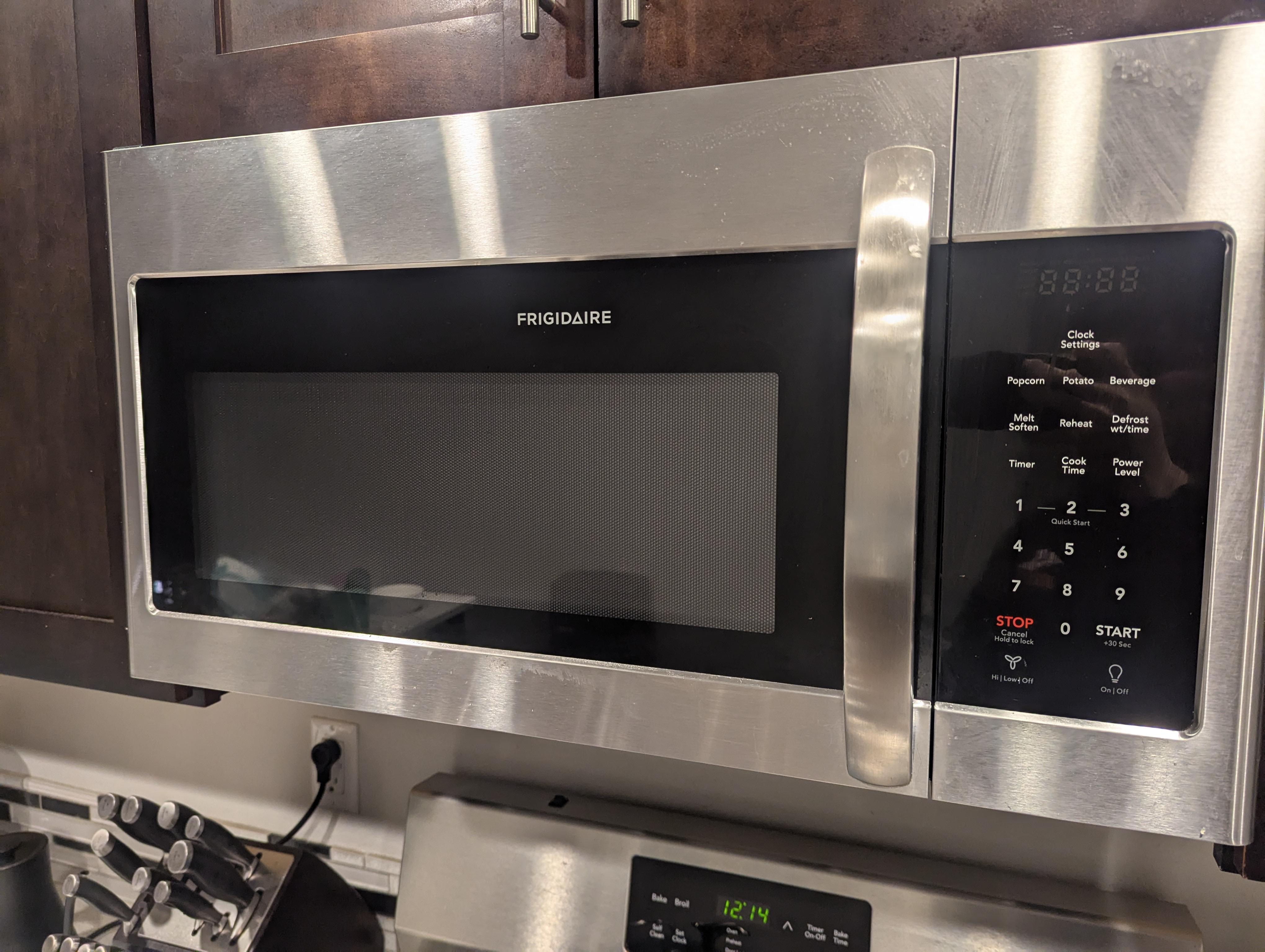
First, what a tripped breaker is telling you
When a microwave trips a breaker, the breaker is doing its job. It is shutting off power because it sees an unsafe electrical condition, usually too much current (overload), a short circuit, or current leaking where it should not (ground fault). On some newer panels it may also be reacting to arc-fault signatures. Either way, the right move is to treat repeat trips as a warning, not a nuisance.
I’m all for DIY, but microwaves are one of those appliances where “poking around inside” can go from harmless to dangerous fast. The good news is you can still do a lot of useful troubleshooting from the outside before you decide whether it is the outlet, the circuit, or the microwave itself.
Stop using it immediately if you see any of these
- Burning smell, melting plastic odor, or visible smoke
- Arcing or bright flashes inside the microwave cavity (not just normal light reflection)
- Buzzing or humming that is new, especially right before it trips
- Trips instantly the moment you hit Start or the moment you open or close the door
- Warm outlet face, scorch marks, or a loose plug that will not stay snug
- GFCI will not reset after it trips
If any of the above is happening, unplug the microwave and leave it unplugged. At that point you are choosing between a qualified appliance repair tech and replacing the unit. Continuing to “test it a few more times” can damage wiring or create a fire risk.
Before you troubleshoot: check the label
Flip the door open and look for the rating label. You want the input watts or amps (not the cooking watts on the front). A quick rule of thumb is amps ≈ watts ÷ 120. For example, a 1,500W input microwave is about 12.5A.
Also check your installation manual if you have it. Many over-the-range microwaves are intended for a dedicated circuit, and some call for a 20A circuit. The manual is not just paperwork. It is the manufacturer telling you how to power it without constant trips.
Most common causes (from most likely to most serious)
1) The microwave is on an overloaded circuit
Microwaves can pull a lot of current, often in the 10 to 15 amp range depending on the model and what else is going on. Add a toaster, kettle, air fryer, or coffee maker on the same circuit and you are likely to exceed a 15A circuit’s capacity.
Clues: It trips only when other appliances are running, or it trips more often in the morning when everything is on.
- Unplug other appliances on that circuit and try again.
- If the microwave works solo, your fix is usually redistributing loads or adding a dedicated circuit.
2) It is sharing a circuit that should be dedicated
Many kitchens are wired with small-appliance branch circuits for countertop receptacles, and an over-the-range microwave is often best on its own dedicated circuit depending on its input watts and the way the kitchen is laid out. If yours is tied into general countertop outlets, it may work for a while, but the setup is more likely to be touchy, especially with other high-draw appliances in the mix.
Thrifty reality check: A dedicated circuit is not the cheapest fix, but it is often the right fix if the microwave is otherwise healthy and you keep tripping even with other appliances off.
3) The outlet or plug connection is failing
A loose, worn, or heat-damaged receptacle can cause arcing and intermittent contact. That can trip a breaker, and it can also create heat in the box.
Clues: The plug feels loose, the outlet face is warm, you see browning, or wiggling the cord causes the microwave to flicker.
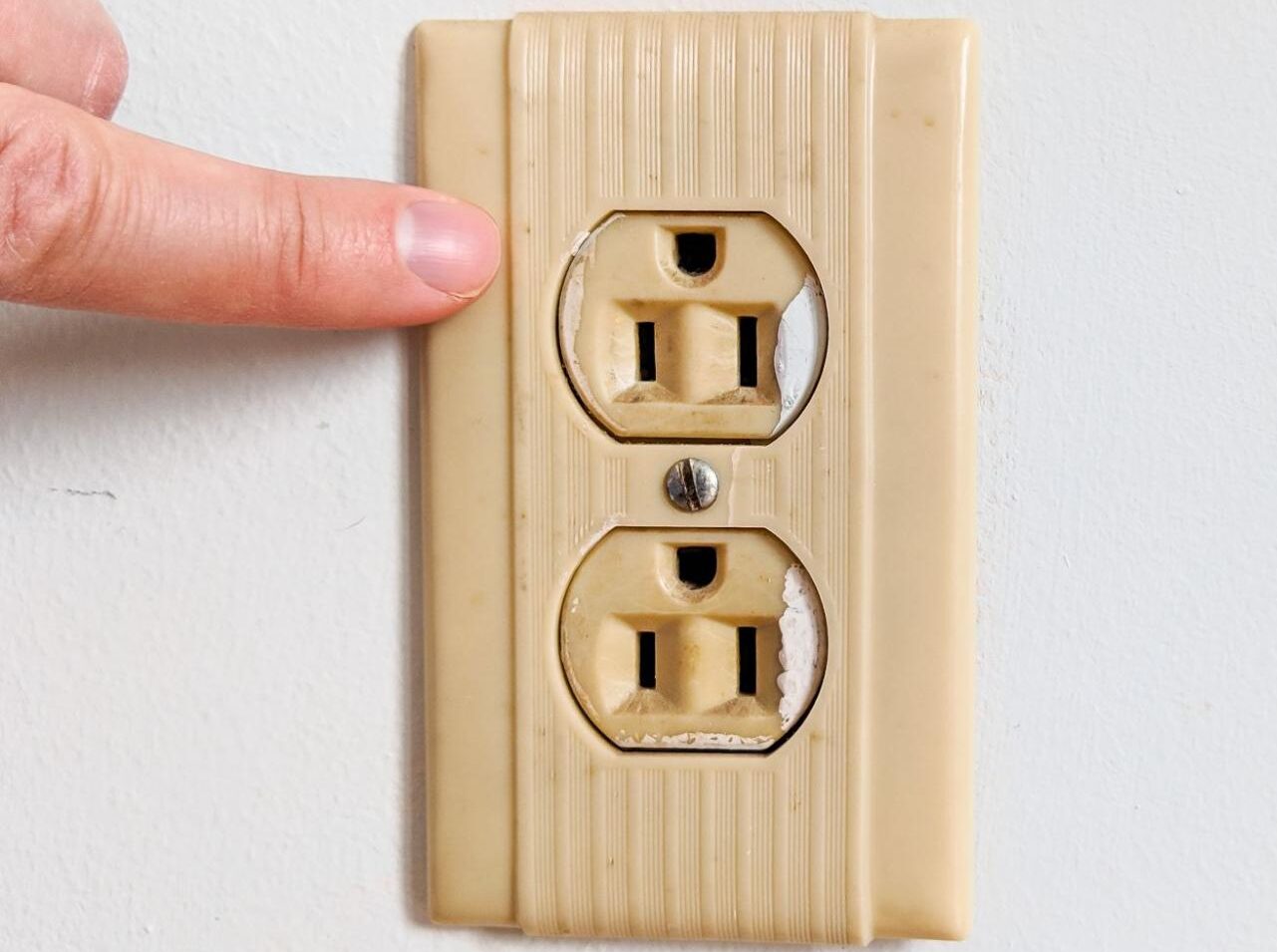
- Test the microwave on a different outlet on a different circuit (details in the troubleshooting section below).
- If the problem follows the outlet, stop and address the wiring and receptacle.
4) You are tripping a GFCI or AFCI for a reason (most of the time)
Newer kitchens may have GFCI and AFCI protection depending on local code and how the home is wired. These devices are more sensitive than old-school breakers, and a failing appliance can trip them even if it “sort of still works.”
- GFCI trip: often suggests leakage current, moisture, outlet wiring issues, or an internal fault. It can also be a nuisance trip with certain combinations of microwave electronics and specific GFCIs, especially on startup.
- AFCI trip: suggests arcing or a signature that looks like arcing, sometimes from a worn cord, failing switch, or poor connections.
If your microwave trips a GFCI repeatedly, treat it as a strong hint something is not right, even if there is a small chance it is an incompatibility. Repeated trips are still telling you to take a closer look.
5) Short circuit behavior (fast, hard trips)
When a breaker trips instantly, it can be a dead short in the microwave, a damaged cord, a failing outlet, or a breaker problem. Door switch issues can also present like this, which is why the trip pattern matters.
Clues: It trips the moment you hit Start, or it trips instantly even with nothing else running on the circuit.
6) Faulty door switches (a very common microwave-specific culprit)
Microwaves use multiple interlock door switches so the unit cannot run with the door open. If a door switch is failing or out of alignment, it can short or mis-sequence as you open or close the door. That can trip the breaker instantly, and it often feels random.
Clues:
- Breaker trips when you open the door, not when you cook.
- It trips when you hit Start even with nothing else running.
- The door feels saggy, or you have to lift it slightly for it to latch.
Safety boundary: Door switch testing and replacement usually requires removing the outer cabinet. That puts you near components that can store lethal energy. If you are not trained in microwave safety, this is a good point to hand it off.
7) Internal high-voltage parts (capacitor, diode, magnetron)
This is the category where I draw a hard line for most homeowners. The high-voltage capacitor in a microwave can hold a dangerous charge even after the unit is unplugged. The diode and magnetron are also part of the high-voltage system. A failure here can cause loud buzzing, burning smells, repeated breaker trips, or tripping a GFCI.
What to know: These parts are not “hard” in the way framing a wall is hard. They are dangerous in the way touching the wrong thing at the wrong time can seriously injure you.
My recommendation: If you suspect a high-voltage fault, do not remove the cover. Unplug it and contact an appliance tech or replace the microwave, especially if it is older or a budget model where repair costs approach replacement costs.
Quick, safe troubleshooting (no disassembly)
Step 1: Reset, then watch the pattern
- Does it trip immediately when you press Start?
- Does it trip 30 to 60 seconds into heating?
- Does it trip when you open or close the door?
That pattern helps narrow the likely cause. Door-related trips lean toward switches. Heating-related trips can point to overload or internal high-voltage issues. Instant trips can indicate a short, a door switch mis-sequence, or a bad connection.
Step 2: Reduce the load
Unplug or turn off everything else on that same circuit. If you are not sure what shares the circuit, the simplest approach is: turn off the breaker, see what else goes dead, then make a list.
Step 3: Try a different circuit (briefly)
If you can safely plug the microwave into another outlet on a different breaker, do so briefly to test. If you have an over-the-range unit, do not take risks getting it down. This step is only for situations where you can access the plug safely.
- If it trips two different circuits, the microwave is the likely problem.
- If it trips only one circuit, suspect the outlet, wiring, or breaker.
Extension cord note: Avoid running a microwave on a long, lightweight extension cord. If you must use a cord for a quick test, use a short, heavy-duty cord rated 15A/1875W or higher, fully uncoiled, and only temporarily.
Step 4: Check the outlet and cord for heat and damage
With the microwave unplugged, inspect:
- Outlet face for browning or cracking
- Plug blades for discoloration
- Cord for cuts, kinks, or melted spots
If anything looks heat-damaged, stop and fix the electrical issue before you do anything else.
Outlet issue or appliance issue?
- Trips only on one outlet and other appliances act weird there too: outlet or wiring issue.
- Trips any circuit you try: microwave fault.
- Trips only when other appliances run: overloaded circuit or needs dedicated circuit.
- Trips when door moves: likely door switch or latch alignment.
- Trips after it starts heating, with buzzing or burning smell: treat as unsafe, likely internal high-voltage problem.
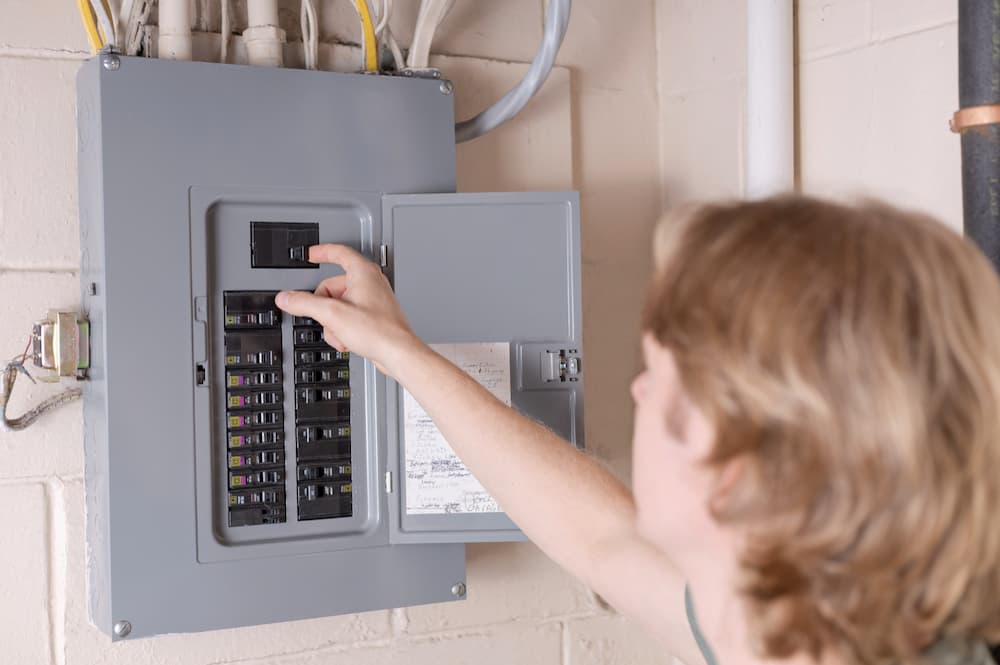
When to call an electrician
Bring in an electrician when the evidence points to the house wiring, not the microwave.
- The outlet is warm, loose, scorched, or crackling
- The breaker trips with multiple devices, or the circuit seems overloaded no matter what
- The breaker will not reset, feels spongy, or trips instantly with nothing plugged in
- You want a dedicated microwave circuit added or the kitchen circuits rebalanced (especially if the microwave label or manual calls for 20A)
When to call an appliance tech or replace it
- It trips breakers on multiple circuits
- It trips when opening or closing the door
- There is buzzing, burning smell, smoke, or visible arcing
- The unit is older and the repair estimate approaches replacement cost
As a budget-minded renovator, I hate replacing things unnecessarily. But I also like my house not being on fire. When breaker trips are paired with heat, smell, or arcing, replacement is often the most sensible and safest route.
DIY safety limits
Here is my line in the sand for Grit & Home readers:
- DIY OK: reducing load, testing another circuit (when safely accessible), inspecting cord and outlet, replacing a damaged receptacle if you are comfortable and the power is off, scheduling a dedicated circuit.
- DIY with caution: anything that involves the microwave mounting (over-the-range units are heavy and awkward) or investigating cabinet ventilation issues.
- Not recommended DIY: removing the microwave outer cover, testing or replacing door interlock switches, capacitor, diode, magnetron, or any internal high-voltage parts.
If you take nothing else from this page, take this: unplugging a microwave does not make its internal high-voltage components automatically safe.
Preventing future trips
- Put high-draw appliances on separate circuits when possible.
- Avoid stacking a microwave with a toaster oven or air fryer on the same receptacle.
- Keep the outlet and plug snug and clean. Replace loose receptacles promptly.
- For over-the-range models, keep the venting clean so the unit does not overheat. Overheating more often causes thermal shutdown than breaker trips, but it is still worth preventing.
FAQ
Why does my microwave trip the breaker after a few seconds?
If it runs briefly then trips, that can be an overload on a shared circuit, a failing breaker, or an internal microwave fault that shows up when heating starts. If it also buzzes or smells hot, stop using it.
Is it normal for a microwave to trip a GFCI outlet?
No. Some microwaves can nuisance-trip certain GFCIs (often on startup), but repeat trips are a strong sign of leakage current, moisture, a wiring problem, or a failing microwave.
Can a bad breaker cause this?
Yes. Breakers can weaken with age, heat, or repeated trips. An electrician can test the circuit load and evaluate whether the breaker is nuisance-tripping or correctly protecting you from a real problem.

About Marcus Vance
Content Creator @ Grit & Home
Marcus Vance is a lifelong DIY enthusiast and self-taught home renovator who has spent the last decade transforming a dilapidated 1970s ranch into his family's dream home. He specializes in budget-friendly carpentry, room-by-room renovations, and demystifying power tools for beginners. Through his writing, Marcus shares practical tutorials and hard-learned lessons to help homeowners tackle their own projects with confidence.