
First: stop the cycle and make it safe
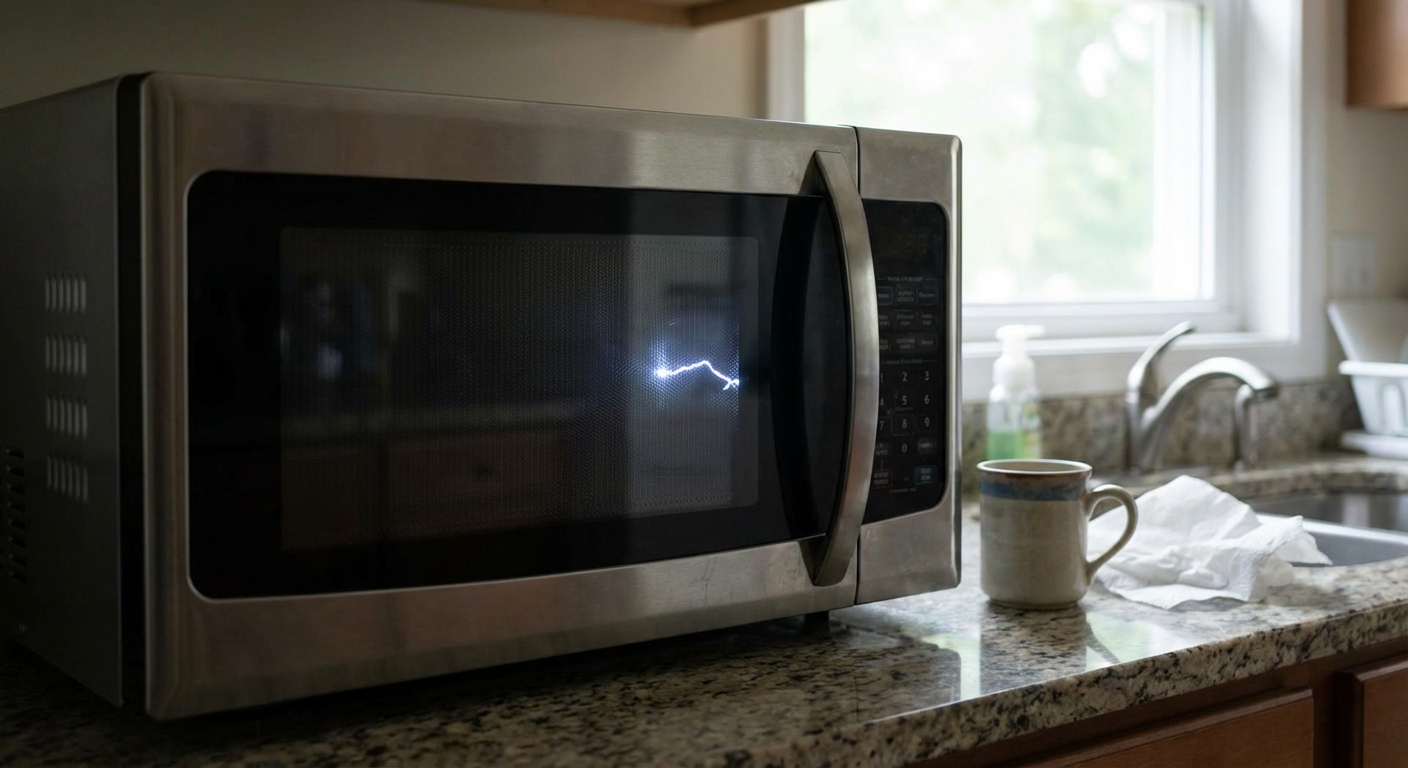
If you see sparks (also called arcing) inside a microwave, hit Stop immediately. Sparking can damage the cavity coating, damage internal components, and in rare cases start a fire. The good news is that many causes are simple, especially if the sparking started suddenly after heating something new.
- Stop the microwave. Do not “test it again” until you inspect a few things.
- Unplug it (or switch off the breaker for built-in units) before you touch anything inside.
- Let it cool if you saw sustained arcing or smelled burning.
- Do not remove the outer cover. Microwaves can retain a dangerous high-voltage charge even when unplugged. Internal electrical repairs should be left to a qualified tech.
If you see flames: keep the door closed, press Stop, and unplug the microwave if it is safe to do so. If the fire does not immediately go out, use a kitchen-rated fire extinguisher and call emergency services.
What sparks can tell you
Not all “sparks” are the same. This quick read can save you a lot of guesswork.
- Quick snaps near the food: often metal, foil, twist ties, a utensil, or metal-trimmed dishware.
- Sparks from the same spot on a wall: commonly a dirty or damaged waveguide cover or burned cavity coating.
- Sparks near the rack or corners: often rack contact, worn rack support paint, or a chipped spot in the cavity coating.
- Loud buzzing plus burning smell: can indicate an internal high-voltage fault. Visible cavity sparks are more often caused by metal, residue, paint damage, or the waveguide cover, but unusual noise or odor is a stop-and-call sign either way.
Common causes of sparking inside a microwave
1) Metal accidentally left inside
This one is the classic, and it includes more than just forks and spoons. Even small bits of metal can arc in a microwave’s intense electric field.
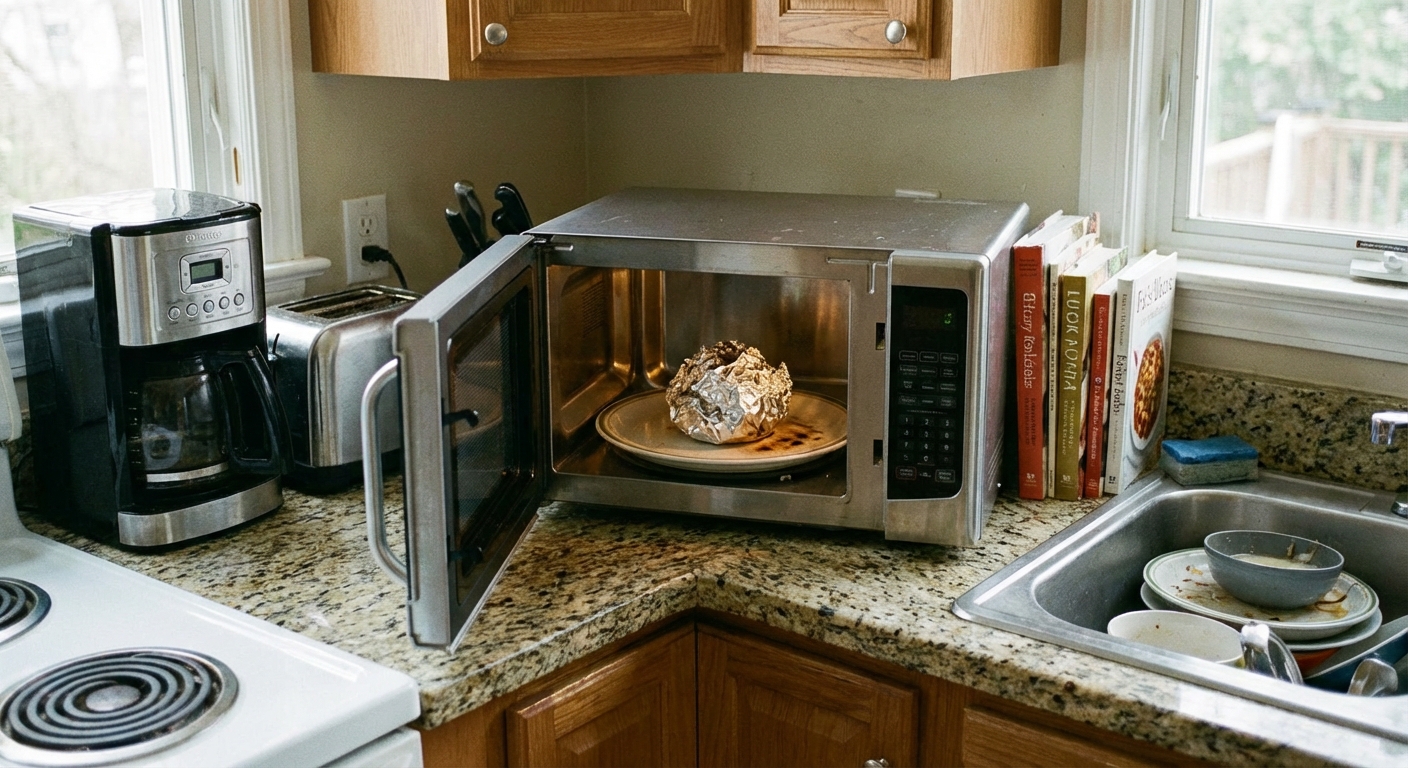
- Aluminum foil (even a tiny torn piece)
- Twist ties, staples, or metallic printing on packaging
- Metal-trimmed plates and bowls
- Takeout containers with hidden metal handles or liners
- A metal spoon left in a mug
DIY fix: Remove the metal item, wipe out the cavity, and inspect the interior paint for any burned spot. If the microwave only sparked because of the metal and the interior coating is not damaged, you are usually good to go.
2) Damaged or dirty waveguide cover
The waveguide cover is usually a small, thin panel on the side wall or ceiling of the microwave cavity. It is often made of mica or a similar heat-resistant material. Its job is to keep grease and food splatter out of the waveguide where the microwave energy enters.
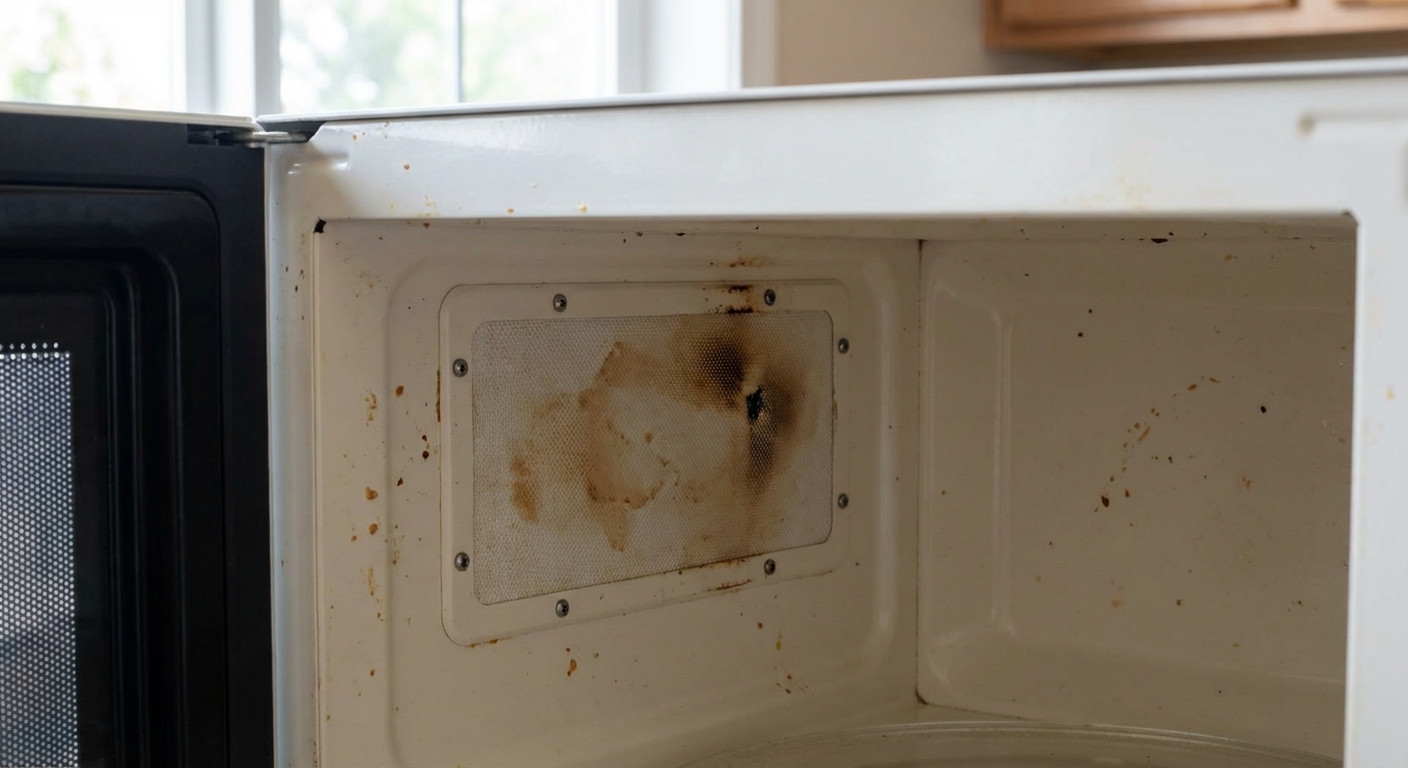
When that cover gets greasy, cracked, or burned, it can arc.
- Signs: sparking from the same spot, burn marks around the cover, flaky edges, or a warped panel.
- Common trigger: reheating greasy foods without a cover for weeks or months.
DIY fix (often safe): If the cover is intact but dirty, clean it gently.
- Unplug the microwave.
- Remove the cover if it is held by a plastic rivet or screw (many slide out after releasing one fastener).
- Wipe with a barely damp cloth and mild dish soap. Do not soak it.
- Let it dry completely before reinstalling.
If it is burned or cracked: replace it with the correct part for your model. This is usually an affordable fix. Do not run the microwave with the cover removed.
Extra caution: If the waveguide area looks charred, pitted, or like plastic has melted, stop using the microwave and have it serviced. That is not a “wipe it down and see” situation.
3) Chipped cavity coating or rack contact
Some microwaves come with a metal rack that sits on small plastic or painted supports. Over time, those support points can chip, exposing metal that can arc. Also, if the rack is installed wrong or bent, it may touch the microwave wall. And even without a rack, any chipped interior coating that exposes metal can spark.
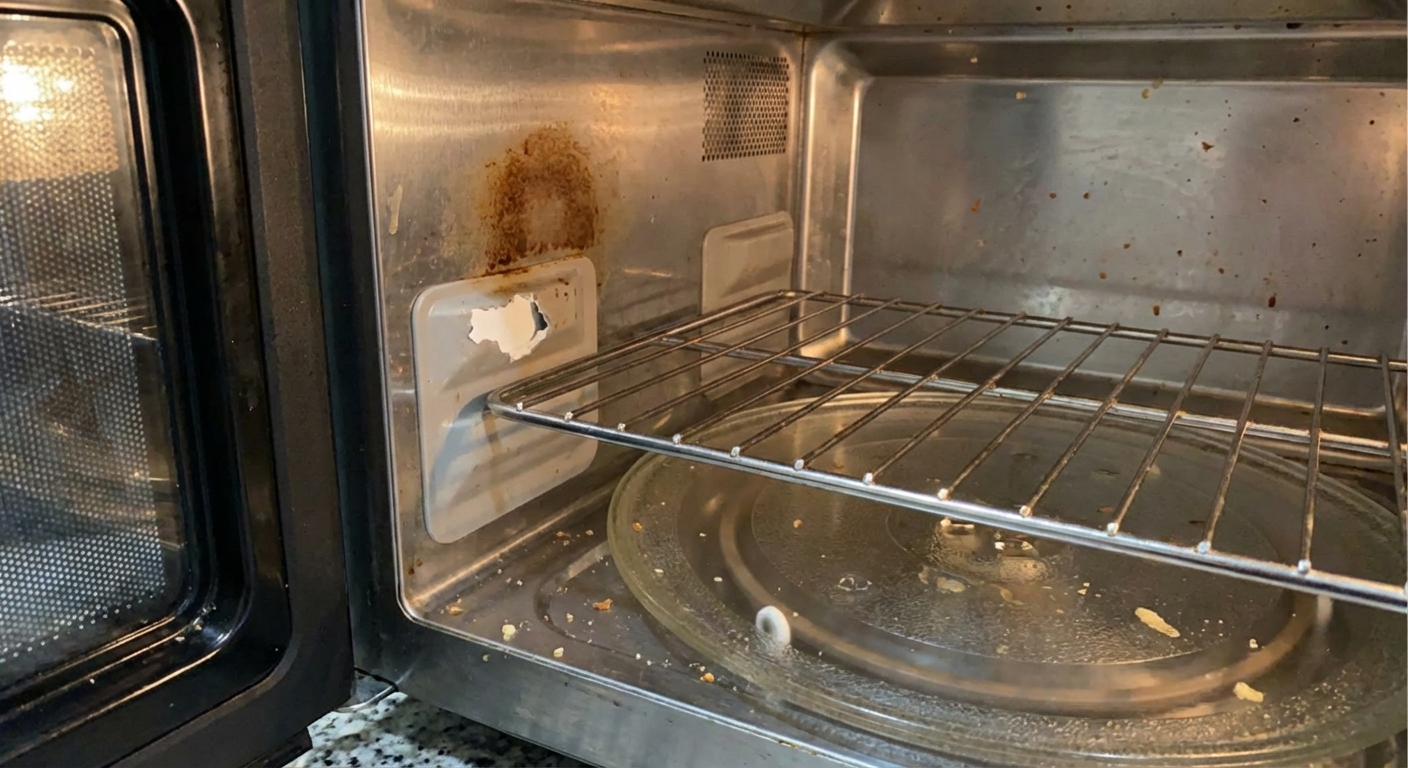
- Signs: sparking near the rack corners, marks where the rack touches, or sparks that stop when you remove the rack.
- Another clue: sparks that consistently come from the same tiny bare spot on the wall or ceiling.
DIY fix:
- Remove the rack and test the microwave with a mug of water for 30 to 60 seconds. If sparking stops, the rack or supports are the culprit.
- Clean the support areas and check for chipped coating.
- If the manual says the rack is optional for your use case, you can leave it out. Some models only approve the rack in specific setups, so follow the manual.
If you find chipped paint exposing metal: skip the water test and do not keep running it. Exposed metal can continue to arc. For a small chip with no rust, you can sometimes repair it using manufacturer-approved or microwave cavity paint (rated for high heat and food-safe environments) after cleaning and fully drying the area. If there is rust, pitting, or widespread damage, replacement is often the smarter call.
4) Carbonized food debris under the turntable
This one gets missed because it is out of sight. Food and grease can collect under the glass tray, around the roller ring, or near the coupler. If it bakes on and carbonizes, it can create a hot spot and start arcing.
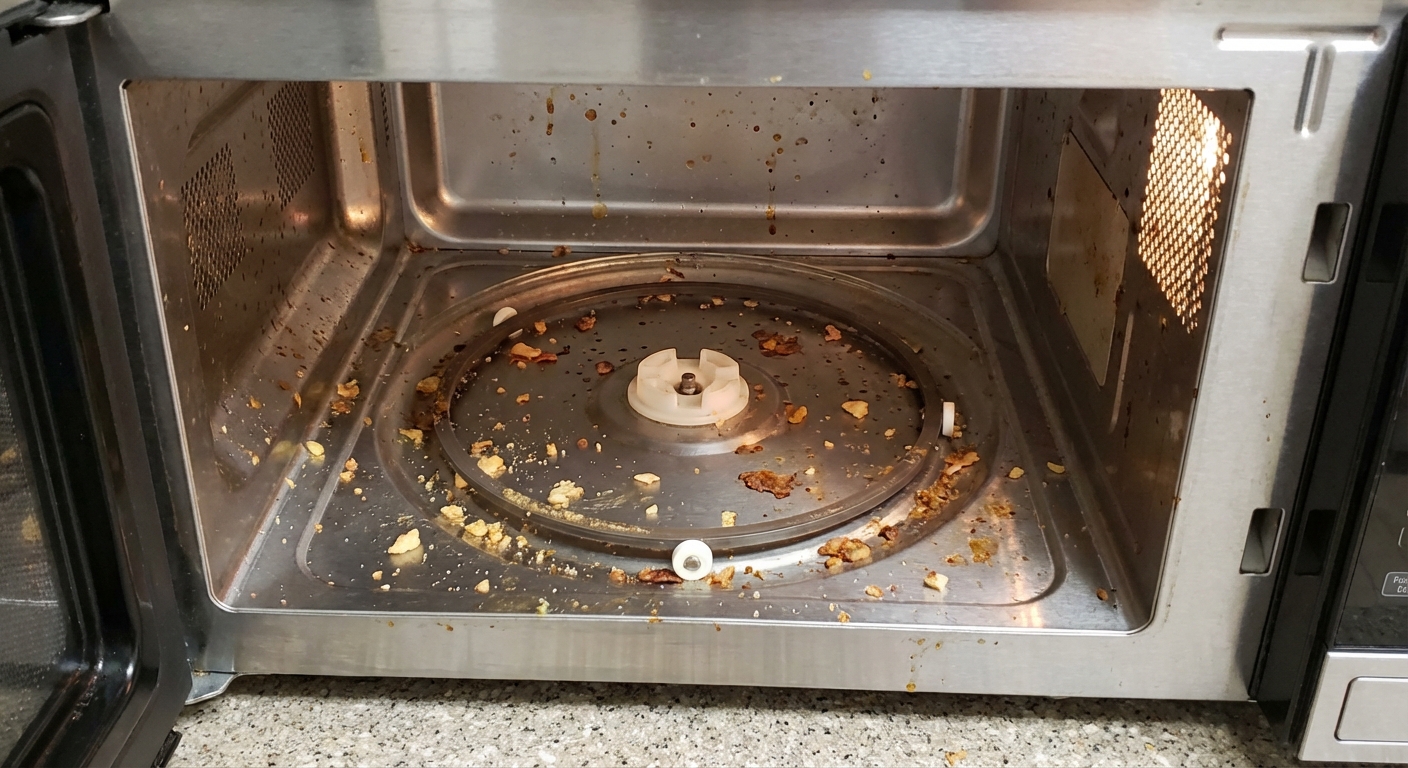
- Signs: sparking that seems to come from the floor area, especially near the center hub or along the roller ring path.
- DIY fix: Unplug the microwave, remove the tray and roller ring, wash them, and wipe the floor and coupler area thoroughly. Let everything dry fully before testing again.
5) High-voltage fault (internal electrical problem)
Internal high-voltage issues (like a failing diode, capacitor, wiring fault, or magnetron problem) more commonly show up as loud buzzing, burning odor, breaker trips, or poor heating. They can sometimes be associated with arcing, but visible sparks inside the cavity are more often due to metal, residue, the waveguide cover, or damaged coating.
- Signs: buzzing or humming that is new or loud, intermittent heating, tripping breaker, or a burning smell.
- Risk: internal high voltage components can retain a charge even when unplugged.
DIY? No. This is a professional repair item. The safe move is to stop using the microwave and schedule service or replacement.
Quick troubleshooting checklist (safe steps only)
This is the exact order I would use at home, because it starts with the simplest and most common causes.
- Remove the food and any accessories (rack, metal skewers, temperature probes).
- Inspect the dishware. Look for metallic trim, gold accents, or damage. Cracked or crazed dishware can overheat and sometimes cause crackling or small arcs, especially if residue is present.
- Check for hidden metal. Twist ties, foil fragments, and takeout containers get people all the time.
- Clean the interior. Especially the side wall where the waveguide cover is located.
- Check under the turntable. Remove the glass tray and roller ring and clean the floor and coupler area. Burnt-on debris here can arc.
- Inspect the waveguide cover. If it is stained, warped, cracked, or burned, replace it.
- Inspect the interior coating. Look for chipped paint, pitting, rust, or burn marks. If you find exposed metal, stop here and address the coating (minor repair or replacement). Do not run the water test with exposed metal.
- Test with water only. If everything looks intact, place a mug of water in the center and run 30 seconds. If it arcs with only water, stop and call a pro.
What you can DIY vs when to call a pro
Usually safe DIY fixes
- Removing accidental metal items or switching to microwave-safe dishes
- Cleaning food splatter and grease from the cavity and door area
- Cleaning under the turntable, including the roller ring and coupler area
- Cleaning or replacing the waveguide cover with the correct model-specific part
- Removing the rack and reinstalling it correctly (or leaving it out if allowed by your manual)
- Touching up a small chip with manufacturer-approved microwave cavity paint, only if there is no rust and the metal is properly cleaned and fully dry
Stop and get professional help
- Sparking continues with a mug of water and an otherwise empty microwave (and no exposed metal inside)
- Strong burning smell, smoke, loud buzzing, or breaker trips
- Visible damage around the waveguide area that looks like melted plastic or charred metal
- Any suspicion of a diode, magnetron, capacitor, or wiring issue
- A built-in or over-the-range unit where replacement is more involved and repair may be worthwhile
If you are on the fence, err on the side of caution. Microwaves are one of those appliances where the “cheap experiment” can turn into a bigger repair fast.
Prevent sparking from coming back
- Cover messy foods with a microwave-safe lid to keep grease off the waveguide cover.
- Wipe the interior weekly if you use the microwave daily.
- Clean gently. Avoid abrasive pads, steel wool, and harsh scrubbing that can chip the cavity coating and expose metal.
- Skip metal-trimmed dishware, even if it “worked before.” It only takes one bad arc.
- Use the rack only when the manual says to. Some models are picky about rack placement and what you heat on it.
- Do not run it empty. Running a microwave with nothing to absorb energy can stress components.
FAQ
Is it safe to use a microwave after it sparked once?
Sometimes. If you found a clear cause like foil or a metal spoon, and there is no interior damage, it is usually fine. If it sparked from the same spot again, if you see charring or pitting, or if it sparks with only a mug of water inside, stop using it and get it checked.
Can a dirty microwave cause sparking?
Yes. Grease and food residue can carbonize over time, and that can lead to arcing, especially near the waveguide cover and under the turntable.
Can I replace a waveguide cover myself?
In many cases, yes. It is typically a small panel secured by one fastener. Use the correct cover for your model, and never operate the microwave with the cover removed.
How do I know if it is an internal part like the magnetron?
You usually cannot confirm that safely without proper testing. Clues include loud buzzing, burning smell, breaker trips, and poor heating. At that point, it is time for a technician or replacement.
My neighbor-to-neighbor advice
I have learned the hard way that the best DIY move is knowing when to stop. If you can point to a simple cause like foil, a dirty waveguide cover, debris under the turntable, or a rack issue, you can often fix sparking in one evening. If the microwave arcs with a cup of water and nothing else, treat it like a potential internal electrical problem and step away. Your kitchen is not the place to gamble with high voltage.

About Marcus Vance
Content Creator @ Grit & Home
Marcus Vance is a lifelong DIY enthusiast and self-taught home renovator who has spent the last decade transforming a dilapidated 1970s ranch into his family's dream home. He specializes in budget-friendly carpentry, room-by-room renovations, and demystifying power tools for beginners. Through his writing, Marcus shares practical tutorials and hard-learned lessons to help homeowners tackle their own projects with confidence.