
🚨 In a DIY emergency or rush?
Skip the details and jump straight to our 30-second cheat sheet for the most crucial info.
If you are smelling natural gas in your home, this is not the moment to troubleshoot like it is a squeaky hinge. Natural gas is intentionally odorized with sulfur-containing odorants (often mercaptans) so you notice leaks fast. When in doubt, treat it as urgent and act first, investigate later.
I have done enough DIY in a 1970s ranch to know the difference between a harmless “old furnace dust” smell and the sharp, unmistakable stink of gas. This article is only about that odorized gas smell. If you smell burning dust on the first heat of the season, that is a different problem and a different checklist.
One simple rule: If you suspect a major leak, do not try to be a hero at the meter. Get out, create distance, and call from outside.
Also worth saying out loud: carbon monoxide (CO) is odorless. A CO alarm matters because your nose cannot help you there.
First: decide if you should evacuate
Use your nose and your common sense. If the smell is strong, spreading, or making your eyes water, get everyone out immediately. If you also hear hissing near a pipe or appliance, treat it as an active leak.
Evacuate immediately if:
- The gas smell is strong, especially in multiple rooms.
- You hear a hissing or rushing sound near a gas line, meter, or appliance.
- Anyone feels dizzy, nauseated, or gets a headache.
- The smell is in any enclosed area where gas can accumulate, including basements and crawl spaces.
- You cannot quickly tell where it is coming from.
Once you decide to leave, do it calmly but quickly. Grab people and pets. Leave doors open as you exit. Do not stop to open windows if the smell is strong. The priority is getting out.
If you live in an apartment or multifamily building: get out, warn nearby neighbors as you go if you can do it without delaying, and notify building management once you are outside. If there is a fire alarm pull station on your exit path, follow local guidance and the instructions of 911 or the fire department.
Do not do these things
This is the part that feels counterintuitive because homeowners want to “handle it.” With suspected gas, you want to avoid anything that can create a spark.
- Do not flip light switches on or off.
- Do not use the garage door opener or any powered tools.
- Do not use your phone inside if the smell is strong. This is conservative advice to avoid any potential ignition source. Step outside first.
- Do not light candles or use lighters or matches.
- Do not start your car in an attached garage if you smell gas there. Move away from the house first.
- Do not try to “find the leak” with a flame.
- Do not plug or unplug devices, and do not turn breakers on or off.
- If a fan, range hood, furnace, or any appliance is already running, do not turn it off. Switching off can spark too. Get out and call from outside.
The safe action order (what to do)
Here is the order to follow. The exact steps depend on how strong the smell is and whether you can safely access the gas shutoff.
1) Get people out and create distance
If the odor is strong, evacuate everyone and move to a safe spot away from the building. A good rule is across the street or to the end of the driveway.
2) If you can do it safely, shut off the gas at the meter
Only do this if the meter is outside, easy to reach, and you can get to it without walking through a heavily smelly area. If the smell is overwhelming, skip this and leave.
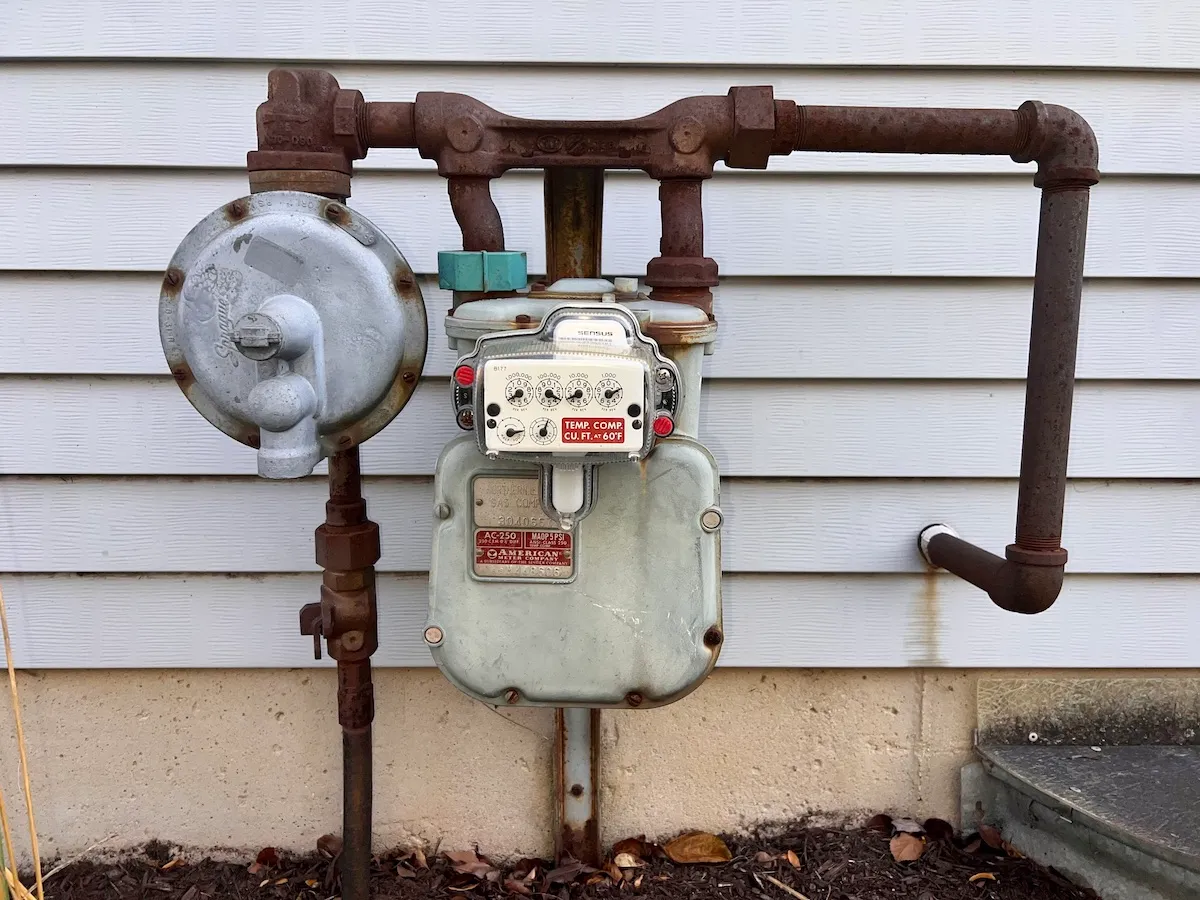
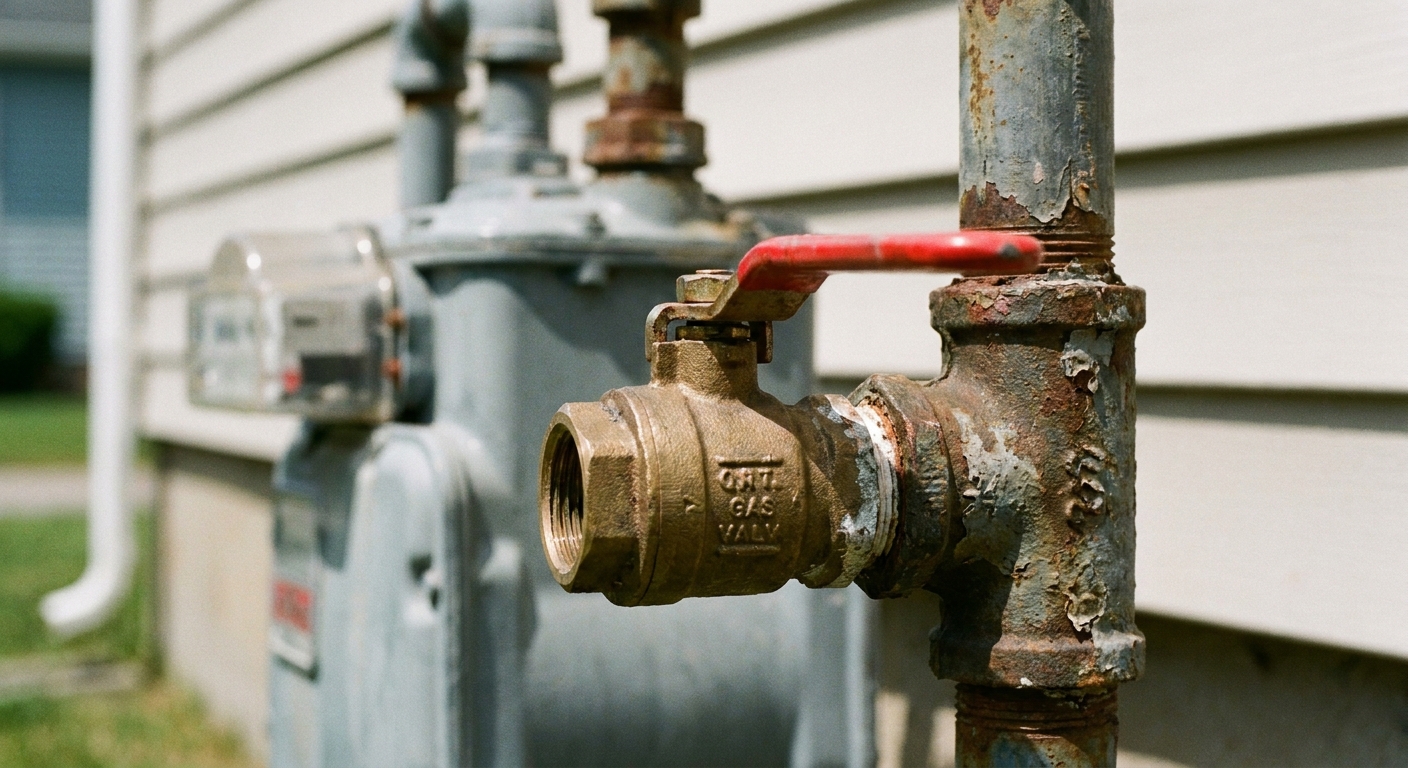
How the main shutoff works: Many homes have a quarter-turn valve on the pipe feeding the meter. When the valve is parallel to the pipe, it is on. When it is turned perpendicular to the pipe, it is off. Some setups vary, so if yours looks different or you are unsure, do not guess.
- If you have a wrench nearby, use it. Many homeowners keep a dedicated “gas shutoff wrench” on a hook near the meter.
- Turn the valve 90 degrees until it stops.
- If it will not move with firm pressure, stop. Do not force it.
3) Ventilate only if the smell is mild and you are still inside safely
If the odor is faint and localized, and you are not in a “get out now” situation, you can open a couple of windows or an exterior door as you leave the area. Only do this if you can do it without operating any electrical switches.
Do not turn on fans or range hoods. Do not turn them off either if they are already running. Anything with a motor or switch is a spark risk.
4) Call your gas utility or 911 from outside
Once you are outside and away from the building, call:
- Your natural gas utility emergency line (often available 24/7), or
- 911 if the smell is strong, you heard hissing, you are in a multifamily building, or you are not sure who to call.
Tell them:
- Your address
- That you smell natural gas (rotten egg or sulfur smell)
- Whether you shut off the meter
- Whether anyone is inside
- Whether you hear hissing or suspect a specific appliance
5) Do not re-enter until you are cleared
Even if the smell fades, do not go back in until the utility or fire department says it is safe. Gas can collect in pockets and the smell can come and go.
Common sources (what it might be)
After you are safe and professionals are involved, it helps to know the usual suspects. Some situations are minor, but you cannot assume that based on smell alone.
Relatively minor (still take it seriously)
- New appliance or recent gas work: A tiny leak at a fitting, or leftover odor from a small release during installation.
- Stove burner that did not light right away: If you turned a knob and it clicked for a while without ignition, you can get a brief gas smell. If it persists, stop using it and leave the area.
- Pilot light blew out (older appliances): If a pilot goes out, some designs can allow unburned gas. Modern appliances often have safety shutoffs, but many older ones do not.
More likely dangerous
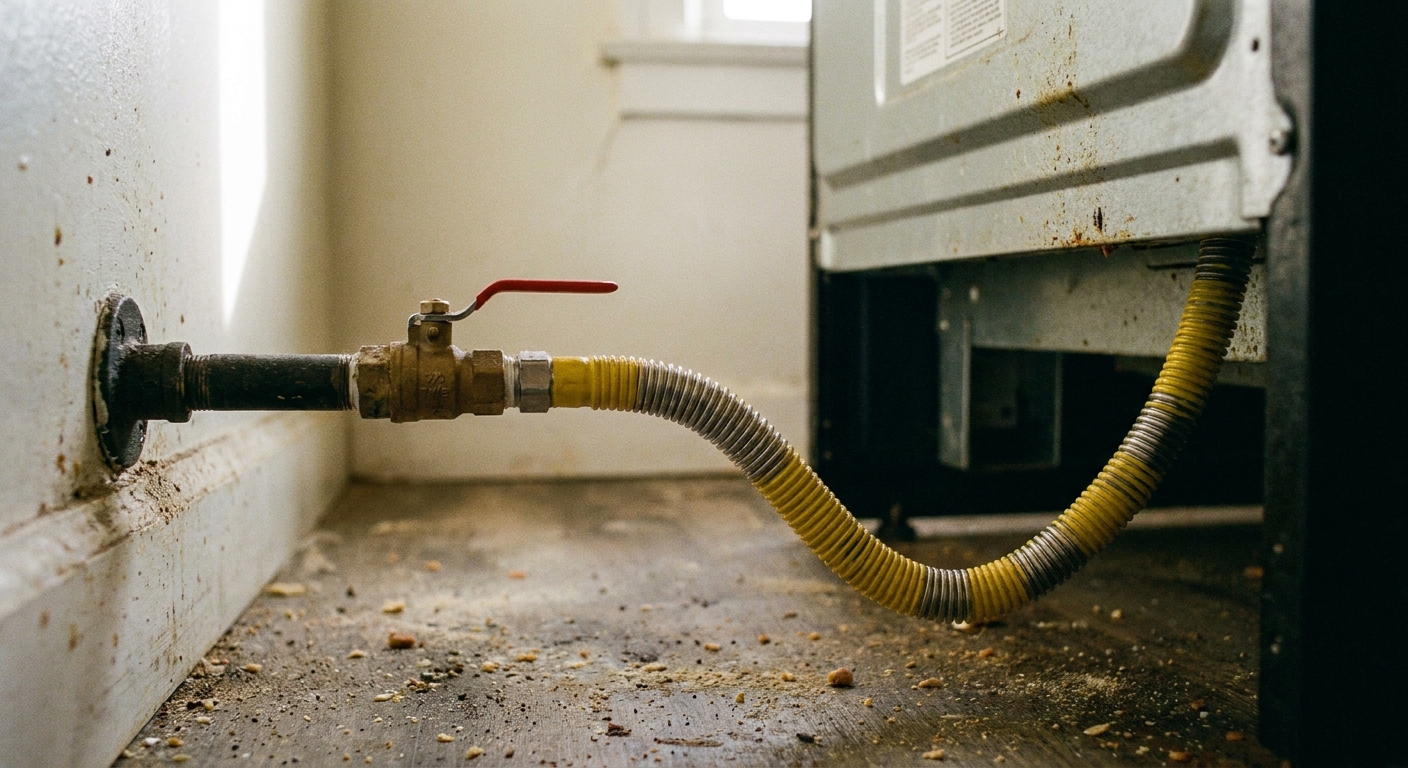
- Flexible gas connector problems: The corrugated flex line behind a stove or dryer can get kinked, damaged, or loosened. This is a very common leak point after an appliance is moved.
- Loose fitting at an appliance shutoff valve: The small shutoff valve behind your stove, dryer, water heater, or furnace can leak at joints, especially if bumped.
- Water heater or furnace gas valve area: Any odor near the control valve or burner compartment should be treated as urgent.
- Outdoor meter or regulator issues: If you smell gas outside near the meter, that can be a leak before the gas even enters the home.
- Underground service line leak: Smell near the foundation or a dead patch of grass near the gas line route can indicate an underground problem.
If you smell gas near one appliance
If the odor is faint and you can clearly locate it near a single appliance, your utility may still tell you to leave and wait for a technician. Follow their instructions. In the meantime, here is what is useful to observe from a safe distance:
- Is the smell strongest behind the stove or dryer, where the flex line is?
- Did anyone recently move the appliance for cleaning or flooring work?
- Did the odor start right after using that appliance?
- Do you hear any hissing when standing near the shutoff valve area?
Important: Do not tighten fittings, remove panels, or attempt a DIY repair before a qualified tech checks it. Even a “small” leak can become a big one fast, and incorrect tightening can make leaks worse.
Gas smell vs other house smells
Part of staying calm is knowing what this article is and is not describing.
Burning dust (first heat of the season)
This is usually a dry, dusty, slightly hot smell coming from supply vents when a furnace or baseboard heat first runs after months off. It should fade fairly quickly. It does not smell like sulfur or rotten eggs. If you suspect gas, treat it as gas.
Sewer gas
Sewer gas often smells like rotten eggs too, which is why people get confused. Sewer odor is more like decaying organic funk and it is often strongest near a drain. Causes include a dry P-trap, a failed wax ring under a toilet, or a venting issue. Sewer gas is still a health concern, but it is a different emergency than a gas leak.
Propane vs natural gas
Both are odorized to smell similar. Propane is heavier than air and can pool low. Natural gas is lighter than air and tends to rise, but indoor air mixing, HVAC airflow, and enclosed spaces can move and trap it in unpredictable ways. Either way, the safety steps are the same: avoid sparks, get out if it is strong, and call from outside.
After the utility visit: what to ask
Once a professional confirms what happened, you can move into repair mode. These questions help you avoid a repeat:
- Where was the leak found, specifically?
- Was it on the utility side (meter, service line) or homeowner side (house piping, appliance connector)?
- Was the appliance red tagged or shut down?
- Should a licensed plumber, HVAC tech, or appliance tech make the repair?
- Do you recommend a pressure test on the house gas lines?
If you shut off the meter, do not turn it back on unless your utility tells you to. Some areas require the utility to restore service and relight appliances safely.
Prep now (cheap and boring)
You do not want your first time looking for the gas meter to be in a stressful moment. Here is the cheap, boring prep that pays off later:
- Locate your gas meter and take a clear photo of it for reference.
- Keep an adjustable wrench or a dedicated gas shutoff wrench near the meter, stored securely.
- Post the utility emergency number somewhere easy to find, like inside a kitchen cabinet.
- If you have older appliances with pilot lights, learn where they are and how they are safely relit, but only after you are sure there is no leak.
When in doubt, treat it as a leak
If you smell natural gas and you are debating whether it is “bad enough,” that is your sign to stop debating. Avoid switches, get out if it is strong, shut off the gas if you can safely, and call from outside. There is no prize for staying inside to be 100 percent sure.
The 30-Second Cheat Sheet
Essential takeaways for: Natural Gas Smell in Your Home? Emergency Steps Before You Call
Natural gas smell emergency checklist
- Do not flip switches or use anything electric (lights, fans, garage door opener).
If something is already running, do not turn it off (switching off can spark too). - If the smell is strong or spreading: evacuate everyone (and pets) immediately.
- From outside, away from the building: call your gas utility emergency line or 911 if urgent.
- If it is safe and the meter is easy to reach: shut off gas at the meter by turning the main valve 1/4 turn so it is perpendicular to the pipe.
- Ventilate only if mild and safe: open a window or door on your way out. Do not run fans, and do not turn fans off if they are already running.
- Do not re-enter until the utility or fire department clears the home.
Most common leak suspects (after you are safe)
- Loose or damaged flex connector behind a stove or dryer (often after moving the appliance)
- Loose fitting at an appliance shutoff valve
- Issue at the water heater, furnace, or gas valve
- Problem at the outdoor meter or regulator
Rule of thumb: If it smells like rotten eggs or sulfur and you are not sure, treat it like a real leak.
💡 Tip: Scroll up to read the full article for detailed, step-by-step instructions.
⬆️ Back to top
About Marcus Vance
Content Creator @ Grit & Home
Marcus Vance is a lifelong DIY enthusiast and self-taught home renovator who has spent the last decade transforming a dilapidated 1970s ranch into his family's dream home. He specializes in budget-friendly carpentry, room-by-room renovations, and demystifying power tools for beginners. Through his writing, Marcus shares practical tutorials and hard-learned lessons to help homeowners tackle their own projects with confidence.