
🚨 In a DIY emergency or rush?
Skip the details and jump straight to our 30-second cheat sheet for the most crucial info.
If you have oil heat, you already know it is a little different than gas. An oil burner needs the right fuel flow, clean filtration, a strong ignition system, and a handful of safety sensors that will shut the whole show down when something looks unsafe.
The good news: there are several homeowner-safe checks you can do in 10 to 20 minutes that solve a big chunk of “won’t start” calls. The better news: I will also be very clear about the line where you stop and call a technician, because oil burners can make smoke fast when they are unhappy.
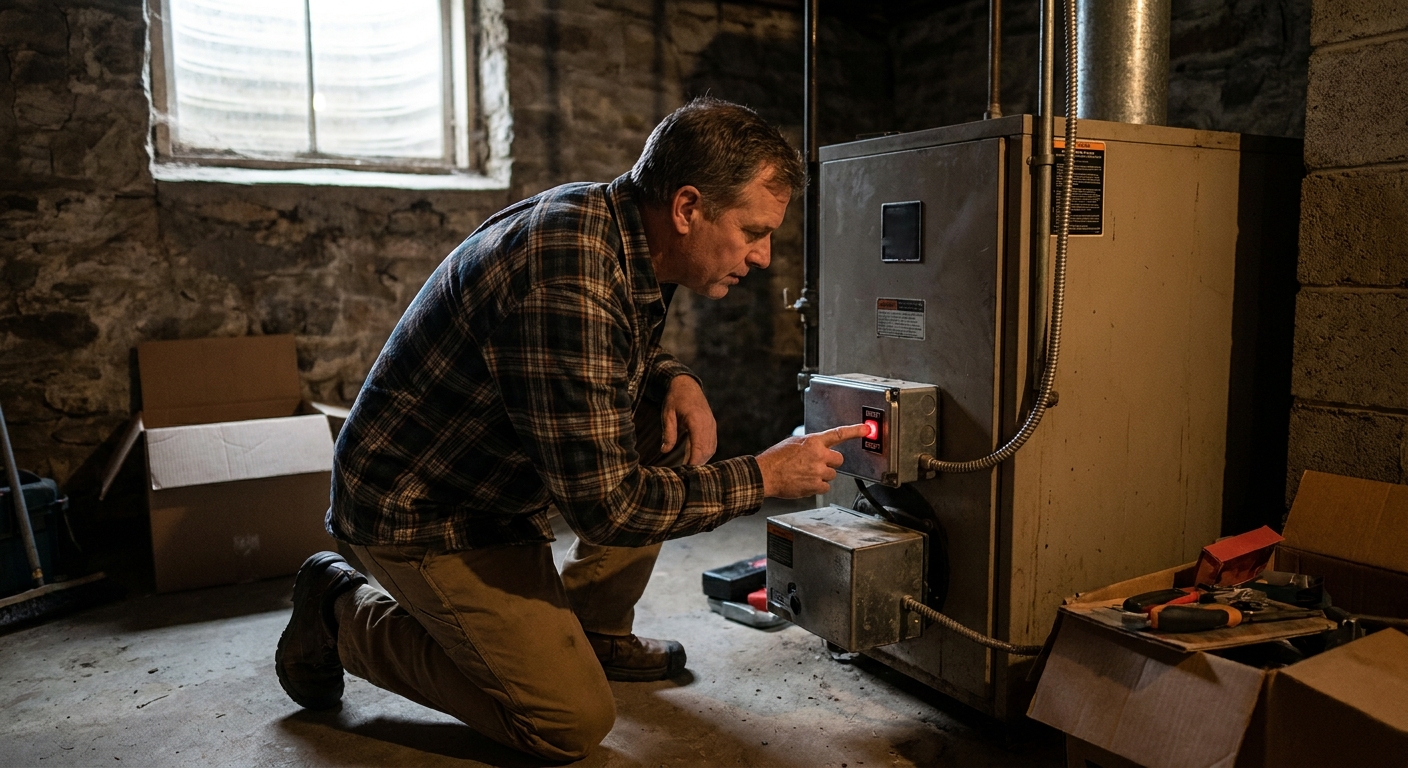
Safety first: what you can do, and what you should not
I am all for DIY. I am also a big fan of keeping eyebrows and basements intact.
Okay for most homeowners
- Checking the thermostat settings and batteries
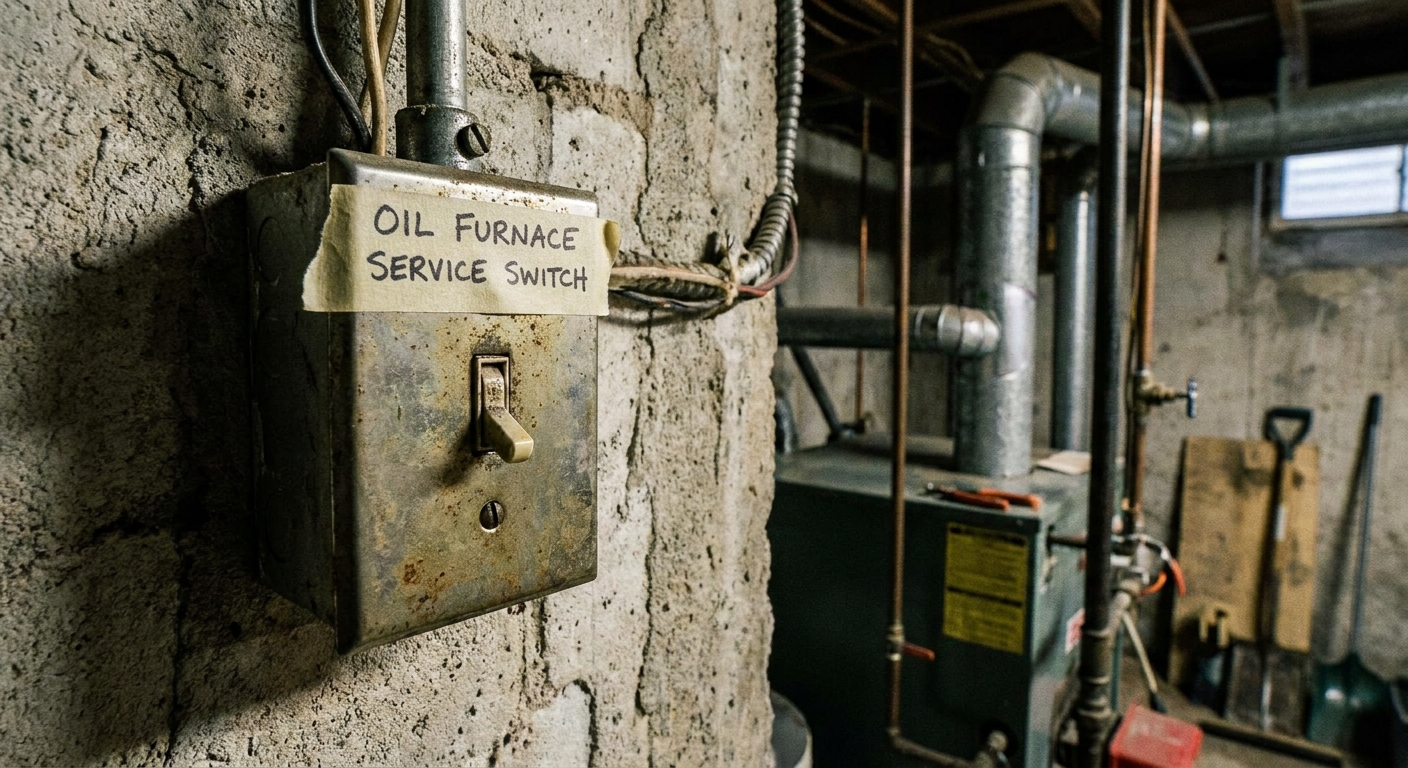
- Checking breakers, service switch, and burner power
- Confirming you have oil in the tank and that the tank valve is open
- Replacing the oil filter cartridge if you are comfortable and can do it without spills
- Pressing the burner reset button once, then stopping
- Observing symptoms: motor hum, burner starts, blower (warm-air furnace) or circulator (boiler) runs, odor, smoke, unusual sounds
Stop and call a pro
- CO alarm sounding: follow the alarm instructions, get everyone outside, and call emergency services. Do not troubleshoot.
- Smoke from the burner or vent pipe, or a strong raw-oil smell that lingers
- Banging, booming, or “oil burner rumble” on startup
- Soot around the burner door, barometric damper, or vent connector
- Oil leaking from the pump, lines, filter, or under the burner
- Repeated lockouts after you reset once
- Any time you suspect a chimney or venting problem
Rule I live by: if you see smoke, soot, hear a bang, or have a CO alarm, shut it down and call. Those symptoms point to combustion or venting issues, not a “little reset” issue.
Quick shutoff tip: know where your burner service switch is (usually a normal wall switch near the unit) and where the oil shutoff valve is at the tank. Also keep combustibles and storage away from the burner and vent pipe.
Start with the simple power and thermostat checks
Oil burners are sensitive to fuel, ignition, and draft issues, but they are still appliances. If they do not have a call for heat or do not have power, nothing else matters.
1) Thermostat basics
- Set the mode to HEAT.
- Raise the setpoint 5 to 10 degrees above room temp so you know it is calling.
- If your thermostat uses batteries, replace them.
- If you have a programmable thermostat, temporarily switch to HOLD.
2) Check the “hidden” furnace switch
Most oil furnaces and boilers have a regular-looking wall switch near the unit. It is often bumped off during storage, laundry, or cleaning.
- Confirm the service switch is ON.
- Check the breaker labeled furnace or boiler. Reset it once if tripped.
If the breaker trips again, stop. That is an electrical fault worth a technician visit.
Confirm oil supply: tank level, valves, and recent delivery issues
“No oil” sounds obvious, but gauges fail, sludge happens, and delivery timing is not always what we think it is.
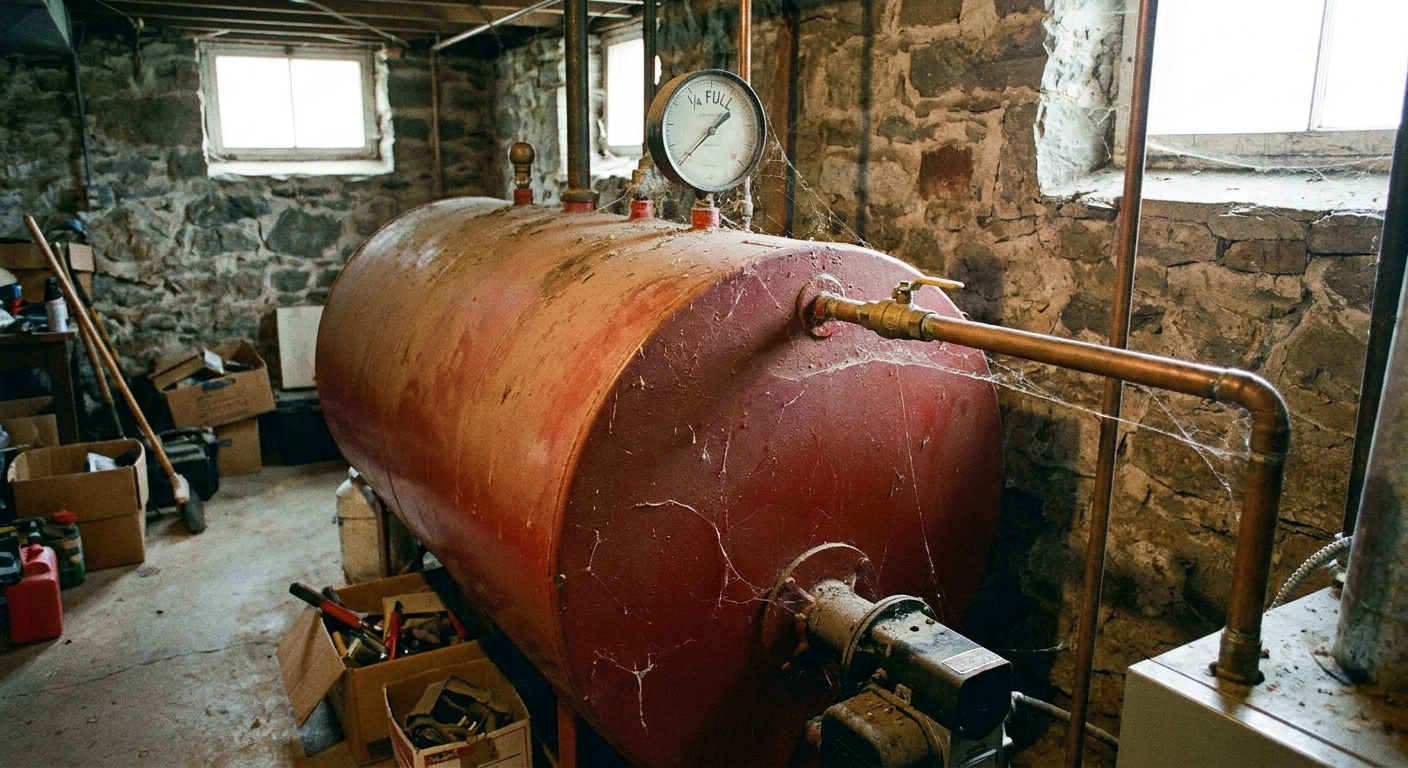
3) Check the tank gauge, then verify reality
- If the gauge reads near empty, assume it may be empty and plan accordingly.
- If you suspect the gauge is stuck, compare it with your delivery records if you have them.
- If you can safely see the tank (and it is a tank style where this is possible), a careful visual check can help confirm the gauge. If not, do not force it. Just treat it as uncertain.
If you ran out of oil
If the tank ran dry, many systems need priming and bleeding to get running again. Some homeowners do this safely, but if you are not familiar with bleeding the pump and verifying safe ignition, this is a good time to call a tech. This is also where repeated reset presses can create a smoky mess.
4) Make sure the oil shutoff valve is open
There is typically a valve at the tank outlet and sometimes another near the filter or burner. Handle parallel to the pipe is usually open for ball valves. For older gate valves, it is open when turned fully counterclockwise.
- Confirm valves are open.
- Look for wetness at fittings that suggests a leak.
If you smell heating oil strongly near the tank or lines, do not run the burner. Oil leaks are messy, can damage finishes, and can turn into a bigger issue fast.
After an oil delivery: what can go wrong
- A delivery does not usually “add air” by itself. Air is more likely if the tank ran dry, there is a leak, or the system is pulling air somewhere.
- The common post-delivery headache is sediment getting stirred up, which can clog the filter, pump strainer, or nozzle.
Oil filter checks: a common no-start culprit
Oil burners need clean fuel. A clogged filter can cause hard starts, lockouts, or a burner that runs for a moment and then quits.
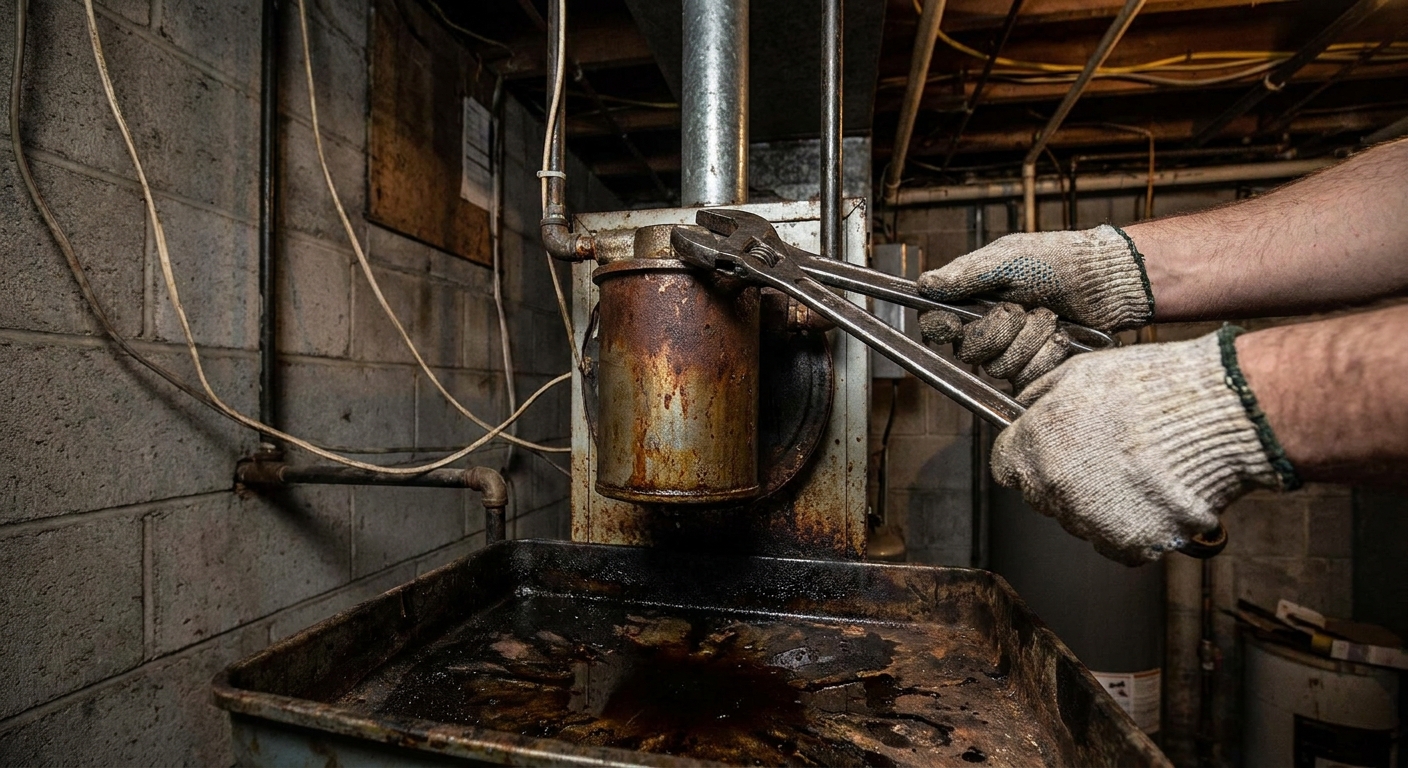
5) Look at the filter canister and lines
- If your filter canister is rusty, wet, or seeping, that is a pro call.
- If you have a clear oil line section or a Tiger Loop style de-aerator, bubbles can hint at air leaks or restrictions.
6) Replacing a filter cartridge: only if you are confident
Many homeowners can replace the oil filter, but do not attempt it if you cannot shut off the oil, control spills, and properly re-seat the gasket. A tiny air leak at the filter can stop the burner cold.
- Turn off power to the burner at the service switch.
- Close the oil shutoff valve at the tank if you have one that works.
- Place a pan and rags under the filter.
- Replace the cartridge and gasket exactly as specified for your filter model.
- Reopen the valve and restore power.
Important: Some systems need the oil pump bled after opening the fuel system, especially if the tank ran low or you introduced air. If you do not know how to bleed the pump safely, stop here and call a tech. Running with air in the line often leads to repeated resets and smoky starts.
The burner reset button: the one-press rule
Most modern oil burner primaries will lock out if they do not see flame quickly. That is what the reset is for. It is not a magic “keep trying” button.
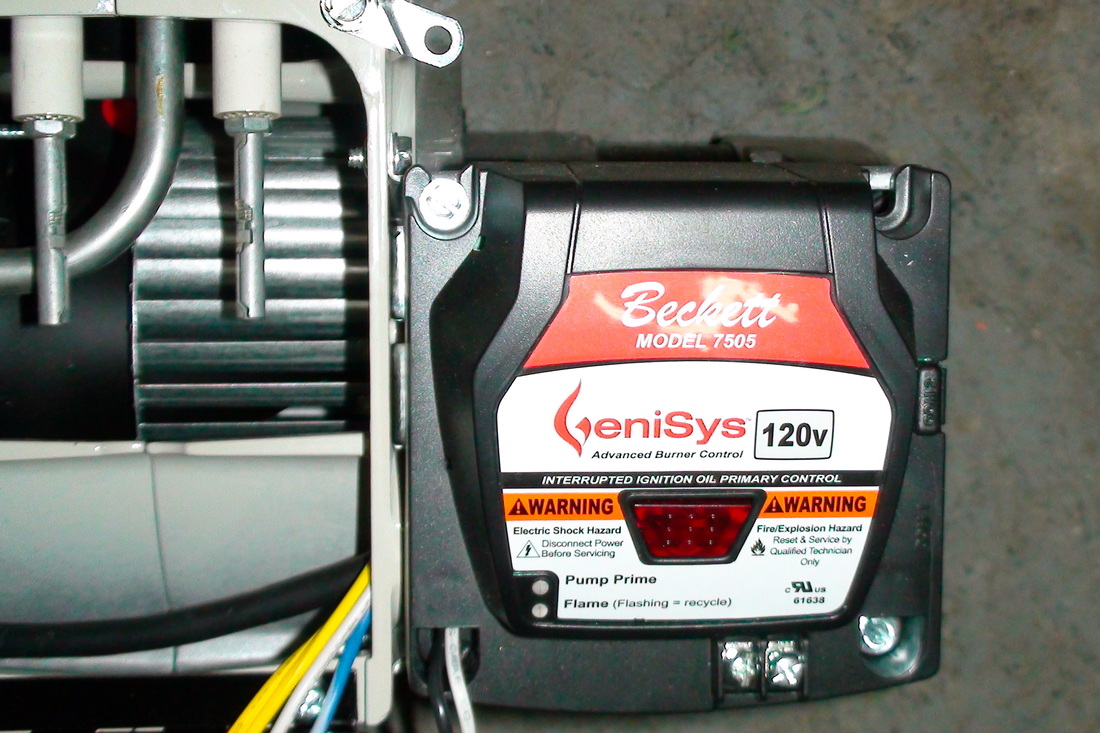
7) Locate the primary control and reset
Look for a small control box on or near the burner with a red button and sometimes a little indicator light.
8) Press reset once, then watch and listen
- Press and release the reset button one time.
- Stand nearby and observe for 60 to 90 seconds.
What should happen
- You may hear the burner motor start and the ignition transformer energize.
- Within seconds, you should hear a smooth “whoosh” as it lights and settles.
If it does not light
- Do not keep pressing reset. Multiple resets can pump unburned oil into the chamber, which can cause a delayed ignition bang or heavy smoke when it finally lights.
- If it locks out again, that is your cue to call.
- If you already pressed reset more than once, stop now and tell the technician. It helps them plan a safer restart.
Reading the symptoms: flame sense, ignition, and fuel clues
Oil systems fail in patterns. You can often tell a tech-repair problem from a simple supply problem just by paying attention to what the burner does.
Burner runs, then shuts down and locks out
This often points to a flame detection issue or unstable flame. The common sensor is the cad cell, a small flame detector that “looks” at the fire through a little port.
- Dirty cad cell eyes, misalignment, or a weak flame can cause lockouts.
- This is typically a technician job because it overlaps with combustion quality and burner setup.
Burner does not start at all
- Likely power issue, safety switch open, or control board or primary failure.
- Also possible: a limit or safety is open and preventing firing (some are automatic and will not look “tripped” to a homeowner).
- On boilers, a low-water cutoff can also prevent firing.
Burner motor hums but does not spin
- Could be a seized motor, failed capacitor, or jammed coupler.
- Shut it down and call a pro. Forcing it can overheat wiring.
Burner starts, you hear ignition, but no flame
This can be fuel delivery, nozzle, or ignition related.
- If there is no oil smell at all, it may not be delivering fuel.
- If there is a strong oil smell, it may be spraying but not lighting, which is a big red flag for smoke and delayed ignition.
Either way, after one reset attempt, this is a service call.
If you are curious what the technician is likely to find, common pro-only causes include a clogged nozzle, dirty or mis-set electrodes, a weak igniter or transformer, a draft issue, or a combustion setup problem. Those are real fixes, but they are not homeowner diagnostics.
Thermostat call is good, but still no heat: limits and safety switches
Even when the thermostat is calling, the burner may be held off by safeties designed to prevent overheating or unsafe operation.
9) Limits and manual-reset safeties
Many furnaces and boilers have a high limit control. Some also have manual-reset safety switches. If a manual reset safety has tripped, it tripped for a reason.
- If you see a manual reset safety tripped, do not keep resetting it.
- Overheating can come from airflow issues (warm-air furnace), blocked returns, dirty heat exchangers, or combustion problems.
10) Boiler-only: low water cutoff
If you have an oil boiler, a low water cutoff can prevent firing if water level is low.
- Check the boiler pressure and sight glass if your system has one.
- If you are not comfortable adding water or you suspect a leak, call a pro.
11) Cad cell safety timing (why it locks out)
Most primaries give the burner a short window to prove flame. If the cad cell does not “see” flame fast enough, the control locks out to prevent pumping raw oil. That is why repeated resets are risky.
Banging, smoke, or soot: the big red flags
I want to underline these because they are the moments where DIY curiosity can turn into a smoky basement.
If you hear a bang or boom on startup
- Shut the system off at the service switch.
- Do not reset again.
- Call for service. This can be delayed ignition from unburned oil, poor draft, or ignition issues.
If you see smoke or smell exhaust indoors
- Turn the system off.
- Open a window for fresh air if you can do so safely.
- Make sure carbon monoxide alarms are working.
- Call a technician immediately.
If a CO alarm is sounding
- Follow the alarm instructions.
- Get everyone outside.
- Call emergency services and then your heating company.
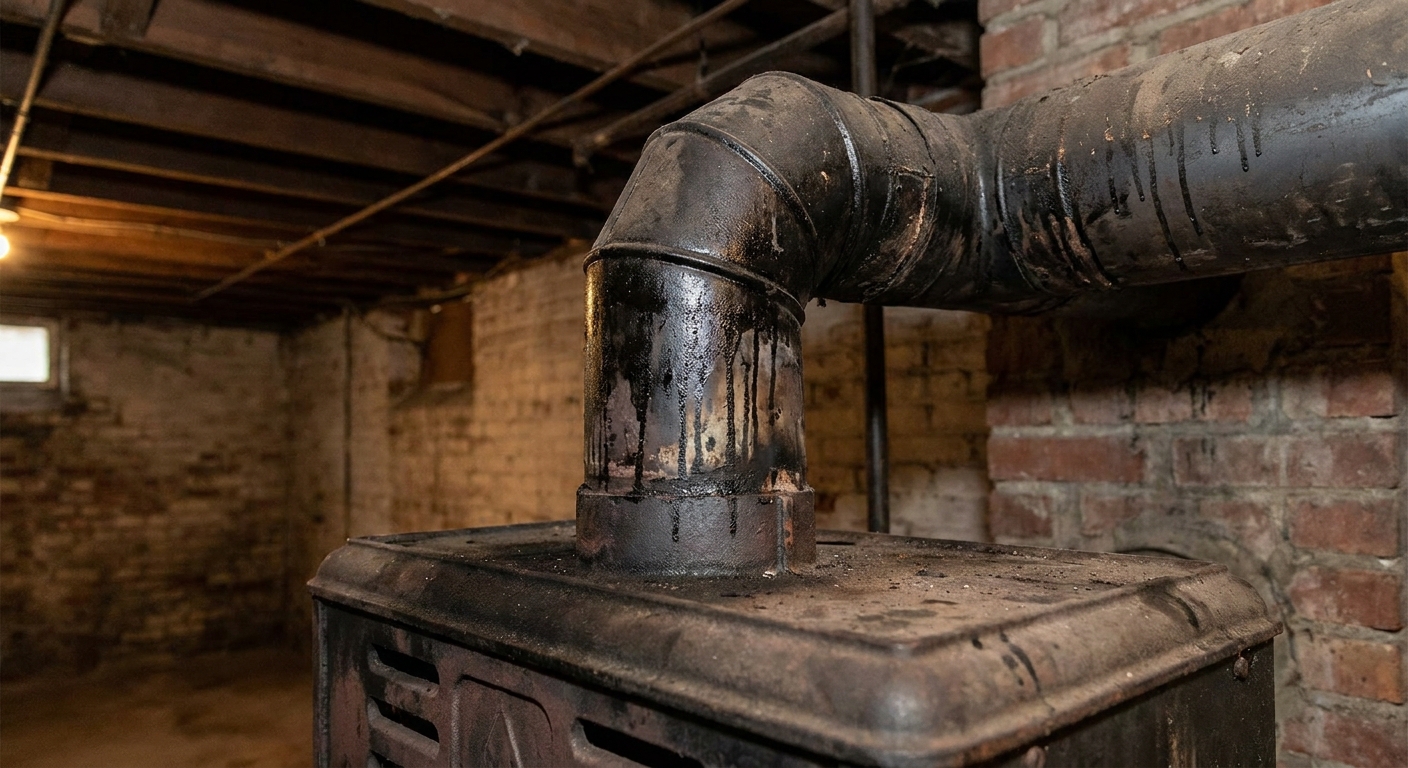
If you see soot around the burner or vent connector
Soot is a sign the burner is not burning cleanly or is not venting properly. That is a tune-up and combustion test situation, not a reset situation.
A quick troubleshooting order
If you want the simplest order of operations, here is the flow I use at my own house.
Thermostat: heat mode, temp up, batteries fresh.
Power: service switch on, breaker not tripped.
Oil: tank level is not suspect, valves open, no obvious leaks.
Filter: check for leaks or obvious clog symptoms. Replace only if you know how to avoid air leaks and spills.
Reset: press once and observe.
Stop: CO alarm, smoke, soot, bang, strong oil smell, or second lockout means call.
When you call, tell the technician what you observed: “motor runs but no light,” “locks out after 20 seconds,” “smelled oil,” “smoke at the barometric damper,” whether the blower (furnace) or circulator (boiler) was running, and whether you pressed reset. That information saves time and often saves you money.
How to prevent the next no-start
Oil systems love routine. Skipping maintenance is usually fine until it is suddenly not.
- Annual service and combustion test: nozzle, electrodes, filter, pump strainer, draft, smoke number, and CO2 or O2 setup.
- Do not run the tank too low (rule of thumb): keeping a reasonable buffer can reduce the chance of pulling sludge or water from the bottom, depending on tank condition and pickup height. It can also help limit condensation issues in some situations.
- Change filters on schedule: especially if you have an older tank.
- Keep the area around the furnace or boiler clean: dusty intakes and blocked airflow can cause overheating, and storage too close to the burner is a fire risk.
My thrifty take: an annual tune-up costs money, but it often costs less than one no-heat emergency call plus the extra soot cleanup that sometimes comes with a neglected burner.
The 30-Second Cheat Sheet
Essential takeaways for: Oil Furnace Won’t Start? Troubleshoot Before You Call
Do these first (safe, fast)
- Thermostat: set to HEAT, raise temp 5 to 10 degrees, replace batteries.
- Power: confirm furnace or boiler service switch is ON and breaker is not tripped.
- Oil supply: check tank level (assume it may be low if you are unsure), and make sure the shutoff valve is open. Check for leaks and strong oil smell.
Reset button rule
- Press the oil burner reset button once only.
- If it locks out again, stop. Repeated resets can flood the chamber with oil and cause smoke or a delayed ignition bang.
- If you already pressed it multiple times, stop now and tell the technician.
Filter check
- A clogged oil filter can cause no-start or quick lockouts.
- Only replace the filter if you can shut off oil, prevent spills, and avoid introducing air. If bleeding the pump is needed and you do not know how, call a tech.
Symptoms that mean “call now”
- CO alarm sounding: follow the alarm instructions, get everyone outside, and call emergency services. Do not troubleshoot.
- Smoke, soot, or exhaust smell indoors
- Banging or booming on startup
- Strong raw-oil odor or visible oil leaks
- Motor hums but won’t spin
- Repeated lockouts after one reset
What to tell the technician
- What the burner does: runs then locks out, hums, does nothing, smells like oil.
- Whether you pressed reset (and how many times).
- Any smoke, soot, CO alarm, or unusual noises.
- Whether the tank ran low or you recently got an oil delivery.
💡 Tip: Scroll up to read the full article for detailed, step-by-step instructions.
⬆️ Back to top
About Marcus Vance
Content Creator @ Grit & Home
Marcus Vance is a lifelong DIY enthusiast and self-taught home renovator who has spent the last decade transforming a dilapidated 1970s ranch into his family's dream home. He specializes in budget-friendly carpentry, room-by-room renovations, and demystifying power tools for beginners. Through his writing, Marcus shares practical tutorials and hard-learned lessons to help homeowners tackle their own projects with confidence.