
🚨 In a DIY emergency or rush?
Skip the details and jump straight to our 30-second cheat sheet for the most crucial info.
When one room suddenly loses power but the breaker handle looks “normal,” it feels like your house is playing a prank on you. I have been there. The good news is that this problem is often something simple and local, like a tripped GFCI upstream, an AFCI that needs a reset, or one failed outlet that is quietly cutting power to everything downstream.
This guide walks you through the most common causes in the safest order, starting with the stuff you can check without opening your electrical panel. If anything feels unclear or risky, that is not a character flaw. It is your sign to stop and call a licensed electrician.
Safety first
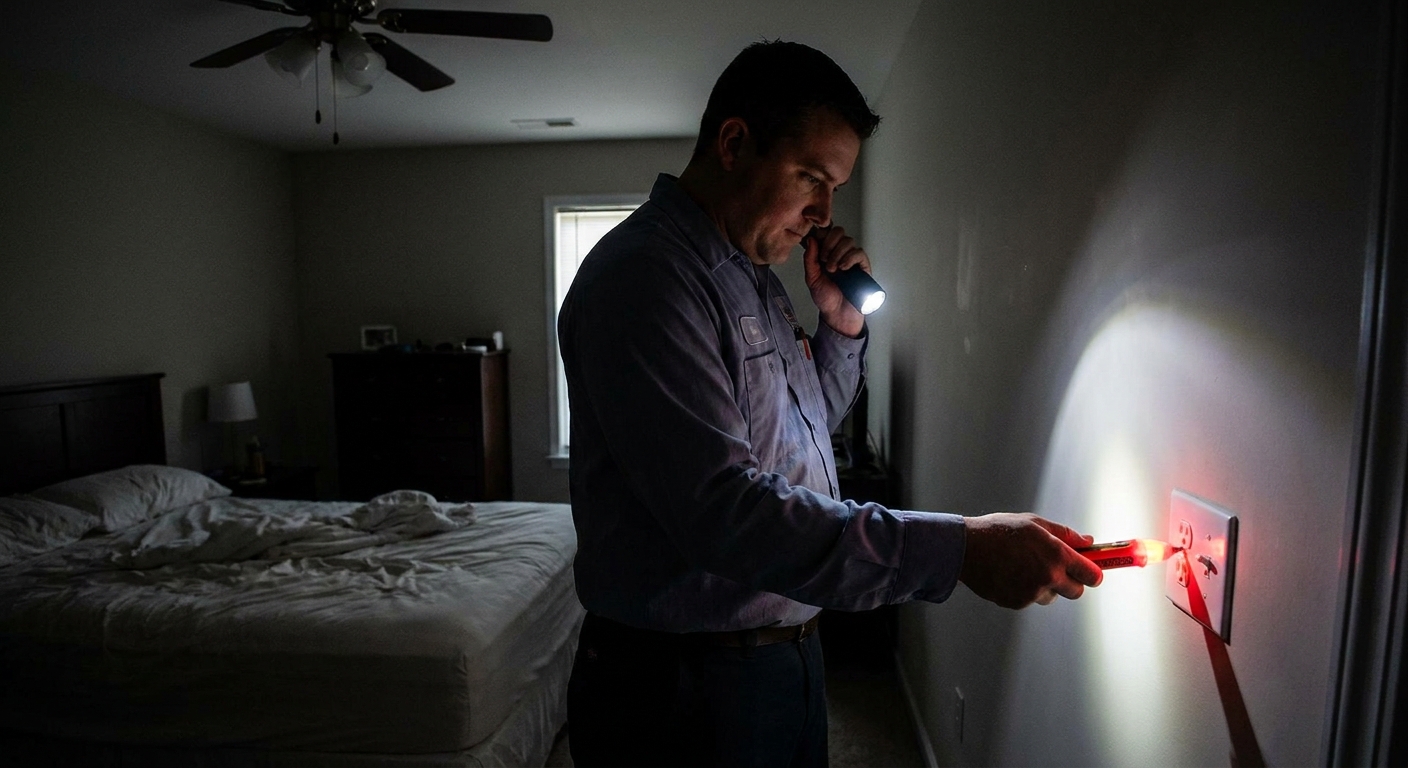
Electricity is unforgiving. Troubleshooting is safest when you keep your hands out of energized boxes and use simple tests.
- If you smell burning, see scorch marks, hear sizzling, or the outlet is hot to the touch: turn off the main breaker if you can do so safely and call an electrician immediately.
- If any outlet in the dead room is loose or cracked: stop using it and plan to replace it, but do not keep “testing” it by plugging things in and out.
- Use the right basic tools: a plug-in lamp you know works, a simple outlet tester (the three-light kind), and a flashlight. A non-contact voltage tester is a helpful screening tool, but it can be fooled, so confirm receptacle power with a plug-in tester or a multimeter if you know how to use one.
- Do not open the panel unless you are qualified: there are parts inside that can remain energized even with breakers off.
Step 1: Confirm what is dead
Before you chase a single circuit, confirm what is actually dead.
- Check lights and outlets. Plug a lamp into every outlet in the room. Flip every wall switch (some control outlets).
- Check adjacent areas. Hallways, closets, smoke alarms, and exterior outlets are often tied into the same circuit.
- Ask “what changed?” A space heater, vacuum, hair dryer, or a new device is a huge clue. So is recent DIY work like hanging a TV, replacing a fixture, or driving nails into a wall.
If only lights are out but outlets still work, the issue is often at the switch, the fixture, or a loose connection in a lighting box. Treat that as a caution flag, especially if anything is warm, buzzing, or intermittent.
Step 2: Reset all GFCIs (anywhere)
This is one of the most common “mystery dead room” causes I see in real houses. A GFCI receptacle can protect other regular outlets downstream, including in a different room.
Where to look
- Bathrooms
- Kitchen counters
- Garage
- Basement
- Laundry area
- Exterior outlets (front, back, and side yards)
- Near a wet bar or utility sink
- Behind stored items in the garage, basement, or patio
Also check the panel
Some homes have GFCI protection at the breaker instead of (or in addition to) a GFCI outlet. You can also have multiple GFCIs in a house on different circuits, so reset the one you find and keep looking if the room is still dead.
How to reset
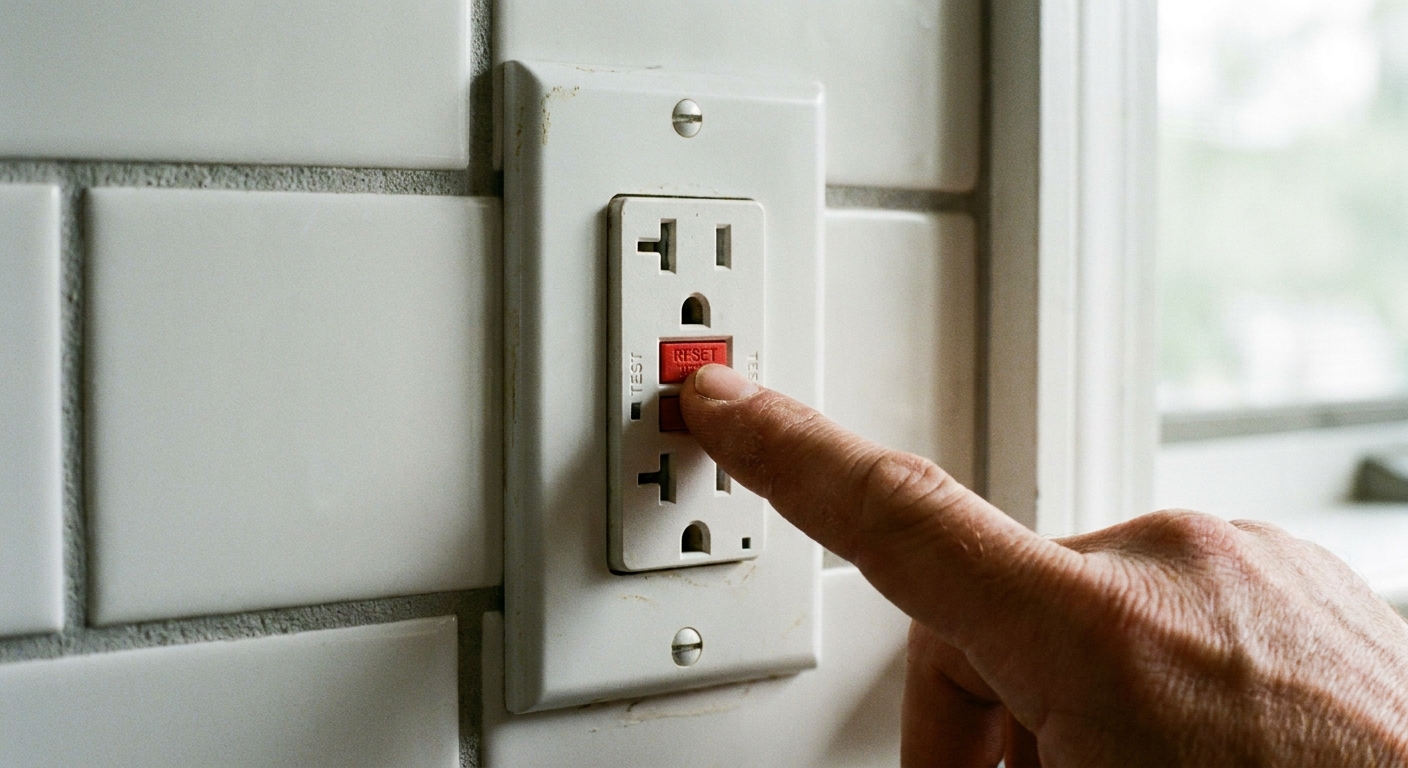
- Press RESET firmly until it clicks.
- If it will not reset, unplug everything you can on that circuit (hair dryer, space heater, dehumidifier) and try again.
- If it still will not reset, leave it off and call an electrician. A GFCI that will not reset can indicate a wiring fault or a failed device.
Step 3: Reset the breaker properly
Any breaker type can trip to a position that looks like ON if you are not specifically looking for it, including standard breakers, AFCI breakers, and dual-function breakers. I have personally missed this, stared at a dead room, and then felt silly when a firm reset brought everything back.
Reset steps
- Go to the panel and find the most likely breaker for that area (labels are often wrong, so be flexible).
- Look for a trip indicator window (common on AFCI and dual-function breakers) or a slightly shifted handle position.
- Flip the breaker fully to OFF, then back to ON. A half move does not count.
- Test the room again with your lamp.
If it immediately trips again, stop resetting it. Something on that circuit is causing a fault, or the breaker is failing.
If a breaker is unusually warm compared to neighboring breakers, or hot to the touch especially with light load, that is a professional problem.
Step 4: Check for a switched outlet
In many bedrooms and living rooms, one outlet is controlled by a wall switch for a lamp. If you never used that switch before, it can feel like the outlet “died.”
How to check
- Plug a lamp into each outlet and flip each switch.
- Pay attention to outlets where only one half works. That can indicate a half-hot switched receptacle.
If only the switched outlet is off and the rest of the room is fine, you found your answer.
Step 5: Look for a failed upstream outlet
This is the other big culprit: one receptacle or connection fails, and every outlet “after” it on the circuit goes dead. The breaker stays on because the failure is an open connection, not a short.
Clues this is your problem
- Some outlets in the room work, some do not
- The dead room shares a wall with another room that recently had an outlet replaced
- You recently plugged in a high draw device (space heater, portable AC)
- You find one outlet that feels loose, looks discolored, or has a history of sparking
Safe way to narrow it down
- Start with the last live and first dead. The problem is frequently in one of those boxes, including in closets, hallways, adjacent rooms, garage, basement, or outside.
- Check for “hidden” receptacles. Behind furniture, in closets, on the exterior, and in utility spaces.
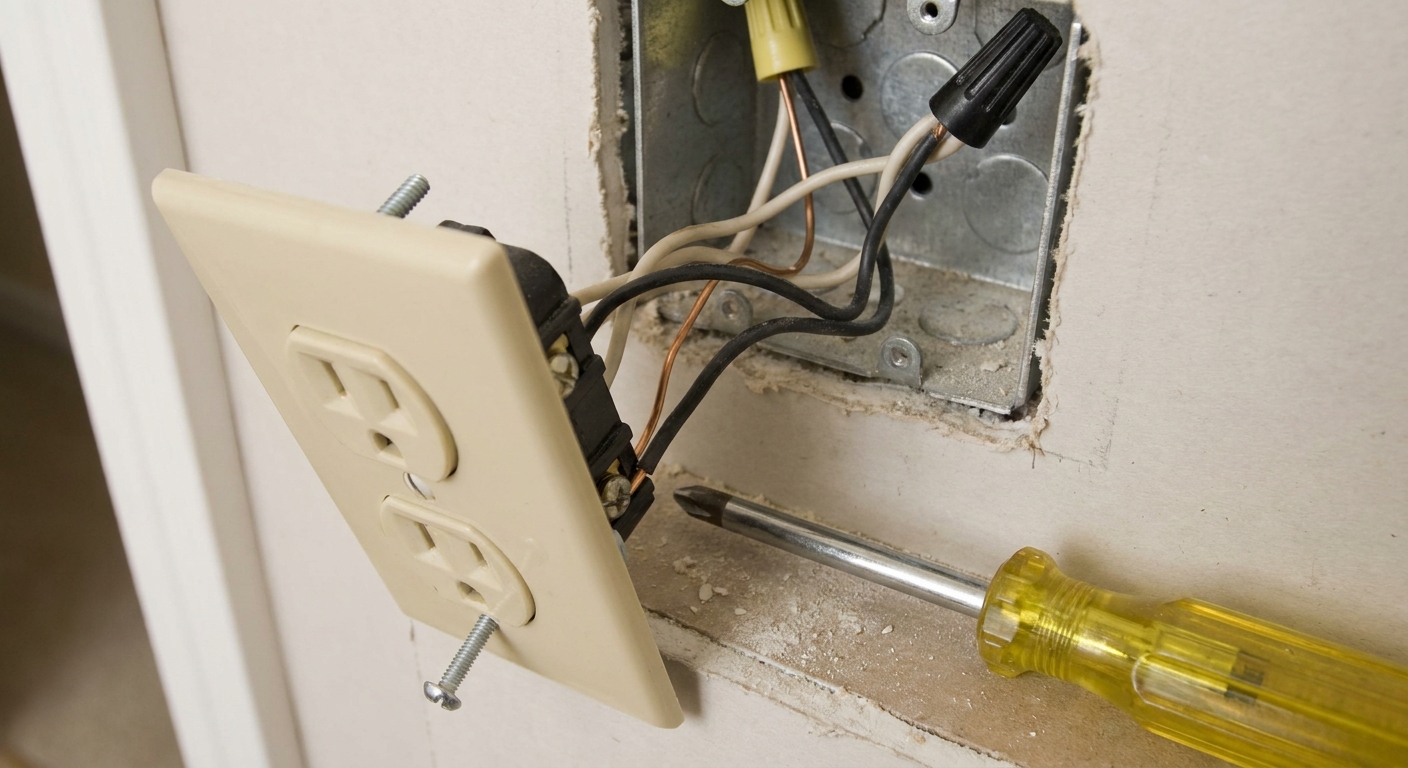
- Be suspicious of recently touched boxes. A loose screw terminal, a failed backstab connection, or a wire nut that was not tightened can open the circuit downstream.
If you decide to open an outlet box to inspect connections, turn the breaker OFF and verify power is off with a tester before touching anything. If you are not comfortable identifying hot, neutral, and ground conductors, this is a good place to hand it off to a pro.
One more edge case (after an outlet swap)
If an outlet was replaced recently and now only half works (or things behave oddly), it could be a split receptacle tab issue. A little break-off tab on the receptacle may have been removed or left intact incorrectly for the way the circuit is wired. This is fixable, but it is also easy to get wrong, so treat it as an electrician-level clue if you are not 100 percent sure what you are looking at.
Step 6: If it’s intermittent, take it seriously
Power that comes and goes is often worse than power that is simply off, because it hints at a loose connection that can arc.
Common patterns
- Only fails when you run a heater or vacuum: weak connection or overloaded circuit.
- Only fails when a certain switch is touched: failing switch, loose splice, or backstab issue.
- Flickering lights plus dead outlets: possible neutral problem, which is an electrician call.
- Odd behavior: dimming or brightening, buzzing, or inconsistent operation.
If you can reproduce the problem by using a particular appliance, stop using that appliance on that circuit until the wiring is checked.
Step 7: What not to do
- Do not keep resetting a breaker or GFCI that trips immediately. That is your circuit telling you something is wrong.
- Do not “upgrade” a breaker to a larger size to stop nuisance trips. That is a fire risk.
- Do not swap breakers or open the panel cover unless you are qualified.
- Do not bypass a GFCI or remove a safety device to “get power back.”
When to call an electrician
Bring in a licensed electrician if:
- The breaker or GFCI will not reset, or trips again immediately
- There is buzzing, sizzling, burning smell, warmth, or visible discoloration
- Power is intermittent, lights flicker, or multiple rooms are affected
- You suspect a panel issue or you are not confident working in outlet boxes
To save time and money, tell them:
- Exactly which outlets and lights are dead (and which still work)
- Whether you reset all GFCIs and which ones
- Whether the breaker is standard, AFCI, GFCI, or dual-function
- What was running when it happened (space heater, vacuum, etc.)
- Any recent work, even “small” stuff like changing a switch, replacing an outlet, or hanging shelves
My go-to order of operations
- Confirm what is dead with a known-good lamp and flip all switches
- Reset all GFCIs I can find (including outside), then retest
- Reset the breaker properly (OFF then ON), then retest
- Check for a switched outlet or half-hot receptacle behavior
- Hunt for the failed upstream connection at the last live and first dead locations
- If anything points to heat, burning, buzzing, or intermittent arcing, stop and call a pro
Most of the time, the fix is one reset button you did not know existed, or one tired outlet feeding the rest. And once you solve it, do yourself a favor and label the panel properly. Future-you will thank you.
The 30-Second Cheat Sheet
Essential takeaways for: One Room Has No Power but the Breaker Isn’t Tripped? What to Check
Do this first (fast and safe)
- Confirm it’s actually dead: plug a known-good lamp into every outlet in the room and flip every switch.
- Reset GFCI protection (anywhere it might be): bathrooms, kitchen, garage, basement, laundry, and outside outlets. Press RESET until it clicks. Note: some homes have GFCI protection at the breaker, not a receptacle.
- Reset the breaker correctly: push it fully OFF, then back ON. Many breakers “half trip” and look normal.
If that didn’t fix it
- Check for an AFCI or dual-function breaker: it may need a full reset even if the handle looks on.
- Suspect a failed outlet upstream: one bad receptacle or loose backstab can kill everything downstream while the breaker stays on. Focus on the last working outlet and the first dead outlet, including closets and adjacent rooms.
- Look for a switched outlet: one receptacle may be controlled by a wall switch, sometimes only half of it.
Stop and call an electrician if
- Any outlet or switch is hot to the touch, smells burnt, is discolored, or makes buzzing or sizzling sounds
- The breaker or GFCI won’t reset or trips again immediately
- Power is intermittent, lights flicker, or you suspect a neutral issue
- You would need to open the panel or you are not comfortable identifying wiring in an outlet box
What to tell the electrician
Which outlets and lights are dead, which still work, which GFCIs you reset (and where), what was running when it happened (space heater, vacuum), and any recent DIY work in that area.
💡 Tip: Scroll up to read the full article for detailed, step-by-step instructions.
⬆️ Back to top
About Marcus Vance
Content Creator @ Grit & Home
Marcus Vance is a lifelong DIY enthusiast and self-taught home renovator who has spent the last decade transforming a dilapidated 1970s ranch into his family's dream home. He specializes in budget-friendly carpentry, room-by-room renovations, and demystifying power tools for beginners. Through his writing, Marcus shares practical tutorials and hard-learned lessons to help homeowners tackle their own projects with confidence.