
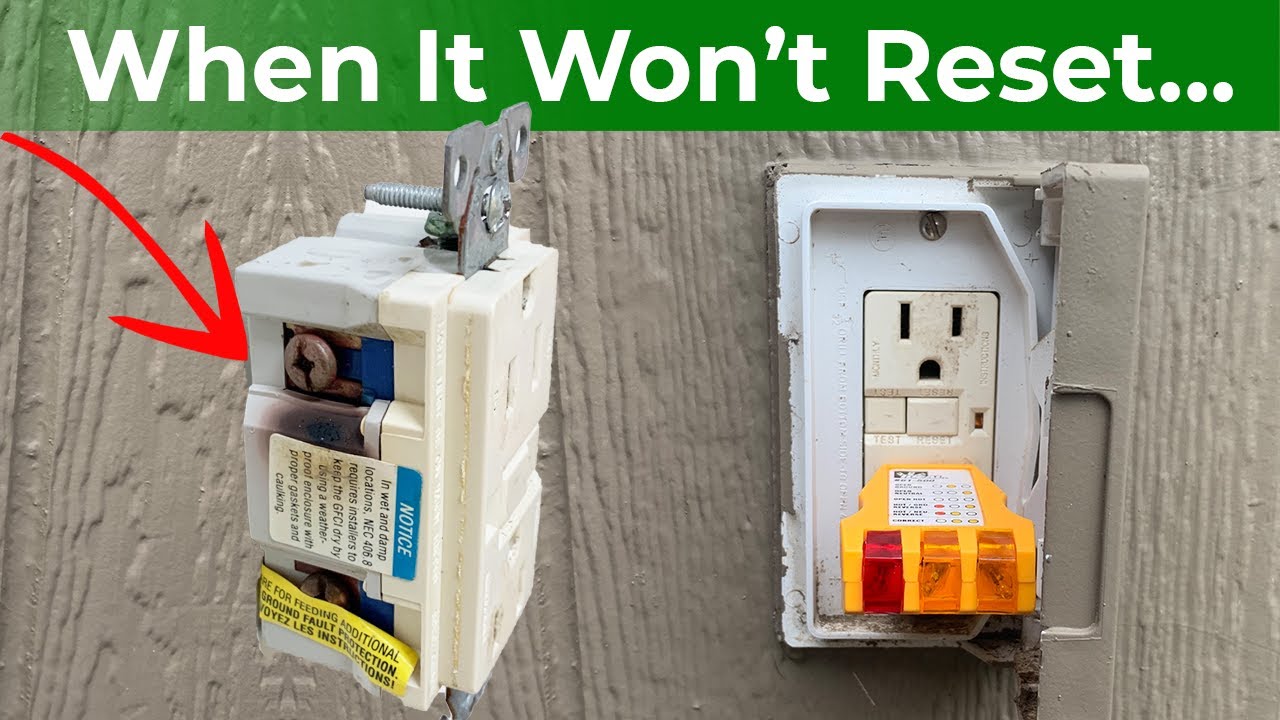
Outdoor GFCIs live a hard life. They get baked by sun, chilled by winter, and fogged with moisture every time the weather changes. So when an outdoor GFCI outlet will not reset, it usually isn’t being picky. It is doing its job, or it has simply reached the end of its life.
In this guide, I’ll help you tell the difference between a tripping GFCI and a dead one that will not reset, then walk you through a logical isolation sequence to find the cause without guessing. I will also be very clear about the points where DIY stops and an electrician starts.
First: “Keeps Tripping” vs “Won’t Reset”
A GFCI that keeps tripping
You can reset it, it works briefly, then it trips again. That often points to a real ground-fault condition (moisture in a box, a damaged cord, a nicked wire) or a failing device that is getting over-sensitive.
A GFCI that will not reset at all
You press RESET and it will not click in, or it clicks but pops right back out immediately. This usually points to one of these:
- No power to the GFCI (tripped breaker, tripped upstream GFCI, bad connection upstream).
- Line and load wiring issues (reversed, loose, or wrong terminals).
- Downstream short or ground fault on the load side (often outdoors, often moisture-related).
- Device failure or end of life (especially older outdoor units).
Safety limits
- If you see melted plastic, charring, or smell burning, leave it off and call an electrician.
- If the outlet box is wet inside, do not work it live. Turn off the breaker, let it dry, and investigate why water is getting in.
- If you are not 100 percent comfortable identifying LINE vs LOAD, stop. Miswiring a GFCI is common and can leave downstream outlets unprotected.
- Use a non-contact voltage tester and, ideally, a multimeter. Testers can lie in wet or crowded boxes.
- Note: if your home has a shared neutral (multi-wire branch circuit), a miswired neutral can cause instant tripping or a GFCI that refuses to set. If you suspect that, it is time for a pro.
Pro tip from my own mistakes: If you are troubleshooting in a weatherproof box, the temptation is to do just one quick check with the cover open while it is damp. That is when people get bit. Dry work area, breaker off for any wiring changes.
Tools
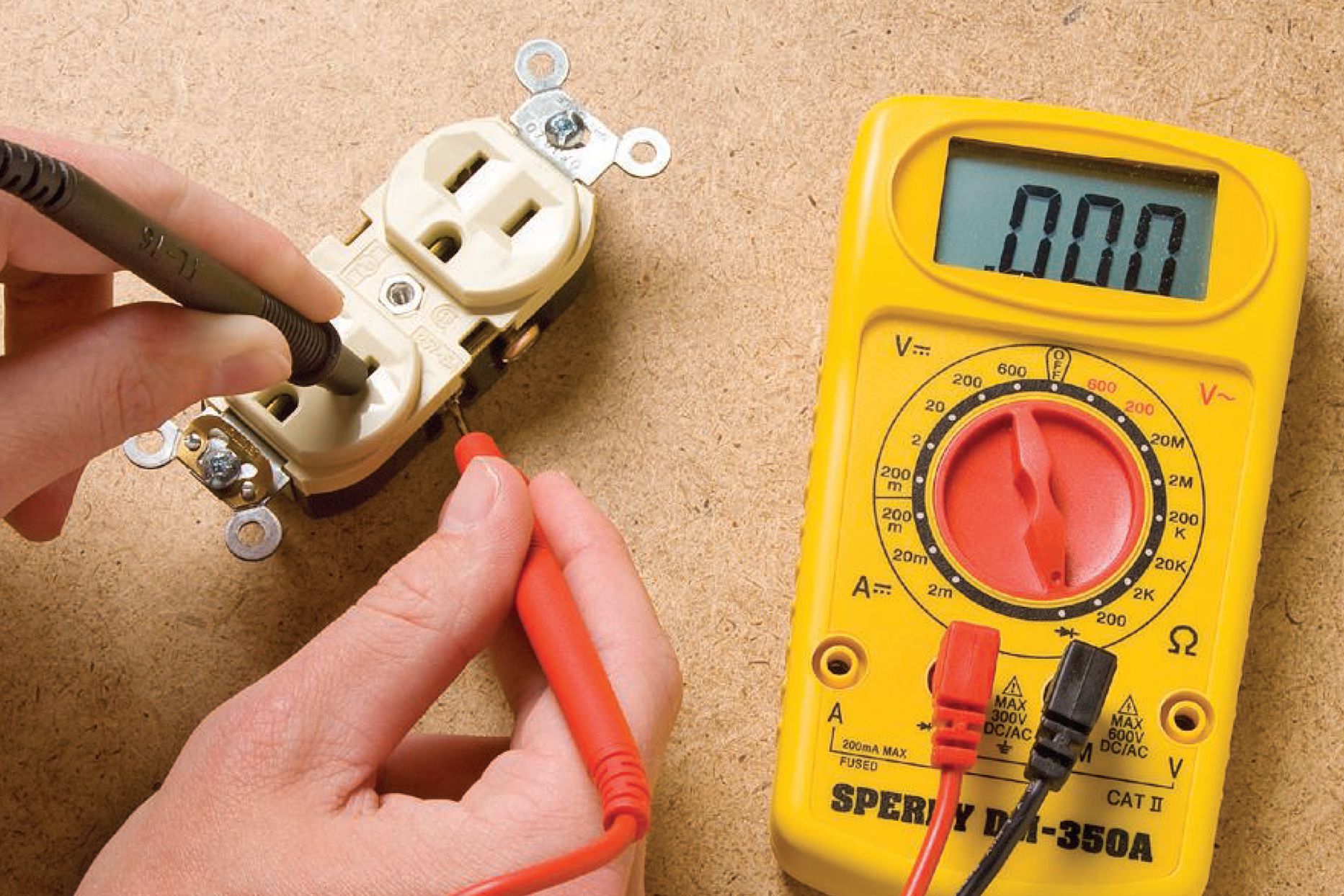
- Non-contact voltage tester
- Multimeter (to confirm voltage and find open neutrals)
- Outlet tester with GFCI test button (helpful, but not a substitute for a multimeter)
- Insulated screwdriver and needle-nose pliers
- Flashlight or headlamp
- Replacement weather-resistant (WR) GFCI receptacle and an in-use cover gasket if yours is tired
Step-by-step isolation sequence
This is the order I use because it tells you, quickly, whether you have a power problem, a wiring problem, a device problem, or a downstream fault.
Step 1: Confirm the breaker is on
- At the panel, flip the breaker fully OFF, then back ON. Some breakers look on when they are actually tripped.
- If it trips again immediately, stop and call an electrician. That suggests a short or ground fault on the circuit. If it is an AFCI or GFCI breaker, it can also be reacting to an arc or ground-fault condition that needs proper diagnosis.
Also: outdoor outlets are sometimes protected by a GFCI breaker instead of a GFCI receptacle, or by an upstream GFCI receptacle (garage, basement, bathroom, kitchen). Keep that in mind as you hunt for the real point of protection.
Step 2: Check for power on LINE
With the breaker on, remove the weatherproof cover and gently pull the receptacle out enough to test. Do not touch bare conductors.
- Using a multimeter, you should see about 120V between hot (usually black) and neutral (usually white) on the LINE conductors.
- If you read 0V, you have an upstream problem (tripped upstream GFCI, loose splice, failed connection, or a breaker issue).
Optional confidence check: If you have a good ground present, hot to ground should also be about 120V. Neutral to ground should be near 0V. If neutral to ground shows noticeable voltage, you may have an open or loose neutral somewhere, and that can keep a GFCI from behaving normally.
If you do not have voltage on LINE: look for another GFCI protecting this one. Outdoor outlets are often fed from a garage, basement, powder room, or even a kitchen GFCI. Reset any other GFCIs you find.
Step 3: Reset the right way
Most receptacle-style GFCIs require line power to reset, and they often need a firm push.
- Press RESET firmly until you feel a click.
- If it was already set, pressing TEST should trip it, and then RESET should click it back in. If it is already tripped and refusing to reset, TEST may do nothing, and that is fine.
If RESET will not click in and you have confirmed power to LINE, move on.
Step 4: Disconnect LOAD
Turn the breaker OFF. Pull the receptacle out and identify the LINE pair and the LOAD pair. The device should have them labeled. If there are two cables in the box, one is typically feed (line) and one is downstream (load), but do not assume.
- Disconnect the LOAD hot and neutral from the GFCI.
- Cap those disconnected load wires individually with wire nuts (hot capped, neutral capped) so they cannot touch anything.
- Leave only the LINE hot and neutral connected to the GFCI.
Turn the breaker back ON and try to reset.
- If it resets now: the GFCI is probably fine and the problem is downstream on the LOAD side (moisture, nicked cable, bad device, or an outdoor fixture).
- If it still will not reset: either the GFCI is bad, it is miswired on the LINE side, or you have a line-side hot or neutral issue.
Step 5: If it resets with LOAD disconnected
This is where outdoor circuits get interesting. Common downstream loads include other outdoor outlets, garage outlets, porch lights, soffit outlets, landscape lighting transformers, and even a bathroom outlet on older homes.
Use this sequence:
- Unplug everything on the circuit (holiday lights, string lights, pressure washer, pond pump, etc.). Then reconnect LOAD and try again.
- If it trips with everything unplugged, the issue is likely in the wiring or a hardwired device like a light fixture.
- Open the next outlet or fixture downstream and look for moisture, corrosion, loose connections, and damaged insulation.
- Pay special attention to any box that faces up, sits low to the ground, or is under a sprinkler pattern.
When I find the culprit, it is often an outdoor box with a missing gasket or a cracked in-use cover letting water mist in over time.
Step 6: If it will not reset with LOAD disconnected
- Verify the incoming hot and neutral are on the LINE terminals, not the load terminals. Many modern GFCIs have reverse line/load protection and will appear dead or refuse to reset if they are miswired.
- Check for a loose neutral. A loose or open neutral can cause all kinds of strange behavior, including a GFCI that refuses to set.
- If LINE voltage is present and wiring is correct, the GFCI itself may be failed or at end of life.
Common causes
Moisture in the box or device
Moisture can create just enough leakage current to ground that the GFCI refuses to latch. This is especially common after a heavy rain, pressure washing, or the first warm day after a cold snap (condensation).
- Turn off the breaker.
- Dry the box thoroughly. A fan helps. Do not cook it with a heat gun.
- Replace cracked covers, missing gaskets, or a warped receptacle face.
- If the device looks corroded, replace it.
Line and load reversed
If line and load are swapped, many GFCIs will not provide power and may not reset properly by design.
- Confirm the feed cable is on LINE.
- If you are unsure which cable is feed, separate and cap wires, then energize briefly and test for voltage to identify the feed. If you are not comfortable doing that safely, call a pro.
Worn or end of life GFCI
GFCIs do not last forever. Heat cycling, weather exposure at the installation, and humidity shorten lifespan. Modern GFCIs have internal self-testing electronics. When they fail a self-test, many will refuse to reset by design.
If your outdoor GFCI is more than 10 years old, consider proactive replacement once you have ruled out wiring and downstream faults.
Downstream short or ground fault
A nicked cable, a staple through a wire, a mouse-chewed run in a crawlspace, or a wet exterior light fixture can all keep the GFCI from staying set when the load is connected.
Isolation is the cure here. Disconnect load, confirm the GFCI works, then reconnect devices and sections one at a time until the fault shows itself.
Loose terminations
Outdoor vibration and temperature swings can loosen marginal connections. Many GFCI receptacles use back-wire clamp terminals that tighten under the side screws. That is a secure method when properly torqued. If your connections are loose, re-terminate them cleanly and tighten to the manufacturer’s instructions.
When replacement makes sense
If your troubleshooting points to a bad device, replacing an outdoor GFCI is usually straightforward for an experienced DIYer, but only if you are comfortable identifying line and load correctly.
- Buy a WR (weather-resistant) rated GFCI receptacle.
- 15A vs 20A: A 15A duplex GFCI receptacle is commonly used and is typically allowed on a 20A general-use branch circuit. You are not automatically forced to buy the 20A T-slot version. Use a 20A receptacle if you need to accept a 20A plug, or if your local requirements call for it.
- Use an in-use (bubble) cover if the outlet is exposed to rain while something is plugged in. In many areas, an extra-duty in-use cover is required outdoors.
- Replace the foam gasket if it is torn or flattened.
After replacement, test it with the built-in TEST button, then confirm downstream outlets (if any) are protected.
Call an electrician
- Breaker trips immediately when turned on
- No voltage at LINE and you cannot find the upstream feed issue quickly
- You find damaged cable in a wall, underground, or conduit run
- Aluminum wiring, multi-wire branch circuits, or a crowded box with multiple splices you cannot confidently map
- The outlet is on a critical circuit and you cannot tolerate downtime (well pump, sump pump, freezer, etc.)
Quick checklist
- Reset breaker fully off then on
- Confirm 120V at GFCI LINE with a multimeter
- Disconnect and cap LOAD, then try reset
- If it resets, troubleshoot downstream moisture or faults
- If it will not reset, verify line and load and replace the device if voltage and wiring are correct
If you take nothing else from this page, take this: separating the load wires is the moment you stop guessing. It turns a frustrating problem into a clean yes-or-no answer.

About Marcus Vance
Content Creator @ Grit & Home
Marcus Vance is a lifelong DIY enthusiast and self-taught home renovator who has spent the last decade transforming a dilapidated 1970s ranch into his family's dream home. He specializes in budget-friendly carpentry, room-by-room renovations, and demystifying power tools for beginners. Through his writing, Marcus shares practical tutorials and hard-learned lessons to help homeowners tackle their own projects with confidence.